Fen Ditton Gallery

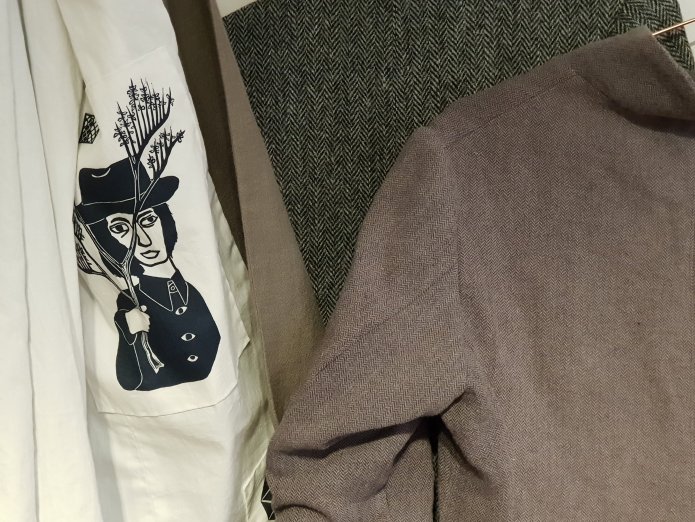
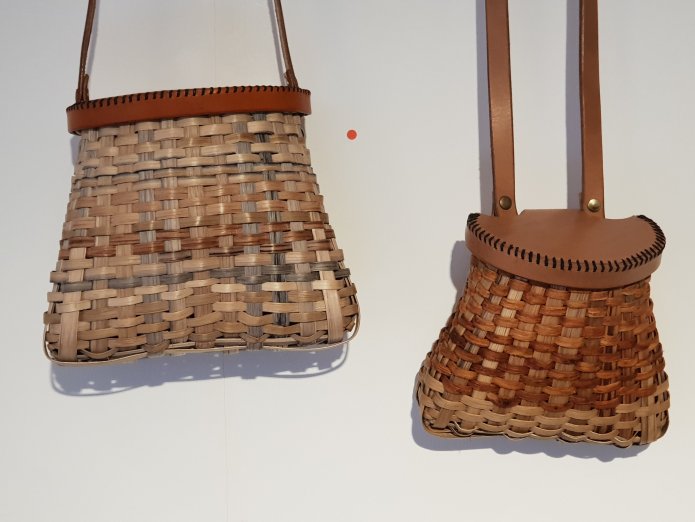
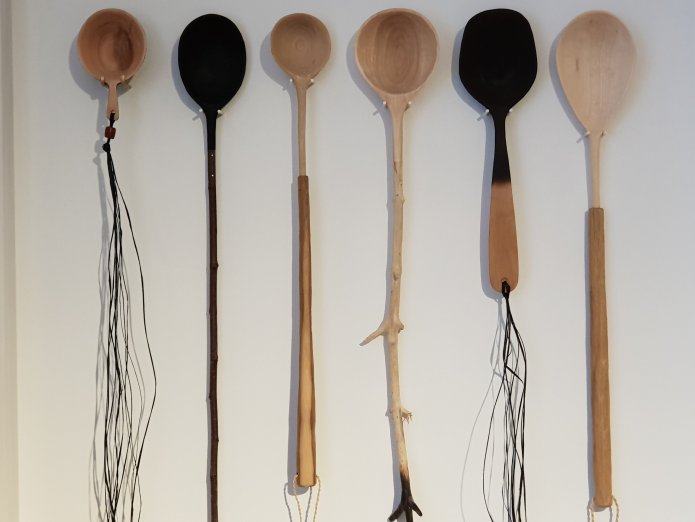
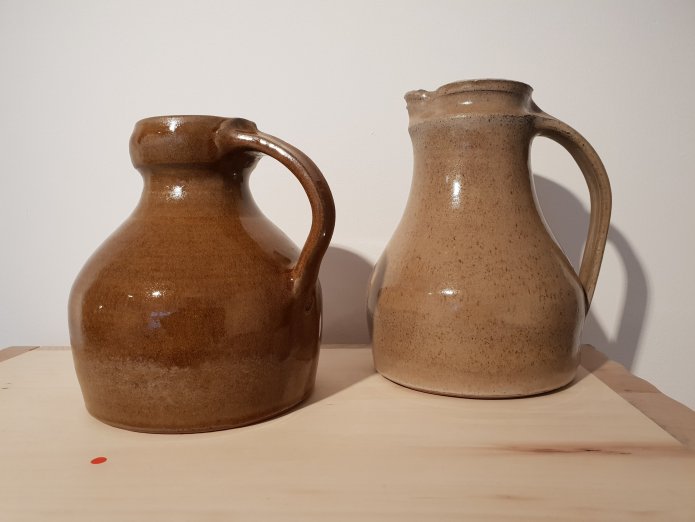
I should have said a bit more about the Fen Ditton Gallery, but the sun went in as soon as we arrived and I was too busy buying Christmas presents to take any photographs. The gallery occupies the ground floor of the old School House half way down the village which is a long way out from the centre of Cambridge through the straggling suburbs, but can apparently be reached by ferry from Jesus Lock in the summer. It’s a vastly much more sophisticated display than might be expected from a local craft shop because the selection has been made by Amanda Game, who for many years used to select the crafts at the Scottish Gallery before striking out as an independent curator. The current display includes glass by Toord Boontje, small silver spoons by Simone von Tempel, normally only seen in Collect and Gallery So in Brick Lane, ceramics by Clive Bowen, and books about the Fens by Paul Hart (and more, but their website doesn’t list the makers, only showing photographs).

This is a conceptual spoon by Simone von Tempel bought by Romilly:-

image

Standard

Stuart Pearson Wright

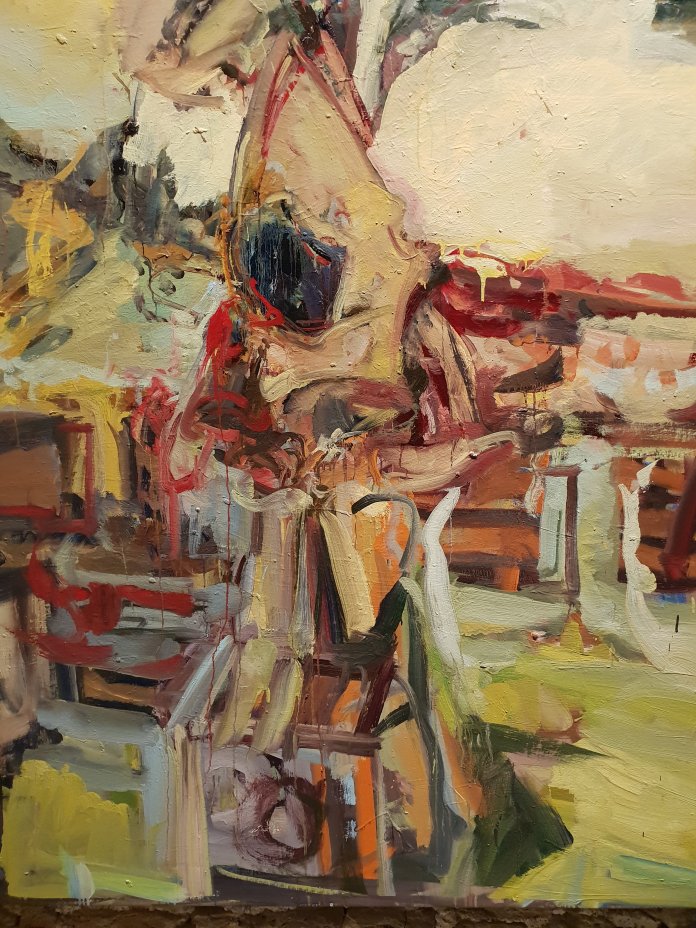
After lunch in Fen Ditton and a visit to the Fen Ditton Gallery, we went to see Stuart Pearson Wright’s exhibition Halfboy in the new Heong Gallery at Downing in the space which Caruso St. John have created out of the old bicycle sheds.

I have admired Stuart’s work ever since he won the BP Travel Award in 1998 and embarked on a big narrative painting, Tisbury Court 1999, A Tragicomedy which was dismissed by the Slade as illustration, but bought by Jeffrey Archer.   In 2001, he won first prize for his surreal picture of the Presidents of the British Academy, Gallus Gallus, which he had very effectively enlivened by adding a large dead chicken basing the composition on a roof boss in Norwich Cathedral.

His current exhibition is autobiographical, based on a cache of photographs which he discovered of his childhood:-

image

It follows his youth and adulthood, in a combination of fantasy, memory, melancholy and close pictorial observation which are very characteristic:-

image

image

image

image

image

Standard

Jesus College, Cambridge

We went to Cambridge to see Alison Wilding’s exhibition, On the Edge, in the new West Gallery on the ground floor of Níall McLaughlin’s recently opened building on Jesus Lane.

The building itself is good, if maybe a touch mannered in its use of raw stone:-

image

image

image

image

The exhibition itself is full of very beautiful work, some using carved English alabaster, one, Darts (2014), using bleached pheasant feathers mounted onto ridged plywood and painted chevrons:-

image

And a work Bedrocked (2013) which combines carved alabaster on a cast black silicone rubber base:-

image

Standard

Duro Olowu

I went last night to the opening of the very choice small exhibition of work by Tommaso Corvi-Mora, a potter/ceramic artist who runs a contemporary art gallery in South London, and Romilly Saumarez Smith, a bookbinder turned jeweller.   The setting which is Duro Olowu’s shop/gallery/treasure trove in Mason’s Yard, just by the back door of the London Library, inspires questions about the nature of contemporary craft and how it relates to the world of fashion and fine art which were being asked at the private view.   It’s a good place for an (expensive) Christmas present.

Standard

John Tusa

I was interviewed last night by John Tusa about what I was expecting to be my time at the Royal Academy, but turned out to be at least as much about the National Portrait Gallery, where he was one of my Trustees, and the National Gallery in between.   I had forgotten how many memories lurk not far below the surface which John was unexpectedly successful – probably as unexpected to him as to me – in resurrecting.   We never quite got to my time at the Royal Academy.   It probably needs twenty years passage of time to digest and then emerge half cooked from my subconscious.

Standard

The last of the Committees

Most of this week has been spent in attending the last of my RA Committee meetings:  yesterday, the Summer Exhibition Committee and Council;  today, the Library and Collections Committee and the Schools Committee.   When I arrived at the RA, I was encouraged to dump my attendance at all the committees as being too time consuming and a distraction from the real business of the RA.   But I argued, which I would still maintain, that they are the bread-and-butter of the institutional machine, the way in which the RAs keep a watch over how the organisation operates and interact with the staff.   Today, we had a long discussion over a possible acquisition in which Humphrey Ocean RA and Hughie O’Donoghue RA demonstrated their visual intelligence in talking about, and describing, works of art.   Maybe I will miss all those committees after all.

Standard

Carols

We had the Friends’ annual Christmas Carol Service in St. James’s, Piccadilly this evening, one of the best events of the Royal Academy’s ritualised year, partly because Lucy Winkett always manages to give it a good atmosphere – mostly secular, about the celebration of Christmas myth, but with the very faintest whiff of doctrinal ritual.   We sang all the best known carols – ‘God rest you merry, gentlemen’, ‘In the Bleak Mid-winter’ (Holst), ‘O Come All Ye Faithful’ (I think this is what I had to sing to get into my prep school choir), ‘Good King Wenceslas’ (an odd setting by Bob Chilcott) and ‘Hark, The herald-angels sing’ in a wonderful setting by David Willcocks, who was still Director of Music at King’s when I was an undergraduate (not that I made the effort to appreciate it).

Standard

Forest Hill

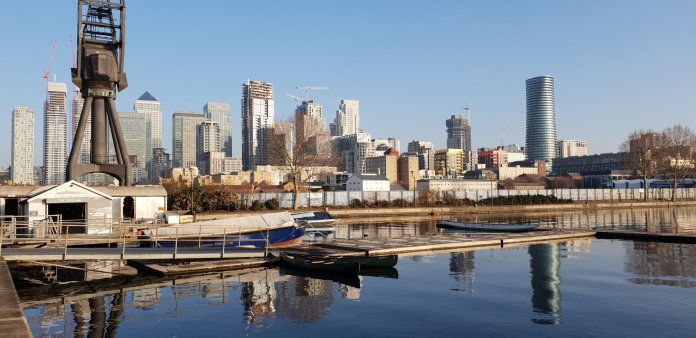
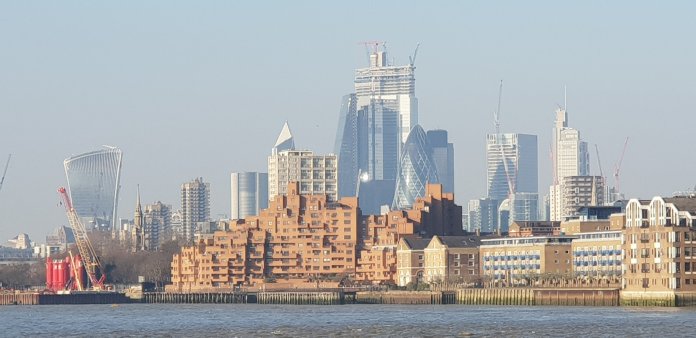
We drove to Forest Hill through the infinite reaches of south London.   However often I go through it and however well I think I ought to know it, I find it infinitely baffling the way Rotherhithe bleeds into Southwark, which itself turns into Deptford, then through Brockley to Forest Hill, which we discovered is a hill, with a view all the way across London:-

image

Standard

Craft (2)

When we went to the discussion between Tanya Harrod and Phyllida Barlow at the Whitechapel Art Gallery about the nature of craft, I had not had an opportunity of reading Tanya Harrod’s excellent and comprehensive anthology of writings on the topic which has been published by the Whitechapel. Over the weekend, I have been grappling with the range of writings, many of them sociological and philosophical, which demonstrate very clearly how comprehensively the boundaries have blurred between the activities of art and craft, which once upon a time, rightly or wrongly, seemed more clearly differentiated: art more obviously about creative freedom in the ways in which materials are manipulated; craft an activity in which manual skills have been creatively applied to, and manipulated, traditional materials, but within inherited boundaries of practice.

One of the essays in the book is by Edmund de Waal, a short one, on attitudes to craft in Black Mountain College, including Anni Albers’s book On Weaving. This was written in 2005, just at the moment he was making the transition from craft to fine art. His work presumably epitomises the shift in categories, having trained as a potter in Canterbury, Sheffield and Japan and initially highly esteeemed, and heavily involved with, the world of the crafts, now migrated into the world of fine art. One could argue that the work is the same, the hand and eye the same, and that all that has happened is a shift in ontological classification. But it is not quite as simple as that because there is a shift also in the way that one judges the work: from viewing it for the quality of its making to seeing it in series; and a difference in the way it is displayed, and, most decidedly, a shift in how much the work costs. Maybe this does mean that the categorisation is in the mind of the viewer as much as that of the maker.

Standard

Small Business Retail

Rowan Moore has written an interesting piece about the future of retail in tomorrow’s Observer.  

I’m interested in this topic, as my readers will know, because in East London, where he and I both live, there is a great deal of pleasure to be gained from small-scale, locally based places of consumption:  the local farmer’s market, small traders like Mouse Tail Coffee Stores in the Whitechapel Road and the Green Truffle in the Roman Road, Breit, the new bread shop under the railway arches off Vallance Road, which I wrote about last week.   These sorts of shops are opening up, not closing.   They are not big monoliths, but versions of the sorts of shops which still thrive in Paris and Rome:  run by individuals, specially sourced, which are protected in those cities by legislation rather than priced out of business as in much of London by extortionate rent and rates;  and are a pleasure to be in unlike the chains which have so obviously crucified the high streets.  

Today was Small Business Saturday in Tower Hamlets.   Something to celebrate:-

https://www.theguardian.com/society/2018/dec/01/everything-must-go-what-next-for-the-high-street-new-retail-empty-shops?CMP=Share_AndroidApp_WordPress

Standard