Steven Newell

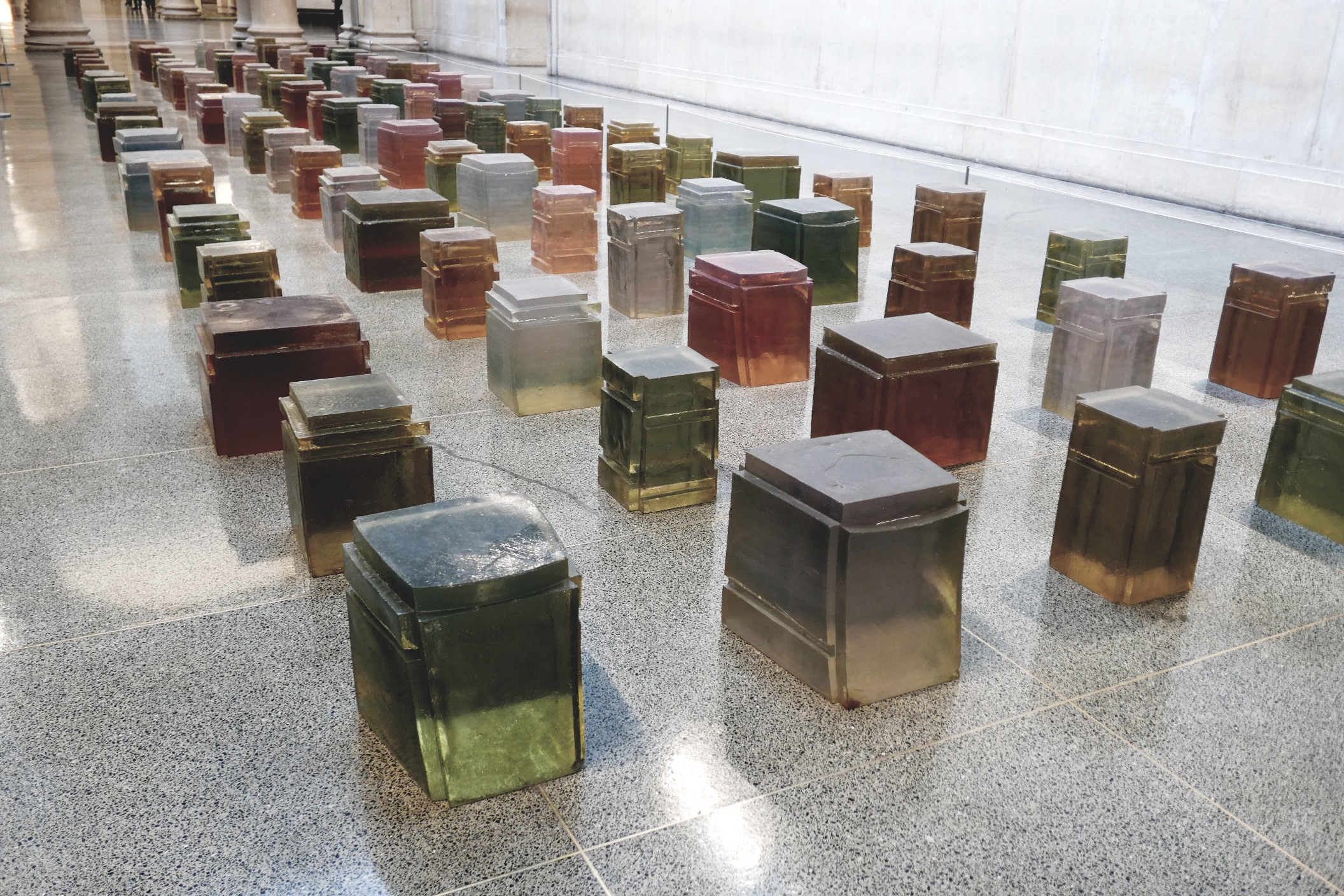
Last week, we had a visit at the RA from the patrons of the Corning Museum of Glass in upstate New York.   It made me realise how little I know about contemporary studio glass and more attentive to the set of glasses that we inherited by Steven Newell, a glass maker whose work we knew from when it was exhibited at the Prescote Gallery in Cropredy, north Oxfordshire in the early 1980s (does anyone now remember and value the work that Ann Hartree did in exhibiting the work of designer makers in the early days of the 1970s Crafts Revival ?).   Newell, I discover, is American, was trained in Kansas City and Pittsburgh before studying at the Royal College of Art in the early 1970s and is still making and exhibiting work forty years later:-

Standard

Make Your Mark (2)

First, I want to thank all those readers who have already given so generously to our Appeal.   It has both surprised and impressed those who are running it how much money has poured in this afternoon.   Maybe it’s from my 7 readers in Argentina.   Second, I should have said that one of the benefits of giving £250 is that you get a private tour with Joseph Green who is brilliant at it and, if I am available, I am more than happy to offer my services as well.

Standard

Make Your Mark (1)

We had an all-staff meeting this morning which, rather amazingly, will be the last to be held in our temporary offices in Unilever House before we move back to Burlington Gardens early in the New Year.   I realised when I did a post earlier in the week about our public appeal that I didn’t actually provide a link to how to make a donation, which is rather badly needed at this juncture, if we are to get to the £3 million we have set as the target.

So, all being well (it will take a minute to be added) here is a link to the film about the appeal.

And this is a link to how to give to it.

https://makeyourmark.royalacademy.org.uk/

Any amount, however large or small, will be appreciated.

Standard

Jamie Fobert

I went tonight to a lecture organised by the Architecture Foundation in which Jamie Fobert talked about his three current, long-standing arts projects, one of which, Tate St. Ives, has just opened.

He started with a modest installation he had done in Tate Modern in 2002, in which he demonstrated his interest in the placement of works of art in open space and the way the spectator related to them with extreme economy of means.

He was first employed to work at Kettle’s Yard in 2004, when he reconfigured a Chinese restaurant at the corner of the site and, following the death of Michael Harrison, was employed by Andrew Nairne to do a much more ambitious scheme, protecting, as far as possible, the Leslie Martin 1970 extension with its ample use of brick, but at the same time creating two generously proportioned exhibition galleries in the old terrace on Castle Hill and much improving disabled access.

He won the competition to transform the barns adjacent to Charleston Farmhouse in 2009, jointly with Julian Harrap (one of the characteristics of his talk was his generosity to the work of collaborators).   The old barns have been restored and a new barn-like structure has been created alongside to contain archive, exhibition gallery and loos.   The project is on site, due to open, he said, next summer.

I had no idea how long-drawn out and complicated his project in St. Ives has been, owing to the fierce determination of the local community to STOP THE TATE and retain the car park on the hill above the art gallery.   In the end, he won the second competition with a project which is sandwiched between the car park and the sheltered housing by the beach.   But it looks like a very intelligent solution, adding a large, open exhibition space underground alongside and opening up the existing Evans & Shalev 1993 building.

Each of the projects demonstrated the extreme intelligence of his approach to design, based on close attention to solving the problems of the ground plan and then allowing the shape and structure of the building to grow from the experience of its context and intelligent use of unexpected materials.

Standard

I took a small group of Patrons round Burlington Gardens.   It may not have looked it to them, but it’s making progress.   The structure of the concrete bridge is now in place:-

The Norman Shaw studios (although not authenticated as by Shaw):-

The Entrance Hall:-

Staircase:-

Collections Gallery:-

Burlington Gardens

Aside

Tenth Anniversary

To judge from the plethora of comments in the Comments section (all now deleted), it looks as if I owe my readers an apology for having been sent a test email.   As readers may have noticed, I have been having problems with the formatting of the blog (and others have experienced problems in posting comments).   I hope the problems have now been resolved.

This morning, I was ambushed by a small celebration of the fact that we have now been fund-raising for our new building in Burlington Gardens for just over ten years, at which point, £50 million later and more still to raise (donations still very welcome), the portrait of Sir Richard Carew-Pole, the chairman of our appeal committee, by Christopher Le Brun PRA, and mine by Tom Phillips RA (very flattering because it is nearly fifteen years old) were turned into cupcakes and we all celebrated Richard’s remarkable, determined, infinitely patient and stalwart contribution:-

Standard

Brockwell Park

We were taken to admire Brockwell Park this afternoon which is not something I would normally have thought of doing.   But it is surprisingly atmospheric, windswept and on the first hill outside London, halfway between Brixton and Norwood, with views north east towards the city and south to Crystal Palace.   The hall at the top was originally the seat of John Blades, a glass merchant, and its park bought by the LCC in March 1891 as an urban amenity, which indeed it is.

The view up the hill from near the Lido:-

The organic garden and community greenhouses:-

And the old walled kitchen garden, which was made in the 1890s into a formal garden by J.J. Sexby, the author of a book about The Municipal Parks and Gardens of London (1898):-

Standard

Bow Common Lane

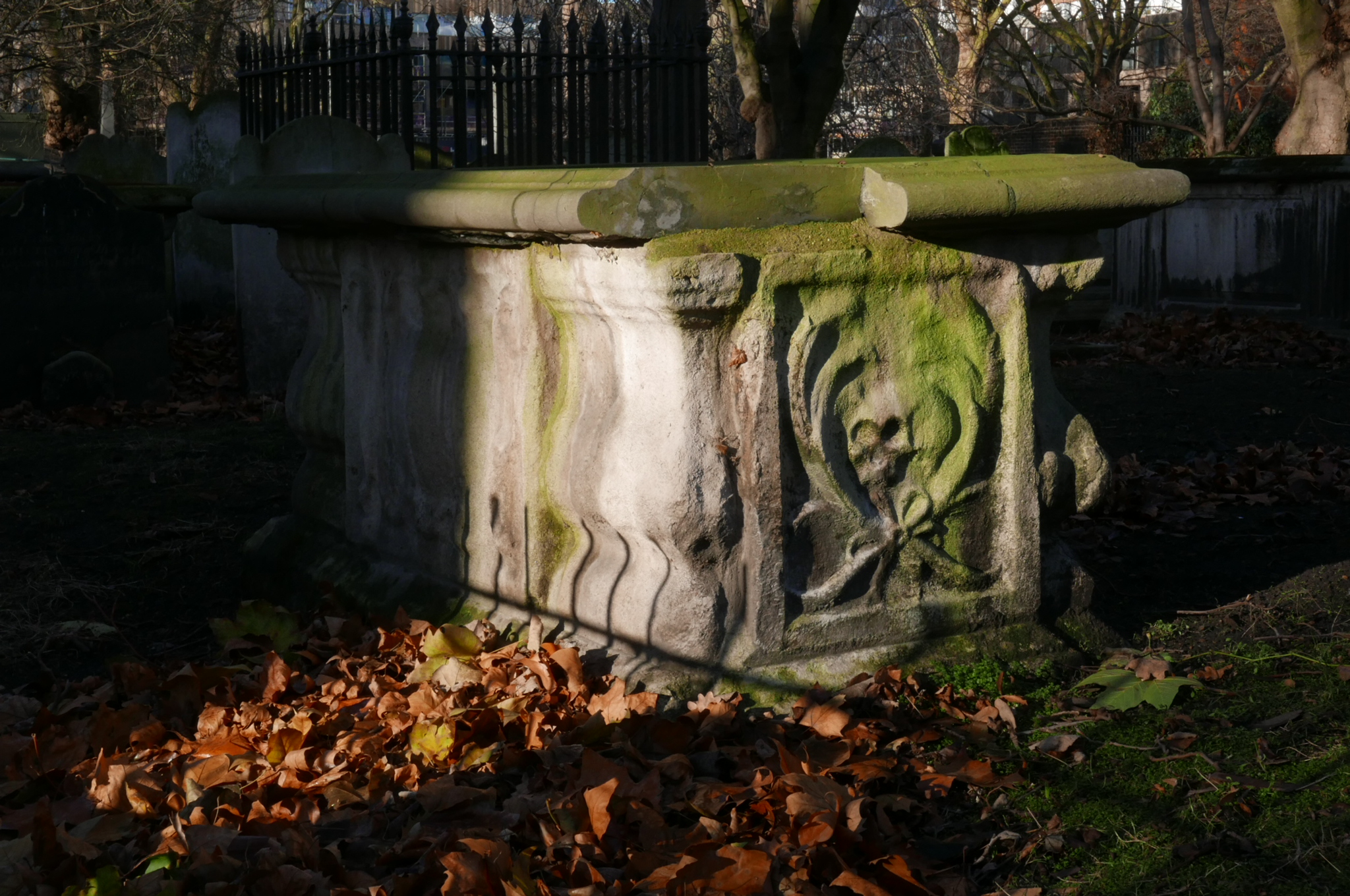
I’ve been intrigued several times recently by a grand, but deserted neo-Georgian building on Bow Common Lane, just south of the cemetery.   What is it ?  What was it ?  Somewhere else it might have been a post office sorting centre, but not here.   It’s not in Pevsner:-

Standard

E5

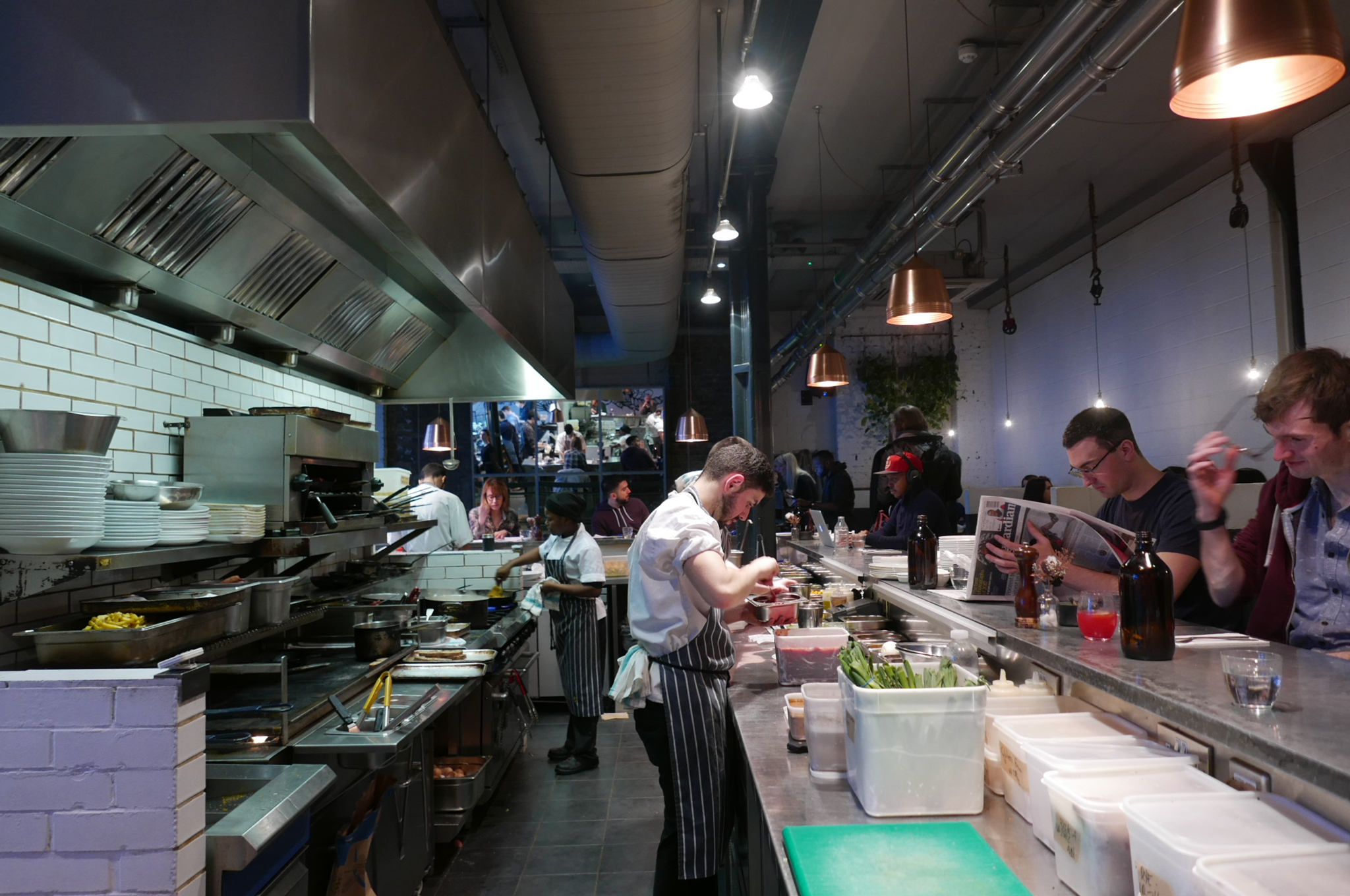
My Sunday morning run (not really a run any more) took us this morning to E5, the Hackney bakery which has opened up on the edge of the Limehouse Cut for fresh eggs on toast and lemon marmalade:-

For some reason it is dominated by images of Lord Lucan:-

And fresh bread:-

Standard

Tisbury

On the edge of Tisbury is a great tithe barn built for the Abbess of Shaftesbury and recently leased to Messums who are using it as a grand exhibition space, with more conventional gallery attached, and currently showing work by an American installation artist, Judy Pfaff, whose work I probably should have known, but didn’t:-

Standard