Fonthill (2)

When he was eighteen and in Switzerland, where he was sent with his tutor, the Rev. John Lettice, Beckford wrote to his friend and former drawing master, Alexander Cozens, about his dream of a gothic tower: ‘the time will arrive when we may abstract ourselves at least one hundred days from the world, and in retirement give way to our romantic inclinations… There we will execute those plans you have imagined, and realise in some measure the dreams of our fancy…we shall ascend a lofty hill, which till lately was a mountain in my eyes. There I hope to erect a Tower dedicated to meditation’.

The dream survived his return to Wiltshire during the 1790s after a long period when he lived in exile in Portugal. In January 1790, he wrote to Lady Craven how ‘I am growing rich, and mean to build Towers, and sing hymns to the powers of Heaven on their summits, accompanied by almost as many sacbuts and psalteries as twanged round Nebuchadnezzar’s image’. In 1791, he first wrote to James Wyatt to recruit him to design his plans. While in Portugal, he ordered the construction of a large wall round part of his estate, which he described as the Enchanted Gardens and Monastic Demesne, so that work could begin without prying eyes.

By February 1797, he was hard at work in realising his dream, writing to Sir William Hamilton how ‘I am staying my stomach with a little pleasure-building in the shape of an abbey, which is already half-finished. It contains apartments in the most gorgeous Gothic style with windows of painted glass, a chapel for blessed St. Anthony (66 ft diameter and 72 ft high), a gallery 185 ft in length, and a tower 145 ft high’. His ambitions grew and each year his architect, James Wyatt, exhibited a more ambitious design in the Royal Academy’s Summer Exhibition. But the first version of the tower was built in wood and a material called compo-cement and blew down in May 1800. Beckford was furious, but Wyatt started again. His father’s old house down in the valley was half demolished and the Abbey rose in compensation. ‘Some people drink to forget their unhappiness; I do not drink, I build’.

While it lasted, it was extraordinarily impressive, a ‘fairy palace’, described by Benjamin West as ‘raised more by magick…than by the labour of the human hand’. Constable wrote, ‘The entrance and when within is truly beautifull. Imagine the inside of the Cathedral at Salisbury, or indeed any beautifull Gothick building, magnificently fitted up with crimson and gold’. But in 1822, Beckford sold it (at quite a handsome profit and with a considerable sense of relief) and in 1825, the Tower collapsed.

Standard

Fonthill (1)

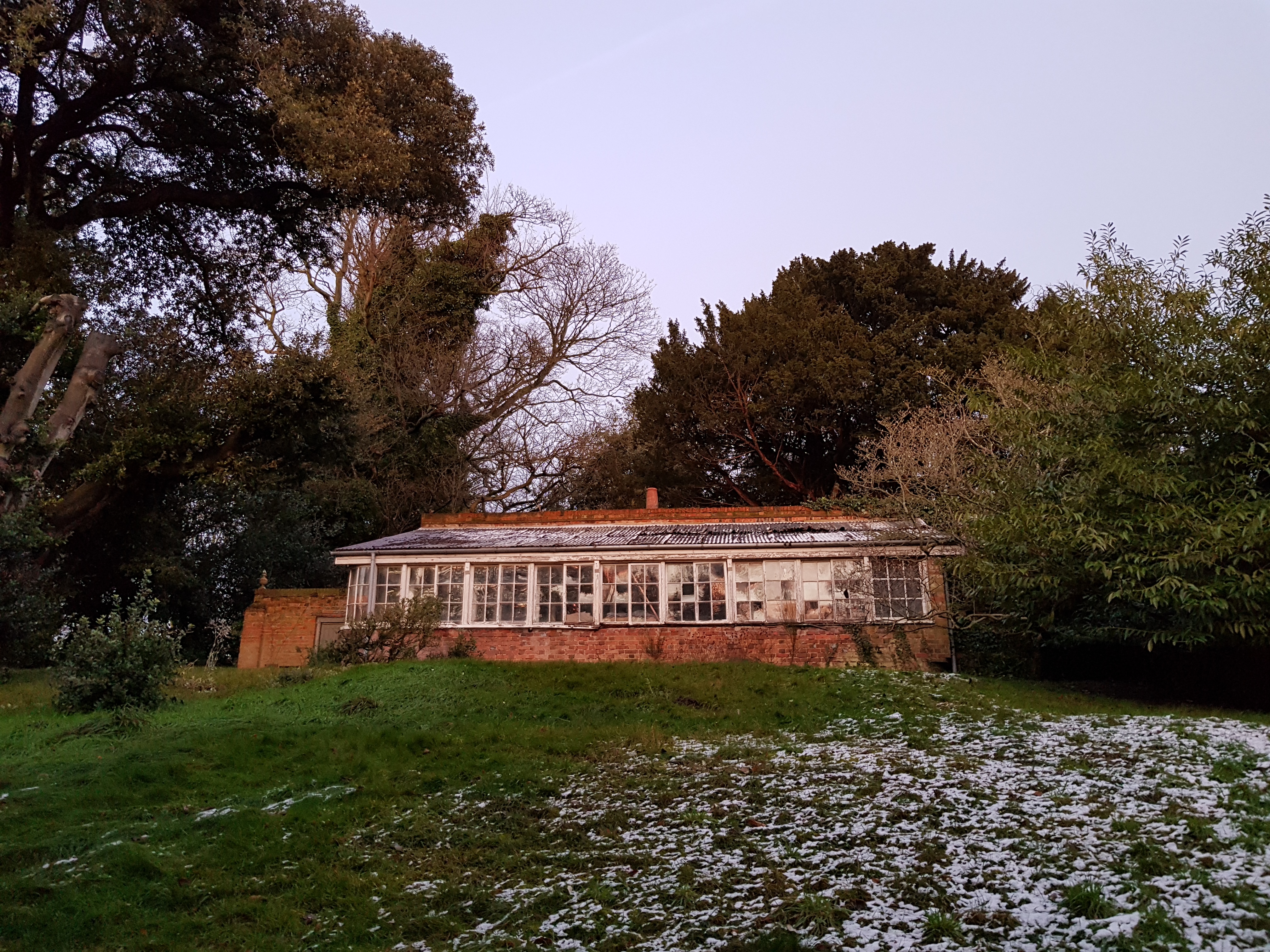
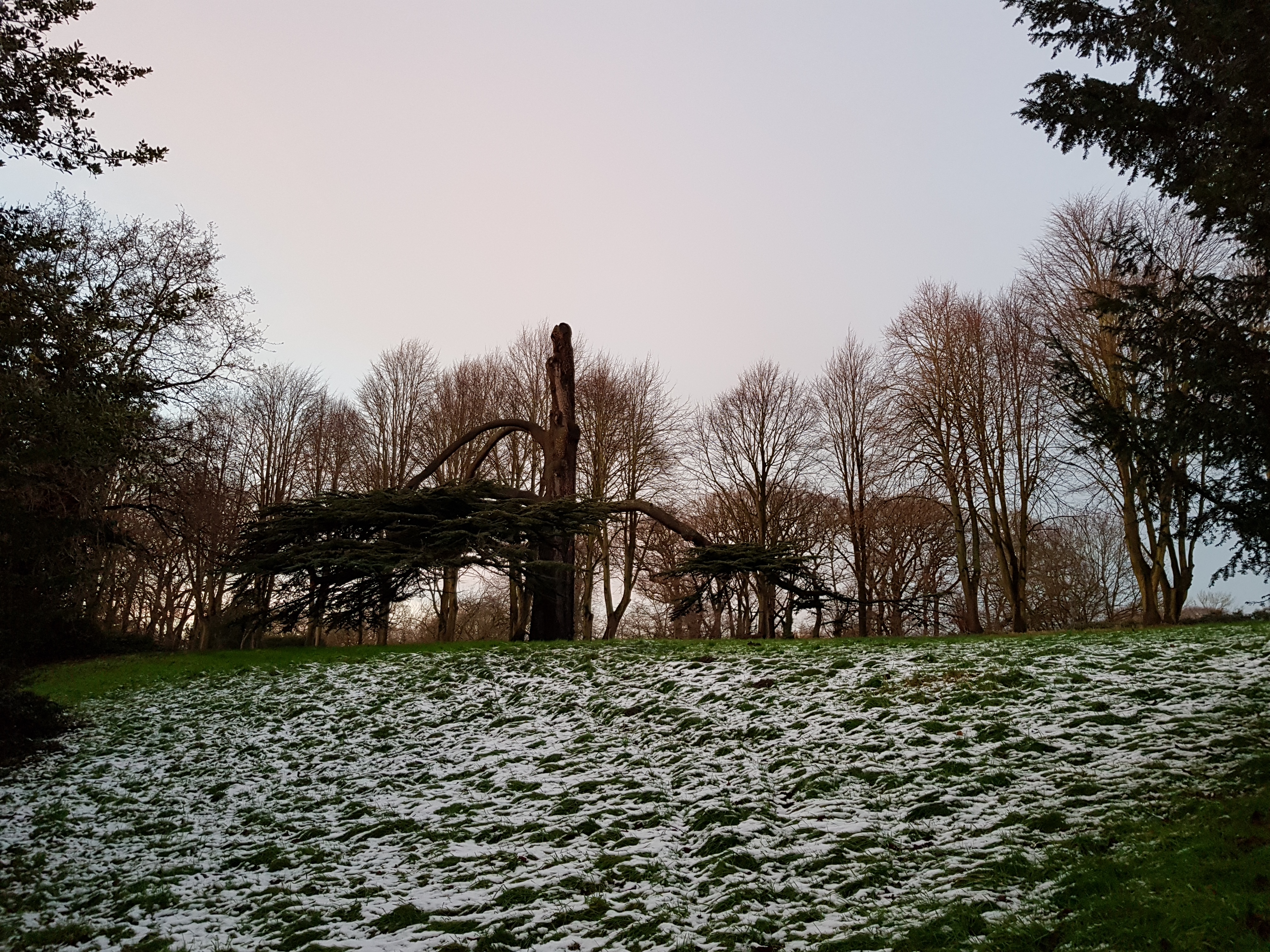
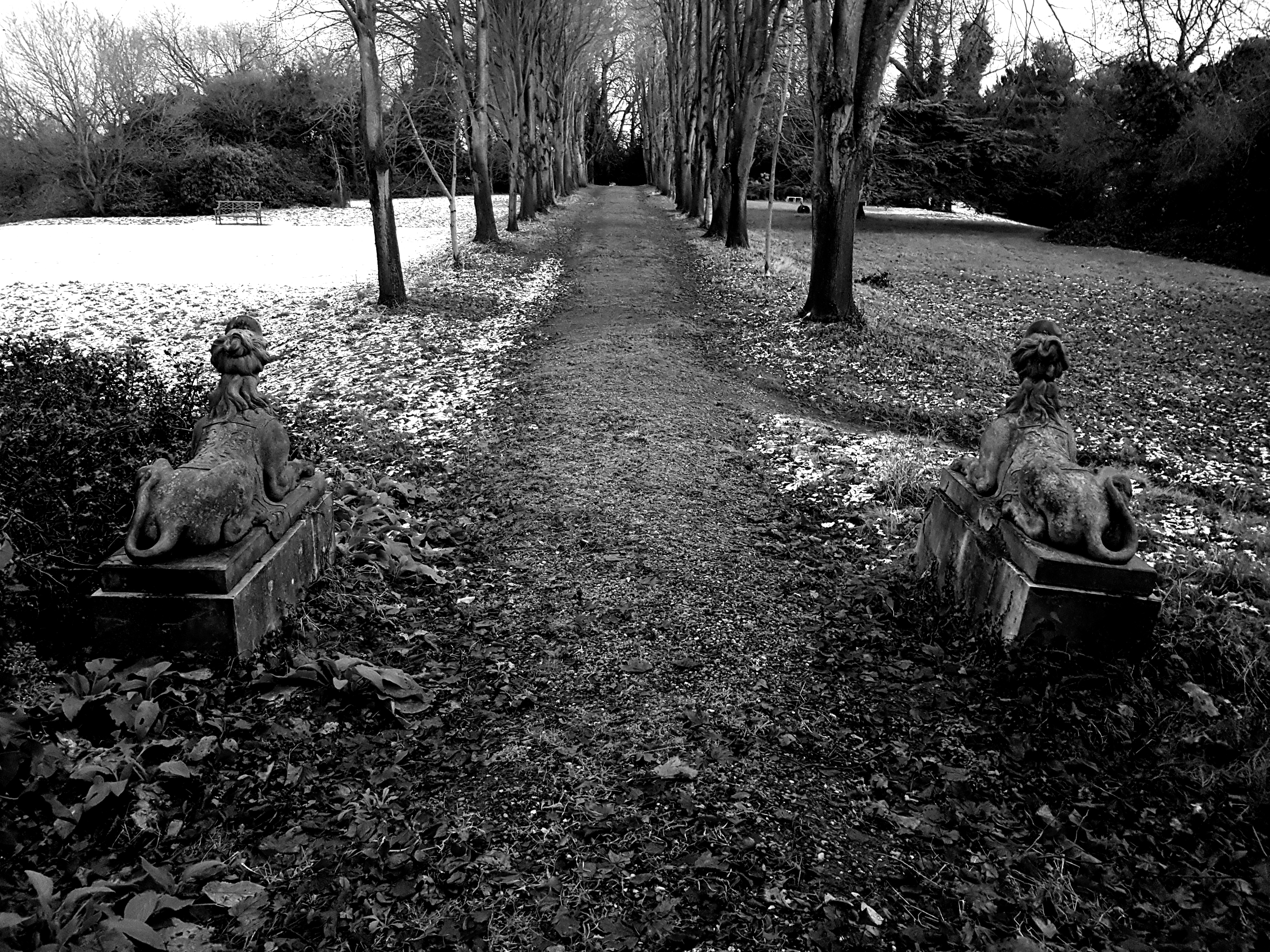
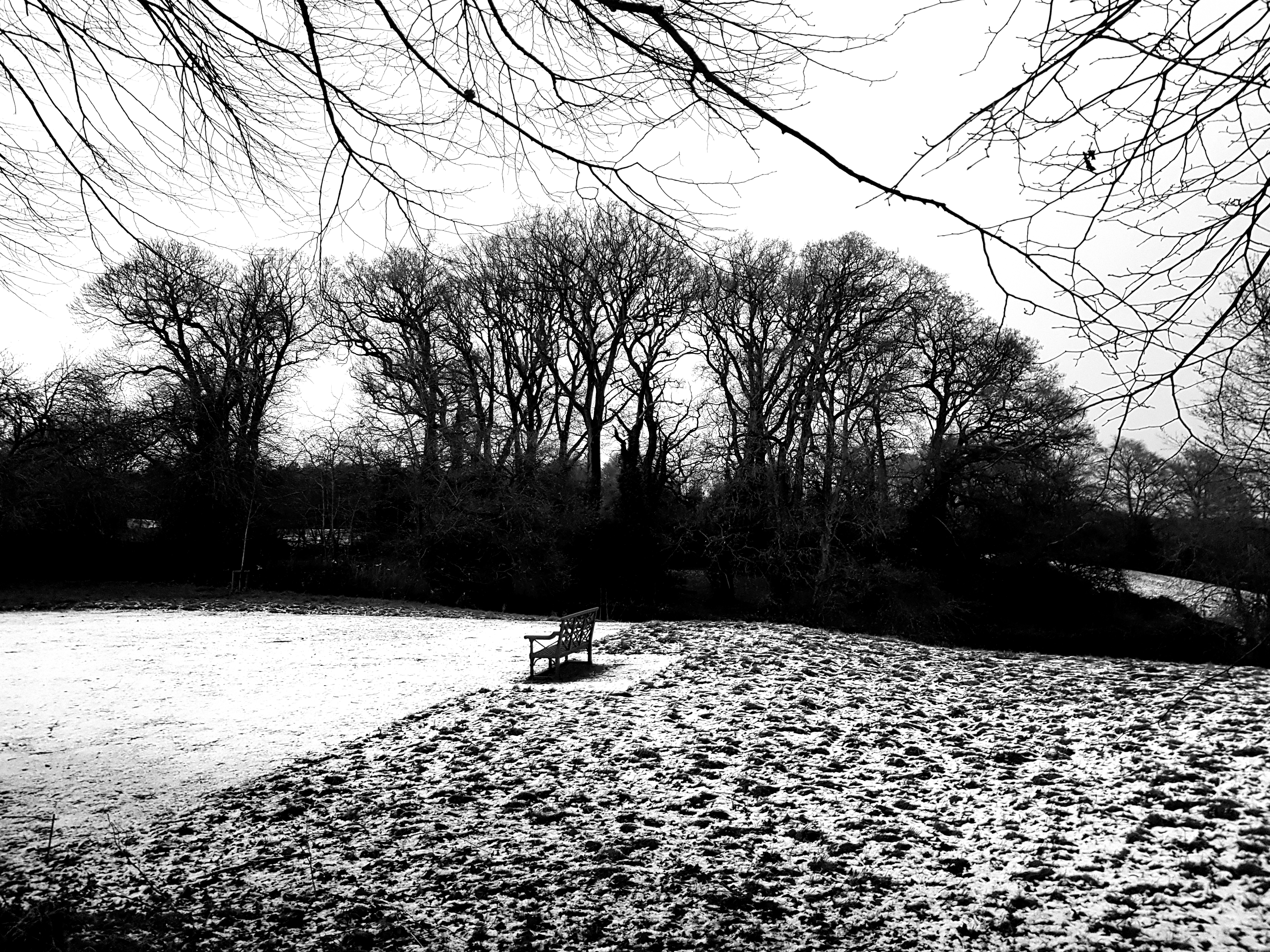
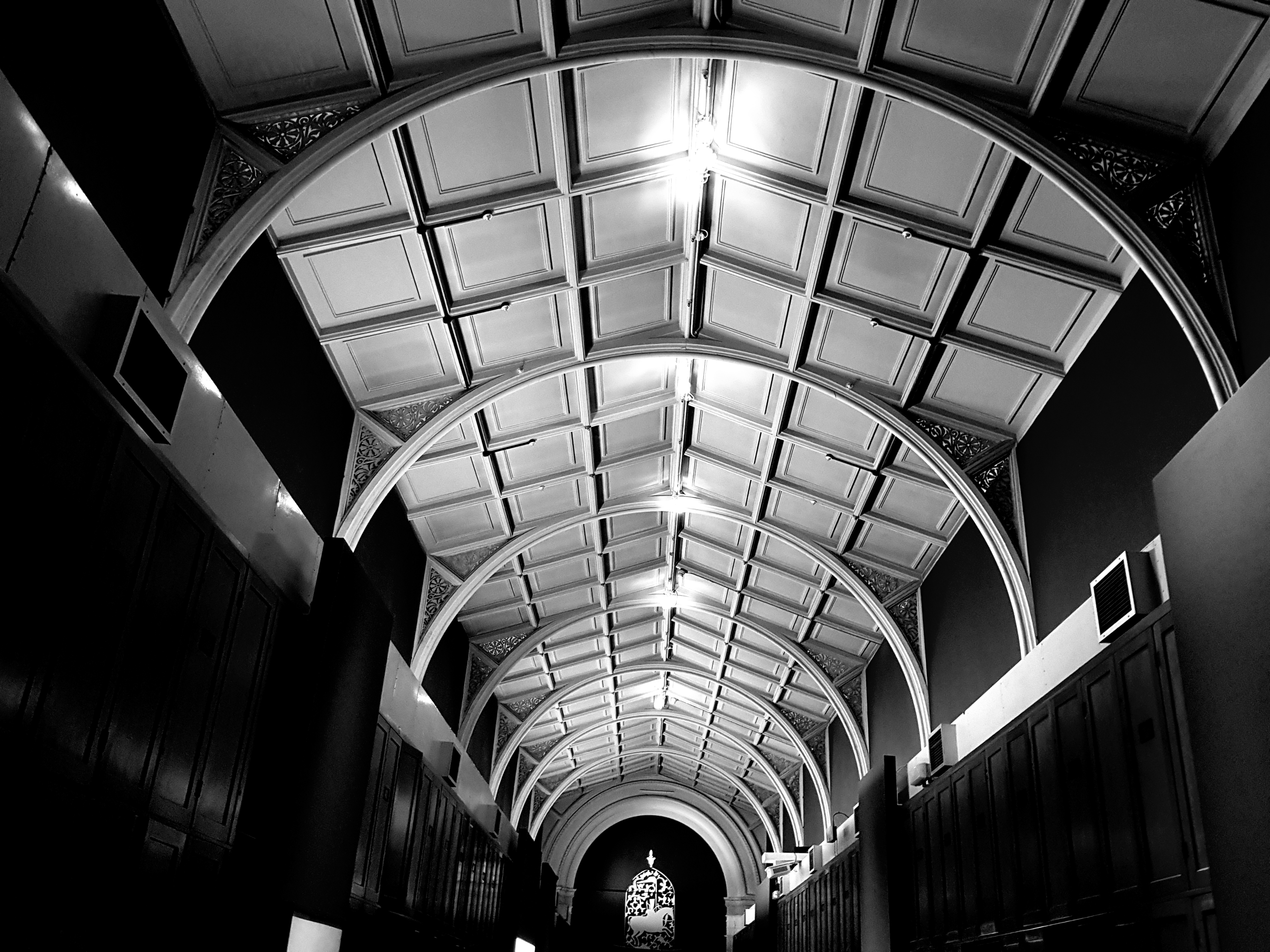
I was incredibly pleased to have been invited to visit what remains of Fonthill Abbey. But less survives than I remembered: only the original north end of the Abbey which once contained the so-called Sanctuary and Oratory, with a State Bedroom and billiard room above, and originally reached from the main part of the Abbey by way of a 312 foot long Vaulted Corridor. It’s hard now to get a sense of its original ephemeral theatricality and the way that the Oratory was originally reached down a long crimson carpet with ‘the organ sending its deep prolonged music along the perspective of the immense galleries’. But one can at least still look out on the surrounding parkland, with avenues of trees planted by Beckford and Bitham Lake where Beckford liked to swim every day:-

Standard

Bato Hiroshige Museum of Art

Reference to the Bato Hiroshige Museum of Art yesterday reminded me that, when I was clearing my study over the summer, I had come across some packets of photographs which I had taken on my trip to Japan in the last days of analogue and never mounted in my photograph albums, including some photographs of the long and low, wooden structure of the Bato Hiroshige Museum of Art which is so beautifully crafted and which I now reproduce:-

Standard

Above the Clouds

Tonight was the second book launch that I’ve attended this week about a view of the world seen from above. Earlier in the week I attended, and even spoke at, the launch of a book of photographs all of which have been taken out of the window of an aeroplane by Scott Mead, who was trained as a photographer at Harvard, taking classes with William Eggleston, then spent twenty years as a merchant banker with Goldman Sachs, and then took up photography again, using the many air miles he must have accumulated to good effect by documenting the hypnotic and transcendent quality of viewing the rays of the sun and the nature of the sky above the clouds.

Standard

Ballooning

I went to the inaugural lecture by Professor Clare Brant, which simutaneously celebrated the publication of her book on Balloon Madness:  Flights of Imagination in Britain, 1783-1786.   It looked like being, as she herself confessed, a very narrow subject – a short-lived craze in late eighteenth-century cross-channel culture.   But she herself brought out its remarkable poetic and imaginative ramifications as it became possible for the first time to see the world from above.   She ended the lecture with the symbolism of the balloon in the history of the BBC, beginning with the original icon of transmission in the 1930s which was a pure circle through the multiple opening shots in the 1960s which showed the world seen from above to coincide with the first views of the earth from the moon through to more recent images of a red balloon travelling over the English countryside.

Standard

W.G. Sebald

I called in today on the W.G. Sebald exhibition in the basement rooms of King’s College, London, which includes a small selection of the extensive archive of his photographs kept in the archive of the Museum of Modern Literature in Marbach where his work is shown in vitrines designed by David Chipperfield. I was interested by the way in which Sebald was influenced by a book published by Solly Zuckerman in 1978 called From Apes to Warlords in which he referred to an article Zuckerman had planned to write for Horizon magazine ‘On the Natural History of Destruction’. There is the mimeograph of an impeccably polite letter which Sebald wrote to Zuckerman, who lived in north Norfolk outside Burnham Market, asking if he could come and consult him about the unexpected silence of post-war German writers about the experience of British wartime bombing (I was reminded of a time when we stood illegally above Dresden in 1987 next to a rock which was inscribed DESTROYED BY THE ENEMY BARBARIANS OF THE WEST). Besides work influenced by Sebald, including chalk slates by Tacita Dean specially commissioned for the exhibition and work by Tess Jaray, who knew Sebald and produced screenprints inspired by quotations from his work (she is herself of German origin), there is an unexpectedly moving screening of Sebald reading from Austerlitz at the Y in New York not long before his death, as one would expect, beautifully impassive, answering questions from the audience with studied politesse, particularly one in which he describes how he stored up photographs and used them experimentally to slow down and break up the reader’s response to his fiction.

Standard

Japanese Art Museums

Nine years ago, I was invited by the Japan Foundation to visit, at my request, smaller art museums outside Tokyo, as I had been very impressed by a visit in 1994 to the Koriyama City Museum of Art, designed by Takahiko Yanagisawa. But I found it very hard to find out about them, other than Kengo Kuma’s very beautiful Bato Hiroshige Museum of Art in Nakagawa, north of Tokyo, pictures of which I had seen as part of his entry to the competition for the Hepworth Wakefield Museum, and SANAA’s Museum of the Twenty First Century in Kanazawa, which had, rightly, a great deal of publicity in the west for its very lightweight use of interlinked glass pavilions. So, I was both pleased and faintly depressed to be sent a small booklet recently published by the Japanese Tourism Organisation, called Japan: Traveling through Art, Design and Architecture, which includes not just the Museum of the Twenty First Century and the Miho Museum, designed by I.M. Pei up in the mountains near Kyoto, which one can’t visit in the winter months, but a host of museums, small and large, many designed by major international architects, from the Aomori Museum of Art, designed by Jun Aoki, in the north to the Kirisima Open-Air Museum, designed by Kunihiko Hayakawa, in the south: hundreds of new museums which I would now like to visit, but probably can’t; and it doesn’t even include Hiroshi Sugimoto’s Enoura Observatory, which opens this autumn.

Standard

Robert Elms

I was interviewed today at great and surprising length by Robert Elms on his eponymous morning radio show. I would provide the link, but don’t know how to, so if by any chance you are interested in listening you will need to google the Robert Elms show and click on the relevant page on BBC iPlayer. He starts with a wide-ranging discussion of aspects of East London and then goes on to ask a series of prescripted questions – what’s my favourite building, what’s my most hated one, what’s my favourite fictional London character (that’s not so straightforward) and what moment in history I would most like to be transported to (1768, of course). I was impressed by how incredibly knowledgeable he is about all aspects of London, but then he’s been asking the same questions for twenty three years. He told me at the end that at any moment in the programme, about 250,000 people might be listening, so I hope one in a thousand might go out and buy my book.

PS It’s on http://www.bbc.co.uk/programmes/p001d7kb

Standard

We went to see Tatlin’s Tower today, a version of which was designed by Jeremy Dixon for the Royal Academy’s exhibition, Building The Revolution, in 2011, based on the original drawings (he had previously made one nearly forty years previously for an exhibition Art and Revolution at the Hayward Gallery).   After the exhibition, it needed a home and has now been re-erected next door to Norman Foster’s Sainsbury Wing, but just out of sight of it, and looks suitably magnificent, particularly when lit pink in the night:-

Tatlin’s Tower

Aside

Pevsner does not mention the formal walled garden at Houghton which it surely should as an extraordinarily ambitious example of a recent formal garden, designed by Julian and Isabel Bannerman, complete with a monumental wooden fruit cage:-

Much clipped topiary:-

The Rustic Temple with antlers in the pediment:-

And good formal planting with golden hornet crab apples:-

The Houghton Garden

Aside