
We went to Monteverdi’s Orfeo at the Roundhouse last night. I realised how shamefully ignorant I am of Monteverdi’s music, so much earlier than the majority of the classical repertory, hovering between the sacred and the secular, the sacramental and theatre, working in Mantua, then Venice, and writing Orfeo in 1607, before Shakespeare’s Tempest, for the Carnival in Mantua. There was a huge audience for it. It was intense, highly dramatic, Orfeo ending up dangling from a trapeze, and brilliantly performed.
Tag Archives: England
Strawberry Hill
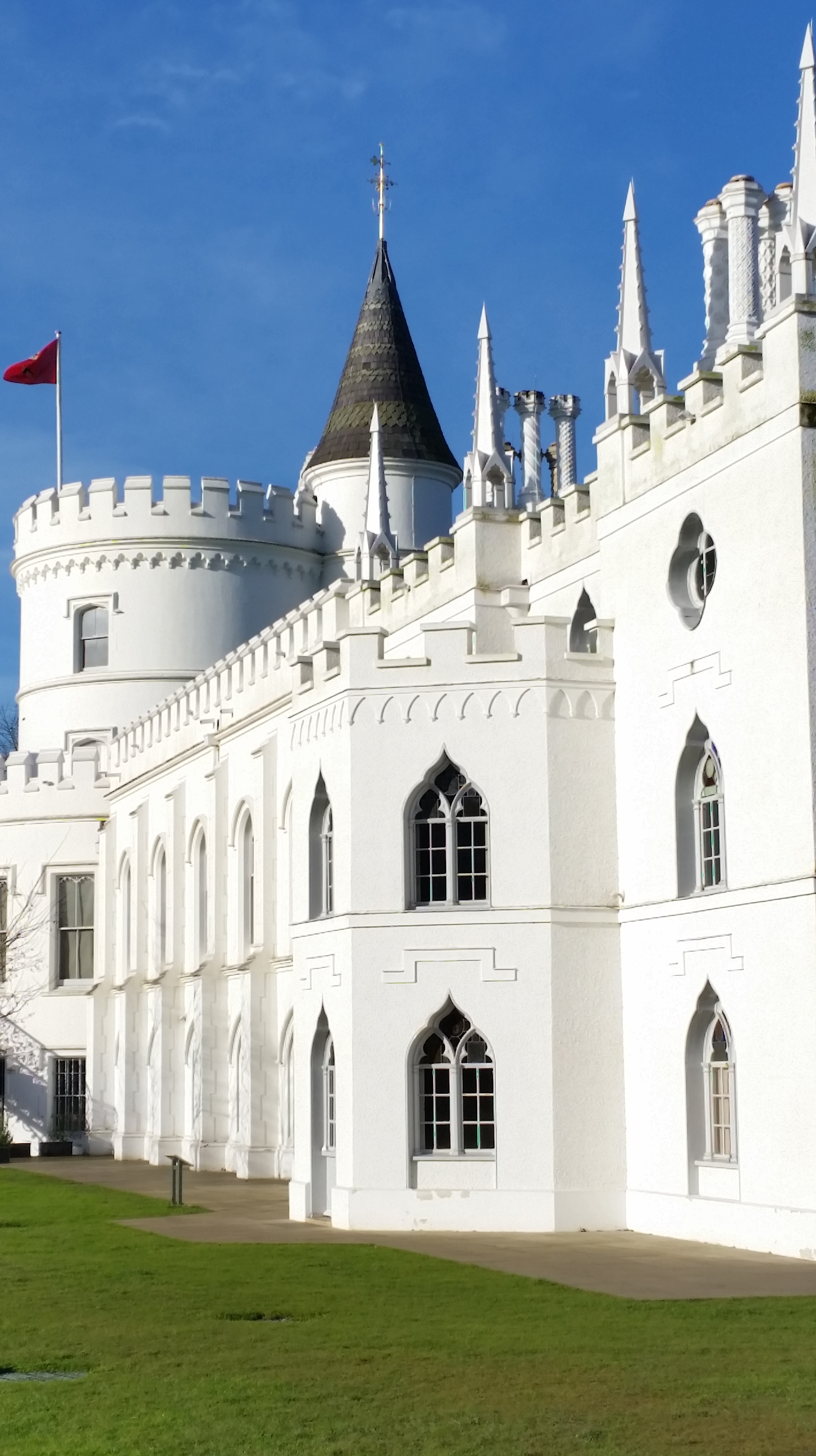
I had arranged to come out early to Strawberry Hill, Horace Walpole’s suburban retreat by the Thames in Twickenham, which he bought in 1747 from Mrs. Chenevix, the toy seller, and gradually added to and gothicised during the course of his life with the help of his friend, John Chute, whom he had met on the Grand Tour. The building history is immensely complicated, beginning with a small house of the 1690s which was redecorated, stained glass inserted in the windows and flock wallpaper by Thomas Bromwich, some of which survives in a cupboard. In 1753, a grand gothic library was added, based on Chute’s drawings of Old St. Paul’s, together with a gothic staircase, designed by Richard Bentley, son of the classical scholar. Then, Walpole’s ideas got grander and he added a gallery, based on Henry VII’s chapel in Westminster Abbey, and the Tribune, which was his cabinet of curiosities. It’s a fascinating combination of collecting, antiquarianism and slightly more playful ancestor worship.
This is the exterior:-
Herefordshire Trees
As readers of my blog will know, I have developed an interest in trees (as Roy Strong points out, I know nothing about gardens). Here are some Herefordshire examples:-

The Laskett
It’s a long time since I’ve been to the Laskett, Roy Strong’s garden, made out of fields in rural Herefordshire. For most of yesterday, it was misty, but at the end of the day the sun came out, illuminating the pleached avenue and highly compartmentalised different sections of the garden, much of which is wrapped away for winter:-

Sir Roy Strong
Some time ago, I was asked if I might be willing to interview Sir Roy Strong for the Victoria and Albert Museum’s oral history project about his time as Director, which lasted from 1 January 1974 to 1987. Since he gave me my first job in September 1982, I agreed with enthusiasm. So, it was that I found myself travelling on the slow train to Hereford armed with a picnic and stout tape recorder. It was hard work, not so much for me as for Roy: the task of remembering the évènements of the mid-1970s, the three-day week, the Heath government, the introduction of compulsory museum charges, the way he was treated by the Keepers, and the closure of the Circulation Department.

Rubens
Today has been Rubens, Rubens, Rubens. Our exhibition is about vastly much more than just Rubens, but is fundamentally about how to get contemporary audiences to engage with Rubens’s stature, not just in his own lifetime across Europe, but his influence on eighteenth-century artists, nineteenth-century artists, and, in the room which has been specially curated by Jenny Saville and added to the exhibition since it was shown in BOZAR in Brussels, on contemporary artists, including Picasso and Sarah Lucas. I think the exhibition looks – but then, of course, I’m prejudiced – pretty wonderful in our big galleries (wall colours chosen by Eric Pearson), which enable the thematic system of organisation to work quite clearly: love, sex, war and poetry; he did them all.
Stephen Cox (1)
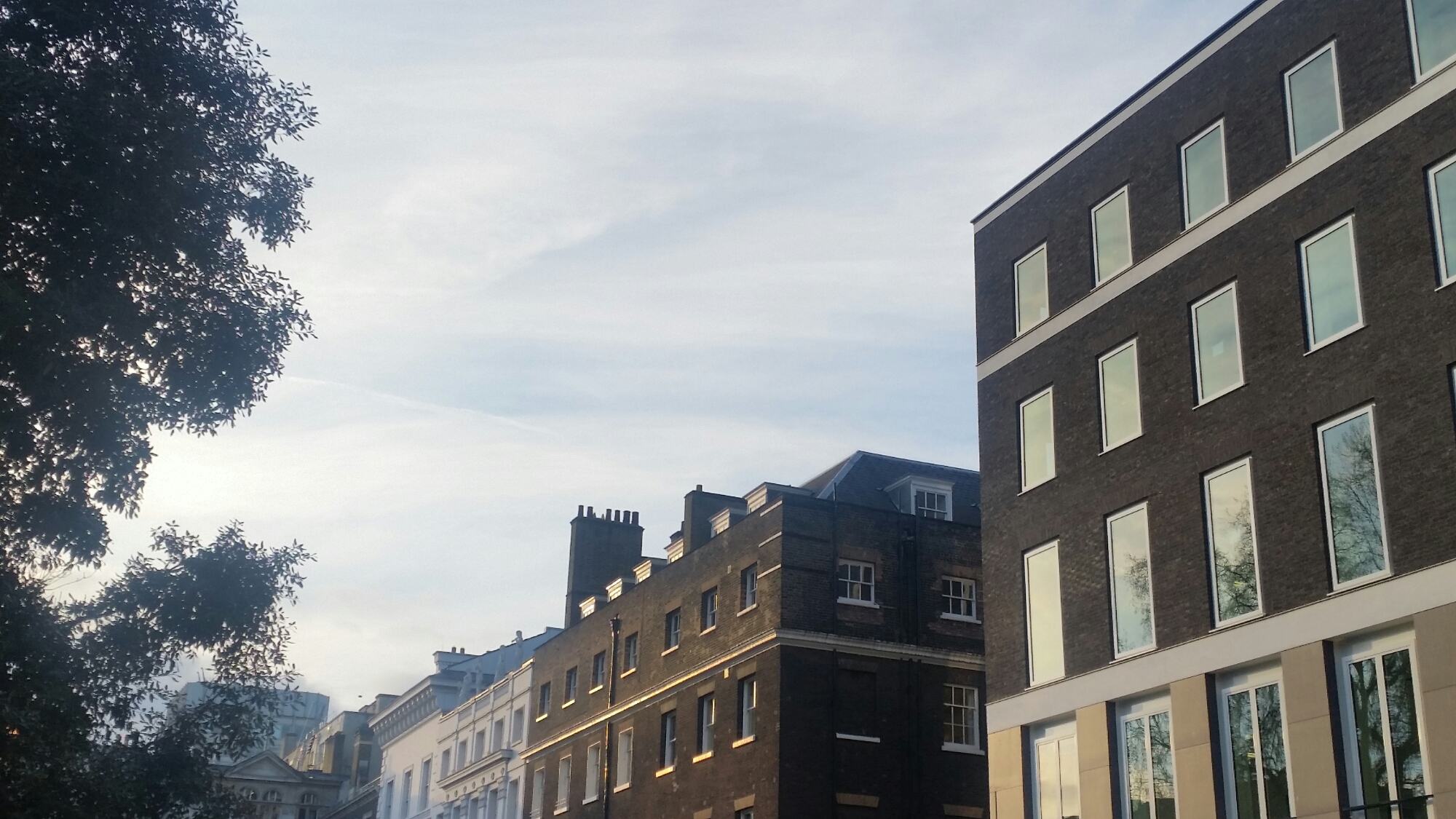
I was asked to come to the unveiling of a new work by Stephen Cox in Apple Tree Yard, where Lutyens worked on the plans for New Delhi and Wheeler’s used to be. It’s at the back of a new building by Eric Parry, with whom Cox has worked before. I realised that the façade of the new building is one I had recently admired in walking across St. James’s Square: quite plain, unornamented, faced in smooth black brick at the upper levels and black porphyry on the piano nobile below, following the rhythms of adjacent buildings, with an effective, semi-classical, big basalt office building behind.
This is the building from St. James’s Square:-
John Bolding & Sons
I came out of Bond Street underground station one morning last week and noticed the elaborate terracotta sign signalling the premises of John Bolding & Sons, of Grosvenor Works in Davies Street. It was a company founded in 1822 in South Molton Lane, a manufacturer and supplier, as the sign says, of sanitary appliances – the highest quality basins and baths to the residents of Mayfair and beyond, made often in brass and technologically sophisticated. It bought out its rival, Thomas Crapper, in 1966, only to go bust three years later:-

The Upholsterer’s Room
We had dinner tonight in the Upholsterer’s Room at the back of A.V.Fowlds, a café in Addington Square off the Walworth Road. It was cold, lit by braziers, but magnificently nineteenth century, with a lorry parked inside and thirty people squished in to eat:-

Bermondsey (2)
We went on an expedition to see an exhibition of knitting at the Fashion and Textile Museum in Bermondsey High Street. I had never been to the museum which has an idiosyncratic coloured façade by the Mexican architect Ricardo Legorreta, but which is presumably as much an expression of its former owner, Zandra Rhodes, who established the museum:-

 | Charles | Saumarez | Smith |
You must be logged in to post a comment.