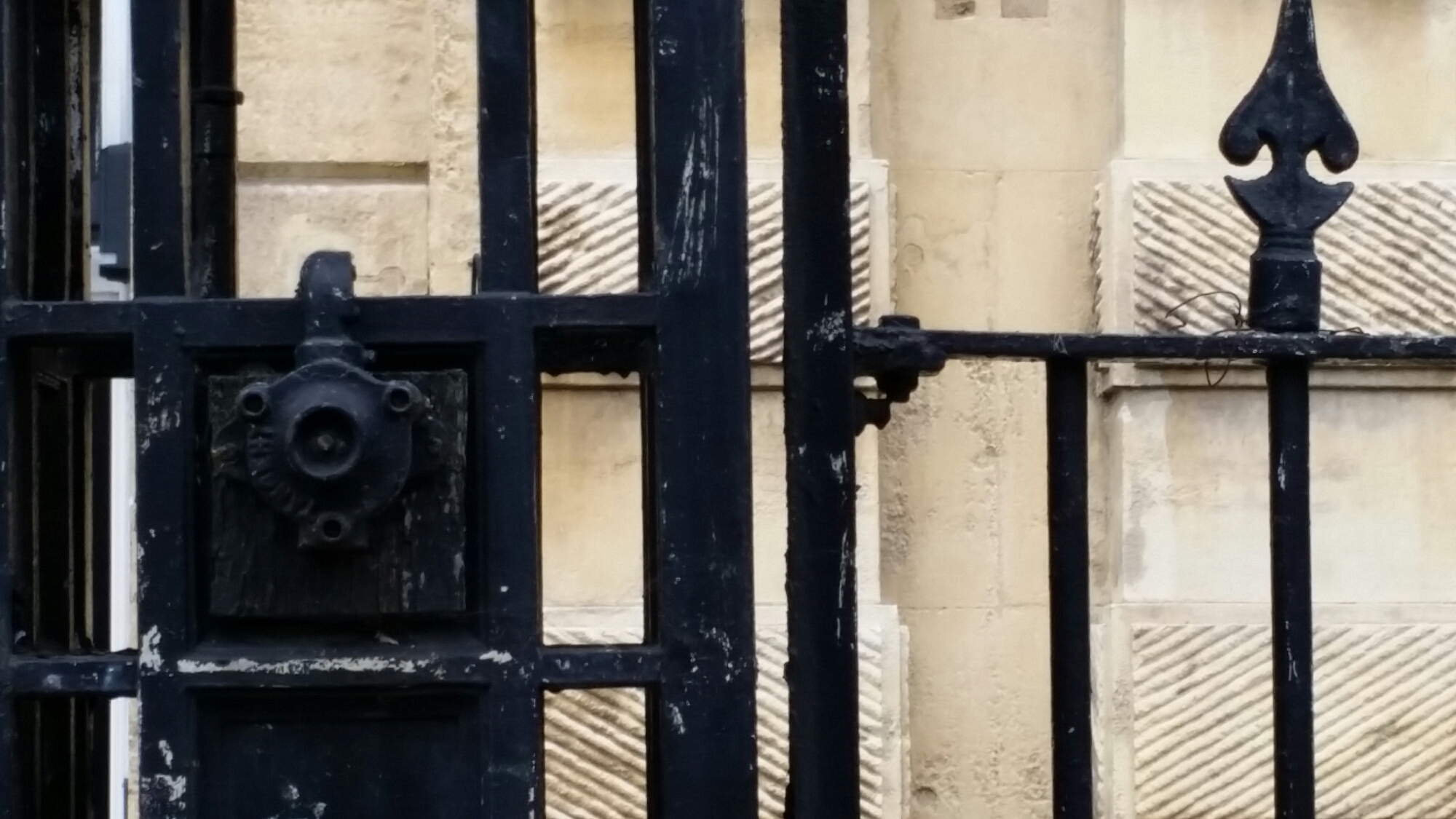
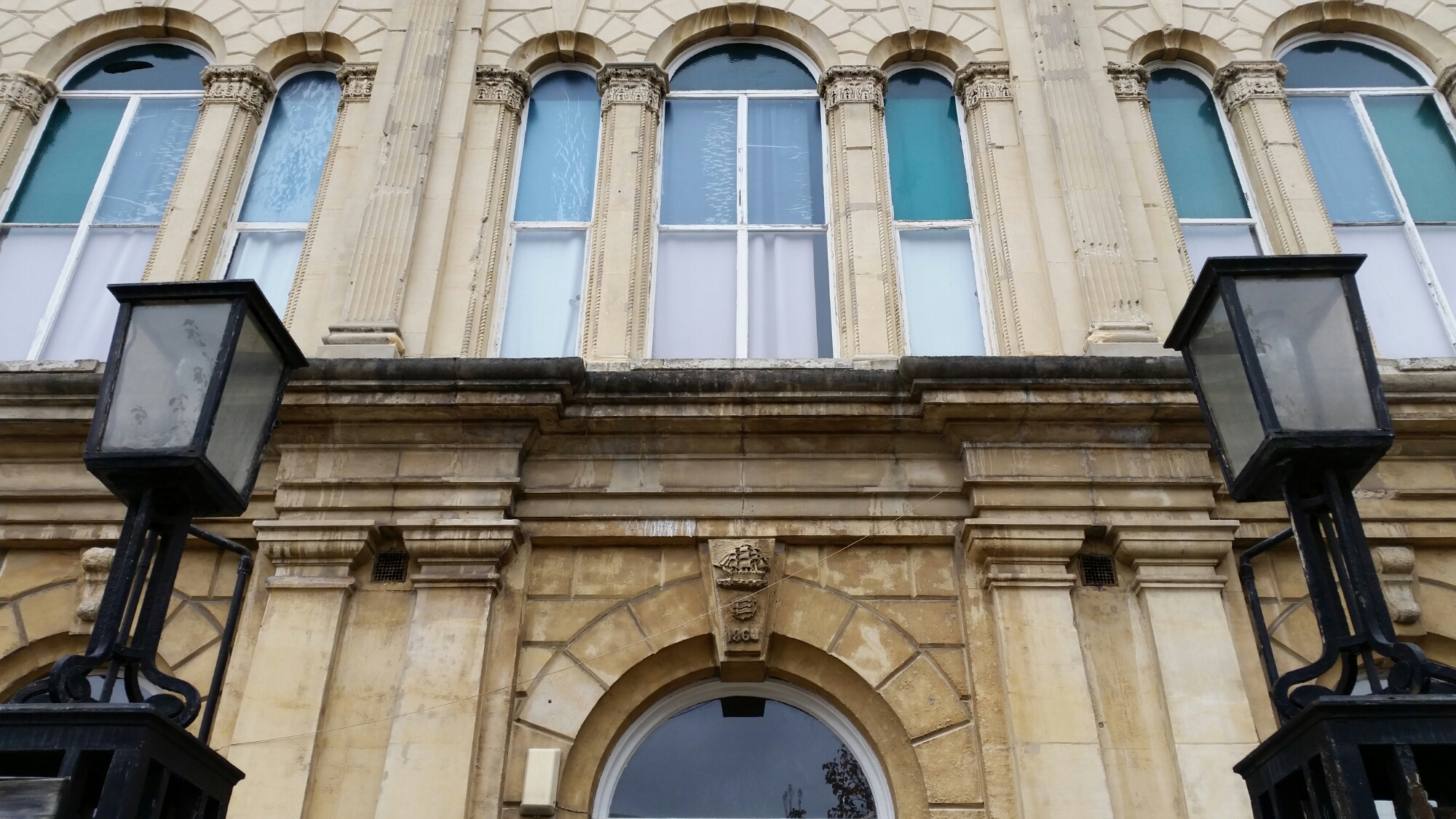
At the weekend I walked past Bancroft Road Public Library where a long time ago I used to do research on local history. It’s a fine building, designed in the 1860s as a Vestry Hall and converted into a public library with the help of funding from Carnegie. But it’s now looking run down and, like all the libraries in Tower Hamlets, has been at risk of sale (our old library in Limehouse has been sold as a restaurant). Let’s hope it survives:
Tag Archives: England
Young Masters (2)
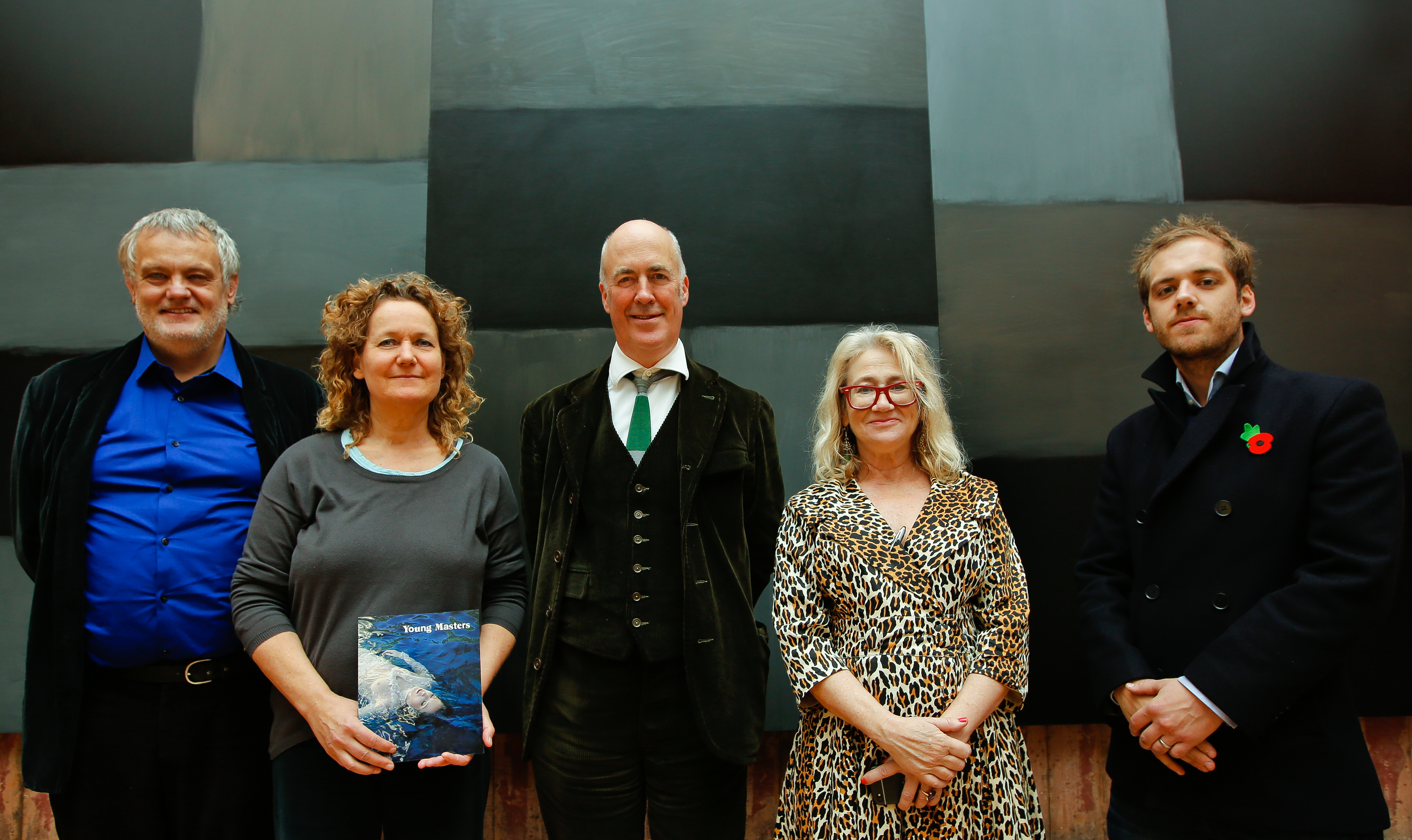
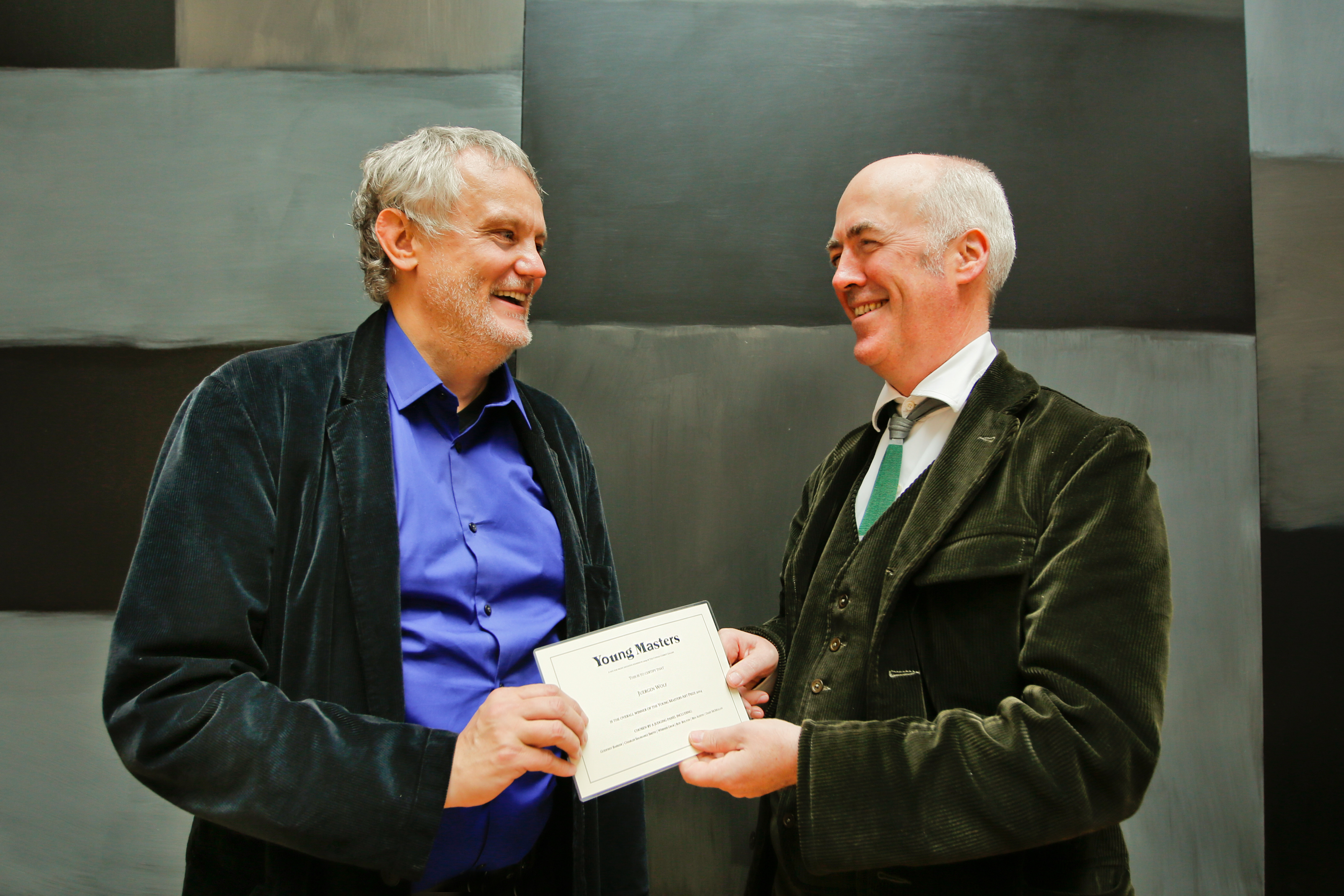
I spent the evening at the prize giving for the Young Masters art prize, which was established some years ago by the Cynthia Corbett Gallery and shows work at Lloyds Club in the City and Sphinx Fine Art in Kensington Church Street. It was an impressively international gathering. The first prize went to Juergen Wolf, a German artist and former Catholic priest. The equal second prizes went to Saskia Boelsums, a Dutch artist, for delicate and intense still lives, and to Marwane Pallas, a French artist, for works of photographic violence. All were influenced (but not dominated) by Old Master painting.
Constable: The Making of a Master
I went to see the V&A’s Constable exhibition. Its premise is that he was not so much a naturalistic painter, as he has traditionally been regarded, but more someone who based his practice on the close study and imitation of old master paintings. It is certainly true that he was deeply influenced by George Beaumont, the painter and landed gentleman whose collection formed the basis of the National Gallery (and who incidentally gave the Michelangelo Tondo to the Royal Academy). At the Royal Academy Schools, he would have been encouraged to study old master prints in the library and he also collected prints voraciously. But he also reacted to these disciplines by undertaking what he described as ‘pure and unaffected representations from nature’. If some of his skills were learned by copying, as is very clearly demonstrated by the exhibition, this doesn’t negate the incredible freshness of his observations from nature, his drawings of clouds and watercolours of Old Sarum.
Anselm Kiefer (5)
I learn something every day about our Anselm Kiefer exhibition. I particularly learn something when taken round by Tim Marlow, our Director of Artistic Programmes, who knows so much about Kiefer from many years working with him at White Cube. He mentioned two key literary sources for Kiefer’s mythographic ideas. One is the writings of Robert Fludd, the early seventeenth-century Rosicrucian and cosmologist, who believed in a close connection between plants and the stars. The second is the poetry of Paul Celan, the Romanian-born, German-speaking Jewish poet and translator who settled in Paris after the war and whose best known work is Todesfuge.
Sir Ronald Grierson
I have only just heard the sad news of the death of Sir Ronald Grierson, Ronnie as he was always known, although I have only just learned that this was not his original name, but was born Rolf Griessmann in Bamberg and only changed his name after the war with the help of a telephone directory. He was an active Trustee of the Royal Academy to the end, missing the last meeting only because he went to the wrong building. A formidable international networker, I never knew if he would be in Sweden, Liechtenstein or Beijing. I once made the mistake of boasting that I couldn’t meet him because I was was spending the weekend at a conference in Hong Kong. He mentioned that he was thinking of coming too on his way back from Beijing. He did. We travelled back together, the only difference being that he had a specially designated member of staff to escort him on to the aircraft and always had the front seat, on British Airways as in the rest of life.
Edmund de Waal
I spent a lot of the day reading the new monograph about the work of Edmund de Waal with its long and informative text by Emma Crichton-Miller, half biography and half about the evolution of his ideas. Edmund’s father told me to pay close attention to the picture of Edmund as a youth, presumably as a reminder that he is a child of the manse. The book taught me a new word haecceity, as in ‘I’ve always been pulled between wanting to show in a Mies van der Rohe space and actually really wanting, or getting very interested in and exercised by, the sheer haecceity, or quiddity of places’ (haecceitas=thisness). Anyway, it made me look again at, and appreciate, our single objects by him:
Commercial Road
I’ve noticed that they’ve let the shops in the Commercial Road run down. It used to be where the local gun shop was, and Callegari’s Restaurant, once a roadside café is now derelict. One could buy fish from a fishmongers which was open to all the exhaust fumes of the main road, and bread round the corner at Walls. But now the whole block is vacant, awaiting redevelopment. This was Callegari’s:
York Square
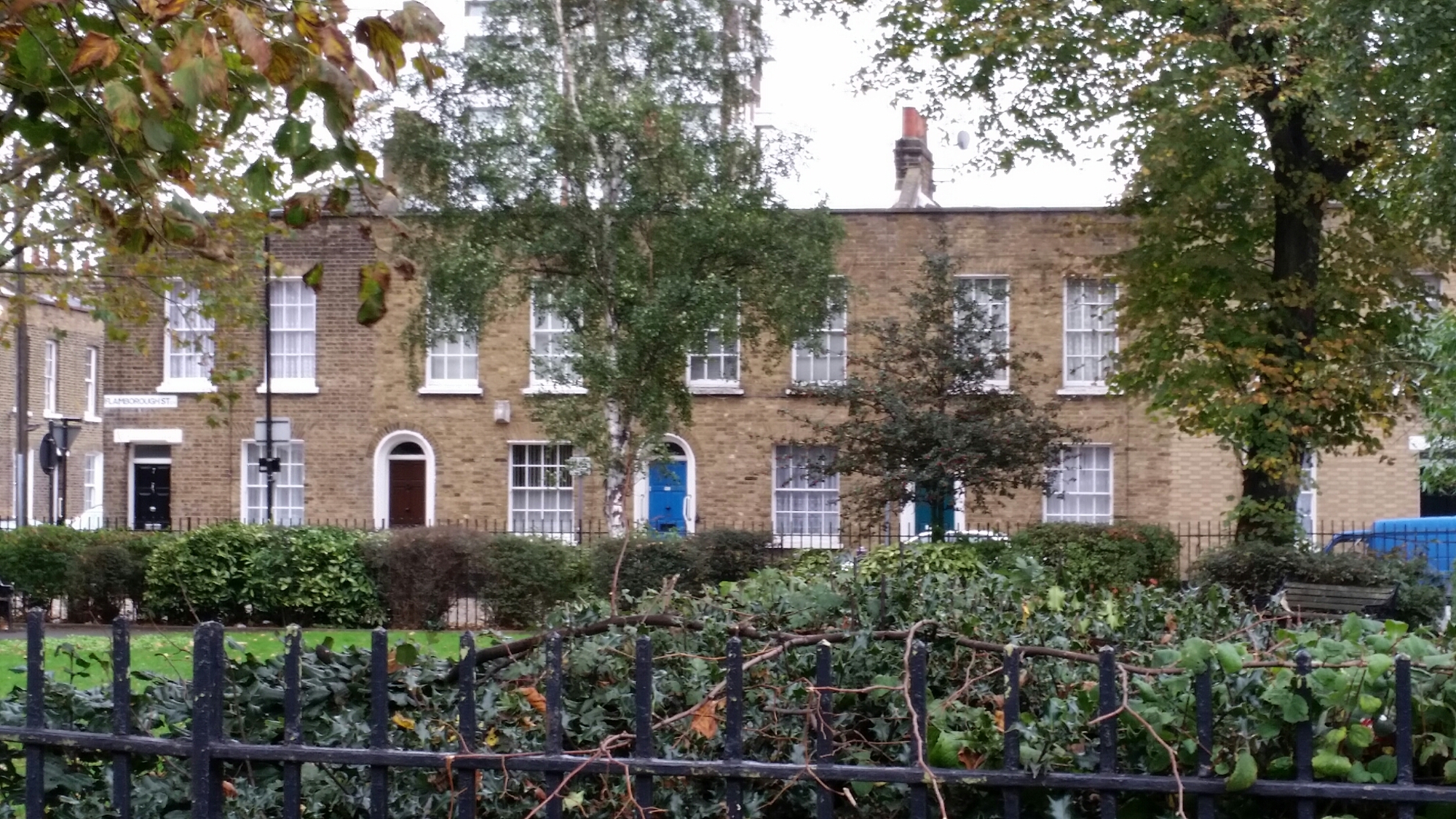
It’s a while since I’ve been on my Sunday morning run (well, it’s no longer really a run, but we like to call it that), which always begins in York Square, a neat East End Square, built by the Mercers Company in the mid-1820s and taken over by the GLC in 1973, all of a piece apart from a certain amount of rebuilding after the war. There’s a campaign to save the Queen’s Head as a community resource and not be sold off as so many of the other local pubs have been. And they’re doing up Flamborough Walk, one of those secret, gated snickets which are such a feature of the East End.
This is York Square:
Spa Road
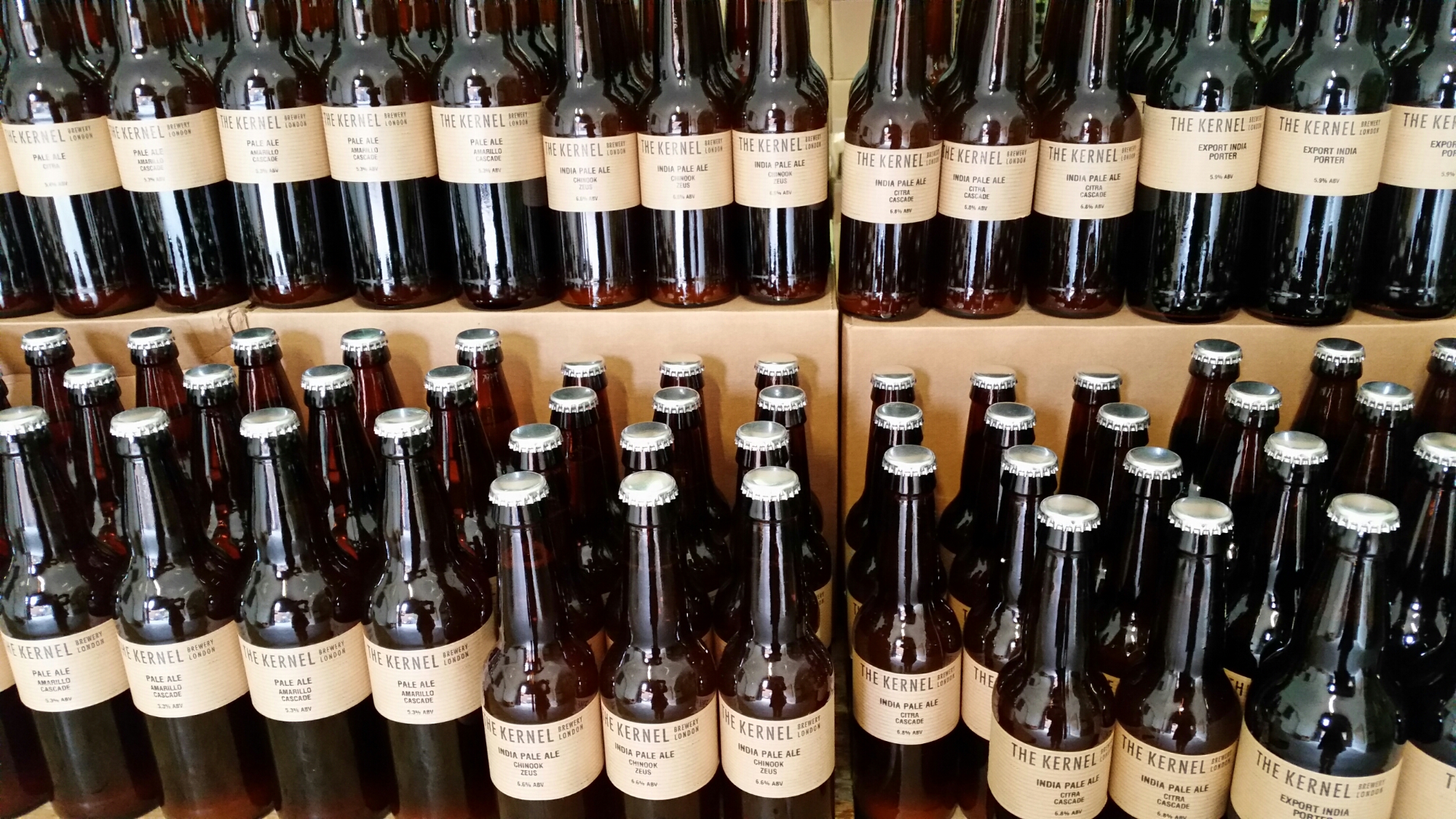
I’ve realised that going to markets must be a wintertime activity because it’s a long time since I’ve been south of the river to visit my favourite suppliers in Maltby Street. Today we met up with friends in Spa Terminus, through a gate under the railway bridge on Spa Road where one finds a food mecca, including Kernel Brewery for table beer, The Butchery next door, where they wrap everything in brown paper parcels and string, the Ham and Cheese Company for a whole jesus, coffee at the Coleman Coffee Roasters, Natoora for vegetables, and cheese at a branch of Neal’s Yard:
Fame and Friendship
I finally made it to the small exhibition Fame and Friendship: Pope, Roubiliac and the Portrait Bust which was first shown at the Yale Center for British Art and then upstairs at Waddesdon for most of the summer. It is based round the fact that Jacob Rothschild bought a bust of Pope which is the pair to a bust of Newton, both of them thought to have been commissioned by Lord Poulett when he bought Pope’s villa at Twickenham. Together they commemorate the ways in which Pope spread Newton’s fame. Malcolm Baker, the curator, has assembled related busts, including the terracotta by Roubiliac, to show the ways in which images of the hunchback poet (he had Pott’s disease) were created and disseminated round the country houses of England.
This is Rysbrack’s bust of Pope, done as a pair to a bust of Gibbs:
This is Lord Poulett’s (now Lord Rothschild’s) version:


You must be logged in to post a comment.