
Loyal readers of my blog will realise that I have gone uncharacteristically silent. This is not because I have gone AWOL, but because I am suffering from the usual post-holiday withdrawal symptoms: the return to London; the return to reality; the feeling that the Mile End Road is not quite as interesting as Route 8. London looks so crowded by comparison to the US, the cars so small, the streets so densely inhabited. But this feeling has never been stronger than when we returned from Newfoundland and looked out of the train window in horror at the streets of south London.
Tag Archives: England
Richard MacCormac (2)
I was really sad to hear this morning of Richard MacCormac’s death. I can now add what I didn’t like to say of his book launch at the Royal Academy a month or so ago that it was obvious then that he was approaching death, so thin he was, but a manifestation of the triumph of the human spirit that he was able to speak with such power and lack of self pity. I hugely admired him: someone who practised at the highest level as a modern architect, but maintained a deep interest in history and ideas, as evident in his Ruskin Library at Lancaster University, an early lottery project, and Blue Boar Court, a combination of graduate housing and a lecture theatre for Trinity College, Cambridge, which might be regarded as post-modern if it was not so obviously deeply thought and felt.
Wickham’s Department Store
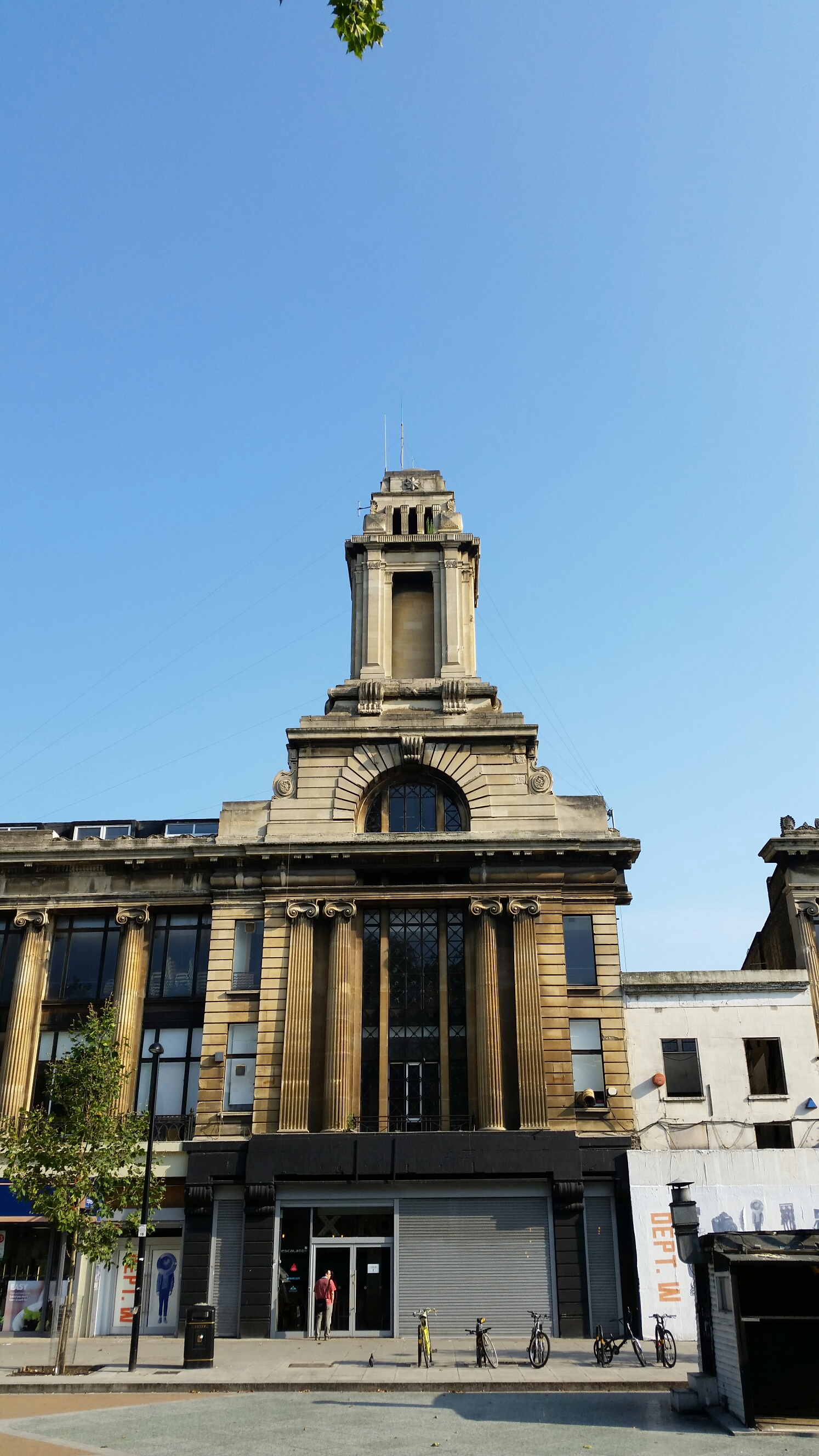
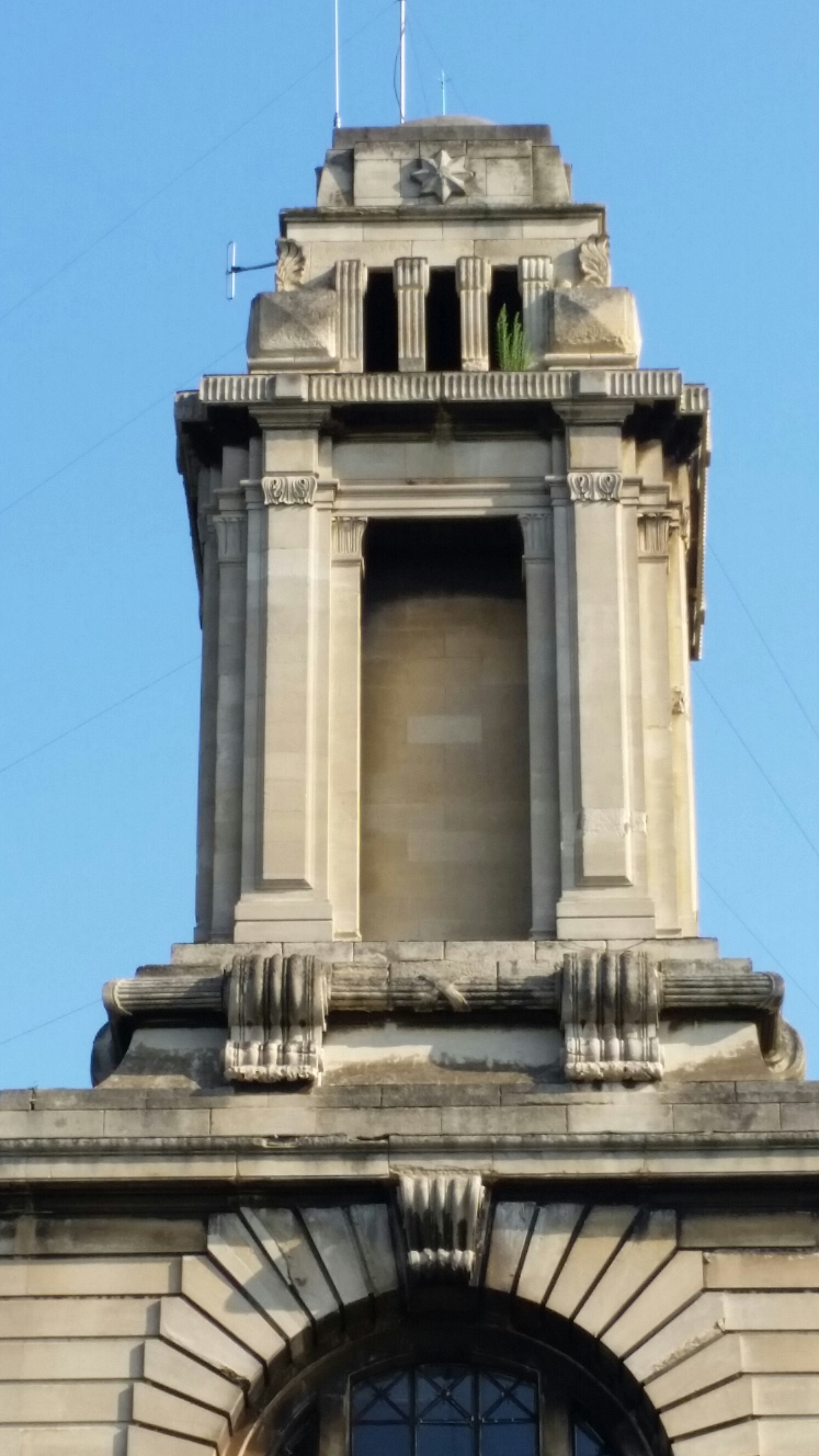
The old Wickham’s Department Store, designed as the ‘Selfridges of the East’ looks good in the early morning summer sun. The original owners gradually bought up a run of shops on the north side of the Mile End Road, all except a small family clockmakers called Spiegelhalter. When it came to construct a grand new building in 1927, the Spiegelhalters refused to sell, with the result that the grand Ionic façade is interrupted by a gap occupied by a single, now completely derelict shop. Ian Nairn loved it and described it as , ‘one of the best visual jokes in London, a perennial triumph for the little man, the bloke who won’t conform. May he stay there till the Bomb falls’.
Beaumont Hotel
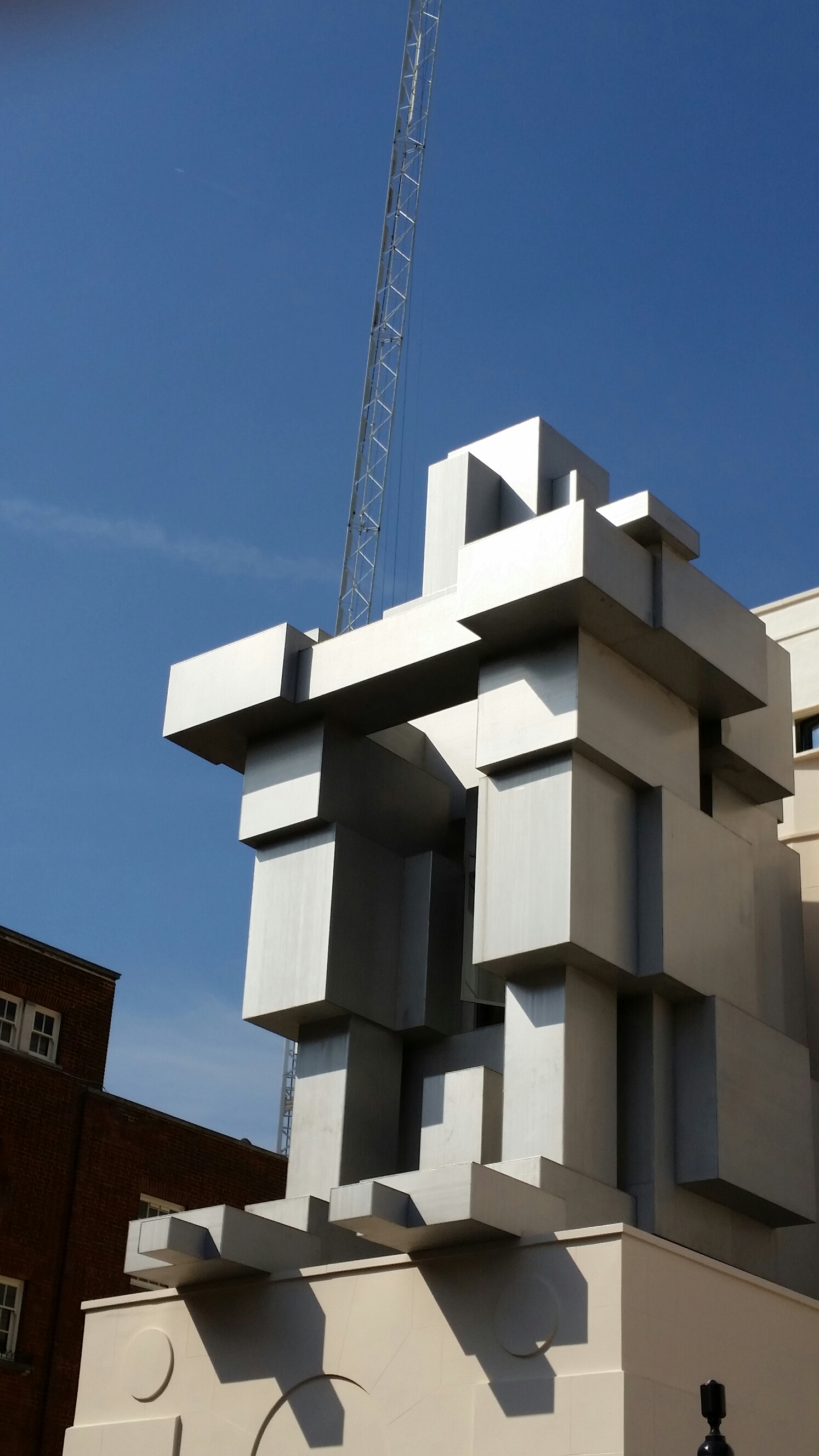
Jeremy King very sweetly gave me a preview of his new venture, the Beaumont Hotel, due to open some time in late September (it’s taking bookings from October 1st.). He has acquired a lease from the Grosvenor Estate on a building just south of Oxford Street which was used as the garage for Selfridges. He has renovated it as if it was a hotel from the 1920s, the era of prohibition. But it’s most prominent feature is a monumental sculpture by Antony Gormley which squats on the side of the hotel and doubles as a hotel bedroom. It’s an extraordinary room, high and dark, no television, made out of smoked oak, like spending a night inside a tomb.
This is the sculpture:

Tutankhamun
I went to the opening of the Discovering Tutankhamun exhibition at the Ashmolean, which shows the continuing lure of Egypt and the treasures of the Valley of the Kings. I was told as I approached the exhibition that it was only photographs. But what photographs ! They come from the Griffith Institute, which was founded in 1939 by Francis Llewellyn Griffith, the first Professor of Egyptology at Oxford, who married well, with a rich first wife and an even richer second one. They received all of Howard Carter’s papers, drawings, diaries and photographs, including 1,850 black and white negatives taken on a plate camera by Harry Burton, who was the official photographer to Carter’s expedition which led to the discovery of the tomb in November 1922. We stood on the staircase for the speeches, including one by the Earl of Carnarvon, and then had dinner on the terrace overlooking Oxford in temperatures which were only twenty degrees less than Luxor.

Alison Wilding RA (1)
I have been enjoying Alison Wilding’s Badapples, which I was given as a birthday present. They were apparently first shown in an exhibition about apples held in a gallery called Large Glass on the Caledonian Road. There’s something nicely tactile about being able to hold and feel a small bronze the size of two hands lying on the table:
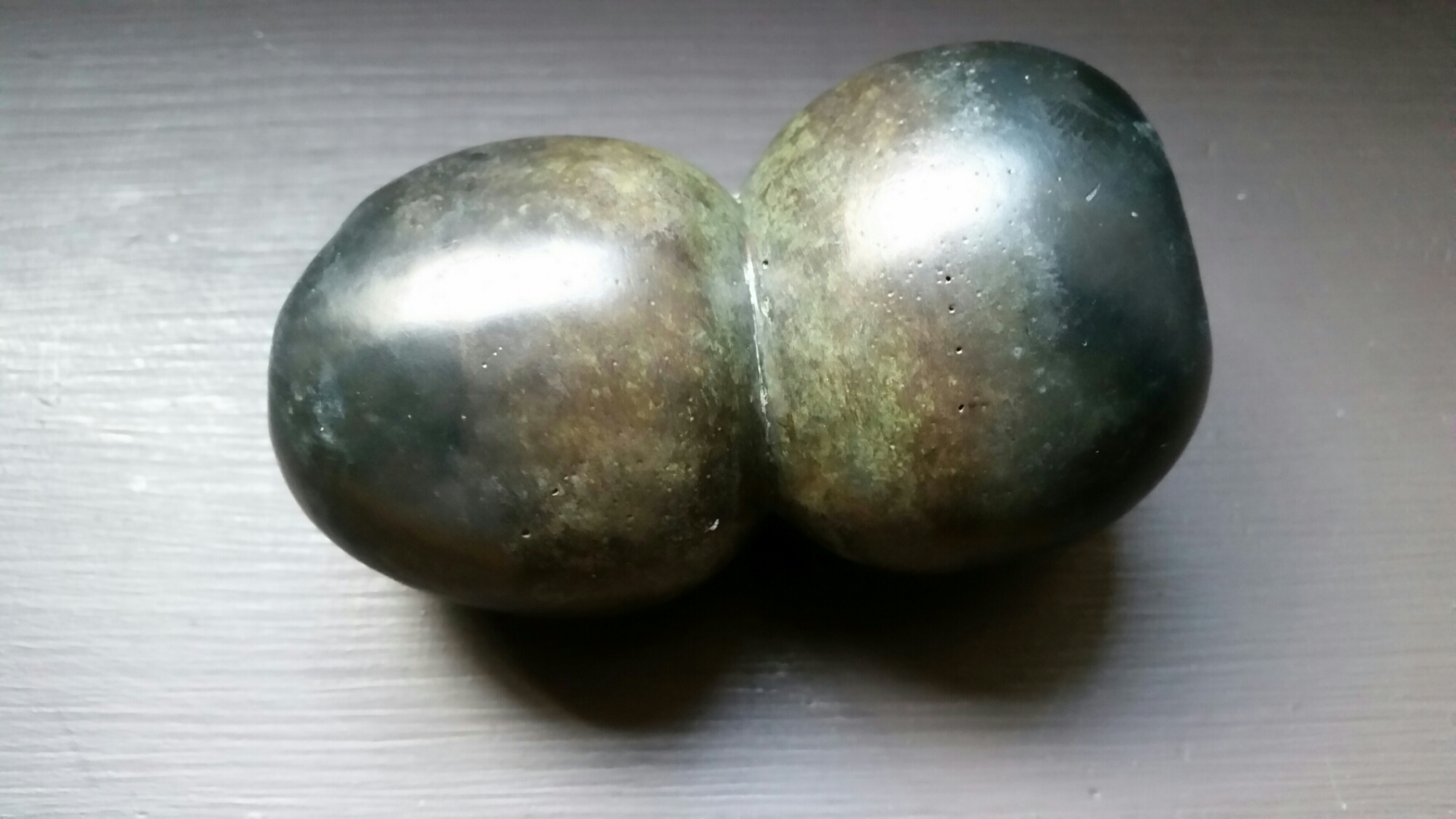
Since Alison feels that the photograph makes the work look more like bottoms than apples, I include a second attempt:

Norman Shaw (2)
With my eye attuned to the work of Norman Shaw, I realised that the large red brick building at the bottom of St. James’s Street is by him, with its charateristically elaborate corner tower and high Dutch gables. Indeed, it is. It was designed in 1882 for the Alliance Insurance Company at the same time that he was doing work for the Royal Academy.


Norman Shaw (1)
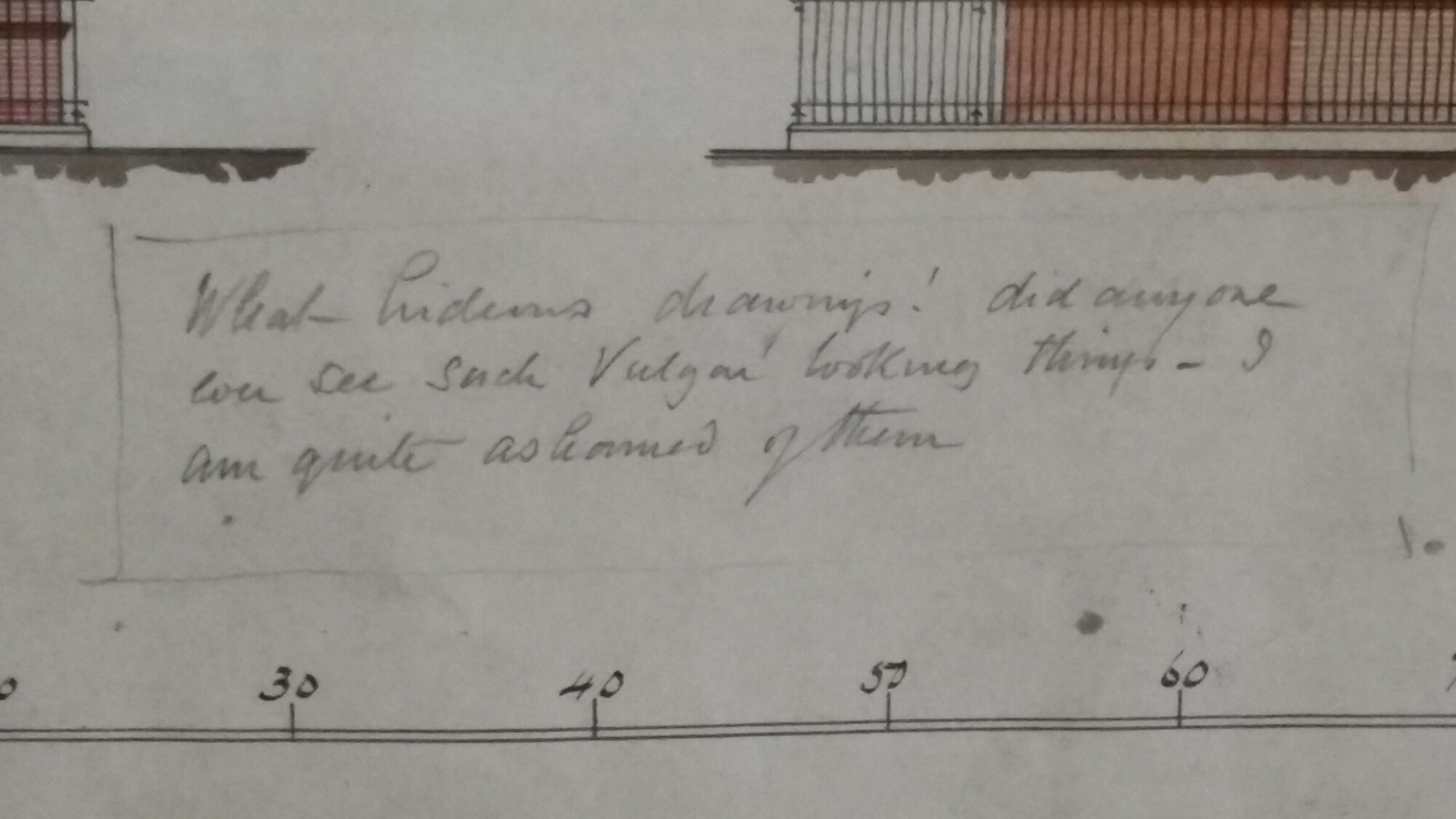
In waiting for someone last week, I was able to catch up with our Norman Shaw exhibition in the Tennant Gallery, which has been open for a while. But I missed the opening. It shows the quality of his work and his commitment to drawing as a means of expression (I liked the comment which he added to a bad drawing done by someone in his office, ‘What hideous drawings ! Did anyone ever see such Vulgar looking things – I am quite ashamed of them’).
There is no mention of the fact that Shaw trained as an architect in the Royal Academy Schools under C.R.Cockerell, winning the silver medal in 1852 and the gold medal the year after. His first commission was to design a house for an RA, John Callcott Horsley, in Kent, and he designed studio houses for Luke Fildes and Marcus Stone, in Melbury Road. In 1872, he became an ARA and a full RA in 1877. Continue reading
Hastings
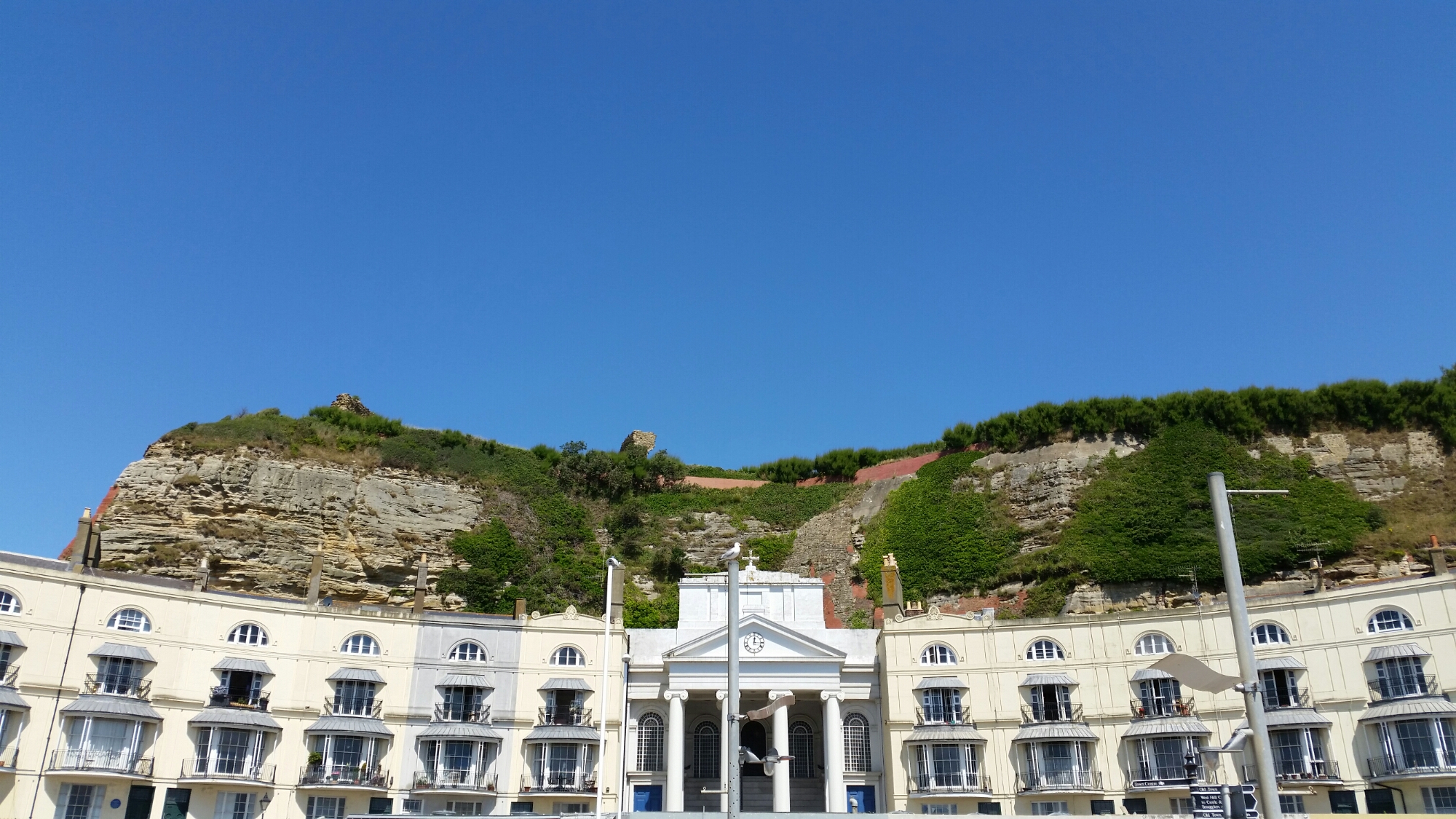
I loved Hastings, a nice, still slightly tatty seaside town with sidestreets and antique shops and shabby Regency squares, what Brighton must once have been. Annoyingly, Hendy’s Home Store was closed.
Jerwood Gallery
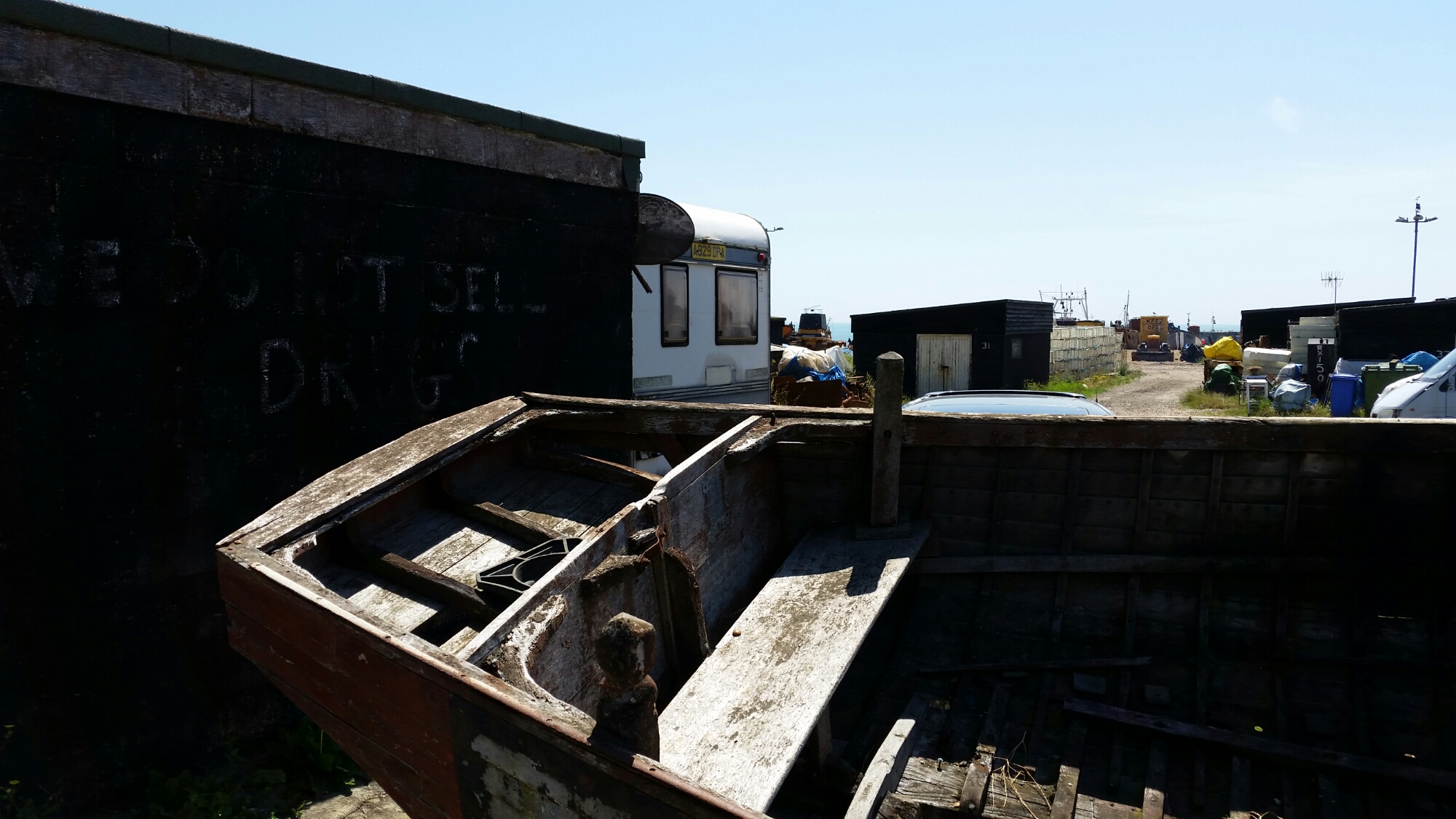
I finally made it to the Jerwood Gallery in Hastings in spite of having been invited to the opening in 2012 and a series of exhibitions, including some by RAs. It’s an incredibly well considered set of intimate interior spaces, half public, half domestic, with a great deal of natural daylight, including windows looking out onto the town, oak floors and door surrounds, and the minimum of air conditioning. It was designed by Hat Projects as their first public project, intelligently thought out and detailed, sitting comfortably amongst the surrounding tar-pitched fishermans’ huts. By chance, we caught the hang of their forthcoming exhibition, Drawn Together: Artist as Selector, which consists of drawings by artists who have been involved in the selection of the annual Jerwood Drawing Prize: a large watercolour sketch by Anthony Green RA, a series of handkerchieves rubbed on tarnished silver by Cornelia Parker RA, and drawings by Lisa Milroy, Tony Bevan, Tim Hyman and Peter de Francia (unusually they indicate on the label if someone is an RA). Alongside the exhibition space are a series of spaces showing works from the Jerwood’s own collection, a group of works of postwar British art, including David Jones, Prunella Clough and Maggi Hambling.

 | Charles | Saumarez | Smith |
You must be logged in to post a comment.