
I started the day at a breakfast meeting in the Ingenia Building in Broadwick Street in the heart of Soho. It was designed by Richard Rogers to allow the creative team at Ford Motors to benefit from a total immersion in the life of the city:-
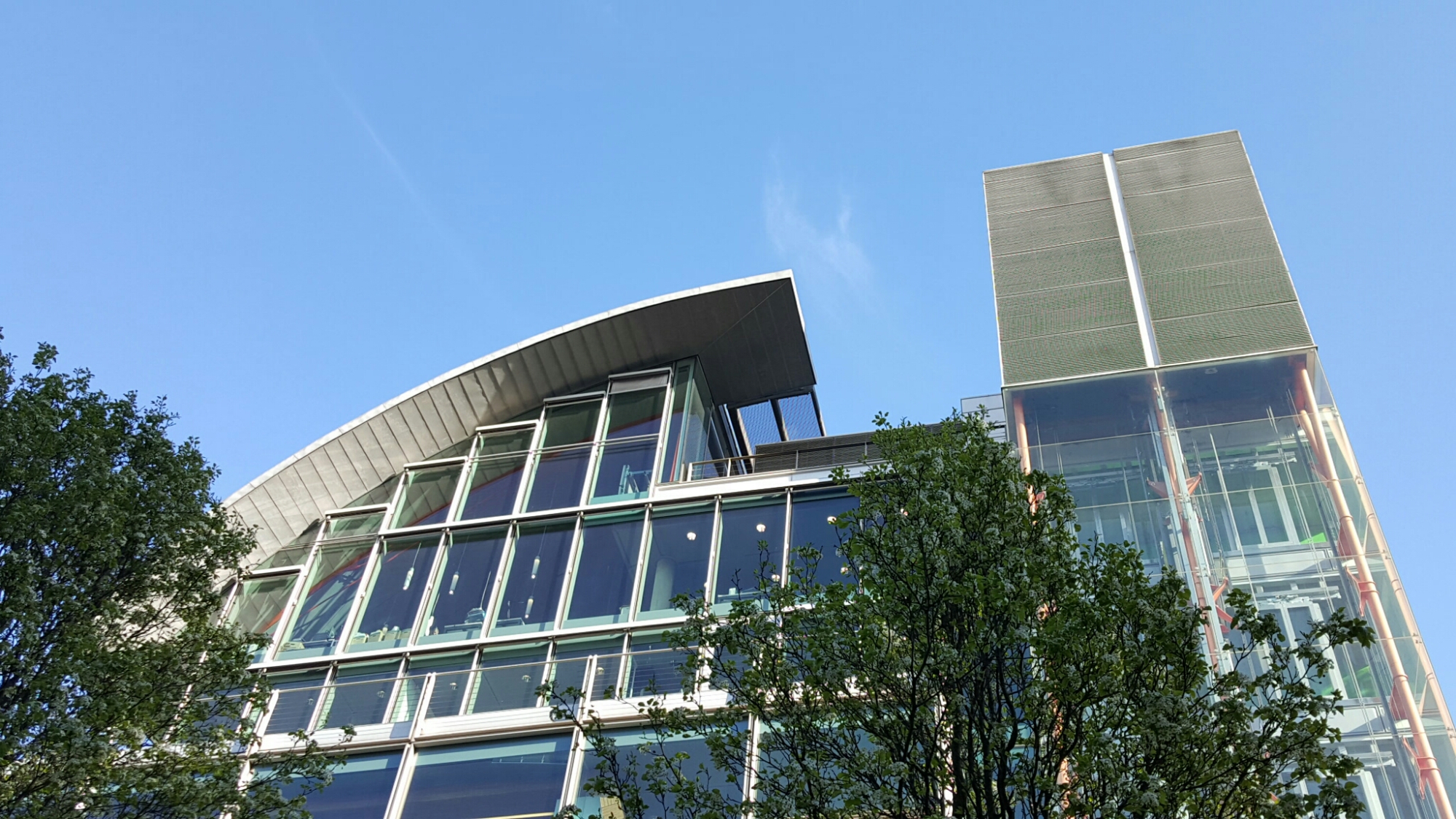
I started the day at a breakfast meeting in the Ingenia Building in Broadwick Street in the heart of Soho. It was designed by Richard Rogers to allow the creative team at Ford Motors to benefit from a total immersion in the life of the city:-
I was asked to give a lunch-time talk to the Romney Street Group at the Athenaeum, that great Greco-Roman palace in Waterloo Place. It was designed in 1824 by Decimus Burton, who was only 24 at the time, the son of a builder contractor, James Burton, employed by Nash in the construction of the Regent’s Park Terraces. Decimus was educated at Tonbridge School and then the Royal Academy Schools and was taken under the wing of Nash at an early age to design Cornwall Terrace and Clarence Terrace. The Athenaeum was originally meant to match the United Services Club opposite, now the Institute of Directors, but by 1830 when it opened it had acquired more gravitas, with a bust of Athene, recently re-gilt, over the front entrance and a cast of the Parthenon Frieze below the parapet:-

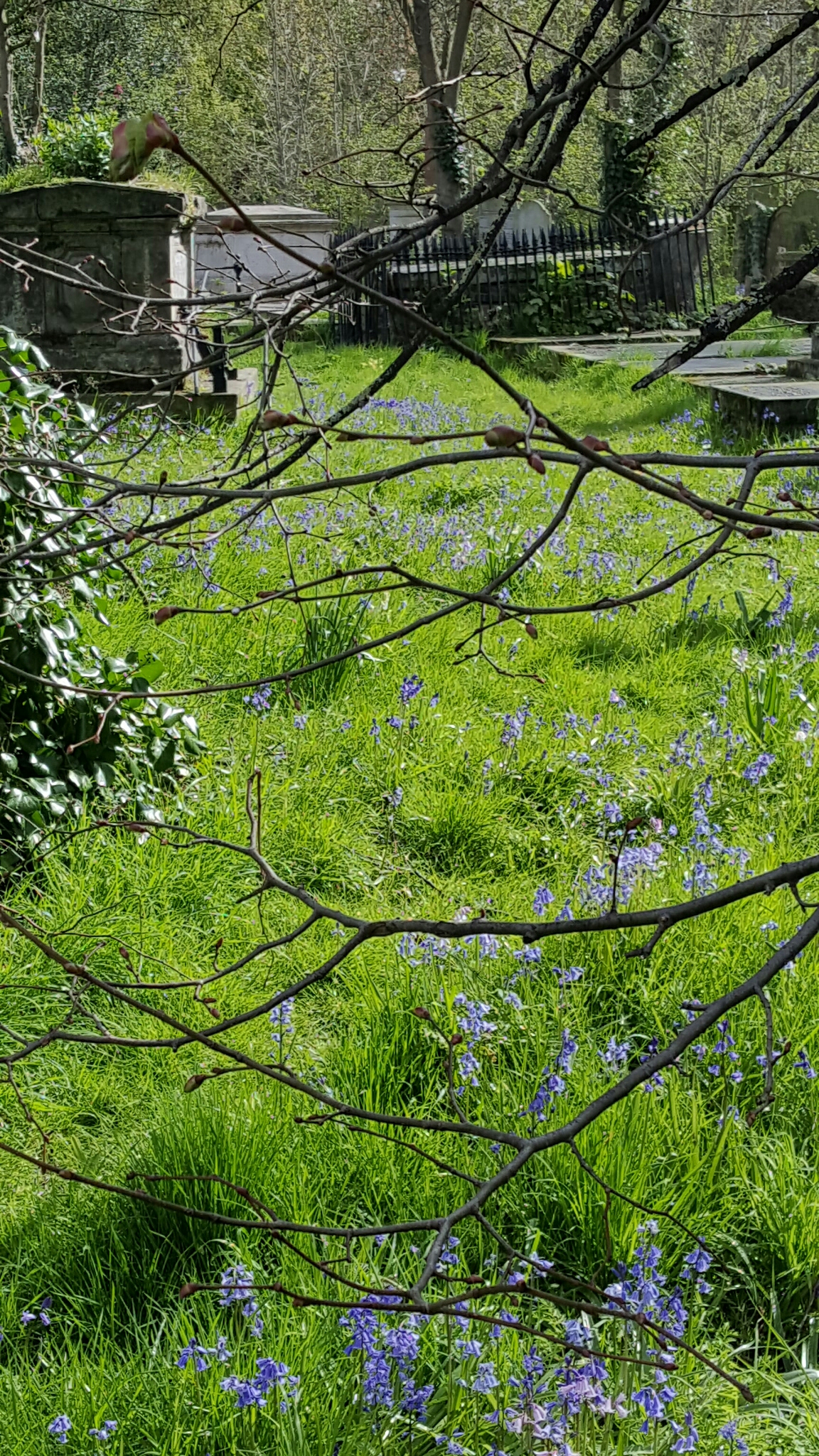
I have done posts on Tower Hamlets cemetery before, but never when it has been covered by bluebells, so that it is a curious mixture of the melancholy memorials of old East Enders, multicultural even in the nineteenth century, together with rampant spring:-
I was walking through Mile End Park when I spotted in the distance what looked like unfamiliar turrets above the rows of standardised terrace housing to the east of the park. It turned out to be an early Board School at the junction of Ropery Street and Southern Grove, part of which was designed by E.R.Robson, but the bulk of it by T.J. Bailey, who had worked previously as Draughtsman and then as Assistant to Robson in the London Schools Board. A pretty grand piece of Edwardian Tudorbethan, it shows the ambition of the Schools Board:-

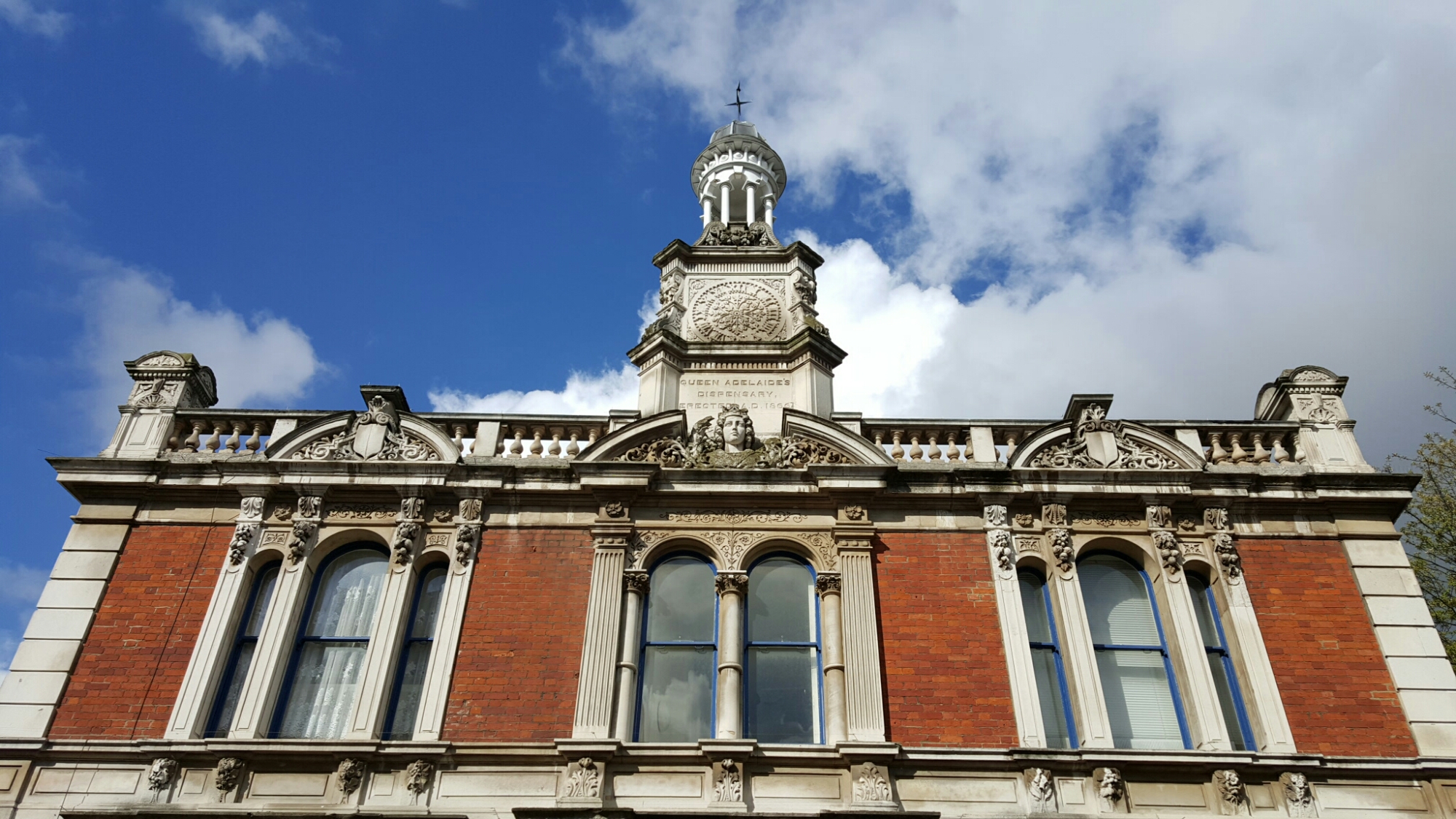
Just north of the Bethnal Green Road is Queen Adelaide’s Dispensary, which first opened in 1850 following a cholera epidemic in 1849 and acquired a grand new building in 1866 designed by Lee & Long in neo-Renaissance style with a bust of Queen Adelaide in the pediment:-

Years ago, I went to a talk by Anthony Burton, the then Director of the Bethnal Green Museum, about the Bethnal Green Road. He treated it as a foreign country. Since I have been forced to think carefully about the cultural consequences of a vote for Brexit (I’m on a podium about it on Wednesday), I thought I would take a walk down it to see how the Bethnal Green Road has changed.
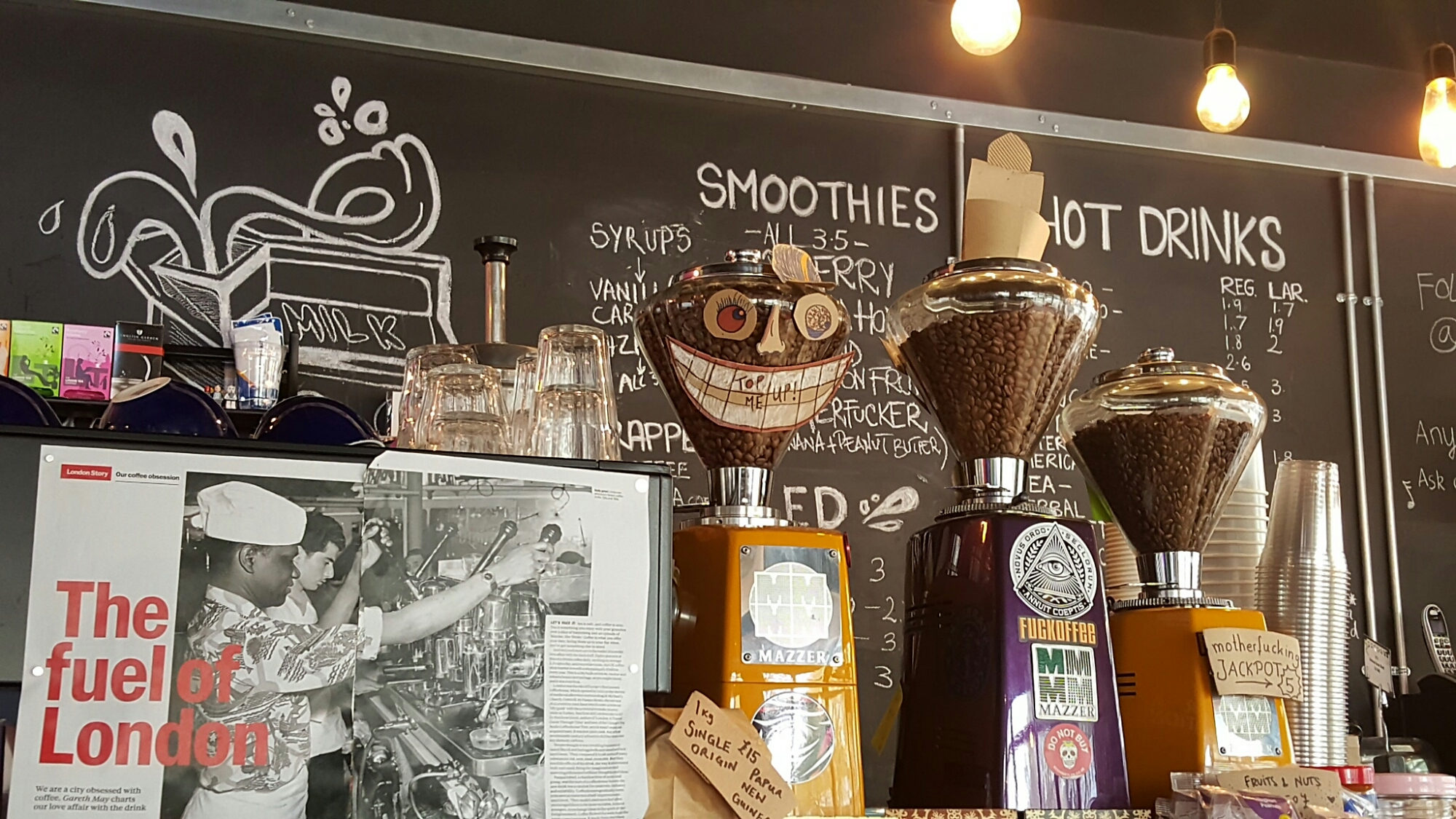
I had my first cappuccino in Jonestown, a neo-1950s, new wave coffee bar:-

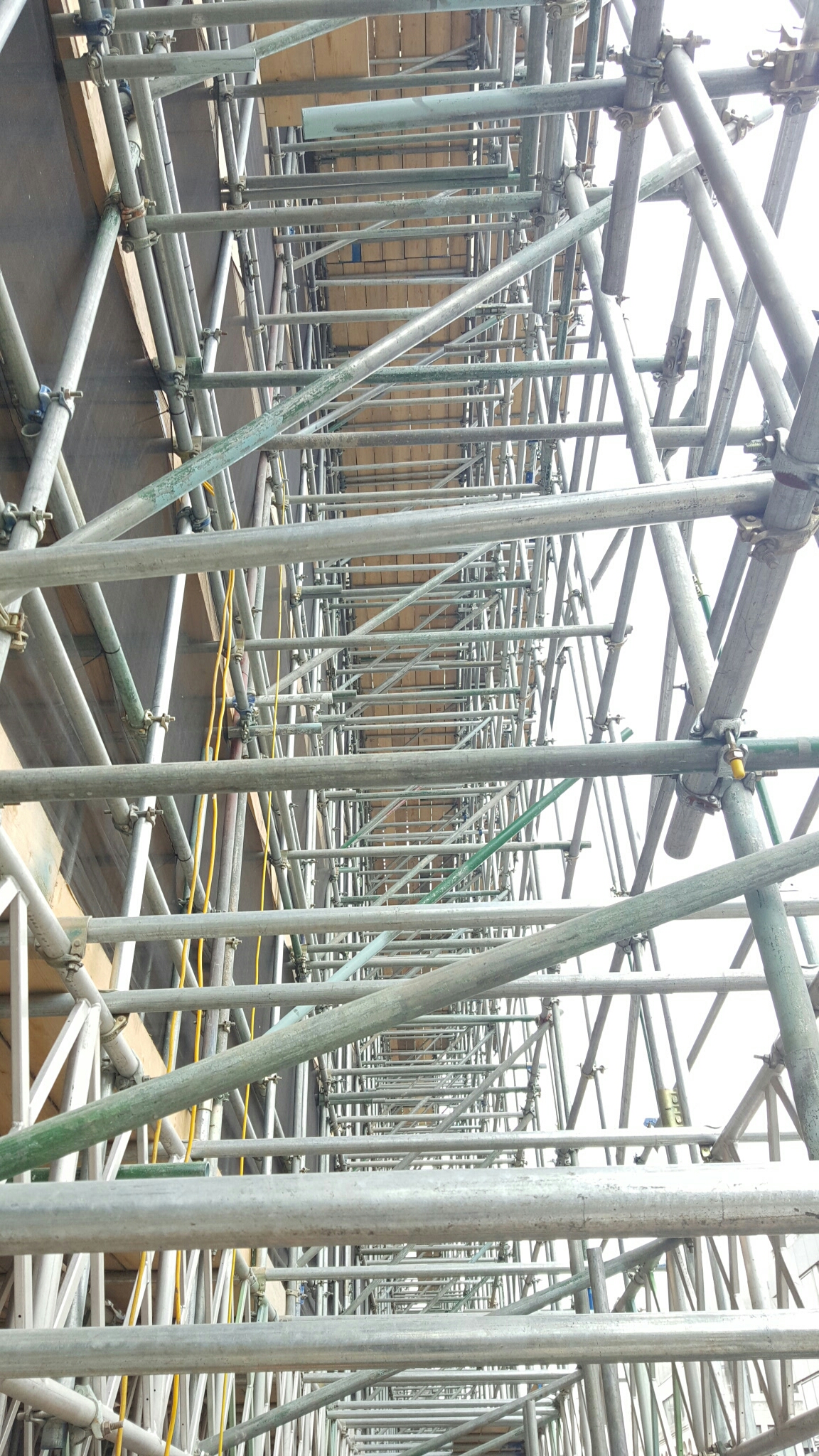
It’s a while since I’ve been on a tour of our building project in Burlington Gardens. A lot has happened in the intervening two months.
The scaffolding is up:-
I have become negligent in writing about buildings between Stepney and Burlington House because the number of those that I haven’t already written about inexorably shrinks. But yesterday I was walking up Bond Street and saw a building that was shown in a presentation last week and which I didn’t recognise. It’s towards the north end of New Bond Street (I was also encouraged to differentiate between New and Old), known as Medici Court. I assume from its name that it must be the building which was originally occupied by Joe Duveen, no less, and commissioned by him from the architect W.H. Romaine-Walker, who himself belonged to a family of art dealers. It’s in the style that I realise lots of people hate, but adds pomp and ceremony to Bond Street:-
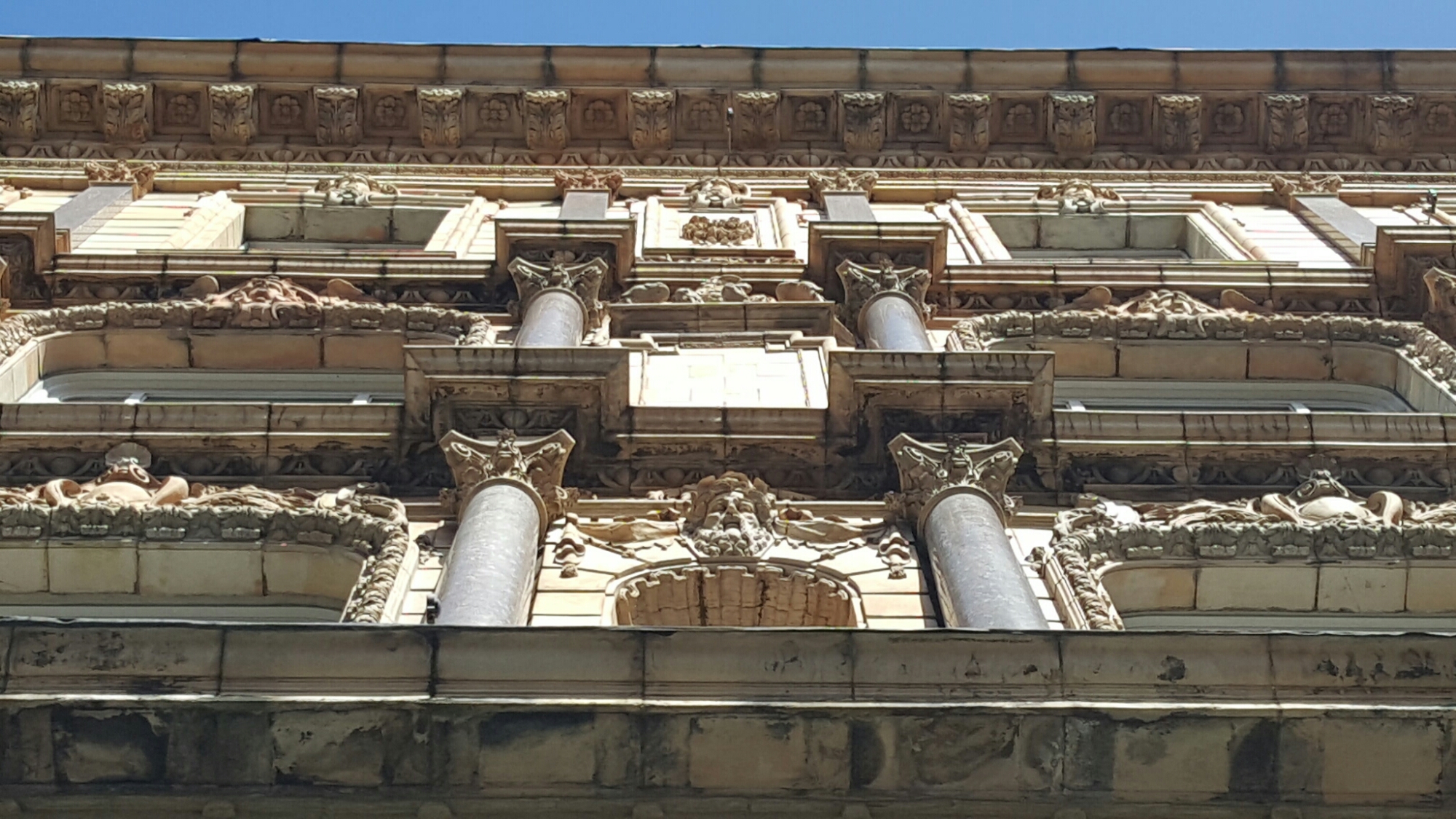
Ages ago, I took some photographs of the bar in Wilton’s Music Hall. But they didn’t really come out. It was dark. I was only half concentrating. We were there for a performance. So, I went back early this evening to have a better look at its shabby chic, recently restored exterior which was created in 1859 by John Wilton out of four houses facing on to Grace’s Alley. It’s recently been ‘restored’ by Tim Ronalds, but so tactfully and diplomatically that the extent of the restoration is invisible and the character and patina of the original has been left wholly intact.
I liked it so much that I went back for a homage to Edith Piaf:-
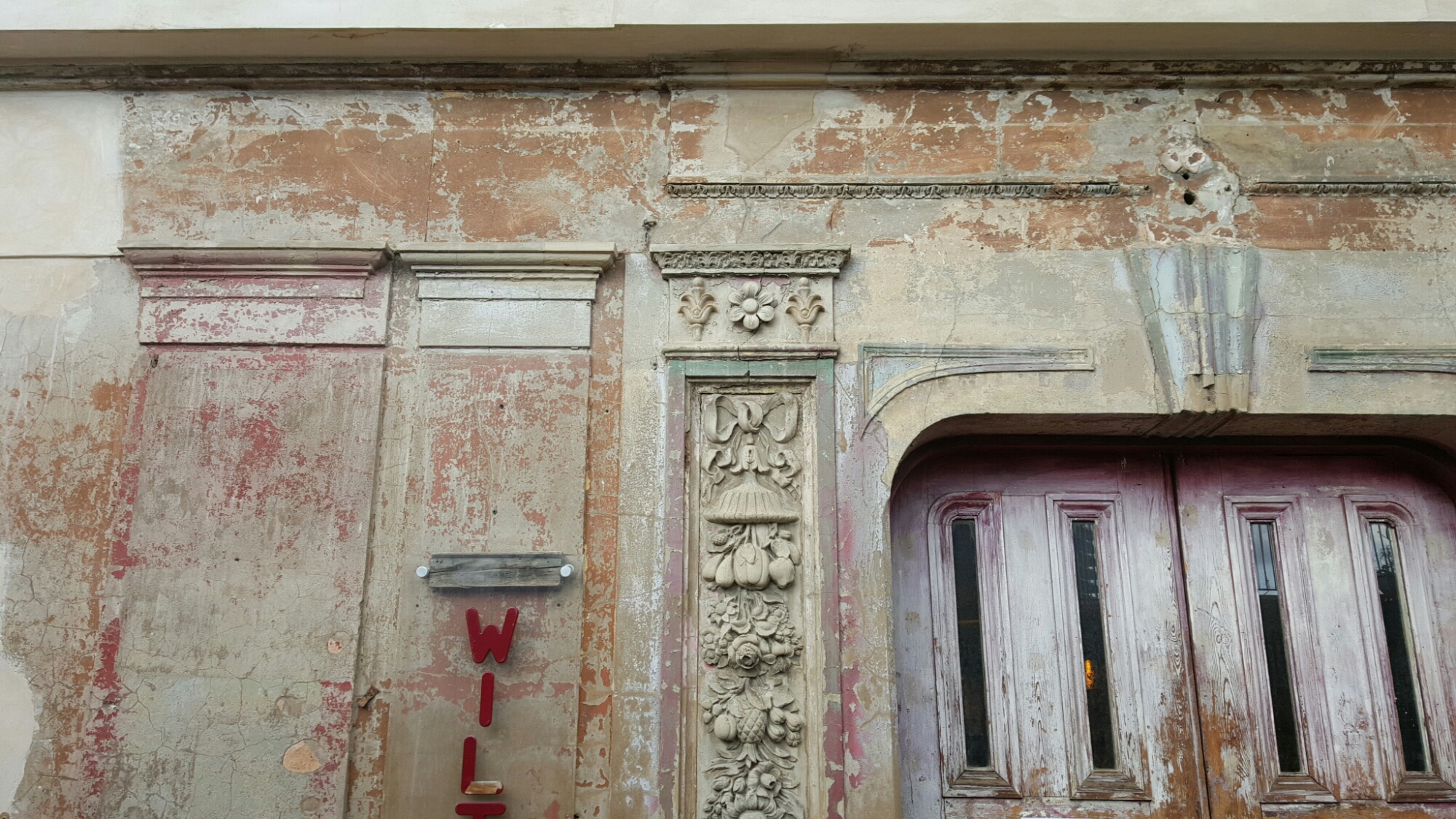
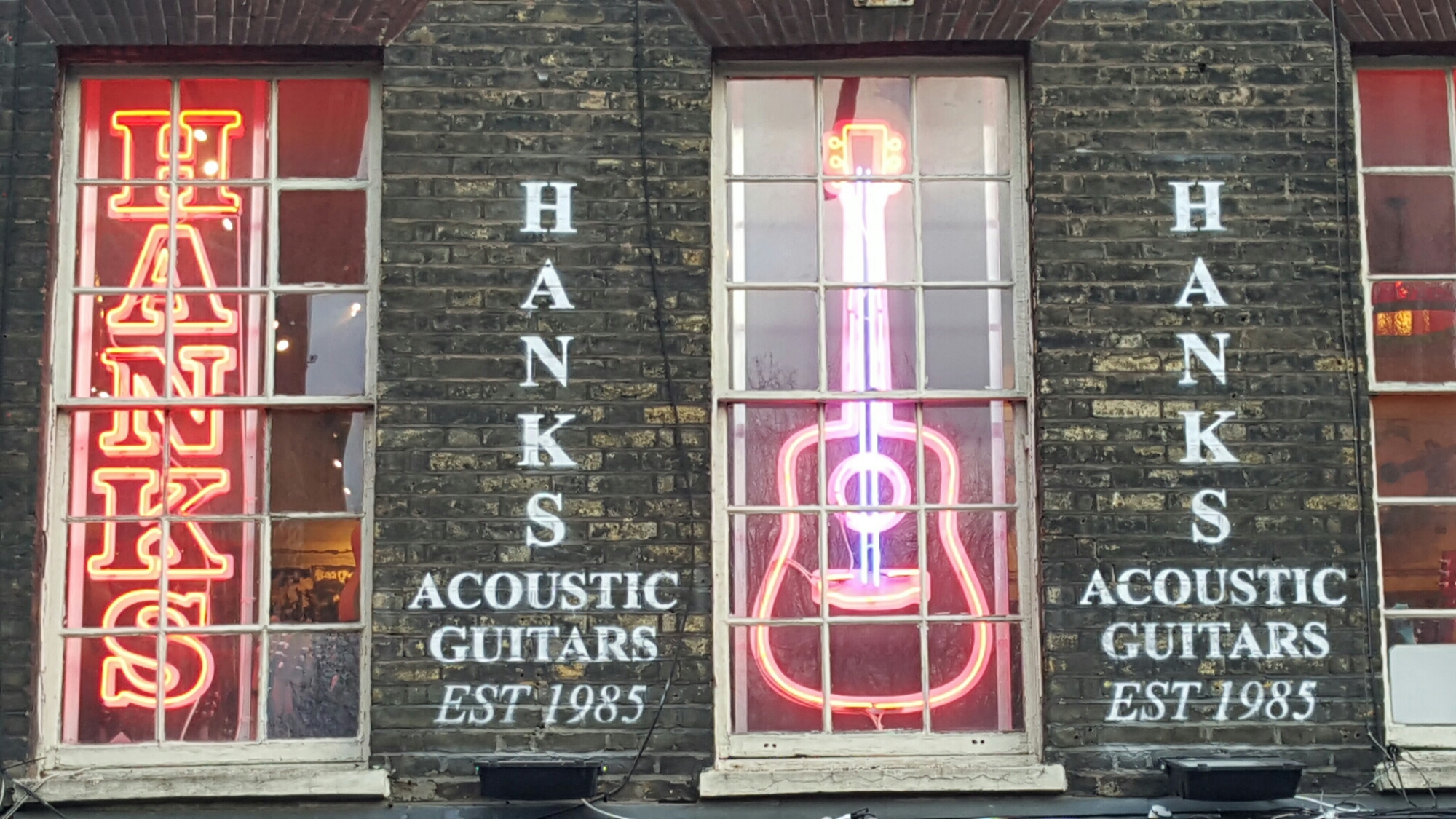
By chance, I found myself in the same neighbourhood tonight as last night because I went to see Eileen Cooper’s exhibition at Rook & Raven in Rathbone Place. It was closed. So, I took the opportunity of checking out how Denmark Street was faring under the strain of redevelopment. I thought remarkably well:-





 | Charles | Saumarez | Smith |
You must be logged in to post a comment.