Llanfairfechan

We have been introduced to the pleasures of Llanfairfechan by Jon Savage, the historian of Punk.   It’s a beautiful, early twentieth-century model development, designed by Herbert North, who lived here (his grandfather, Richard Luck, settled here in the 1850s), having previously worked as an assistant to Lutyens.   He published books on The Old Cottages of Snowdonia and The Old Churches of Snowdonia.  

His own house, Wern Isaf, but previously called ‘Rosebriers’ is the best, up on the hill and constructed on a curious inverted butterfly plan and beautifully preserved, with elaborate arts-and-crafts detailing, not big.   This is his signature over the front door:

image

Next is the Church Institute, down in the village, which North designed free of charge and where he liked to perform pageants.   They would have performed Under Milk Wood this year if it hadn’t been banned by the Thomas estate.   It was opened in 1911, incorporated a rifle range during the first world war, and still has a strong atmosphere of pre-war village life:

image

Beyond is the Churchmen’s Club, built in 1927 for the Church of England Men’s Society and now surrounded by chickens:

image

image

image

image

Above the Church Institute is The Close, a planned development of model houses, each of which was expected to cost no more than £1,000.   £1,000 could buy you a lot in those days – a small garden, a hipped-roof garage, an inglenook, all designed in a spirit of art-and-crafts utopianism.   Everyone was out trimming their hedges:

image

image

Standard

Menai Bridge

Menai Bridge is the middle class stronghold of Anglesey, where I always assume retired Professors from the University of Bangor live and where the Duchess of Cambridge is occasionally spotted shopping in Waitrose.   There’s the noble bridge itself, a monument to Thomas Telford’s engineering skill, connecting Anglesey to the mainland for the first time on 26 April 1825:

image

Continue reading

Standard

Newborough

I like the fact that Newborough, our local village/town, was new in 1303 when Dafydd ap Gwylim described it as ‘Tref Nibwrch, tref llawn obaith’ (Newborough town, town full of hope).   It was originally the site of a royal court – a lys – and it’s been downhill ever since, although according to the Companion Guide to Wales, it was ‘once the centre of a thriving mat, cord, and net-making industry’.   Not in our time, it hasn’t been.   When we started coming in the 1970s, it had a garage, a butcher, a post office, two grocers and two small supermarkets.   Now there’s a single supermarket and so far the post office.   But this year a café has opened in what was the butcher’s:

image

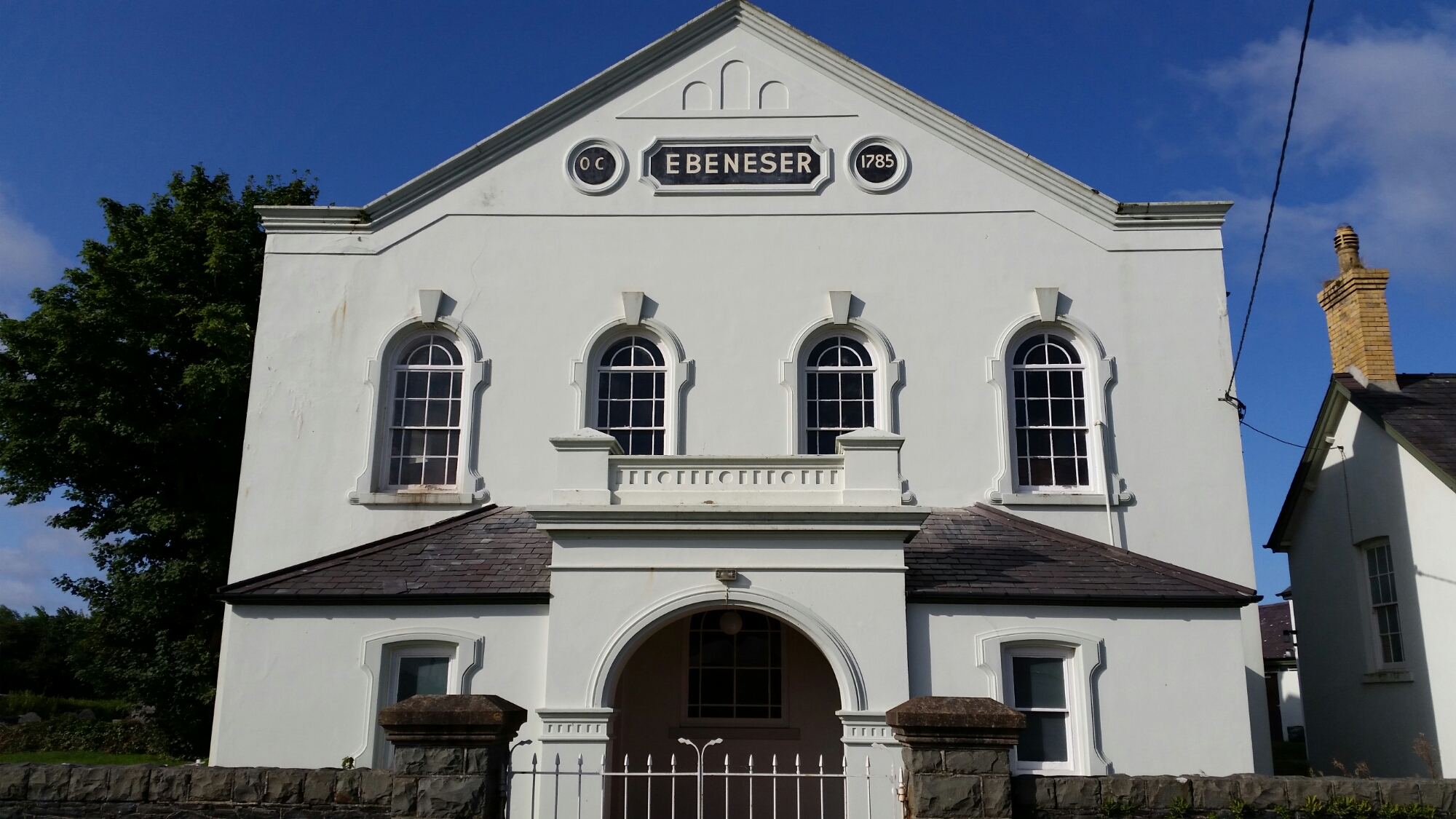
There’s the Ebeneser Wesleyan Methodist Chapel, which says 1785 prominently on the façade, but dates from the mid-nineteenth century:

image Continue reading

Standard

Maurice Wilks

We are staying, as we always stay, in the cottage where Maurice Wilks designed the land rover.   He worked for Hillman Motor Car Company in Coventry in the early 1920s and then spent two years with General Motors.   After returning to work for Hillman, he was appointed chief engineer at Rover in 1930, where his older brother was already works manager (he had previously been managing director of Hillman) and was to become managing director in 1934.   Wilks bought a smallholding on Anglesey and used an American army jeep to travel round it during the war.   He and his brother had the idea of designing a version of the jeep for British farmers which they decided to call a Land Rover.   The first land rover rolled off the assembly line on 11 March 1948.   It’s clear that Wilks belonged to a peculiarly British strand of manufacturing, strong in engineering and technical invention, more interested in high quality production than in volume, good with his hands and at carpentry.   He had the idea for the Range Rover in 1952.   So, next time I see a great Chelsea tractor, I will think of Maurice Wilks bumping around in a prototype over the boggy fields of south-west Anglesey. Continue reading

Standard

Gallinioch Bach

One of my favourite things in Anglesey is the little stall which is placed outside the gate of a local farm from which one can buy vegetables, including small tomatoes and huge cucumbers and occasionally eggs, on the basis of trust.   I like the unpredictability of it (it’s on a back road down to the Straits).   We try and go every day in order to buy something of what’s on offer.

image

Standard