
I went for drinks on Tuesday to Winfield House, the residence of the US ambassador in Regent’s Park. It was assumed that I would know its architectural history, but didn’t. It’s on the site of Hertford Villa, designed by Decimus Burton for the third Marquess of Hertford, known as the ‘Caliph of Regent’s Park’. He is said to have used the house for orgies. The original villa was damaged by fire in 1936 and the following year sold to Barbara Hutton, heiress to Woolworths. A large neo-Georgian house replaced it. It was designed by Leonard Rome Guthrie, a Scottish architect, who was the son of a Master Decorator and trained at Glasgow School of Art. In 1925, he had joined the firm of Wimperis & Simpson, which had won the competition to design Fortnum & Mason, and in the 1930s he did work for the BBC, designing transmitter stations with art deco façades.
Monthly Archives: December 2014
31, Old Burlington Street
I was tipped off at a meeting earlier in the week that no. 31, Old Burlington Street, just north of Burlington Gardens, is Grade 1 listed. So, I stopped to study it, having passed it a thousand times and never identified it as having particular historical and architectural significance. The reason for its importance is owing to the fact that it dates to the time of the third Earl of Burlington’s development of the streets on the land to the north of Burlington House, including Old Burlington Street, Savile Row (named after his wife) and Cork Street (his secondary title). The Scottish architect, Colen Campbell, who had been responsible for the publication of Vitruvius Britannicus in 1715, oversaw the design of the first houses to be built, which included 31-34, Old Burlington Street, between 1718 and 1723, and no. 31 was lived in during the 1720s by the waspish Lord Hervey and, from 1730, by Stephen Fox, later Lord Ilchester. It is apparently still owned by Fox’s descendants:

Life Room
We had a party the night before last in the Life Room of the Royal Academy Schools. I found myself trying to explain what is special about it. It’s nothing to do with the architecture of the space, which is utilitarian mid-Victorian, part of the undercroft of the Royal Academy. It is more due to its continuous use, the generations of students who have been taught to draw from the living model. It is also due to the absence of any self-conscious reverence for the room’s history: it has been battered and used by generations of students. This is increasingly rare in historic interiors. They are preserved and protected and coddled, but not used. And then there is the ghost of previous studios: the time when the drawing studio was in the dome of the National Gallery; before that, in Somerset House; before that, in Pall Mall; and originally, in an alleyway off St. Martin’s Lane. The room contains the memory of previous students, flicking bread at one another, and of previous spaces, back to Bologna and the Academy of St. Luke’s in Rome.

47, Maddox Street
I was walking down Maddox Street on my way to a meeting the day before yesterday which gave me a chance to admire the façade of Browns, the restaurant, all in the most brilliant faience by Burmantofts. I’ve been trying to work out its history. It was apparently designed by an architect called Walter Williams for a Messrs Lawrence, a tailors and was later owned by Wells and Company who cut suits for Winston Churchill.

Gieves and Hawkes
I have been puzzling over the fact that Gieves and Hawkes has two different dates – 1771 and 1785 – prominently displayed on its main façade. How come ? The answer is that Thomas Hawkes, having previously worked for a Mr. Moy, who supplied velvet hats on Swallow Street, set up shop in Brewer Street in 1771, selling clothing to the military. He moved to No. 17, Piccadilly where, in 1793, he was described as ‘Helmet, Hat and Capmaker to the King’. The company later developed not only the shako, but the solar topee, before merging with Gieve in 1974. The date of 1785 relates to the date of foundation of Gieve. This may be wrong. James Watson Gieve, who gave his name to the firm, was born in 1820. He was apprenticed to Augustus Meredith, who ran a firm of military tailors at 73, High Street, Portsmouth. Meredith’s father, Melchizedek, had apparently established the firm in 1784, kitting out naval officers, including Nelson. Gieve became a partner in the firm in 1852. So, by my reckoning, it should say 1784:

The Rectory in Literature
I have spent the weekend reading a curious, but unexpectedly enjoyable book which I picked up in the shop at Charleston on Friday. It’s called The Wry Romance of the Literary Rectory and charts the place of the rectory – it seems mostly to be the rectory, not the vicarage – in the life of English writers, beginning with Tennyson who was brought up in the rectory at Somersby in deepest Lincolnshire, to Dorothy Sayers, who was brought up in the rectory at Bluntisham in the fens north west of Cambridge, to Rupert Brooke mourning the Old Vicarage in Grantchester from a café in Berlin. After chapters on R.S. Thomas in rural Wales and Vikram Seth buying George Herbert’s rectory at Bemerton, it ends with Bensons and de Waals in the Chancery at Lincoln. Rectories harboured families that were high minded, puritanical, and impoverished, the perfect place for a writer, as is argued in the book, because of the sense of history and social displacement.
Clapham
I went to Clapham to visit my cousin. It was cold and damp, but it gave me a chance to see Holy Trinity, Clapham, a large, barn-like and still evangelical structure, isolated in the middle of the common. Also, the larger houses on the north side of the common, with their relics of the Clapham Sect, and including no.29, a large house now being renovated which was once the home of Charles Barry.
This is Holy Trinity, which opened in 1775:

LCC Housing
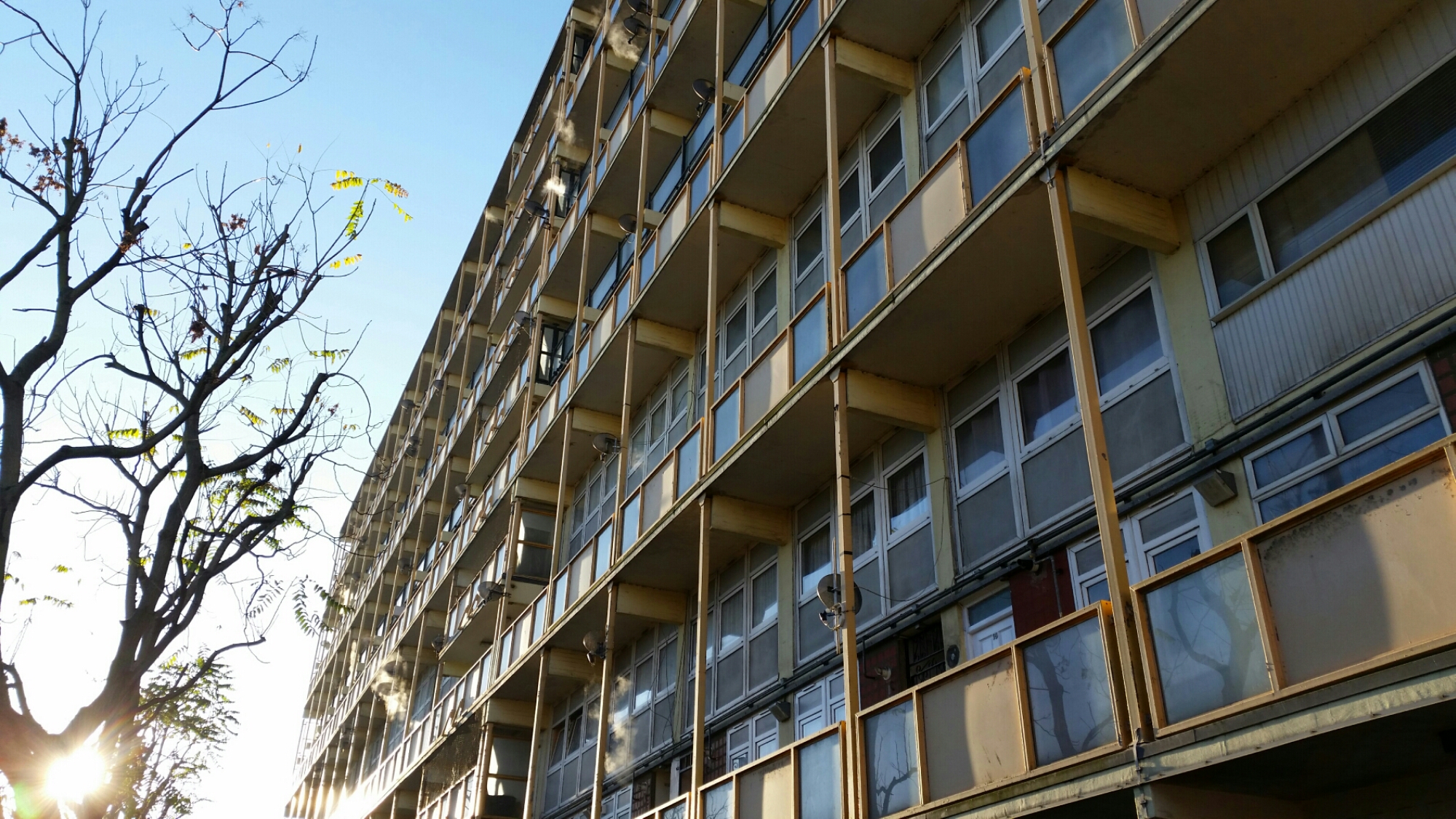
As the years go by, I become less hostile to the big Corbusian estates, based on the Unité d’Habitation, which were put up with such zeal by the London County Council in the late 1950s when the architects’ department was run by Leslie Martin. I’m more appreciative of their social ambition, however misplaced, and their abstract geometry, played out in their balconies, particularly when the sun shines. This is Withy House on Globe Road (architect apparently unknown):
Us at Work
Once a year, our house is turned up side down for the annual jewellery sale. In the garden, there are Polish condiments:


Indoors, four jewellers display their wares. This is Romilly’s stand:

Tower Hamlets Cemetery
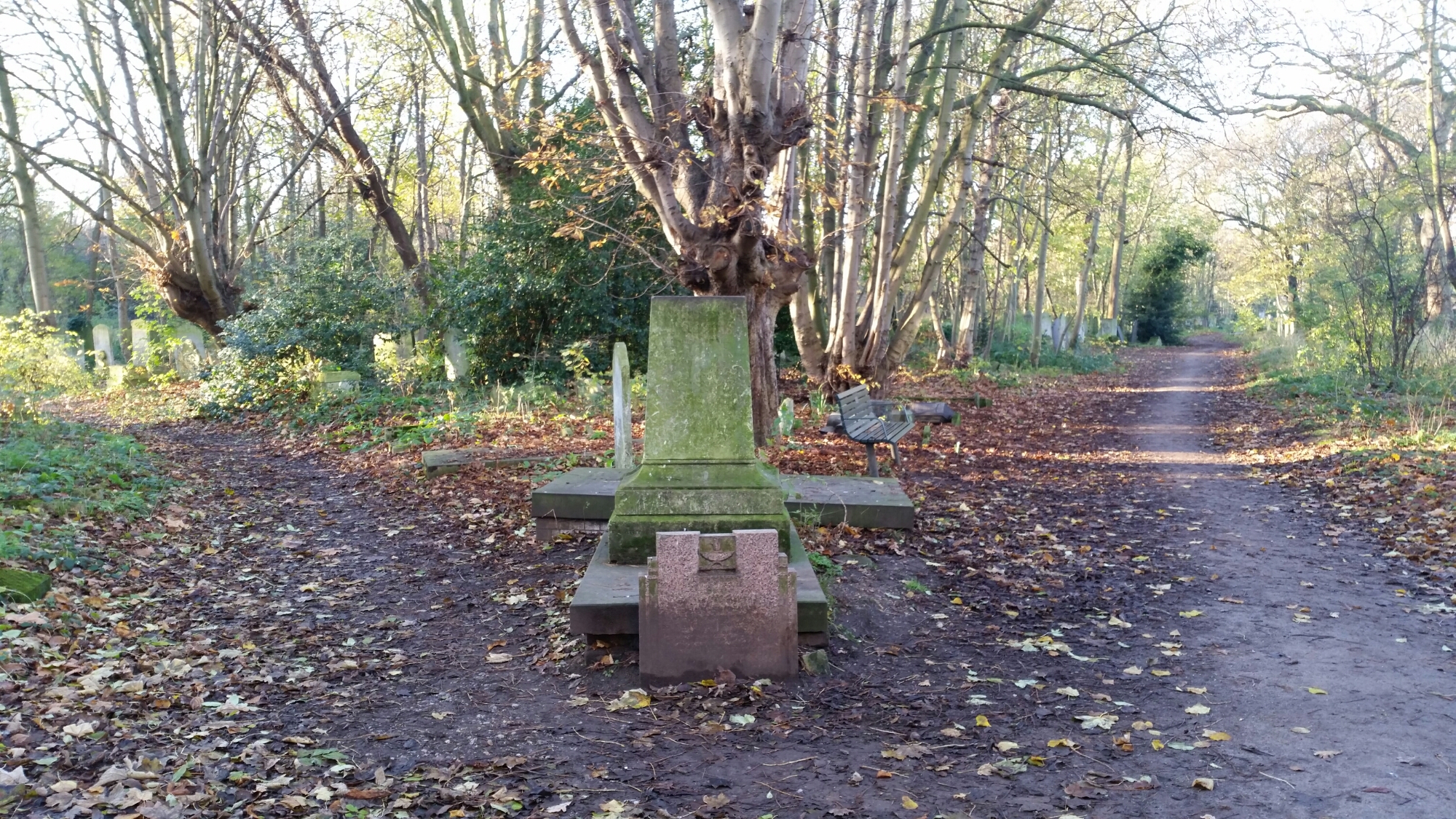
I’ve been asked why it is that I’ve never written about Tower Hamlets Cemetery, given my taste for tombs. It’s true that it’s always been off my local map tucked between Mile End tube station and the railway track. So, I’ve been waiting for a half decent day to re-explore its neglected woodland:
 | Charles | Saumarez | Smith |
You must be logged in to post a comment.