In examining the history of Bethnal Green, I have become interested in the house known as Bethnal House or Kirby’s Castle, which occupied the site where the library now is. It was built in 1570 by John Thorpe for John Kirby, a merchant and was subsequently owned by the lawyer and natural scientist, Sir Hugh Plat. Plat used the garden to experiment growing grapes and the effects of different manures. In 1602, he published Delights for Ladies with instructions about how to preserve and bottle fruits and, in 1608, Floraes Paradise Beautified, which included instructions on how to make fuel brickettes. Pepys visited the house on 26 June 1663 when it was owned by Sir William Rider, Deputy-Master of Trinity House, and described how he had ‘a noble dinner, and a fine merry walk with the ladies alone after dinner: the greatest quantity of strawberries I ever saw, and good’. In 1727, it was leased to Matthew Wright as a private mad house, later known as the White House or Blind Beggar’s House and was run by the sadist employed to cure George III of his madness. Its use as a lunatic asylum is why the local park is apparently known as Barmy Park.
Monthly Archives: January 2015
St. Paul, Shadwell
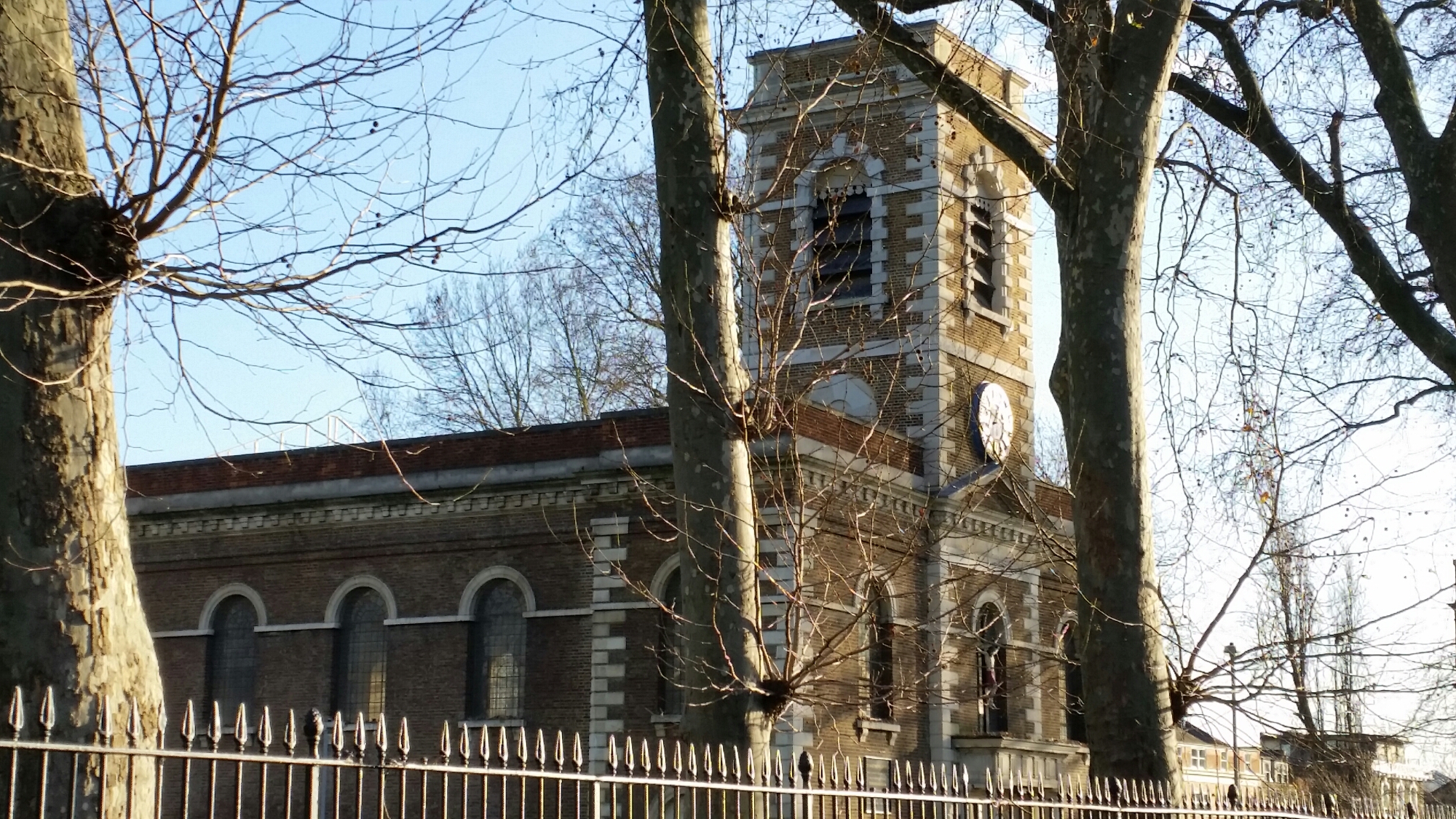
St. Paul, Shadwell lurks beyond the high wall of the old London dock across Shadwell Basin, one of the first of the Commissioners’s churches, designed by John Walters, who died in 1821, the year after the church opened, aged 39. It replaced what was known as the Church of Sea Captains and was described in Walters’s obituary in the Gentleman’s Magazine as ‘simply neat, and elegantly chaste’:


York Hall and Baths
Just north of the Bethnal Green Museum is the York Hall and Baths where the citizens of Bethnal Green could come to box, wash their laundry and take a Turkish bath:-

Bethnal Green Town Hall
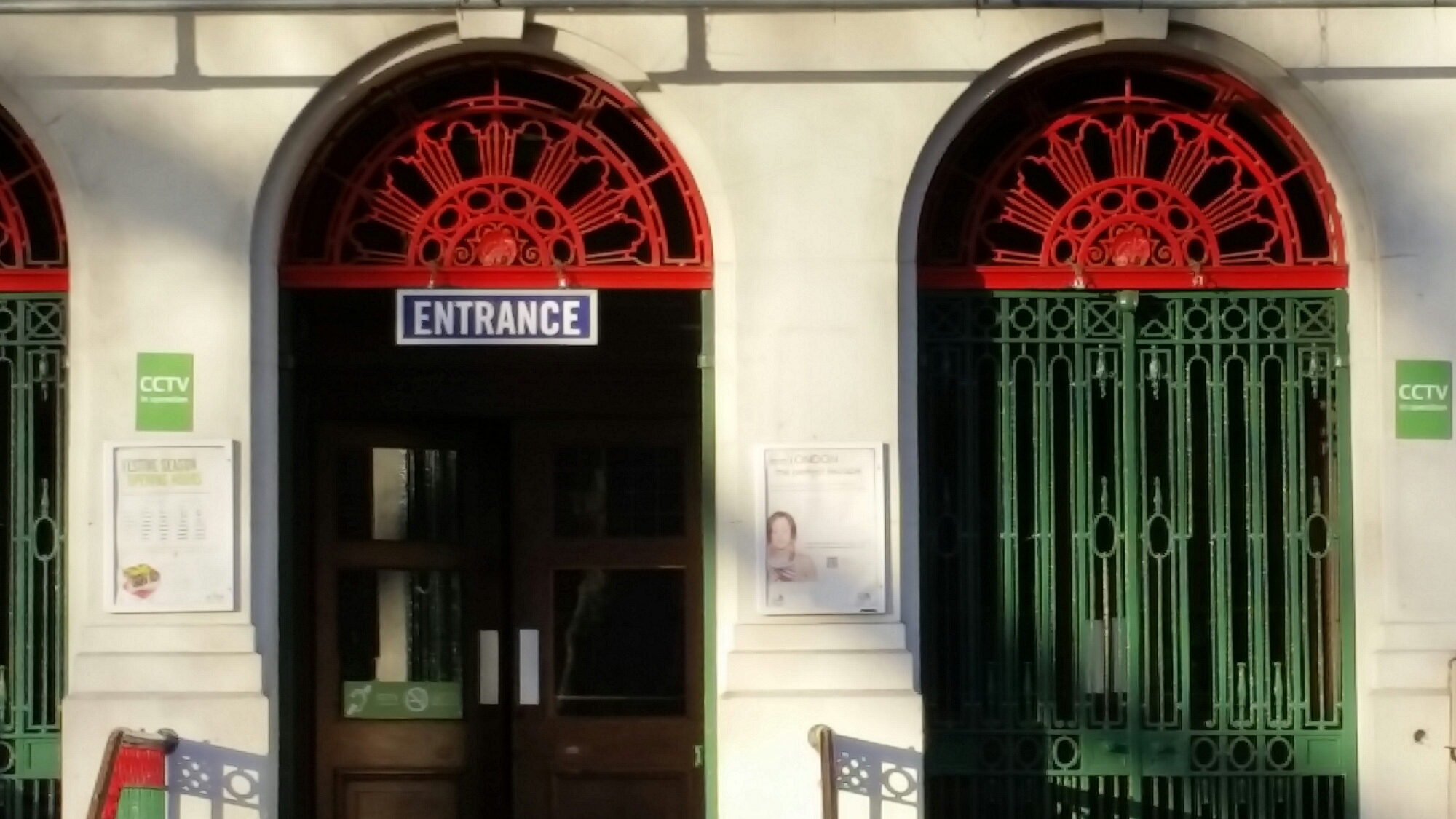
I had read somewhere that the back elevation of the recently renovated Bethnal Green Town Hall is one of the top ten pieces of new architecture in London. I was intrigued as I hadn’t registered this elevation (one enters on the opposite side). It’s a fine, aluminium, if (at least in the photograph) slightly surreal, sheath designed by Michel da Costa Gonçalves and Nathalie Rozencwajg of rare:-

Nettleswell House
I wish we had been able to afford to buy Nettleswell House when it was sold by the V&A for what now seems like a song in the late 1980s. I don’t think I quite appreciated its significance as a relic of sixteenth-century Bethnal Green when the ground was leased by Sir Ralph Warren, a former Lord Mayor. The house itself is part mid-seventeenth-century, part 1705 and part 1862. I remember it as the site of gloomy meetings:-


Bethnal Green Museum
I’ve always liked Bethnal Green Museum of Childhood and now the new decorated entrance façade by Caruso St. John:-


Hackney Road
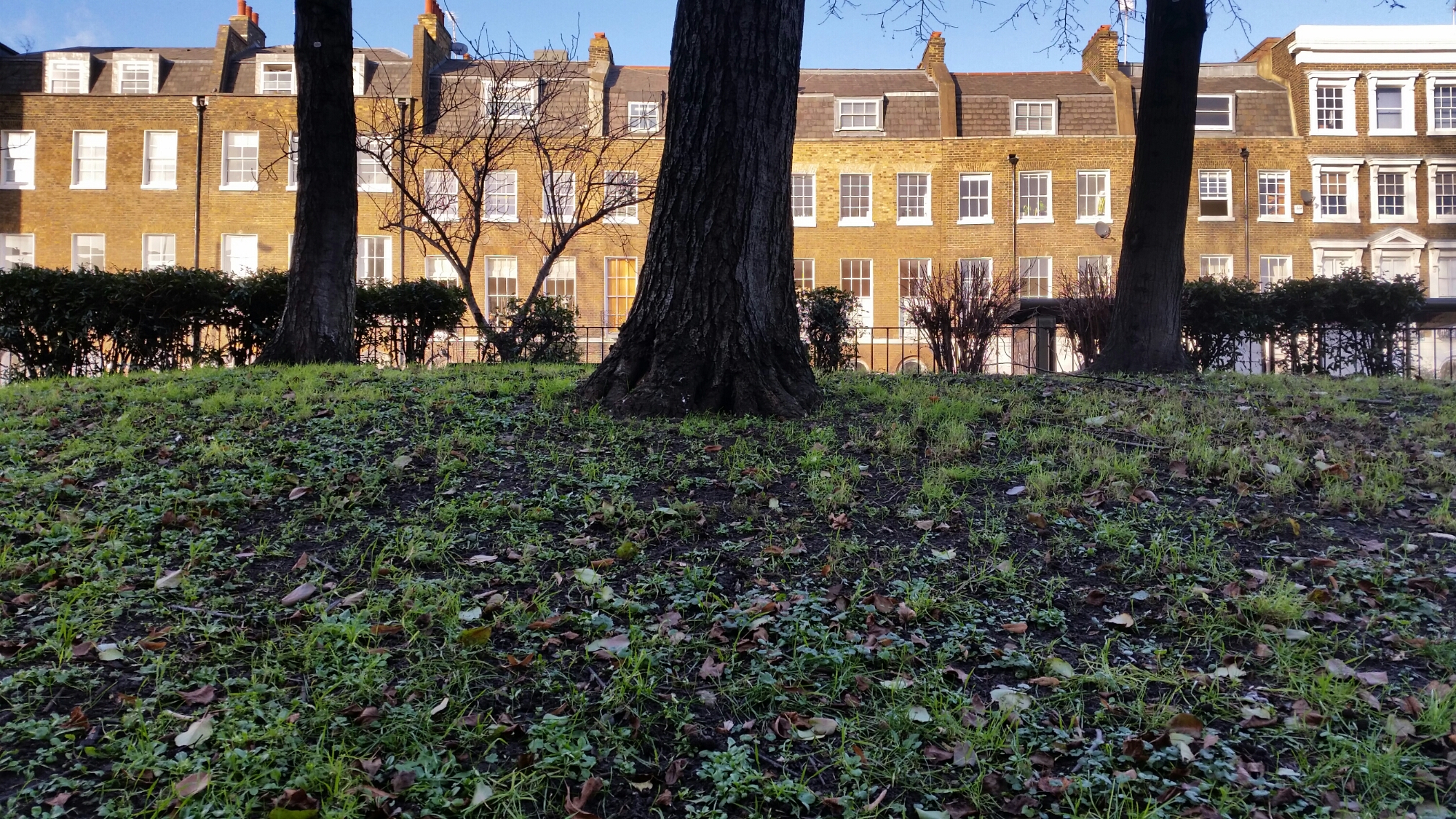
Pevsner (or, more likely, Bridget Cherry) is dismissive of Hackney Road, but it has good examples of early Victorian terrace housing on the north side, surprisingly grand for the neighbourhood, which at the time was beginning its slide into slumdom:-
Keeling House
I was only shown Keeling House recently: a muscular and ingeniously geometric, early example of work by Denys Lasdun, when he was working for Fry, Drew, Drake & Lasdun in the mid-1950s. It’s more purely architectural than the standard LCC blocks, still surrounded by what would have been regarded as Victorian slum housing, now being done up, as has Keeling House itself:-

St. Peter, Bethnal Green
St. Peter’s, Bethnal Green is unexpectedly rustic, as if lost down a leafy, Norfolk lane, not surrounded by tough housing estates. It was designed by Lewis Vulliamy for Bishop Blomfield and built in knapped flint and stock brick:-

St. Matthew, Bethnal Green
As therapy for the New Year, I took myself on an unplanned walking tour of Bethnal Green. I started at St. Matthew’s, the parish church, which was originally planned to be one of the Fifty Churches designed by Hawksmoor. But the parishioners objected to the cost and the Rector of Stepney didn’t want to lose his income from tithes. Instead, a more modest church was commissioned from George Dance Senior. Work started in 1743, but funds were inadequate. An Act of Parliament provided funds on the grounds of the ‘dissoluteness of morals and a disregard for religion, too apparent in the younger and poorer sort’. In the 1850s, the interior was destroyed by fire and, again, by Hitler. It was reconstructed in the 1950s by Antony Lewis of Tapper and Lewis with work commissioned from young artists. It’s a good example of 1950s ecclesiasticism:-
 | Charles | Saumarez | Smith |
You must be logged in to post a comment.