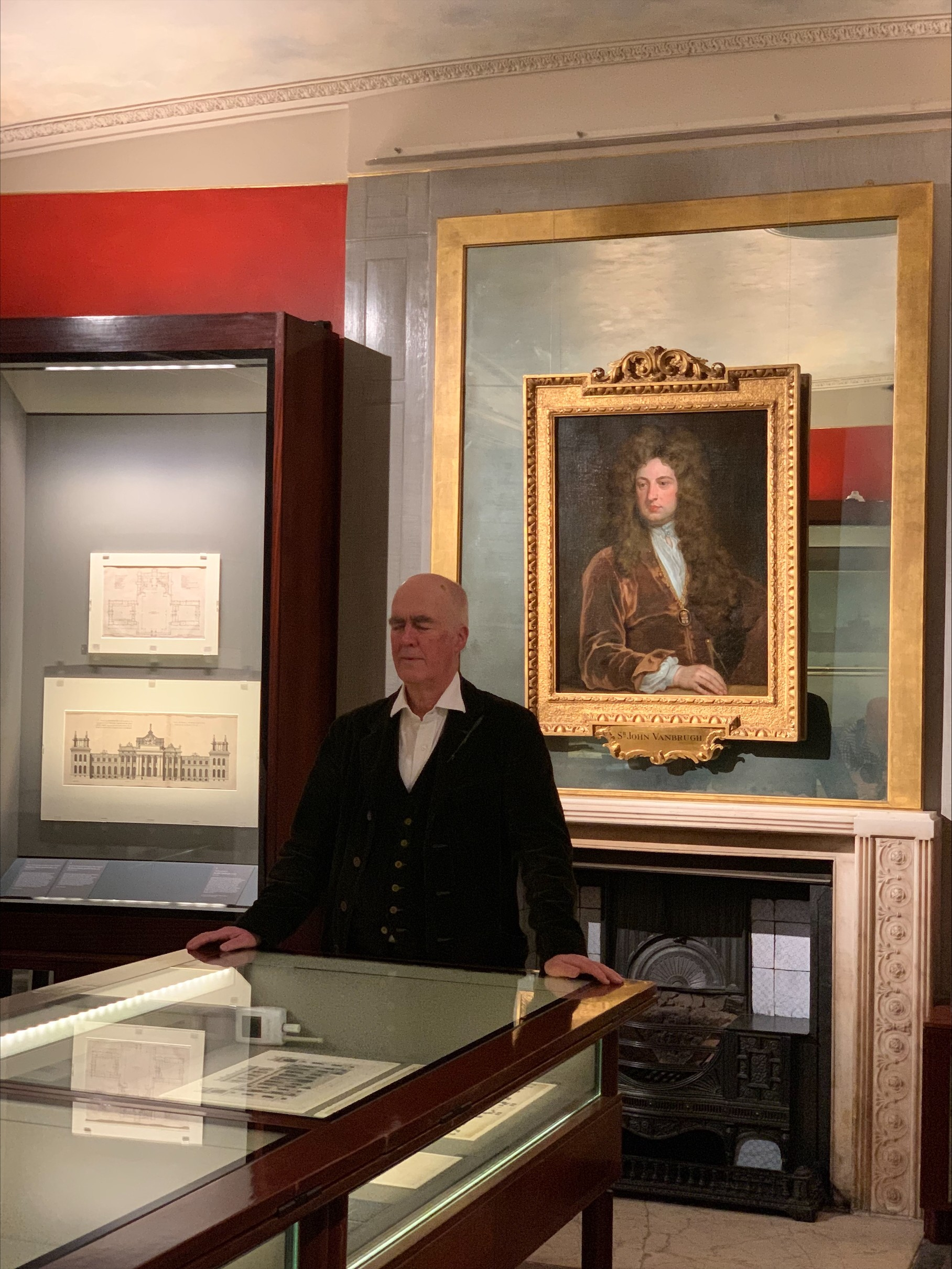
Some time ago, I spent a memorable day in deepest rural Essex out beyond Great Bardfield viewing a collection of daguerrotypes which had been taken by Ruskin, or, more likely, his butler, whilst walking round Venice. They were discovered packed carefully away in an old mahogany box at a country auction, having probably been sold from Brantwood in the 1930s. I remember peering at Venice as if through an eyeglass by Ruskin himself: old, dilapidated, unrestored, but full of picturesque incident which led to his drawings and the writing of The Stones of Venice. The daguerrotypes have now been comprehensively researched and published by Ken and Jenny Jacobson who made the discovery.
Monthly Archives: March 2015
Ministry of Justice
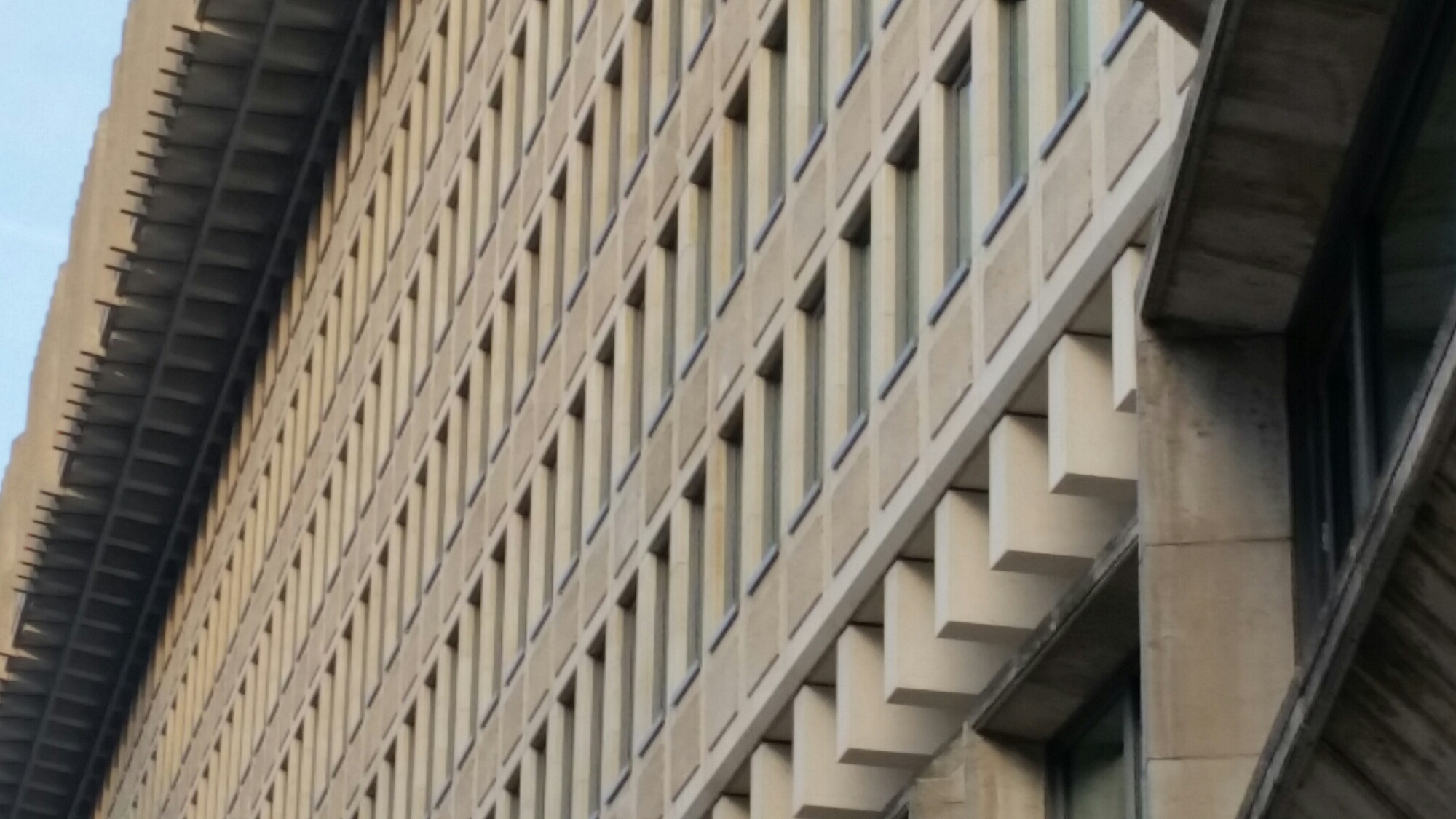
The early morning sun made me pause to examine and possibly admire the great hulk of Basil Spence’s Ministry of Justice building which greets me every morning opposite St. James’s Park tube. It is not exactly beautiful, but does have a certain Thunderbirds magnificence. It was opened in 1978 as the Home Office and is known by its occupants, not inappropriately, as ‘the Lubyanka’. I quite like the protruding windows with their fins:-

Adrien Gardère
© David Chipperfield Architects
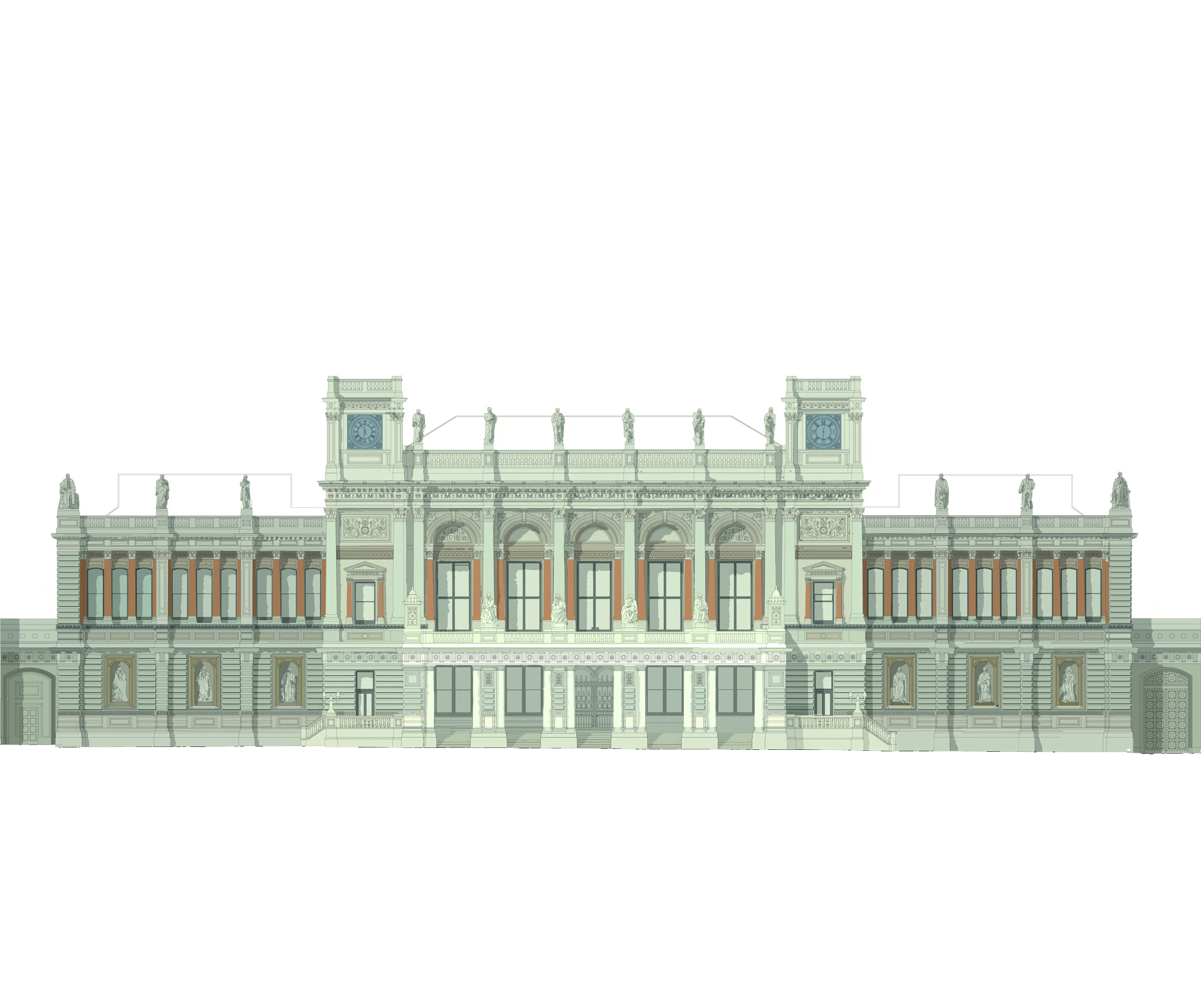
I have just been to a lecture in the Kenneth Clark Lecture Theatre at the Courtauld Institute in which Adrien Gardère, the French museum designer (or museographer) explained his approach to display. Trained as a product designer, he started off designing lamps for Artemide. He then somehow won the contract to redisplay the whole of the great Museum of Islamic Art in Cairo, a project which was completed just before the revolution, with grey paint specified by the Minister of Culture, and was recently catastrophically blown up by a car bomb outside. He did the displays for the new Louvre in Lens, a cool, cerebral project by SANAA with aluminium walls in which the antiquities, objects and works of art are placed on a conceptual time line. He entered the competition for the Museum of Roman Antiquities in Narbonne jointly with Norman Foster, where together they are creating a display in which objects remain movable by a fork lift truck. Most recently, he has worked on the design of the Aga Khan Museum in Toronto. He did not mention that he has been working on a radical redisplay of the collection across the site at the RA. In all his projects, his approach drives at intellectual and visual lucidity with a minimum of superfluous interpretation.
HLF
I went this morning to an event held in the Senate Room in Burlington Gardens to launch the findings of a research project ’20 Years in 20 Places’. The idea of the project was to discover through interviews and questionnares people’s attitude towards their local heritage. Interestingly, and surprisingly, people are more engaged with the heritage and better pleased with money being spent on it, if they buy lottery tickets than if they don’t. Not surprisingly, the research also discovered that younger people, BAMEs and DEs are less involved, but are interested in investment in parks, libraries and archives (i.e local community heritage). Much of the discussion was whether the appeal of heritage is emotional or transactional, beauty or use. To what extent is it, as Richard Layard asked, a contribution not to wealth, but to the pleasures of subjective well-being ?
The Flat White Economy
On Friday afternoon I was walking with Adam Dant up Holywell Row, a fairly nondescript diagonal street just south of Great Eastern Street on the northern fringes of the city. He casually observed that we were walking through the heartland of the new digital economy, which is based classically round the so-called Silicon Roundabout at the junction to City Road. I ordered the new book by Douglas McWilliams to learn more about this phenomenon. Nearly 25% of all UK sales are now online. 32,000 new businesses were registered in EC1V between March 2012 and March 2014. 3.2 million cups of coffee are sold in London every day. It is worth registering that the growth in the digital economy is driven by young, highly educated, migrant, bicycling Europeans, many of whom live in Haringey.
Anna Maria Garthwaite
So, who was Anna Maria Garthwaite? Born in Leicestershire, the daughter of the Rector of Harston, she moved to Spitalfields in the late 1720s with her recently widowed sister. From her house in what was then known as Princes Street (now Princelet Street) she supplied floral designs in watercolour, many of them dated, to the local silkweavers to be made up into elaborate silks which were either sold in the grand drapers in the Strand or exported to America. She died aged 75 on 24 October 1763, having been described in Malachy Postlethwayt’s Universal Dictionary of Trade and Commerce as a designer who had ‘introduced the Principles of Painting into the loom’. I like to think of her as one of two elderly ladies living in the corner house in Princelet Street, producing beautifully bold drawings of plants and flowers for adaptation as brocade.
Natalie Rothstein
In writing about Anna Maria Garthwaite yesterday, I could not help but think of, and remember, the late Natalie Rothstein, the former Deputy Keeper of the Department of Textiles at the V&A, who devoted the best part of her long career at the V&A to the study of Anna Maria Garthwaite’s textile designs. The granddaughter of Lenin’s ambassador to Persia and daughter of ardent North London socialists, she joined the staff of the V&A as a Museum Assistant straight from Oxford in 1952. She wrote a long and magisterial Master’s dissertation on the ‘The Silk Industry in London 1702-1766’ which should really have been published and was always said to have been an enthusiastic scooter rider, having ridden motorcycles in her youth.
Verde & Company
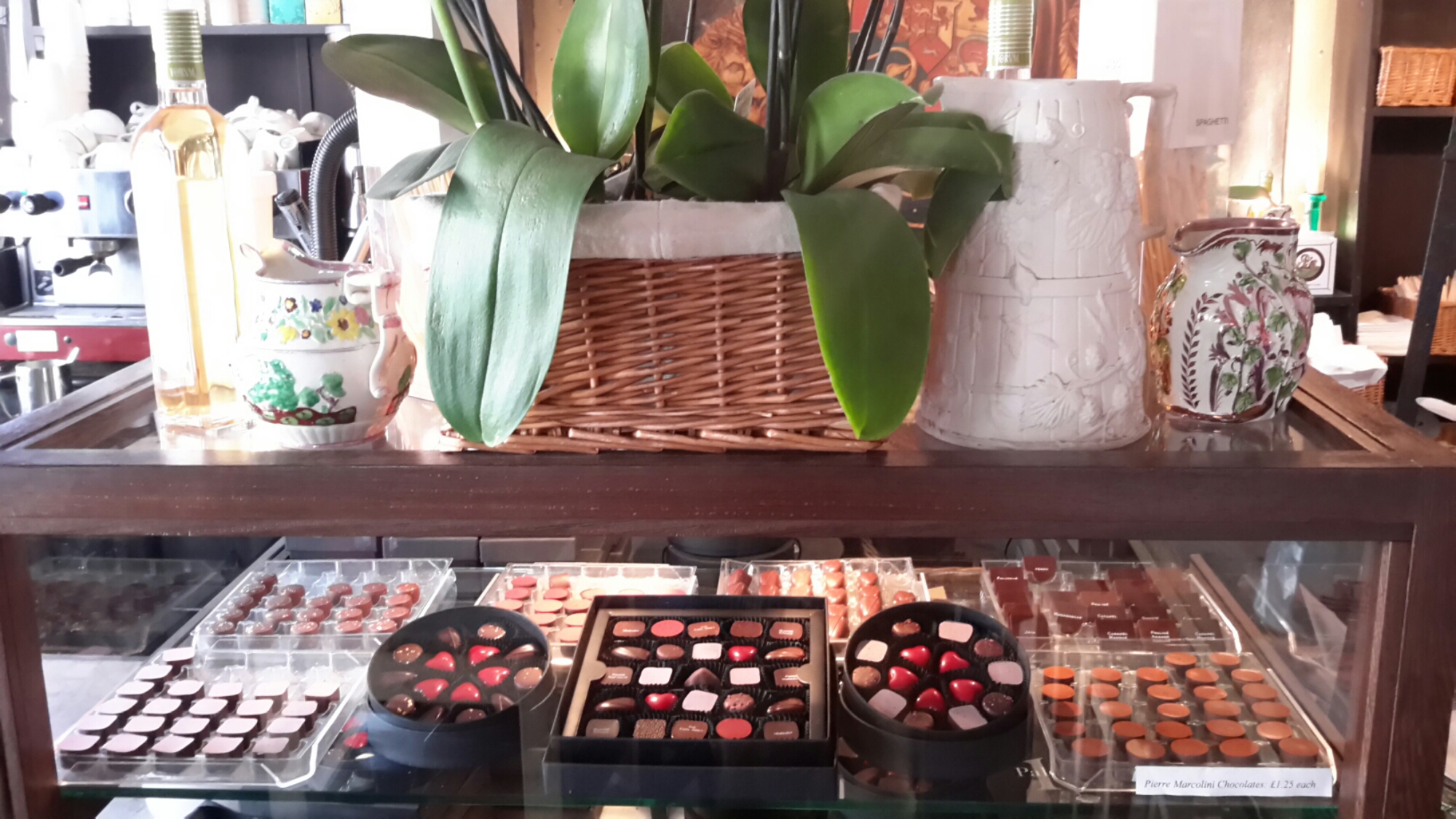
No visit to Spitalfields is complete without a trip to Verde & Company, run by Harvey Cabaniss, and the only supplier – so far as I know – of Pierre Marcolini chocolates in London, the best chocolates in the world, as well as of assorted baskets, knicknacks, silver teapots and Yorkshire Parkin:-

Princelet Street
I was a bit early for my appointment with Miss. Willey, so I took the opportunity of taking some photographs in Princelet Street with my I-pad since my camera phone seems to have conked out. It’s the street where Anna Maria Garthwaite lived and did her beautiful textile designs, different according to the season. This is her house:-


Old Town
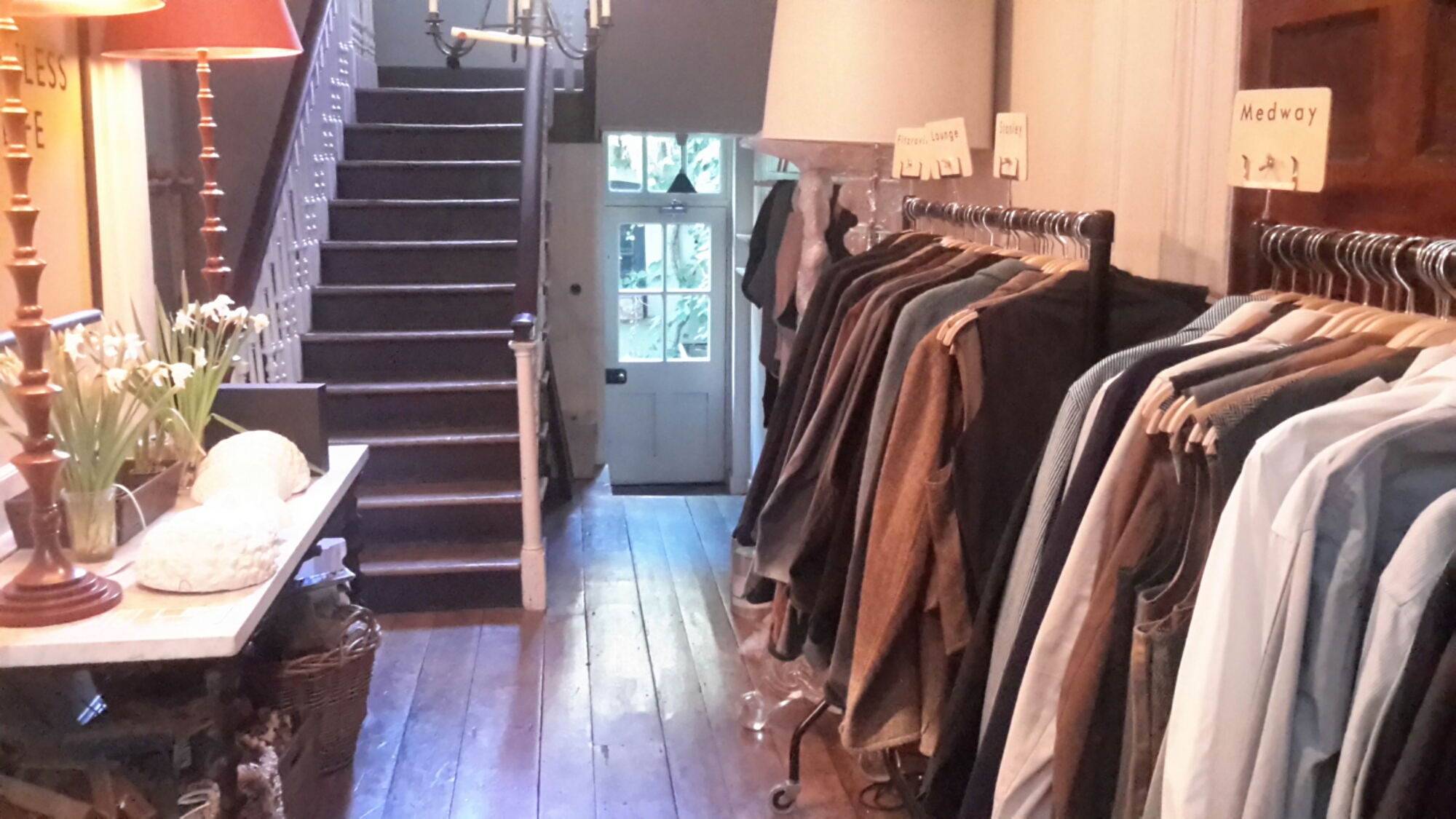
I was nearly first in the queue for the annual visit of Old Town, the mail order tailors, down from Holt in Norfolk to take up temporary residence in Fournier Street. I dearly love Miss. Willey, sometimes known as Marie, who runs the business with great briskness and always remembers what I have bought the year before. I tried on a shirt in a broom cupboard:-

 | Charles | Saumarez | Smith |
You must be logged in to post a comment.