Catania (2)

We decided to spend our last day back in Catania.   Not that there was a lot more to see, but to check that it wasn’t a mirage.

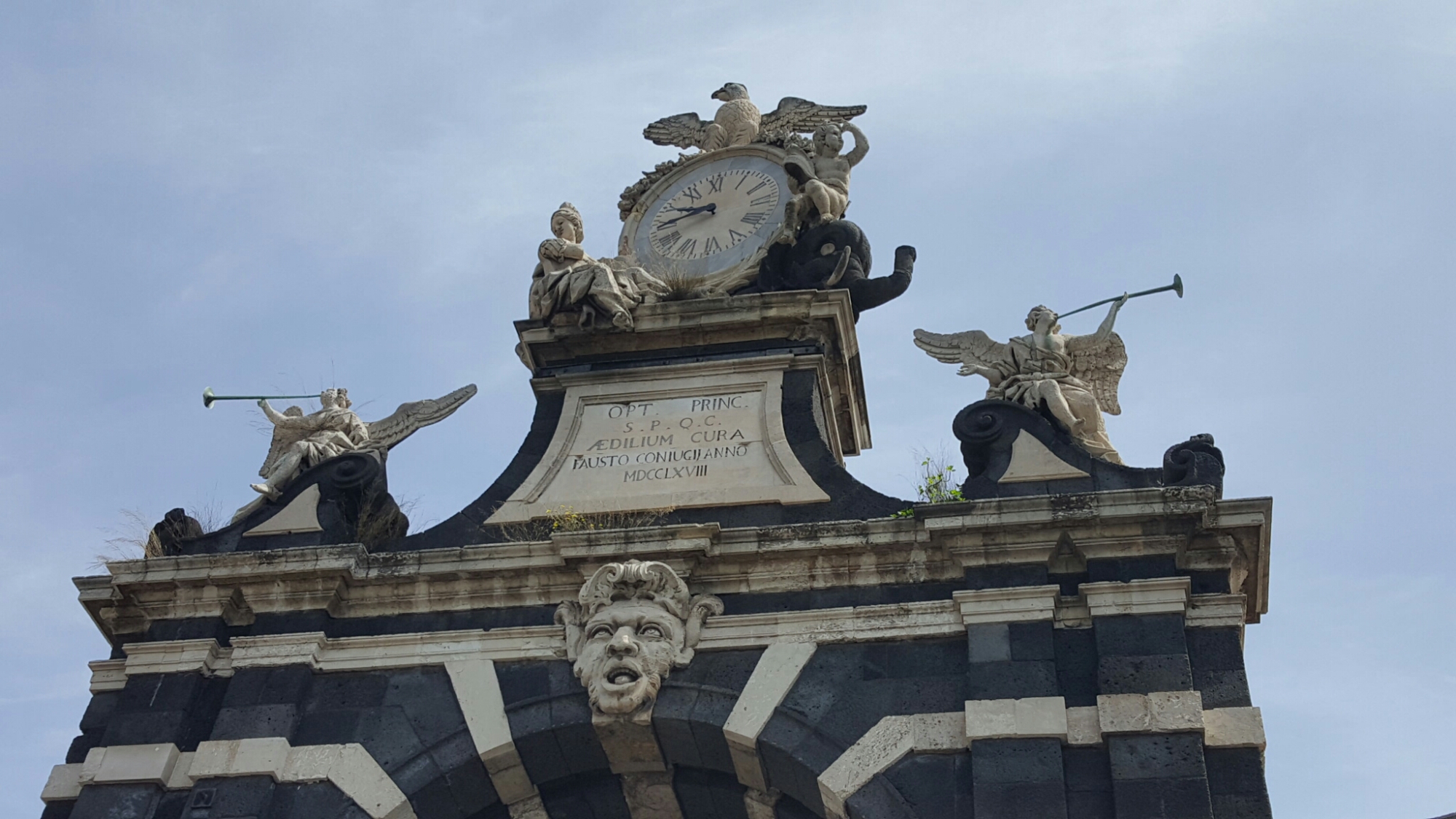
We started at the Porta Garibaldi which is just visible in the distance from the Duomo.   Built in 1768 to commemorate the wdding of Ferdinand I of the Two Sicilies to Maria Carolina of Habsburg-Lorraine, it was designed in full neo-classical glory by Stefano Ittar and Francesco Battaglia:-

image

image
Continue reading

Standard

Catania (1)

We went to Catania in order to go to the railway station.   None of the guidebooks had prepared us for how astonishing the historic centre is – grand, extensive, blackened with age and the use of lava stone, full of dilapidated churches, long axial streets and well preserved squares (the Cadogan Guide describes it as ‘a blackening lava-paved inferno of trash, crime and despair’).   The presiding genius is not Gaglieri, but Giovan Battista Vaccarini, who was born in Palermo, trained in Rome under Carlo Fontana and settled in Catania in 1730 where he was responsible for much of the best architecture and town planning.

We began and ended at the Cathedral by Vaccarini:-

image

image Continue reading

Standard

Rosario Gagliardi

I realise that we have seen nearly the entire oeuvre of Rosario Gagliardi in the last few days.   He was born in Syracuse, worked as a carpenter with his father in the years immediately following the 1693 earthquake, trained with the Jesuits in Palermo, but from 1712 worked mainly in Noto, where he became municipal architect giving him some level of oversight over work in the city as a whole.   He is documented as ‘M. Rosario ingeniero’ when working on S. Salvatore in Mòdica in 1723.   In Noto, he is said to have benefitted from membership of its academy and access to various private libraries, but there is no evidence that he travelled outside Sicily.   In 1762, he appointed Vincenzo Sinatra, his nephew, as his successor and since there is no further documentary mention of him, it’s assumed that this was the year of his death.

What then are the characteristics of his style ?  Grand curved façades.   A certain freedom in the use of architectural form.   Elaborate oversize spiral volutes.   Tiered composition.   Great sculptural complexity.   An original.
Standard

Scicli

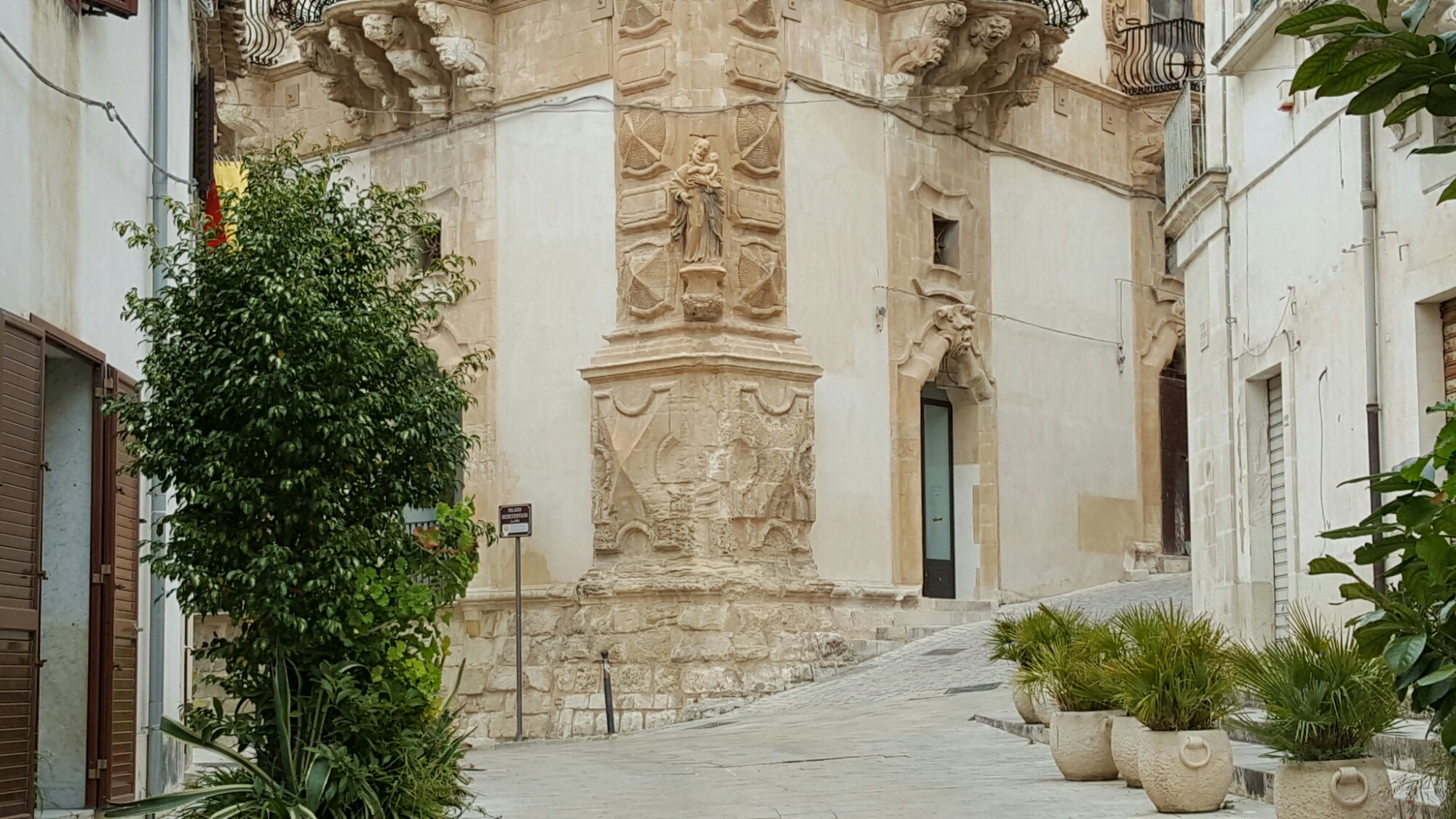
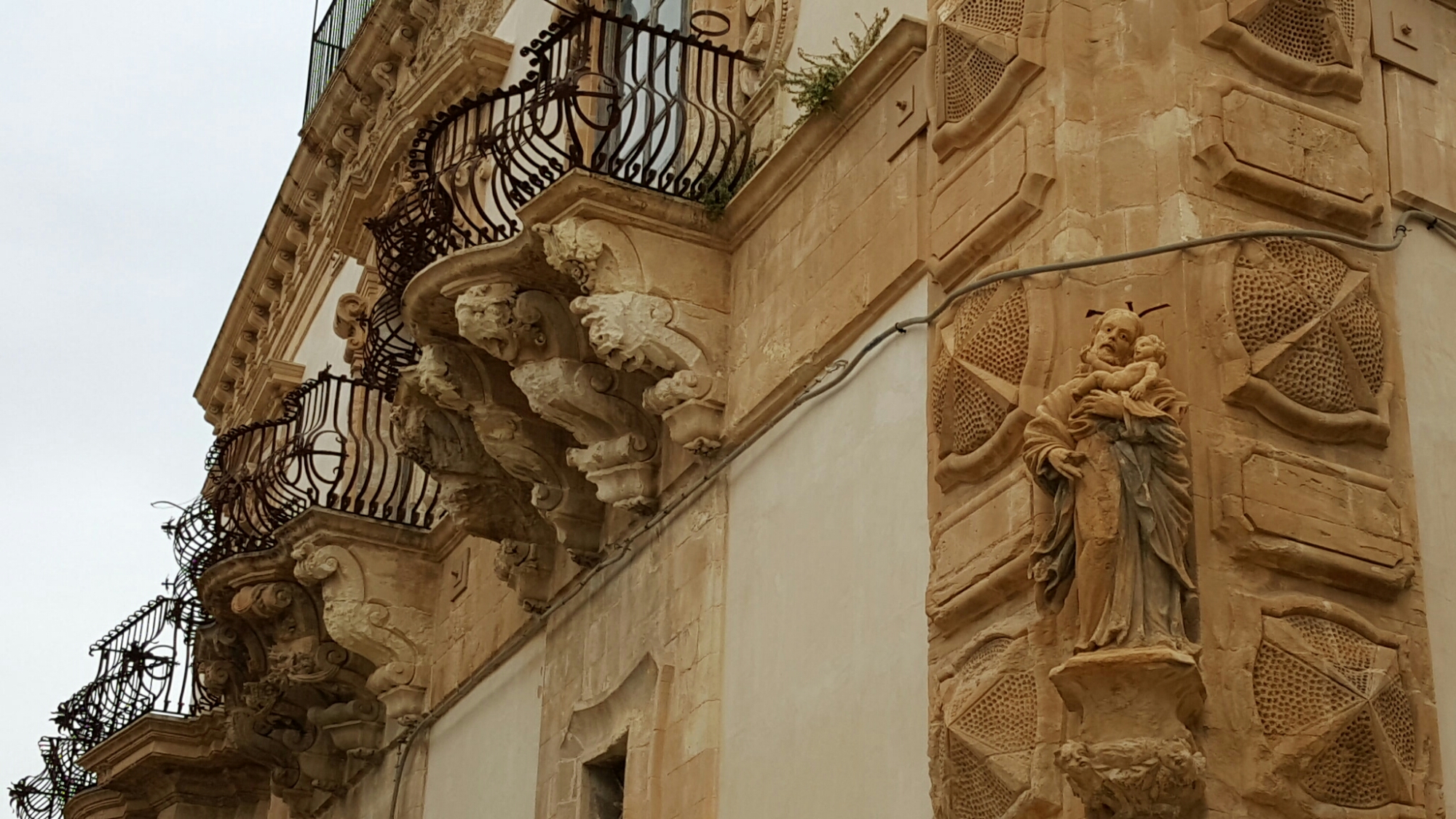
We had been planning to have lunch in Scicli yesterday, but went today instead.   It’s not quite so ostentatious in its charms, but not without them either.   We had lunch by the weirdly overblown Palazzo Beneventano:-

image

image Continue reading

Standard

Mòdica (2)

We went back to Mòdica on a grey Saturday because we realised that we had managed to miss the cathedral in Mòdica Alta, the grandest of its buildings and another work attributed to Rosario Gagliardi:-

image

image Continue reading

Standard

Mòdica (1)

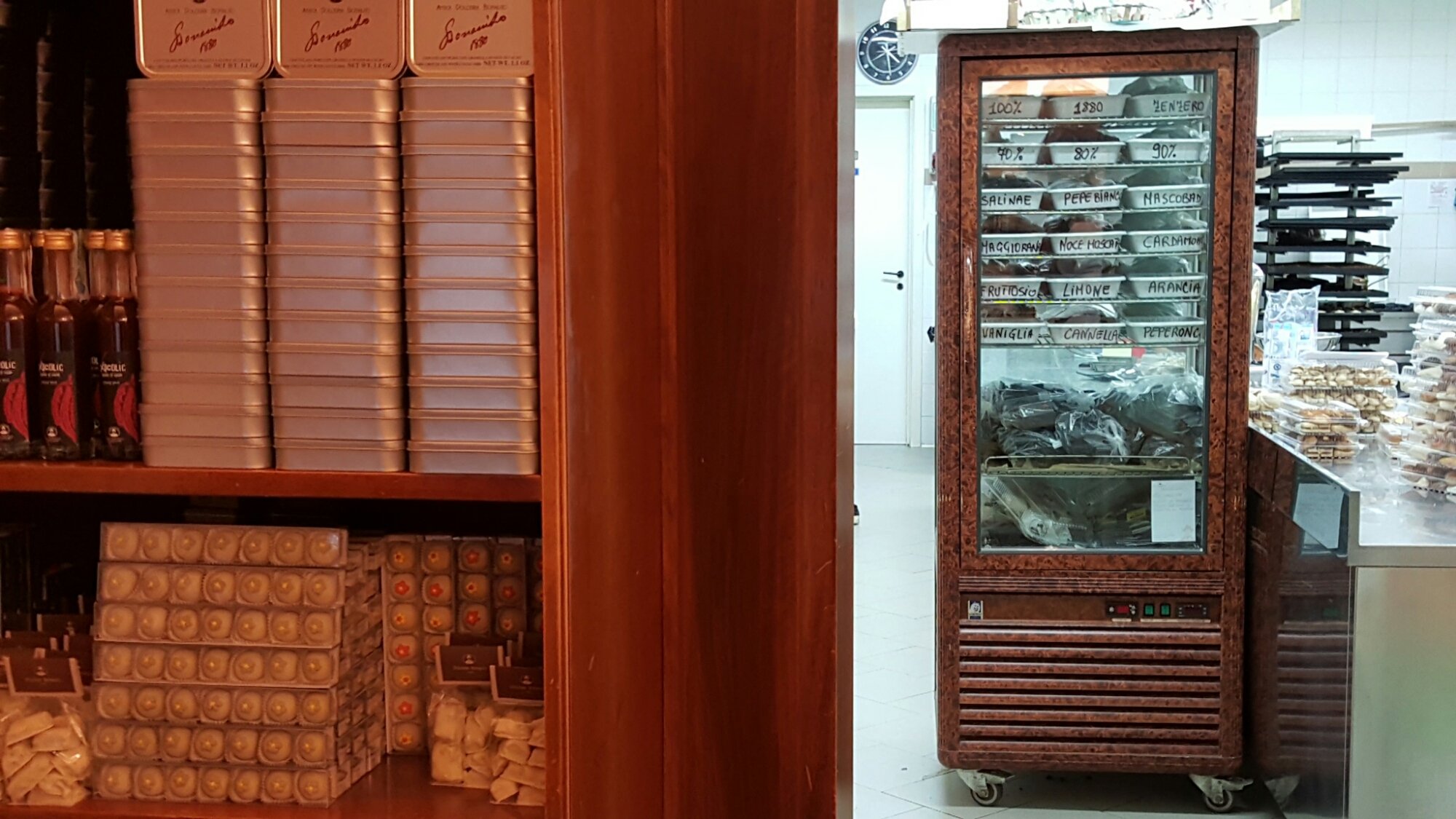
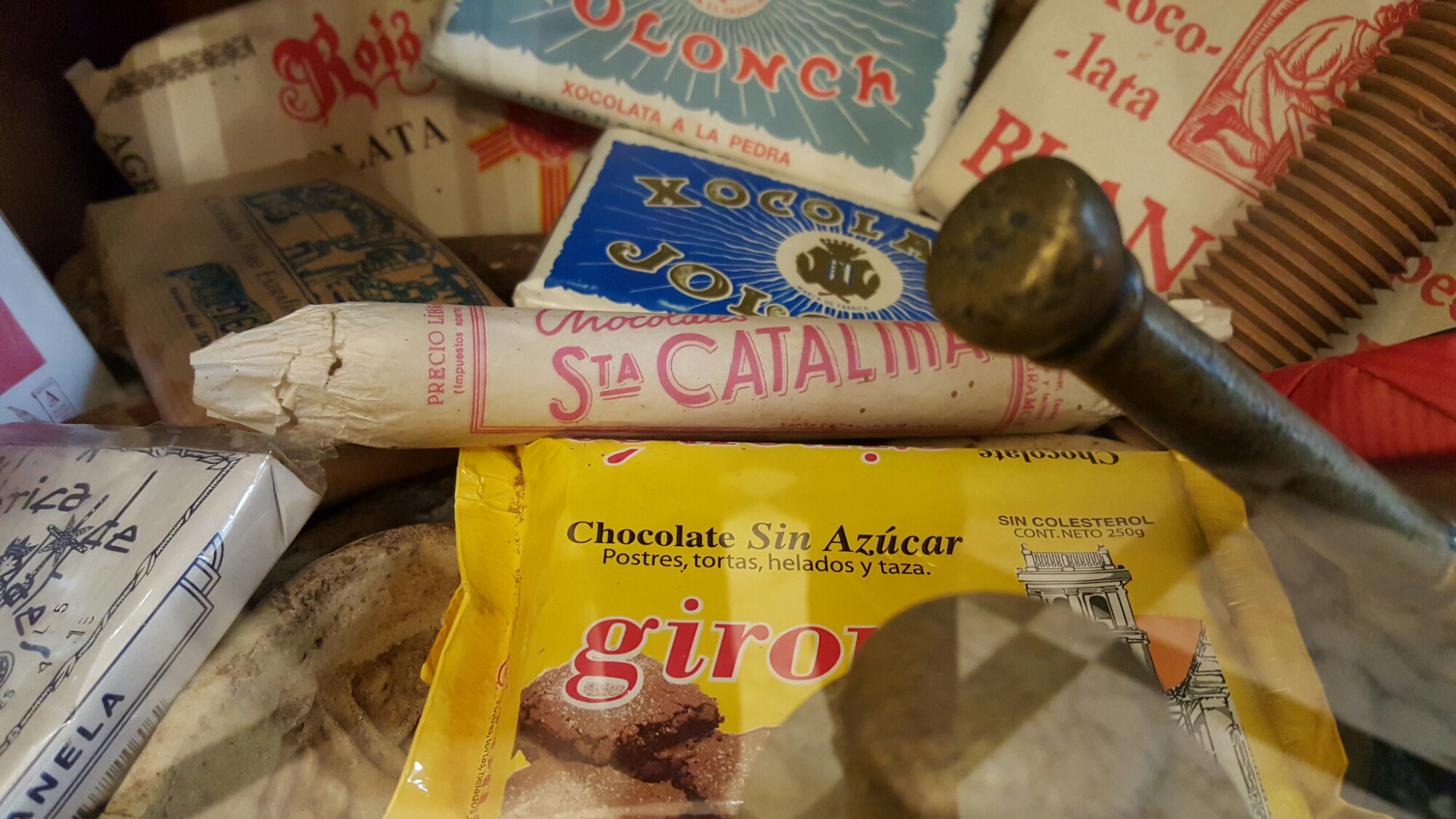
It was worth going to Mòdica if only for its wonderful chocolate shop, Antico Dolceria Bonaiuto, tucked down an alleyway on the Corso Umberto I:-

image

image Continue reading

Standard

Zaha Hadid RA

News of Zaha Hadid’s death has reached southern Italy.   It has made me think back on her career.   I first became aware of her – other than through the controversy surrounding the Cardiff opera house – through an exhibition of her drawings and designs which was shown at the San Francisco Museum of Modern Art over Christmas 1997.   They were astonishingly inventive.   At the time, they seemed like fantasies and one was not encouraged to think of them as buildable.   They were comments on the language of architecture.   But the last two decades have seen versions of them built – magnificent free structures in the tradition of the Russian constructivists – including the Olympic Aquatics Centre which is the best place to see her work in London.   In an interview with Alain Elkann conducted in August 2012, she ends by saying ‘You need to convince other people to do the impossible.   This is my profession’.   A great loss.

Standard