Bethnal Green

I walked yesterday through unfamiliar bits of Bethnal Green in an attempt to take a half way decent photograph of the Brady Street Cemetery, which can only be done by poking a telephone through the gate and hoping that the lens is pointing on the right direction.

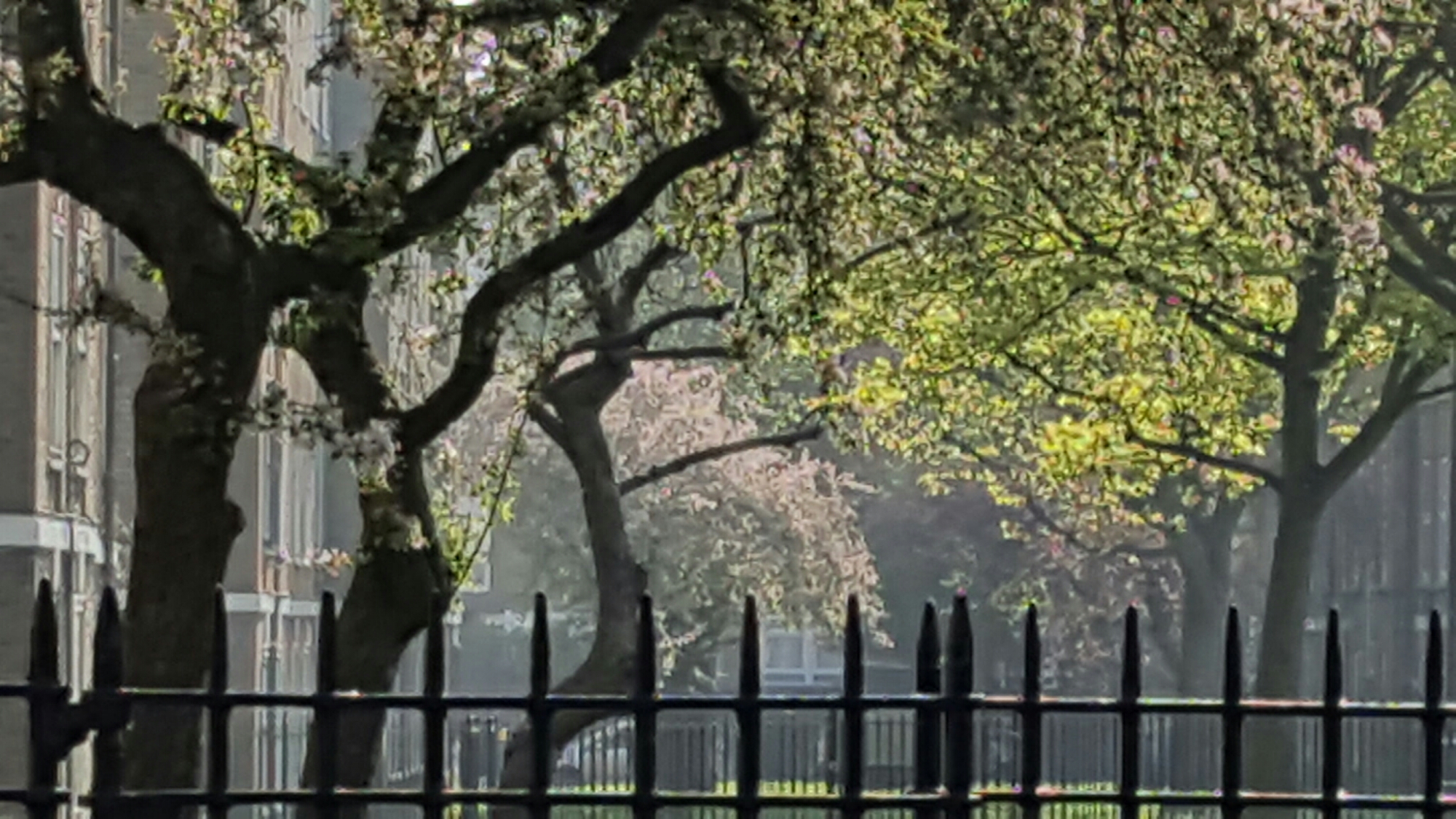
I started through the Collingwood Estate, which in most weathers would be a bit grim – big, standardised, neo-Georgian blocks laid out in the 1920s and 1930s by the LCC under G. Topham Forrest.   But it looked pretty good in the sun:-
image

Then the cemetery itself:-

image Continue reading

Standard

Cleeve Workshops

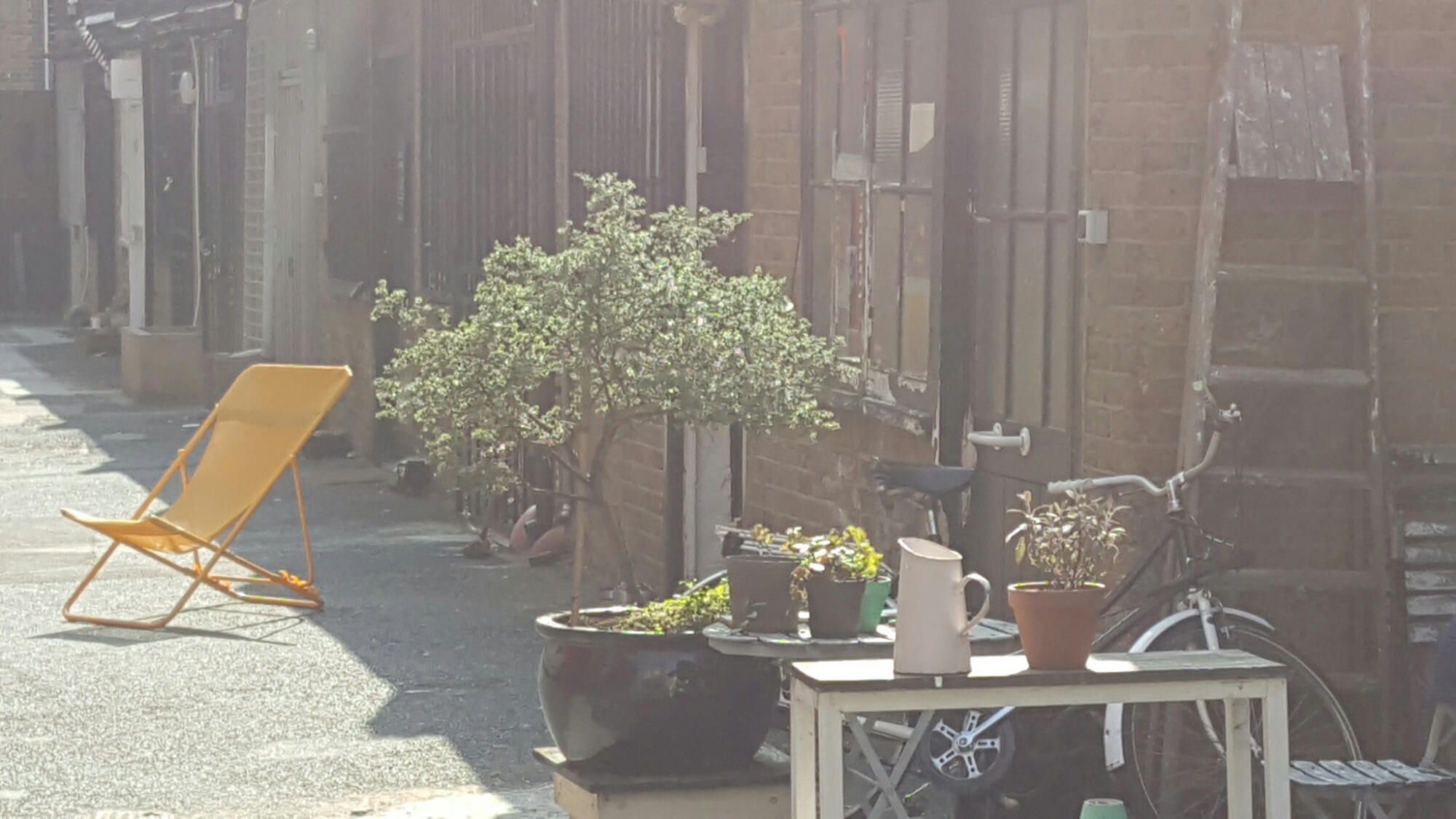
I’m not sure that I have ever done a post about Cleeve Workshops, a group of sixteen worker’s units in a yard at the back of Cleeve House on Calvert Avenue.   They were built in 1895 as one of the first parts of what became the Boundary Estate, planned by the Housing of the Working Classes Branch of the LCC Architects’ Department and designed by Reginald Minton Taylor.   They now house small cafés and fashion studios, including S.E.H. Kelly:-

image

image Continue reading

Standard

Hieronymus Bosch (2)

I like the idea that Bosch depicted himself as half hooded man, half crustacean monster in the bottom right hand corner of the altarpiece that he painted for the Brotherhood of Our Lady, the guild of which he himself was a ‘sworn brother’ in 1487 and hosted its annual banquet in the summer of 1488.   It shows exactly the sort of respectable, bespectacled, thoughtful and earnest man one would expect him to have been as recorded by the church archives, but whose mind was nevertheless teeming with half crazy and fantastic visions of paradise and hell, populated by sarcastic images of his fellow citizens, the evidence for which is in the pictures themselves.

Standard

Hieronymus Bosch (1)

It wasn’t straightforward to get to s’Hertogenbosch by 8 o’clock in the morning in time for the opening of the Bosch exhibition, where there was already a long queue of international art pilgrims.   I’m glad I made it because it’s not a very easy exhibition to absorb, given how relatively few fully authenticated surviving works there are, mixed with copies and works by followers.   I found I particularly enjoyed the assembly of nearly the complete oeuvre of his surviving drawings which are so much less familiar and where it is easier to understand his curious mixture of late medieval storybook piety and coarse scatological humour and to enjoy the free fluency of his invention of fictive monsters.   What comes across is the strange intensity, as well as playfulness, of the imaginative life of an otherwise entirely conventional craft painter living and working just next to the marketplace in a regional town in northern Brabant, far away from his painter contemporaries.

Standard

Burlington Gardens

I realise you may tire of my posts about Burlington Gardens, but I like the idea of being able to record its slow transformation as I walk people round trying to raise the last £3 million.   I can’t pretend that much has changed, just that I notice different details.

The view of the Lecture Theatre now that the floor has been removed:-

image

The drainpipes on the side of Albany:-

image Continue reading

Standard

Olafur Eliasson

Olafur Eliasson came last night to give the annual David Lean Lecture to the Royal Academy Schools, but in the Royal Institution (we await the completion of our lecture theatre).   He was in conversation with Tim Marlow.   It was a good combination, Tim gently goading, Eliasson intelligently resistant to provocation.   What came across was the extraordinary multifariousness of Eliasson’s practice – architecture, design, invention, public realm, ecology.   He talked about learning to draw in order to impress his divorced father, his championship break dancing, and his turn to art practice at the Copenhagen Academy of Fine Arts.   He came across as deeply thoughtful about the nature of, and absence of boundaries in, contemporary fine art practice.

Standard

The People’s Palace

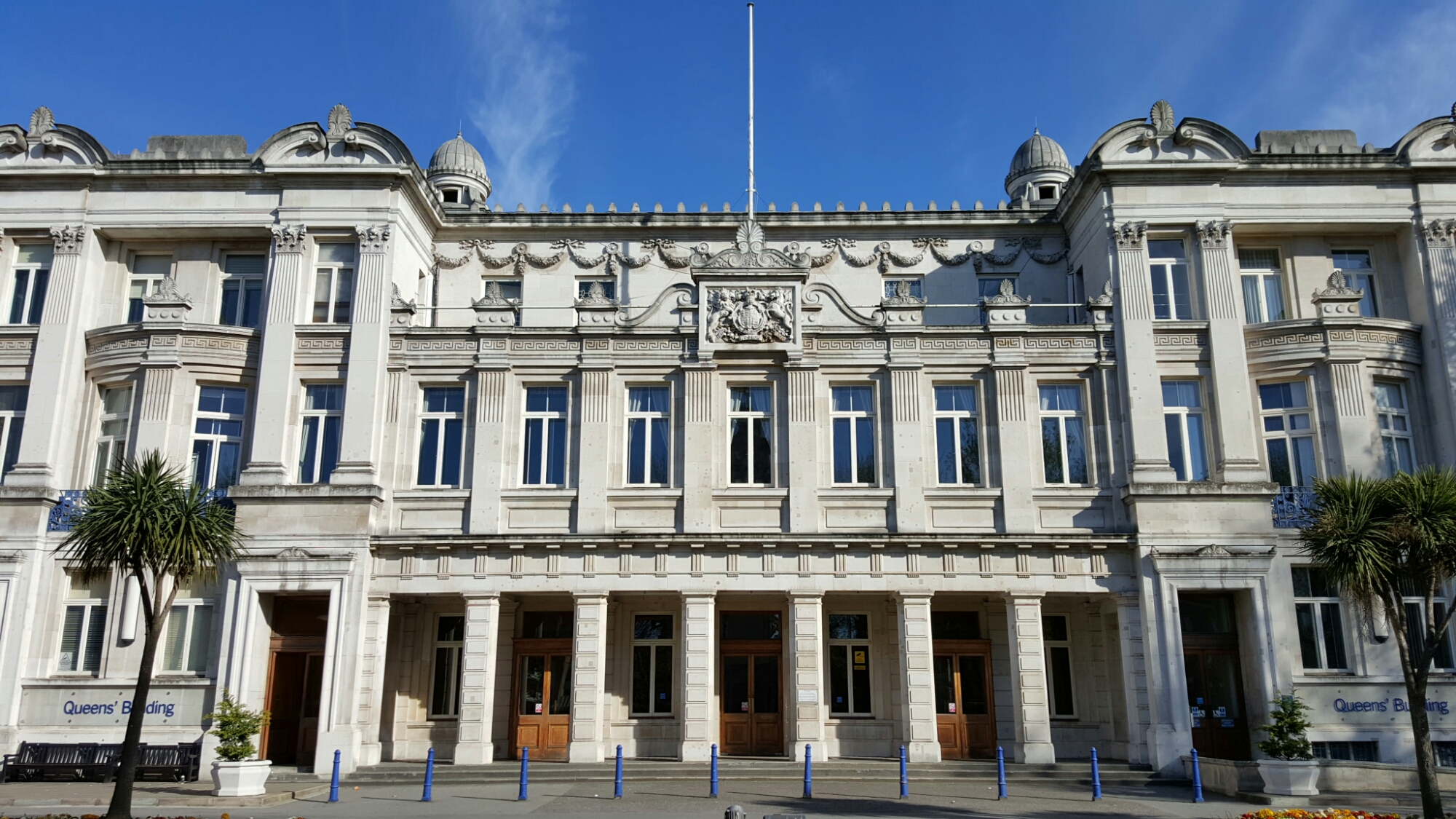
I have been meaning to do a post about the original People’s Palace, now subsumed into being the Queen’s Building at Queen Mary.   It has a long and interesting history.   Barber Beaumont, an eighteenth-century miniaturist who was trained at the Royal Academy Schools, turned in later life into an entrepreneur, establishing the Provident Life Institute and Bank of Savings. As a philanthropist, he set up the Eastern Athenaeum, a museum, library and concert hall in Beaumont Square, which later became the New Philosophic Institute in Mile End.    His legacy also made possible the construction of a so-called People’s Palace, a rival to the Alexandra Palace in combining the functions of swimming pool, winter garden and concert hall.   It was described by The Times as ‘a happy experiment in practical socialism’ and, at least to begin with, was wildly popular.   The original building was designed by E.R. Robson, the architect of the London Board Schools, but burned down in 1931.   It was taken over by Queen Mary in 1934:-

image

image Continue reading

Standard

Craft Values

We’ve just been to an event to launch London Craft Week in which Mark Henderson, the chairman of Gieves and Hawkes and founder of The New Craftsman, was in conversation with Martina Margetts, a veteran of craft debates and Senior Tutor in Critical and Historical Studies at the Royal College of Art.   We particularly enjoyed the moment when Mark referred to craft as a form of ‘better shopping’:  the idea that craft practice will inevitably rise as a result of more discriminating consumers, particularly in markets like Japan, looking for beautiful handmade objects.   Martina could barely disguise a look of anxiety and horror that a century of fine art practice applied to three dimensional form might be reducible to a species of luxury goods.

Standard

Cassland Road Board School

In wandering round East London, I am increasingly admiring of the scale and ambition of the London Board Schools.   They were designed to be ‘Lighthouses, my boy !  Beacons of the future !  Capsules with hundreds of bright little seeds in each, out of which will spring the wiser, better England of the future’.   The one in Cassland Road was opened in 1902, the year after education was taken over from central government by the local authorities and was designed by T.J. Bailey in the grandest Wrenaissance style in the middle of an area of market gardens.   It is now – surprise, surprise – being converted into luxury flats:-

image

image Continue reading

Standard

East London Food

I picked up a book this morning in the Broadway Bookshop about East London Food.   In effect it’s a sociology of East London gastronomy, tracing the ways in which the food culture has evolved from a small number of old fashioned pie and mash shops like G. Kelly in the Bethnal Green Road and F. Cooke in Broadway Market through the era of pioneers like Fergus Henderson at St. John Bread and Wine (established 2003) and David Waddington and Pablo Flack at Bistrotheque in Wadeson Street (2006) to the current astonishing diversity of activity, including poachers on Hackney Marshes, an Australian jam maker in Clapton, The Towpath Café and the man who makes beef jerky in Hackney Wick.   Food for more blogs.

Standard