Royal Opera House

I spent the early part of the morning being shown behind-the-scenes at the Royal Opera House, which I have never seen before, apart from Jeremy Isaacs’s office on the other side of Floral Street. Stanton Williams have been commissioned to ‘Open Up’ the opera house (shades of the Venice Biennale) by creating much more publicly usable, daytime space between the corner entrance to the Piazza and the street frontage to Bow Street. It looks very successful, creating an extra public space beneath the Floral Hall, opening up the balcony overlooking the Piazza to greater public use, and completely refitting the Linbury Theatre with dark American walnut.

I wasn’t allowed to take photographs, so am posting one of the Floral Hall and one of the view down to the Piazza:-

image

image

Standard

Grafton Architects

We had the Annual Architecture Lecture last night, given this year by Yvonne Farrell and Shelley McNamara of Grafton Architects who did one of the installations for Sensing Spaces and are curators of the current Architecture biennale in Venice.   They gave a tour d’horizon of their choice of work for the biennale – very global, very publicly oriented, based on the ideas of imagination and generosity – ‘generosity of spirit and a sense of humanity’ or Freespace as their overall theme is called.   Almost no architects from the United States, apart from Michael Maltzan’s Star Apartments in Los Angeles:  the drive is towards the creation of non-commercial public spaces, a mood which passes most of North America by.

Standard

The Go-Between

Am I alone in being reminded constantly during this spell of long, unnaturally hot weather of Joseph Losey’s The Go Between, which, true to the book, but more obviously, describes the consequence of a young-ish boy going to stay with a school friend in a Norfolk country house where he is used by adults in ways that he only half understands ? I thought of it particularly today, picnicing in Norfolk parkland and remembering the heat in the film, the sense of menace, the way that the adult world was seen through the eye’s of an adolescent, the places of escape in a large estate, and how the adolescent revisits the episode in his memory at the end of his life. I remembered that the film had been made in a Norfolk country house, but couldn’t remember which one. It was Melton Constable, south-west of Holt. In the book, the house is called Brandham Hall.

Standard

Antony Gormley RA

En route to Norfolk for a picnic lunch, we stopped off at Kettle’s Yard to see Antony Gormley’s current exhibition Subject, which makes use of the light spaces of Jamie Fobert’s new exhibition galleries by joining them together at right angles with thin, taut and extremely tensile metal wire which makes one register the quality of the spaces, as if with lines drawn between them.

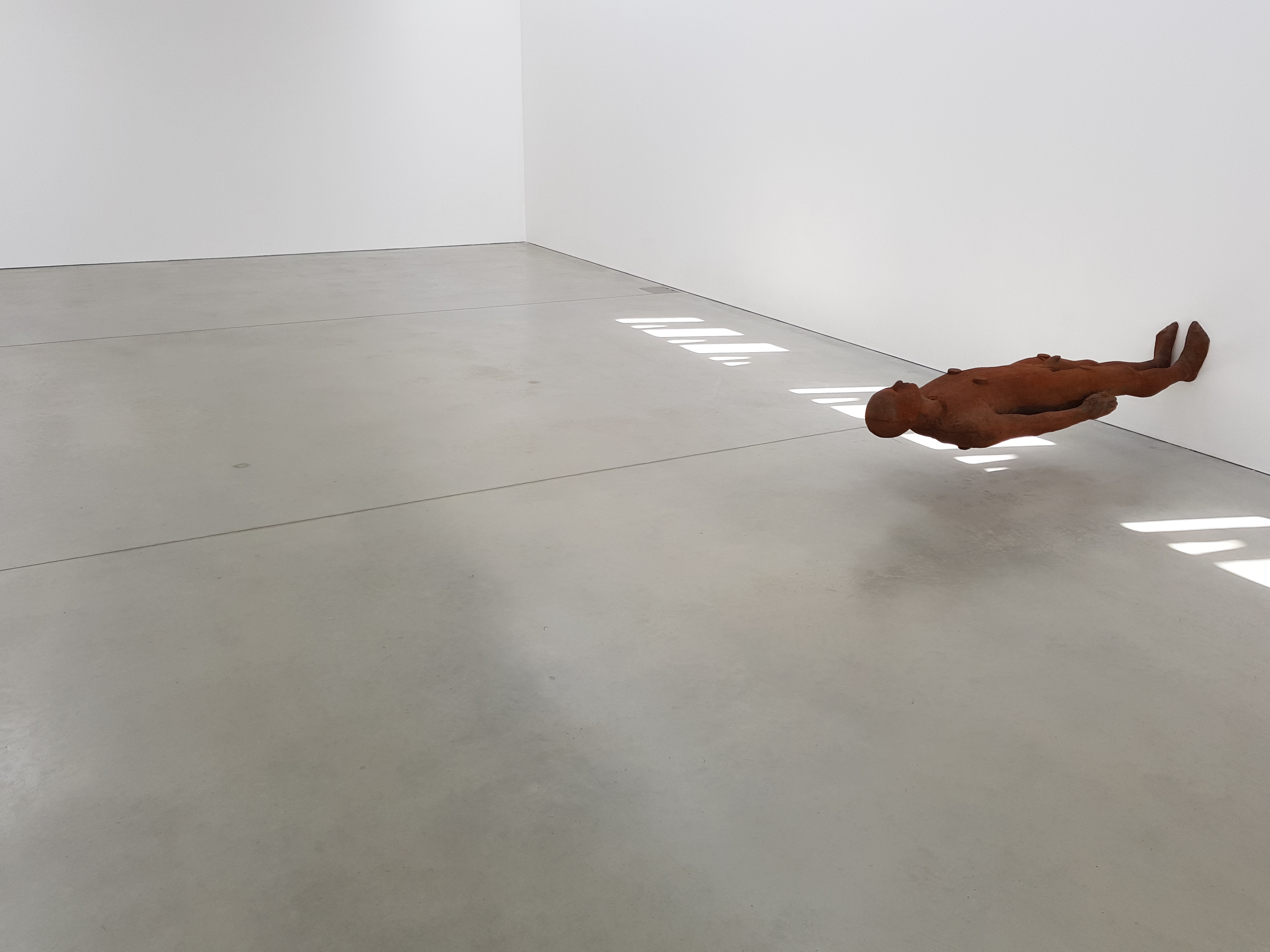
In Gallery 2, there is a projecting body in cast iron, his own:-

image

In Gallery 1, a standing figure, prehensile:-

image

Upstairs, unmentioned in the gallery guide, was a small case of drawings, which help describe the character and quality of the thought process behind the work:-

image

image

image

Standard

Branch Line to Ongar (2)

I have discovered that – perhaps not surprisingly – there is already a very well established mythology about the line to Ongar. When it opened in 1957, the trains were discovered to be much colder than the old steam trains, not helped by the fact that they kept the doors open while they were waiting at Ongar. There was also not a very good electricity supply, which meant that acceleration was slow and they could only run one train of four carriages at a time. As a result, people would drive to Epping and park there, which meant that the line was little used. But the rumour that John Betjeman wanted to retire to Blake Hall station was apparently an April Fool.

Standard

Branch Line to Ongar (1)

I thought I remembered that there was a branch line beyong Epping to Ongar.   There was.   It was operated by steam until 1957 when the line was electrified, but the trains were only four carriages long.   The loop at North Weald was closed in 1976.   Blake Hall was officially closed in 1981, although drivers were apparently willing to make unauthorised stops on request.   And the branch was finally closed in September 1994, so is no longer available to take the Cabinet to their nuclear bunker in Kelvedon.   I find it odd to think how much the tube map has been quietly doctored during my lifetime without anyone, except maybe railway fanatics, and perhaps the Cabinet, noticing.

Standard

Epping Forest

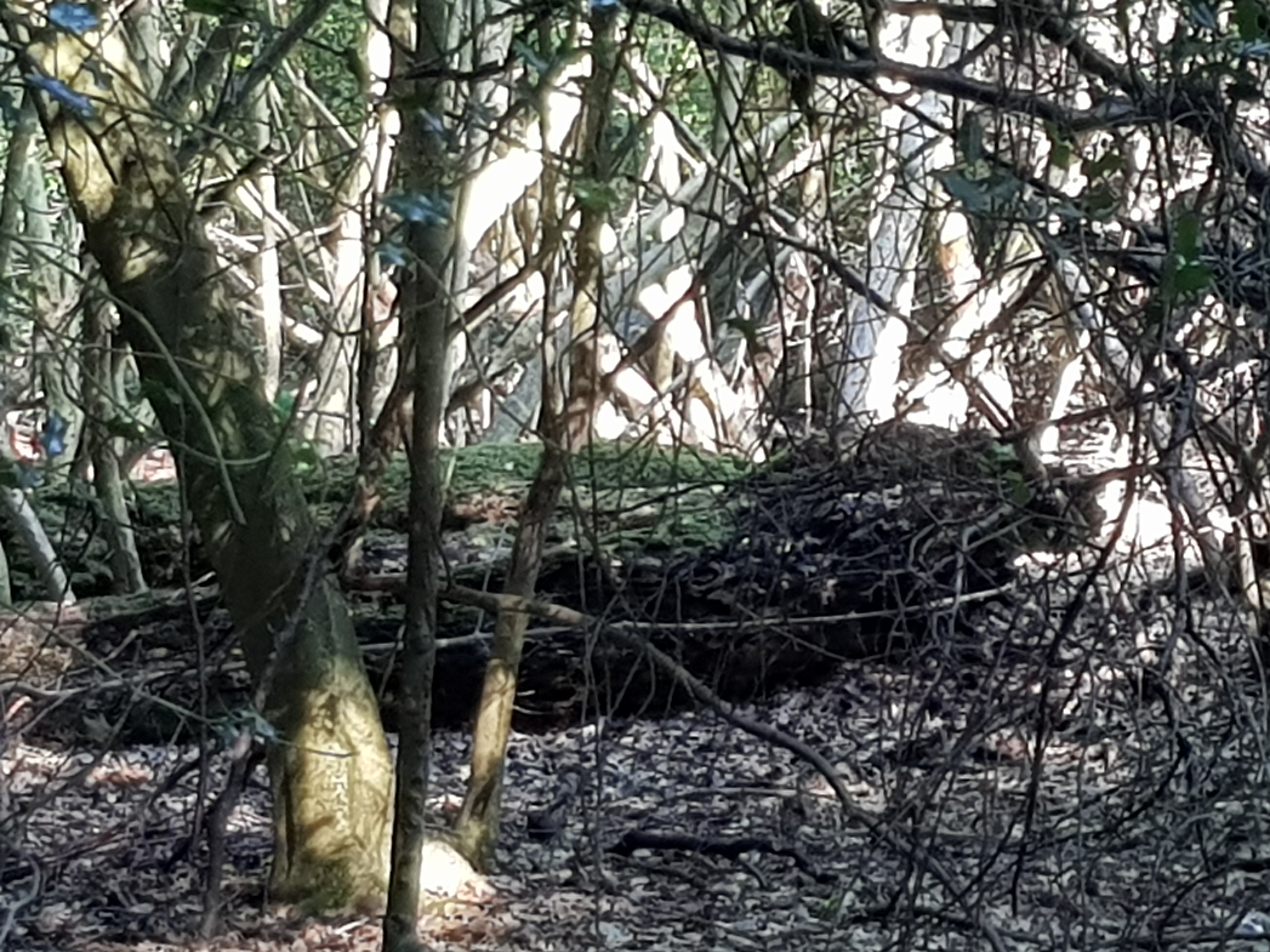
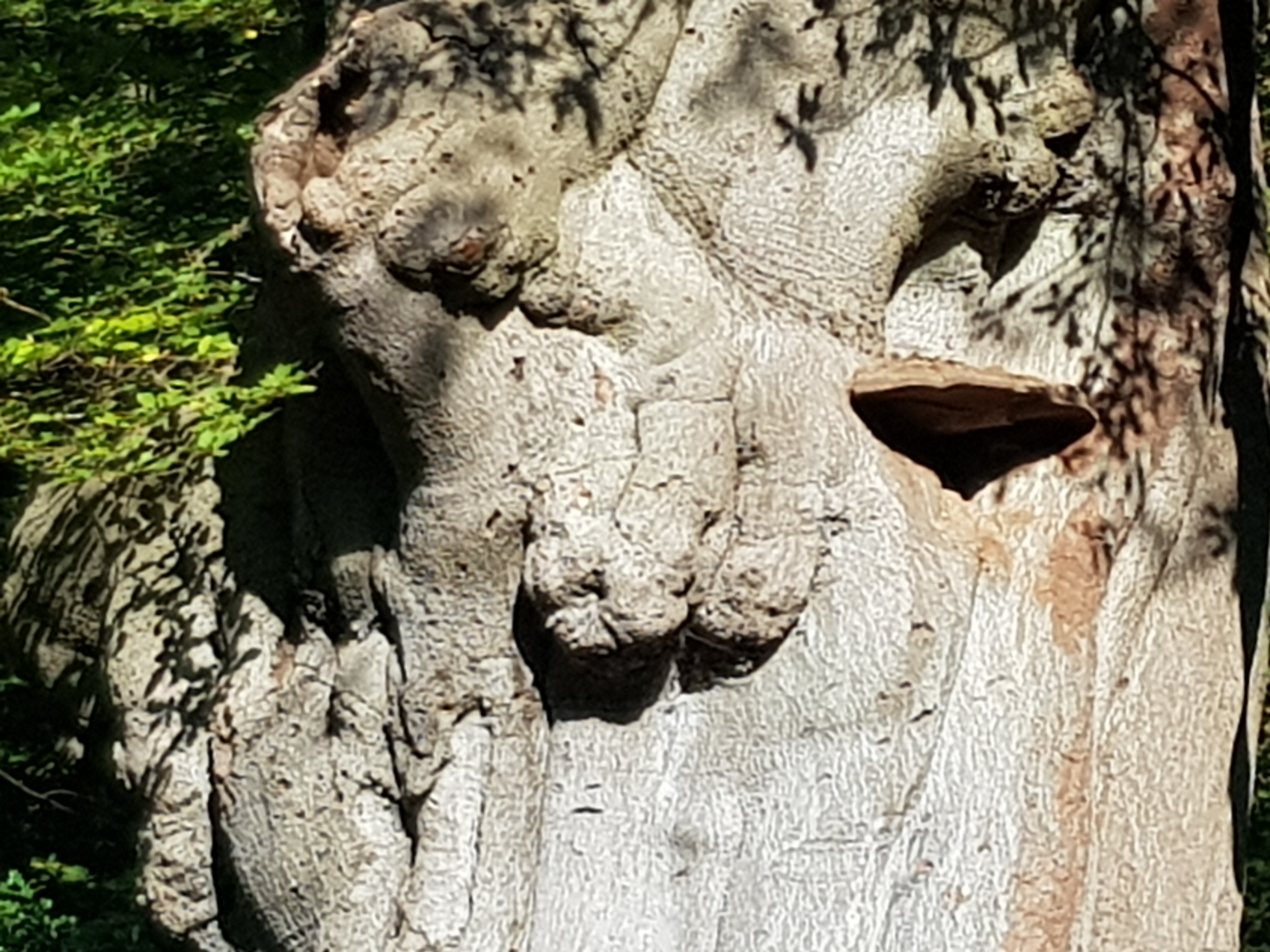
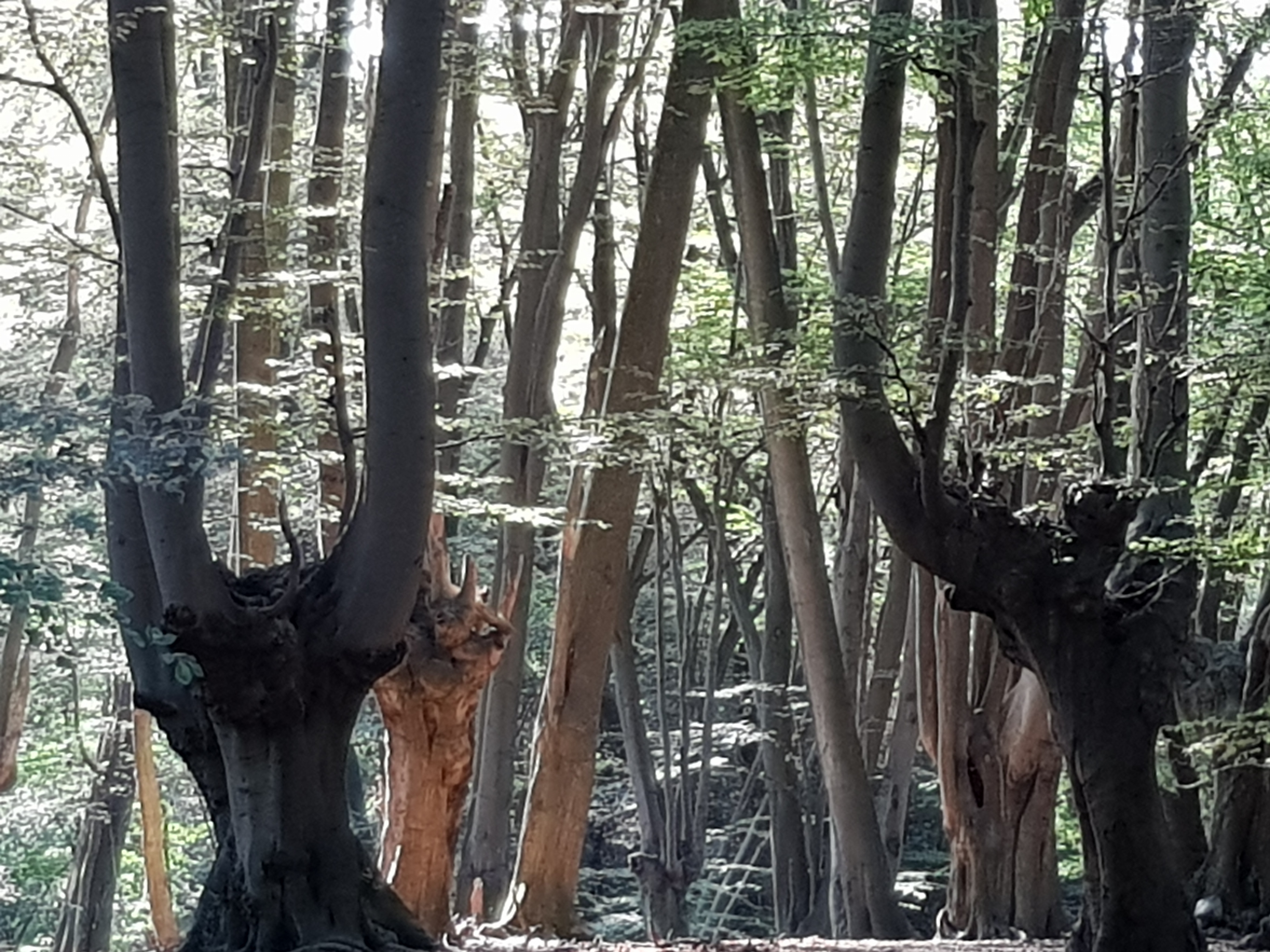
In reading Will Ashon’s book Strange Labyrinth:  Outlaws, Poets, Mystics, Murderers and a Coward in London’s Great Forest, I realised how little I know Epping Forest in spite of living within easy reach of it for nearly forty years.   So, I took the Central Line to Epping, the end of the line, past Theydon Bois where the underground runs alongside fields, and found my way, not without difficulty (it’s a while since I’ve had to rely not on Google, but the Ordnance Survey) out into the long rides of the forest, mostly deserted, apart from over-equipped runners, across the occasional road, to Chingford in the distant south where I was able to get a cup of coffee next to Queen Elizabeth’s Hunting Retreat:-

image

image

image

image

image

image

Standard

St. Pancras Station

I know that I have posted photographs of St. Pancras Station before, but as I was crossing the street from the British Library this evening, I was struck by the amazing quality of its architectural detailing, the way the late afternoon light fell on the columns, and wandered through to the booking hall, which has become a fancy restaurant.   I saw someone who looked uncannily like Peter Ackroyd.   Maybe it was:-

image

image

image

image

image

image

image

image

Standard

The Westminster Jews Free School

Another bit of curiosa I spotted yesterday was the lettering for the former Westminster Jews Free School on the north side of Hanway Place.   The school was established in 1811 under the auspices of the Western Synagogue to teach Hebrew, English, writing and arithmetic.   Originally in Greek Street, it moved to new premises in Hanway Street in 1883 in a building with good terracotta decoration and lettering:-

image

image

Standard

The French Protestant Church

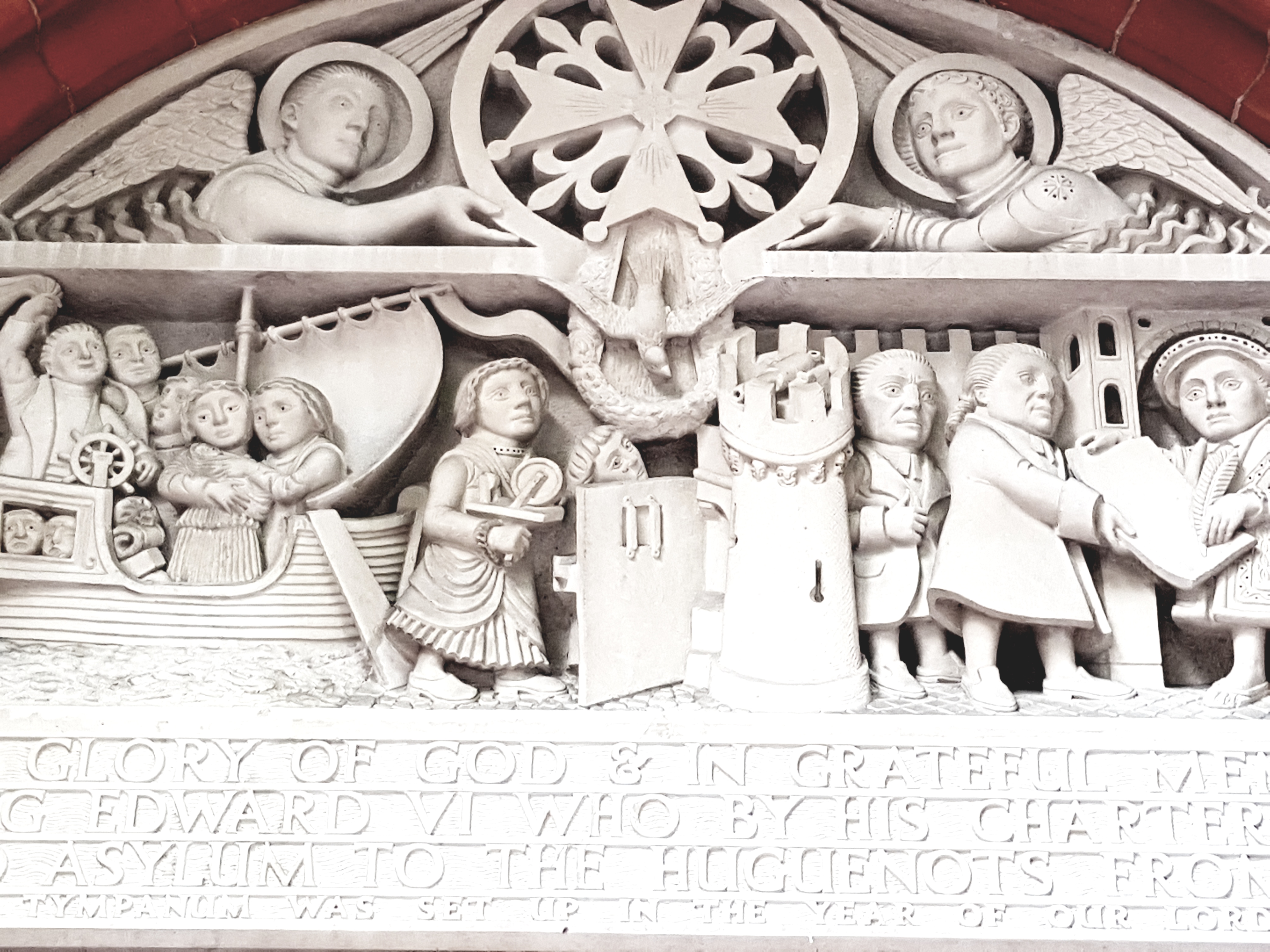
On my way to the party to celebrate the big book about the RA’s collection, my eye was caught by the curious, but attractive carved relief over the entrance to the French Protestant Church in Soho Square.   It is dated 1950, done to celebrate the 400th. anniversary of the establishment of the Huguenots in London, when Edward VI signed letters patent for the foundation of a Strangers’ Church in London.   The church itself was designed by Aston Webb, the carving by J. Prangnelli, who seems to be otherwise undocumented:-

image

Standard