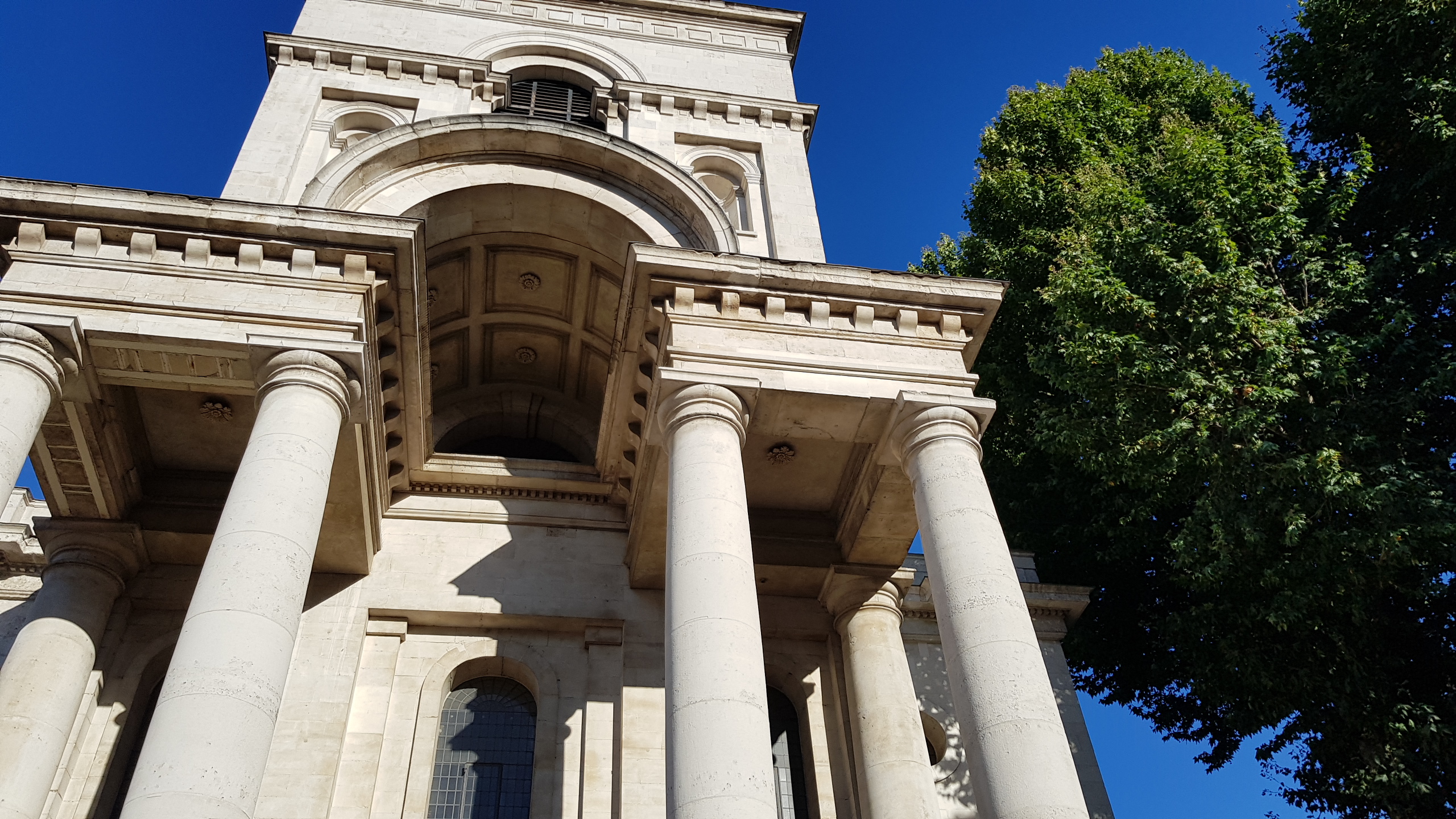
It’s so rare that Christ Church, Spitalfields is open when I’m in the neighbourhood that I braved their five o’clock service to remind myself of its interior, till recently a noble ruin, now a touch over-restored and with purple fluorescent lighting. But I had forgotten that it contains – very appropriately – a monument to Jim Stirling (designed by Celia Scott):-
Monthly Archives: September 2018
The Rag Factory
One of the pleasures of walking down Heneage Street off Brick Lane is seeing the graffiti painted by a Sheffield-based artist called Phlegm, higher quality and more inventive than much of the East London graffiti:-
Whitechapel Bell Foundry
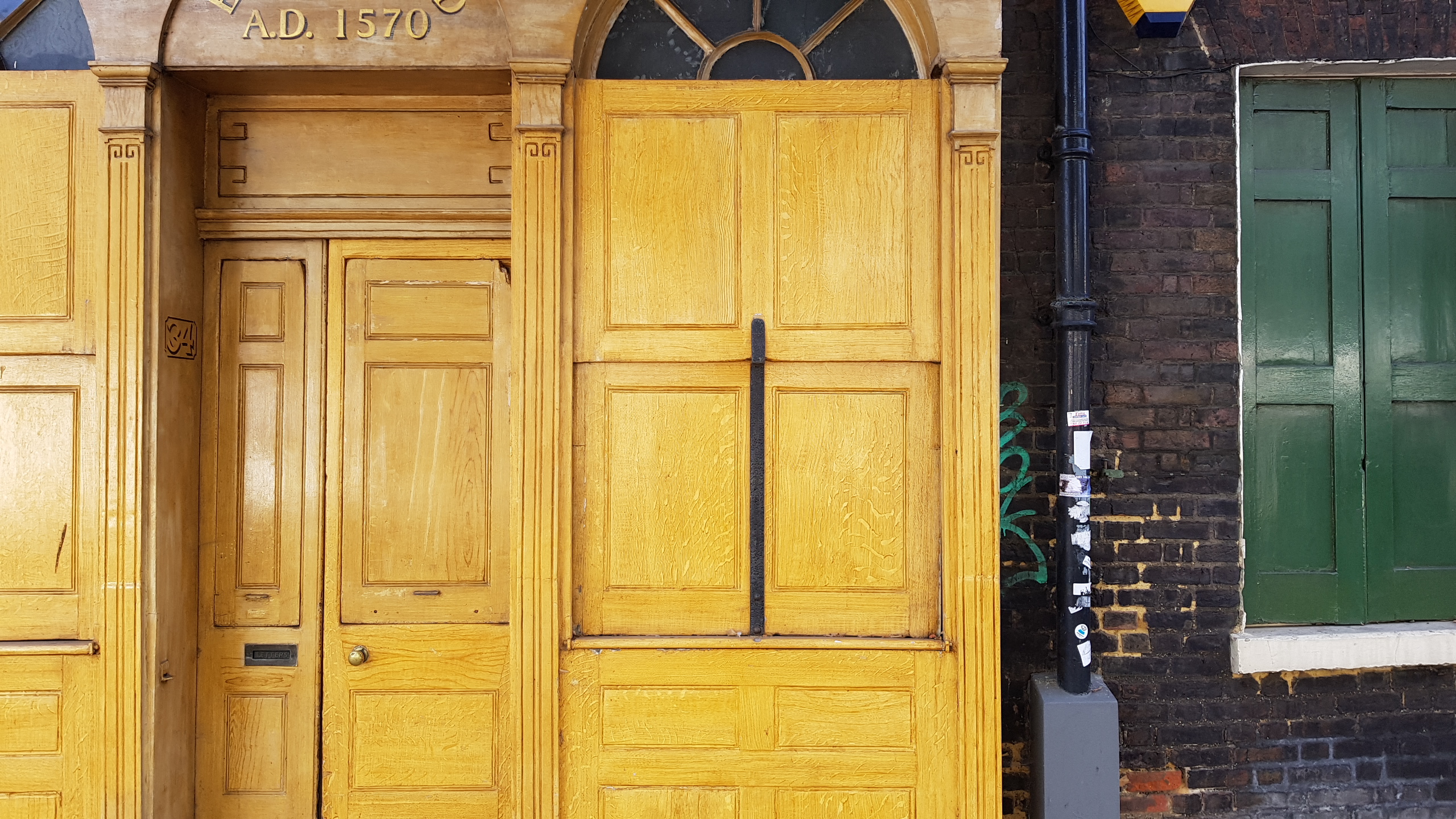
There is a further public consultation on the future of the Whitechapel Bell Foundry today. It was another opportunity to see the plans which have been drawn up by Raycliff for its development into a heritage centre-cum-café in the historic part of the building, with a hotel foyer in the space occupied by the building which was added at the back by James Strike between 1979 and 1981, and a large hotel on the site next door. It may be a last chance to see the building before it is demolished:-
Neuron Pod
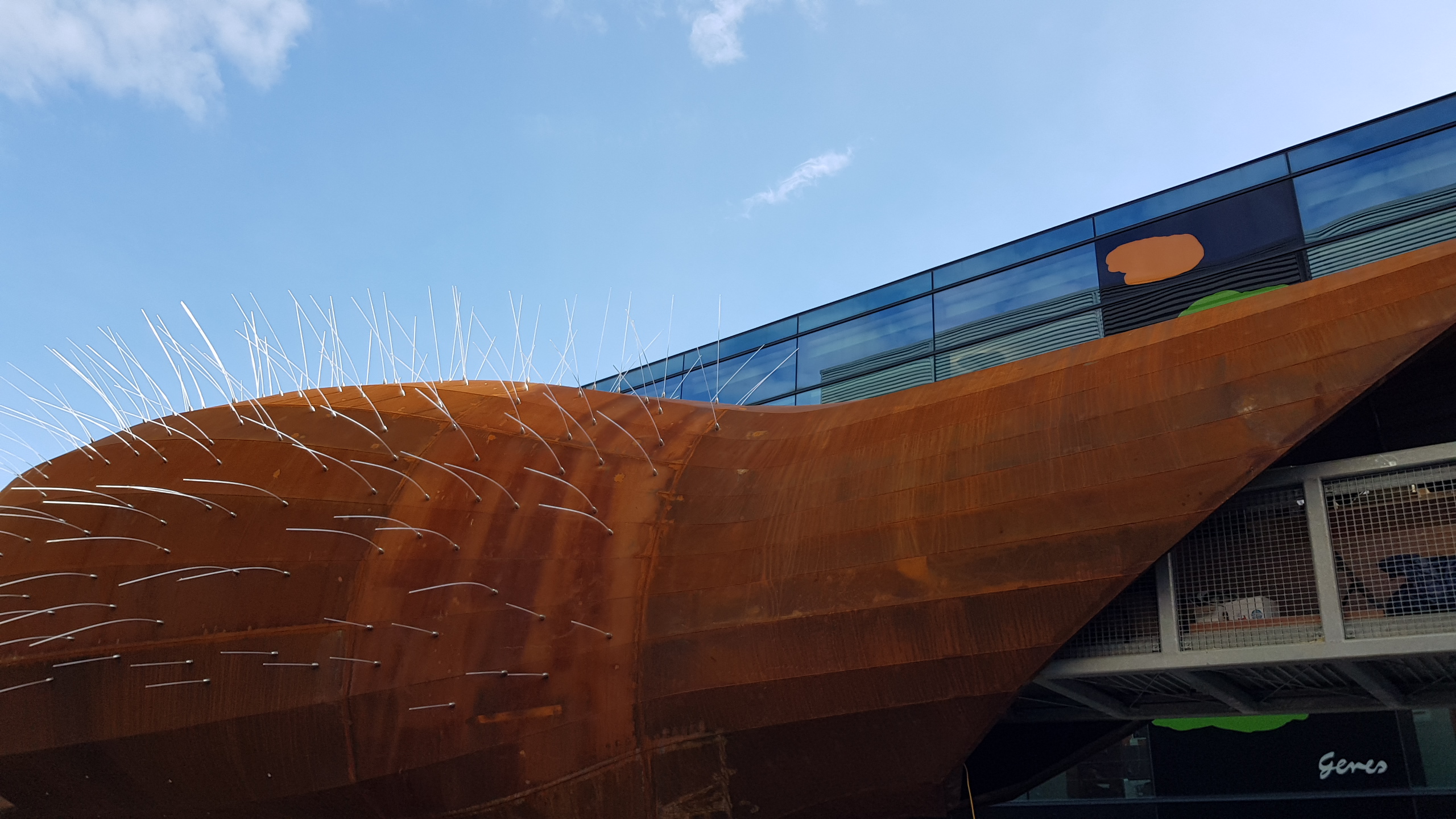
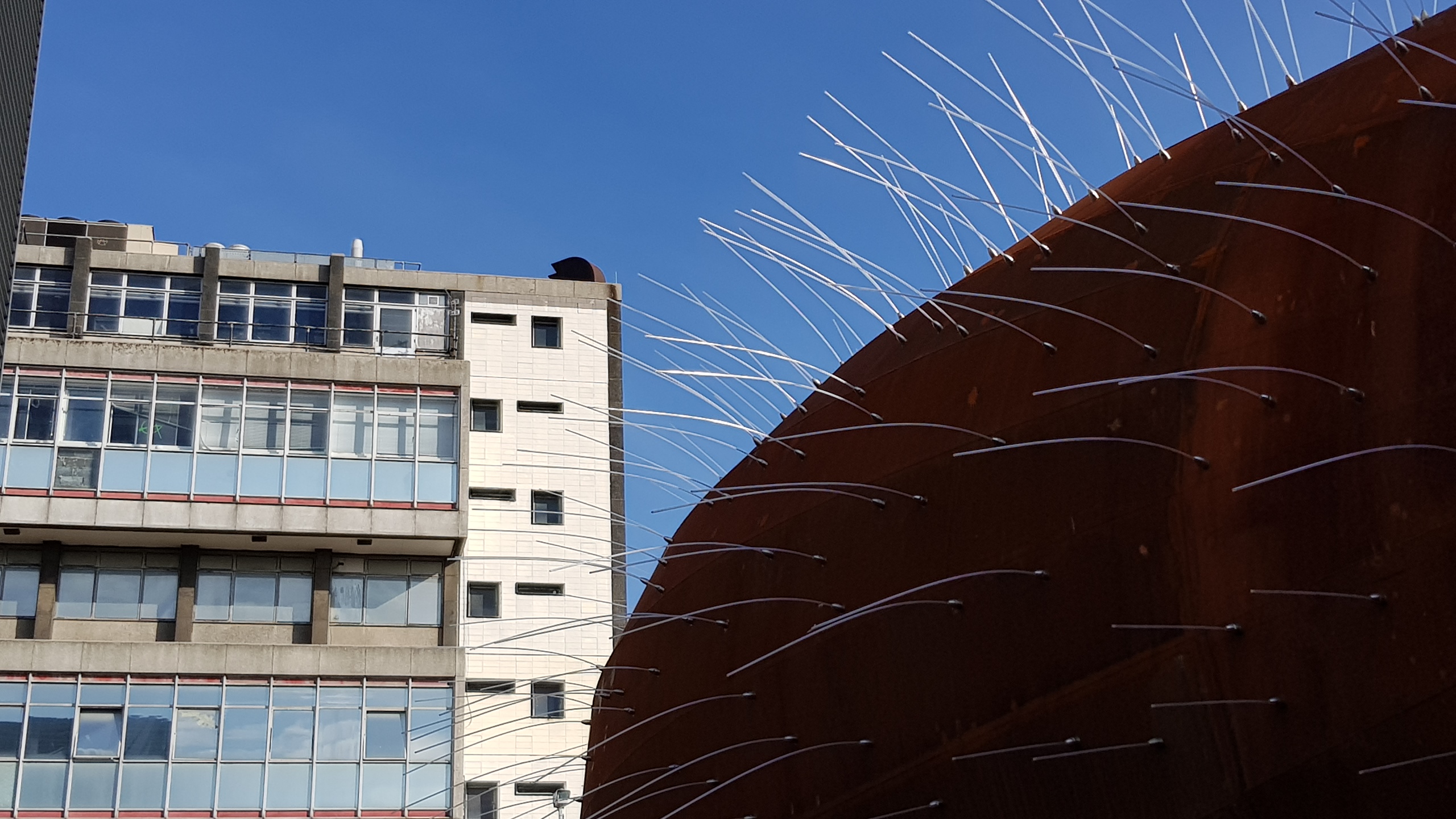
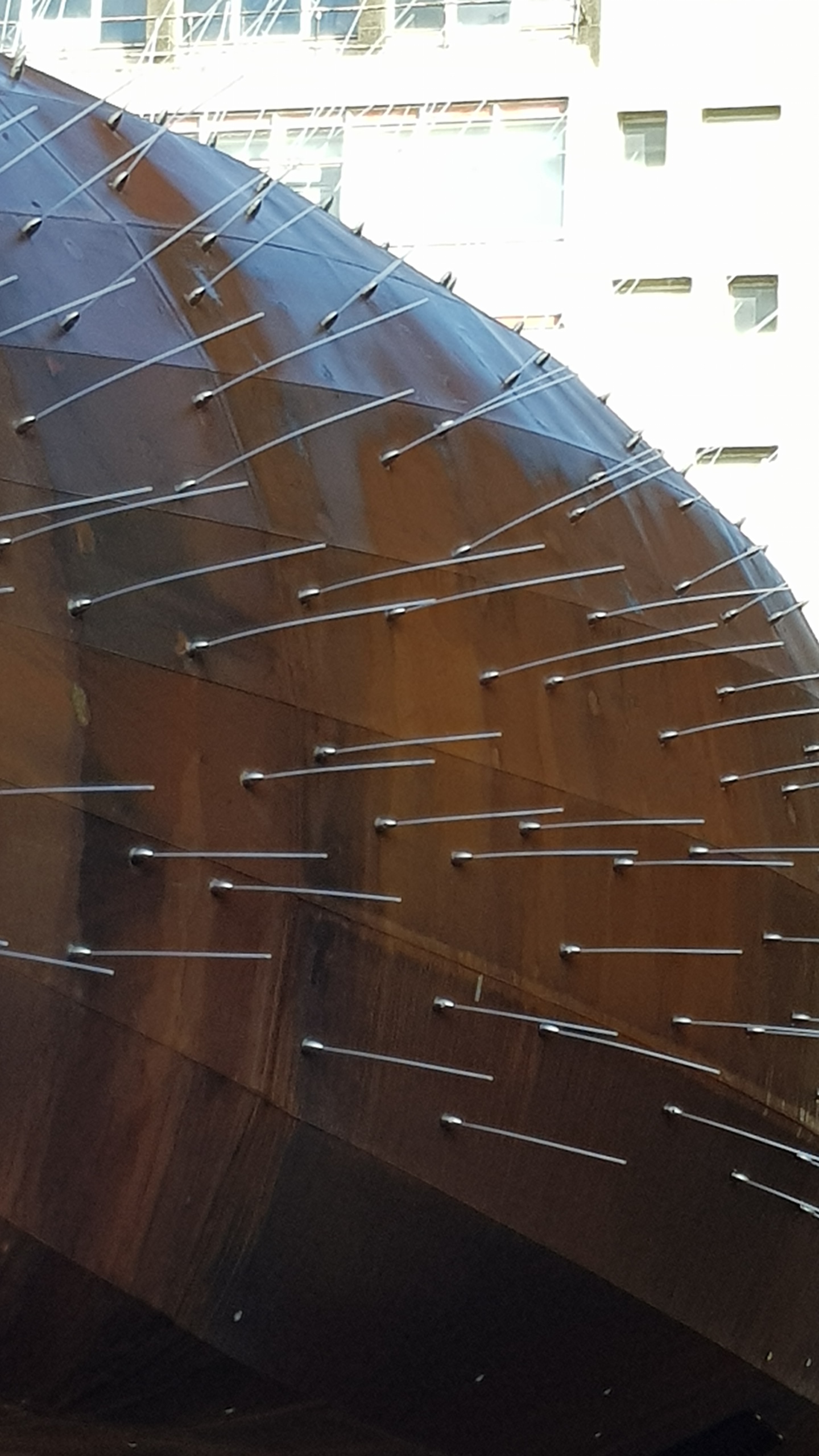
I read about the Neuron Pod on the Survey of London’s excellent blog about the work they are doing on Whitechapel. It’s a symbolic construction sandwiched between the two halves of Will Alsop’s Blizard Building. Since I was passing, I thought I would look. It’s designed by aLL Design, an odd, but fascinating beast to have arrived in Whitechapel:-
Richard MacCormac
I missed the discussion at the recent event on the character of Richard MacCormac’s architecture (or that of MacCormac Jamieson Prichard and Wright) and the extent to which it could be described as postmodern. But this morning, I had a look at the book he produced on Jocasta Innes’s house in Spitalfields and his own next door, Two Houses in Spitalfields, just before his death. It describes how they met after he had been told that ‘there was a woman in Heneage Street, dressed in a catsuit, swinging from a ladder and brandishing a blowtorch’; how ‘although educated at Cambridge in the ethos of modernism, I had never been pressed into the reductive white architecture of the European modern movement’; and how she opened up for him ‘a colour world’ – ‘illusion, allusion, surprise, humour and, of course, colour’. These may not be pure postmodern characteristics, but they sound very like it.
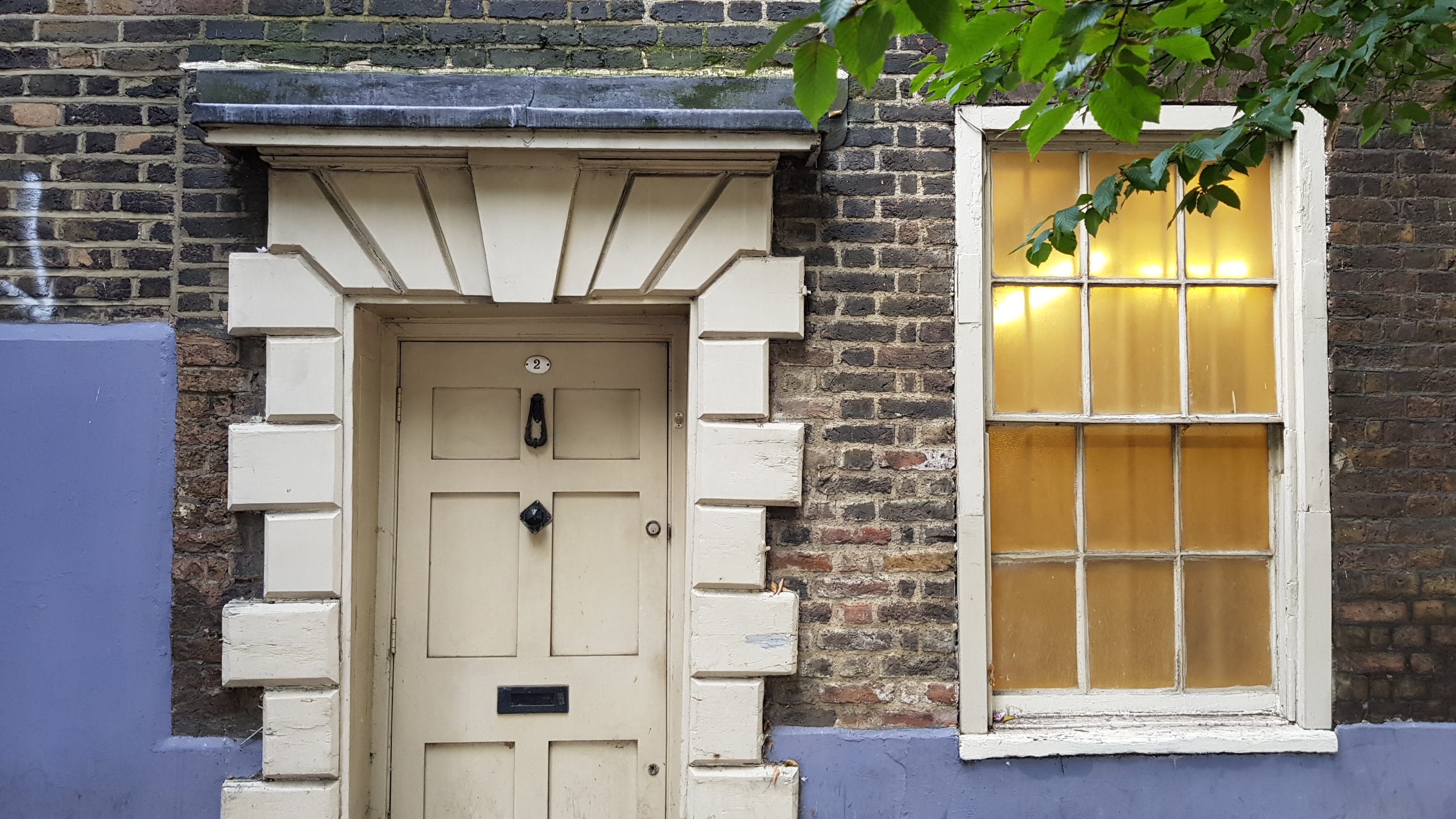
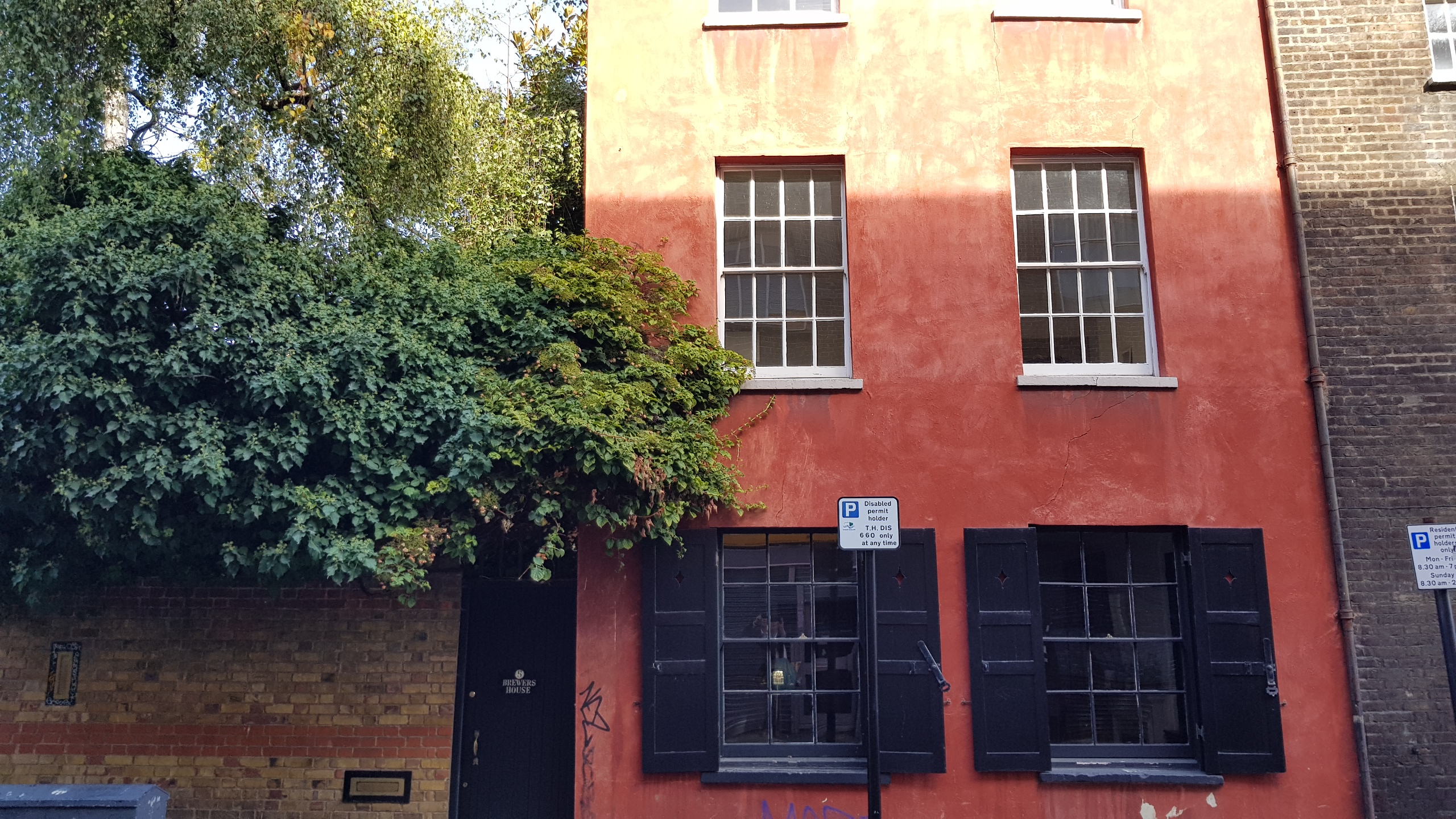
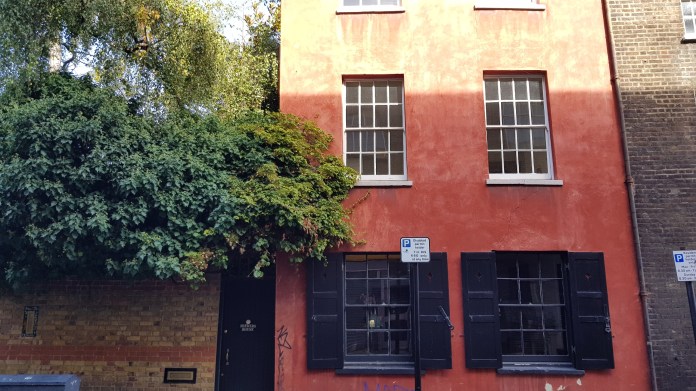
I am attaching a photograph of the Brewer’s House in Heneage Street, which Jocasta Innes bought from the Spitalfields Trust in 1979, in front of the brewery which Richard MacCormac had bought not long before and next to The Pride of Spitalfields, where they first discussed whether or not life is better without architects. The house which Richard bought is next door:-
Denise Scott Brown (1)
I read the article below on Twitter. I found it a fascinating and, in multiple ways, troubling (for men) account of the problems a female partner in an architectural firm encounters, when she is also the spouse: partly because I am very aware of the fact that the Sainsbury Wing is frequently attributed to Bob Venturi on his own and Denise Scott Brown must have suffered all the multiple forms of anger, irritation and humiliation she describes many times over during its design and subsequently – I have probably been guilty of it myself; and partly in the light of the recent death of M.J. Long, who was never given the same level of credit as her husband, Colin St. John Wilson. Have things changed ? I doubt it, which is why the article deserves wide circulation. It’s good that she is being awarded the Soane Medal on her own.
https://www.readingdesign.org/room-at-the-top
John Virtue
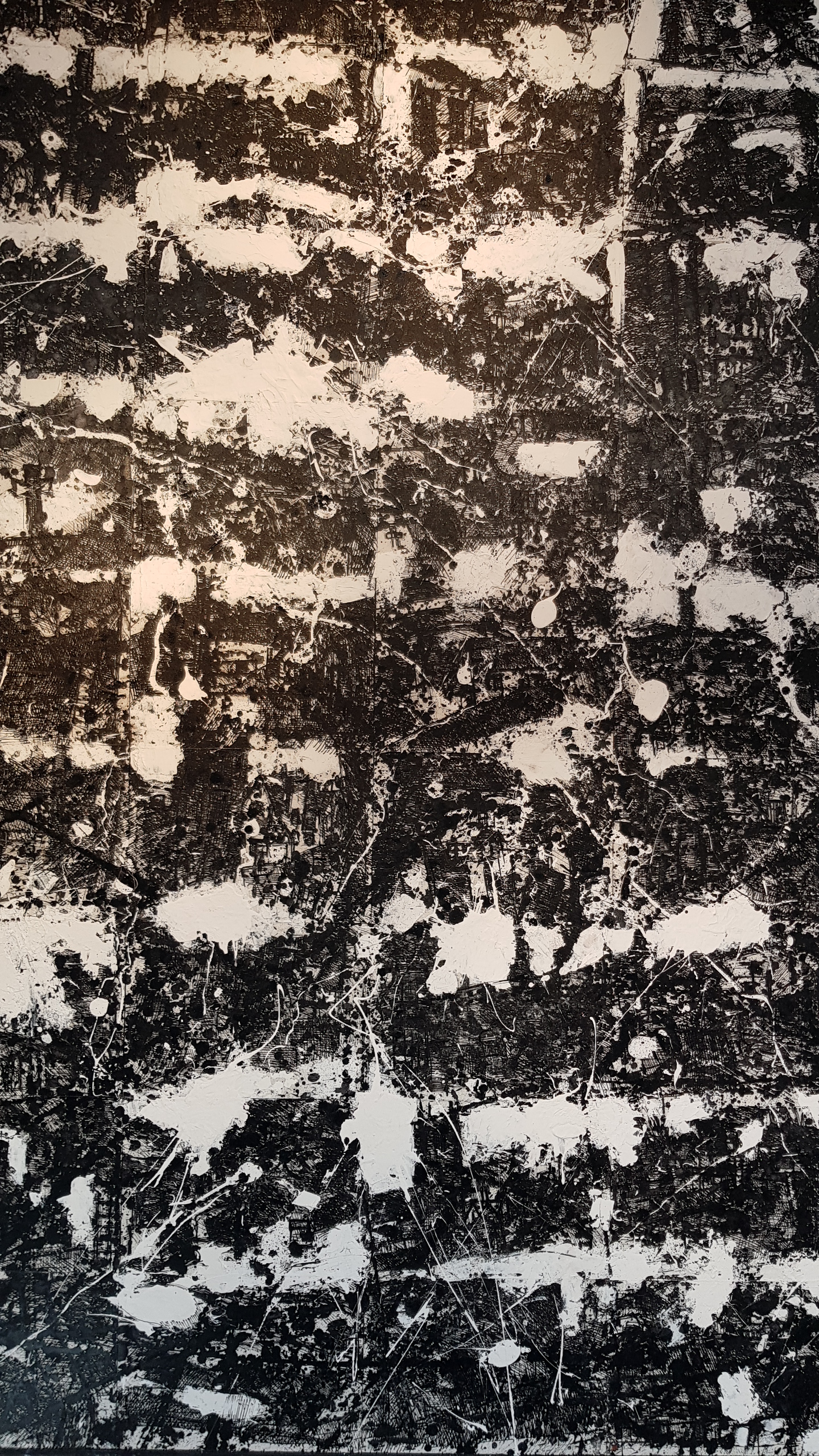
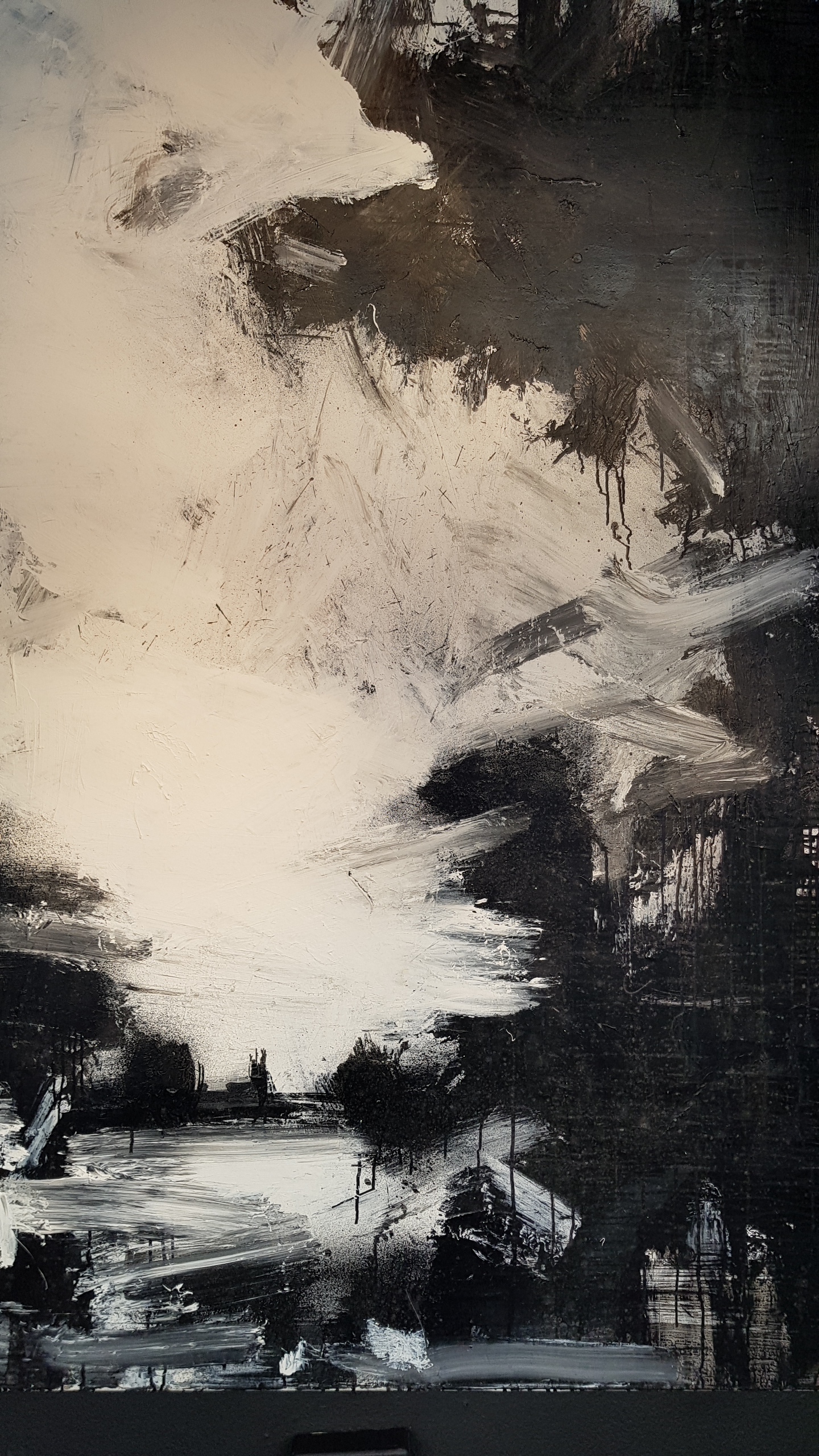
The shop windows of Fortnum & Mason are not necessarily the best place to see major works of art, nor the staircase an obvious place for a retrospective, but it is possible to see the full span of John Vertue’s career in both places, from the early tight graphic work in black ink, pencil and charcoal through to the more recent seascapes, painted in north Norfolk:-
Renzo Piano
It’s the press view of our Renzo Piano exhibition today: a very thoughtful exploration of his practice as an architect through models, drawings and original archival material. I hadn’t realised that he came to London in 1969 to teach at the AA and set up practice with Richard and Su Rogers then, pre-Pompidou entry. I’ve also always liked his building for the Menil Foundation in Houston, even better than Pompidou – light and lightweight, highly respectful of its suburban surroundings, looking out onto greenery. There’s a nice drawing of the roof structure, showing Renzo Piano with a pipe. Amongst later projects, the two that I know are the Whitney Museum, successful not just for its creation of good public spaces at the bottom of the High Line, but for very good, well considered back-of-house spaces, often neglected in museum projects; and the Shard, which I’ve always liked for its cathedral-like monumentality on the skyline. But there are also lots of projects I don’t know.
Churchill as an Artist (2)
David Cannadine gave a brilliant lecture last night on Churchill’s commitment to his work as an artist and his use of painting as a way of alleviating the black dog of depression. But I realised afterwards that I am still unclear as to exactly how friendly he was with Alfred Munnings and how far he shared Munnings’s very conservative views of art. It was apparently Churchill who encouraged Munnings to revive the Royal Academy’s annual dinner in 1949. He was sitting next to Munnings when Munnings, as President, stood up to give his ill-fated and drunken speech in which he berated all aspects of contemporary French art, quoting a comment Churchill had made earlier in the evening as to what one might do if one met Picasso in the street – apparently, much to Churchill’s annoyance. What Cannadine made clear that Churchill’s involvement in art, and commitment to it, was longer, deeper and more complex than one might expect of a major international statesman.
Churchill as an Artist (1)
I have just had a remarkably brief interview on the Today programme with David Cannadine who has just published a brilliant short account of Churchill’s involvement with the art world under the title Churchill: the Statesman as an Artist. What is clear is how seriously he took what was essentially a hobby, taking lessons from Lavery, Sickert and William Nicholson. Then, rather amazingly, he was asked to write comments on the annual Summer Exhibition for the Daily Mail in the 1930s when he was out of government. In 1938, he gave a good and thoughtful speech at the Academy’s annual dinner about the role of the Academy as a mainstream art institution, representing tradition, but also needing to co-opt innovation. Cannadine is lecturing on the subject tonight and there are probably still tickets available.


You must be logged in to post a comment.