Venice (3)

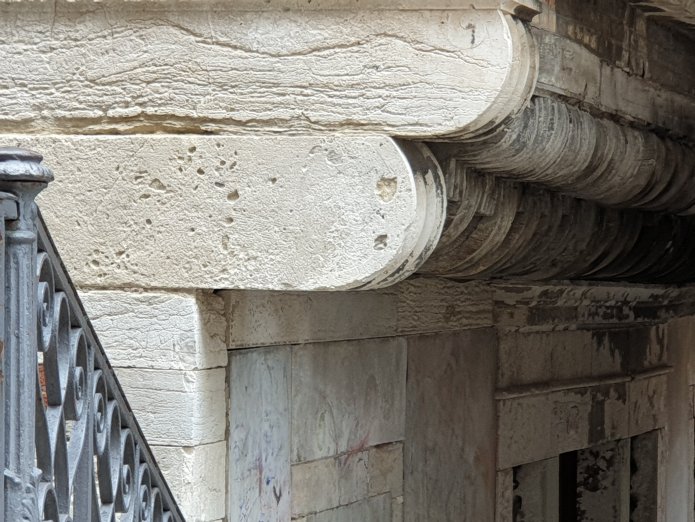
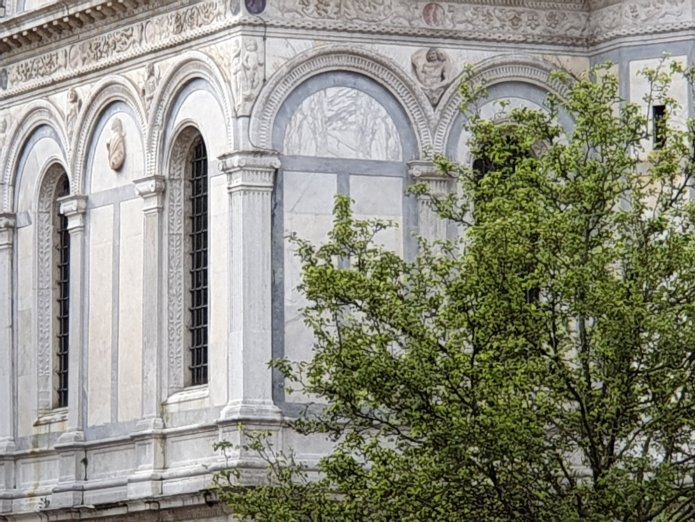
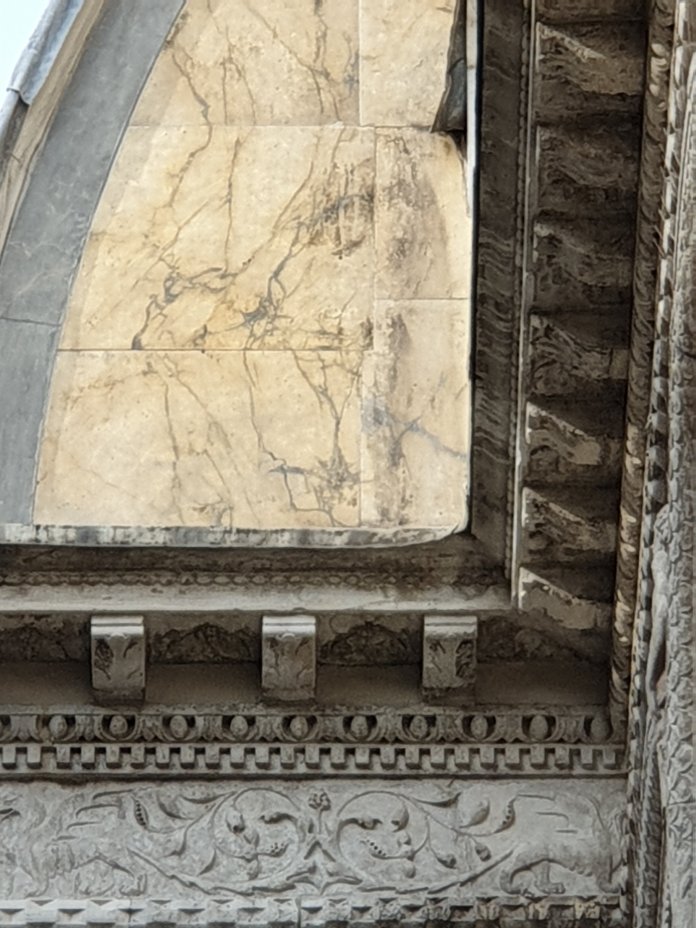
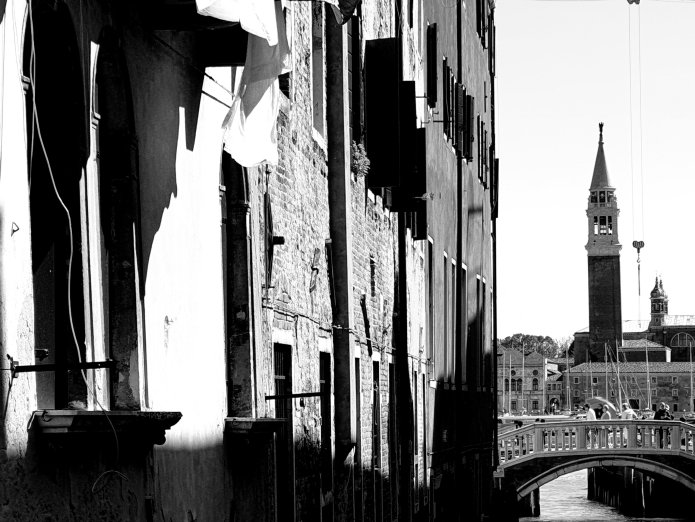
My third post from Venice is more miscellaneous – things seen on taking a long route from the ghetto to the Arsenale, because I discovered – I should have known – that you can’t get a ticket for the vaporetto from Orto.

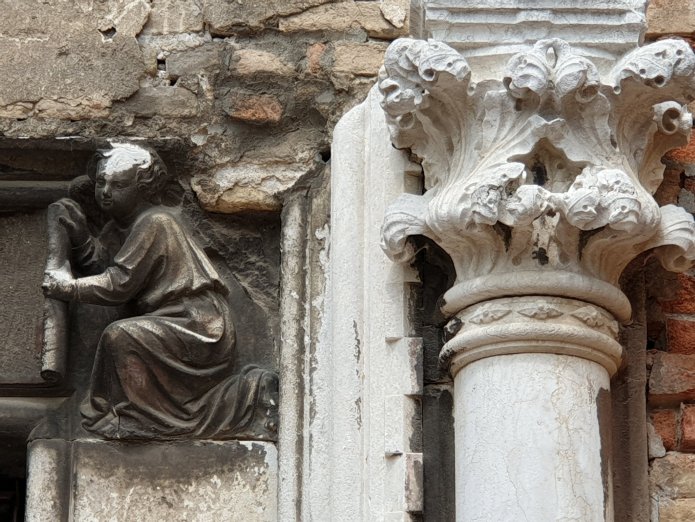
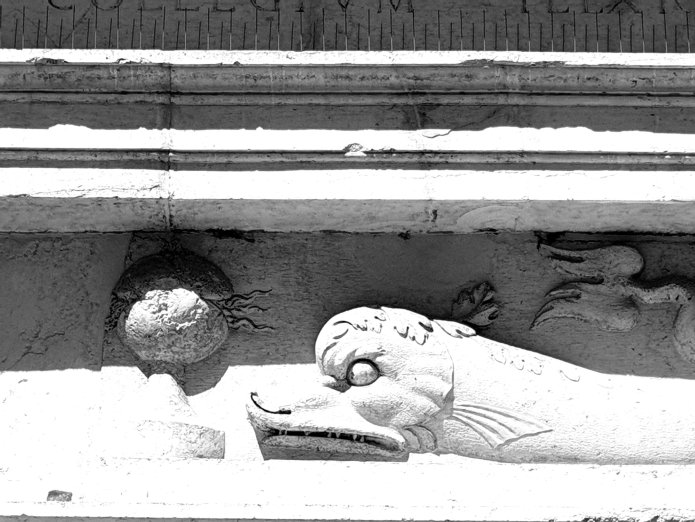
First, a head on an unidentified palazzo on the Strada Nova:-

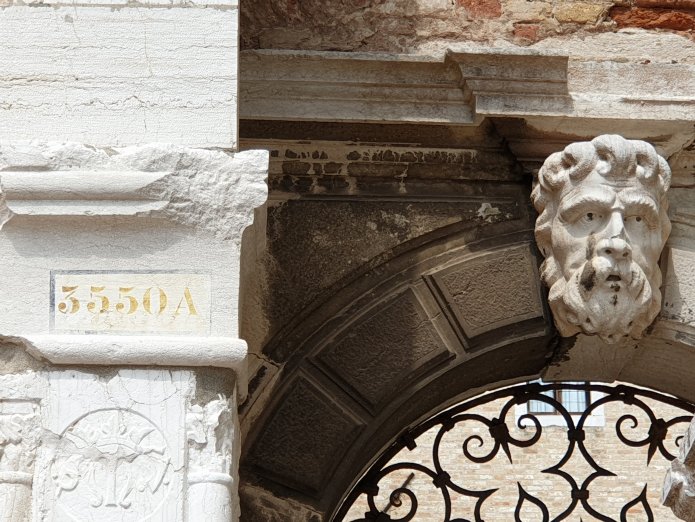
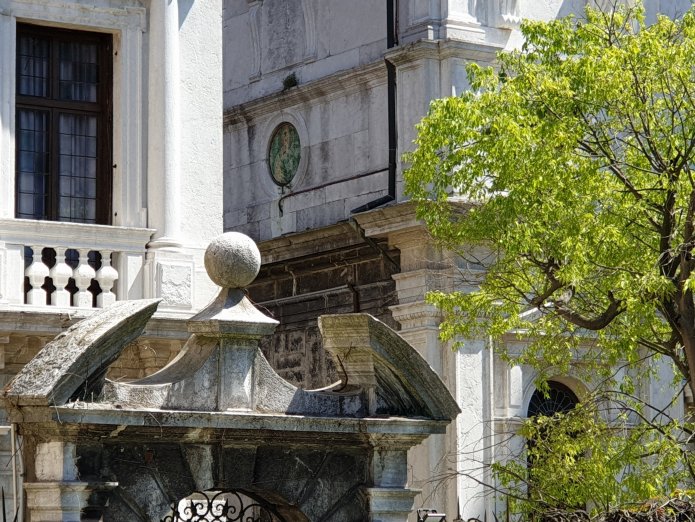
Another head on a gateway alongside the Scuola Vecchia de la Misericordia:-

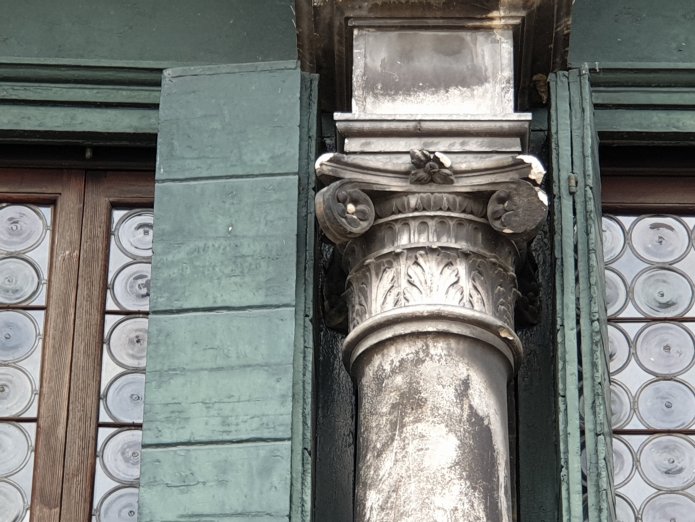
And a column on the façade:-

The façade of S. Maria Valverde:-

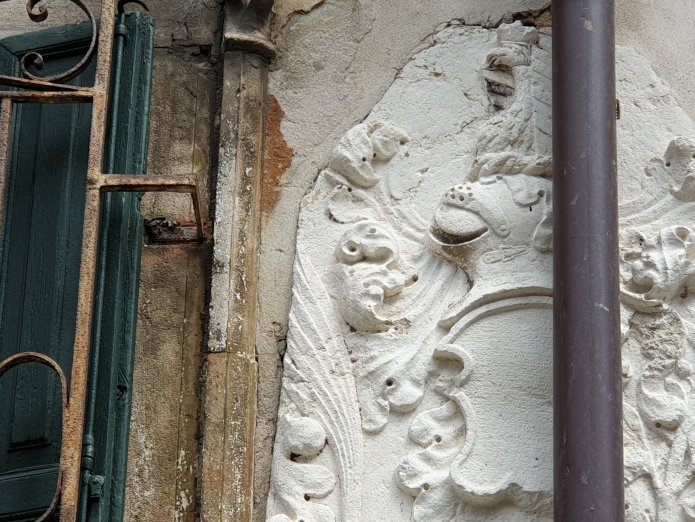
This is the side of the Palazzo da Lezze:-

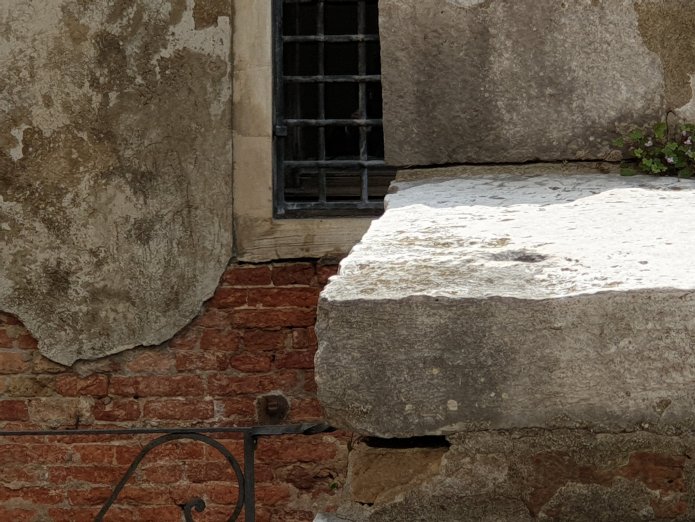
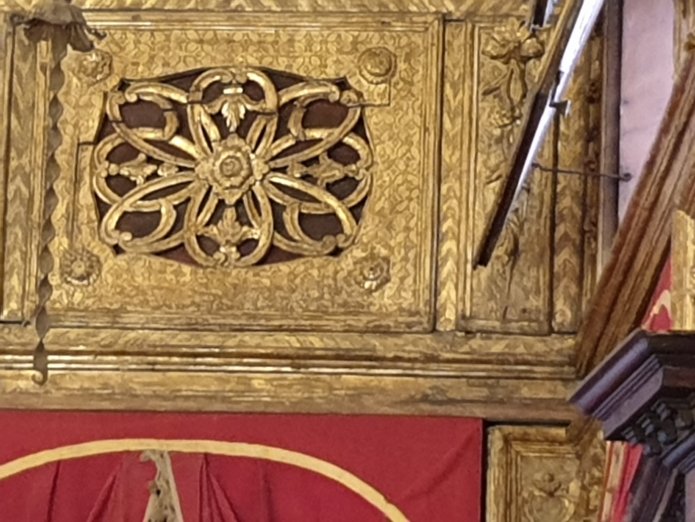
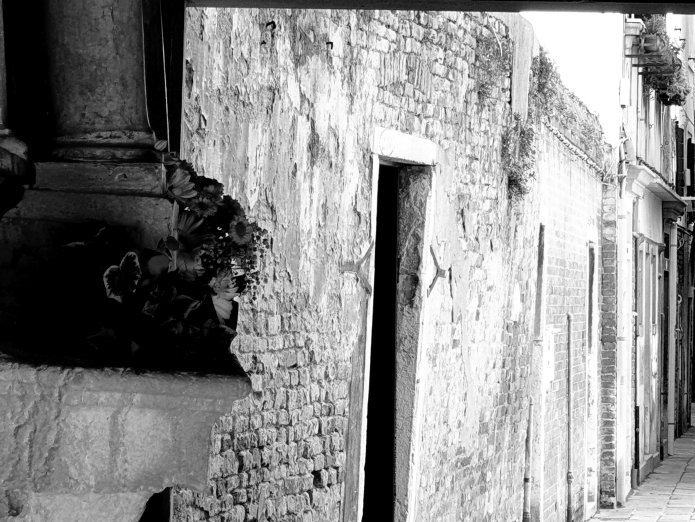
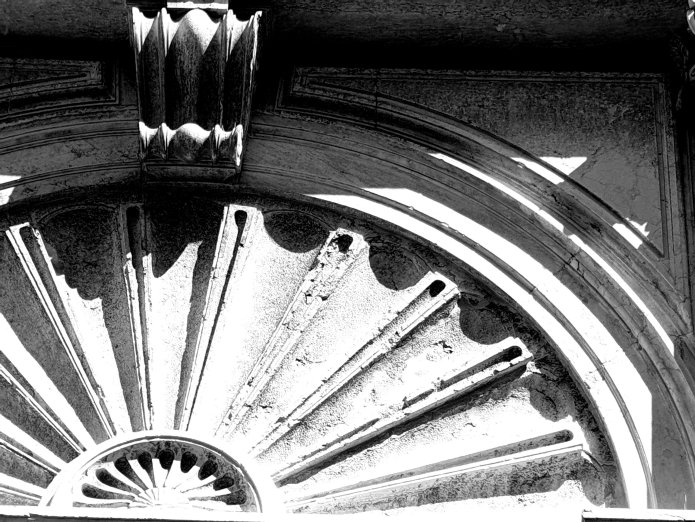
The rest I can’t identify:-

Standard

Edmund de Waal

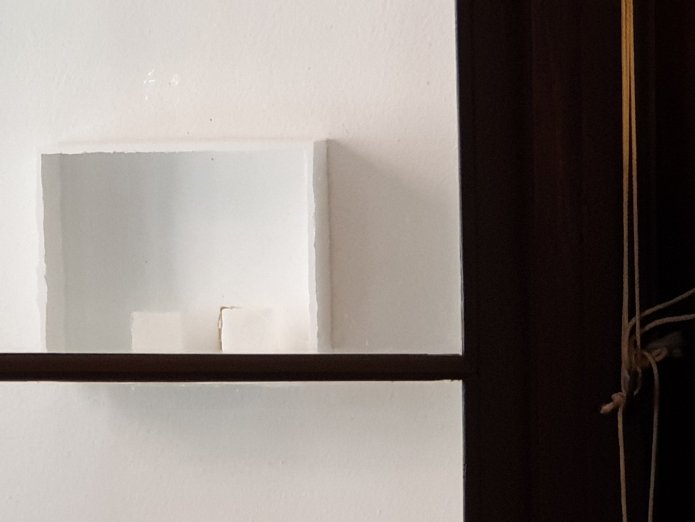
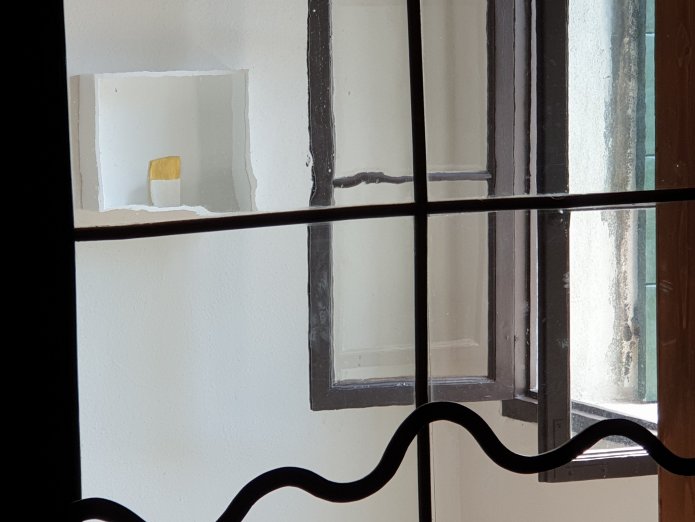
I somehow found myself at the tail end of the press trip to Edmund de Waal’s installation in the upper part of the Jewish Museum in the old ghetto in Cannareggio.

It was a profound experience, not just for the opportunity of seeing the latest manifestation of Edmund’s work in gold, marble and porcelain, but as much for the opportunity of seeing the Canton Synagogue, a deeply symbolic space whose origins go back to the establishment of the ghetto:-

Through the windows, one sees – I should say witnesses – the vitrines of Edmund’s work in response:-

Standard

Venice (2)

I set off early to explore more:-

The entryway to the Palazzo Grimani, which is showing paintings by Helen Frankenthaler:-

As one comes in to the Campo S. Maria Formosa, the Palazzo Malipiero is on the left:-

The Campo itself is surprisingly open and spacious opening up urban space at the heart of the city:-

I walked through to S. Giovanni Crisostomo:-

Some nice lettering at the entrance to S. Giovanni Crisostomo:-

And then then the pearl of S. Maria dei Miracoli, Pietro Lombardo’s marble masterpiece:-

Standard

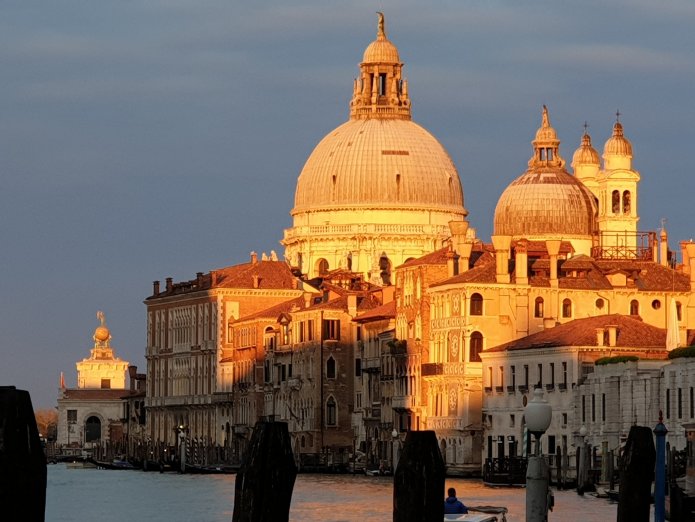
S. Maria della Salute

Photographers were lined up on the Accademia bridge last night to take photographs of S. Maria della Salute as the sun went down. I could hardly resist:-

Standard

S. Giorgio degli Schiavoni

I discovered by chance that S. Giorgio degli Schiavoni was open over lunch, contrary to what I had read in the guidebooks, so I was able to enjoy it on my own, not having been back to it in many moons.

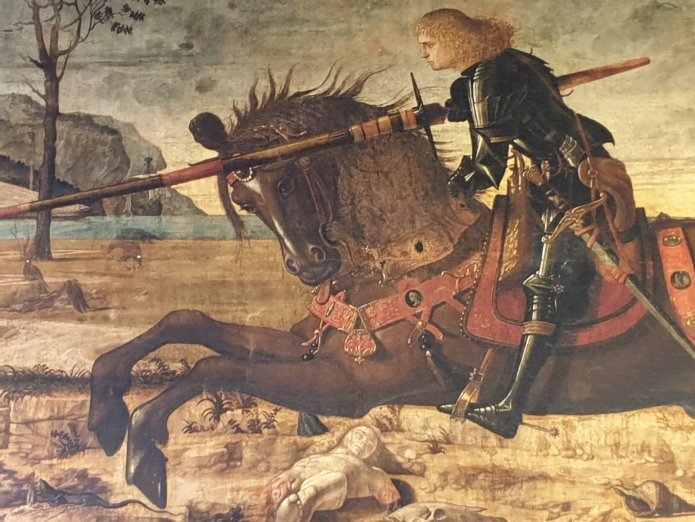
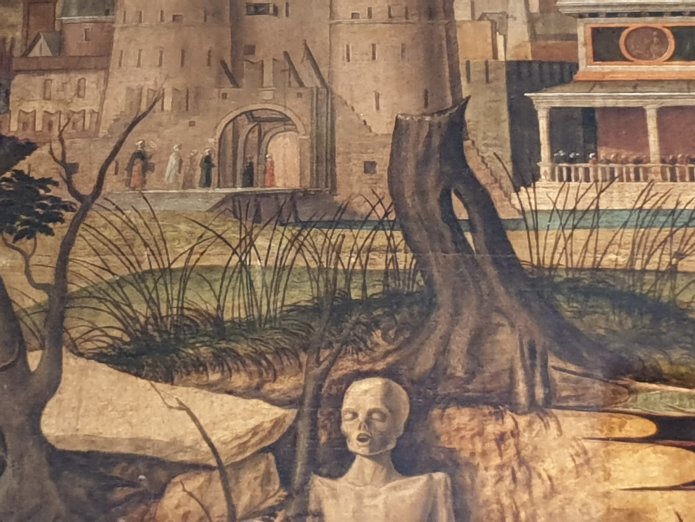
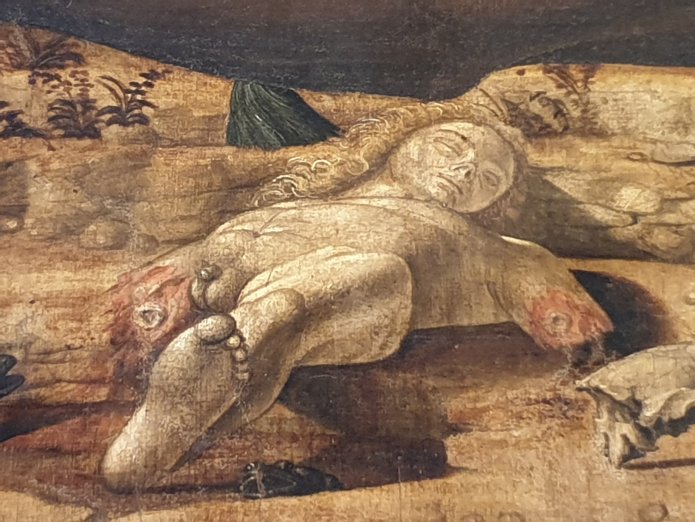
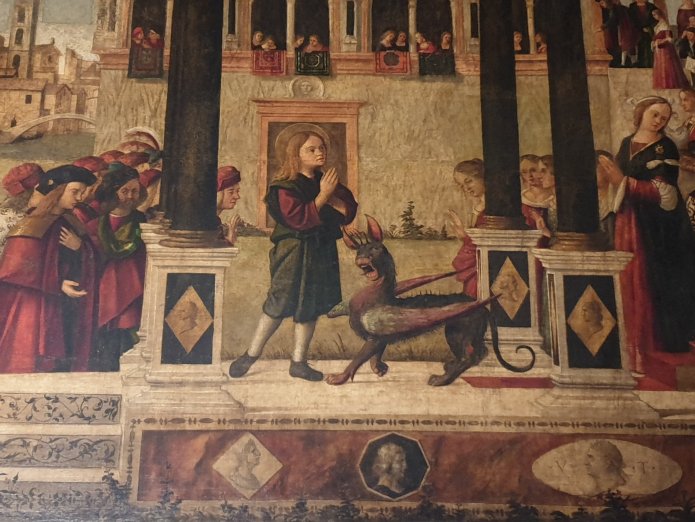
It makes the greatest possible impact because of the sense that the cycle of paintings which Carpaccio painted between 1502 and 1507 survives intact in a good state of preservation in situ in the oratory underneath the main church, although I remembered from Links that this is not strictly true because they were originally painted for an upper hall and only installed here in 1552 fifty years after they were painted.

St George killing the dragon:-

The Triumph of St. George:-

St. George baptising the Gentiles:-

The miracle of St. Tryphone (or, as Links calls it St. Tryphonius subduing the basilisk):-

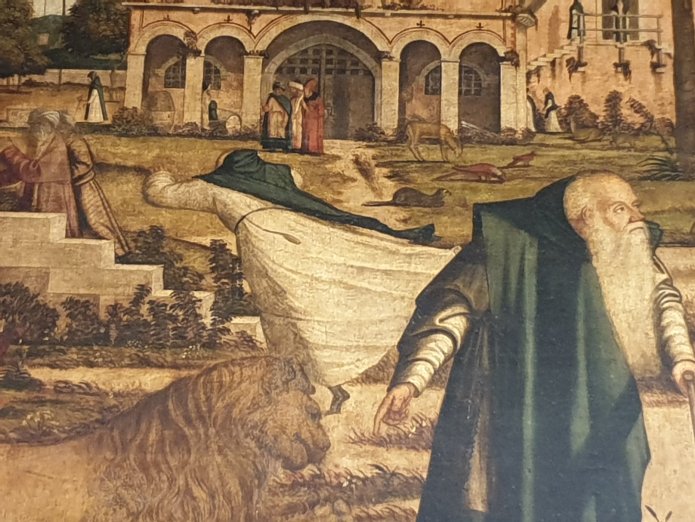
St. Jerome leads the Lion into the Convent:-

The Death of St. Jerome:-

The Vision of St. Augustine:-

Standard

S. Zaccaria

I have never knowingly been to S. Zaccaria before, a treat, not least for its great Bellini.

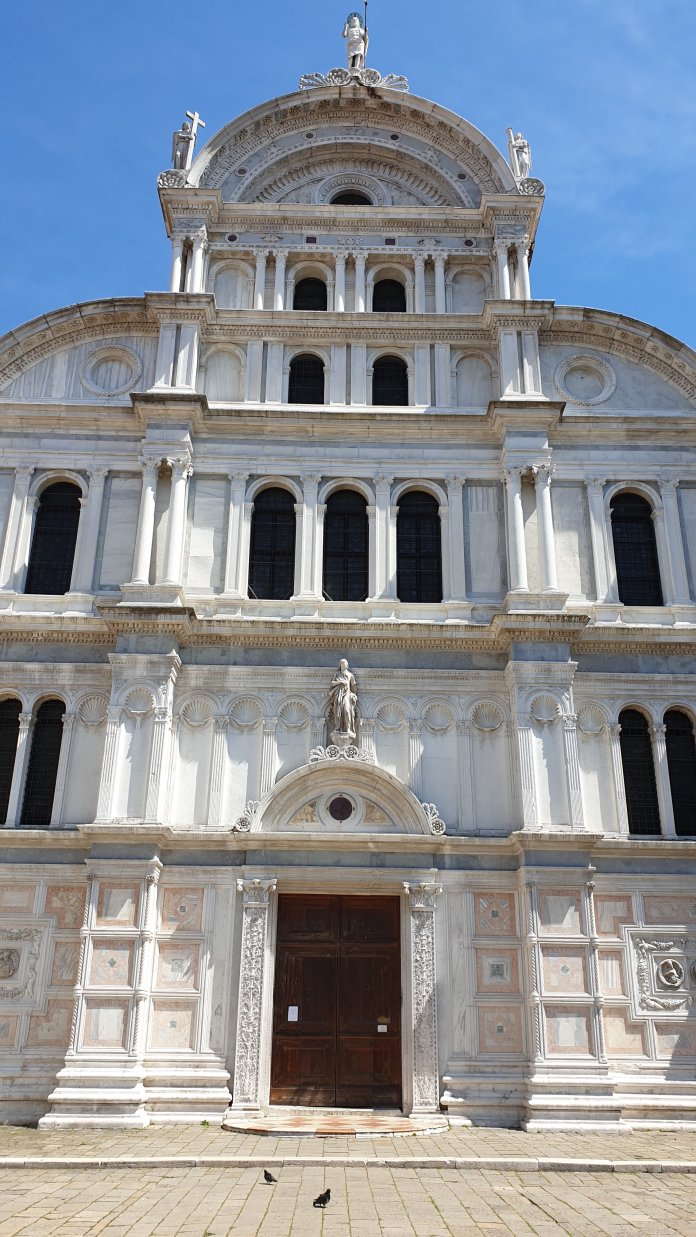
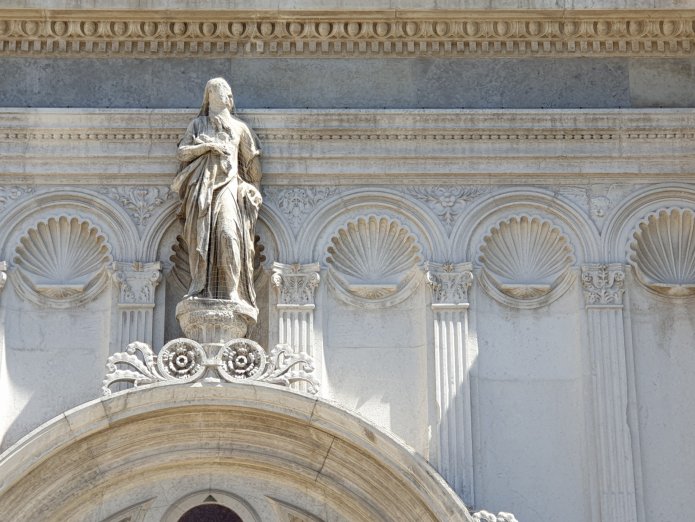
First, the façade begin in the 1440s, completed towards the end of the century with its multiple decks of round-headed windows:-

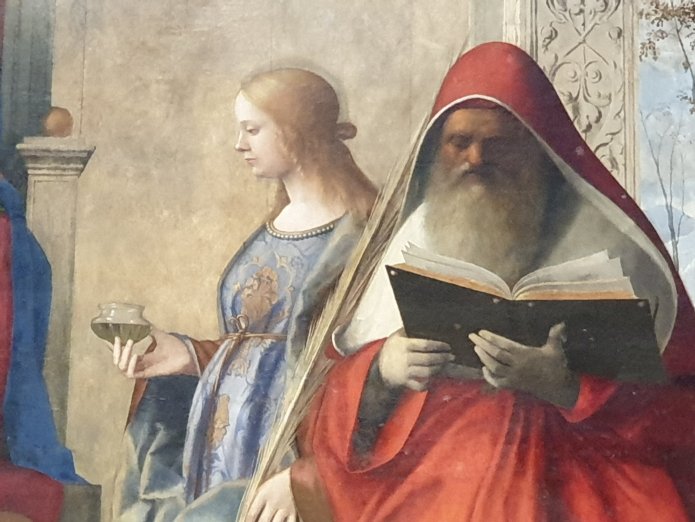
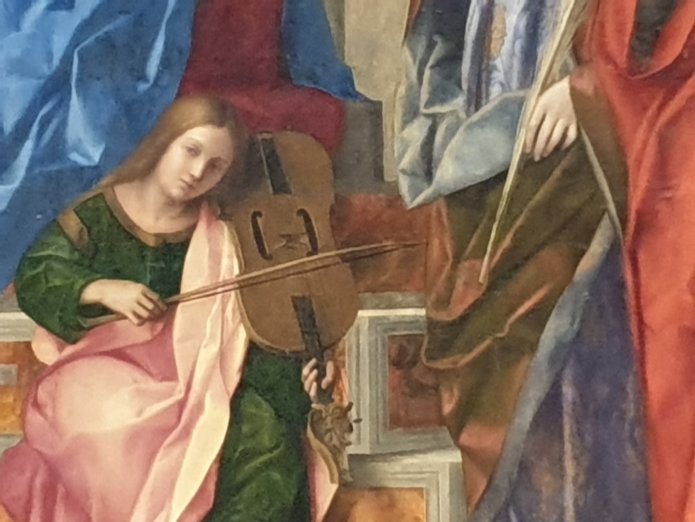
Bellini’s Virgin and Child with SS. Peter, Catherine, Lucy and Jerome:-

The fifteenth-century choirstalls and gilt seats for the doge and his entourage in the Nun’s choir:-

Through to the Cappella di S. Tarasio:-

And a glimpse through to the High Altar:-

Standard

Venice (1)

Since nothing in the Biennale seems to open till tomorrow, I took myself off on a walking tour of Castello, having previously kept to the peripheries, starting with S. Zaccaria (see separate post).

Then, exploring the hinterland.

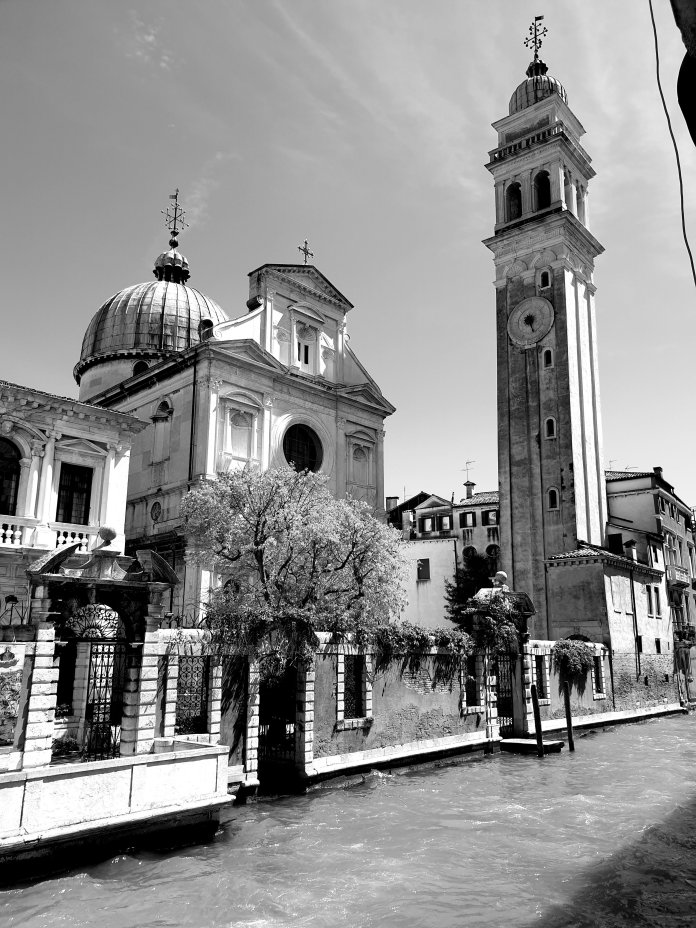
S. Giorgio dei Greci, with its beautifully peaceful courtyard, as if private:-

Next door is the Scuola della Confraternita dei Greci by Longhena:-

The facade of the Scuola di S. Giorgio degli Schiavoni:-

Then up rougher streets towards S. Francesco della Vigna:-

The façade of S. Francesco by Palladio, but which nobody seems to much admire:-

And its interior:-

In walking south down the Calle dei Scudi, a nice Ruskinian set of windows:-

And a head which I had spotted on the nearby canal:-

The façade of the Scuola de San Giovanni Battista in Campo Bandiera e Moro:-

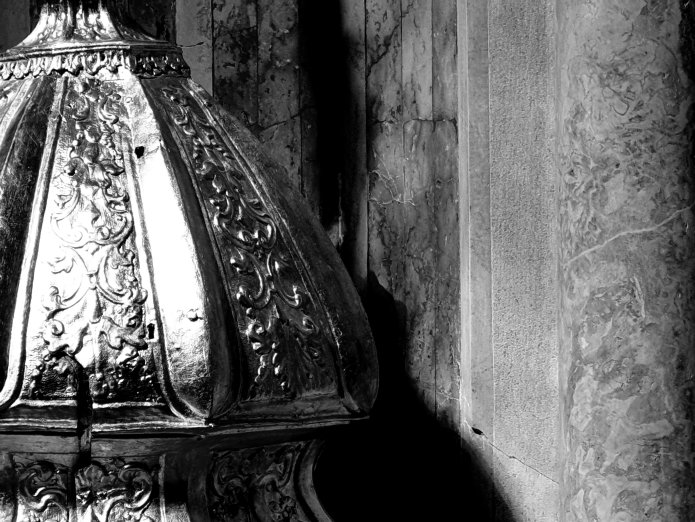
And the font in S. Giovanni in Bragora:-

The view through to the campanile of S. Giorgio Maggiore:-

And, last, before my legs collapsed, the fenestration of the Palazzo Priuli:-

Standard

J.G. Links

I have always viewed Venice through the eyes and writing of Hugh Honour’s Companion Guide to Venice, first published in 1965 and of which I still have, and use, the second 1967 edition. As a result, I have never paid attention to J.G. Links’ Venice for Pleasure, first published in 1966, of which I have long had, but never read, the second 1973 revised American edition. In setting off to Venice and wanting to explore Castello, I was quickly hooked by its great historical and visual expertise. He and his wife, Mary Lutyens, always stayed at the Danieli. In the introduction to himself which he quirkily provides at the beginning of the book, he says that two of his half dozen friends in Venice are the doormen at the Danieli. In walking one round Venice (he reduces Venice to only four walks) he is brisk, very matter-of-fact, attentive to the need to stop for a cup of coffee and extremely knowledgeable in a lightly worn way, able to quote Coryat and keen on Carpaccio and Canaletto, but not Canova or modern art.

Standard

Cliveden

I have had to swot up on the building history of Cliveden, which is mighty complicated.

It was first built probably in the late 1670s (Colvin says c.1676-8) for the second Duke of Buckingham, one of the richest, grandest and most complicated of Charles II’s courtiers, in and out of royal favour, the B of the Cabal. He got the house designed by William Winde, a fellow member of the royal court, born in exile in Brabant, serving as an Ensign at the time of the Restoration, made a gentleman usher to the Queen of Bohemia and a Fellow of the Royal Society in 1662. Buckingham is said to have acquired the Cliveden estate in ‘about 1664’. In 1677, a royal warrant allowed him to leave the Tower of London to go to Cliveden ‘to take order about carrying on some buildings there’. By 1679, Evelyn was able to describe it as ‘a building of extraordinary expense’.

This was only the beginning. The Earl of Orkney bought the house in 1696 and in 1706 consulted ‘severall of the chiefe men in England’ about the design of his house, one of them being Thomas Archer, who designed flanking wings which more or less survive joined to the main house by colonnades. In 1714, John Macky described it as ‘a Noble Building a la Moderne‘, but by the 1740s Jeremiah Milles was much less complimentary, calling it ‘A double pile house but ye rooms I think are rather too small in proportion to ye House’.

Pevsner says the house was burnt out in 1745, but I am sceptical of this because it was leased by Lord Orkney to Frederick, Prince of Wales and in 1751 Lady Coke admired it ‘though I saw it with the disadvantage of all the Prince’s furniture being taken away’ (no mention of a fire). In 1762, William Toldervy writes in England and Wales Described in a Series of Letters how ‘The Building is regular and grand, and the Apartments noble, especially that which is called the Grand Chamber: Where, in Tapestry, the Battles of the great Duke of Marlborough are depicted’. Again, no mention of a fire.

William Burn reconstructed it in the 1820s and this version of the house was indeed burnt out in 1849 and what we see now is mostly Barry:-

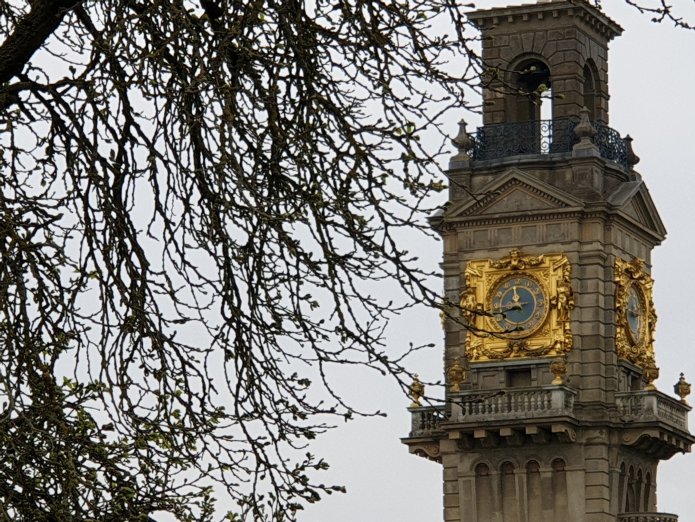
Alongside it is a fabulous high Victorian clock tower, designed by Henry Clutton:-
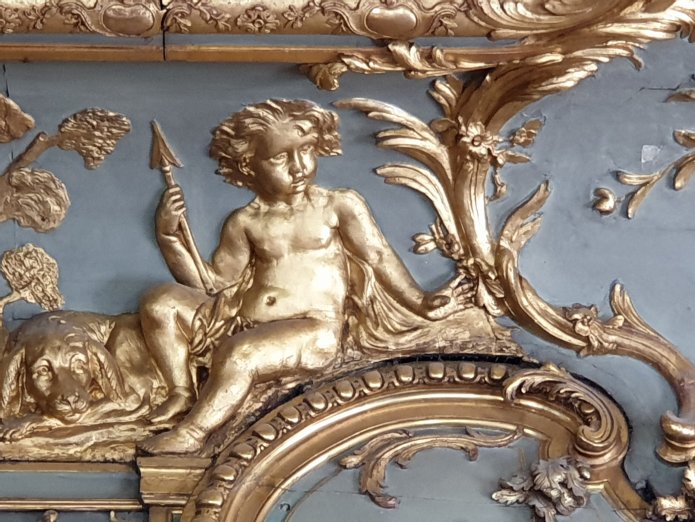
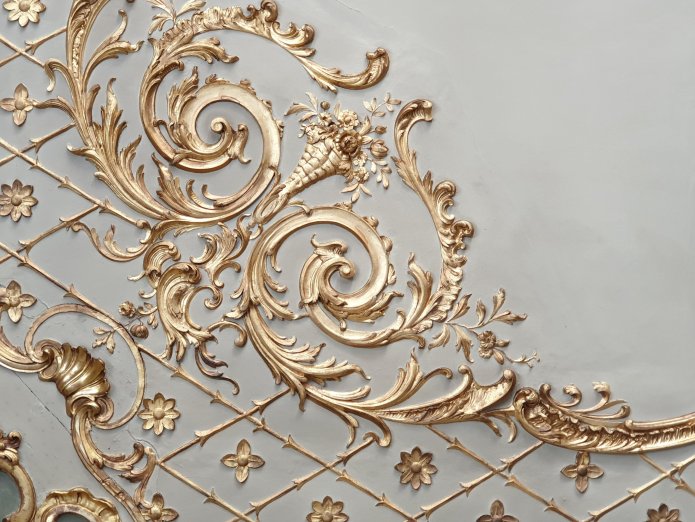
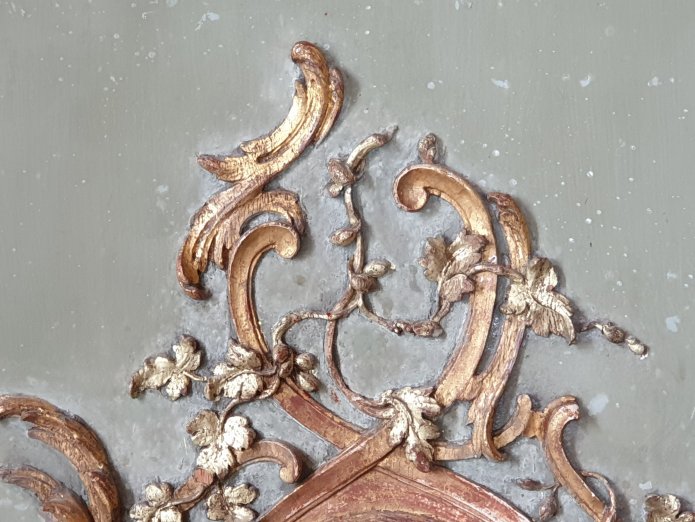
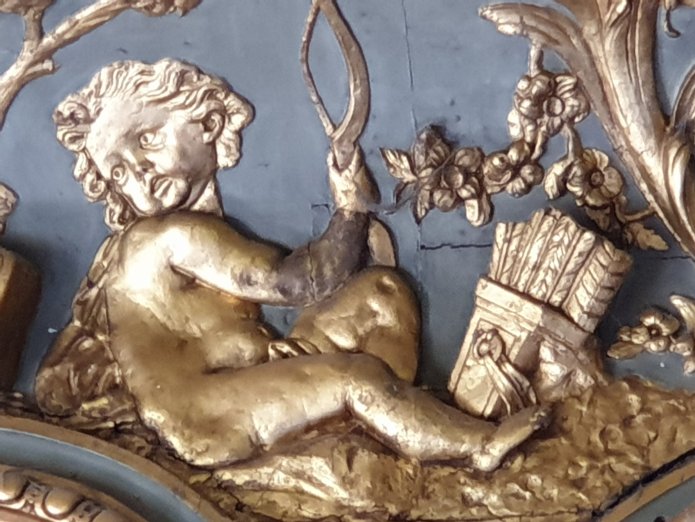
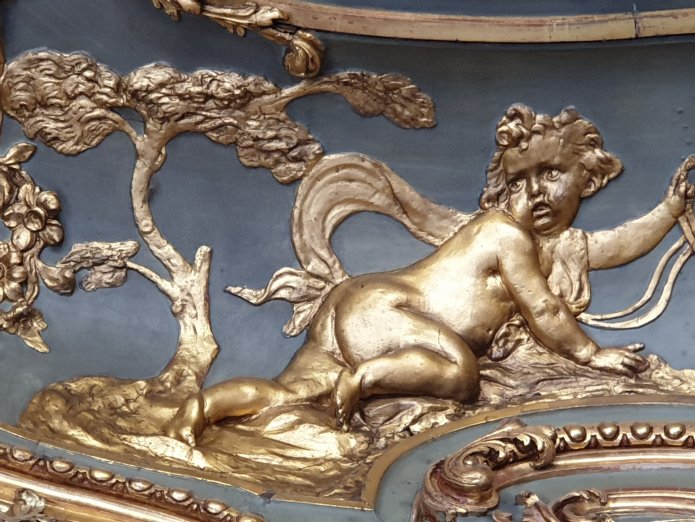
Indoors, fine rococo woodwork. I couldn’t work out if it is the original by Pineau or the reproduction by Allard:-
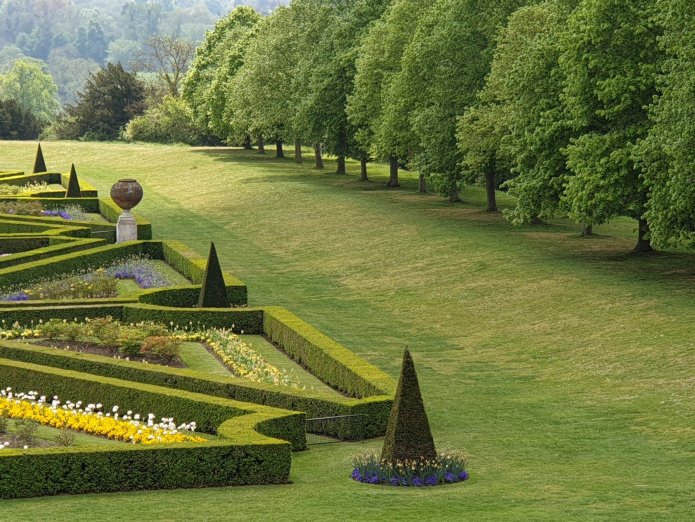
Outside, spectacular views out from Winde’s terrace over the formal gardens towards the Thames:-
Standard

Anthony Caro (2)

We went to the Anthony Caro exhibition at Cliveden, where his sculptures are laid out along the line of the so-called Green Drive, which runs down the east of the estate, parallel to the Thames and, to judge from the planting, was laid out in 1869 when the Duke of Westminster bought the estate (go to the woodland car park, not to the hotel).

The first was a more recent work Star Flight (2001/3):-

Second Sculpture (1960):-

Cliff Song (1976):-

Emma This (1977):-

Scorched Flats (1974):-

Curtain Road (1974):-

Box Tent (1987/9):-

Tympanum (1987/1990):-

Standard