Ways of Drawing

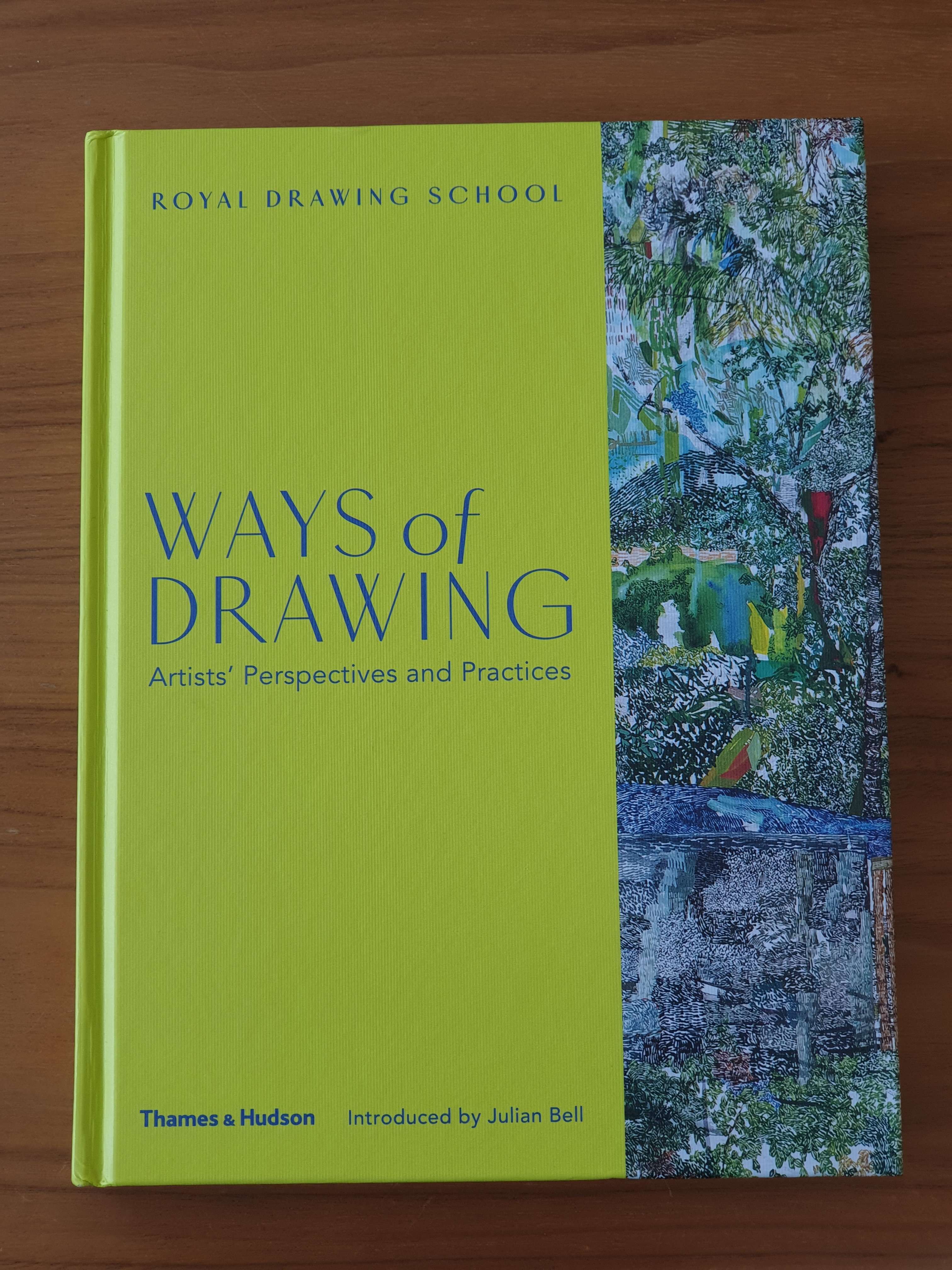
One of the pleasures of being involved with the Royal Drawing School at this juncture is that, jointly with Thames & Hudson, it has just published a book, Ways of Drawing: Artists’ Perspectives and Practices, which includes a host of short essays by artists who have been involved with teaching at the School encapsulating their various ideas, beliefs and attitudes, and illustrated by a multiplicity of drawings by ex-students (plus works from the Royal Collection):-

Standard

Royal Drawing School

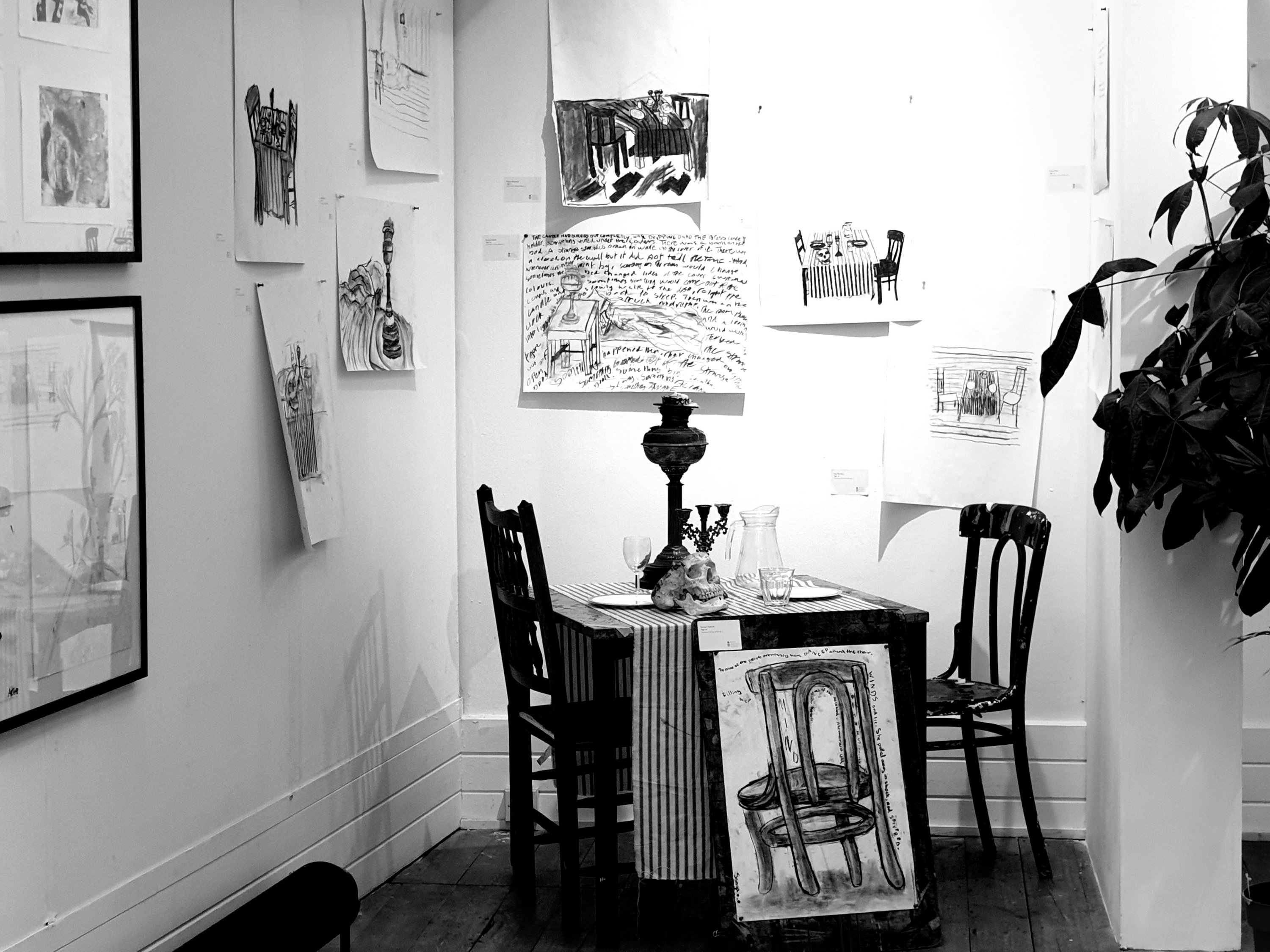
My first act as the new chairman of the Royal Drawing School was to celebrate and congratulate the 139 Young Artists whose work is on display in the Drawing School’s gallery in Charlotte Road. They are mostly between the age of 15 and 18 and attend classes not just in Shoreditch, but also Trinity Buoy Wharf, the National Gallery, the Ashmolean Museum, Norwich and New Cumnock Town Hall. It’s an amazing programme, developing skills of expression, concentration and observation, which are valuable whether or not the students go on to art school:-

Standard

Dumfries House

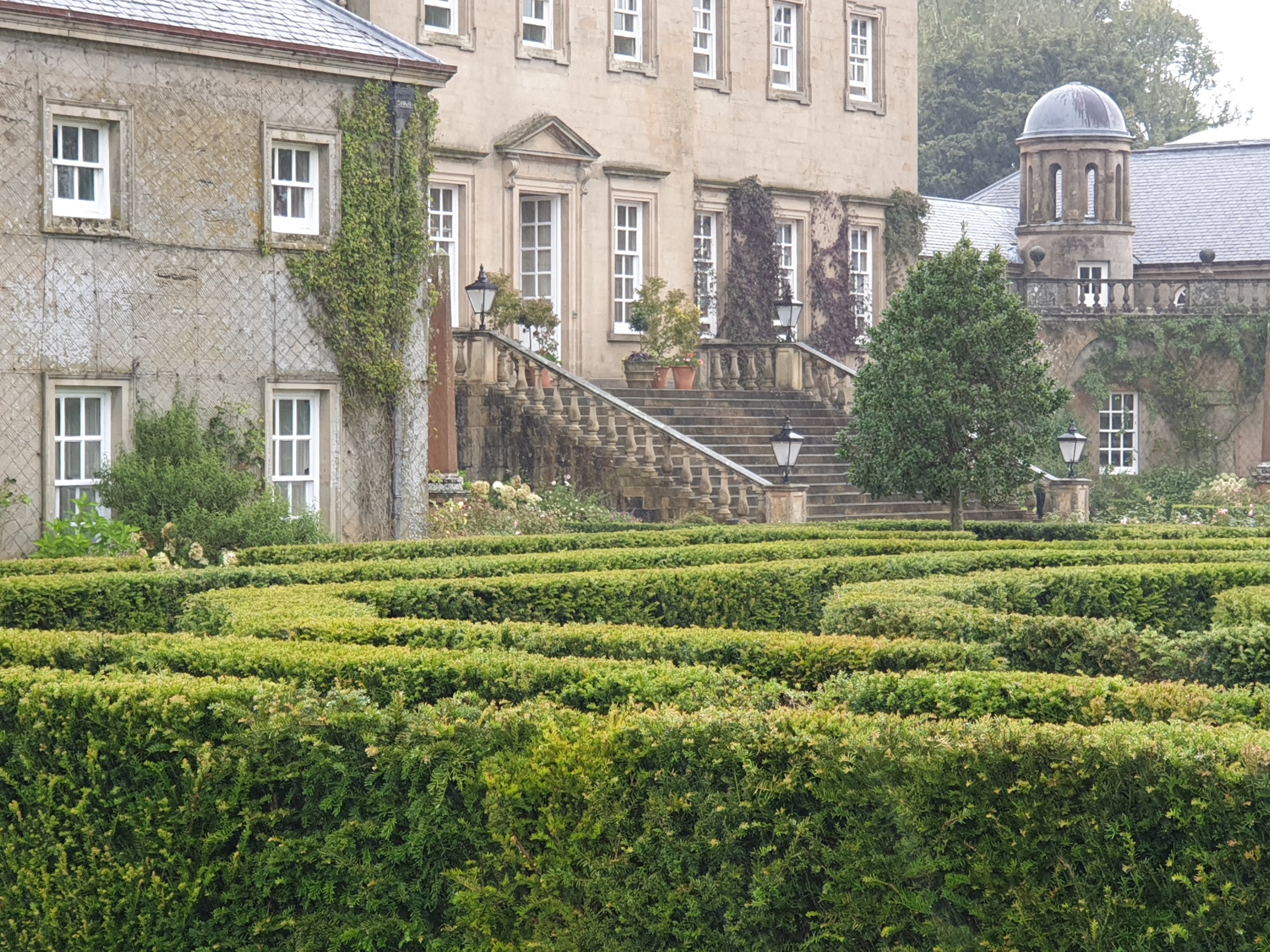
It was a pleasure to re-visit Dumfries House, the fifth Earl of Dumfries’s smart new house, designed for him by John Adam, the oldest of the three brothers Adam, who took over their father’s successful architectural practice after their father’s death in June 1748, with the possible additional involvement of his younger brother, Robert, who was in Italy for much of the time that the house was being designed, but who was named as party to the alterations to the final design agreed in February 1754. Maybe he tweaked the final design.

John was originally given the task in November 1748, was paid £22 1s. on 4 June 1750, and the first set of plans were submitted to Lord Burlington for his approbation in April 1751. On 19 March 1753, Lord Dumfries wrote to the Earl of Loudoun that ‘Mr. Adam has at last finished the plans and estimates for the new house’ and he bought two volumes of ‘Paladios Architecture’ on 19 July 1753. The contract for construction was signed on 19 May 1754.

Standard

The interregnum

I can maybe take a break from politics for a bit and return to architectural details. The policy seems clear: silence parliament; and then swamp the media with state-funded propaganda, promoted by H.M Treasury, singing the praises of cheap booze under No Deal. Unfortunately, the policy may work given the recent history of using social media to target swing voters, emphasising how horrid life under Corbyn is going to be. But, as I understand the psephology, it requires those people who remain passionately in favour of Brexit, whatever the consequences, to vote in favour of a Conservative/Brexit party coalition and swing from the benefits of a close relationship with Europe to preferring an American-style low wage, free market economy, regardless of long years of Austerity. As plenty of people have pointed out, one can’t disregard the possibility of this happening. But will all those traditional Labour voters in the north really swing to the Conservatives, irrespective of tribal loyalties, whilst much of the rest of the country, including many old-style, traditional tories, alienated by the extremism of what was their party, move across to the liberals and the Scots to the Scottish nationalists ? It will no doubt require more dirty money.

Standard

Dominic Grieve (2)

A footnote to my post about Dominic Grieve. Am I alone is seeing a certain irony in that Sonia Khan was unceremoniously and illegally fired by Dominic Cummings on the basis of a single, apparently incriminating (but never revealed) private text message, whereas now 10, Downing Street and Geoffrey Cox are arguing that text messages are private and should not be made available to the House of Commons ? I would say it is an obvious case of double standards, except that everyone seems to have forgotten that there are, or were, Standards in Public Life which MPs, government ministers and civil servants are required to adhere to.

Standard

Dominic Grieve (1)

I am increasingly admiring of Dominic Grieve, not least in the way that he is now tackling with such careful and forensic zeal why and when it was that the government chose to prorogue parliament and getting the evidence out in the open, as it is supposed to be and clearly is not, because of the increasing tendency of special advisors to conduct much government business on WhatsApp, precisely so that they are not accountable, as required by the civil service code (Cummings thinks he does not have to abide by the civil service code). We now know from the WhatsApp comments by government ministers over the weekend just how ignorant, childish and jejune they can be, so I will be interested what further comments are revealed if – as now seems unlikely – the government complies with the demand.

Standard

Lucian Freud (2)

It seems to be the season for books about Lucian Freud because I went last week to the launch of the first volume of William Feaver’s massive and magnificently detailed biography of Freud, which he was banned from publishing during Freud’s lifetime on the grounds that it was all fiction, which it is only to the extent that all biography involves an element of invention and Freud no doubt felt, as all artists do, that what was important was not the life, however meticulously documented, but the art.

What comes across in what I have read so far is the importance of Freud’s upbringing in Berlin, part of the 1920s Berlin elite, living next door to the Ullsteins, and how early his talent was recognised, Stephen Spender inviting himself to stay in the cottage where Freud went to paint in Snowdonia as a seventeen-year old and regarded by the critic John Russell as like Tadzio in Death in Venice.

Standard

Lucian Freud (1)

We had an event in the gallery tonight to celebrate the publication of Giovanni Aloi’s new book about Lucian Freud’s very beautiful and surprisingly numerous paintings, drawings and etchings of plant life, which are not so familiar as part of his oeuvre because they are seldom exhibited. The event was made the more interesting in that he was in conversation with Annie Freud, Lucian’s oldest daughter, who read from her own poetry, including one inspired by inheriting from her father a Biedermeier chest-of-drawers, and spoke of the experience of sitting for her portrait and her father’s deep knowledge and love of poetry, particularly some of the nonsense verse included in W.H. Auden’s anthology, The Poet’s Tongue.

Standard

What now ?

Sometimes I feel that British politics is built in such a way that it corrects itself and prevents extremism; but this morning, catching up on the weekend’s op-ed pieces, I feel nothing but an extreme sense of anxiety, gloom and despondency. It seems that the Prime Minister is determined to commit ritual Hari-Kari with the country and, worse, that he still has the support of large parts of the country and a rump of incendiary MPs, including many in the cabinet, to leave Europe whatever the costs, in spite of the fact that this was not what was on the ballot paper or in the manifesto at the last election. Look at the WhatsApp message from the Rt. Hon Iain Duncan Smith, ‘We must stand fast and stand together. The Chief is right. The government has the right to demand that we do not hand power over to parliament’. In other words, they are encouraging him to ride rough shod over parliament and break the law. They are doing so in the most childish and puerile language as if it is a war game, not the fate of the country at stake.

Standard

Amber Rudd

Whether by accident or design (it looks like design), Amber Rudd has chosen to resign, not just from the cabinet, but from the Conservative party as a whole, with maximum brutality. Whereas Jo Johnson, Boris’s younger brother, chose to go quietly and with dignity (we should not forget that it was Jo who got the first class degree), Rudd has chosen to plunge the knife in by co-opting the Sunday Times. Presumably she, like so many One Nation tories, was persuaded to join the cabinet by the hope and promise of a deal, a promise which we have now all discovered was, as Cummings so delicately describes it, ‘a sham’. She was led down the garden path by continued promises and expectations of a better deal, now in ruins. No wonder she and her ilk are angry. Let’s hope that she will persuade more to join her.

Standard