
I have been trying to understand the Prime Minister’s arcane schoolboy language. Luckily, there is now a great deal of information available online to help explain his description of the Leader of the Opposition as ‘a great big girl’s blouse’, which is a new one on me: the best appears in an American online publication called The Cut, which describes it as fifty-year old slang for a sissy, first used in a late 1960s sitcom called Nearest & Dearest. Now, I read that he described David Cameron recently in the discussion as to whether or not to prorogue parliament as ‘a girly swot’. I do perfectly well understand this: that only a swot might expect parliament to sit during September after a long break during August, when they are paid salaries to do so. Then, there is the picture of him being comforted on a park bench, looking like an elderly, out-of-work actor who has fallen on hard times; and the picture of him giving a speech in front of the police in which he cannot read the lines that have been scripted for him. I have to pinch myself to remember that this is actually our new Prime Minister.
Monthly Archives: September 2019
Ernst Gombrich (2)
The reason for looking up the Conrad review of A Little History of the World is because I had been told on twitter, which I did not know, that it was Gombrich, working as a radio monitor during the war, who informed Winston Churchill that Hitler was dead. On 1 May 1945 German radio played the slow movement from Bruckner’s 7th. symphony, as a prelude to the formal announcement of Hitler’s death at 10.25. Gombrich knew that Bruckner’s second movement had been composed in preparation for Wagner’s death and deduced correctly why it was being played (his mother, by the way, had been a pupil of Bruckner). He is said to have informed Churchill, presumably by telephone or telegram, although I notice that others claim to have done so as well.
Ernst Gombrich (1)
I was reading Peter Conrad’s review of the English edition of Ernst Gombrich’s A Little History of the World yesterday and I was struck, for obvious reasons, by his view towards the end of his life of British attitudes to our continental neighbours, as described by his granddaughter. Apparently, ‘Before his death, he thought that the English were perhaps warming up to this lump of land just across the channel. John Major was less hostile to Europe than Margaret Thatcher, and the budget airlines opened up a wider world. I remember him being surprised that his cleaning lady was going on holiday to exotic destinations. So he agreed to an English edition, though he didn’t live long enough to add the chapter on Shakespeare that he had in mind.’
What happens now ?
Like everyone, I have been reading the papers, watching the television, and trying to figure out what on earth happens next, with the benefit that any predictions are almost certainly going to be untrue. But the thing which seems to be missing from the discussion is what happens to the big heavyweights of what used to be the Conservative Party. The group includes not just Ken Clarke, the father of the house, and Nicholas Soames, the grandson of Winston Churchill, but also Rory Stewart, the cleverest and most independent-minded of the leadership candidates, Justine Greening, Dominic Grieve, Philip Hammond, David Gauke, Sam Gyimah, Oliver Letwin and Margot James, not to forget Ed Vaizey, former Minister of the Arts, whose father changed parties long ago. They have all been unceremoniously booted out of their own party by a combination of threats and intimidation. They have shown themselves to be people of conscience, unwilling to be cowed by the ruthless and vengeful Cummings. So where do they go ? Of course, what would be best would be a liberal/liberal conservative working group. Surely there must be some form of reconstruction of the centre ground against Johnson’s version of the Brexit party. I think and hope that the future is interestingly unpredictable and that what this group now decides will determine the country’s fate.
Julian Stair
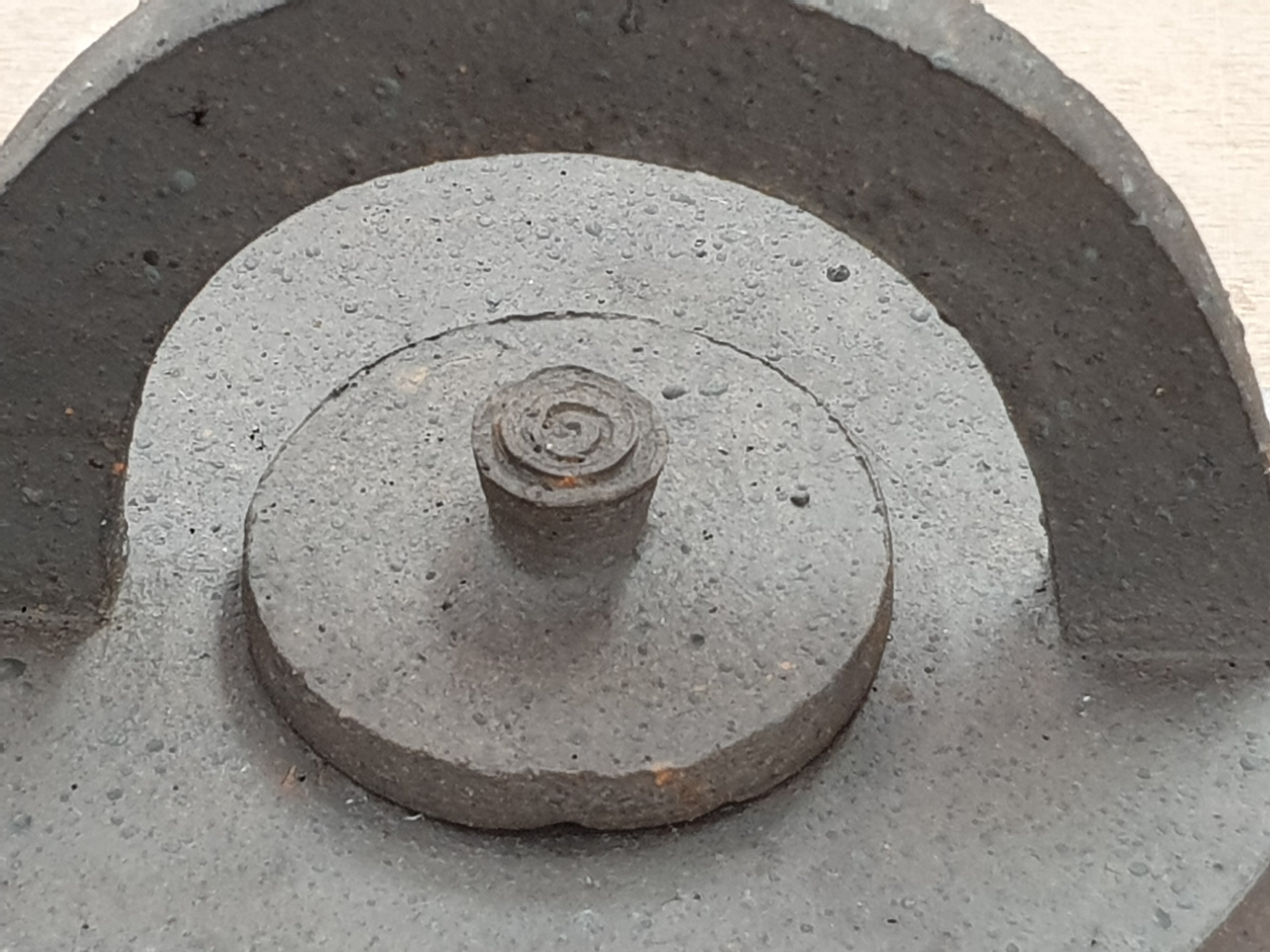
We went to see Julian Stair’s pottery in deepest East Dulwich in order to admire his recent work: the font he has designed and made for St. Augustine, Hammersmith and an assortment of vessels, many in sets, simple in form, differentiated by subtle changes in shape, colour and glazing, some having a slightly archaeological character, much informed by his knowledge of ceramic history:-






Johnson (1)
I had a sudden moment of brief optimism last night, the first for a long time, as I watched the clips of the Prime Minister speaking in the street outside 10, Downing Street last night. It was as if he did not believe his own rhetoric, as the crowd bayed for his blood in Whitehall. All the puff and pomposity had gone out of him, as if he had suddenly realised that perhaps, after all, it was not such a great idea to have prorogued parliament, to have upset and alienated not just the fringes of the Tory party, but now increasingly its middle ground, those who may be anxious about losing their seats, those who were told, and believed, that he was a liberal at heart, and, instead, has thrown in his lot with the extremists, the zealots, taking advice only from a non-conservative who has moved his bunker from his father’s estate in Durham and believes that life is a war game. Maybe he will lose the election he may be about to call after all. He looked deflated.
Hawksmoor and Gibbs
I have been asked about the relationship of Hawksmoor and Gibbs and whether or not St. Anne’s, Limehouse was influenced by St. Martin’s-in-the-Fields (or vice versa). I thought this would be easy to answer, but it is not, because I had forgotten that both served as Surveyors for the Commission for Building Fifty New Churches, Hawksmoor from when the Commission was first established in 1711, and Gibbs more briefly from 1713 to 1715, when he was ousted as a Tory and a Catholic. So, they would have sat round the table together, poring over the designs for the early churches built as a result of the Commission, including both St. Anne’s and St. Mary-le-Strand (St. Martin’s-in-the-Fields was the result of a separate Act of Parliament in 1720). Temperamentally, I see them as very different – Gibbs the product of a proper training in architecture in Rome under Carlo Fontana, Hawksmoor an apprentice and dogsbody to Wren. Maybe there was more of a crossover in ideas than I had thought.
St. George-in-the-East (2)
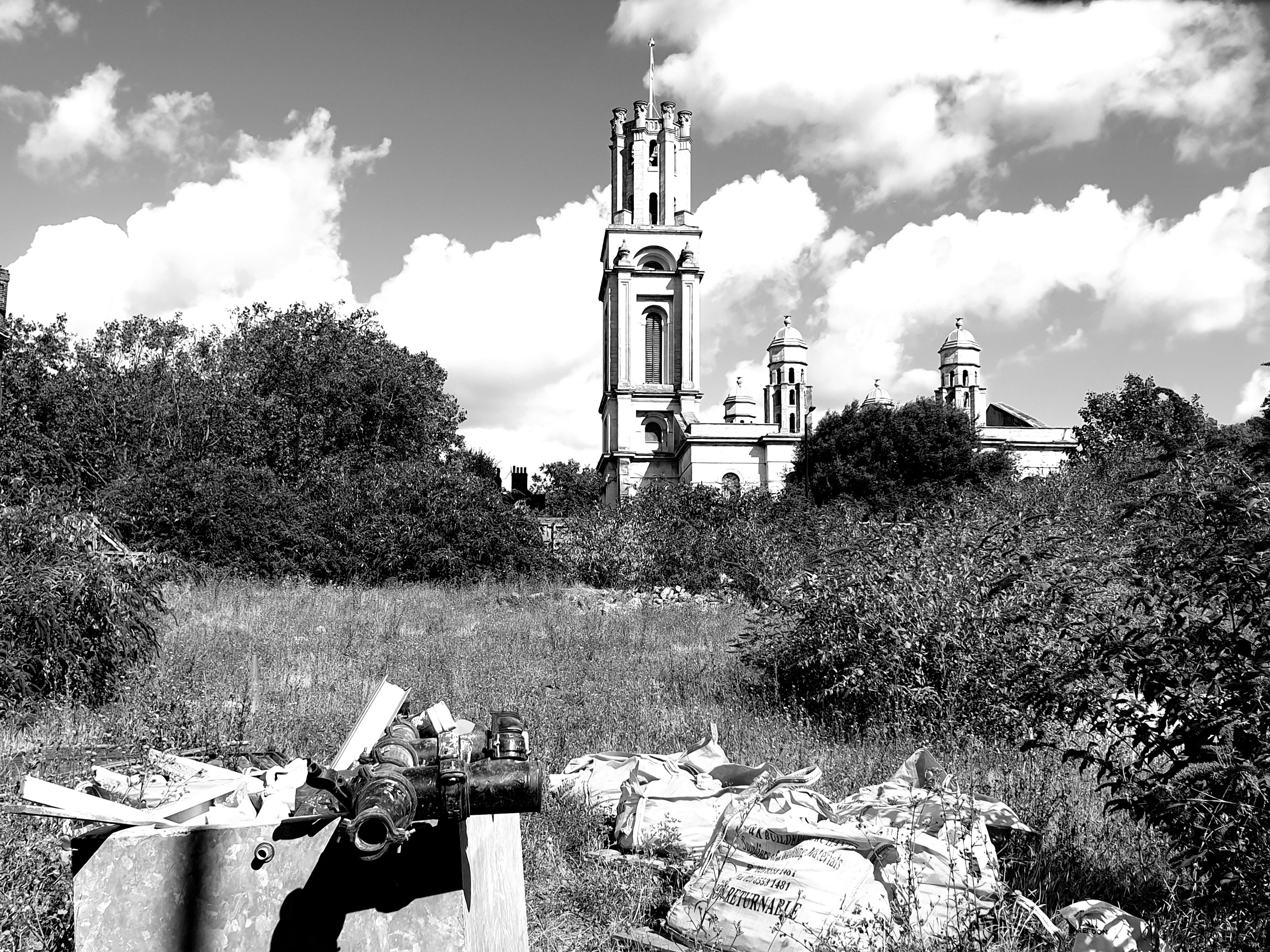
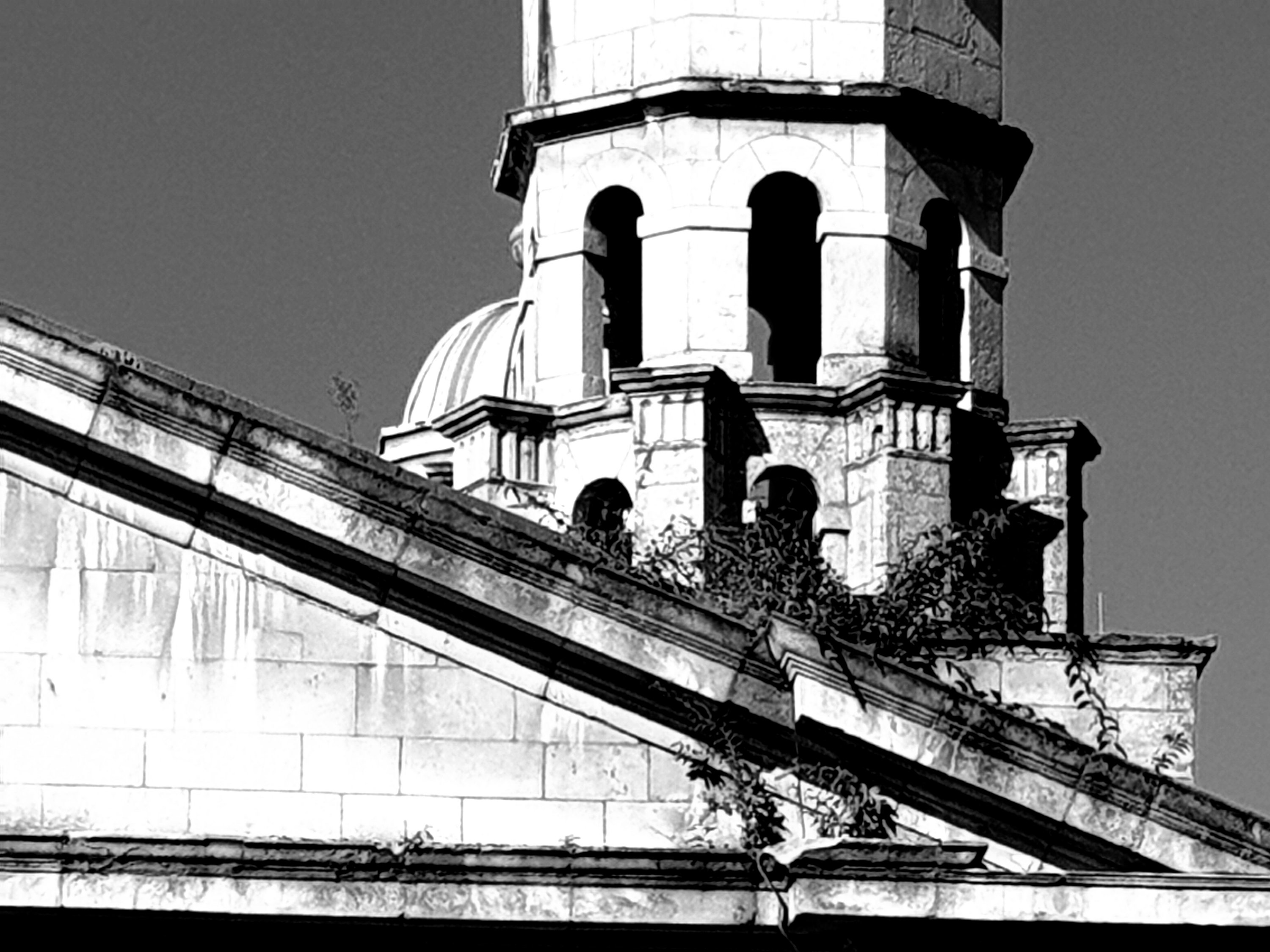
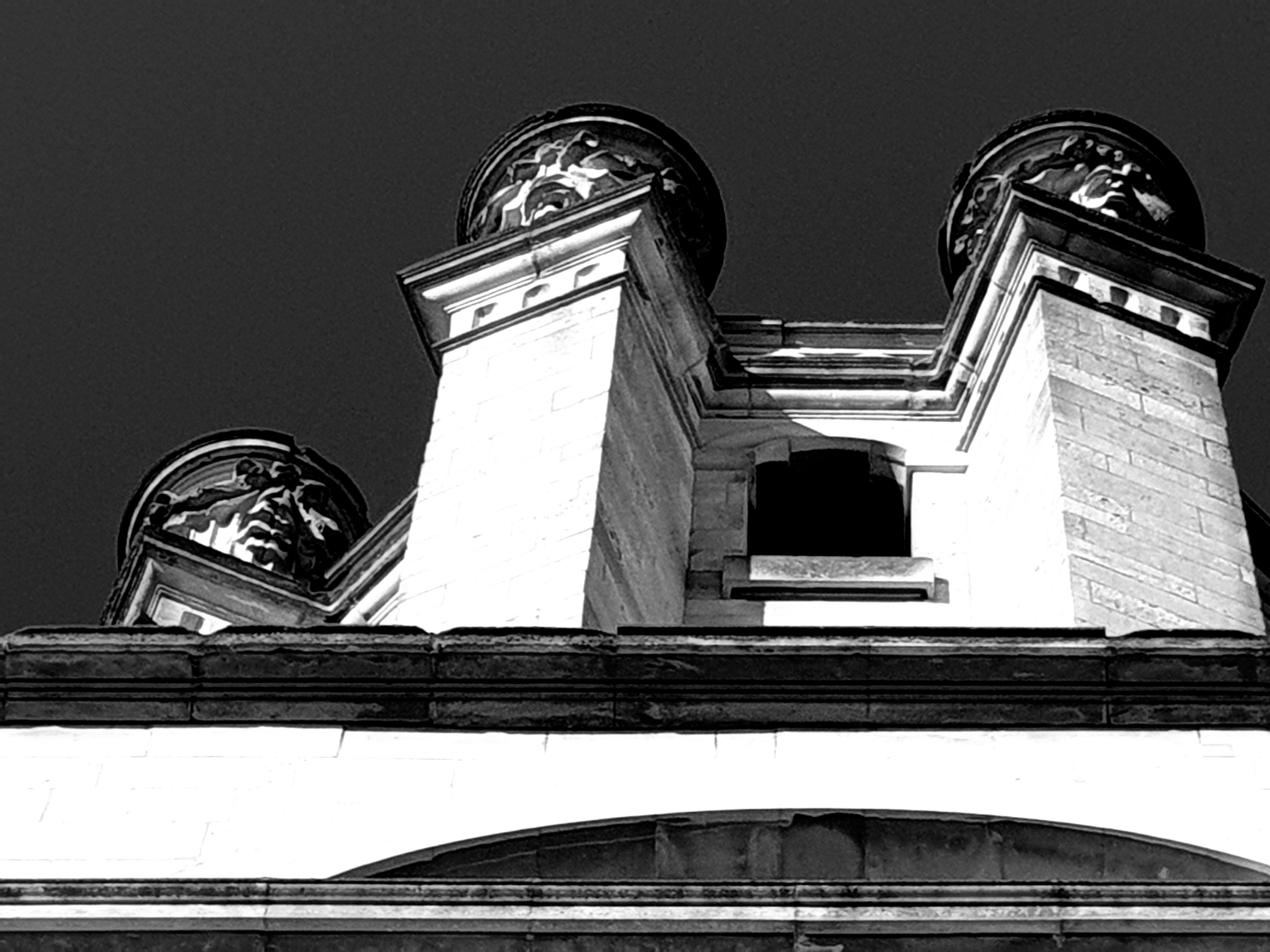
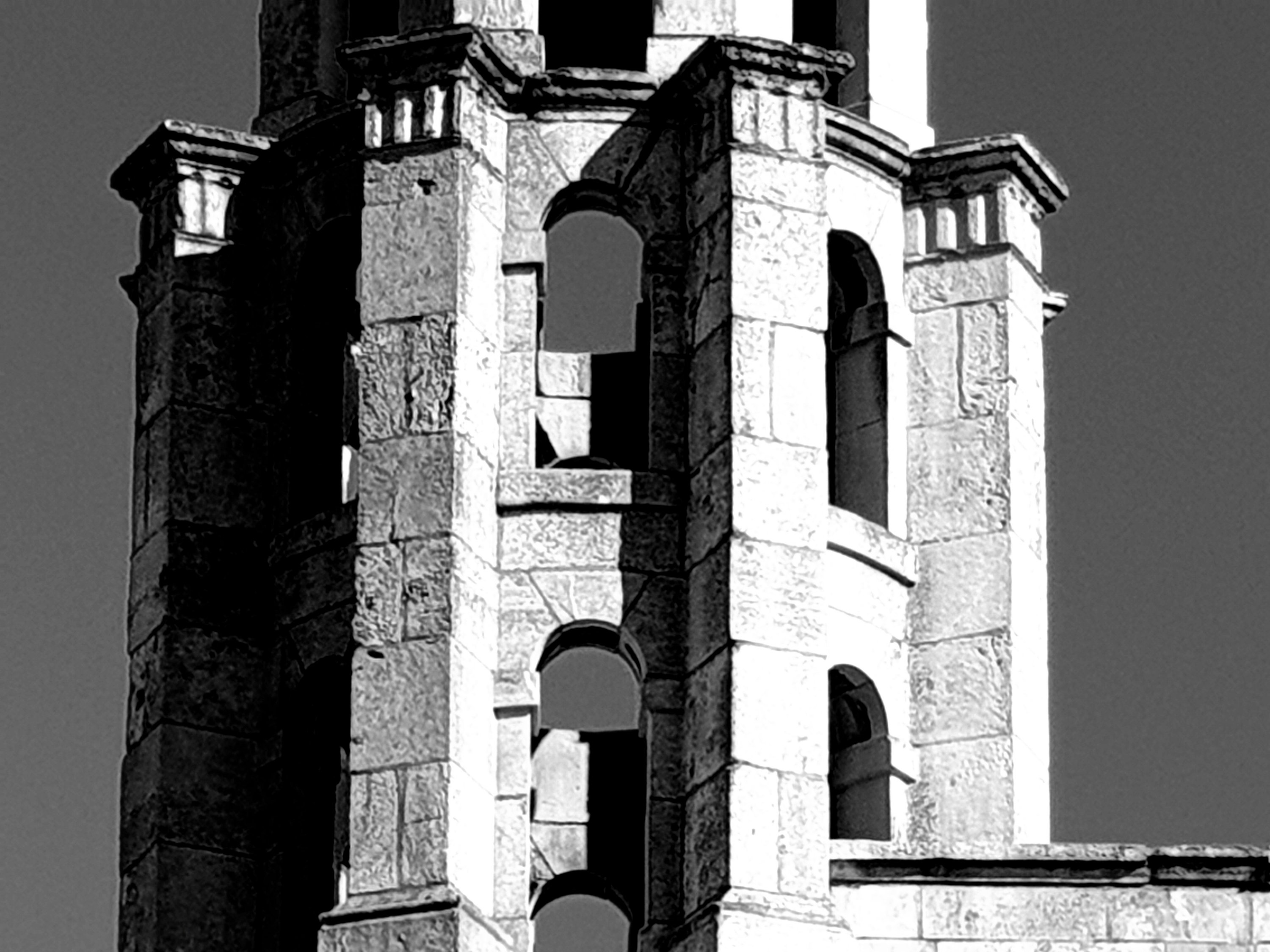
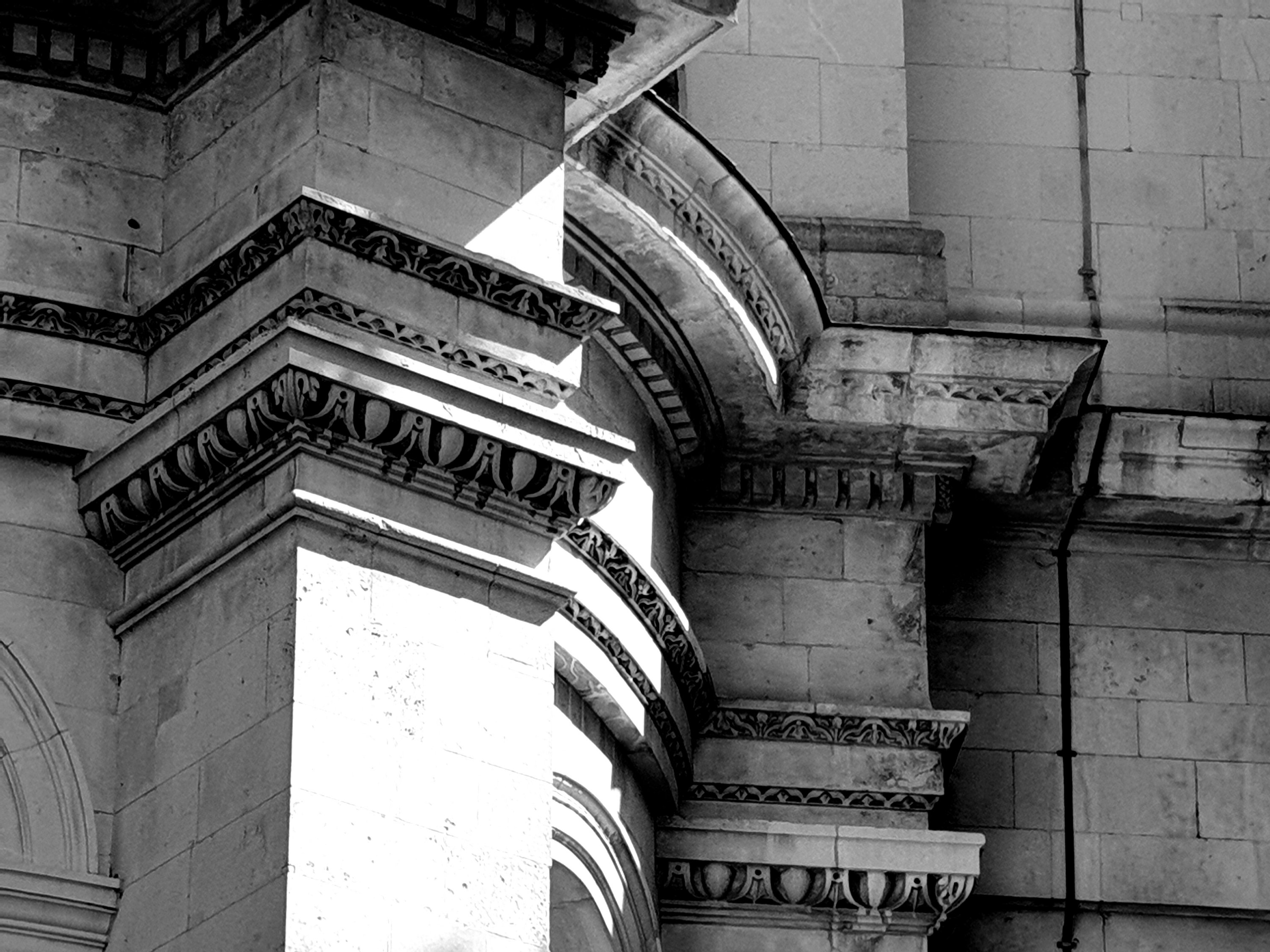
I know St. George-in-the-East so much less well than St Anne’s, Limehouse, because it is not on any of my normal routes. But it was this morning – majestic as ever, more complex in its geometry than St. Anne’s, more highly ornamented, with its unexpected, highly decorated, pepperbox towers which are such a contrast to the more austerely geometric structure of the church as a whole.
The site to its south is still undeveloped:-
I love the purity and complexity of its geometry, demonstrating the restlessness of Hawksmoor’s mind, ingesting classical ideas and motifs from his extensive library and somehow creating an architecture which is so purely abstract:-




St. Anne’s, Limehouse
We walked through the churchyard of St. Anne, nostalgically peering through the fence into the back of our old garden. I have photographed it so many times that there is little to add, except the memory of Tony Snowdon photographing John Piper there in 1963, when he was preparing the print of his Retrospect of Churches, published by the Curwen Press the following year:-

The pyramid tomb in the churchyard, inscribed on its south face ‘The Wisdom of Solomon’, whose origin and purpose (and meaning) has never been satisfactorily identified:-

And the back of the builder’s yard, now being developed, next door to the churchyard:-

The Souvenir (2)
I gather that the film is based on Coker. Does this change one’s view of the film ? Not at all, except that it helps to explain its depth and its reality, the nuances of the English class system, which so appealed to Coker, his love of double-breasted suits and East Anglia. One feels without knowing it that the film is based on long buried and autobiographical pain and on some truth about the complexities of life and how they transmogrify into art, even without knowing the original character and how he might have inspired it. Anthony’s voice in the film was apparently based on a recording of the original. I would be interested in hearing it.
 | Charles | Saumarez | Smith |
You must be logged in to post a comment.