Laurie Magnus

I feel slightly sorry for Laurie Magnus taking on the role of this government’s ethics advisor.

Where to start ?

Some of the current accusations against Dominic Raab ? Or the increasing evidence of high-level corruption in the awarding of COVID contacts ? Or the way the honours system has been corroded and the House of Lords packed with Tory donors ?

How does one clean up the Augean stables when one is given extremely limited powers to do so ?

I look forward to his first report.

https://goodlawproject.org/revealed-the-names-of-those-who-referred-covid-testing-firms-into-the-vip-lane/?s=09

Standard

Canada’s National Portrait Gallery

I’m pleased to see that Canada is resurrecting the idea of establishing a National Portrait Gallery which, I think, got further than is implied in the attached article (if you can open it). There was a Director, Lilly Koltun, who pursued the project with admirable energy (she died last year) and a building project, designed by Edward Jones.

The obvious precedent ought probably to be not so much the National Portrait Gallery in London, with over 150 years behind it, or Washington, a product of the 1960s, but Canberra, which emerged in the 1990s as a combination of private initiative – established through effective campaigning by Gordon and Marilyn Darling – and state funding: it has been very successful in combining photography and portraiture, starting with a broad remit and an adventurous exhibition programme. The risk is that the older established portrait galleries look too traditionalist, although both have radically reinvented themselves.

https://www.theartnewspaper.com/2022/12/22/canadas-national-portrait-gallery-has-no-collection-or-physical-spacebut-it-does-have-ambitious-plans

Standard

Christopher Woodward

Reading Christopher Woodward’s choice of people who have made an impact on gardening in 2022 (see below) made me feel that he should have included himself: for his amazing and creative energy in running the Garden Museum; for having saved it from an adjacent tower block and campaigning for rights to daylight; for launching a competition to design the area next to the Garden Museum; for overseeing the acquisition of Benton End; for a constantly imaginative exhibition programme, including the current exhibition of Lucian Freud’s plants; for saving it during COVID by swimming to Tresco; not to forget its café, always a pleasure; and the annual festival which I missed this year.

I’m a bit prejudiced because I am one of his trustees, but I am amazed by how much is achieved.

https://www.gardensillustrated.com/gardens/gardeners/gardeners-impact-2022/?s=09

Standard

Evans Bros.

I was very pleased to be stopped in the mop section of my favourite hardwear shop in Menai Bridge by someone who reads my blog. I sometimes forget that people read it, but was particularly glad to be told that it lifts the spirits – it is indeed maybe a way of lifting mine.

Here anyway are the mops:-

Standard

Philip Pearlstein

The recent death of Philip Pearlstein reminded me that we acquired a portrait by him of the great postwar UN figure, Brian Urquart at the NPG – I think while I was still there. I couldn’t remember how it came about and see from the NPG’s website that it was a commission organised by Sir John Weston, who had himself been ambassador to the UN. Good that his work is represented.

https://artuk.org/discover/artists/pearlstein-philip-b-1924

Standard

2023: What to look forward to

I tend to read all the articles which tell one what’s coming up next year and have also been casually investigating what is coming up. It’s a way of mapping out and planning where to be in the year ahead. Please let me know if there are other things cultural/architectural I should be aware of.

January 19

Gagosian open an exhibition in Paris on the work of Phyllida Barlow, Rachel Whiteread and Alison Wilding. I hope we can get to see it.

January 21

Spain and the Hispanic World at the Royal Academy. It will be great to see the collection of the Hispanic Society in London.

February 11

Donatello at the V&A. I missed the exhibition in Florence, so am very pleased that a version of it is coming to London.

February 25

Tercentenary of Wren’s death. It’s a year for looking back at, and re-appraising, Wren and his legacy.

March 4

Lucie Rie at Kettle’s Yard.

March 19

An exhibition on ‘Art, Death and the Afterlife’ by Julian Stair opens at the Sainsbury Centre (Julian Stair: Art, Death and the Afterlife – Sainsbury Centre)

March/April

The Farrell Centre opens in Newcastle with an exhibition ‘More for Less: Reimagining Architecture for a Changing World’.

April 22

The Georgian Group has organised a conference on Wren (https://georgiangroup.org.uk/event-directory/symposium-wren-300/).

June 22

The National Portrait Gallery re-opens. I’m looking forward to seeing the way that Jamie Fobert has managed to enlarge and reconfigure it by taking in the space outside and the nineteenth century moat and the original east wing which has been used as offices, although originally designed as a top-lit (narrow) gallery space. Also how the collection has been selected and re-hung.

July 25

Yale University Press publishes Eeva-Liisa Pelkonen’s Untimely Moderns: How Twentieth-Century Architecture Reimagined the Past on how twentieth-century architects, particularly those based round the Yale School of Architecture, viewed history.

September 22

The Centre for Classical Architecture in Cambridge is organising a conference on ‘The Professional World of Sir Christopher Wren’.

September

The Faith Museum is due to open in Bishop Auckland. There is already a Gallery of Spanish Art in the main square and a hotel will open in the spring. The Faith Museum will be housed in a stone building by Niall McLaughlin, already added to the Bishop’s Palace.

Autumn

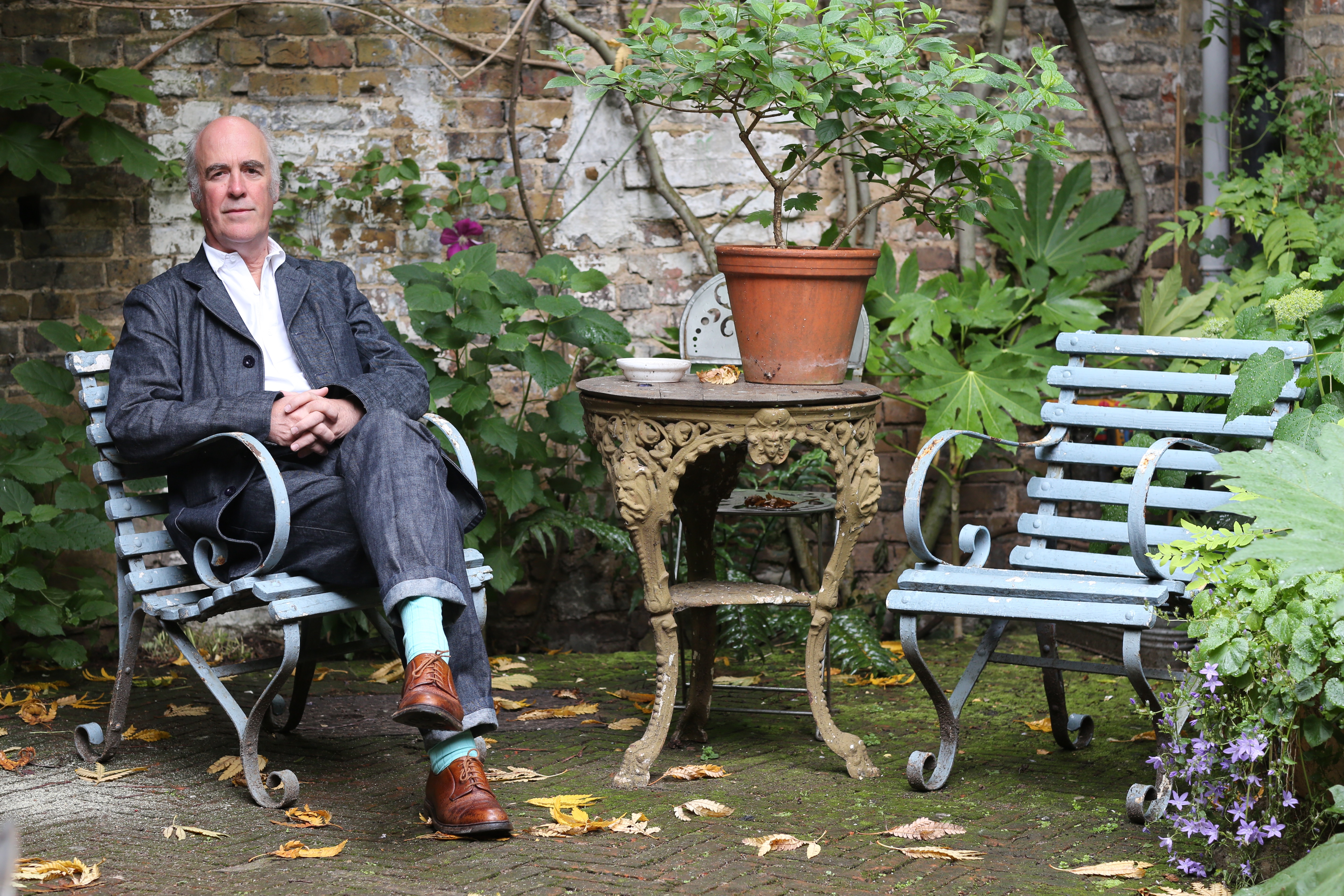
Gill Hedley’s book on Henry Flitcroft is being published with an introduction by CSS (https://georgiangroup.org.uk/2022/07/20/henry-flitcroft/)
Standard

Intangible Cultural Heritage

Following my talk last Sunday about the Whitechapel Bell Foundry, someone in the audience said that the thing he found most baffling was that so many of the relevant heritage and cultural agencies had sat on their hands. SAVE didn’t want to get involved because it was a ‘factory’, the Georgian Group because it was workers’ culture, not posh culture, Historic England couldn’t see the point of it and didn’t think it was part of its remit to protect Living History (even in spite of living history being part of its mission statement).

I tried to explain that in this country we don’t really do living history. We prefer our past embalmed. Bricks and stone, but not the life and work inside (except at Erddig, but then that’s life below stairs).

Now, someone has provided good proof of this strange neglect. UNESCO has a programme to protect what it calls ‘Intangible Cultural Heritage’. Guess how much ‘Intangible Cultural Heritage’ there is in the UK according to UNESCO. Precisely none. No dance, no croissants, no witchcraft, no bells. Neither the National Trust which runs Styal Mill nor Historic England has thought to register cheddar cheese or Morris Dancing.

Maybe an incoming labour government could address this curious, but revealing lapse.

https://ich.unesco.org/en/lists

Standard

Stepney City Farm (4)

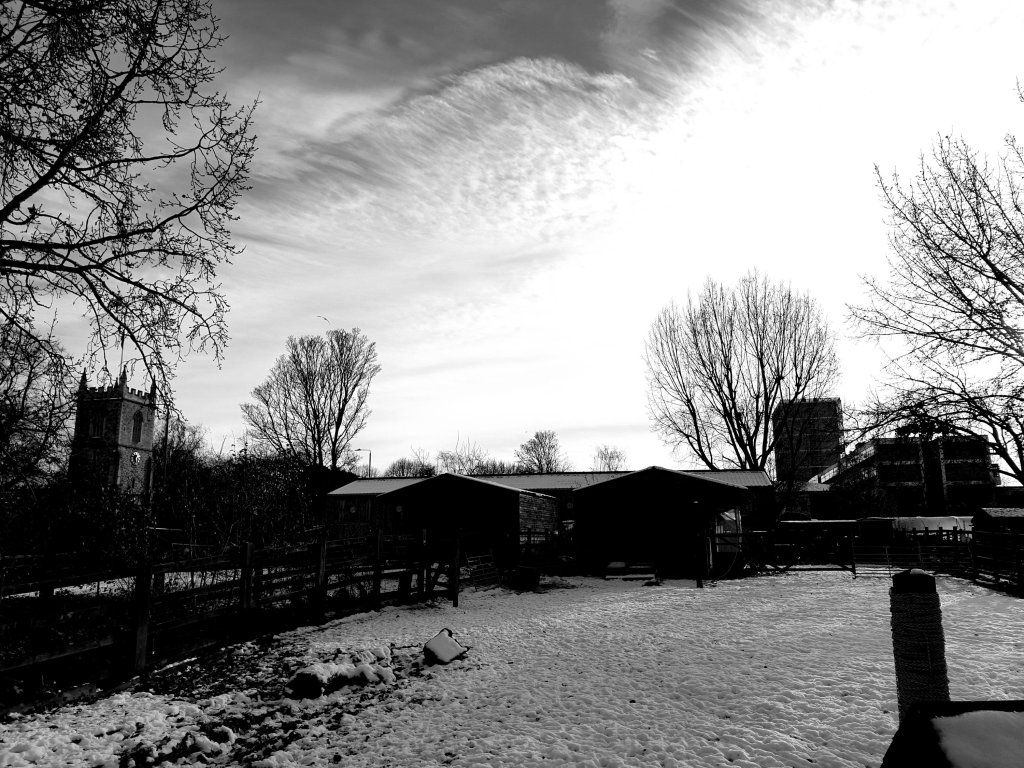
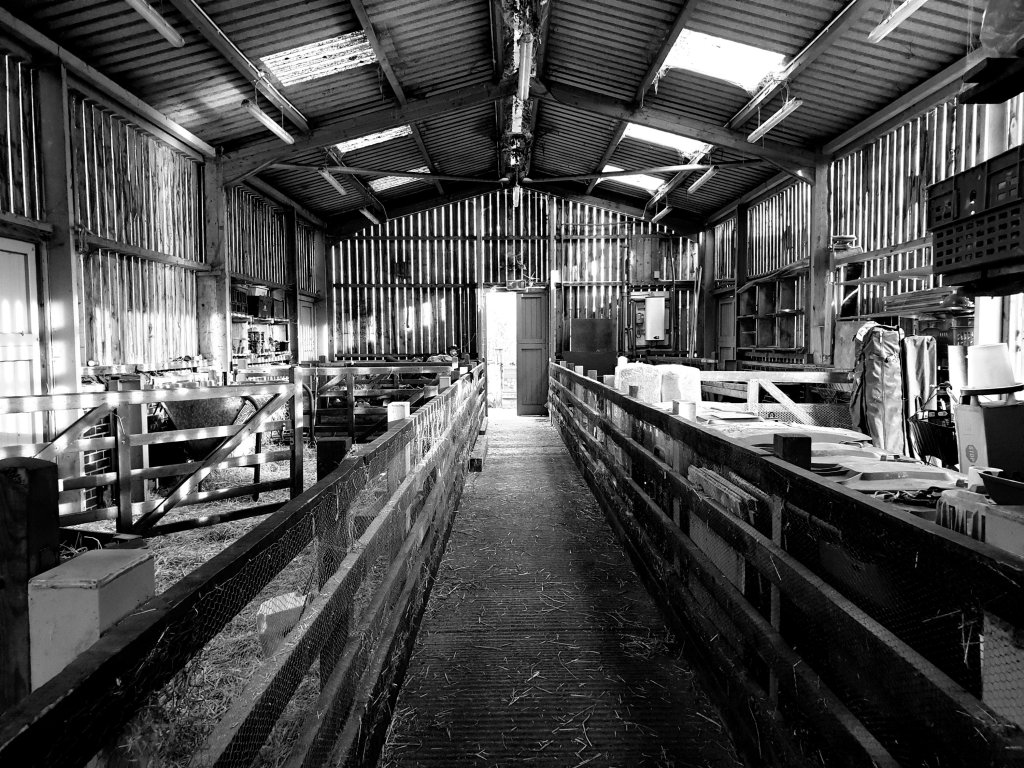
I have gone easy on posting pictures of the week-long snow because they seem to either look unbearably kitsch or, truer to the reality, terribly bleak and grey. But today I succumbed to views of Stepney City Farm, which looked particularly picturesque, as if it was on the east coast of the United States instead of inner London. And it is a way of thanking them for providing a place of retreat during COVID, including the admirable Allotment Kitchen, which is so popular that people were having their lunch outside (this is its last day of opening before Christmas):-

Standard

Simpson’s Tavern

My attention has been drawn to the attached decision by the City’s all-powerful planning committee to protect the future of Simpson’s Tavern by designating it as an asset of community value – a way of protecting historic entities and perhaps a recognition that shops and taverns are as important to the historic fabric as the buildings themselves.

This could be a way for Lutfur Rahman to protect the future of the Whitechapel Bell Foundry, if he is so minded as the new legislation can apparently be used in Westminster and Tower Hamlets just as much as in the City.

It is not too late.

https://news.cityoflondon.gov.uk/historic-chophouse-granted-asset-of-community-value-status/

Standard

72, Upper Ground (2)

If anyone was in doubt about the profoundly negative impact of the new building on the curve of the river, then it is worth studying the attached clip of photomontages which shows the effect of its huge scale on its surroundings – particularly on the adjacent river walk and the view from Waterloo Bridge – and presumably Westminster Bridge as well.

It is currently the subject of a planning appeal and I hope the planning inspector will turn it down.

Standard