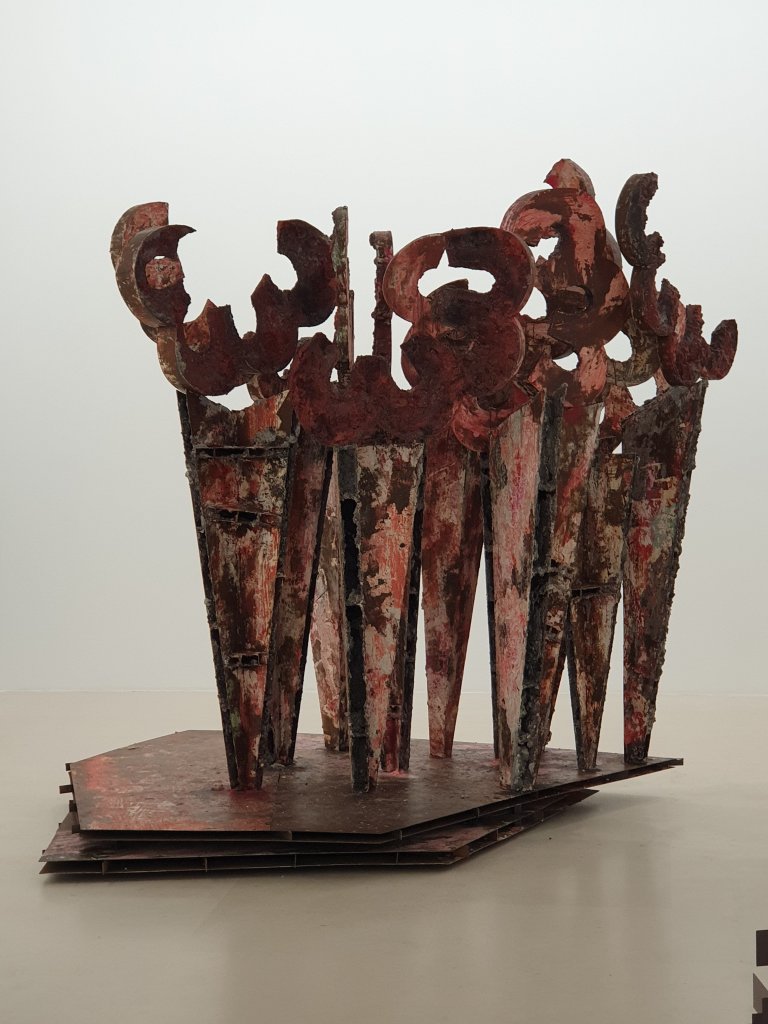
We have spent the day mourning the totally unexpected death of Phyllida Barlow who we saw not so long ago at the opening of her joint exhibition at Gagosian in Paris – Hurly-Burly, now closed. She was, as ever, full of an immense joie de vivre, and it feels unreasonably cruel that she should have been struck down.
Of many articles about her work, I admired Tanya Harrod’s:-
I devoted my monthly column in The Critic to Sir Christopher Wren to mark the tercentenary of his death, trying so far as is possible – it is not easy – to give a sense of his personality, which seems to have been pretty reticent, incredibly hard working, able to get on with successive monarchs, and in the end, upset by the way he was ousted from the Office of Works, which had the benefit that he sat down to document his life in Parentalia.
Inspired by Rowan Moore’s article about new housing developments (see below), I stopped off at Marmalade Lane, one of the recent schemes he cites, which I knew about, but had never seen.
It doesn’t seem very difficult to see why it’s better than the acres of nondescript housing by which it’s surrounded: more solidly constructed, a bit smaller scale, more variety, involving the owners in the design of the interior, making sure it’s properly insulated, being attentive to the idea that a house should be a part of a living community. There are chickens in the back yard. After four years, it feels lived in and two people were happy to chat about what it’s like and show me the big back garden. This kind of friendliness on a remote housing estate is pretty unusual. I could have had a cup of tea in the community café if I’d located it.
I don’t quite understand why successive housing ministers find these ideas so hard to grasp, except that many of them may have received funding from the volume house builders who are the bulwark of Tory donors, so that, as a result, we have had twelve years of much crap new housing and no solutions to the housing shortage.
Gove’s latest idea is that there should be a new Architecture School focussed on urbanism which would mean that we might have some new housing designed on different principles in about twenty years time. Perhaps his civil servants could take him on a little tour. Perhaps they could go on a tour themselves.
I stopped off at Kettle’s Yard to see the Lucie Rie exhibition, which was much more varied than I had expected, showing the full range of her work. beginning in Vienna in the 1930s:-
To buttons she made as an enemy alien in the early 1940s:-
To earthenware bowls in the late 1940s:-
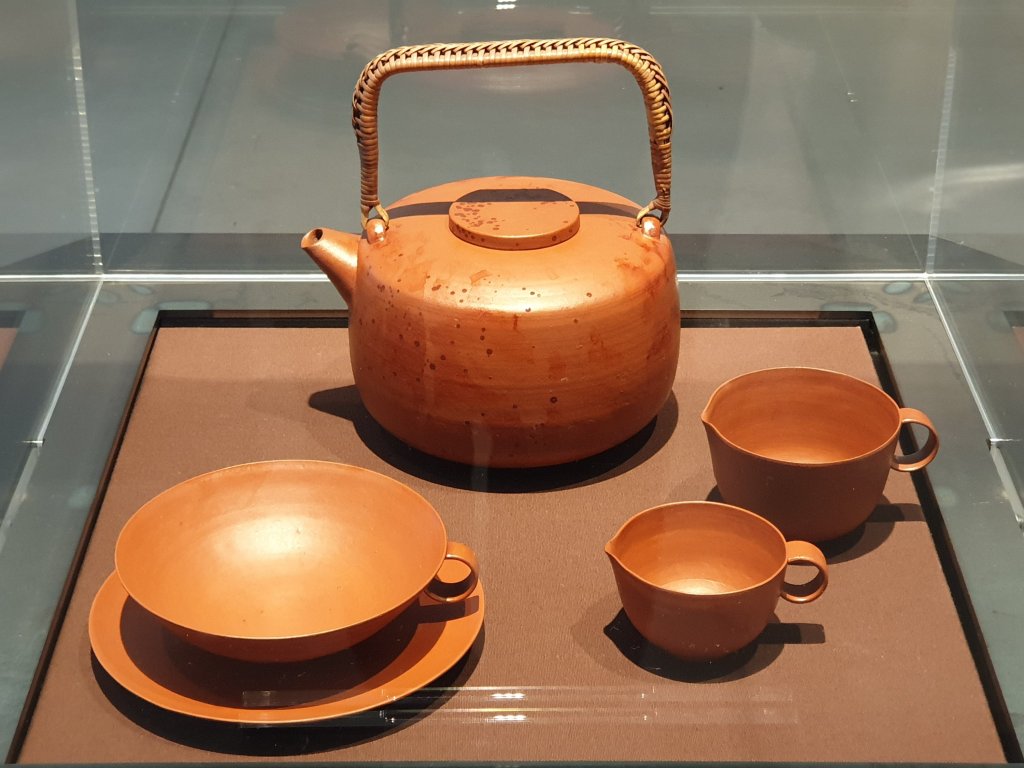
To teapots for Heal’s:-
And stoneware jugs:-
To prototypes for Wedgwood (rejected):-
More elaborately decorated work from the 1970s:-
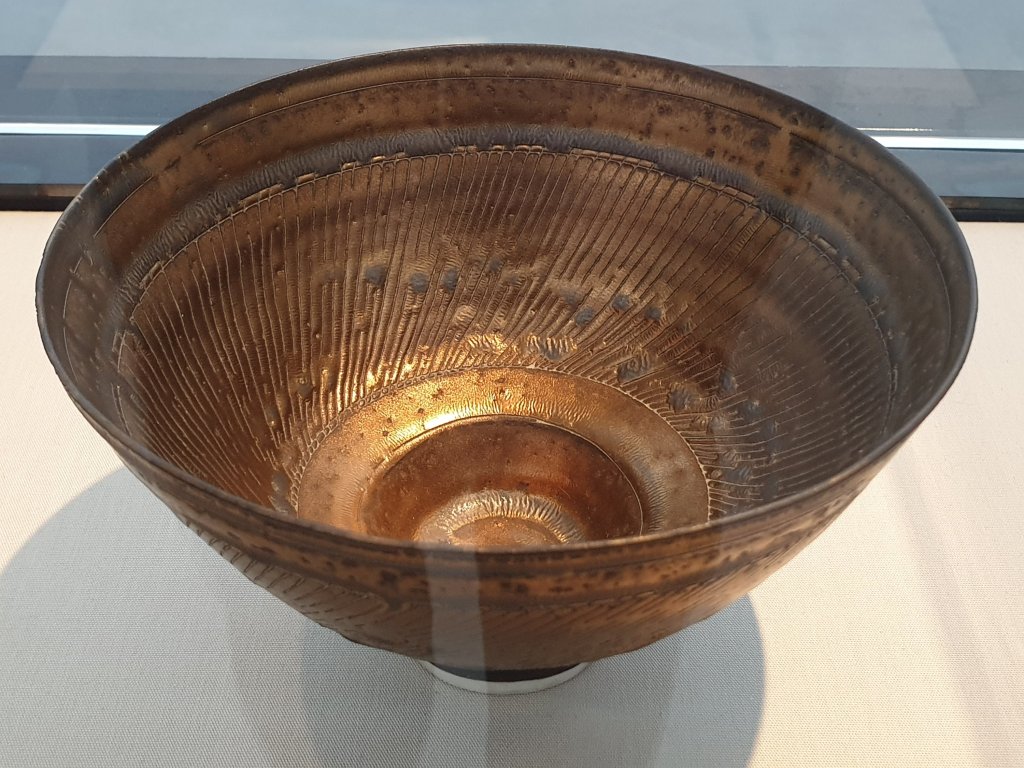
To a late, translucent, porcelain bowl:-
This was her showroom in Albion Mews:-
The exhibition was designed (beautifully) by David Kohn, with graphics by A Practice of Everyday Life.
PS There is a very good and characteristically thoughtful interview with David Chipperfield in a new volume called Imagining the Museum: 21 Dialogues with Architects edited by Andras Szanto (https://www.hatjecantz.de/andrs-sznt-8307-1.html). Highly recommended.
A very nice article by Edwin Heathcote about David Chipperfield winning the Pritzker Prize, for those who have an FT subscription (see below).
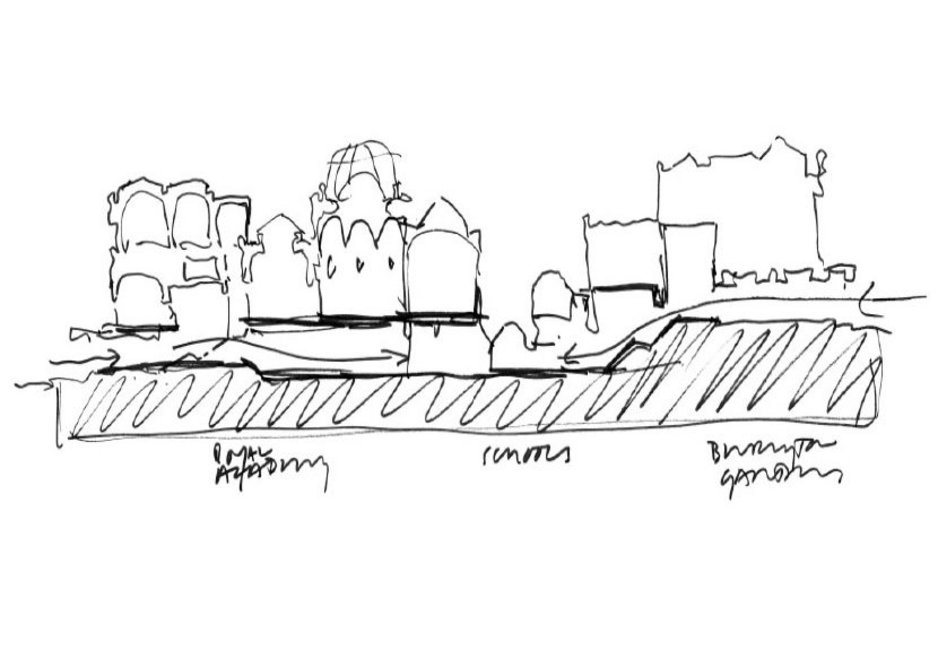
I’m particularly pleased, for obvious reasons, that it mentions the work he has done – and is still doing – at the Royal Academy, for which I sometimes feel he didn’t get the credit he deserved: partly because it opened not long before lockdown; partly because it is lowkey, about renovation, stitching two buildings together and reinstating a lecture theatre where there was a lecture theatre before; and partly because, as at the Neues Museum, he worked with Julian Harrap as conservation architect in an effective partnership. But these are precisely its virtues, fitting into the surrounding city and sensitive to its history, instead of being a big personal statement.
Like Heathcote, I just assumed he had won the Pritzker long ago.
I am attaching Gillian Tindall’s excellent article about Stepney as it was in 1963 because it gives such a powerful sense of what the area was like post-war and the impulse towards redevelopment, including the lack of political support for, and interest in, shopkeepers and small traders: such a contrast to both Paris and rural France where one sense that the tissue of society is maintained by its small shops, the butchers still working, and the bakers who I was told are state subsidised.
En route to the nearby canal, we spotted a romanesque portico on the church of St. Martin-de-Sescas, a fine and full blown set of carvings, although worn by the weather:-













 | Charles | Saumarez | Smith |
You must be logged in to post a comment.