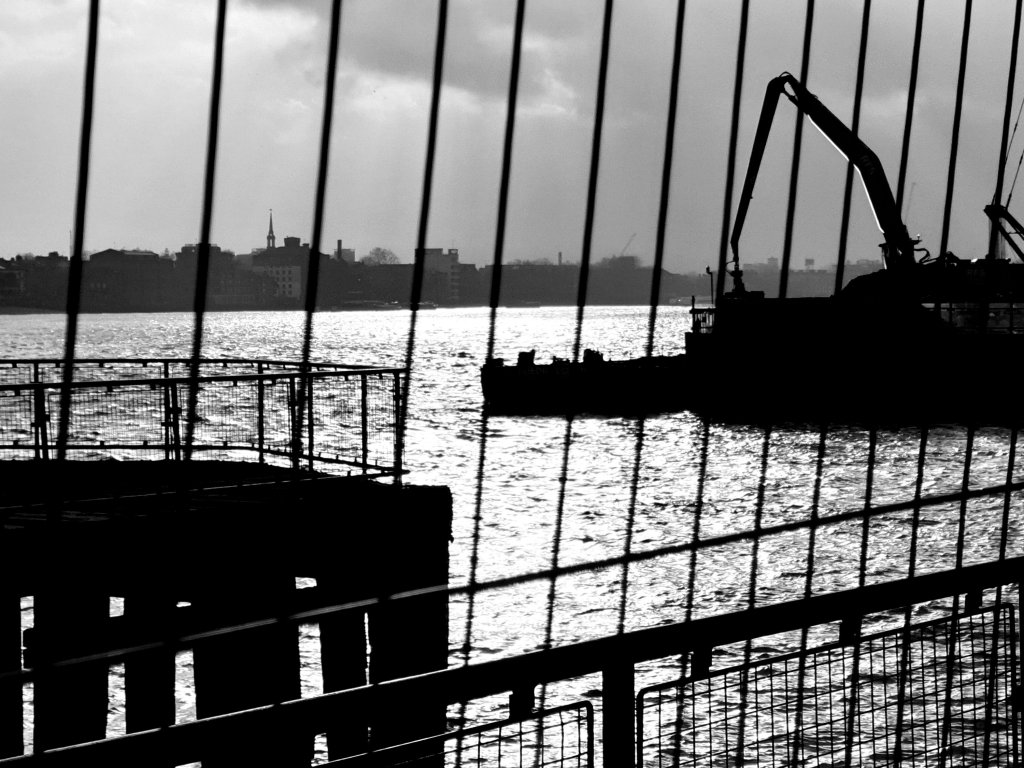
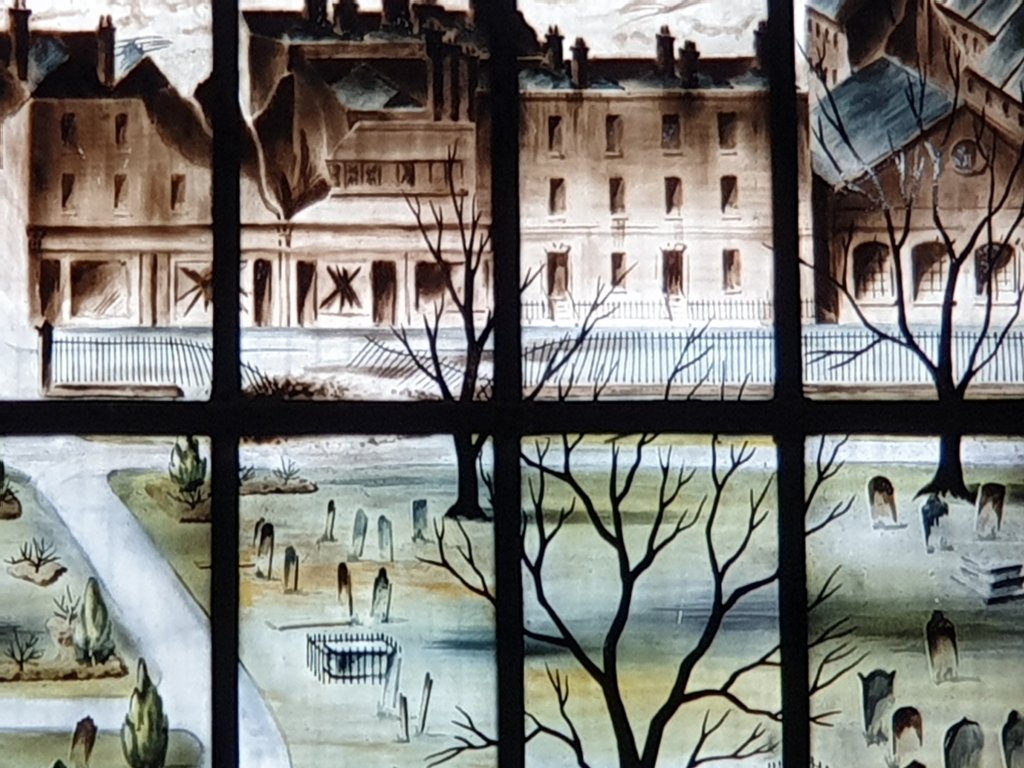
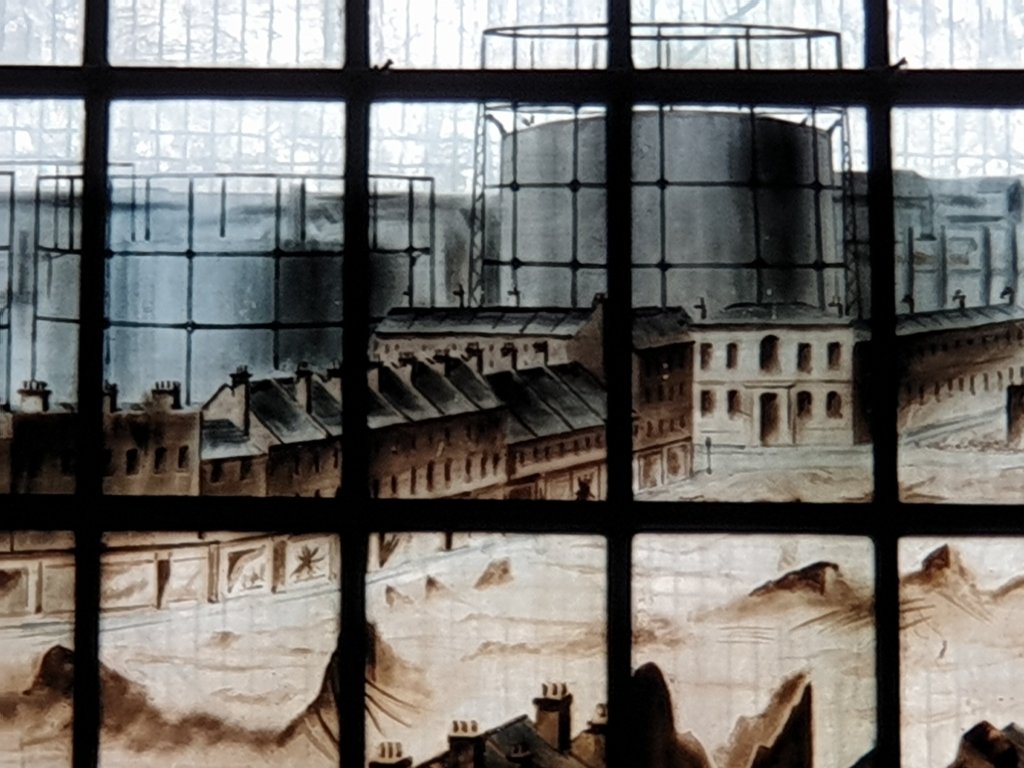
After nearly four years of fighting to save the Whitechapel Bell Foundry from its ignominious fate of being turned into a boutique hotel, I have been sent a memento of my very first visit on 25th. February 2017, organised by Sue Stamp of the Friends of the RA, who took a photograph of me taking photographs of the foundry. I was blown away by the working interiors and have always suspected that possibly the Commissioners of Historic England have never visited, which has made them so oblivious and disregarding of its significance:-
As part of my background reading to understand more about the intellectual significance of Warburg, I acquired a copy of Edgar Wind’s The Eloquence of Symbols which includes the review that Wind wrote for the TLS of Gombrich’s intellectual biography of Warburg, published in 1970. It is the most astonishing and powerful piece of invective, written by Wind who was Panofsky’s first student at Hamburg, met Warburg in 1927, and was key to the transfer of the Warburg Library to London. He was clearly very protective of Warburg’s legacy, whereas Gombrich joined the Institute after Warburg’s death and was obviously in many ways hostile to Warburg’s thinking, his interest in astrology and magic, in psychology, and didn’t want to deal with the some of the intellectual complexities and undercurrents of Warburg’s life and mind. I recommend it for an understanding of Warburg’s influence on later scholarship.
I was very pleased to have been asked to write about why the publication of Aby Warburg’s Bilderatlas is, for me at least, the big publishing event of the year (see below). Warburg’s ideas and beliefs about the transmigration of images from antiquity across cultures preoccupied him in his last two frenetic years after the opening of the Kulturwissenschaftliche Bibliothek Warburg had opened next door to his house, mounting images on forty screen ranged round the elliptical main room of the library. Ernst Gombrich was hired in 1936 to oversee its publication, but thought the task impossible. So it is wonderful that it is now freely available, as well as being the subject of two recent exhibitions in Berlin which I had planned to visit in March, but like so much else in this year have only visited online, but of which the book is a physical memorial, available for future study.
I follow the fortunes of Factum Arte with the utmost interest, not least because they are the people who have been involved in the bid to take over the Bell Foundry and to keep it as a working foundry. At the public Inquiry, Raycliff’s lawyer did everything in his power to pour cold water on their business plan, so I was pleased to see a piece in this morning’s Guardian by Jonathan Jones making clear how important their work is – key to the protection and preservation of artistic monuments round the world, from Egypt to Nigeria and Brazil, not to forget the Victoria and Albert Museum:-
For those of you who are interested in museums and how they operate and still have the stamina for online discussions (after nine months it may be waning), I am doing a discussion on December 1st. with Dinah Casson and Frances Spalding about Dinah’s forthcoming book Closed on Monday: Behind the Scenes at the Museum, which is due to be published any minute by Lund Humphries (https://www.lundhumphries.com/blogs/mba/behind-the-scenes-at-the-museum-with-dinah-casson). It’s a lovely thoughtful, reflective book, informed by the fact that she has worked with so many, and in so many different types of museum around the world and knows them intimately, but not uncritically. This is an invitation to the discussion:-
I’ve just finished chairing an event with Antony Gormley in discussion with one another. There were more synergies/crossovers than I had expected: born within a year of one another (Gormley 1950 Arad 1951); both children of the 1960s – freewheeling, inventive, creative; both resisting the categorisation of their medium. Arad trained in architecture, but only practised for a year before setting up his studio as an inventor/designer in Covent Garden; Gormley spent three years in India before going to Central School, Goldsmith’s and the Slade. Both determined to resist categorisation, liking working with others, doing things provocatively and experimentally; both nearly equally impossible to chair, because so full of ideas.
The last session of the museums conference that I was able to attend was on the age-old, but still highly contentious issue of the future of the curator, with a good and interesting range of speakers from institutions in both history and contemporary art, chaired by Andrew McClellan. Jessica Morgan, a former curator of the Tate, now director of the Dia Art Foundation, argued for the need for new skills and less adherence to traditional art historical expertise. There was an occasional presumption that curators hold disproportionate authority in the ways that works of art are acquired and interpreted. My own experience is that curators increasingly feel marginalised by the growth in other areas of the museum – digital, marketing, finance, learning, all of which require different forms of specialist professional expertise which subtly, but significantly displaces curatorial knowledge, not least in pay scales. I say this as a non-curator.
The final session of the day was a keynote address by Sandra Jackson-Dumont, the Director and CEO of the Lucas Museum of Narrative Art, which is currently being built in Exposition Park in Los Angeles, right next door to the Natural History Museum. It is a rather fascinating project because it treats art as a broad narrative, encompassing prints and photographs alongside paintings, blurring the boundaries of medium and high and low, so including George Bellows next to Andrew Wyeth next to Dorothea Lange and Gordon Parks. The building is designed by a Chinese architect, Ma Yansong, who worked for Zaha Hadid before opening an office in Beijing:-
Very oddly, it is conceptually not totally dissimilar from the new LACMA in the way in which it deliberately eschews traditional architectural forms for curved walls and shapes and they are both one story up in order to create a plaza below:-
Both are determined to break the mould of traditional museums in ways which are not dissimilar: abolishing the canon; opening themselves up to non-traditional art; treating the experience as more about browsing than study. They are both scheduled to open in the next few years. It will be interesting to compare the ways in which they are received by the museum and art history communities.
I have just attended a good session on the role of empathy in the museum, led by Tom Crow. Art historians have become wary, or hostile, to the discussion of the nature of aesthetic experience in museums, feeling that it is either indeterminate or elitist, too connected to connoisseurship. But it’s interesting to discover that psychologists and psychotherapists feel no such inhibition and are both working with museums and studying the therapeutic values of wonder, pleasure and visual delight, the nature of individual, visual response to works of art and the ways in which it contributes to private well-being and public health.
I attended the first day of a big, international conference organised by the Louvre Abu Dhabi entitled Reframing the Museum and held, of course, virtually, which has the advantage of no travel costs and of being able to view the proceedings comparatively dispassionately. I was expecting to get a better sense of how museums are going to change than in practice I did. There was an interesting session on new business models in which Frédéric Jousset proposed some: flexible pricing; exploiting the museum’s brand; licencing; jacking up the price of entry and encouraging a business class of entry; not treating visitors as uniform; and re-orienting the museum in order to privilege and give more space to the most popular exhibits. I was interested that Max Hollein in his response said that, of course, museum directors are not inclined to think about their visitors as customers, which sounded to me like a voice from a long distant past. I was left with an impression that, although at the beginning of the pandemic, everyone rushed to go virtual, now we approach its end, everyone can’t wait to be back in reality and that museums may end up being unexpectedly the same after all: symbols of the cosmopolis, as Anthony Appiah so elegantly argued.
You must be logged in to post a comment.