
One can tell that it’s the Christmas season in that we have just been given another book about London interiors, called Restoration Stories: Patina and Paint in Old London Houses by Philippa Stockley who was long ago at the Courtauld Institute, lives in Whitechapel and writes a lot about houses for the Evening Standard. The book is, in many ways, a tale of the success of the Spitalfields Trust, established in 1977 by Dan Cruikshank, Mark Girouard and Colin Amery, to preserve the silkweavers houses which were then semi-derelict or in multiple occupancy and have now been beautifully restored. She writes in a sprightly and well-informed way about the history of the houses, how they have been restored, and the conservation thoughts and beliefs of their current owners. Lots of bric-à-brac and architectural salvage.
Author Archives: Charles Saumarez Smith
All Soul’s
All Soul’s was looking very magnificent for the memorial event held for Philip Lewis, an old and close friend, who was a elected a Junior Research Fellow in 1965, a Senior Research Fellow from 1972 to 1988, and an Emeritus Fellow till his recent death.
We admired Hawksmoor’s elliptical, coffered buttery, with Hawksmoor’s black bust in a niche overlooking the fellows having lunch:-

And then, by magic, we were invited to cross the North Quadrangle, Hawksmoor’s experiment in gothic:-
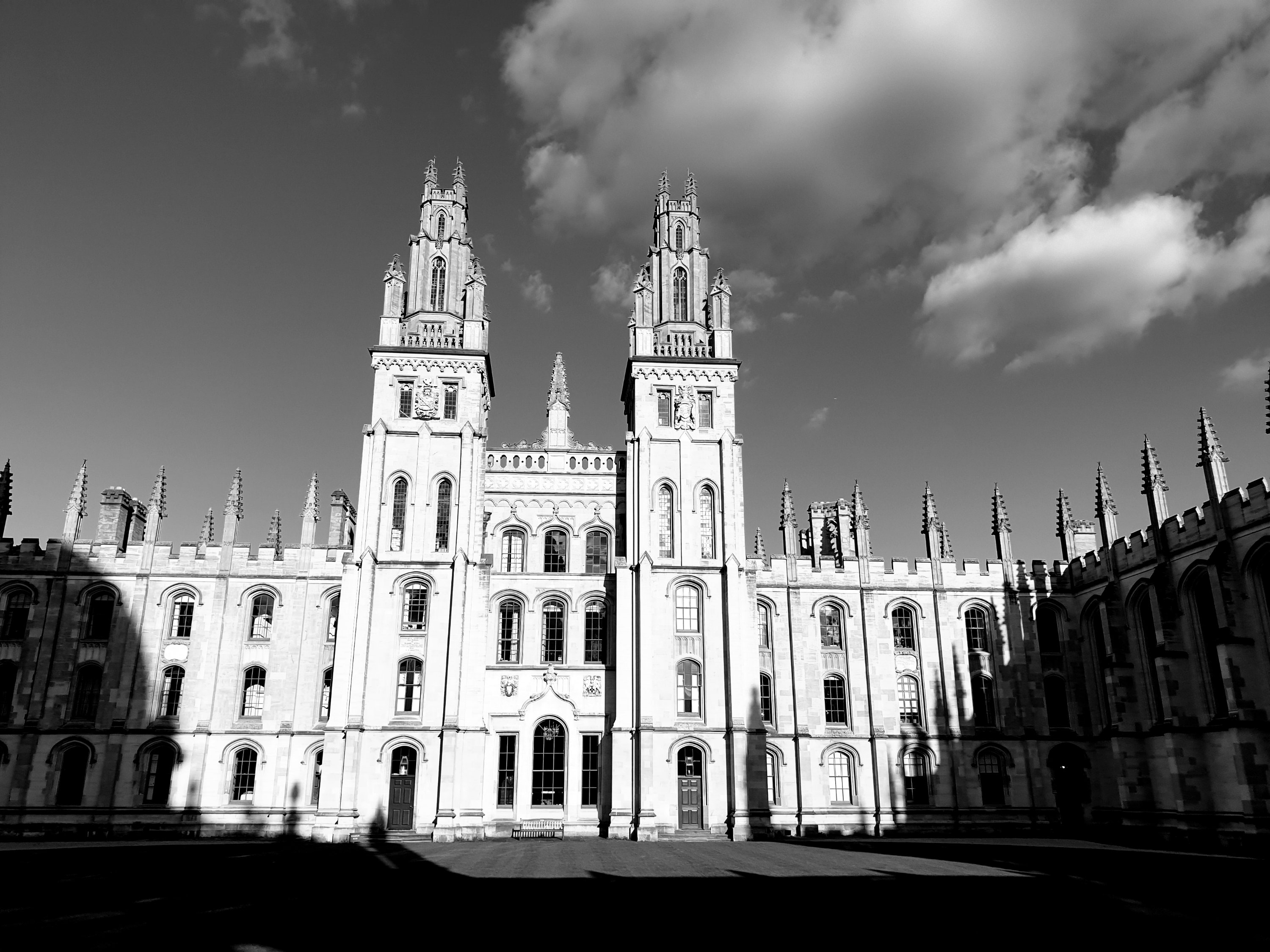
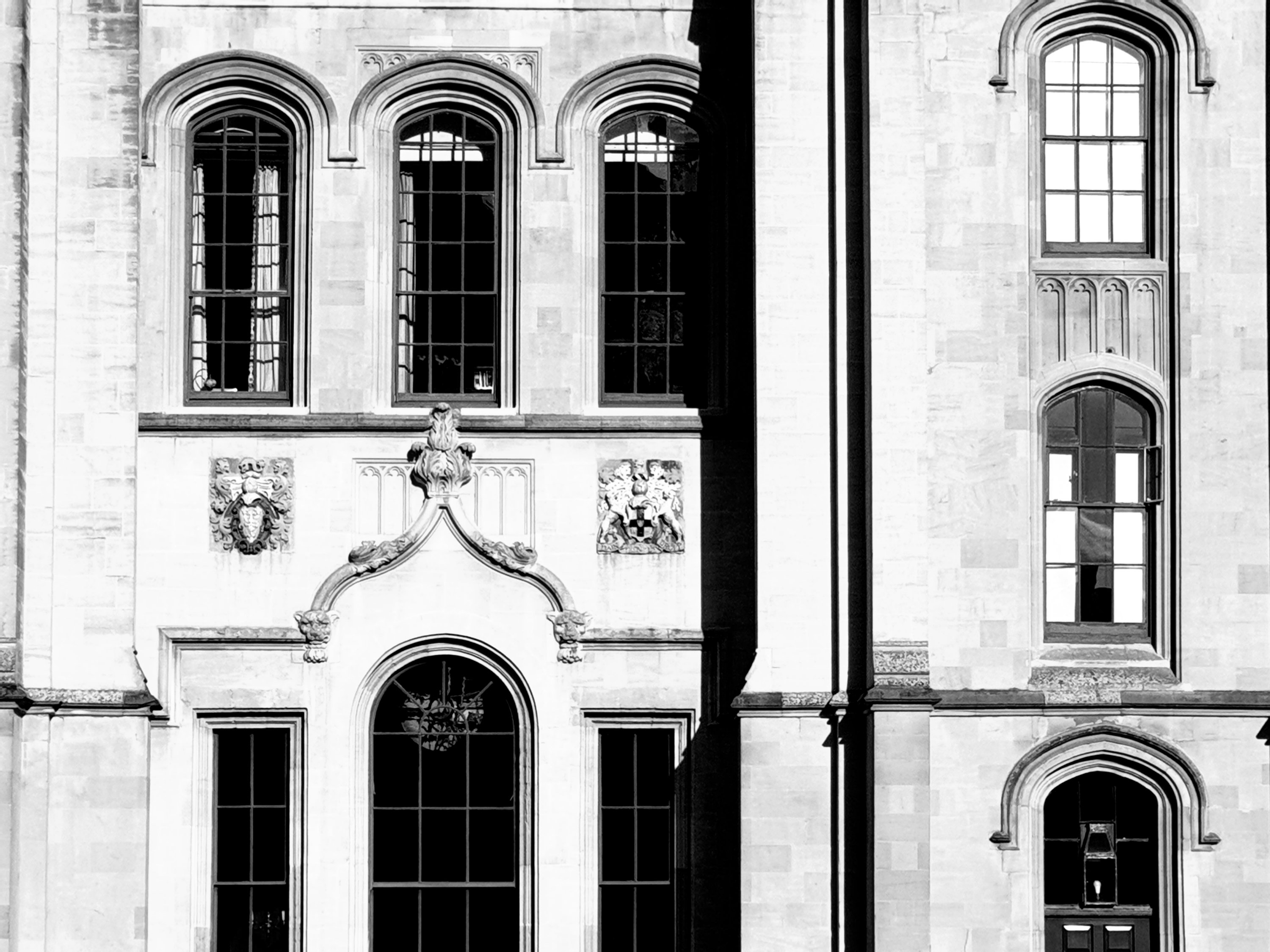
And through a side door to the great sweep of the Codrington Library, now condemned for its association with Christopher Codrington, a plantation owner in Barbados, who left £10,000 in his will to All Souls, where he had been a Fellow in the 1690s, whilst simultaneously fighting for the crown as a captain in the foot guards, but hard not to admire architecturally:-

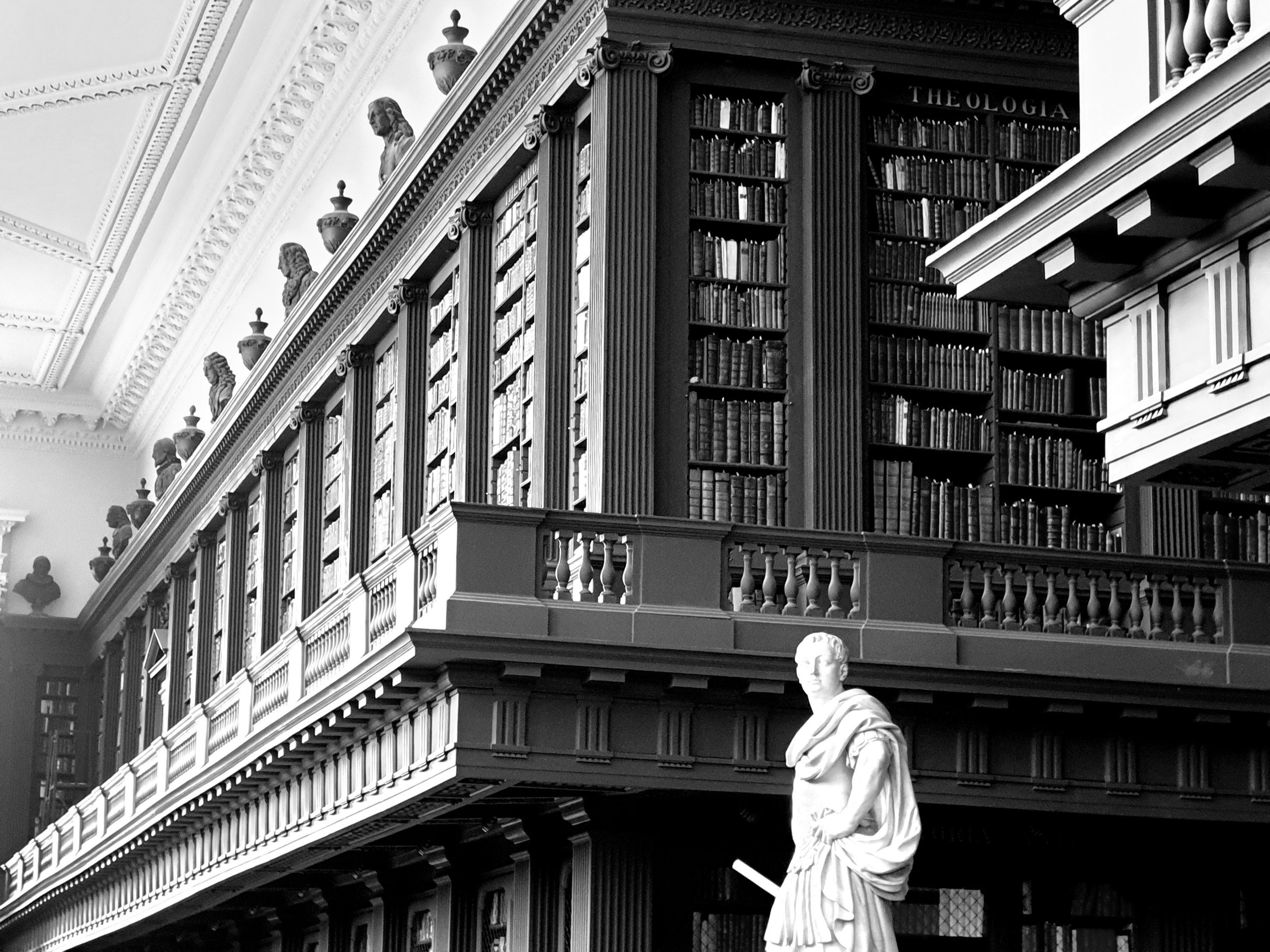
Henry Cheere’s statue of Codrington:-

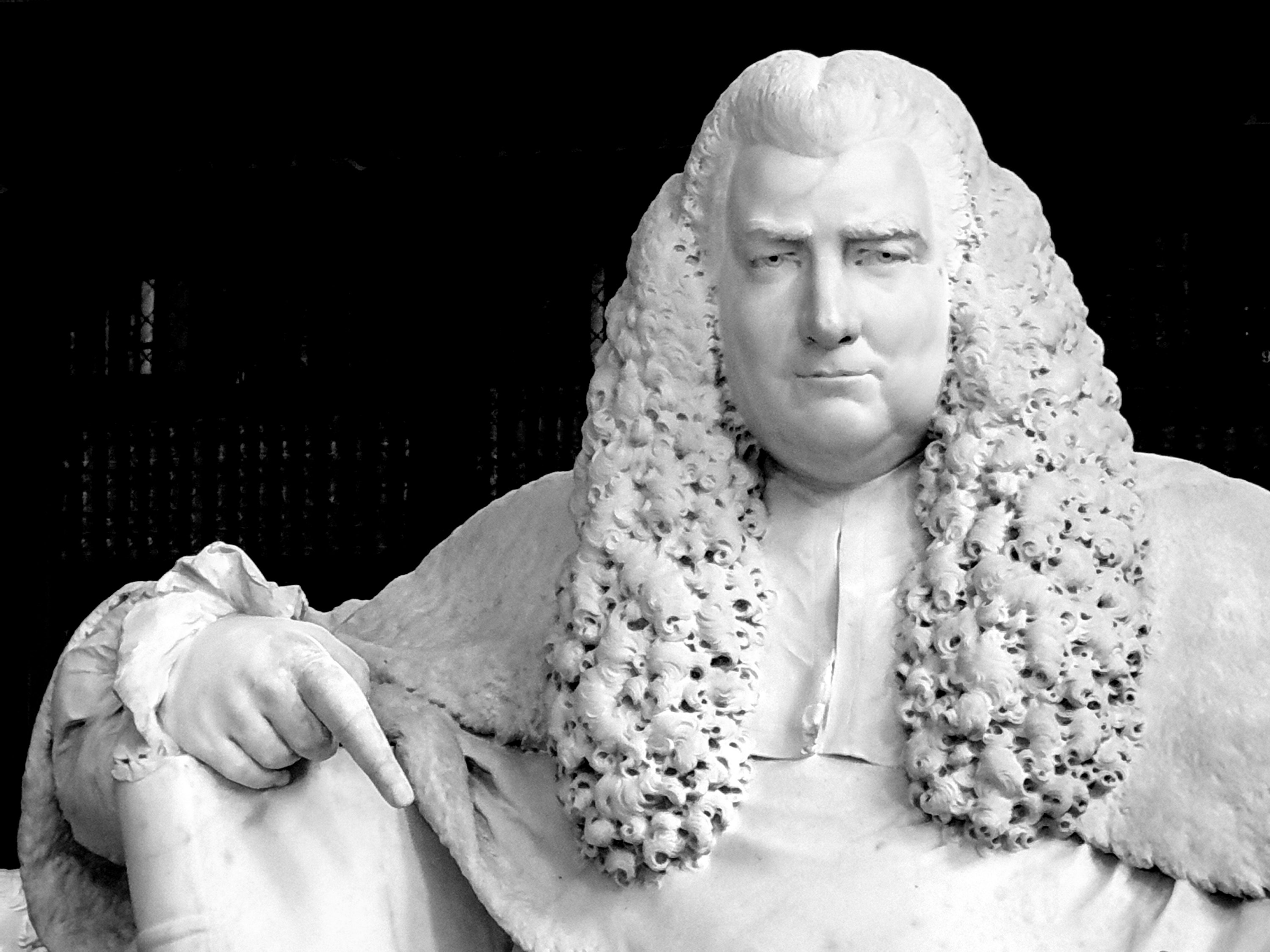
And John Bacon’s seated statue of William Blackstone, who as bursar of the college had arranged for the completion of the library:-
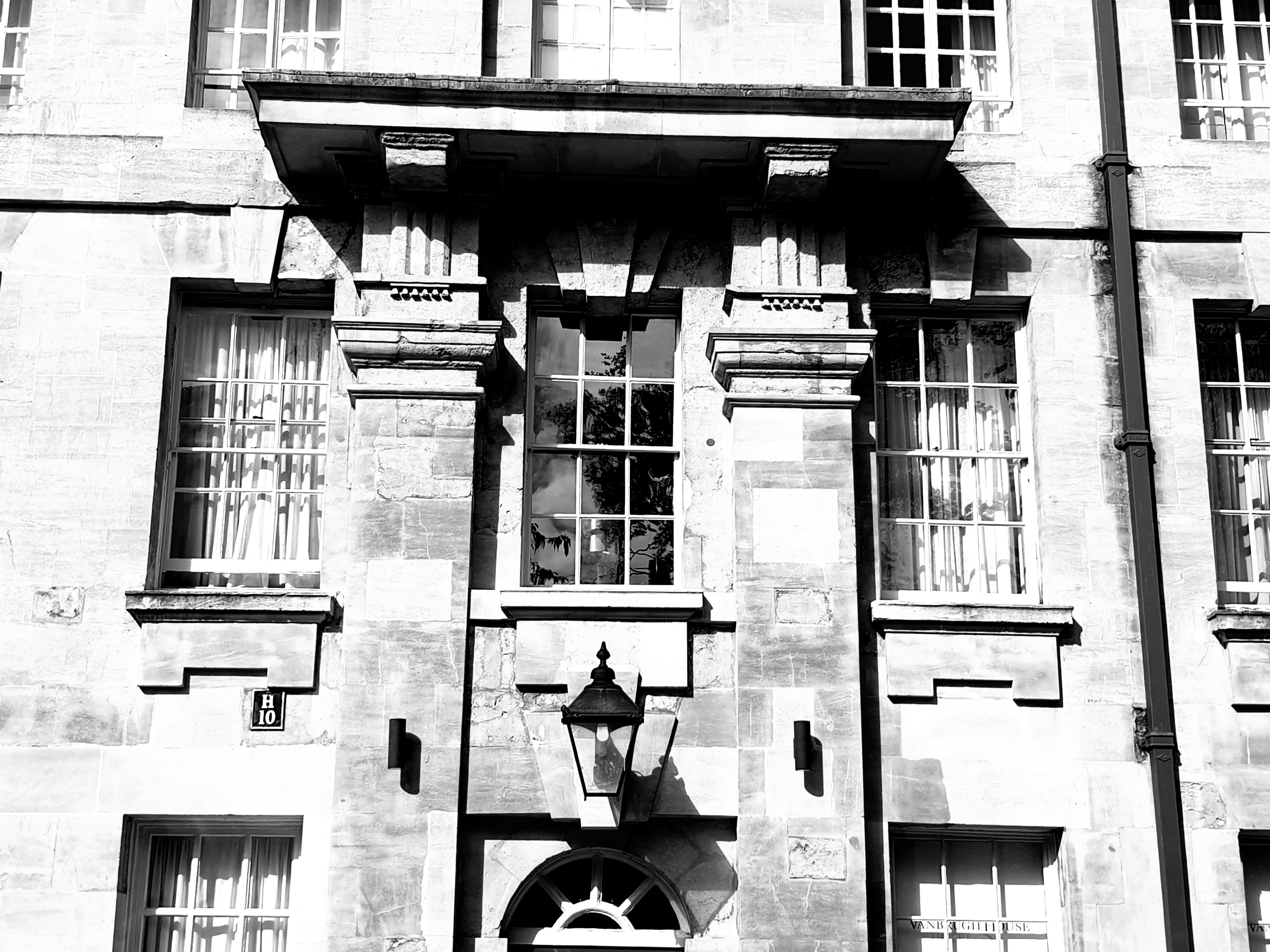
Vanbrugh House, Oxford
I had no idea that there is a house in St. Michael’s Street, Oxford en route from the railway station which is named after, and attributed to, Vanbrugh for good reason – not just the proximity of Blenheim, but its exaggerated double columns on the façade and its playful combination of capitals and triglyphs. But I note that Historic England more cautiously attributes it to William Townesend, who worked as a mason at Blenheim and was involved with a number of projects in Oxford as surveyor:-

The Search for a Carer
I am using the unorthodox means of a blog post to ask if any of my readers might by any chance know of someone, preferably in East London, who would be willing to act as Romilly’s carer on Friday all day (it’s a 15-hour day) and either Saturday mornings (another six hours) or all day Saturday. We are finding it nearly impossible to find someone suitable, because I have realised that the work of getting her up and dressing her is arduous, both physically and, in some ways, psychologically. I have done it myself often enough and am not good at it. But the rest of the day is not so onerous and I would like to think that there might be some postgraduate or medical student who needs a bit of extra income and has the necessary kindness, patience and generosity of spirit as her other wonderful and saintly carers. If so, could they please contact me at charles@blainsouthern.com ?
Jennifer Arcuri
A week ago, I thought it just possible that the information which was leaking out about Jennifer Arcuri was more likely to bring Boris Johnson down than the Supreme Court announcement that he had lied to the Queen about his reasons for proroguing parliament. It seems that the tory press don’t object to legal and constitutional impropriety, particularly since they think, without evidence, that it is politically motivated, but they do like sleaze because it sells papers. So, I am not sure that the story of Johnson sneaking off in the afternoon to the apartment of a 24-year old volunteer to have what he describes as technical discussions is going to go away; particularly as she was very handsomely compensated with massive sums of public money for her new start-up business, which turns out not to have been in IT, as was originally suggested, but now appears to have involved the arrangement of events for members of the American alt right. Even Johnson, who has a well developed knack for brushing off impropriety, is surely going to find it hard to demonstrate that he followed due process in paying a pole dancer £100,000 of public funds.
East London Homes (2)
I have already done a post about the beautiful book produced by Hoxton Mini Press about East London Homes and I have now been sent a link to the book, which includes the spread of our dining room and the portrait – we like it – of the two of us, both taken by the photographer Jon Aaron Green:-
The Rise of the Nazis
Until recently, I have thought that the common comparison of what is happening in Great Britain to Germany in the early 1930s over-melodramatic and somewhat far fetched. But having now watched the BBC’s three-part series on The Rise of the Nazis, I am less sure. There are so many points of comparison, all of them troubling: a sense of political and parliamentary turmoil, which allowed a minority party to seize power; an angry and discontented population looking for what they considered to be strong leadership and national prestige, seduced by promises of increased national wealth; hostility to parliament and a manufactured hostility to the rule of law; a lazy, but articulate leader effective at sloganeering. It all happened so fast by the appeal to the violence of the streets against the institutions of state. Rampant demagoguery, surrounded by arrogant and complicit cheerleaders who mindlessly repeat the leader’s message. The programmes were presumably intended to be disturbing. They most certainly are.
Goldsmith’s Hall
I have just been to a talk about the benefits of Instagram in finding out about jewellery, which gave me the opportunity to admire the wonderful carving in the coving of the Court Room, which survives from the second version of the seventeenth-century Hall, presumably a product of the rebuilding by Edward Jerman after the Fire of London in 1669:-


The garden
As the garden moves into its autumn phase, I have been particularly impressed by the fat and overblown daturas, known for good reason, as The Devil’s Trumpet:-


And the Japanese begonias, which the Wynn-Jones from Crûg found in Japan:-


Dominic Cummings
This long read piece in the New Statesman tells one almost more than one needs to know about Dominic Cummings and his intellectual formation. Two things stand out: that at Oxford, he was a pupil of Norman Stone, who was a clever, radical Tory anarchist, who was also a well-known drunk, which could perhaps help to explain Cummings’ tendency to wander round the Commons with a glass in his hand and always arrive at work so late and so disheveled. The second thing is the amount of time he spent in Russia in the mid-1990s, where he will have witnessed at first hand and perhaps enjoyed the breakdown of civil society and the way it could benefit a small number of oligarchs who later helped to bankroll his Vote Leave campaign. Clever, undoubtedly, but corrupt as well.
https://www.newstatesman.com/politics/uk/2019/09/dominic-cummings-machiavel-downing-street


You must be logged in to post a comment.