W.G. Sebald (1)

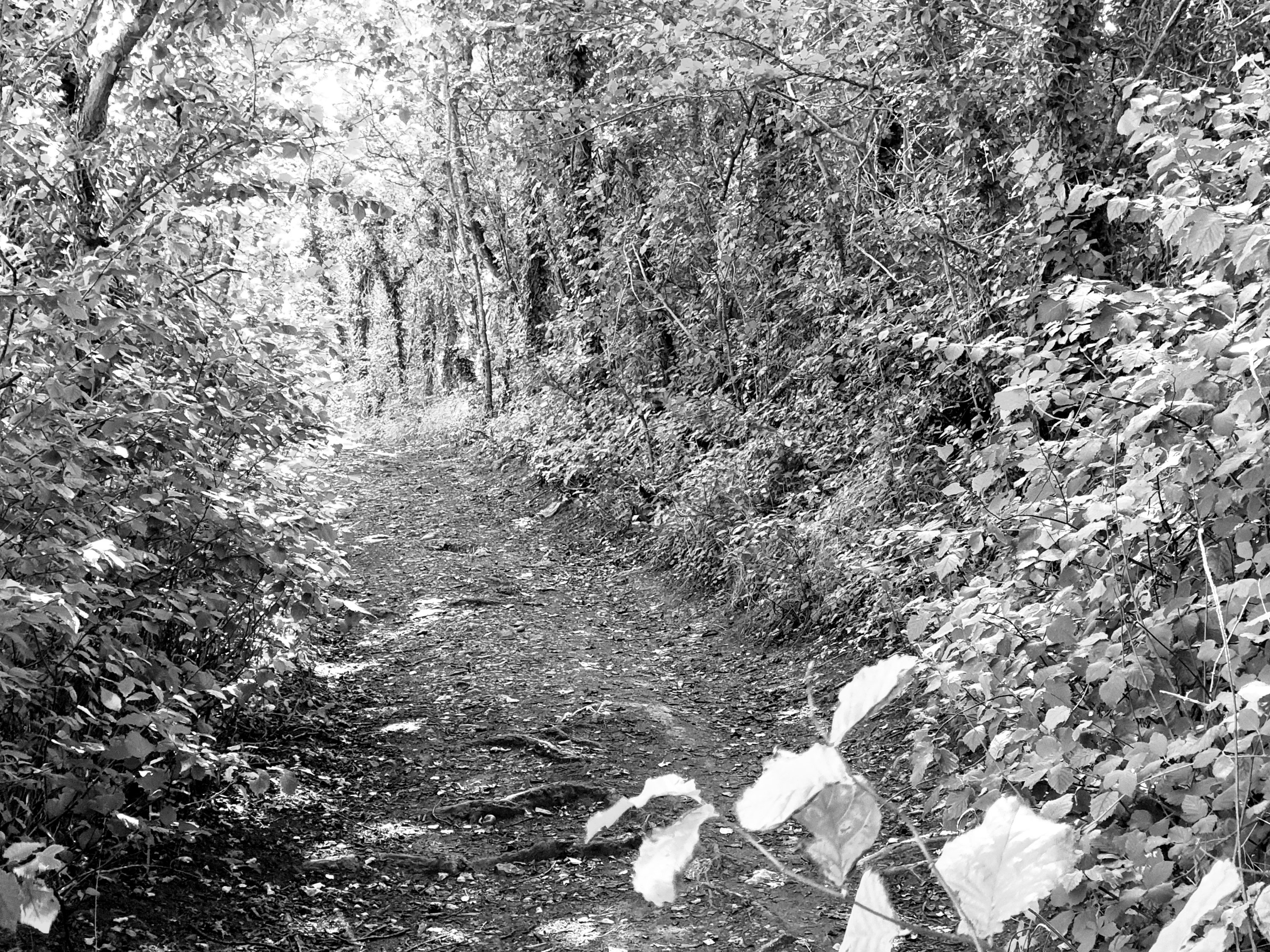
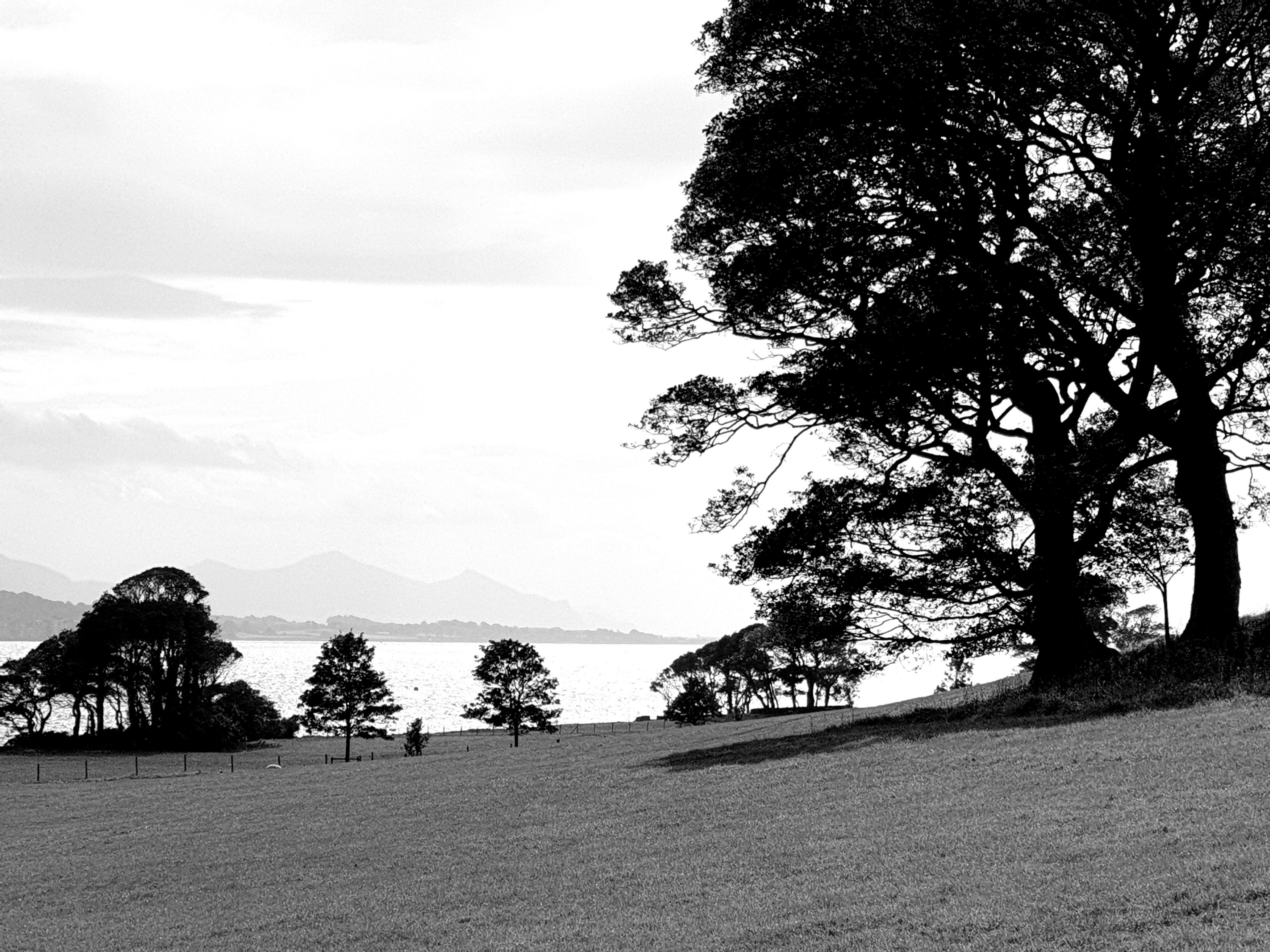
I spent the morning in the exhibition Lines of Sight: W.G. Sebald’s East Anglia in the Norwich Castle Museum, which resurrects and helps one to analyse the complex process of transmogrification which occurred between Sebald’s own photographs of East Anglia, which are mostly quite dull, had they not been taken by him as visual records of the long walk he took in August 1992 and of the way they were then converted into more memorable, often cropped images by Michael Brandon-Jones, the photographer in the Art History Photographic Collection in UEA. He it was who turned the images into black-and-white in such a way that they could be used alongside postcards, book illustrations and archival images throughout the text of The Rings of Saturn, and which are so important to its atmosphere of historical and topographical suggestiveness.

These are the instructions which Sebald gave to Brandon-Jones on the printing of his photographs:-

And this is his list of the order in which the photographs were to appear:-

This is the picture of Sebald setting out for his walk which was used for the cover of the first German edition:-

One of the best and most unexpected things in the exhibition is a clip of a film made by Kenneth Griffith about Roger Casement which caused Sebald to fall asleep in his green velvet armchair when it was first broadcast on 28th. October 1992. It’s in a style of suggestive and poetic documentary film making which is nowadays unimaginable, but not surprising that Sebald admired it.

Standard

Jacob Burckhardt

In walking past Jacob Burckhardt’s house on the St. Alban-Vorstadt where he lived during his time as a Professor at the University, originally from 1848 to 1853 and later from 1858 to his retirement in 1893 (he died four years later), I am forced to reflect on how much the discipline of art history owes not to Germany – although Burckhardt was trained as an art historian under Ranke and Kugler in Berlin – but to the cast of mind of this liberal, sceptical Calvinist, brought up as a member of a prominent Basel family, the son of a minister at the Cathedral. Burkhardt first taught architectural history in Bonn, then published Der Cicerone in 1855. There is a picture of him walking past the Cathedral with a large portfolio of drawings under his arm, on his way to the University to teach his students of the virtues of humanism.

Standard

Old Basel (2)

The sun came out yesterday afternoon on the streets of the Altstadt round the Minster and down towards the river where Jacob Burkhardt lived and wrote The Civilization of the Renaissance in Italy:-

Standard

William Kentridge

I have been to the William Kentridge exhibition at the Kunstmuseum twice today: once because I made the mistake of thinking that it could be visited casually; a second time because I found its scale and content overwhelming, so full of the politics of content, drawing, music, tough imagery, it needs time to ingest. I know everyone else already knows this.

Upstairs is a display devoted, very appropriately, to Erasmus (he’s buried in the Cathedral):-

The top floor has a performance, More Sweetly Play the Dance, which is overwhelming.

Standard

Basel Minster

The ferry took me to the Minster: with carving in red sandstone.

The church was reconstructed after the previous Romanesque church had been destroyed by an earthquake in 1356. Its architect was Johnannes von Gmünd, also responsible for Freiburg Minster, the towers being added in the fifteenth century, more gothic:-

Beautiful carving in the north portal:-

In the west door:-

And a high gothic – or is it flamboyant gothic ? – pulpit:-

Standard

River boats

It was hard to resist the childish pleasure of crossing the Rhine on one of the river boats which plies its way back and forth from below the Cathedral to the opposite bank – surprisingly fast, as it turns out, in spite of being unmotorised, relying only on the strength of the current:-

Standard

Old Basel (1)

By dint of staying in the University district, I have got to know a bit of Basel which I didn’t know before.

The Spalenvorstadt, full of old shops and well preserved façades, which leads down into the old town:-

Back up from the Marketplace:-

Past the old Kunstgewerbemuseum:-

There are good details:-

The Petersplatz, alongside the botanical garden, is, not surprisingly, very green:-

With more good details on the houses:-

Standard

Early Picasso

I took a break from the Art Fair in order to see The Young Picasso: Blue and Rose Periods at the Fondation Beyeler, which brilliantly illuminates Picasso’s development as an artist from 1900 when he first visits Paris with his friend Carles Casagemas through 1901, when Casegemas commits suicide in a Paris café and his work is first shown in June by Ambroise Vollard, 1902 when he goes back to Barcelona, 1903 when he paints La Vie, 1904 when he meets Fernande Olivier and Guillaume Apollinaire, 1905 when he meets the Steins, to 1906, when he meets Matisse for the first time and Vollard buys everything in the studio.

There are some amazing loans from private and, particularly, American public collections.

I don’t ever remember seeing La Vie, painted in Barcelona in May 1903, from Cleveland:-

Or the Head of a Harlequin (1905) from Detroit:-

The Acrobat and Young Harlequin (1905) comes from a private collection:-

The Two Brothers (1906) belongs to Basel:-

He was still only 25.

Standard

Frank Auerbach

In amongst the melee of Art Basel, I came across a beautiful, small Auerbach on Bernard Jacobson’s stand. It has one of Bernard’s charmingly idiosyncratic labels in which he writes, ‘Sadly I have cooled towards his work in recent years, actually I much prefer the work of his great friend Leon Kossoff’. This is a new form of reverse salesmanship:-

Standard

Antoniuskirche

I discovered that the place where I’m staying in Basel is a short walk away from the Antoniuskirche, the magnificent concrete church designed by Karl Moser, a Professor of the ETH in Zurich and soon-to-be President of the CIAM, and Gustav Doppler between 1925 and 1927, an austere 1920s monument:-

Standard