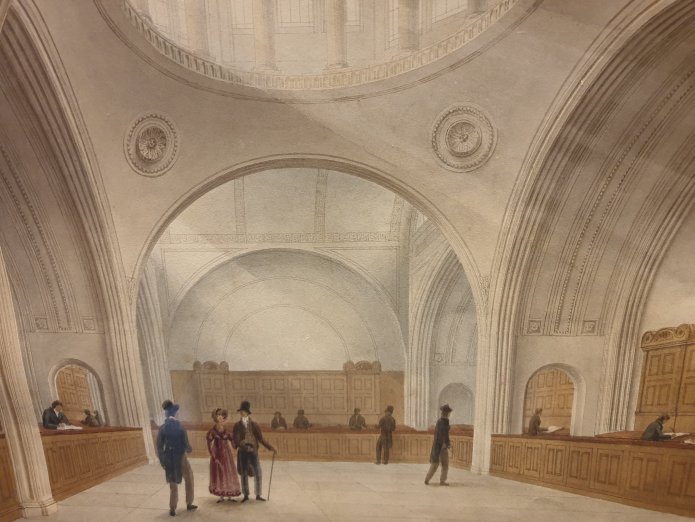
I have always viewed Venice through the eyes and writing of Hugh Honour’s Companion Guide to Venice, first published in 1965 and of which I still have, and use, the second 1967 edition. As a result, I have never paid attention to J.G. Links’ Venice for Pleasure, first published in 1966, of which I have long had, but never read, the second 1973 revised American edition. In setting off to Venice and wanting to explore Castello, I was quickly hooked by its great historical and visual expertise. He and his wife, Mary Lutyens, always stayed at the Danieli. In the introduction to himself which he quirkily provides at the beginning of the book, he says that two of his half dozen friends in Venice are the doormen at the Danieli. In walking one round Venice (he reduces Venice to only four walks) he is brisk, very matter-of-fact, attentive to the need to stop for a cup of coffee and extremely knowledgeable in a lightly worn way, able to quote Coryat and keen on Carpaccio and Canaletto, but not Canova or modern art.
Author Archives: Charles Saumarez Smith
Cliveden
I have had to swot up on the building history of Cliveden, which is mighty complicated.
It was first built probably in the late 1670s (Colvin says c.1676-8) for the second Duke of Buckingham, one of the richest, grandest and most complicated of Charles II’s courtiers, in and out of royal favour, the B of the Cabal. He got the house designed by William Winde, a fellow member of the royal court, born in exile in Brabant, serving as an Ensign at the time of the Restoration, made a gentleman usher to the Queen of Bohemia and a Fellow of the Royal Society in 1662. Buckingham is said to have acquired the Cliveden estate in ‘about 1664’. In 1677, a royal warrant allowed him to leave the Tower of London to go to Cliveden ‘to take order about carrying on some buildings there’. By 1679, Evelyn was able to describe it as ‘a building of extraordinary expense’.
This was only the beginning. The Earl of Orkney bought the house in 1696 and in 1706 consulted ‘severall of the chiefe men in England’ about the design of his house, one of them being Thomas Archer, who designed flanking wings which more or less survive joined to the main house by colonnades. In 1714, John Macky described it as ‘a Noble Building a la Moderne‘, but by the 1740s Jeremiah Milles was much less complimentary, calling it ‘A double pile house but ye rooms I think are rather too small in proportion to ye House’.
Pevsner says the house was burnt out in 1745, but I am sceptical of this because it was leased by Lord Orkney to Frederick, Prince of Wales and in 1751 Lady Coke admired it ‘though I saw it with the disadvantage of all the Prince’s furniture being taken away’ (no mention of a fire). In 1762, William Toldervy writes in England and Wales Described in a Series of Letters how ‘The Building is regular and grand, and the Apartments noble, especially that which is called the Grand Chamber: Where, in Tapestry, the Battles of the great Duke of Marlborough are depicted’. Again, no mention of a fire.
William Burn reconstructed it in the 1820s and this version of the house was indeed burnt out in 1849 and what we see now is mostly Barry:-

Alongside it is a fabulous high Victorian clock tower, designed by Henry Clutton:-

Indoors, fine rococo woodwork. I couldn’t work out if it is the original by Pineau or the reproduction by Allard:-


Outside, spectacular views out from Winde’s terrace over the formal gardens towards the Thames:-

Anthony Caro (2)
We went to the Anthony Caro exhibition at Cliveden, where his sculptures are laid out along the line of the so-called Green Drive, which runs down the east of the estate, parallel to the Thames and, to judge from the planting, was laid out in 1869 when the Duke of Westminster bought the estate (go to the woodland car park, not to the hotel).
The first was a more recent work Star Flight (2001/3):-


Second Sculpture (1960):-

Cliff Song (1976):-

Emma This (1977):-

Scorched Flats (1974):-

Curtain Road (1974):-

Box Tent (1987/9):-

Tympanum (1987/1990):-

Historic England
While I am on the subject of twitter, I happened to come across a request from Historic England North West for responses to what is described as a ‘Tailored Review of Historic England’, which they describe as ‘easy to complete’.
Since I have reservations about the requirement of Historic England to increase its revenue by providing planning advice to developers, thereby diminishing its ability to act as an independent arbiter when it comes to providing historical and other advice to local planning authorities – an obvious conflict of interest – I thought I would fill up the form.
Far from being easy to complete, it requires a great deal of technical knowledge of Historic England’s statutory responsibilities and, instead of encouraging lay response, it is phrased in a way which reduces independent comment and, through a system of multiple choice questions, encourages the devolution of statutory responsibilities.
I would provide a link to the form, but it is not easy to do this and comments have to submitted by May 9th. Instead, you can respond directly to albteam@culture.gov.uk.
Calouste Gulbenkian
I am attaching the reference to Apollo’s tweet not for purposes of self-advertisement (I hope), but in case anyone is interested in the article it promotes, a short digest of a long, scholarly biography of an important figure in early twentieth-century taste and art politics, not to mention the establishment of the oil industry:-
@Apollo_magazine’s Tweet: https://twitter.com/Apollo_magazine/status/1123972916796887049?s=09
Processing Lichen
I went to see The New Craftsmen’s new exhibition Processing Lichen & Other Matter, in which Charlotte Kingsnorth, a graduate of Toord Boontje at the RCA, shows her metalwork inspired by the patination of lichen:-


I admired the work of Lucie Gledhill, who works with Romilly:-

And a case of work by Romilly herself:-


I had thought it was a revival of the work that Stephen Calloway celebrated in Baroque Baroque, fin-de-siècle neo-naturalism. Perhaps it is:-

Anthony Caro (1)
I went to the opening of the Anthony Caro exhibition at Annely Juda last night and was particularly interested to see his early work, undertaken when he was studio assistant to Henry Moore at Perry Green, including Warrior I, influenced by Moore’s collection of African art:-

Also, one of a set of sculptures he did in 1957 of the Cigarette Smoker, done when he was still hovering between figuration and abstraction and before he had discovered his own style:-

Mary Moser
In walking through the RA last night, I was impressed to see a commemorative floral artwork celebrating the life of Mary Moser, who died 200 years ago tomorrow aged 68 and has become of increasing interest as one of only two artists elected as Royal Academicians (the other was Angelica Kaufman) at the time of its foundation in 1768 – Moser for her skill as a young flower painter, winning prizes at the Society of Arts from the age of fourteen and exhibiting not just flower paintings at the RA until her eyesight began to fail in her late fifties.

Boom Cities
Boom Cities was launched tonight: a very good send-off.
Peter Mandler talked about changes in intellectual fashion and how when, in the late 1990s, he had wanted to work on the history of post-war town planning, nobody had been remotely interested, whereas now it is a hot topic: presumably partly generational, now that brutalism has lost its stigma.
Otto SS quoted Mark Girouard’s preface to English Towns which was magnificently derogatory about the effect of new telephone exchanges on old town centres; and summarised two key findings of the book – that it was not all the fault of architects, but of a multitude of politicians, civil servants, town planners and other assorted utopians, and that fashion in town planning changed not because of the actions of a few lone conservationists, but because those who had advocated radical town planning realised that they had got it wrong (and many of them were themselves ardent members of the William Morris Society).
Now, you have to buy the book, published by OUP for £65.
James II
In coming out of the Sainsbury Wing, I was struck by how prominent the statue of James II appears, as if framed by William Wilkins’s columns. It was commissioned from Grinling Gibbons’s workshop, but is unlikely to be by Gibbons himself as full-scale bronze statuary was not his forte: more likely by Artus Quellinus III who was in the workshop at the time that it was commissioned, together with one of Charles II, by Tobias Rustat. It was originally erected in the old Whitehall Palace in March 1686, later moved to outside the New Admiralty, and only arrived in its current location after being stored in Aldwych tube station in 1947:-

You must be logged in to post a comment.