Musées Royaux, Brussels

I spent the afternoon in the Musées Royaux, normally a treat, but currently under reconstruction, with only some of the collection on display.

But it includes Rogier van der Weyden’s Pietà:-

image

A fabulous Bosch Temptation of St. Anthony:-

image

image

image

And a more conventional Bosch Calvary:-

image

A very languid Memling St. Sebastian:-

image

A wonderful Antonis Mor portrait of Hubert Goltzius:-

image

And a roomful of Bruegels, including The Fall of Icarus which Auden saw in December 1938 while staying with Christopher Isherwood (now thought to be a copy and the subject also of a poem by Michael Hamburger).:-

image

The Fall of the Rebel Angels (1562):-

image

image

image

image

Standard

Sean Scully

I was pleased to see the full range of Sean Scully’s work in his exhibition at the De Pont Museum:  from early drawings undertaken from before when he was a student at Croydon College of Art in the 1960s developing his drawings both figuratively and abstractly through to big meditative abstract paintings, beautifully displayed, top-lit in good natural daylight in the empty spaces of the De Pont Museum, and including many beautiful prints and drawings in the small closet spaces which run alongside the exhibition.

Doric Metes (2013):-

image

Untitled (Doric) 2016, which is painted on aluminium, demonstrating the sensuality of his treatment of pigment:-

image

image

Standard

De Pont Museum

I had arranged to see the Sean Scully exhibition at the De Pont Museum in Tilburg.   The Museum was established with an endowment from the estate of Jan de Pont, a lawyer and businessman who had bought a factory in Tilburg and wanted his estate to be spent on contemporary art.   In 1989, the trustees of the foundation hired Hendrik Driessen, who arranged for the purchase of an old textile spinning mill in Tilburg, renovated by BenthemCrouwel, an Amsterdam architectural firm; but it retains its character as industrial space and is said to have been one of the inspirations of Tate Modern:-

image

image

image

image

Standard

Whitechapel Bell Foundry (2)

I am posting some photographs I took of the exterior of the Whitechapel Bell Foundry nearly exactly a year ago when I first heard that the United Kingdom Historic Building Preservation Trust was taking an interest in mounting a rescue of the Whitechapel Bell Foundry, equivalent to what it has done so successfully at Middleport Pottery in Stoke-on- Trent. Now, the only hope is that Tower Hamlets refuses permission for a change of use and Bippy Seigal who owns the site might consider selling it on:-

image

image

image

image

Standard

Whitechapel Bell Foundry (1)

The attached account in Spitalfields Life gives the terrible facts of the sale of the Whitechapel Bell Foundry which is now owned by a Boston venture capitalist who wants to turn it into a boutique hotel. Thus has a unique surviving example of one of London’s preindustrial workshops, preserving manufacture in the inner city, been stripped out and sold off. The only hope is provided by Factum Arte’s intelligent and well-considered proposal to use it for latterday bronze casting.

See http://spitalfieldslife.com/2018/06/21/hope-for-the-whitechapel-bell-foundry/#comments

Standard

Maastricht

I spent the afternoon in Maastricht for a peer review of the Executive Master in Cultural Leadership which is being launched jointly by the RA and the University of Maastricht.   It’s a long time since I’ve been grilled by an academic panel on my intellectual and teaching credentials.   In the interval, while waiting for the result, I was shown some of the town.

The city walls:-

image

The gate to the university, which is housed in an old Jesuit monastery:-

image

And the ceiling of one of the rooms in the business school:-

image

On the way back to the railway station (we passed !), I was able to enjoy the medieval streets of the Jeker Quarter:-

image

image

Some of the detailing and door surrounds:-

image

image

image

And the Onze-Lieve-Vroubasiliek:-

image

image

Standard

Leonard McComb RA

I heard today the very sad news of the death of Leonard McComb RA, the former Keeper.   I could not be more sad about this as I had failed to see him over the winter and was due to see him soon in Staffordshire.

I knew him from the 1990s.  I commissioned him to do a portrait of Doris Lessing, the South African writer, for the NPG.   It was a big thing for him, and for her as well, and he undertook it with great care and imbued it with his vein of decorative meaning.   At the time, he was Keeper of the Royal Academy, trying to maintain life drawing, but in an era when students had lost interest in it as an essential discipline.

He kept on saying that he wanted to paint my portrait and eventually did so when I became Secretary of the Royal Academy, with characteristic meticulousness, depicting me sitting impassively in front of the nineteenth-century Secretary’s desk.   He thought that the RA would be pleased to have a portrait of its Secretary, but it was hung behind the screen on the exit to the shop, where nobody would see it, a punishment for it being delivered late.

By the time I arrived at the RA, Leonard had become slightly cussed and he probably always had a strong independence of mind, arriving at meetings of the General Assembly in an old-fashioned suit with wide lapels. But I admired him as an artist for a vein of fantasy and magic realism, and as a beautiful draughtsman. He was the only current RA to have been elected as a draughtsman.

Standard

Cadogan Square

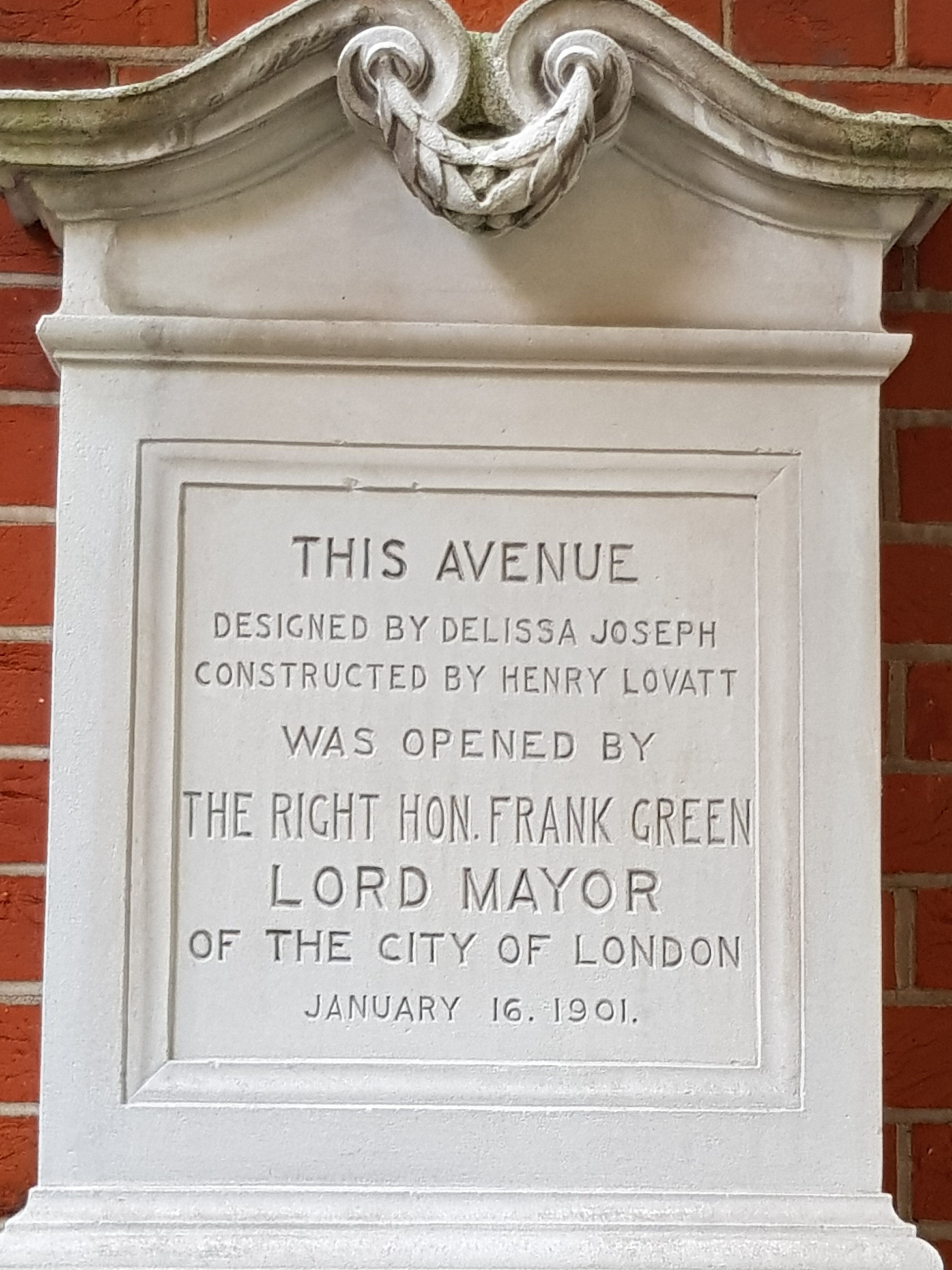
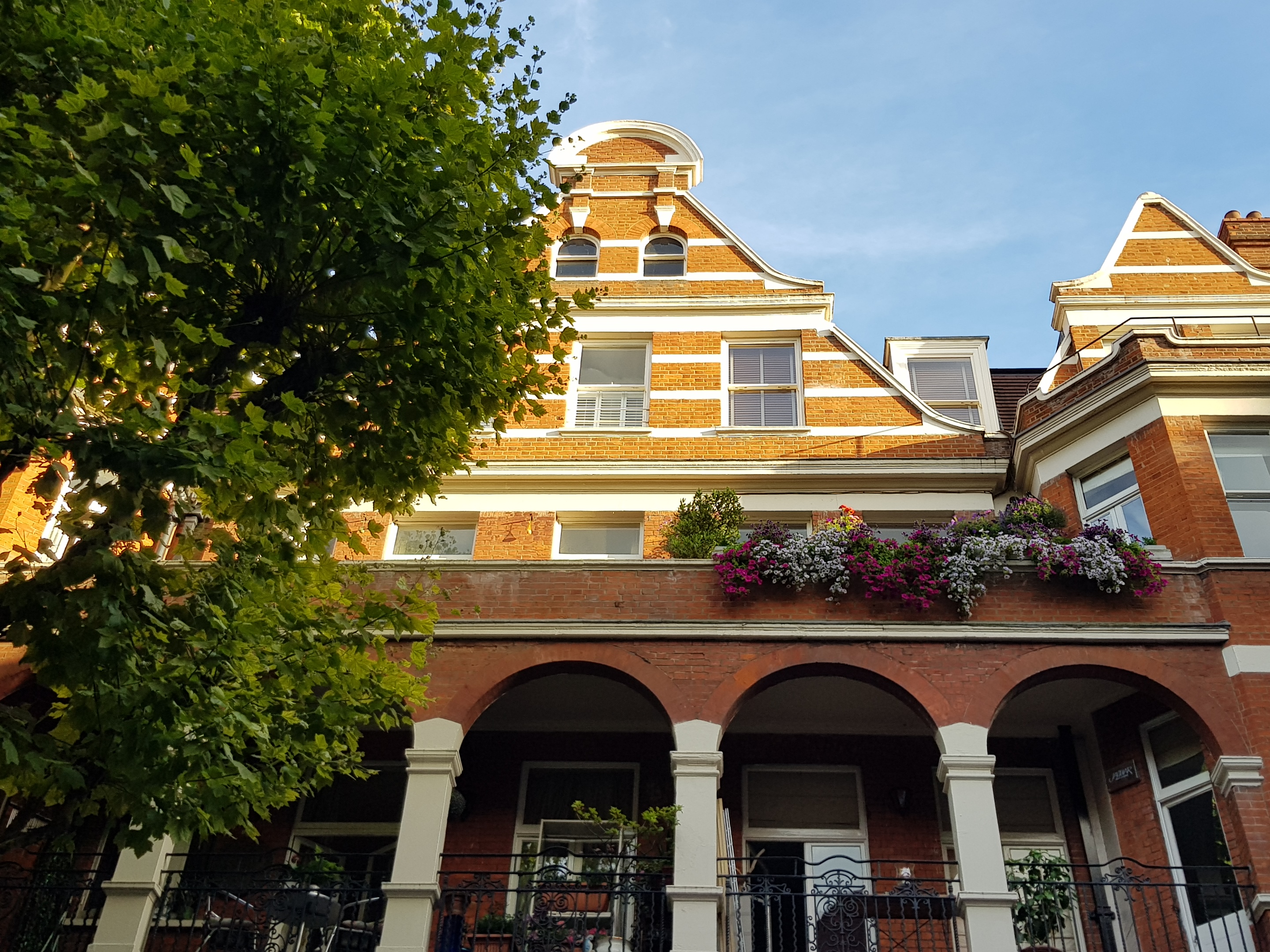
It’s very rare that I ever visit Cadogan Square. In fact, I only ever remember occasional and faintly alarming visits to visit Denis Mahon, who lived in the most spectacular disorder with papers piled everywhere on the floor beyond the possibility of ever being tidied. But today I visited a private collection and was able to admire the ceramic columns at the north end:-

image

The astonishing riot of brick and terracotta decoration on no. 52, designed by Sir Ernest George for Sir Thomas Andros de la Rue:-

image

image

image

image

And more high quality brickwork decoration elsewhere in the square:-

image

image

image

Standard

The Last Supper

We had our first formal dinner last night in front of the Royal Academy’s early copy of Leonardo’s Last Supper.   I found it forced attention on the drama of the action:  the way that St. James reacts by spreading out his arms, thereby preventing doubting Thomas from getting near Jesus, who is isolated from the others, having just declared that one of them will betray him.   As dramatic narrative, demonstrating the way that Leonardo created drama compositionally, the copy is as good as the original (and, dare I say it, given the state of the original, more legible):-

image

image

Standard

Lovelace Courtyard

I have been fascinated by the rapid development and maturing of the Lovelace Courtyard, a slender space between the back of the Pennethorne building and the extra run of studios which were added – it is thought – by Norman Shaw to the north of the Royal Academy Schools.   The space has been landscaped by Peter Wirtz who designed the courtyard to David Chipperfield’s offices in Berlin, a comparably urban space.   He uses the most minimal means:  no more than cobbles, a curving path and grass;  but to great effect, bringing green into the heart of London:- 

image

image

Standard