Whitechapel Bell Foundry (95)

I am very grateful to the Gentle Author for writing an update on what is happening on his blog Spitalfields Life (see below).

As he rightly says, there are glimmers of hope that a solution might be found through cross-party action in the House of Commons. It seems that there are parliamentarians across the spectrum who recognise the great importance of the Bell Foundry, not least as the place where Big Ben was cast. I have always assumed that Robert Jenrick wanted it saved. Otherwise, there would have been no point calling the decision in. Also, it was decidedly unorthodox for him to condemn a decision which had been made in his name.

So, what can be done ? I hope the question of a CPO (Compulsory Purchase Order) is being properly investigated. I hope that the Review Jenrick has ordered is investigating the system already in place for the acquisition of major works of art. I think the best bet may lie in the decision being forensically examined by the Digital, Culture, Media and Sport Committee, chaired by Julian Knight MP, including particularly the role of Historic England in supporting it, and/or the equivalent Select Committee for Housing, Communities and Local Government, chaired by Clive Betts. And are there not people in the House of Lords who can get involved ?

https://spitalfieldslife.com/2021/05/30/hope-for-the-whitechapel-bell-foundry-x/?s=09

Standard

Museum of the Home (1)

I wasn’t sure if I was allowed to post photographs of the new Museum of the Home which I was asked to see a week or so ago ahead of its official opening in mid-June. I was very impressed. It’s not at all an easy task to renovate the small rooms of an early eighteenth-century almshouse which were first laid out as a historical sequence of period rooms by Marjorie Quennell in the mid-1930s. Wright and Wright have dug down to produce a parallel set of rooms underneath which are much more thematic. The 1990s Branson Coates extension survives intact as the grand and very slightly flamboyant entrance hall from Hoxton Overground station. And so does the former pub building at the corner of Geffrye and Cremer Street, now a café called Molly’s after Molly Harrison who was the director of the Geffrye Museum as was in the 1950s. It struck me as a very intelligent and thoughtful set of interventions and I’m much looking forward to going back again in June and exploring further.

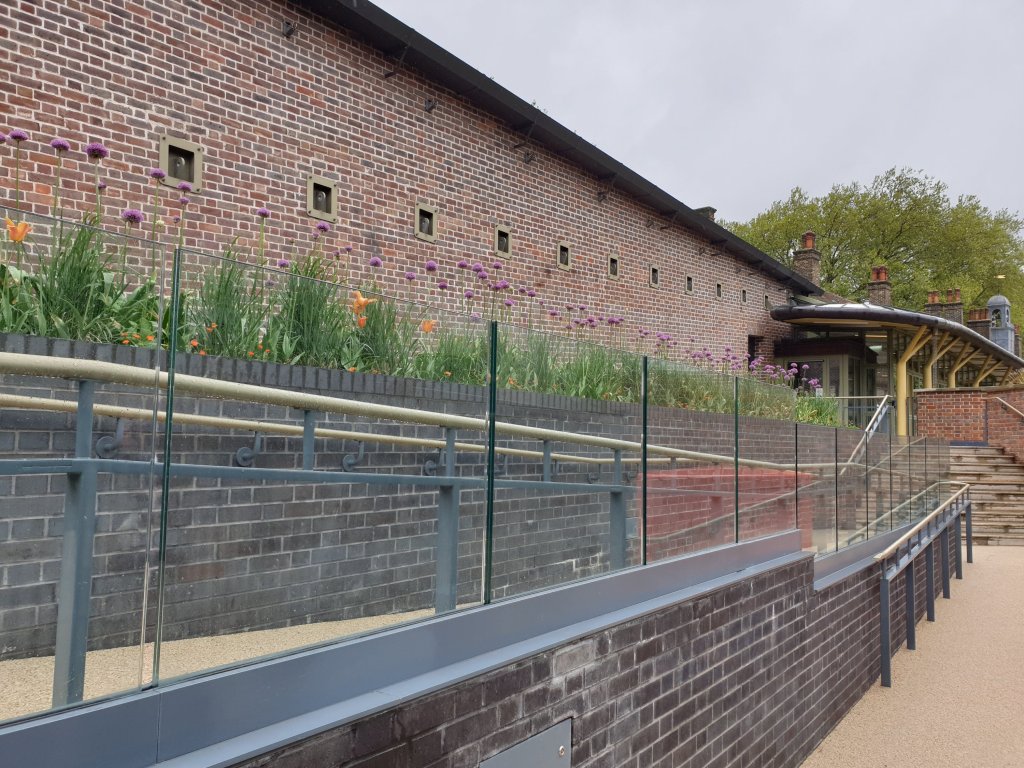
This is the new entrance ramp so that you now enter from the east:-

This is a view of the arts-and-crafts extension which was added at the back of the almshouses – I assume after the almshouses were acquired in 1911 by the LCC, opened as a Museum of the Furniture Trade in 1914:-

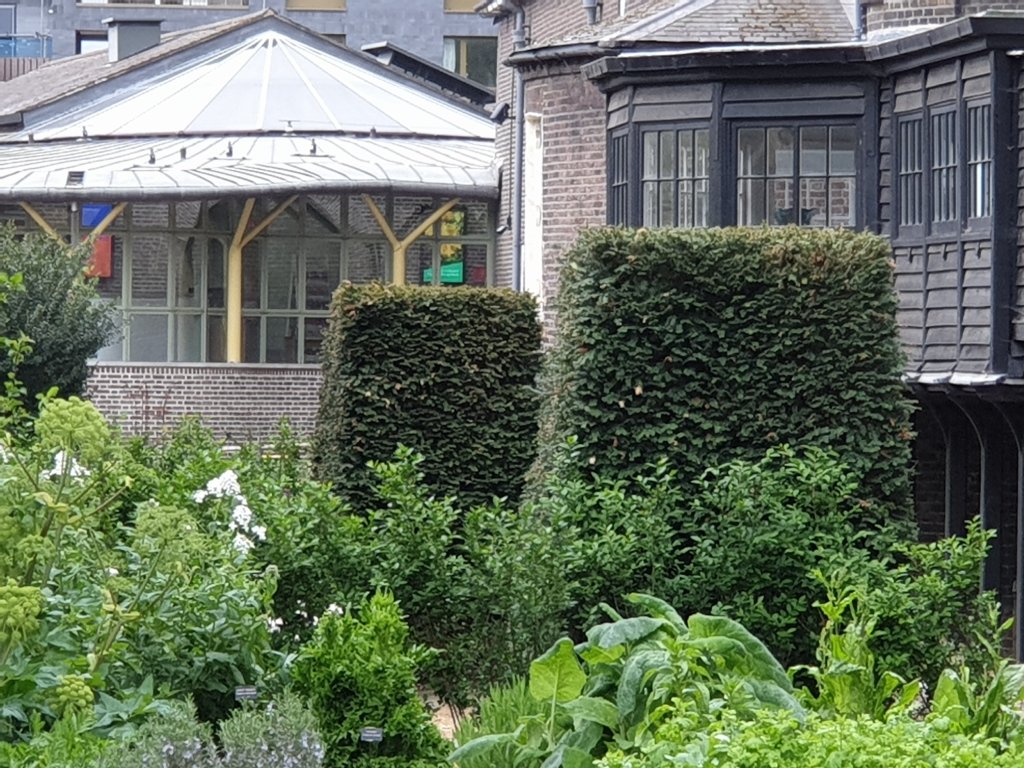
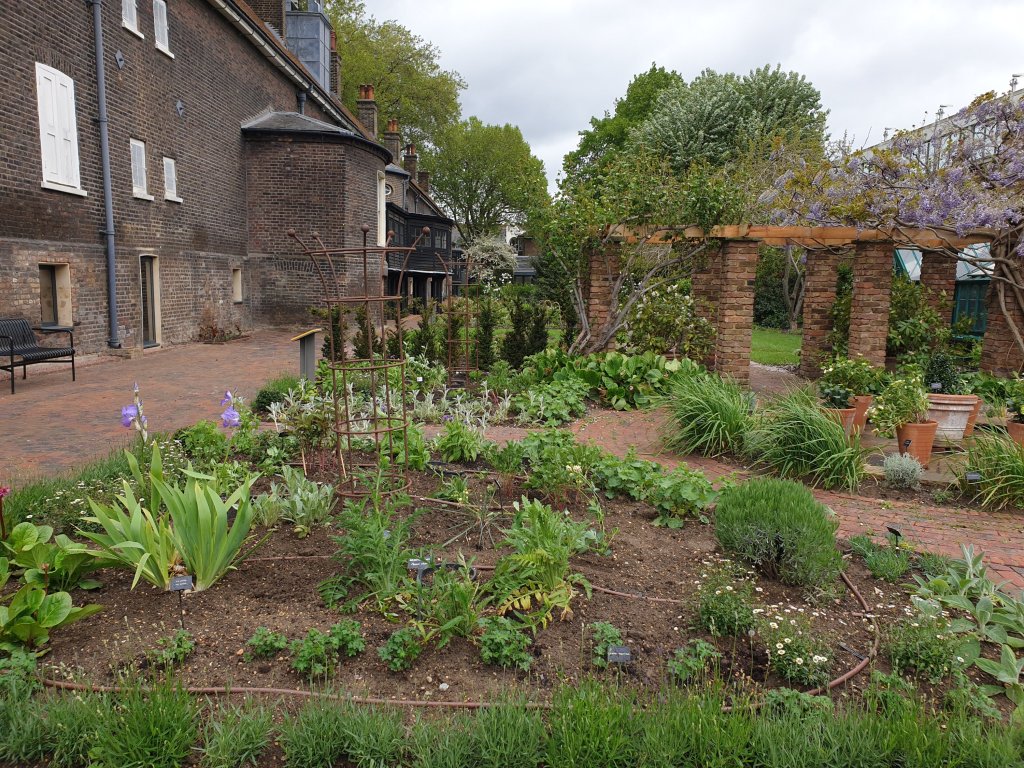
The gardens have been totally transformed and much improved as a place of public respite:-

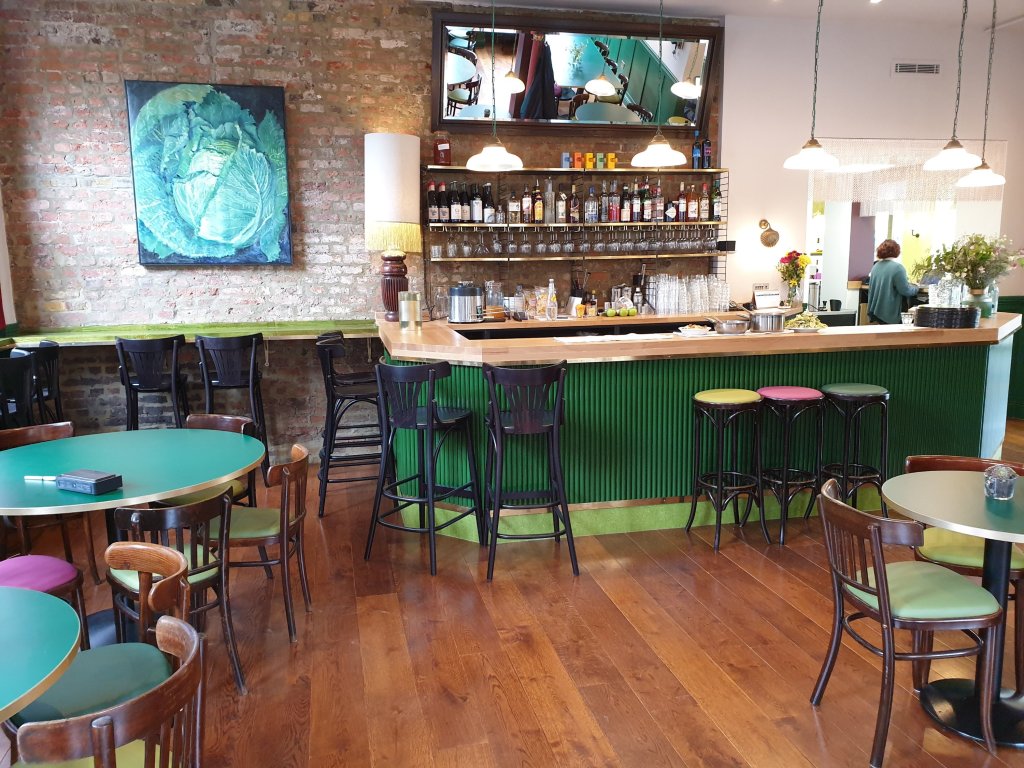
And this is Molly’s which is already open for service of octopus and much else:-

Standard

Money, morality, and musea

I have been meaning to repost an article which appeared online in Philanthropy Daily, which focuses on a section of my book which I called ‘The Morality of Wealth’. I tried to consider the issue as to what one should think of those people who have lived possibly immoral lives, but have then devoted their great wealth to good causes. I have always taken the Mandevillean view of a relationship between private vice and public virtue, but acknowledge that in a new climate of public morality (although this does not apparently extend to the views of the electorate towards the behaviour of our most prominent politicians), this is increasingly unfashionable, if not indefensible. Anyway, I am pleased to discover my book is being read and pondered, even if criticised, in American philanthropic circles, in spite of my not being the type to enjoy a Funyun or two.

https://www.philanthropydaily.com/money-morality-and-musea/

Standard

The Pitt Rivers Museum

I have been meaning to revisit the Pitt Rivers Museum, ever since issues of historic collections, the legacy of colonialism and questions of restitution became so much more widely discussed.

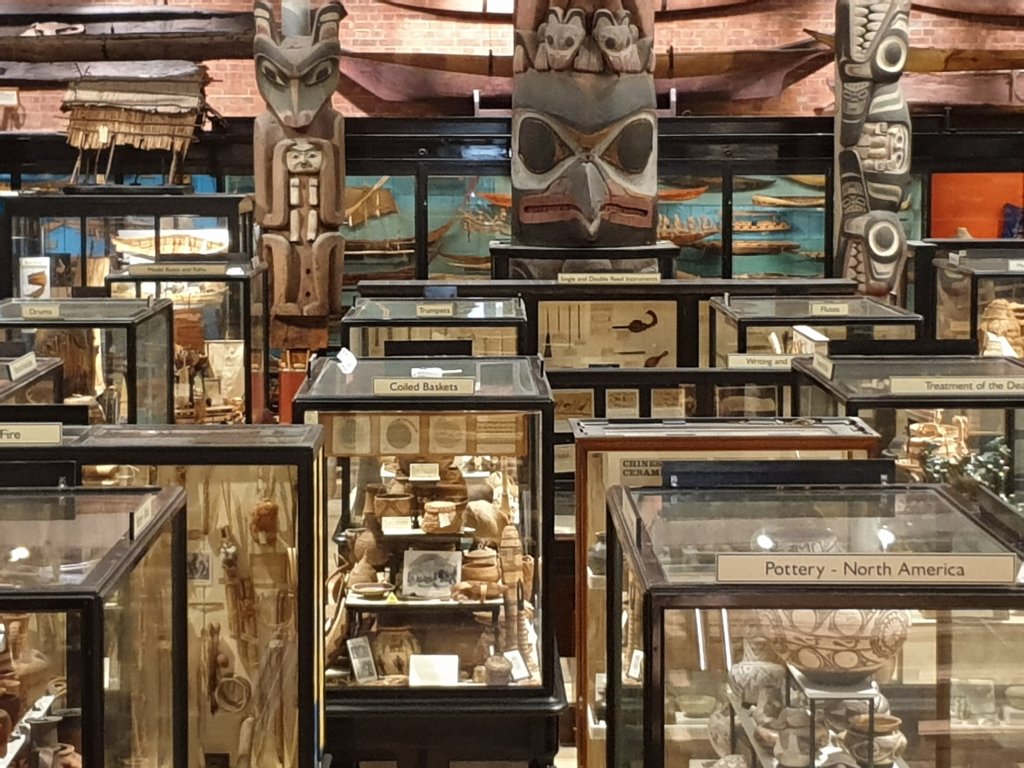
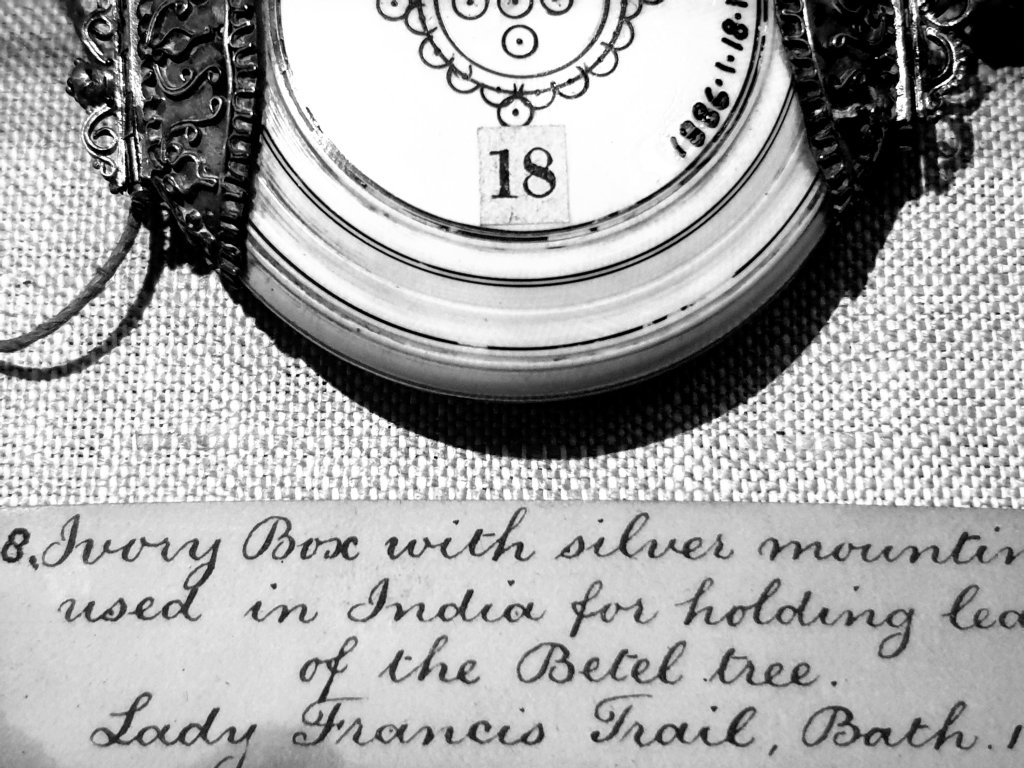
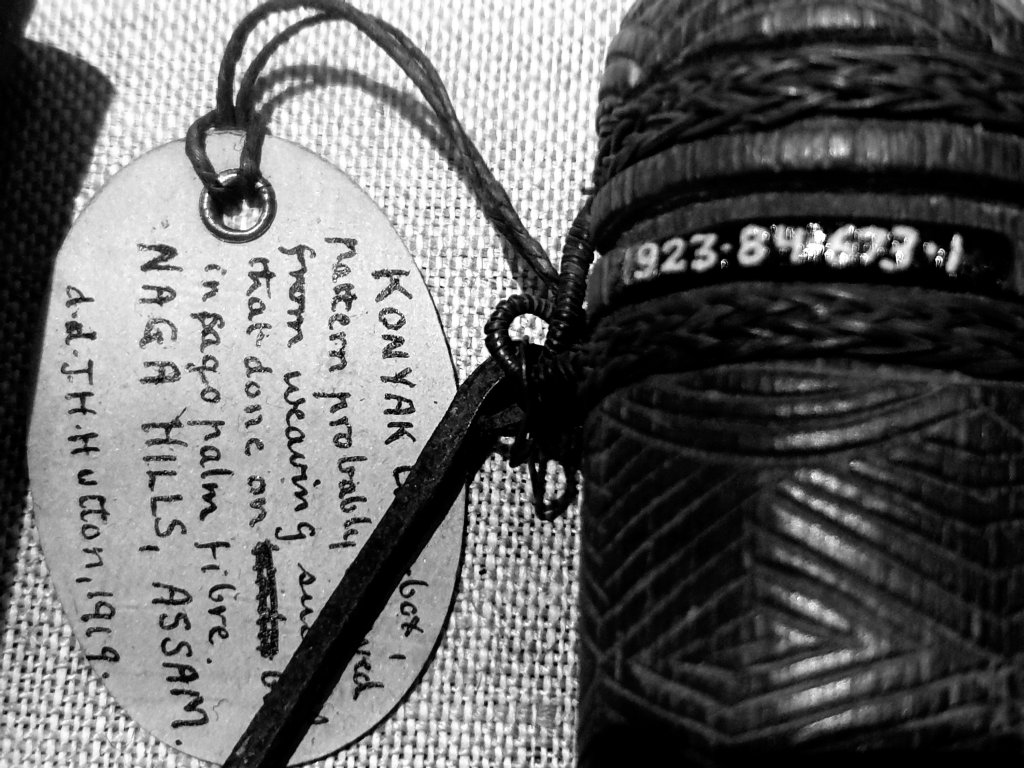
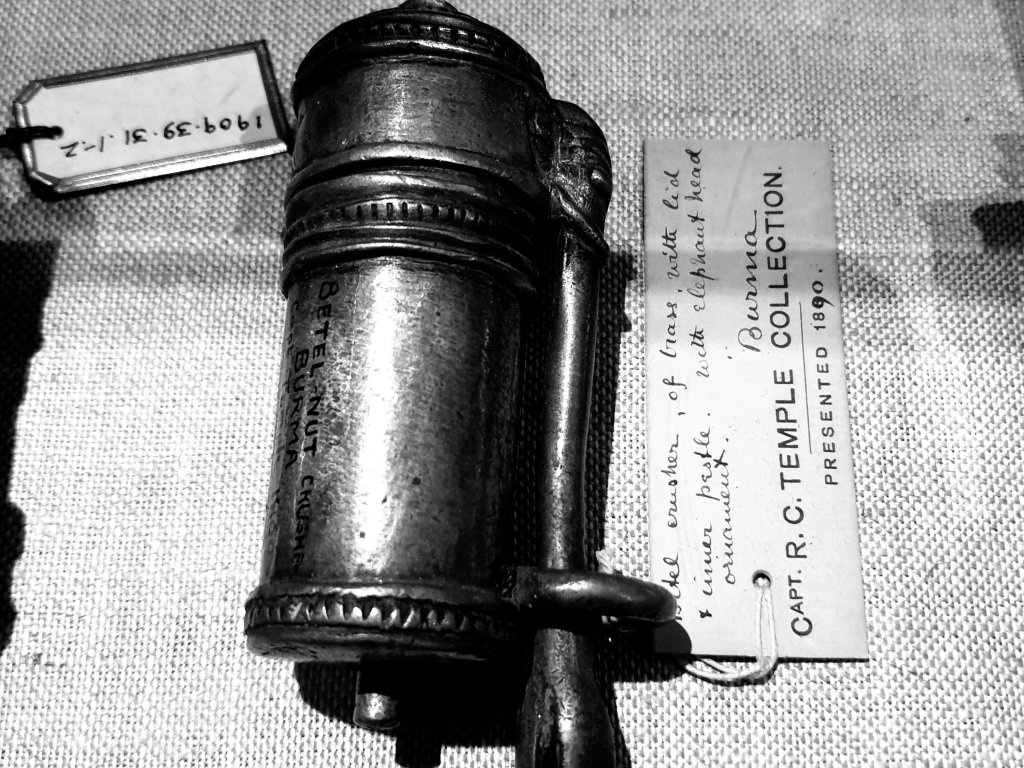
I freely confess that I feel a sense of unease, confronted by such rich collections, assembled according to principles of scientific curiosity and taxonomy, now retained apparently as much for the wrongs they demonstrate as for what one might learn of the societies from which they were acquired:-

The interpretation starts with a carving of a colonial officer, B.J.A. Matthews, done by a Yoruba artist in the 1930s:-

It is slightly hard to work out the system of labelling as between the modern labels – typed – and the hand-written ones which have been retained to give a feel for the history of the collection:-

Lord Tollemache’s moosehair suit is in unexpectedly good condition:-

Having survived so long intact and being such an astonishing manifestation of the late Victorian collecting world, one can only hope that it will now survive relatively unmodernised, whatever the attitudes it may exhibit, indeed precisely because of it being such a complete documentary and visual record of the colonial mindset.

Standard

Whitechapel Bell Foundry (94)

Talk of the devil !

No sooner had I posted my question this morning as to whether or not there was going to be a proper and systematic review of the Whitechapel Bell Foundry decision than I received the following:-

The housing secretary has commissioned a review into how the Planning Inspectorate (PINS) and planning policy “considers and defends heritage” in the wake of a controversial government decision last week that granted consent for the redevelopment of a Grade II-listed historic former foundry in London into a mixed-use hotel scheme.

As will be clear from my previous blogs on the subject, for me the key issues are:-

  1. It is apparently very hard for the heritage sector to react at speed. The Whitechapel Bell Foundry has been a slow-moving fiasco which could have been sorted out by more radical intervention at an earlier stage, including at the very least a requirement that the sale of the Bell Foundry should have been publicly advertised instead of being agreed in secret.
  2. Once a decision had been taken to support redevelopment at a meeting of the London Advisory Committee in February 2017, it felt that no amount of further discussion or views expressed was ever allowed to alter or open up this decision to question and, as a result, the debate became very adversarial in a way which was probably unhelpful to everyone.
  3. Heritage advice is now split between Historic England and the Heritage Lottery Fund, both of which come under the Department for Culture, Media and Sport, whereas planning is handled by the Planning Inspectorate which no doubt views planning as a more technical specialism, guided by the law, but not necessarily by a knowledge and awareness of history.
  4. There is too much emphasis on the building itself, not on the effect on the building of change-of-use, let alone on the protection and preservation of historically important use.

All I can say is that I am glad that these issues are now being properly and appropriately addressed, with a hope – perhaps a vain hope – that, if possible, any recommendations should be allowed to work retrospectively.

Standard

Whitechapel Bell Foundry (93)

As we approach the endgame on the fate of the Whitechapel Bell Foundry and await the answer to the question of whether or not Robert Jenrick will, as he has said he will, organise a review of the planning system which has authorised the redevelopment of the Whitechapel Bell Foundry in his name, but without apparently his approval, I am publishing a letter which was sent recently to Historic England, of which I was sent a copy.

It seems to me to state the case for some action and investigation being taken very cogently:-

Whitechapel Bell Foundry is indeed a very special historic place, but its exceptional nature lies not in the buildings, important as they are, but in the fact that until very recently the buildings contained and sustained a still living ancient and historic working tradition. As I am sure the individuals at Historic England must understand, were they honestly to look beyond the official line, a small, tourist attraction foundry making souvenir hand bells annexed to a coffee shop is no substitute for what the Bell Foundry has been over the last several centuries. I am aware that the Hughes family decided the business was no longer viable, but they declined to put the business to the open market to test their hypothesis. As you will know, qualified others strongly disagree as to the sustainability of the business, its adaptability to the present century.

The opinion as to whether the modern building at the rear of the site is of architectural or historic interest is of course open to debate – but again, if I may, Historic England seem to have missed the point. In this case it is not only the material culture – the bricks and mortar – that require protection but what those buildings contain: a unique and living historical tradition.

You write that ‘overall we believe that the proposals have the makings of a successful heritage regeneration scheme’ and I must say, my heart sinks. One reply would be that, had the path of sustainability been chosen and supported, regeneration would have been unnecessary – the business and the site would have continued, embracing modernisation in a way perhaps beyond the scope of the previous owners’ experience or enterprise or, indeed, imagination. A second reply would be to wonder despairingly what Historic England’s criteria for a successful heritage scheme are? Please forgive me for quoting sixties’ songwriters to you, but the words of Joni Mitchell come insistently to mind – “they take all the trees, and put them in a tree museum, then they charge all the people a dollar and half just to see them.” Is our heritage – of which Historic England are purportedly the protectors – to consist of anodyne, buffed up, roped off sites, or might it be a living and thriving and adaptive present that embraces a continuing history while looking to the future?

As I understand it the Secretary of State did not – quite – approve the scheme. Rather the necessary piece of paper was signed on his behalf by a civil servant in Bristol, and shortly afterwards the Secretary of State expressed regret at the decision via Twitter – thus adding a note of farce to this long and unhappy tale.

I would absolutely hope, as you write, that Historic England’s advice has been impartial. However, having been employed by the developer to give advice at the point of the proceedings when nothing was public – thus no opportunity allowed at that crucial moment for alternative visions for the Foundry’s future to be imagined or presented (and Historic England coming up with no such ideas itself) – I wonder if Historic England might have since felt obliged to hold to the support it gave to the developer. I do wonder, had the alternative schemes for the Foundry that have since emerged been presented to Historic England with equal weighting to the boutique hotel plans, which would have been supported? Which scheme better follows Historic England’s banner headline, “Championing England’s Heritage”?

Standard

Whitechapel Bell Foundry (92)

I have been trying to stand back from the day-to-day battle over the Whitechapel Bell Foundry and figure out what I would do, in the very unlikely event that I was asked to give advice to Robert Jenrick as he embarks, as he has said he will, on his review of what is wrong with the procedures of planning.

From my experience of dealing with the Bell Foundry, the following seem to be the problems:-

Tower Hamlets is, for understandable reasons, very pro-development, feeling that new development will bring new sources of income into what is a very poor borough. But they don’t seem to be at all good at balancing this pro-development stance with the benefits of the existing built fabric and a knowledge of local history . Nor of the importance of tourism to Spitalfields. Spitalfields is being gradually hollowed out by new development with huge new residential blocks around its fringes, a new shopping mall now being planned for Brick Lane, as well as the mega-structures proposed by developers on Bishopsgate Yard. At some point, there is a risk that the existing mixed environment of old historic buildings, small shops and local businesses and some small infill will be totally overwhelmed by new tower blocks, totally out-of-scale, thereby destroying the economic and tourist honeypot that Spitalfields has become. It is not the new tower blocks which bring the tourists in.

The Bell Foundry is a symbol of the tendency to allow old buildings to be turned into bland tourist attractions, losing a sense of character and local identity, what is special about a place instead of what is standardised. This was what happened in the 1950s when it was universally felt that what was new was better than what already existed and that new development should be promoted at all costs across the political spectrum. But the conservation movement in the 1970s recognised the advantages of saving what is old, conserving and redeveloping it in an organic way, instead of just replacing it. Do we have to learn this lesson all over again ? Can we not tweak the planning laws to protect and preserve instead of supporting new development, however destructive ?

I don’t sense anyone in the Tower Hamlets planning department had any sense whatsoever of the historical interest and importance of the Bell Foundry and of the efforts which had been made to preserve it in the 1970s, so they were not able to advise their planning committee accordingly.

Historic England has become gradually demoralised by endless cuts over the last twenty years such that it has lost any real belief in its statutory role. It now takes a view that it is better to work with developers rather than against them, including developers on its board, promoting adaptation over preservation. But this leads to obvious conflicts of interest. Once it has accepted money from a developer to give advice, it is obviously very psychologically difficult for them to say that what the developer is doing is wrong.

Post-COVID, I would have thought that it is in our interests as a society to put a brake on new office and hotel development and concentrate on the benefits of what we have already got, rather than just tearing it down . But, on the contrary, the new changes to planning law look likely to promote the development of green-field sites and sticking up poorly designed housing – not social housing – on land which was previously used for farming.

It feels like we are back in the 1930s: new build good; the old can be replaced. It is this mind-set which needs to change.

Standard

The Art Museum in Modern Times (4)

I was casually browsing my Google news feed when I discovered to my surprise and pleasure a review of my my book in the South China Morning Post, not a paper that I normally have access to (see below). It says, which is true, that I would have wanted to include the new Herzog and de Meuron M+, had it been completed in time. I have only seen it from outside. And I am conscious that my survey of new museums in China is confined to those on the West Bund in Shanghai, ending with the outpost of the Centre Pompidou which opened in early 2019, the most recent of those included.

Maybe I can do a second edition…

https://amp.scmp.com/magazines/post-magazine/books/article/3133870/art-museum-modern-times-charles-saumarez-smiths-world#amp_tf=From%20%251%24s&aoh=16218552317197&csi=0&referrer=https%3A%2F%2Fwww.google.com

Standard

Whitechapel Bell Foundry (91)

This morning, The Heritage Crafts Association has published its list of endangered craft practices. Not surprisingly, bell founding is one of them, regarded as ‘critically endangered’. Of course, there is another Foundry at Loughborough as well, but it too is said to be struggling in spite of attracting funding from the Heritage Lottery Fund.

It is perhaps worth making clear in what way the alternative proposal put forward by Factum Foundation is conceptually different from that of Raycliff, the developers, since the Inspector saw no difference in his report.

Factum Foundation plan to retain the site as a whole, including the 1980s extension, as a working Foundry, continuing to make church bells, but also working with contemporary artists in order to ensure its profitability (this is its core business in Madrid). It also plans to work on the introduction of new, environmentally clean technology in conjunction with the Bartlett.

Raycliff, following criticism of its original hotel plans, now expect to instal a small Foundry into the corner of its ground floor café as a memento of the building’s previous use.

These ideas are conceptually – and practically – totally different. One preserves the Foundry in active use, keeping manufacturing alive in East London, the other treats making things merely as a picturesque curiosity, a funny bit of the old world (actually, twelfth century).

The Inspector expressed scepticism of Factum’s business plan, as if it would already have a full order book. This is surely an unreasonable requirement. It’s a fully functioning and successful business in Madrid. Why should it not be in London ?

https://heritagecrafts.org.uk/bell-founding/?s=09

Standard

Whitechapel Bell Foundry (90)

There is still quite a bit of activity on twitter about the Bell Foundry. There are two key issues I have been pondering:-

1. It looks pretty obvious that Robert Jenrick’s Department passed the redevelopment without consulting him. You can hear the pleasure and glee in the coverage on planning websites that he has been so effectively snookered. So, the question is: can he circumvent the advice he is probably being given by his civil servants to let the matter drop ? Perhaps his Special Advisors can help ? Or his legal department ?

2. In the late 1970s, the Hughes wanted to move out of the historic building. The Historic Building Division of the GLC, which was extremely knowledgeable and very effective, immediately moved in and – I think – paid for the extension by James Strike, now being demolished. I haven’t consulted the relevant archive, but there must be people who know the history. Were conditions attached? Did Historic England check the relevant papers before encouraging redevelopment? I doubt it. In which case, there could have been demonstrable negligence which would emerge through Judicial Review.

Standard