A new website and business has been launched today by the founders of The Modern House, which has done such a brilliant job of making the rich variety of modern architecture better known. Now they plan to do the same for historic houses. Our house is featured, but it’s not for sale.
The book on the Hermitage is very good on the peculiar character and culture of curators, which in some ways was peculiar there because dealing with western European works of art was both necessary, but at the same time forbidden, and gave the privilege of travelling outside Russia. Of course, I now realise that the reason the Impressionists were in the attic was because they too were particularly disapproved of, relics of the State Museum of New Western Art which had been opened in Moscow in 1923 and closed by Stalin in 1948, half of it exiled to Leningrad.
There is a very good description of the difference between academic art history and the experience of art developed in a museum. ‘If you are in the slightest degree sensitive to art, then, when you carry this painting somewhere, when you look at it in inclined sunlight, look at the canvas’s backside, discuss it with restorers, these things turn out to transgress conceptual frameworks…The pieces are endlessly more complex. And all the considerations of style, of tendencies in history of art, are so helpless at explaining anything…’
My next work of museum study, a form of travelling in the mind, is a recent book about the Hermitage, called Art of Memories: Curating at the Hermitage, written by a French sociologist, Vincent Lépinay, who spent some time as Director of a new Center for Science and Technology Studies at the European University at St. Petersburg, and was instantly given the task of examining the nature of the Hermitage by its long-standing director, Mikhail Piotovsky, whose father, Boris, was director before him.
The Hermitage is huge and somehow unknowable: still as much Catherine the Great’s palace as a twenty-first century museum, with room after room after room of great treasures, right up into the attics where the Impressionists used to be displayed with windows wide open and the curtains flapping. Its first catalogue of paintings appeared in French in 1773. By the time of the publication of the first Russian catalogue in 1797, there were already 4,000 paintings. Now, it would take eight years to look at every object, allowing a minute each (most people apparently spend an average of only twenty eight seconds looking at works of art in museums).
I am looking forward to talking to Tim Marlow about my book about new museums. There was a time when I thought of including John Pawson’s new Design Museum as a case study, but in the end narrowed the field to art museums. But it fits the recent narrative: big on the visual excitement of public circulation space, growing from small building to big, treating grand architecture as part of the museum experience (and one of the best shops):-
One of the consequences of having been so involved in all the discussions and debates round the Whitechapel Bell Foundry is that I am much more alert to the way that historic building controls are being swept aside by the application of free market principles to planning and development and a view that the preservation of the past is just an irritation and encumbrance put in the way of inevitable urban change. Recently, one of the city planners was quoted as saying that there used to be idiots who wanted to keep the old alleyways of the City and some of the old restaurants, shops and barbers, but now everybody could see the benefit of only having big high rise office developments and chain stores, like every other great city in the world. I found myself thinking, I am one of those idiots. I thought that the City had traded on being distinctive and special, a place of trust with its roots in the past, not just a pastiche of every other bland, corporate city centre everywhere else in the world.
This is merely a way of introducing the fact that I have been alerted to the risk of the Bevis Marks Synagogue, which opened in 1701, being overwhelmed – dwarfed – by two gigantic, insensitive office developments which will tower over it blocking its access to natural daylight.
There is no longer an opportunity to object to the office building in Creechurch, which has already been stopped once before Coronavirus and should surely be stopped by the City’s planning committee when it meets in April. But there is still time to object to the even bigger one down at the end of Heneage Lane in Bury Street:-
Just as important, they are keen to raise the profile of the Bevis Marks Synagogue and awareness of its historic interest. I am happy to do what I can to help.
I got an email out of the blue from an Italian painter called Luca del Baldo, who said that he had done a portrait of me, which I had never acknowledged and so had been left out of the book he has published of his imagined portraits under the title The Visionary Academy of Ocular Mentality, published by a German press, de Gruyter. Since it is not every day that someone does a portrait of me and since I retain an interest in the nature and character of portraiture – what makes a good portrait and what differentiates it from a photograph – I have added it to the miscellany of images which readers have to endure as the price of the blog.
I have just been sent a copy of an article in the Financial Times, which, since I am not a subscriber, I would not normally have seen. It is a warning against complacency on both sides of the Atlantic.
It is only right at the end of his book that Fernando Domínguez Rubio makes clear the underlying polemical reason for writing his book. Is it really worth the simply gigantic financial and ecological cost to preserve so many works of contemporary art in the store rooms of the Museum of Modern Art when so many of them will seldom or never be seen ?
He outlines the growth in the collection as more and more is acquired which is less and less easy to preserve in its pristine condition, like old ladies kept in the freezer after their death. What’s it all for ? Sometimes it’s made to seem a vanity project with fundamental, but essentially unfathomable purposes, as objects are locked away for eternity not in Manhattan, but Queen’s.
It’s certainly a set of questions worth asking and when you read of the amount of skill and energy which goes into preservation, the project of modernism and its apparatus in museums is made to seem psychologically and ethnographically strange.
The final chapter of Still Life is faintly terrifying. It’s on ‘The Work of Art in the Age of Digital Fragility’, detailing the immense and frequently futile efforts which have to be made to keep digital art still working, owing to the very rapid changes in digital technologies. It starts with a work by Naim June Paik which can only be kept going by the intervention of a single TV repair shop in Lower Manhattan and ends with an interactive video work, IWYTWM which turned out to be essentially inoperable at the moment of its acquisition.
It reminded me of Nicholson Baker’s wonderful book Double Fold about his efforts to preserve hard copies of long runs of American newspapers, of which the only surviving library copies were being thrown away once they had been put on microfiche. But it turns out that many of these technologies are fugitive, they all have to be renewed every four years, so much of history, as well as art, will disappear into thin air.
I was recommended a new book about museums called Still Life: Ecologies of the Modern Imagination at the Art Museum. It’s a deep dive – a very deep dive – into the workings of the Museum of Modern Art, written by a sociologist, Fernando Domínguez Rubio, at the University of California, San Diego, working under Chandra Mukerji, who has herself, very unusually for a sociologist, written about the gardens of Versailles. What is impressive about the book is that he treats everything about the internal workings of the museum, the nature of works of art, how and why they are acquired, the processes of their care and conservation, the ways they are displayed, with the same, deeply scrupulous care and attention, trying to understand the processes involved with intelligence and sympathy as well as critical detachment, which marks it out from much museological writing where the critique is paramount, rather than the empathetic understanding. I found it strange and very fascinating, because it makes it clear the extent to which museums are strange places, following their own rules of engagement, judgment and obsession.
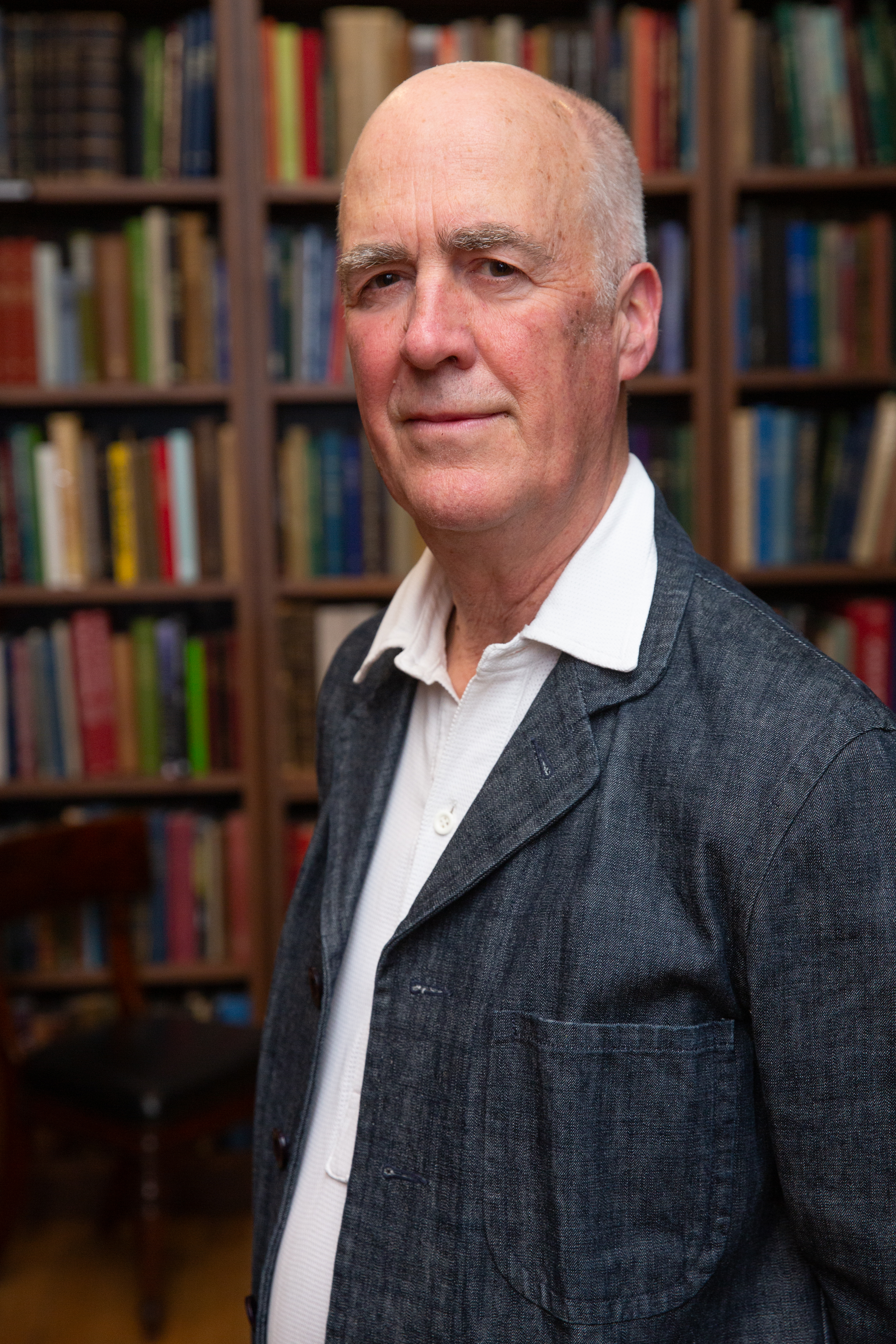


 | Charles | Saumarez | Smith |
You must be logged in to post a comment.