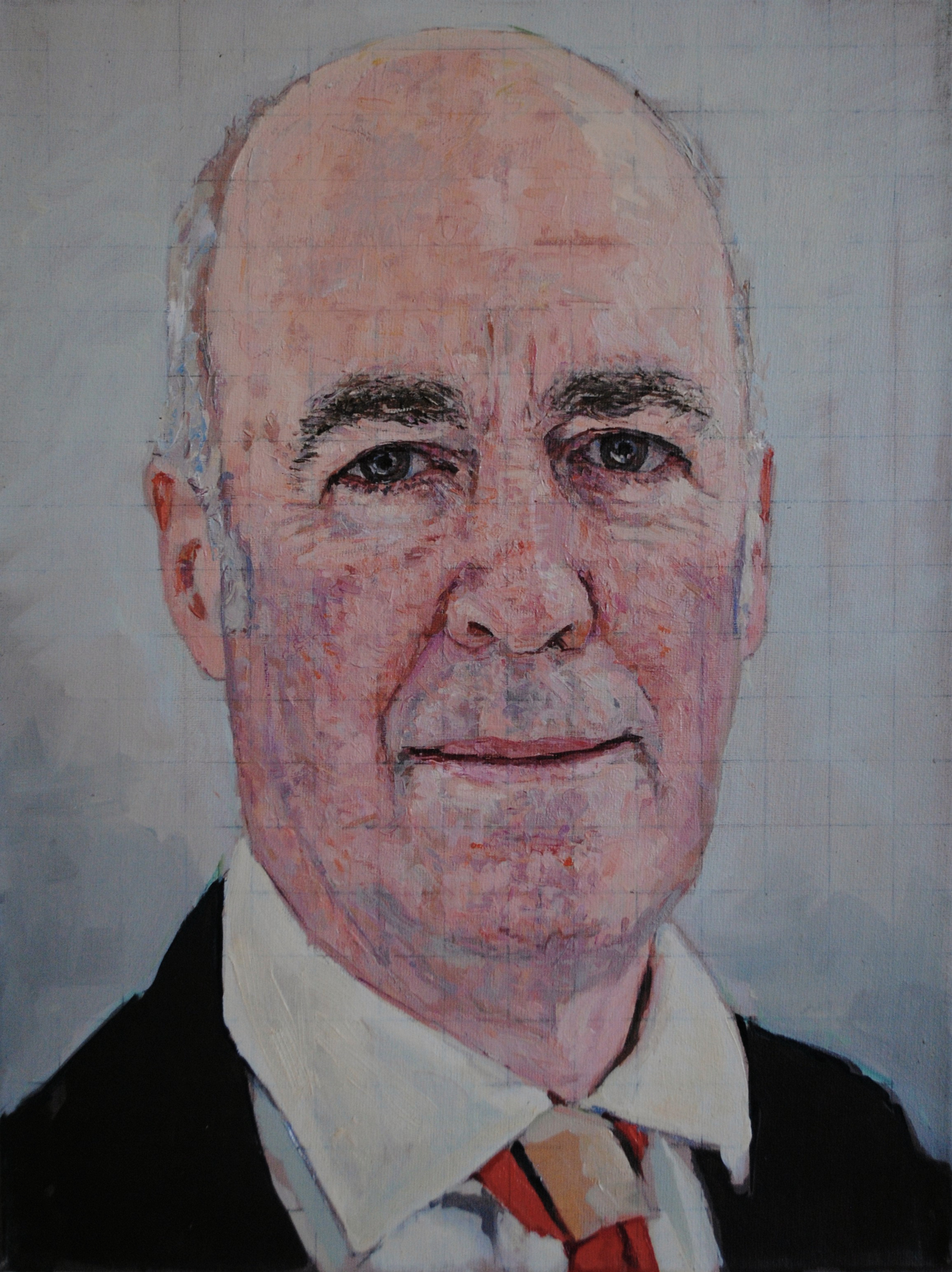
Listening to Mark Padmore sing Schubert’s Winterreise so incredibly movingly in the empty Wigmore Hall inevitably makes me reflect on the nature of the way culture has been experienced online in the last three months. Music seems able to transcend the limitations of the physicality of performance in a way that I don’t feel that art can. I’m sure that performers will, and do, say that it is impossible to replicate the interaction with an audience in a concert hall; but I find myself relishing the intensity of the experience of music transmitted through the web to our garden in a way that I don’t find zooming through exhibitions is in any way an adequate substitute. So, I suppose the issue is whether there is any difference between listening to Schubert semi-live as broadcast at lunchtime today and on Spotify. I’m sure I’m not the first person to try to differentiate between the nature of these musical experiences.
The Future of Public Culture
I just attended an interesting online discussion organised by the British Academy about the future of public culture post-Coronavirus and what the pandemic’s long-term cultural effects might be. A bit of me thinks, and half fears, that human memory of difficulties will be short and once museums, cinemas and theatres have been allowed to re-open and once social distancing ceases to be necessary, normal activity will resume. But as François Matarasso pointed out, this is in practice increasingly implausible, because funding will have been decimated, some institutions may go under, and some cultural habits may have changed long-term, especially the greater use and experience of culture online. Some cultural forms have actually benefitted from Coronavirus: book sales are apparently up, so people are reading more; I have found that I have been able to experience music more, but not museums; I also think that social media have benign elements of sociability, even if they do act as echo chambers.
The biggest issue which came out from the discussion is how online cultural activity can ever be monetised, because we have got so used to experiencing it free. I have been enjoying the Wigmore Hall lunchtime concerts, but I have not so far been asked to pay, except through the licence fee. How performers get paid – actors, musicians, dancers, museum curators – feels deeply problematic and totally unresolved, unless through the public purse which will be, and is already, hideously depleted.
Neue Staatsgalerie, Stuttgart
In writing my book about postwar museums, I have included a section on the design of the Neue Staatsgalerie in Stuttgart, which is important for its postmodernism, but also that it led to Jim Stirling being considered for every other major museum project during the 1980s, including coming second in the Getty competition and submitting a fascinating drawing which I have been unable to reproduce for the Sainsbury Wing (it’s inaccessible in the CCA because of Coronavirus). I wish I had had access to the attached very detailed and poignant description of the gestation of the Staatsgalerie’s design by John Tuomey, which gives a brilliantly detailed account of the gestation of the Staatsgalerie and of Stirling’s working method more generally, in the days when everything was done through drawing:-
https://www.drawingmatter.org/sets/drawing-week/stirling-stuttgart-rear-view-views/
Bryan Robertson
I’ve been asked for some book recommendations from my recent reading. I’ve been trying to catch up on books about art in the 1950s and 1960s and have two recommendations. The first is Catherine Lampert’s short, but beautifully written (and beautifully produced) book about Frank Auerbach which tells one everything one wants to know about his work from her long and deep knowledge of him. The second is the amazingly enjoyable book about the life and work of Bryan Robertson, The Life of Bryan. When I die, I would like to be the subject of a book which is as comprehensive, funny, truthful and generous. It makes it only too obvious why he wasn’t appointed to the Tate as he hoped – he was still quite young, was magnificently disorganised, never did any planning and, according to John Hoyland, worked from 9 to 5 (9 at night to 5 in the morning); but he supported the work of an amazingly wide range of artists, not just the Abstract Expressionists.
I am open to suggestions of other good books about the period
The New Museum of London
I listened this evening to Sharon Ament, the Director of the Museum of London, and Asif Khan, one of the architects of its new plans (he is working with Stanton Williams and Julian Harrap) about what they have proposed for the development of the existing historic buildings in Smithfield and their development into a complex, multicultural and food-based account of London’s history. What I hadn’t realised while they talked was how nearly we escaped the development and demolition of the entire site, as is clear on the attached description by Save of what might have happened. It’s a salutary reminder as to how much radical and random demolition is currently happening all over London and how important it is to retain the historic fabric and texture of the city (please note Robert Jenrick).
https://mailchi.mp/savebritainsheritage.org/campaignscurrent-1646014
The Garden Museum
I have been watching with interest how museum directors have responded and reacted, first, to lockdown and now, as of yesterday, to the opportunity to reopen. Few have been as insanely adventurous as Christopher Woodward, the director of the Garden Museum, who is not only re-opening the Garden Museum on July 4th, the first day he is allowed to, and is opening a Derek Jarman exhibition and the lovely Garden Museum cafe for takeaway sandwiches, but in September is embarking on a sponsored swim from Newlyn in Cornwall through the treacherous seas of the Atlantic eight hours a day to the gardens of Tresco in the Scilly Isles. I salute his bravery. The Museum is still open to donations to give him strength in his endeavours (https://gardenmuseum.org.uk/a-sponsored-swim-to-save-the-garden-museum/).
Inaction
I’m sorry the blog has gone so silent. The truth is there is so little to say. The days roll by with occasional meetings on Zoom. I bicycle every so often to Spa Terminus to buy cheese from Neals Yard and now bread from St. John whose bakery has reopened. I went to the local branch of the Co-op for nearly the first time yesterday to buy two bottles of Brecon gin and was petrified by the necessity of human interaction, wanting to tell the man behind me to back off, but knowing that the two metre rule has now been dropped. It’s a curious in-between time, half normal, half not quite knowing what one is allowed to do, and half not wanting to do it anyway as there is so much time now for reading, writing, sitting in the garden and rumination.
Thames Barrier Park
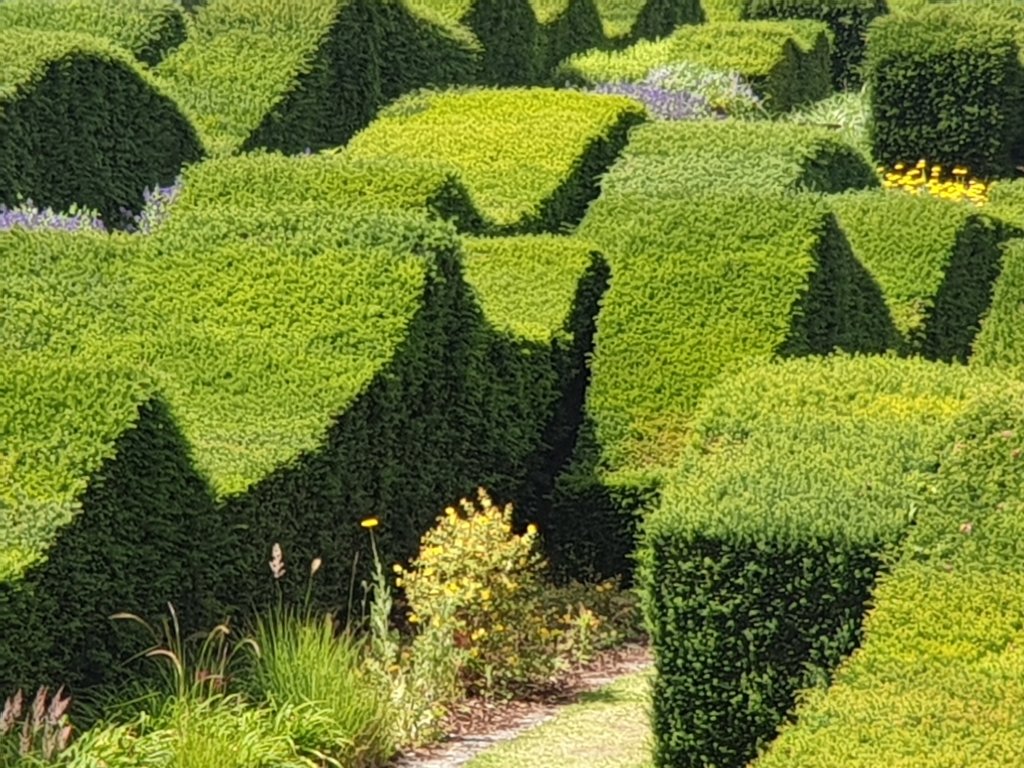
We were en route to the Thames Barrier Park which we had been tipped off is an unexpectedly mature piece of French garden design with rolling asymmetric yew hedges all in a straight line pointing towards the barrier and Kent beyond:-



Millennium Mills
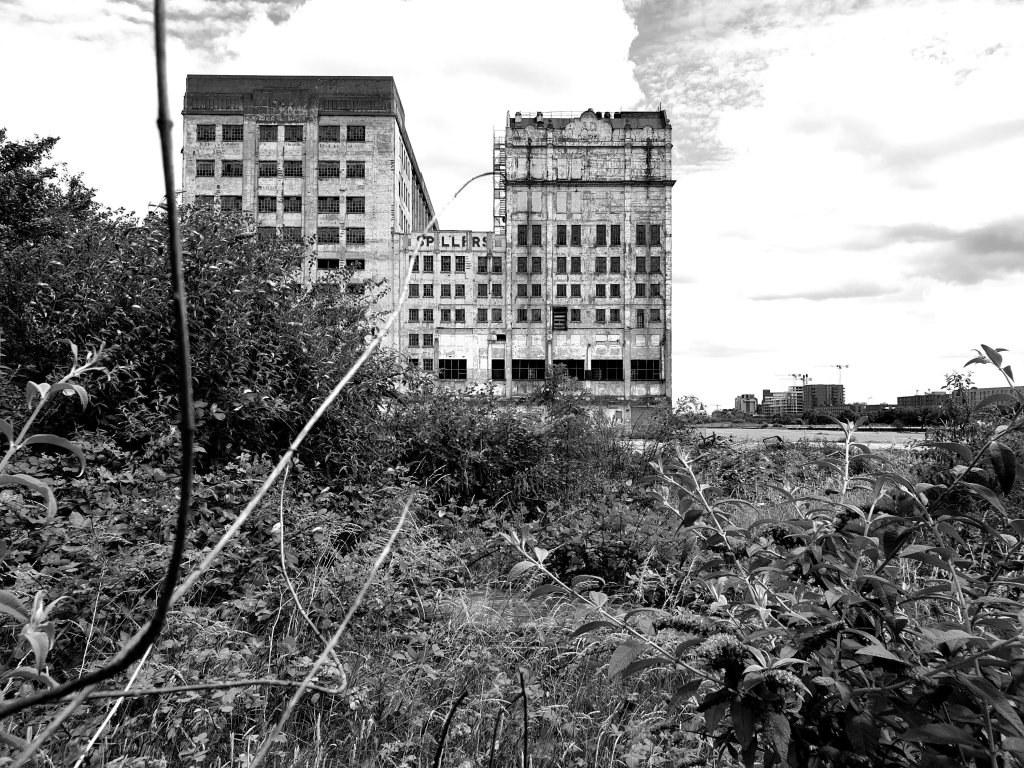
We walked past Millennium Mills, one of the last remaining grand industrial ruins still in Silvertown, used by Derek Jarman for the filming of The Last of England. It was originally built in 1905, destroyed by an explosion in the Brunner Mond works next door in 1917, reconstructed for Spillers in 1933, who dealt in flour before they turned to dog biscuits:-


Marlborough Fine Art
I have just read the extraordinary and unexpected news that Marlborough Fine Art is closing down its New York operation (https://news.artnet.com/art-world/wet-paint-marlborough-gallery-to-close-permanently-amid-board-coup-while-patriarch-nearly-died-of-covid-19-and-more-juicy-art-world-gossip-1888324) as a result of what sounds like a family feud, as well as a downturn in the art market and Covid-19.
It was well known that its New York operation was now being run by Frank Lloyd’s great-nephew, Max Levai, who is said to be something of a playboy figure with a taste for the glitzier style of contemporary art; and that they had bought the beautiful Cheim and Read space in Chelsea, right next door to Marlborough’s existing downtown gallery, which had been converted into a gallery space by Richard Gluckman, the best of the New York austerely modernist designers. It was briefly leased to Blain|Southern which is how I know it. The demise of Marlborough, if it is being closed, will mark the end of one of the greatest of post-war galleries, which has looked after the estate of Francis Bacon and supported many of the best painters, including R.B. Kitaj, Frank Auerbach and Paula Rego. It’s hard to imagine the art world without it.
 | Charles | Saumarez | Smith |
You must be logged in to post a comment.