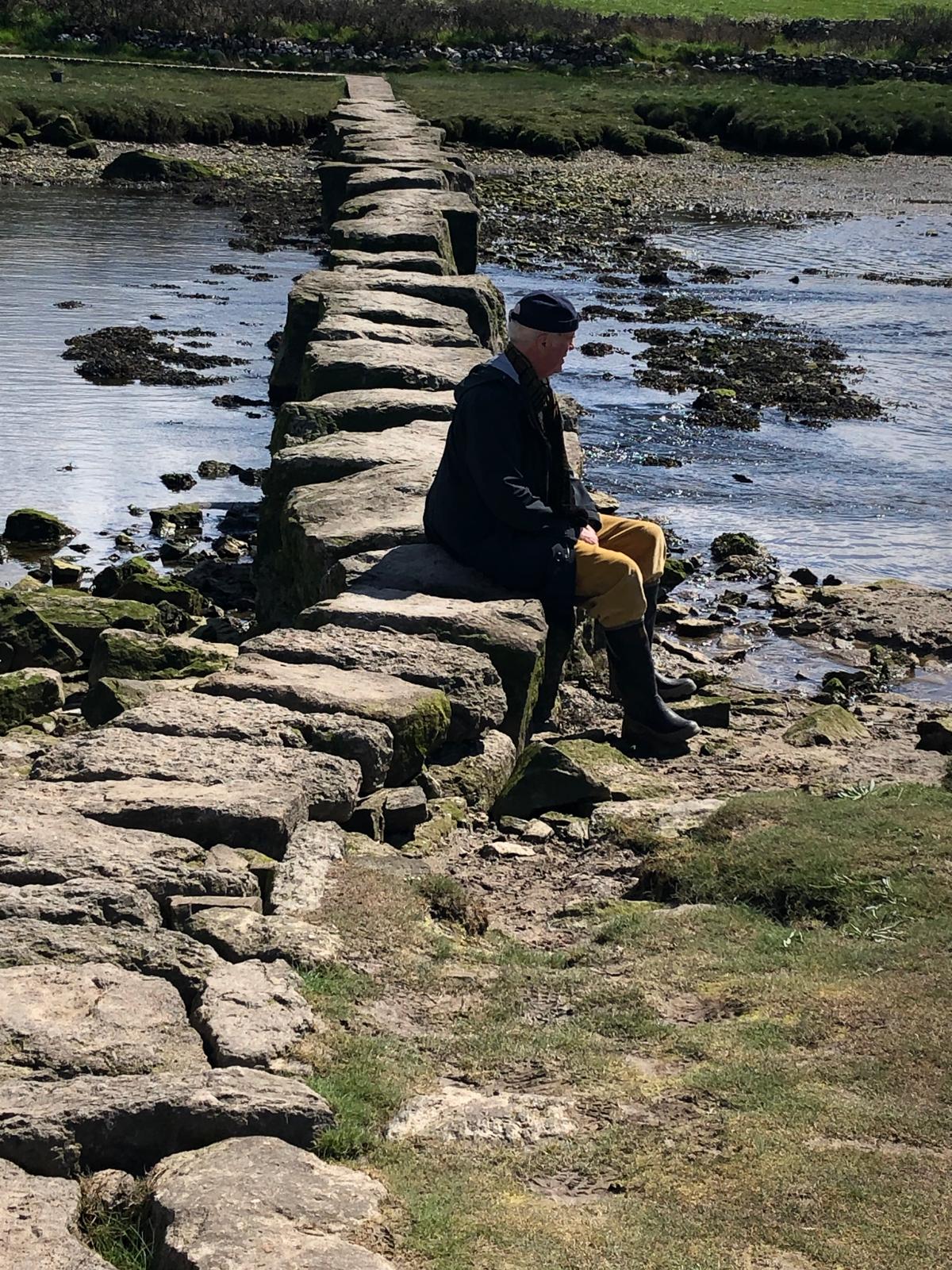
Another very sad restaurant closure ! The interiors were done by Eva Jiřičná in the early 1980s and it retained a feel for its period – smart and a bit glitzy, but with an incredibly nice and always welcoming staff. I have eaten there a lot over the years and always loved it, including the dinner after the launch of the film of the Royal Academy and lunch in the alcove at the end on the left, now no longer possible.
A Docklands Tour
I was shown bits of docklands this evening I didn’t know existed.
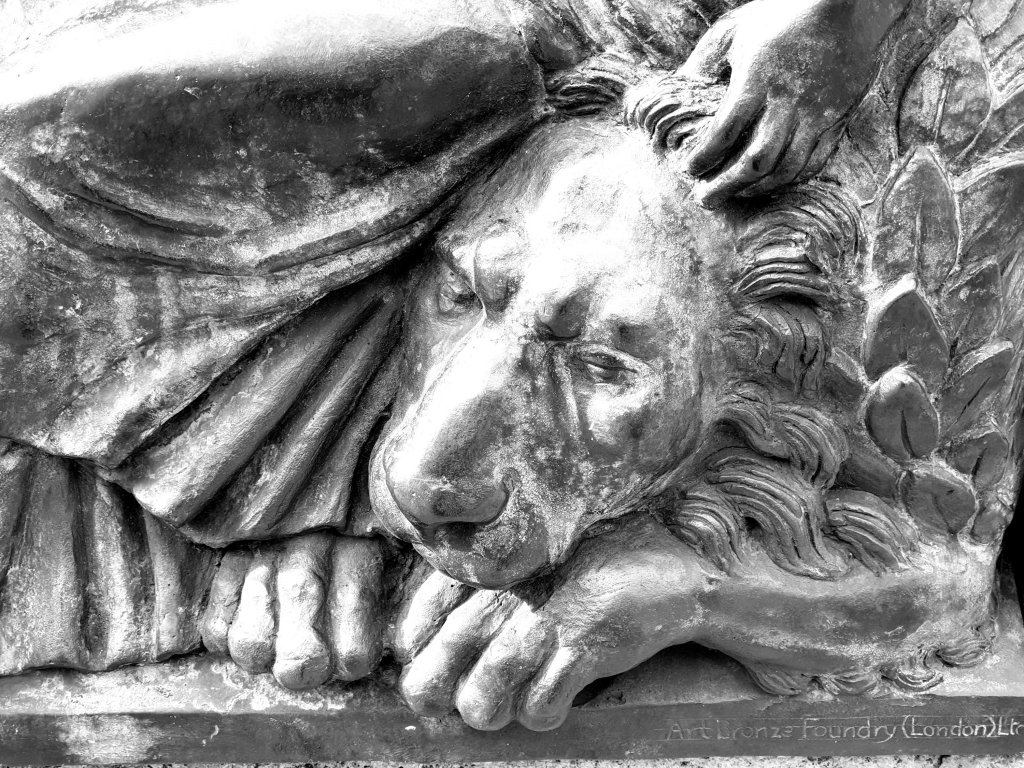
First, we looked at the plinth of the statue of Robert Milligan, the Scottish merchant and slave factor who was responsible for the construction of West India Docks. Only the bronze plaque remains showing a helmeted warrior – is it Britannia ? – sitting on a sleeping lion receiving gifts, presumably brought by the sailing ship behind:-

Then the new Wood Wharf tower by Herzog and de Meuron:-

A nice doorknocker in Coldharbour:-

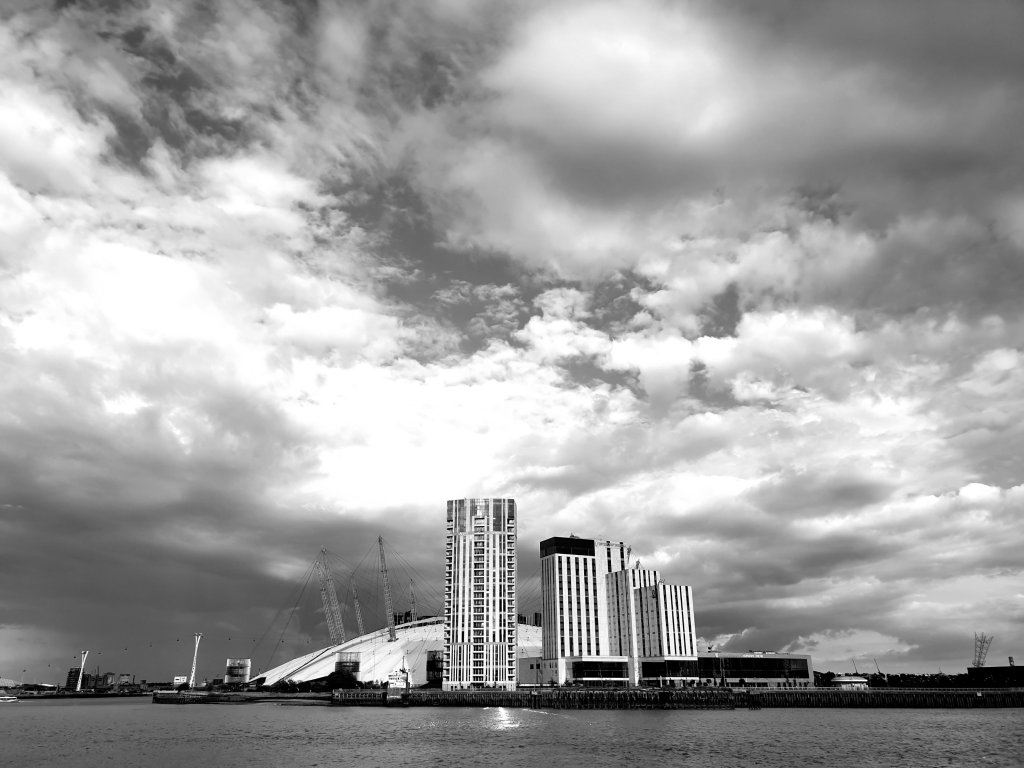
A good view across the river towards the dome:-
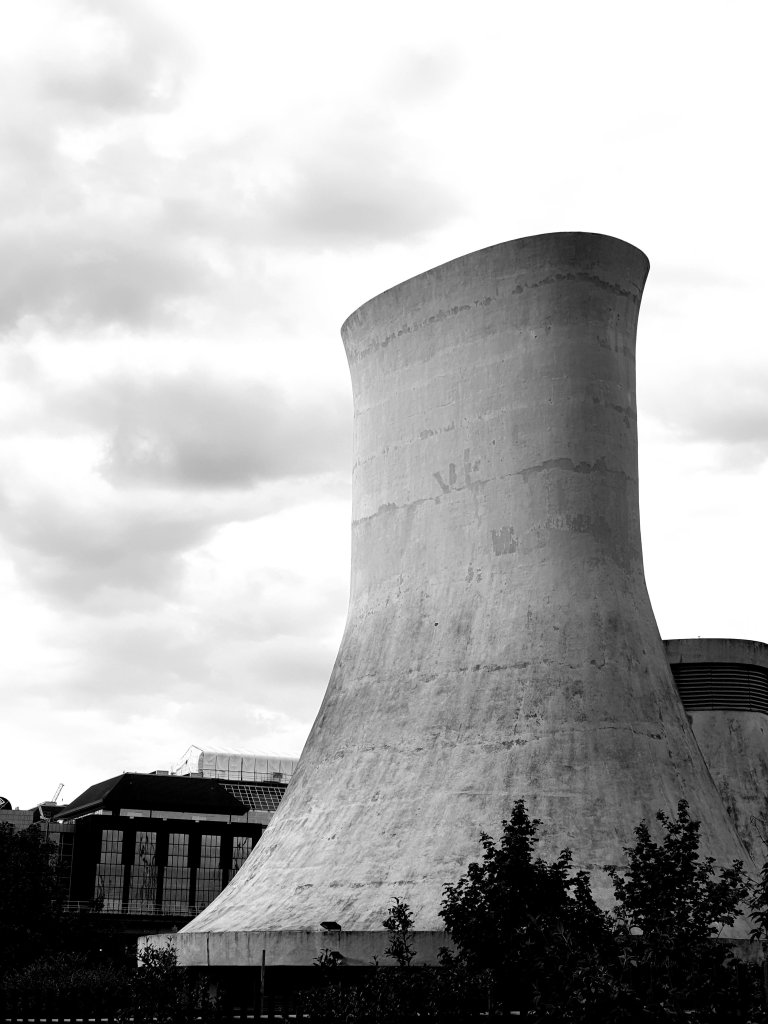
The ventilation shaft for the Blackwall Tunnel designed by Terry Farrell when he was working for the GLC:-
And an egret in East India dock:-

Edwardian Houses
I have spent the weekend immersed in Timothy Brittain-Catlin’s new book The Edwardians and their Houses: The New Life of Old England, a form of architectural escapism as it was for them, full of large, well-built, spacious houses, as well as cottages, which have never made the history books either because they have been forgotten or deliberately written out. Not so much Lutyens, who has been much written about, more W.H. Romaine-Walker, who was responsible for Canford Manor in Dorset, now a school, Stanhope House next to the Dorchester, and part of the Tate, as well as providing illustrations for a new edition of Alice in Wonderland; W.D. Caröe, who designed a new tudor house for himself south of Godalming; and Horace Field, co-author of English Domestic Architecture of the XVII and XVIII Centuries (1905). I felt like J.M. Richards whilst reading it, suddenly nostalgic for the architecture of the suburbs – Queen Anne Revival and Stockbroker Tudor – which continued the language of Edwardian architecture into the 1950s. Of course, it was nostalgic, but it was also well designed, comfortable and beautifully built, much of it designed for progressive members of the liberal government, now turned into private schools and luxury hotels. As it happens, it also includes Chequers, a Tudor house much altered and remade just before the First World War by Reginald Blomfield, with gardens by the architectural writer and Oxford don, H. Avray Tipping, before being presented to the nation by Sir Arthur Lee for the use of Lloyd George from 1917 with a requirement that nothing ever be changed.
Royal Naval College
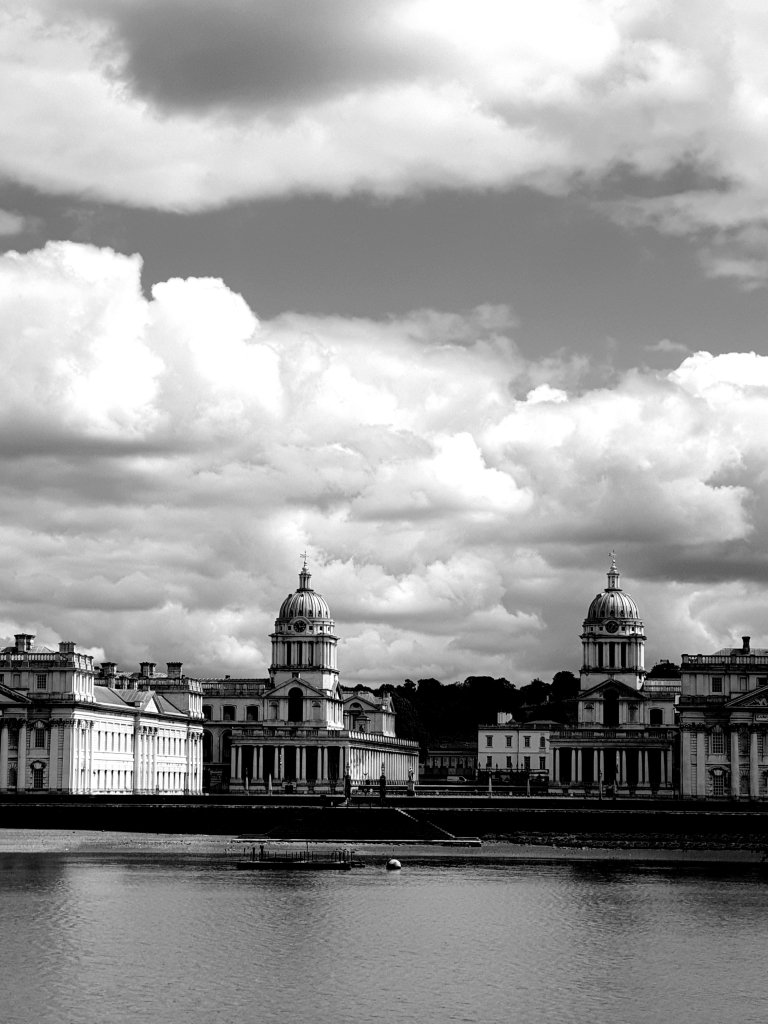
For us, the nearest place we can get even a sense of the sea – seagulls, mudflats and open water – is in Island Gardens, the park at the bottom of the Isle of Dogs where the foot tunnel goes from, but the lift is not working, and one can look across the Thames to the noble accumulation of fine buildings on the other side, with the Queen Anne Court in the afternoon sun. It was designed by Wren and Hawksmoor to replicate the work of Webb to the west, begun in 1698, financed by the proceeds of a state lottery:-
What’s happening politically
Since I have a small number of overseas readers who presumably don’t see the British newspapers, although I can’t help noticing theirs are equally scathing, I am re-posting Andrew Rawnsley’s op-ed piece in the Observer today because I admire his writing, he tends to be very well informed from within government, and his judgment is well considered. This makes this week’s verdict all the more damning of two months of relentless spin doctoring, making up policy on the hoof, endless false promises, allowing disproportionately high numbers to die, and making Keir Starmer look and feel like a proper grown-up in contrast to the arrogant, small-minded, jejune idiots who run our government so incompetently.
Grange Park Opera
Unable to go to Grange Park Opera this summer, its season cancelled long ago, Wasfi has organised a recital by Pavel Kolesnikov, a young Russian pianist, trained at the Moscow State Conservatoire, playing Chopin and Beethoven in the empty concert hall. There is a recipe for making Russian pancakes attached:-
Statues and Empire (2)
While I’m on the subject of commemorative statues – a subject which I’m fascinated to find stirring such unbelievably passionate feelings – I have been thinking about the vexed issue as to what should happen to Kara Walker’s Fons Americanus which was on display in the Turbine Hall up until lockdown, assuming it has not already been dismantled as was planned after it was due to come off display on April 5th. Is there not a possibility of making it into something more permanent ? I don’t think it belongs in Bristol because it is a satire on the Victoria Memorial. It is currently made out of deliberately ephemeral materials so that it can be recycled. But is there not an opportunity of showing it more permanently somewhere outside either near the Thames on a site outside Tate Modern and opposite St. Paul’s or, equally appropriately but less publicly, outside Tate Britain ?
Statues and Empire (1)
As the late nineteenth-century and unexpectedly art nouveau civic statue of Edward Colston is fished out of the waters of Bristol’s harbour, awaiting an appropriate place to be displayed in a museum (few people have pointed out that Bristol Museum and Art Gallery already owns a smaller bronze version of it and the two maybe belong and should be shown together), I found the article below by Martin Kettle a thought-provoking discussion of the much bigger issue that the statue raises: that is, why the teaching of British history has tended to be entirely separate from the teaching of Imperial History (or at least it was in my time), how colonial history could and should be taught in schools, and how it is shown in museums. These strike me as being much bigger and more urgent issues than which other statues should be taken down: to change the way history is taught and seen.
EAT (2)
My informant in the food industry has filled me in on the history of EAT: THE REAL FOOD COMPANY, which I probably should have looked up myself before posting about it. The truth is that EAT only opened in London in 1996, next to Charing Cross (that was why I knew about it when looking for a franchise for the NPG) although a version of it (E*A*T) had existed in New York since 1973, founded by Eli Zabar. So, it wasn’t a pioneer, but more an opportunistic rip-off of Prêt-à-Manger, which was maybe the originator of the idea of the quick, pick-up, reliable lunchtime sandwich in London, founded in Hampstead in 1983 and bought by Julian Metcalfe, just out of college, in 1986. I think it’s a tale of city-based entrepreneurs spotting a gap in the market. Anyway, I’ve discovered why I liked EAT. It was designed by David Collins, the clever, visually inventive Irish architect-designer, who died in 2013 and was responsible, amongst many other projects, for the Wolseley, the Connaught Bar and the National Gallery Dining Rooms. So, EAT brought elements of his aesthetic of modernist haute luxe (he was a friend of Madonna) to the high street.
Paul Lewis
Many people have already sung the praises of the series of lunchtime concerts broadcast from an eerily empty Wigmore Hall, but few can match the experience of listening to Paul Lewis play the Moonlight Sonata, with his ability to make the familiar like something one has never heard before – is it the astonishing speed of playing or its unpredictability which gives it its special intensity ? – even in spite of having listened to recordings of him having played it often before:-
 | Charles | Saumarez | Smith |
You must be logged in to post a comment.