I do not think of Vanessa Bell as a product of the Royal Academy Schools because the whole of Bloomsbury was so implacably hostile to the the Royal Academy and everything it stood for. But it was then the leading art school and after lessons at home from Ebenezer Cooke and a period studying at Arthur Cope’s art school at Park Cottage in Pelham Street, she entered the Royal Academy Schools in 1901 where she learned anatomy and perspective from, amongst others, George Clausen and John Singer Sargent. Not much of her early work survives apart from her very beautiful silvery picture of Iceland Poppies which survives at Charleston and shows how accomplished she was as a painter before friendships with Roger Fry and Duncan Grant moved her in the direction of Post-Impressionism.
Vanessa Bell (1)
I had forgotten how redolent of Vanessa Bell’s paintings and personality the interiors of Charleston are, including the bedroom on the ground floor where she died on 7 April 1961 under a portrait of Julian from whose death she never wholly recovered:-
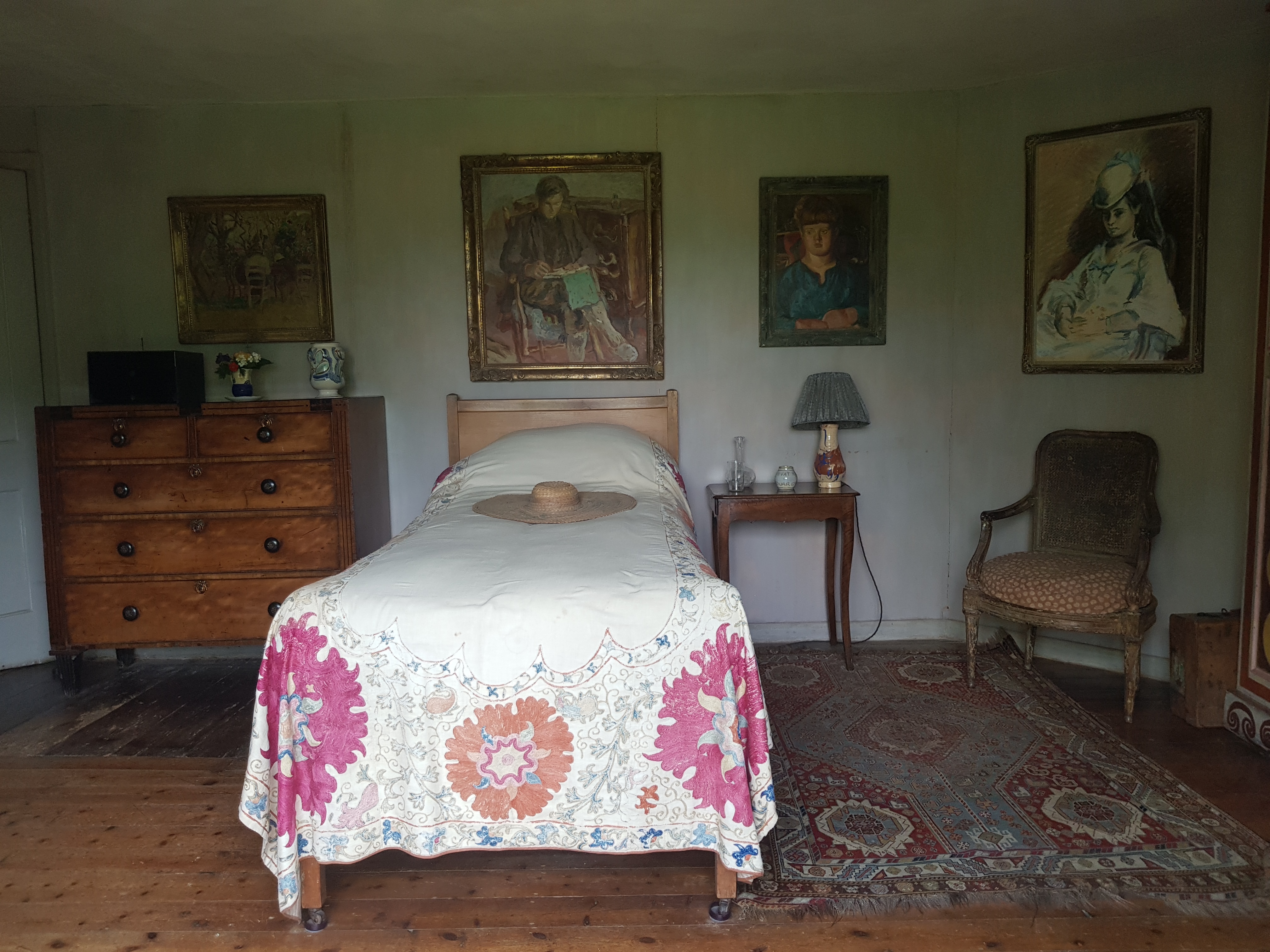
Charleston
We have come on our annual pilgrimage to the Charleston Festival, not least to hear Sylvia Brownrigg in conversation with Amy Bloom about their respective books.
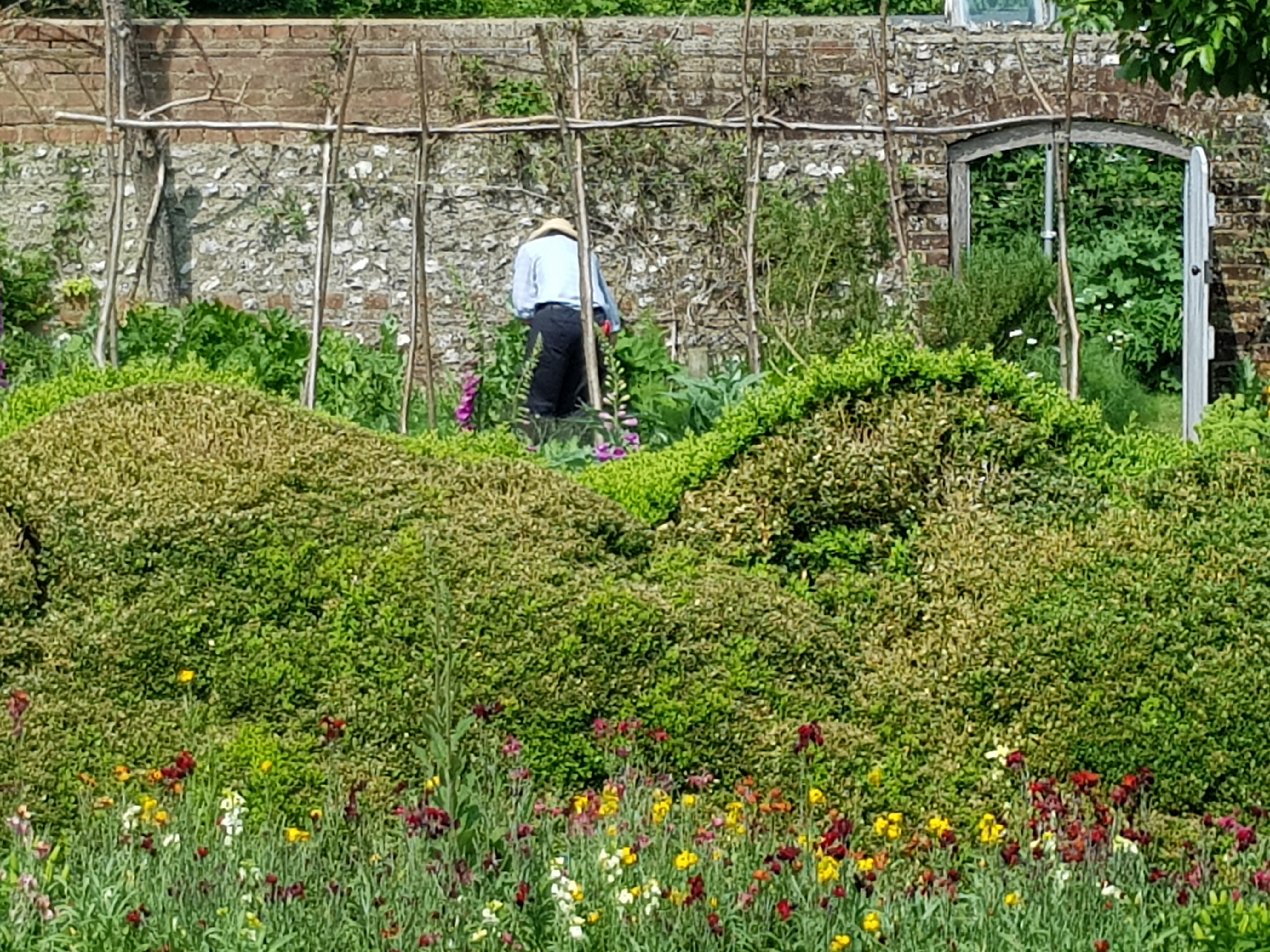
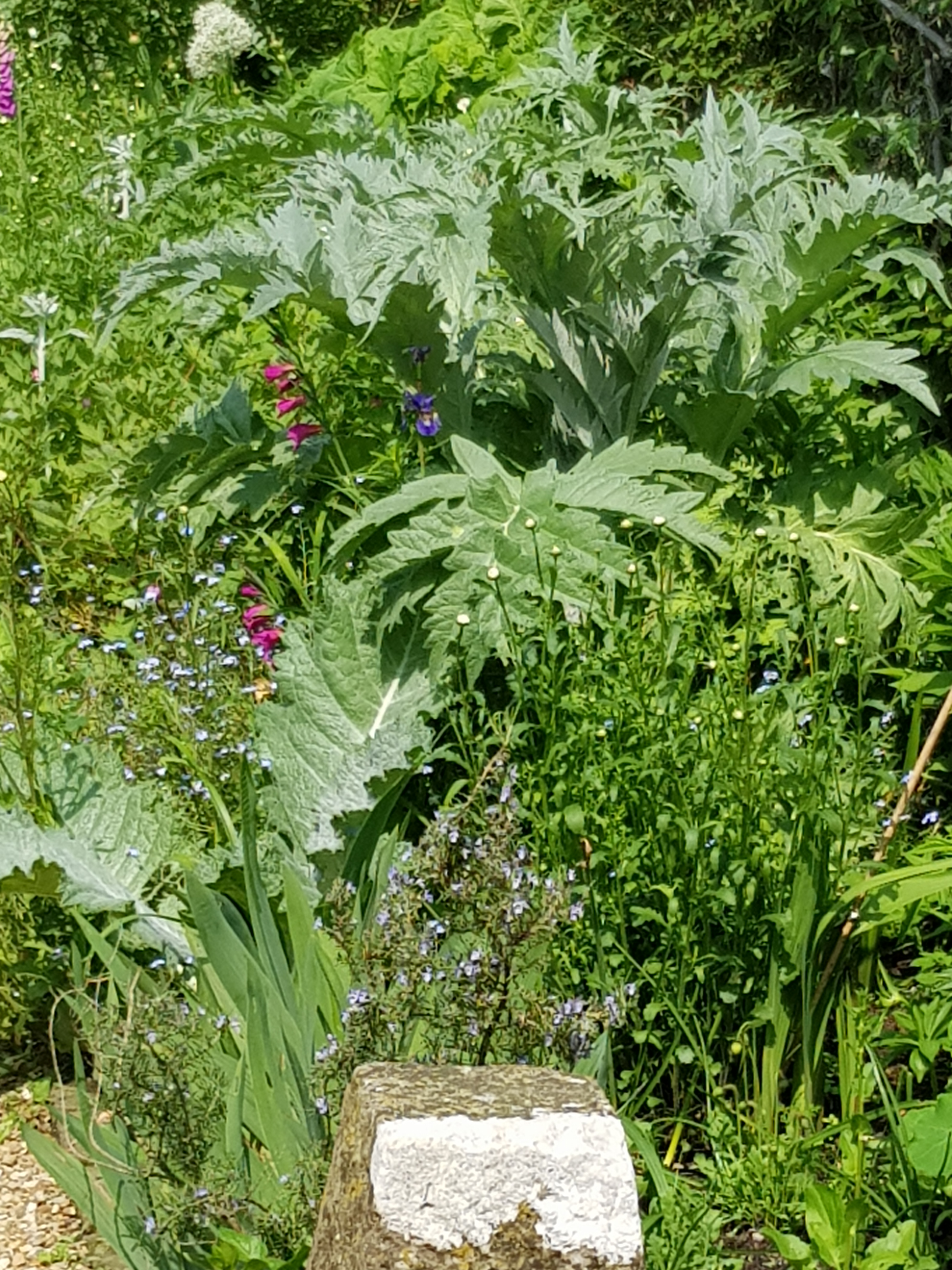
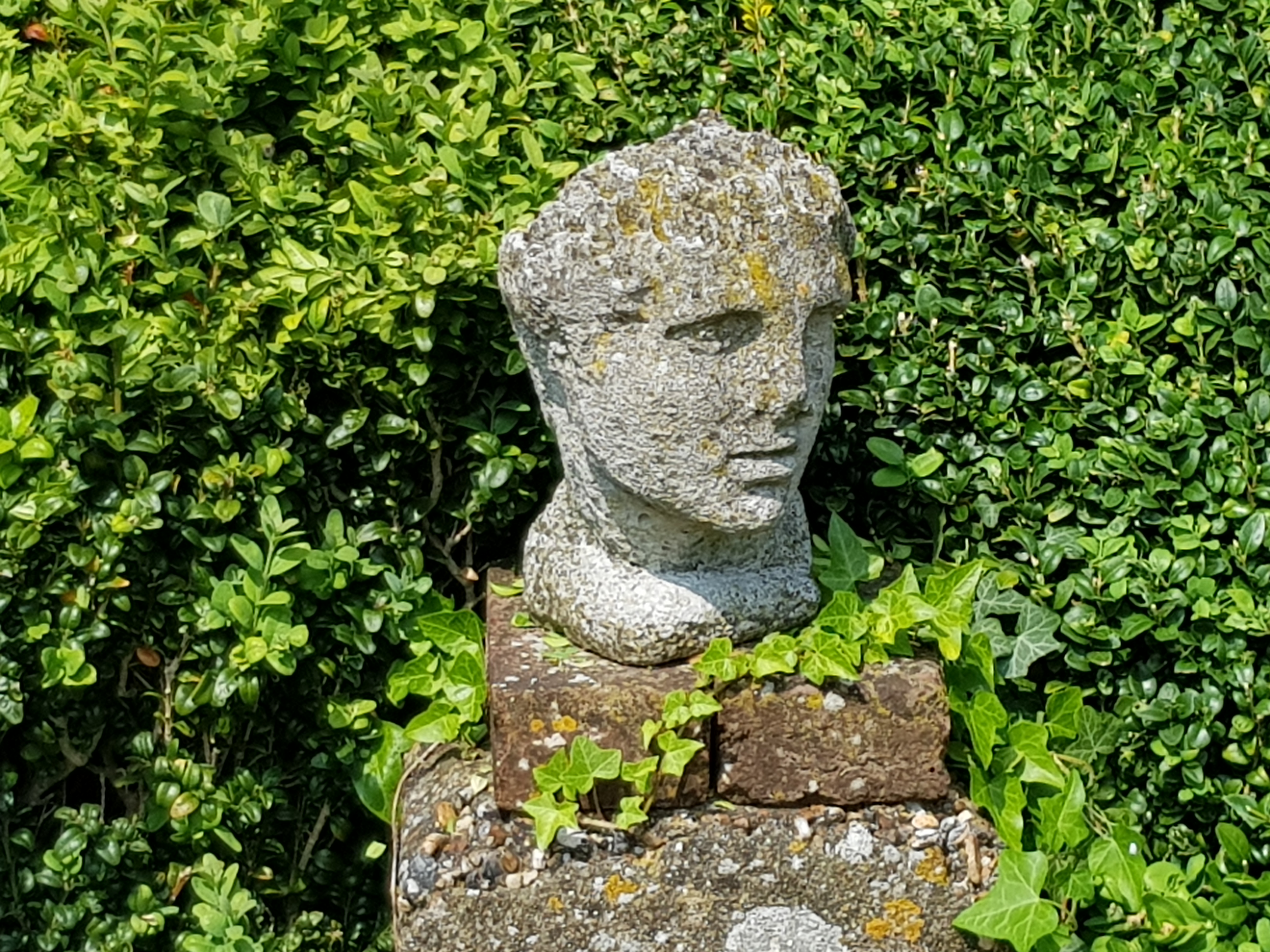
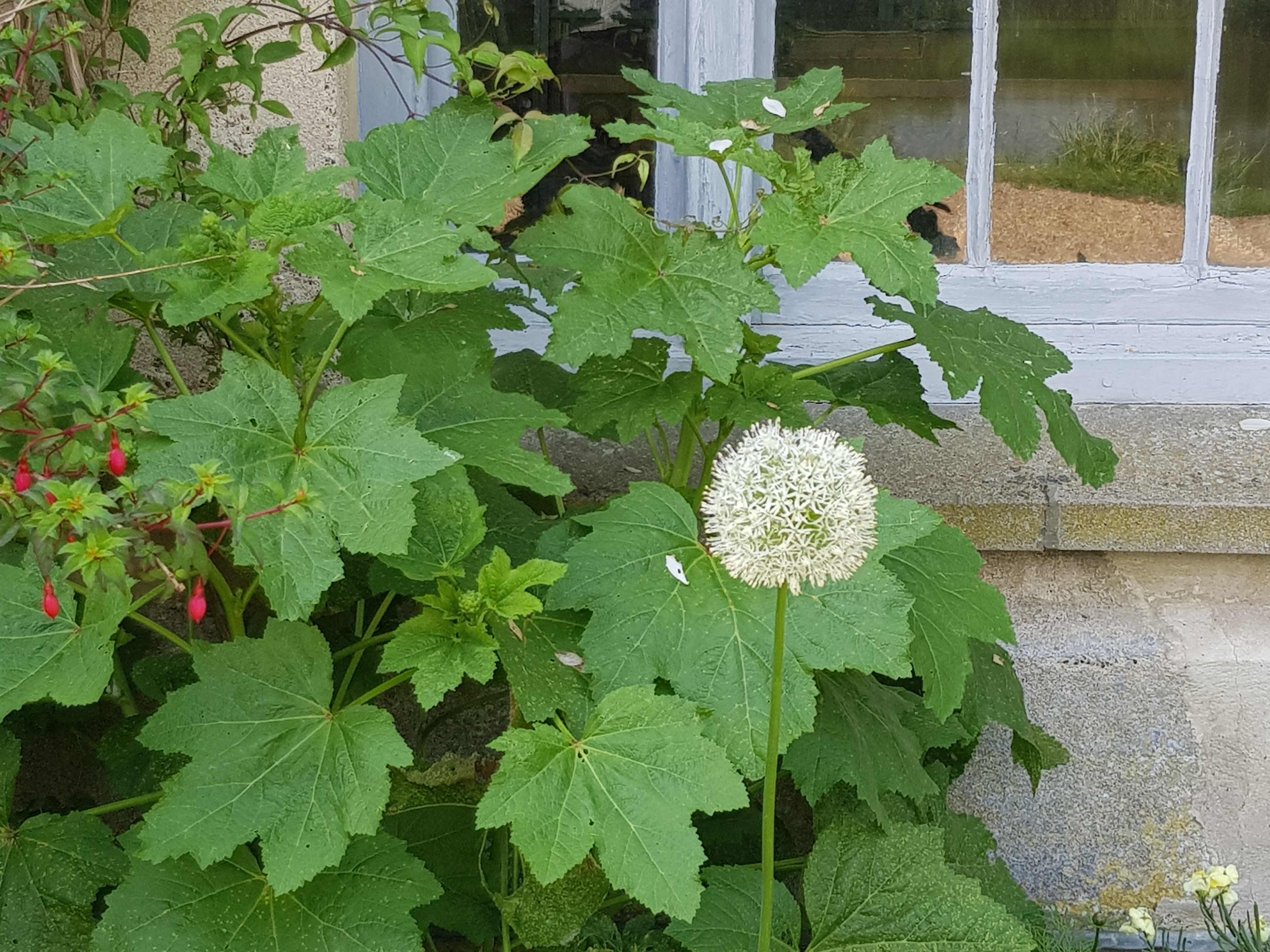
The house and garden look as good as ever:-

The Windrush Generation
I started the day by going to see an exhibition of photographs of the Windrush generation by Jim Grover in the Oxo Gallery. He lives in Clapham and has won the trust of the local community which has enabled him to document the lives of the original settlers from the Caribbean, who came every year between 1948 when the SS Empire Windrush docked in Tilbury and 1962, the year of the Commonwealth Immigration Act. What it shows is the way their lives were built round the local church, family and community – and dominos and dancing. His photographs convey dignity and pride.
Museum Retail
We had a meeting this morning with the Luxury Club of the French Chamber of Commerce – representatives of the ways in which Mayfair, and Bond Street in particular, represent so many of the world’s leading luxury brands, including Louis Vuitton, Cartier and Hermes, who dominate the local economy. Ever since we started developing Burlington Gardens a key question has been how far we connect with, or distance ourselves from, the local retail community. I’ve always been in favour of establishing close connections, partly because so many fine art and contemporary dealers are local and partly because I think it is in the Royal Academy’s interest to be able to attract cultural tourists (not to mention High Net Worth Individuals) in a way that in the past it may not have done. Some time ago, we commissioned a report on Culture and Commerce: the Royal Academy and Mayfair from Charles Landry, the writer and urban theorist; and I am looking forward to reading Please Do Not Touch And Other Things You Couldn’t Do at Moss, the Design Store That Changed Design, the recent book by Murray Moss, who gave advice to us on our shops.
Benjamin West Lecture Theatre
We had an event last night to celebrate and thank all those people who have bought seats in the Lecture Theatre: a wonderful piece of collective philanthropy in which one person has bought seats in honour of a group of red collars; another in honour of Angelica Kauffman. People bought seats for their spouse or in memory of someone or just for themselves and came to sit in their seats for the first time in order to admire their handiwork and hear the differents strands of the story which has led finally to the completion of the building.
Buckingham Palace
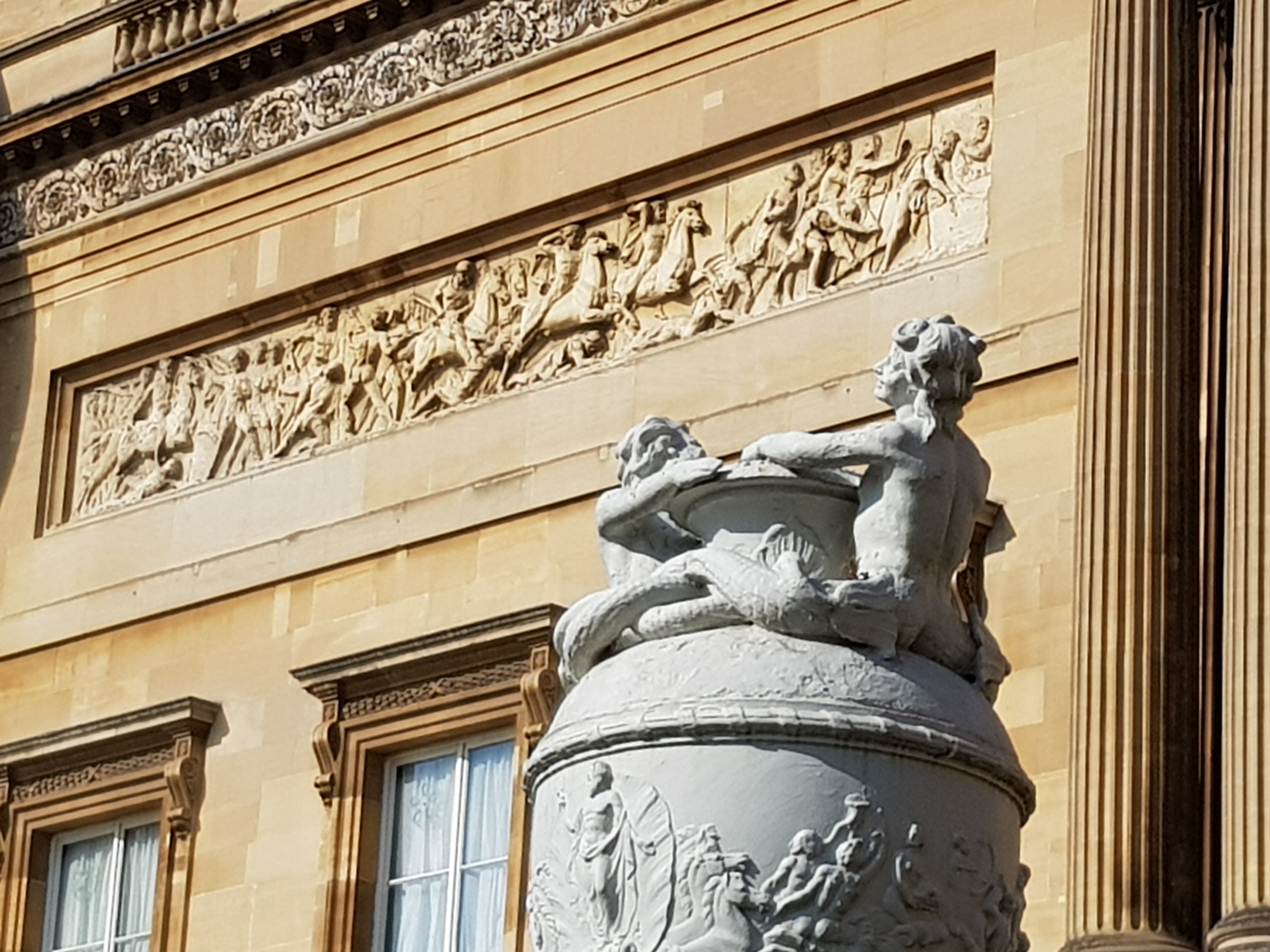
Since there was no possibility of my getting a view of Meghan, I concentrated my attention on the garden façade of Buckingham Palace. I always find the internal courtyard a bit dour, as designed by Edward Blore, but the garden façade is presumably still Nash in his most magnificent style – spending money like water on the most opulent visual effects, as if it was a Palace for a Tsar, with ornamental sculpture to match:-

Lovelace Courtyard
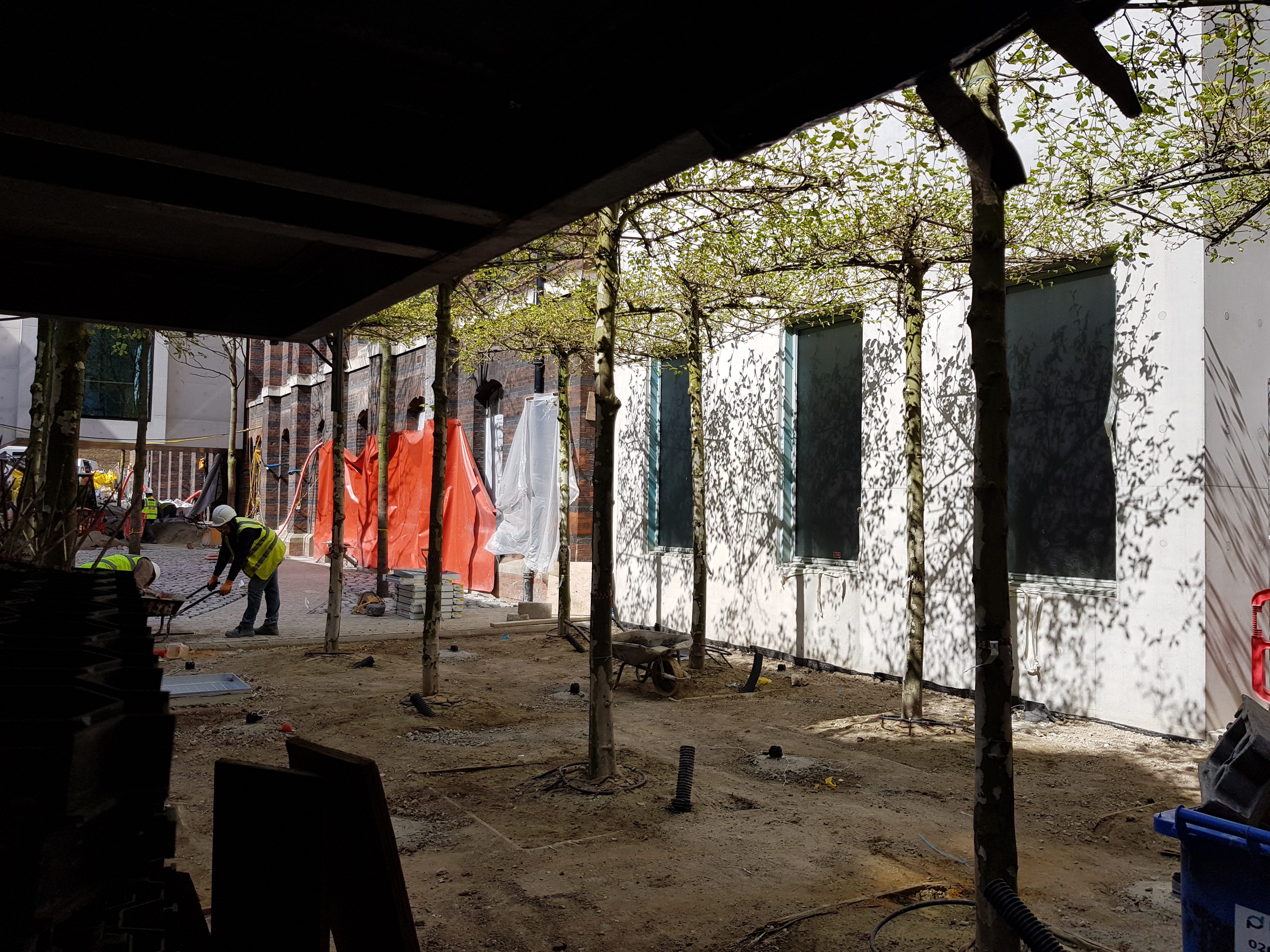
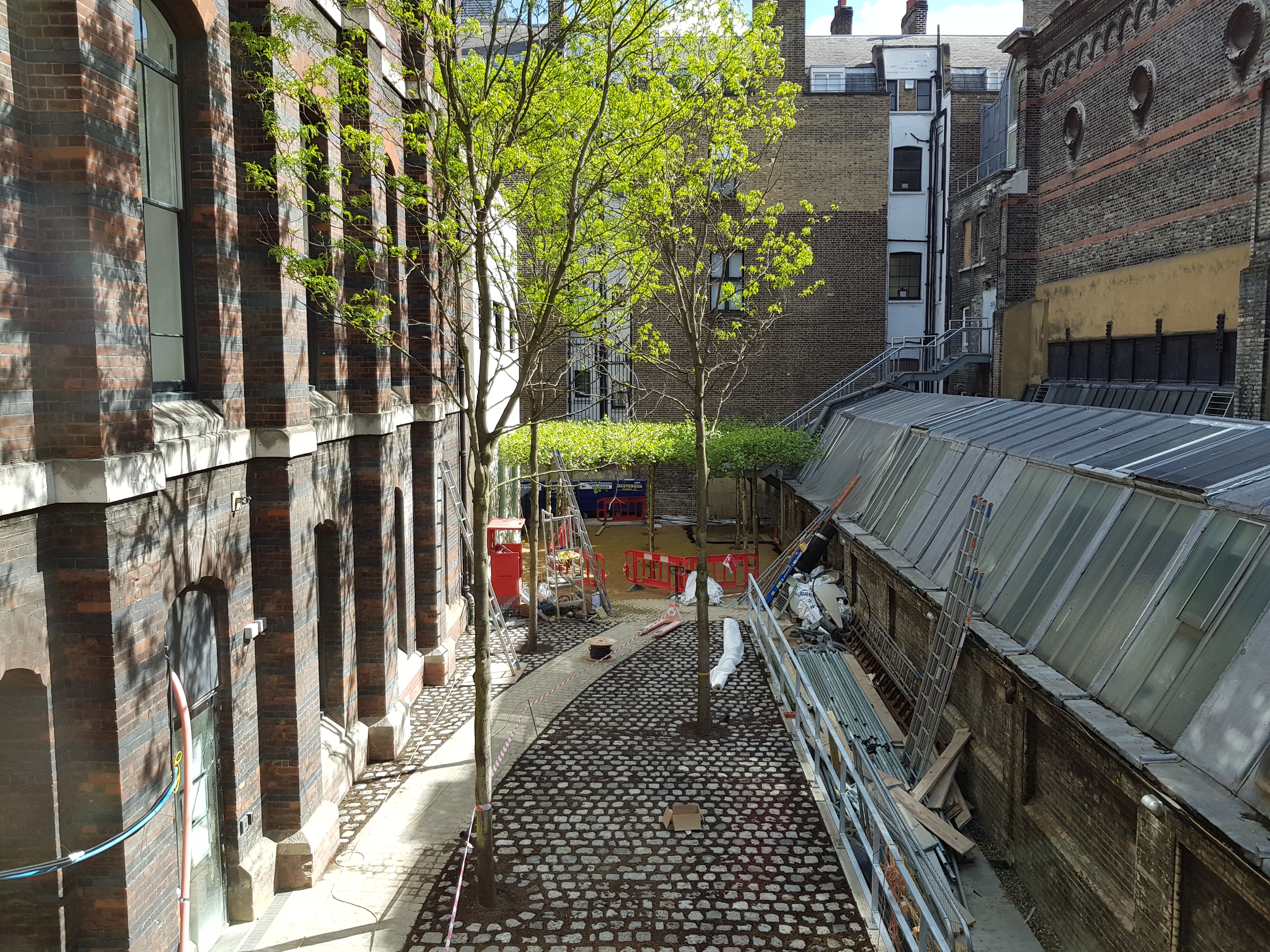
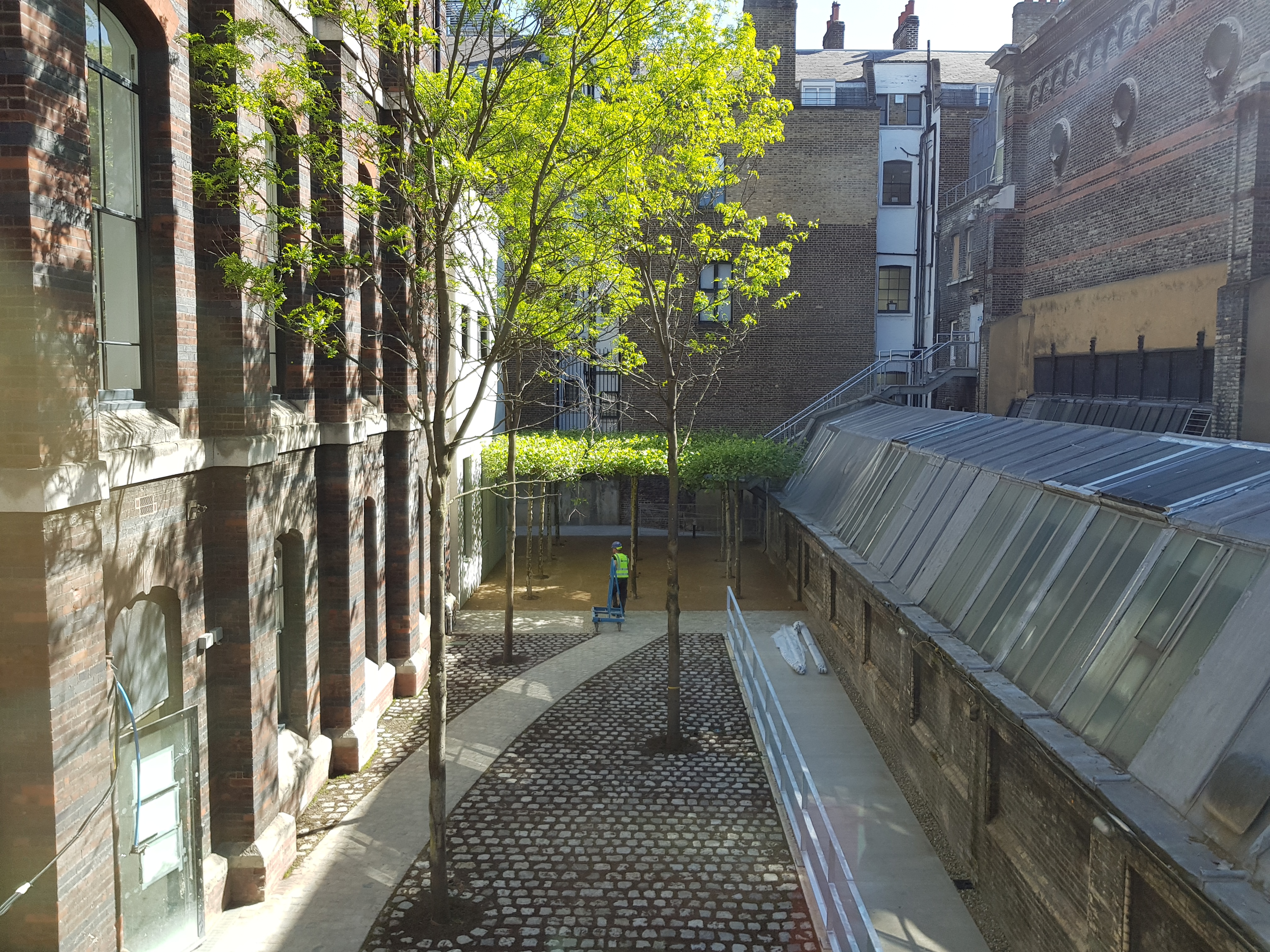
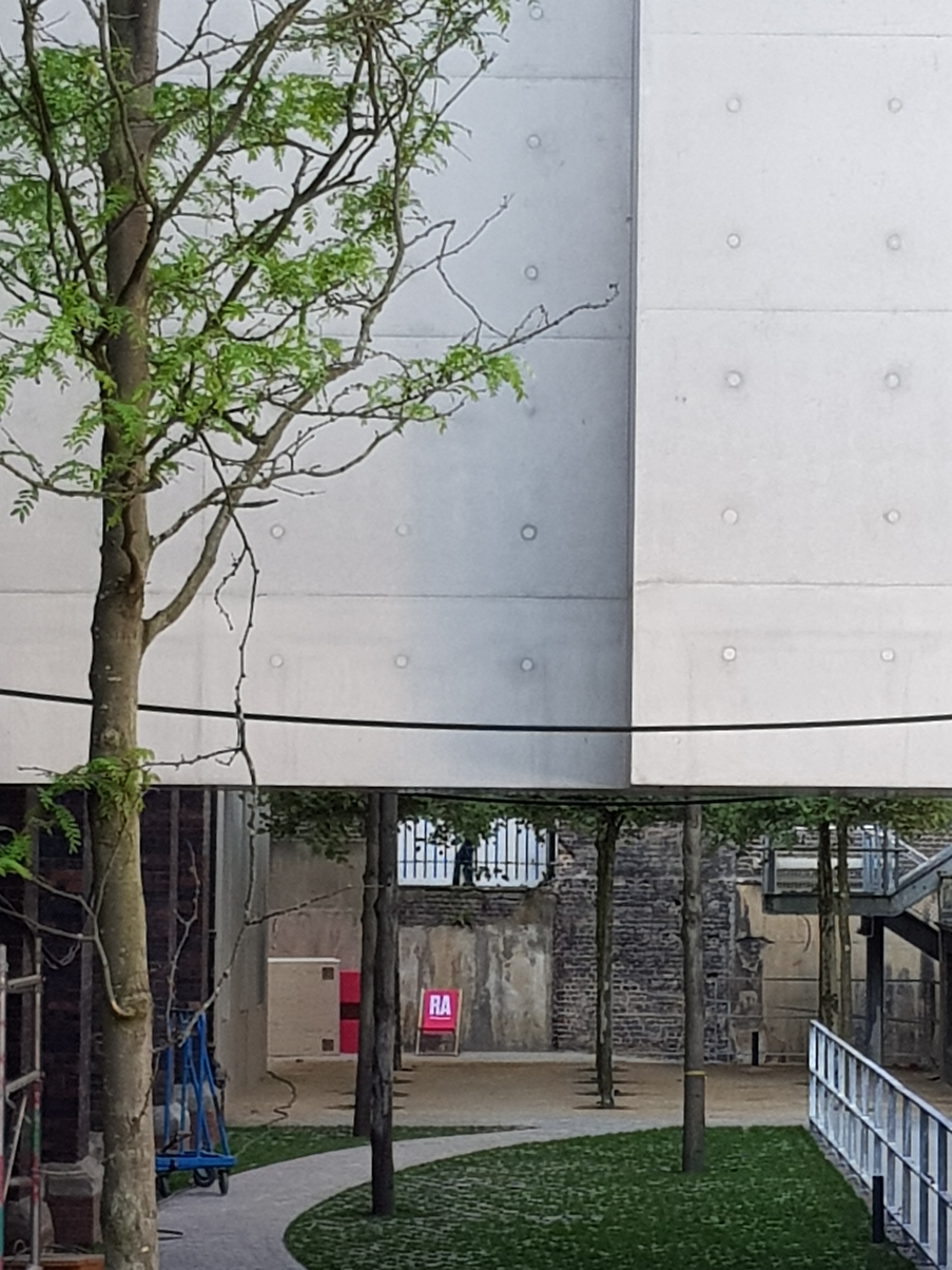
One of the great pleasures of the last few weeks has been seeing the Lovelace Courtyard come together in the backyard between Burlington House and Burlington Gardens, which David Chipperfield describes as a ‘demilitarised zone’, a bit of green in the heart of London, somewhere for staff to sit out and, as of last night, for the students to play pingpong. It was designed by Peter Wirtz, the son of Jacques Wirtz who designed the gardens at Alnwick Castle:-





Sir David Chipperfield RA
We had the inaugural Architecture Lecture in the Benjamin West Lecture Theatre, delivered, very appropriately, by Professor Sir David Chipperfield RA.
He concentrated on three issues.
The first was the creation of an appropriate amount of public space in any building project, beginning with the terrace and colonnade outside the otherwise very internalised Museum of Literature in Marbach. The second was the creation of space for playing ping pong alongside his Jumex Museum in Mexico City, which reminded me of the public space underneath the podium of Lino Bo Bardi’s São Paulo Museum of Art. The third was the amount of public circulation above ground in the neoclassical colonnade of the James Simon Building in Berlin, soon to open.
The second issue was, and is, his reference to history. We were reminded of how the majority of German’s wanted a precise reconstruction of August Stüler’s monumental staircase in the Neues Museum, not a faint echo of it. But how Berliners queued round the block to see the newly reconstructed Neues Museum, once it was completed.
The third issue was the way architects have to attend to the detail of projects, including the different types of window frame in Mies van der Rohe’s National Gallery in Berlin. Should the original be maintained, in spite of the fact that it had, and would, leak ? Or should there be a modern equivalent ? Or an adaptation of the original ?
Chipperfield argued for an adaptation of the original on this and other occasions. A sensitivity for history and its legacy, but a freedom to adapt and re-invent it, when necessary. The spirit of Ruskin and the Venice Charter for the Conservation and Restoration of Monuments and Sites, which he brought so effectively to his work in Berlin, and now, more recently, to the renovation of Burlington Gardens.
Satan Summoning His Legions
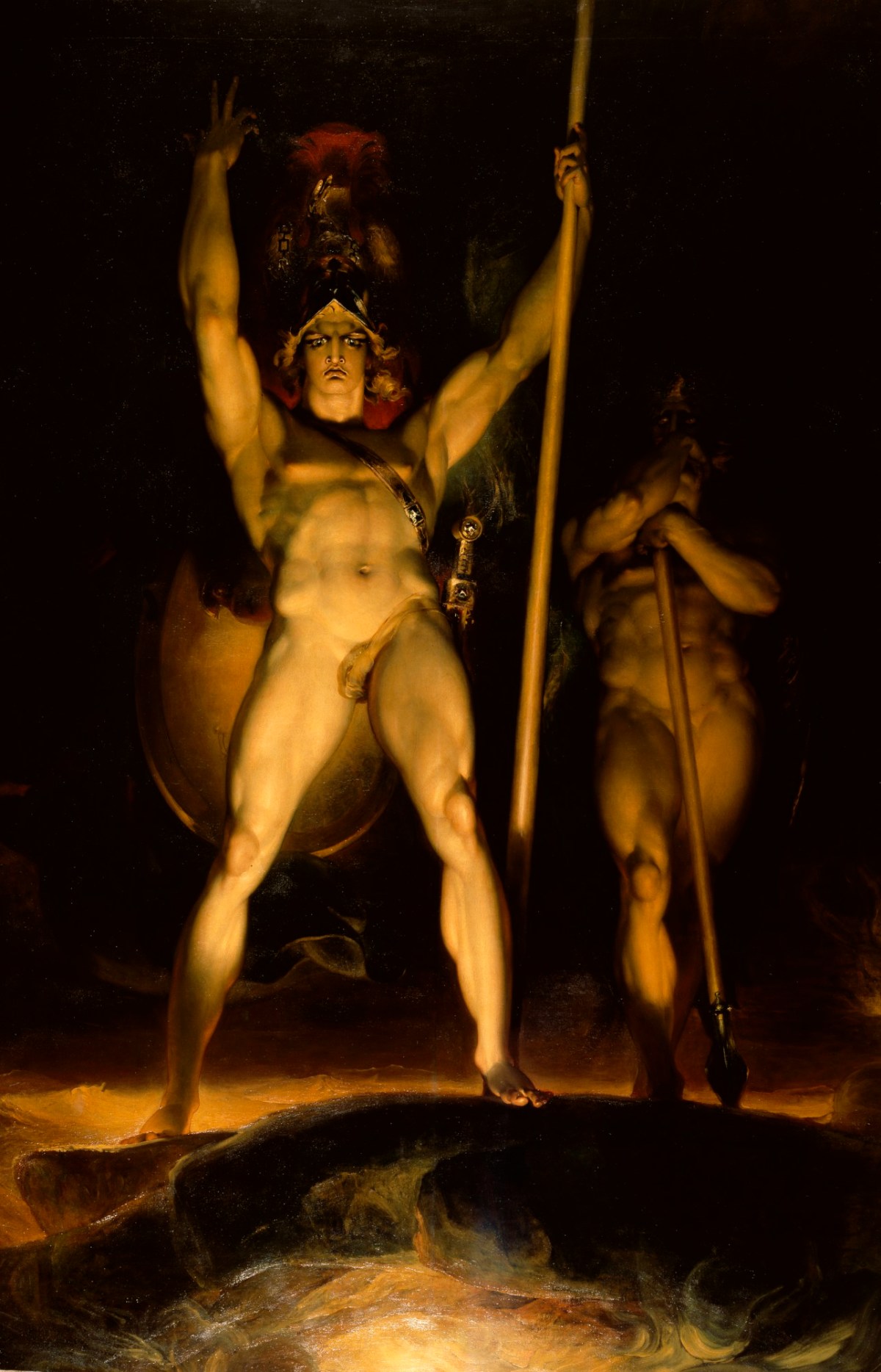
The unlikely star of the new Collections Gallery at the RA is Sir Thomas Lawrence’s Satan Summoning His Legions, partly because scarcely anybody has seen it before, partly because it’s so unlike anything one expects of Thomas Lawrence, the fashionable portraitist, and partly because his wispy crotch confronts the viewer with what is so obviously missing. It was painted in 1796 for the 1797 Summer Exhibition, where it was shown under the title of ‘Satan calling his Legions. First Book of Milton’. Lawrence was 28. He had been recognised as a prodigy as a child, drawing pencil portraits for customers at the Black Bear Inn in Devizes and later pastels in Bath, before moving to London with his parents in 1787 to study at the Royal Academy Schools. But already as a teenager, he had a darker side to his personality, telling Charles Eastlake in 1822 how he used to spend his nights as a teenager copying the prophets and sibyls from prints of the Sistine Ceiling. George III encouraged the Royal Academy to elect him as an Academician in 1790 when he was still under age (you had to be twenty five). He was elected in 1794, aged twenty five. Satan Summoning His Legions was presumably his bid to be taken seriously as a history painter. If so, it was extremely unsuccessful. Richard Westall thought Lawrence unqualified ‘to paint historical subjects. He has little of the creative power’ and Hoppner said that he would ‘Give £100 to have Lawrences Satan out of room, as it takes effect from his pictures’. It was his last such attempt.
 | Charles | Saumarez | Smith |
You must be logged in to post a comment.