St. Anne’s, Limehouse

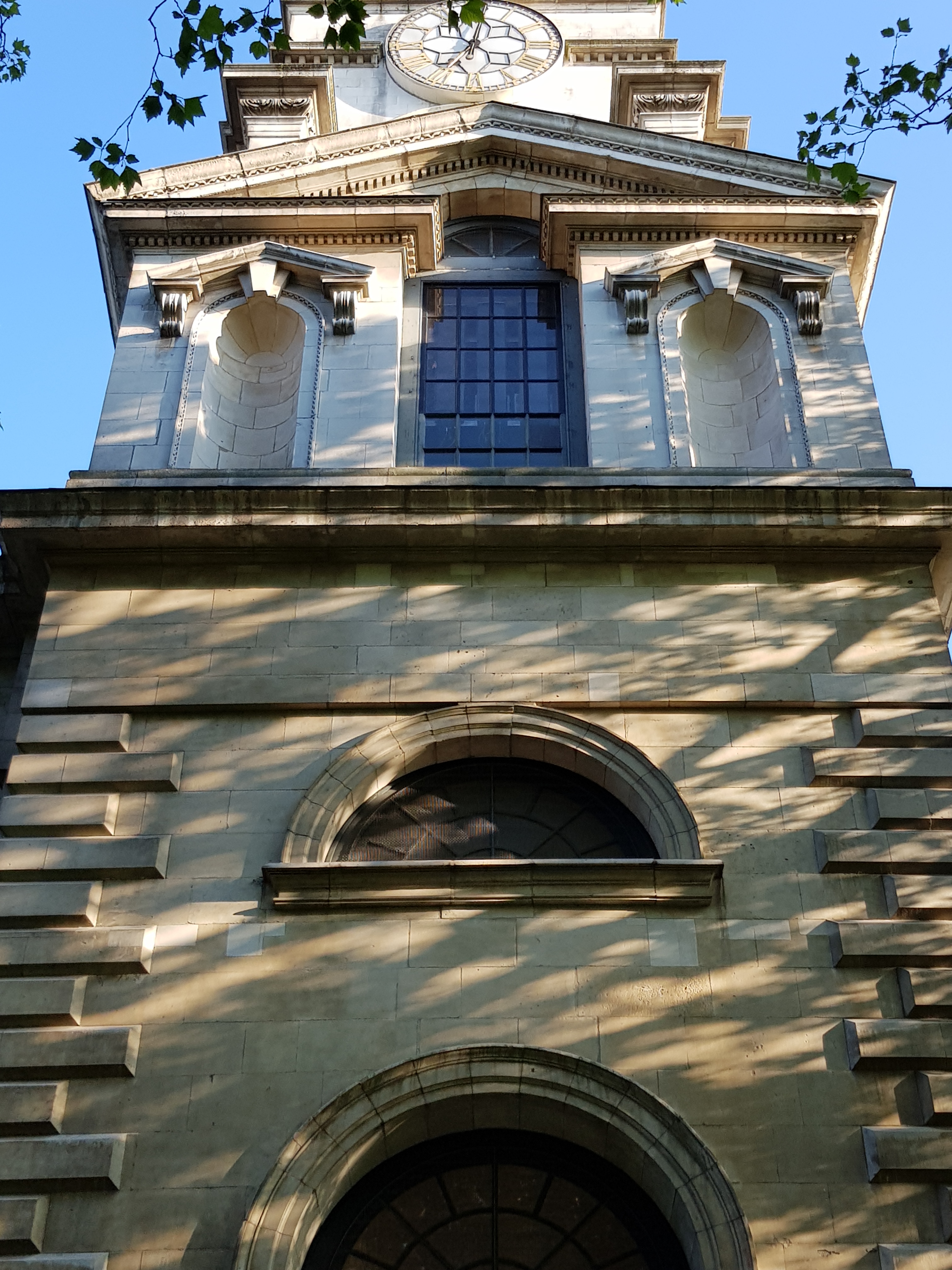
I was asked to give a talk tonight to the Limehouse Community Forum in the church of St. Anne’s:  a great pleasure, for me at least, to be inside its barn-like interior, trying to imagine what it was like for an early eighteenth-century congregation when Limehouse was no more than a small riverside community clustered round the boatyards.

It’s not often that I see the church in the evening:-

image

image

image

St. Anne’s passage which always sounds rather rude:-

image

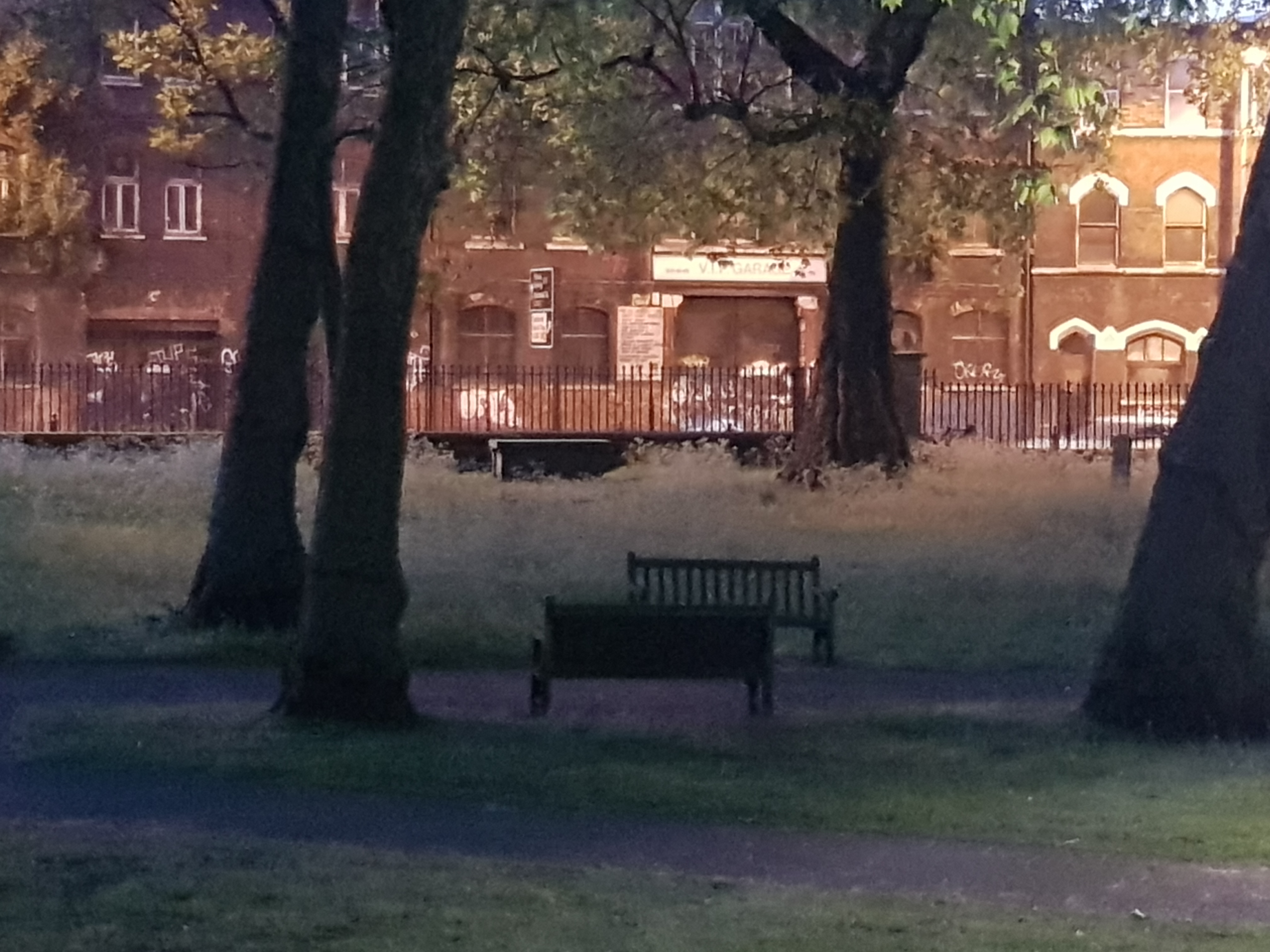
And as I left, the churchyard had a ghostly light:-

image

image

Standard

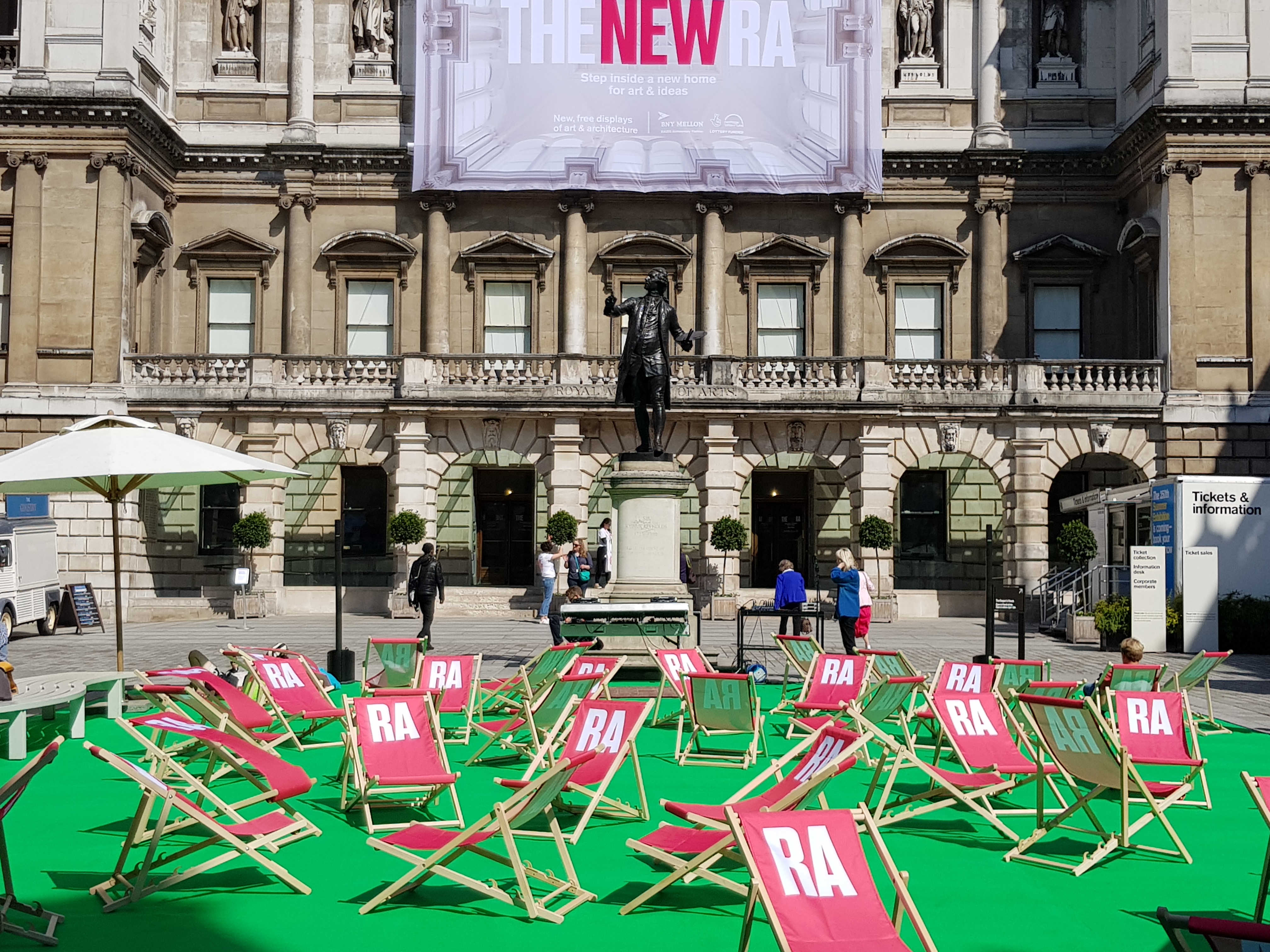
The New RA (6)

Over the years, I have had my fair share of run-ins with Waldemar Januszczak, as he is the first to acknowledge; but he has done the building project proud in today’s Culture Section of the Sunday Times, seeing and understanding exactly its symbolic value in opening up the art school and creating ‘a moon-shaped auditorium in the Greek fashion, with an exciting Enlightenment mood…If ever a space demanded to be used for the exploration of new ideas, this is it’. He couldn’t have written better about it.

Standard

Rick Mather

In the literature of Postmodernism, I would have liked there to be space to mention Rick Mather’s internal renovation of the Architectural Association, including its upstairs bar and downstairs basement restaurant, none of which now survives. Of course, Rick Mather is probably not properly regarded as post-modern, but I remember feeling that his work at the Arhitectural Association introduced a new vocabulary of design in the late 1970s – smarter, sleeker, more sophisticated and more American (he was himself American) – which, given its location in the heartland of London architectural teaching, made it feel programmatic. Maybe it was more post-minimal than post-modern, but he was included alongside Chipperfield, Eric Parry and Stanton Williams in an exhibition at the 9H Gallery in which his Climatic Research Centre at the University of East Anglia is an obvious and wilful contrast to the work of Denys Lasdun, interested in surface, detail and finish in a way that Lasdun was not and which is one of the beneficial characteristics of the postmodern.

Standard

Pomo (3)

One of the obvious things in reading about the history of Postmodernism in London is the extent to which, as with so many stylistic movements, it revolved round a relatively small group of people.   A key influence was Léon Krier, who came to London from Stuttgart in 1968, worked in James Stirling’s office for a year, lived in Belsize Park near Stirling and Ed Jones, and had a much more European view of urbanism and its history than most modernists at the time. Another was Charles Jencks, who studied under Reyner Banham and published The Language of Post-Modern Architecture in 1977. There’s a picture of this group by Carl Laubin all standing on the balcony of the Royal Opera House, Papadakis holding a banner for Post-Modernism: Andreas Papadakis, James Stirling, James Gowan, Léon Krier, Charles Jencks (it looks to me more like Ed Jones), Terry Farrell and Fenella Dixon (out of shot):-

image

Standard

The New RA (5)

Although I was still feeling rather groggy with a summer cold, I hauled myself out of bed to witness the first visitors arrive in Burlington Gardens.   I wanted to see and experience what it felt like to ordinary visitors, not just our Friends who have been exploring it gingerly over the last few days.

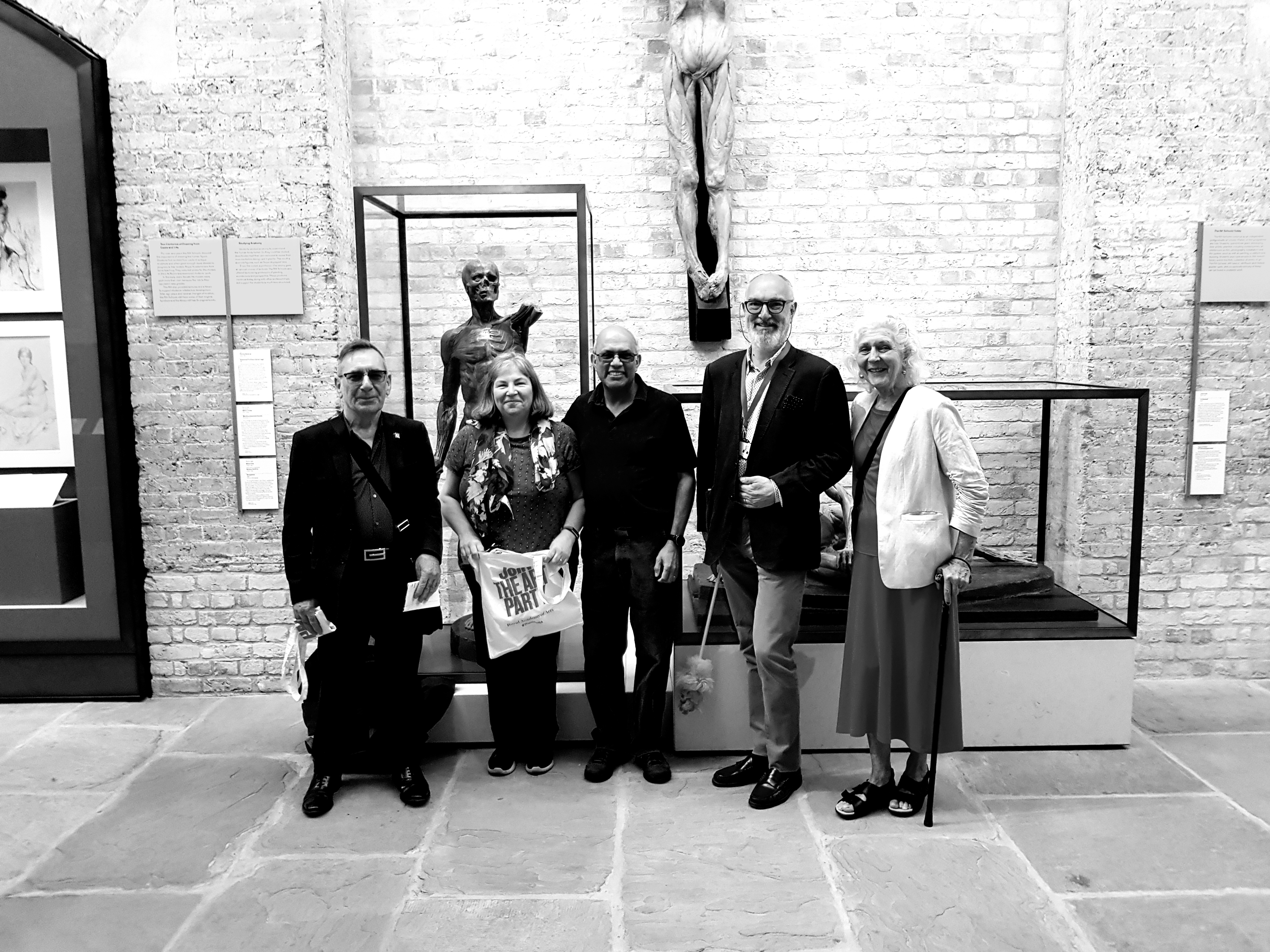
I discovered our Head of Collections dusting down the skeletons:-

image

image

And was able to photograph him with the first real visitors:-

image

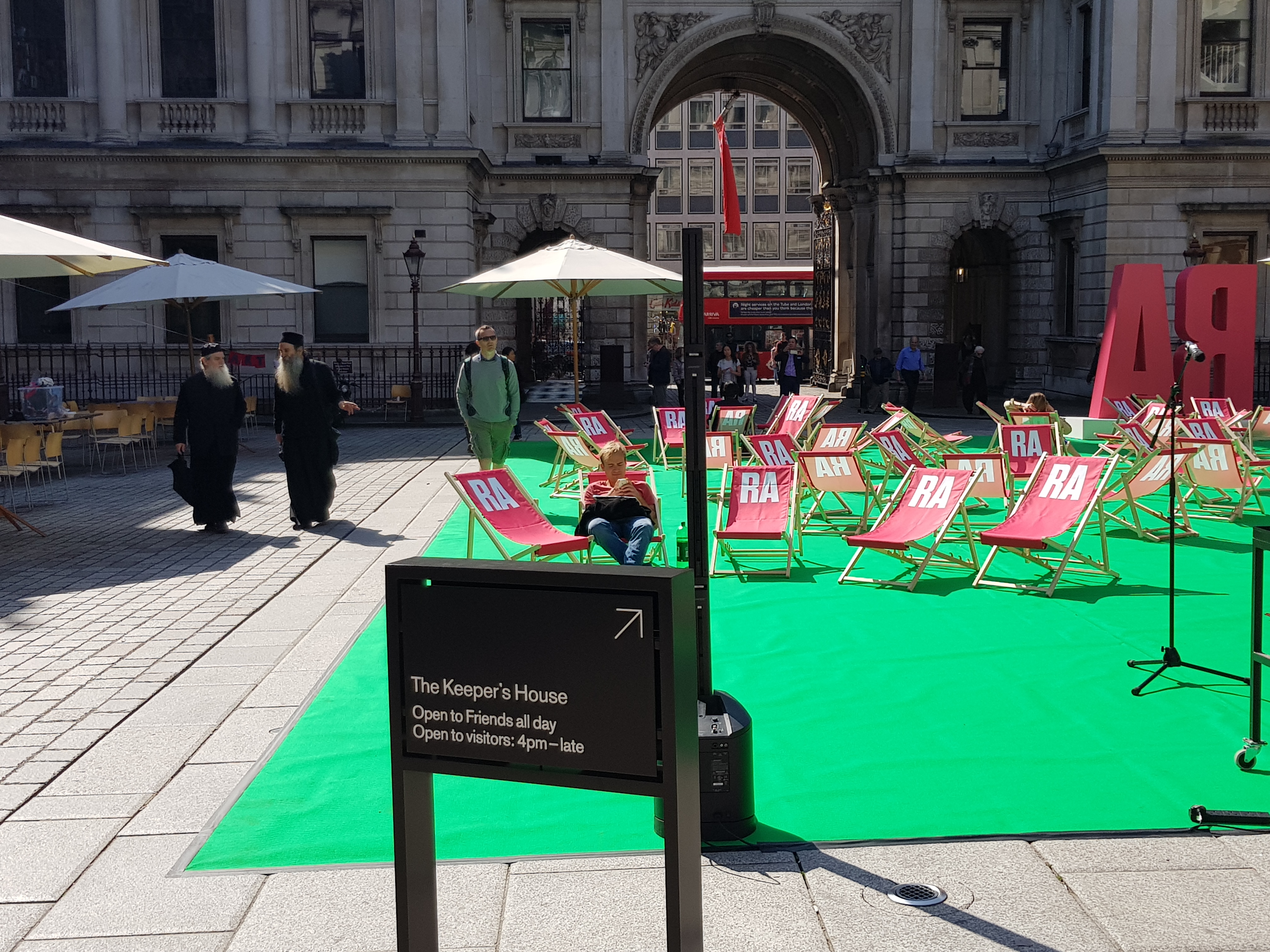
The courtyard looks festive in the morning sun:-

image

image

image

And I had a cappuccino in the Poster Bar:-

image

It’s a day of celebration.

Standard

The New RA (4)

In the interests of the historical record, I am posting a piece I wrote for the RA’s in-house magazine about the experience of watching visitors enjoy the new building in the first few days:-

I’ve been asked to record my reactions to the new building.  It happens that the request has arrived just as I have sat down to a cappucino in the Casson Room (buns are either off the menu or have all been eaten) after walking round to get a feel for our visitors’ response.

​I enjoyed going round, not least because appearing on ‘The Private Life of the Royal Academy’ means that many more Friends recognise me and come up​ and chat, including Sandy Wilson’s first wife.  I see them doing a double take and then ask a question to check that I’m real.

I was particularly pleased to see that the Dorfman Senate Room was packed in the middle of the afternoon even though you can only get beer, not tea.  The space is humanised, literally as well as metaphorically, by being used.

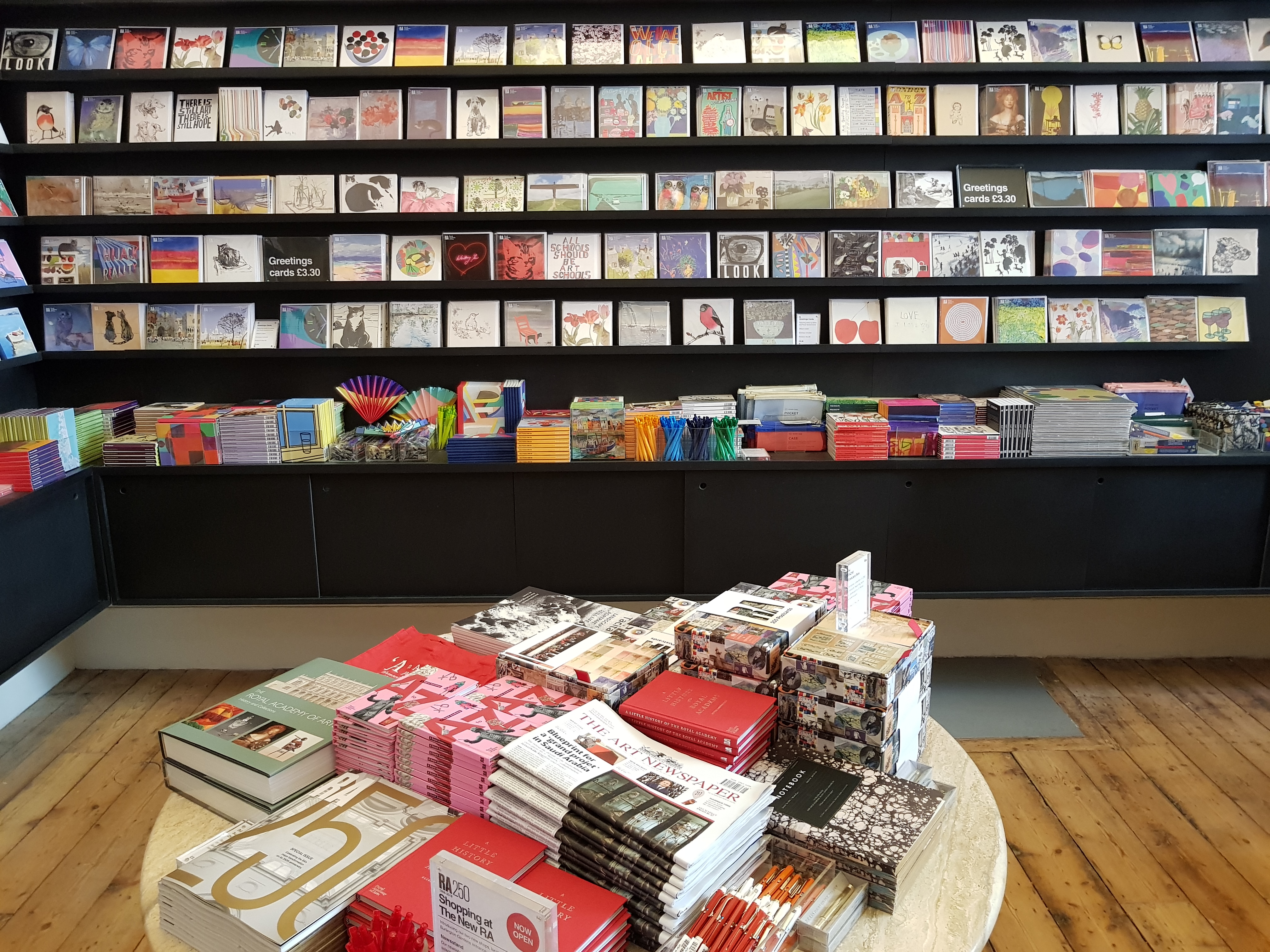
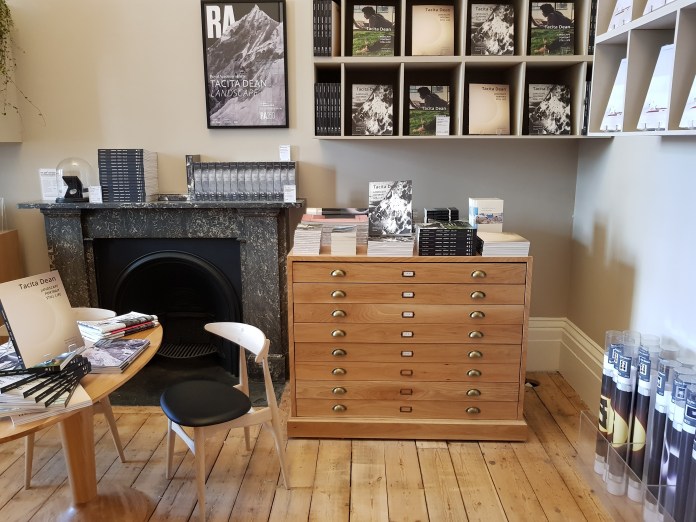
I’m delighted by the trio of commercial spaces on the ground floor, which strike just the right balance between being clearly commercial, but also appropriate to the atmosphere of the building – the Poster Bar which has been designed to be like the bar of an Eastern European railway station, the Personal Shopping space with its plan chest, and the Newsstand with the latest art magazines (and, by the way, buy a card, write it, and have it posted for you – a lovely idea):-
image

image

One of the things that many people have remarked on is the centrality of the Schools and the way that this changes people’s attitude to the Academy.  Of course, as the President says, this was the whole point of the scheme.  But the theory can be different to the practice.  I had not anticipated how key it is to the experience, mixing new art with old, the anarchic with the respectable, giving a frisson as one travels through the vaults into the Weston studio.  It puts practice at the heart of the Academy in a wonderful way.

Another thing that has given me incredible pleasure is seeing staff sitting out in the sun eating sandwiches under the pleached trees of the Lovelace Courtyard.

After many years of staring at ground plans and CGIs, the experience is suddenly real, like a cartoon which has sprung into life.

But the real test will be 10 o’clock on Saturday when the first visitors walk in.

Standard

Pomo (2)

I have been reading the booklet, the return of the past: Conversations on Postmodernism, which the Soane Museum has produced to accompany its exhibition.   It consists of interviews with the key protagonists and makes clear that while we tend now to think of it as merely a colourful style of historical pastiche, it had its origins in a widespread disillusionment in the early 1970s with the whole apparatus of the welfare state, local authority control of housing, statism and the standardisation which was a characteristic of modernism.   Piers Gough saw himself as a pop architect wanting people to like and enjoy what he produced, including the taxi drivers who bought flats in Cascades.   Jeremy Dixon toured the country talking to branches of the RIBA and was embarrassed by what his profession had inflicted on British cities.   I had a flashback to what it was actually like in 1974 with hyperinflation, the beginnings of IRA bombings, two general elections, and the three-day week.   It is hardly surprising that architects looked for new solutions to reconnect architecture to its public.

Standard

The Royal Academicians

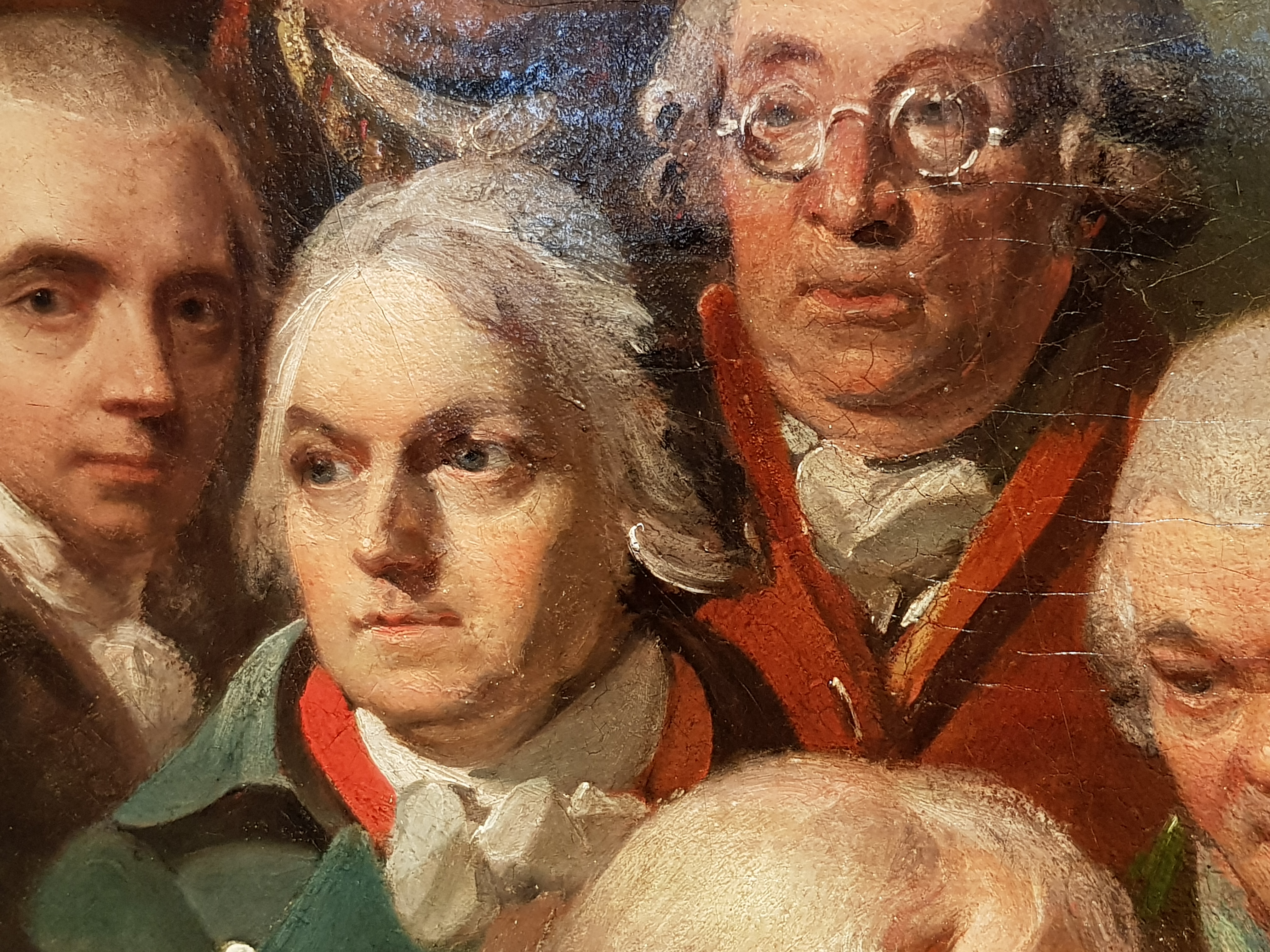
It’s time now to catch up on all the things I didn’t have time to do in the week.   One of them is to identify the sitters in Henry Singleton’s big painting of The Royal Academicians in General Assemby which now has pride of place in our new Collections Gallery.   So far as I can find, this can only be done by reference to a published Key to the Royal Academicians, which was produced by Charles Bestland to accompany the original engraving (there is no key provided in the Gallery, nor in the recently published book about our History and Collections).

Benjamin West is easy, sitting in pride of place on the President’s Chair in a cocked hat, painted in 1795 three years after he had become President and after turning down a knighthood in the expectation that he would be made a life peer.   The figure immediately to his right is Sir Francis Bourgeois, described in the key as ‘Painter to His Majesty and to the Kg of Poland’:-

image

On the left are three figures (6,8 and 10 in the key) – Sir William Beechey, Portrait Painter to His Majesty;  Francis Wheatley;  and Joseph Wilton, now aged 73 and Keeper of the Schools, wearing spectacles:-

image

Standing proudly underneath Laocoön is Benjamin West’s fellow countryman, John Singleton Copley

image

And next door to Copley, Robert Smirke, architect of the British Museum, and John Opie, the Cornish painter:-

image

Standard

David Chipperfield RA

I have just been listening to the podcast produced by the Art Newspaper (ow.ly/Vk0w30k55XY) which consists of ten minutes of me (you can skip that) and then a long and fascinating description by David Chipperfield of his methodology at the RA – his focus on how spaces are used, what he calls his diagnostic approach, his sensitivity and interest, for example, in how works of art are stored, his sense of the project being a jigsaw of interrelated parts which needed ordering and clarification – which is precisely what he has done. He is asked how far it helped or hindered him that there were so many architect RAs involved and I suddenly realised how important it had been to him that every aspect of his proposals was being intensively inspected by his peers, including Sir Nicholas Grimshaw, who chaired the Client Committee (and who, I think, suggested putting the lavatories on the ground floor, not the basement), Chris Wilkinson, who took over the Client Committee, and Spencer de Grey, who was responsible with Norman Foster for the Sackler Galleries: tough judges of every aspect of what was proposed.

Standard