
Inside is a nearly perfectly preserved set of interiors of the late 1750s, complete with plasterwork ceilings, neoclassical chimneypieces and much Chippendale furniture, whose purchase is documented, including fine Chinoiserie girandoles flanking Lord Dumfries’s portrait in the dining room, a set of elbow chairs and pair of card tables in the Parlour, a desk in the room originally known as ‘My Lords Dressing room’, and, best of all, the padouk bookcase in the Drawing room. Chippendale had taken on a Scottish partner, James Rannie, in 1754, the year he published the Director. The furniture was dispatched by boat from London in late May 1759, and, on 29 May, Chippendale wrote a letter to say that ‘we ship’d your goods on board the Dilgence which saild on Sunday morning early… The contents of each case wt properdirections are given to ye Person who goes to put up the Furniture. We pay him a Guinea a Week’. It is an astonishing survival, narrowly saved from sale by Christie’s (the sale catalogues had been published), before the house and estate were bought lock, stock and bookcases by a consortium led by the Duke of Rothesay, following appeals by James Knox and Marcus Binney, in 2007.
Dumfries House (1)
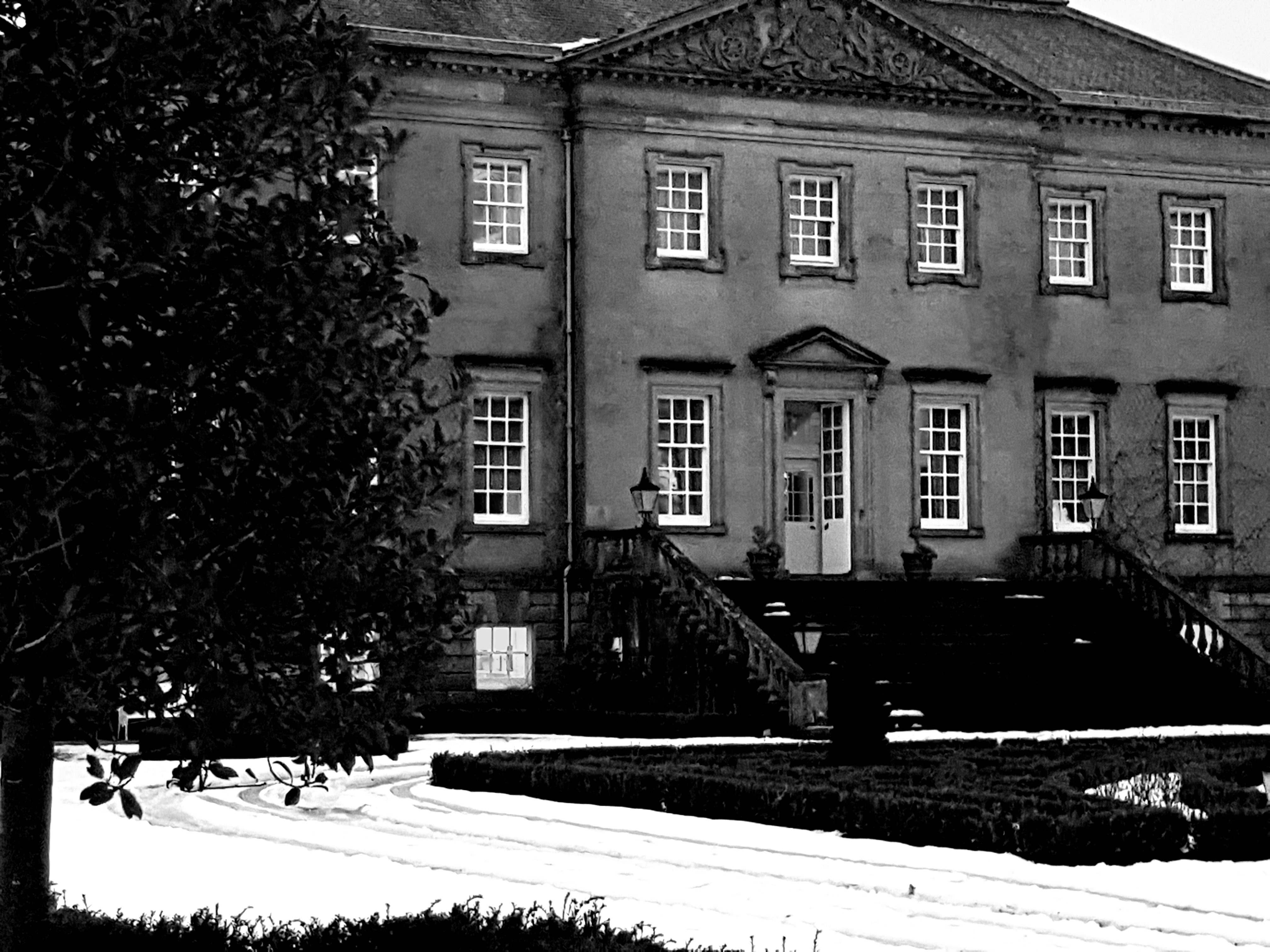
I had been looking forward to visiting Dumfries House – a small-scale, mid-eighteenth-century, classical mansion, designed by John Adam, the oldest son and heir of William Adam, and his younger and more talented brother, Robert.
The house was built for William Dalrymple-Crichton, the fifth Earl of Dumfries, who was born in 1699, served in the army, and fought as aide-de-camp to his uncle at the Battle of Dettingen, having inherited the title from his mother the previous year. During the 1750s, following the death of his first wife, he devoted himself to the task of constructing a new house in consultation with friends and a neighbours, a model of the mid-eighteenth-century Scottish and Edinburgh élite (Boswell was brought up on the estate next door).
The first reference to his plan to build a new house appears in a letter the Earl’s lawyer wrote in 1749 to the effect that ‘Mr. Adam who I see now in town will with your Lop whenever you desire’. On 7 June 1750, he wrote, ‘I hope Mr Adam has given your Lordship full satisfaction. Is the house to go or not’. As the Earl’s lawyer, he was anxious about the likely cost: ‘I agree with your Lop that you need a new House, bit would not have your Lop go into an expense that would shorten your living comfortable’.
The process of design took some time and it was not until 19 March 1753 that Lord Dumfries was able to write to his friend, the Earl of Loudoun, that ‘Mr. Adam has at last finished the plans & estimates for the new house, but I have not yet seen them and of consequence have taken no resolution about them’. The drawings that accompanied the second estimate, dated March 1753, were drawn by Robert Adam, who was then acting as draughtsman for his older brother’s architectural practice, and he was co-signatory with his two brothers on the contract design dated 24 April 1754, before setting out on the Grand Tour. Lord Dumfries had already paid in advance for a copy of ‘The RUINS of the Emperor DIOCLESIAN’S Palace a SPALATRO in DALMATIA’.
Unfortunately, it was nearly dark by the time I got to see the south front of the house:-
Leonora Carrington
We went last night to one of Yinka Shonibare’s Friday evening supper clubs to celebrate the life and work of Leonora Carrington, the beautiful daughter of a Lancashire textile manufacturer, brought up in a turreted Victorian mansion reading Lewis Carroll, sent away to be educated by nuns, and studying art at Miss. Penrose’s Academy in Florence. She returned for her coming out party at the Ritz, but registered first at Chelsea School of Art and then Amédée Ozenfant’s Academy before meeting Max Ernst at a dinner party and eloping to Paris. Ernst was interned as an enemy alien in 1939 and Carrington had a nervous breakdown which led to her being treated in a lunatic asylum in Spain and her first novel which described the experience, Down Below (1944). A marriage of convenience took her to Mexico and she began to exhibit her paintings at the Pierre Matisse gallery in New York after the war.
Marina Warner described how as an undergraduate she had first encountered Leonora Carrington’s work visiting the house of Maurice Cardiff, who had got to know Carrington and bought her work while working for the British Council in Mexico. Warner had visited Carrington in a basement flat in New York in the 1980s, living frugally in spite of owning major works of surrealism in her house in Mexico City, which she travelled to and from by bus. She was already what Warner described as ‘a secret cult figure’. We enjoyed an alchemical feast which included butternut squash in paint tubes:-

Burlington House
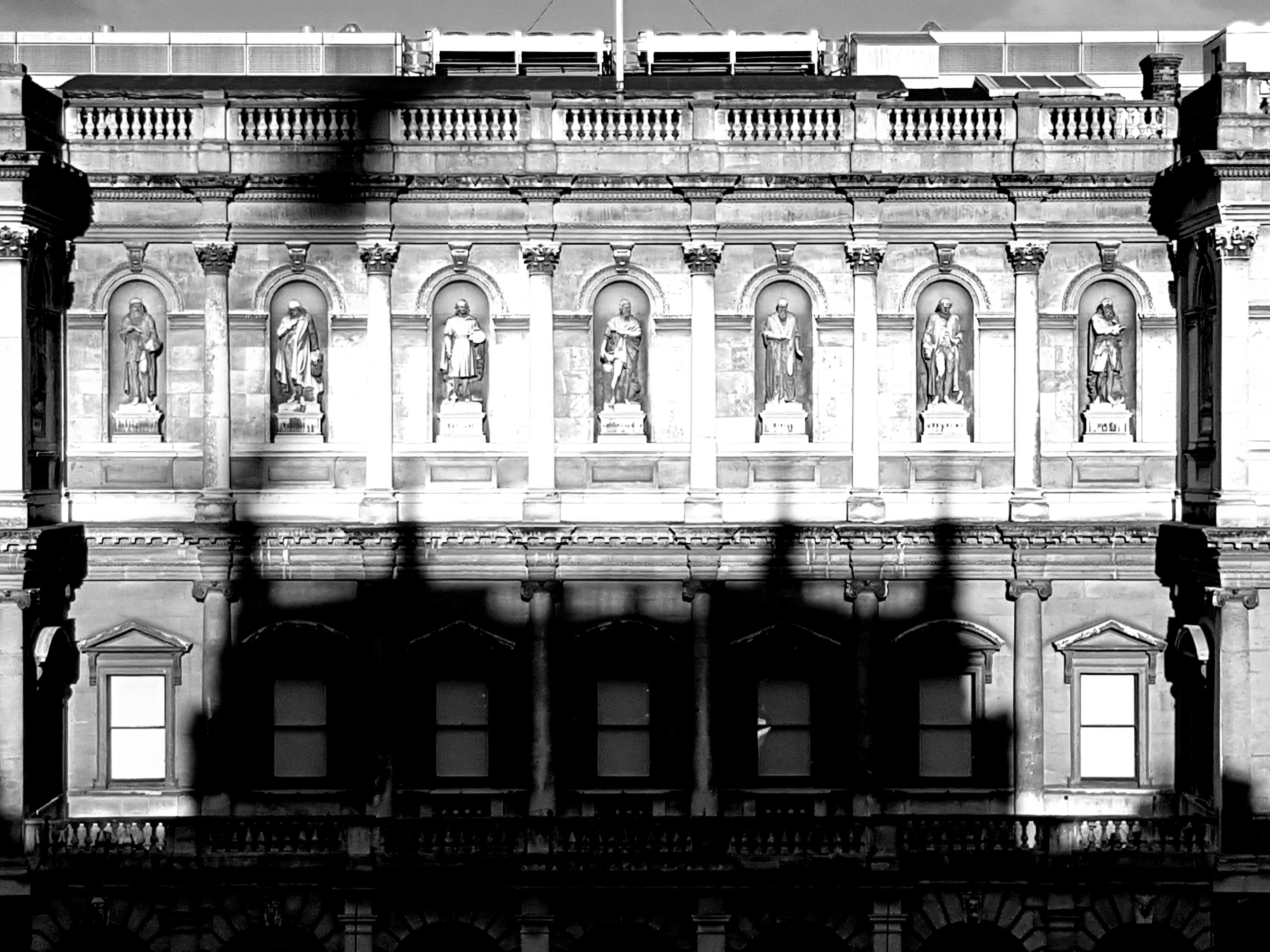
A meeting this morning in the Tower Room of the Linnean Society high above the entrance arch into the Burlington House courtyard gave me an exceptionally good view of the Burlington House façade, as adapted by Sydney Smirke in the late 1860s. By chance, the façade has been temporarily cleared of its banners for a light projection this evening, and so I saw it as it was, when first opened, on Monday 3rd. May 1869 (I know the exact date from reading the relevant chapter of Nick Savage’s excellent forthcoming monograph on Burlington House):-


Novo Cemetery
Continuing my series of unexpected night-time views, I’m posting a picture I took from the staircase of Arts Two in Queen Mary University, where one looks out onto the old Sephardic cemetery which survives so oddly in the middle of the campus:-

City Road
We often drive up City Road which connects the Old Street roundabout to the Angel, constructed to connect the old New Road, now the Pentonville Road, to the City in 1761. It’s transformed in the last few years from the home of my accountant into a high-rise boom town with the construction of the Canaletto tower by Ben van Berkel of UNStudio with its swagger curvilinear aluminium strips outlining the windows and now the even more massive 250 City Road by Norman Foster, which I photographed from outside McDonalds:-

London Art Fair
I spent the later afternoon at the London Art Fair: always a pleasure; pleased to see Art UK prominently represented; and an early work by Simon Lewty, Boices in the Close Country, out from store and looking as fresh as ever from his fertile middle period:-


An extremely beautiful Euan Uglow Still Life with Onions and Wine Glass (1962):-

And Patrick George, Uglow’s contemporary, but vastly much more affordable:-
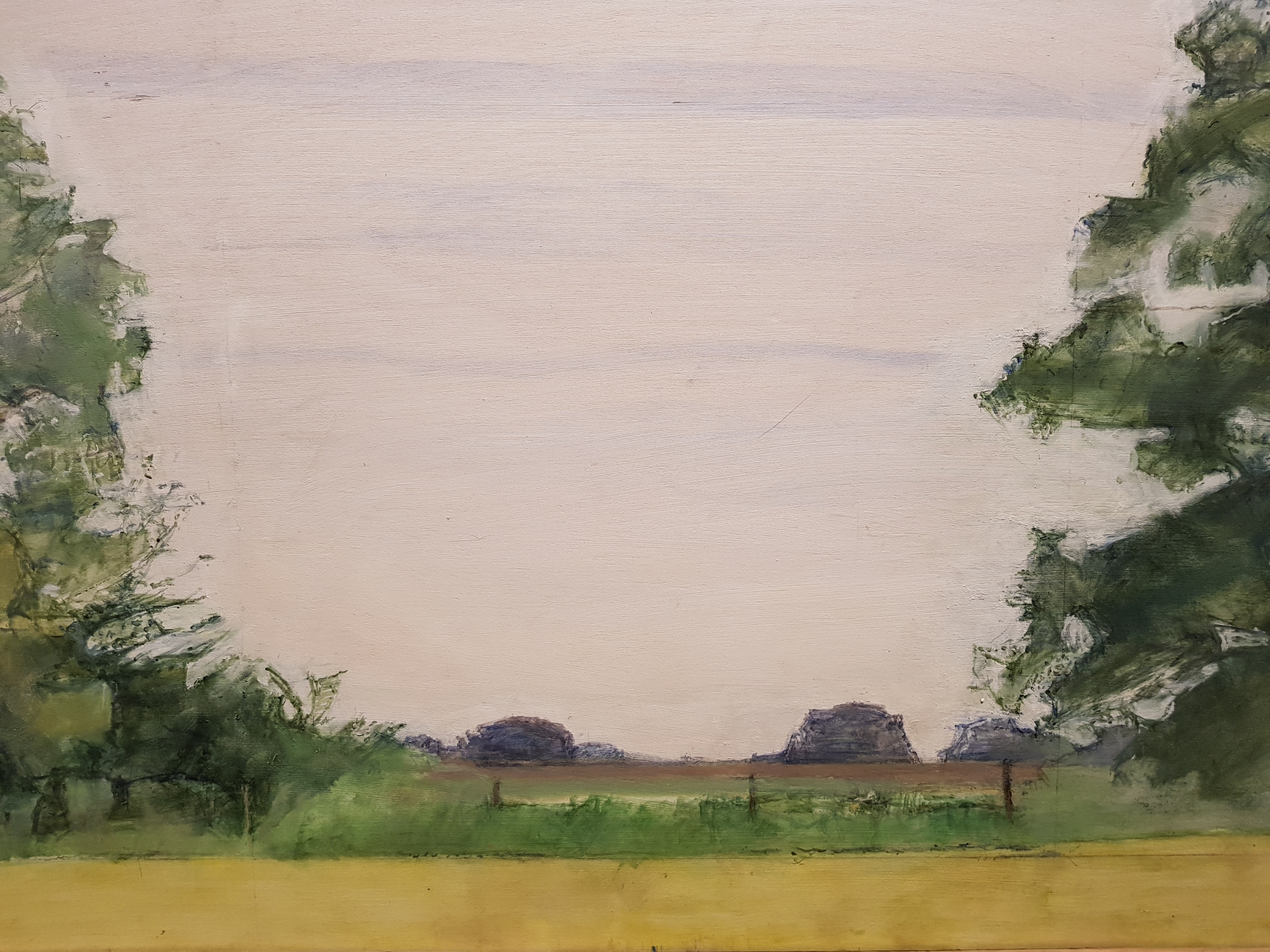
I was pleased to see examples of Stephen Farthing’s ambitious series Museums of the World, due to be shown in Chichester in March:-

Curlew River
We went last night – as recommended by Rupert Christiansen on his twitter account – to a performance of Benjamin Britten’s Curlew River, an opera (is it an opera ? not really) which I didn’t know about, performed most magically in the darkness of St. Bartholomew the Great, whose Norman interiors provided an atmospheric setting for what was described by Britten as a ‘Parable for Church Performance’, with the very faint smell of incense and plastic sheeting providing the performance space down the nave. The music is said to have been deeply influenced by Britten’s visit on holiday to Japan in early 1956 and the text – by William Plomer – is based on a Japanese noh play Sumidagawa. But the mood seemed more medieval, partly because of the setting, but also the austerity of the tenor voices and use of plainchant. Very intense.
Lynn Chadwick RA (2)
A couple of postscripts to my entry on Lynn Chadwick:-
1. I have realised that he only became an RA in May 2001 when he was already 86, so would have been elected as a Senior Member. I assume that this was when Phillip King was President and got in some of the older generation of sculptors, who had not been keen on the RA, including Anthony Caro, who declined election in 1990, but accepted in 2004. In fact, Chadwick kept himself apart from the London art world by moving from Cheyne Row to a cottage near Stroud in 1946 and then to a remote cottage near Cheltenham before buying Lyppiatt Park in 1958.
2. Because I am currently reading Mark Girouard’s brilliant biography of James Stirling (Big Jim), I am struck by the parallels in their lives (they didn’t know one another) and the incredible sense of ambition and confidence of those who had served in the war and were then demobbed, including Chadwick, who worked as an architectural draughtsman in the 1930s, served in the Fleet Air Arm as a pilot during the war, returned to work for a firm, Arcon, which specialised in designing prefabricated buildings, and started making mobiles out of balsa wood as a sideline. By 1956, he had won the International Sculpture Prize in Venice, beating Giacometti.
Lynn Chadwick RA (1)
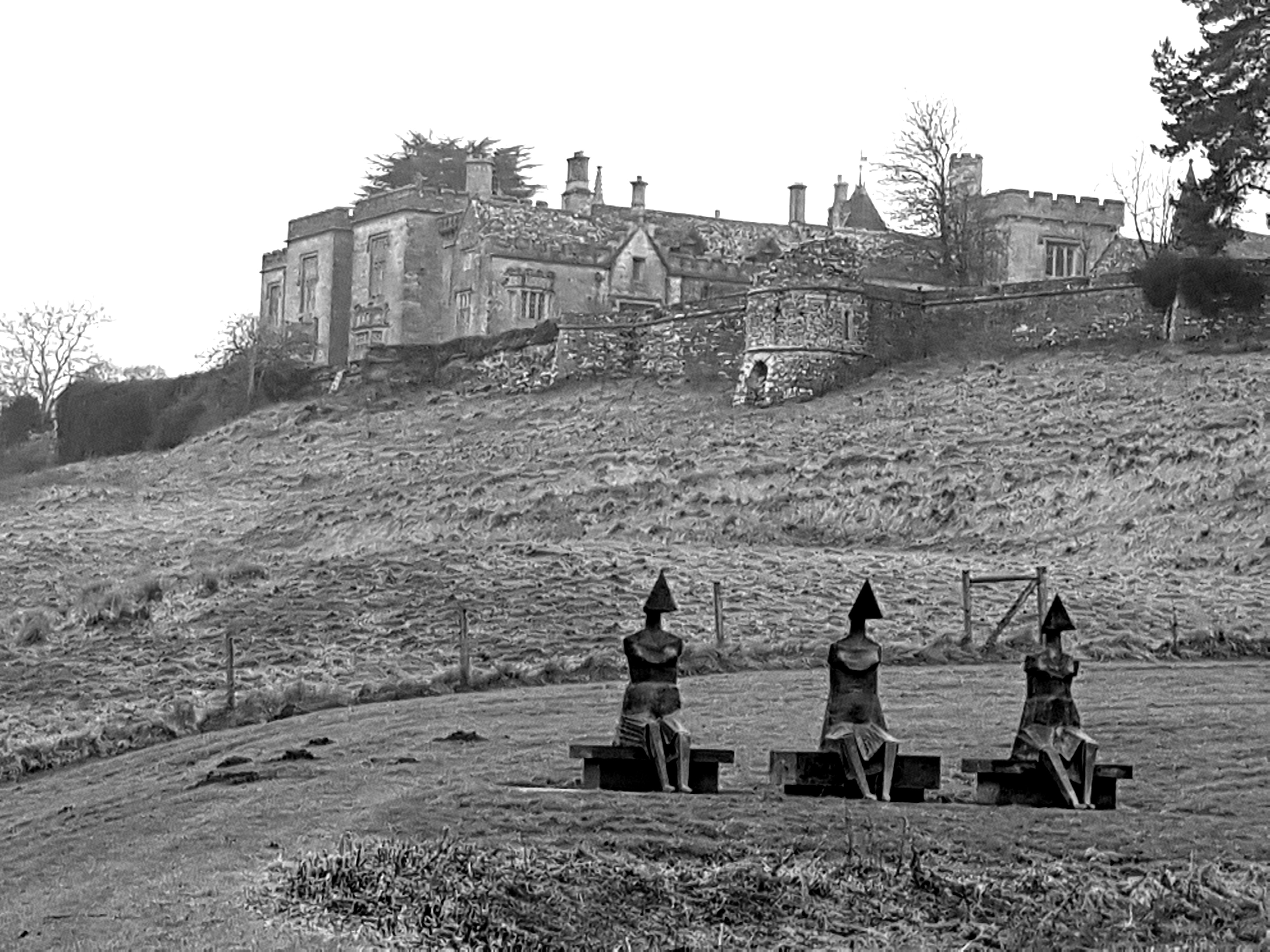
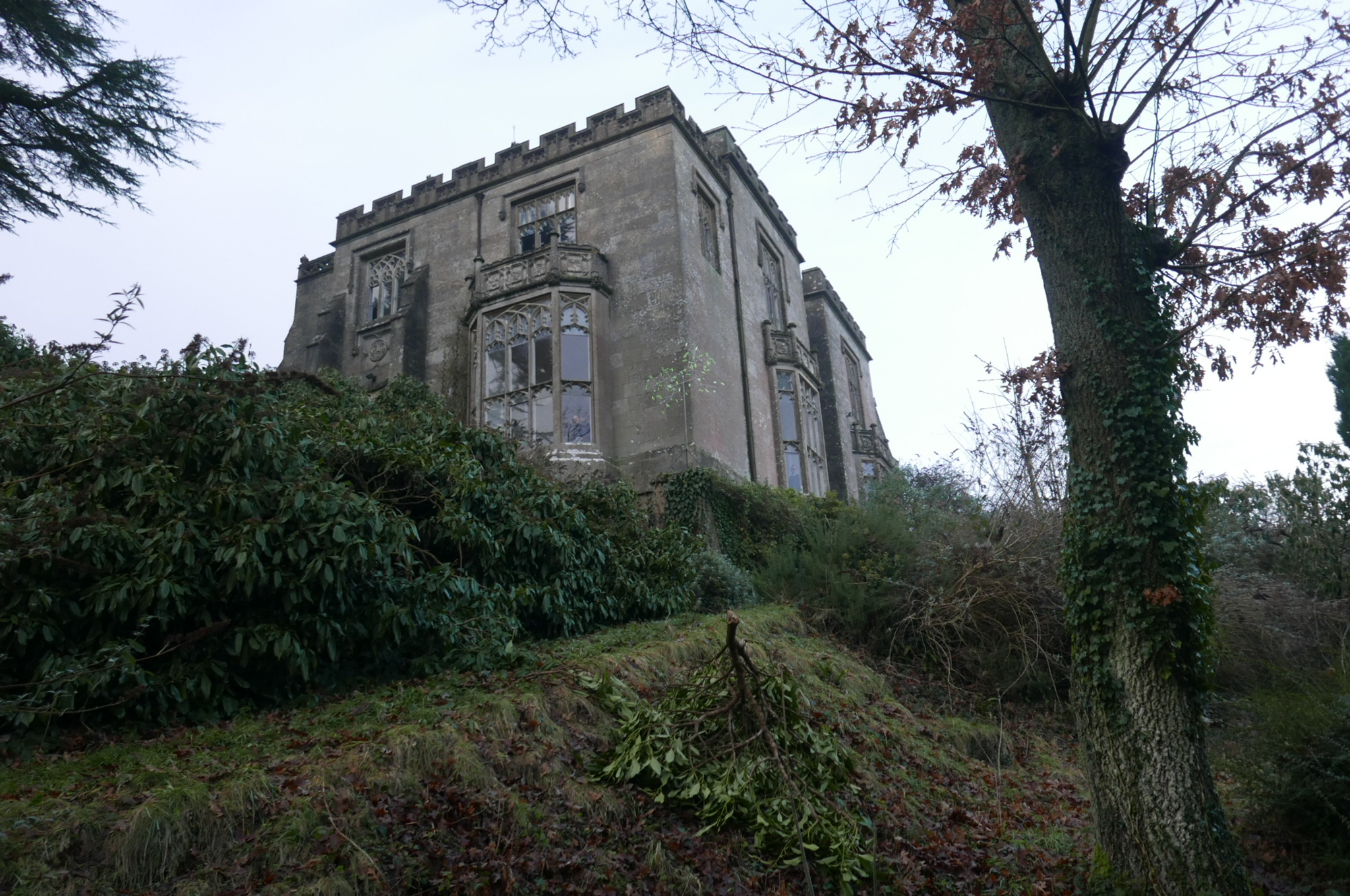
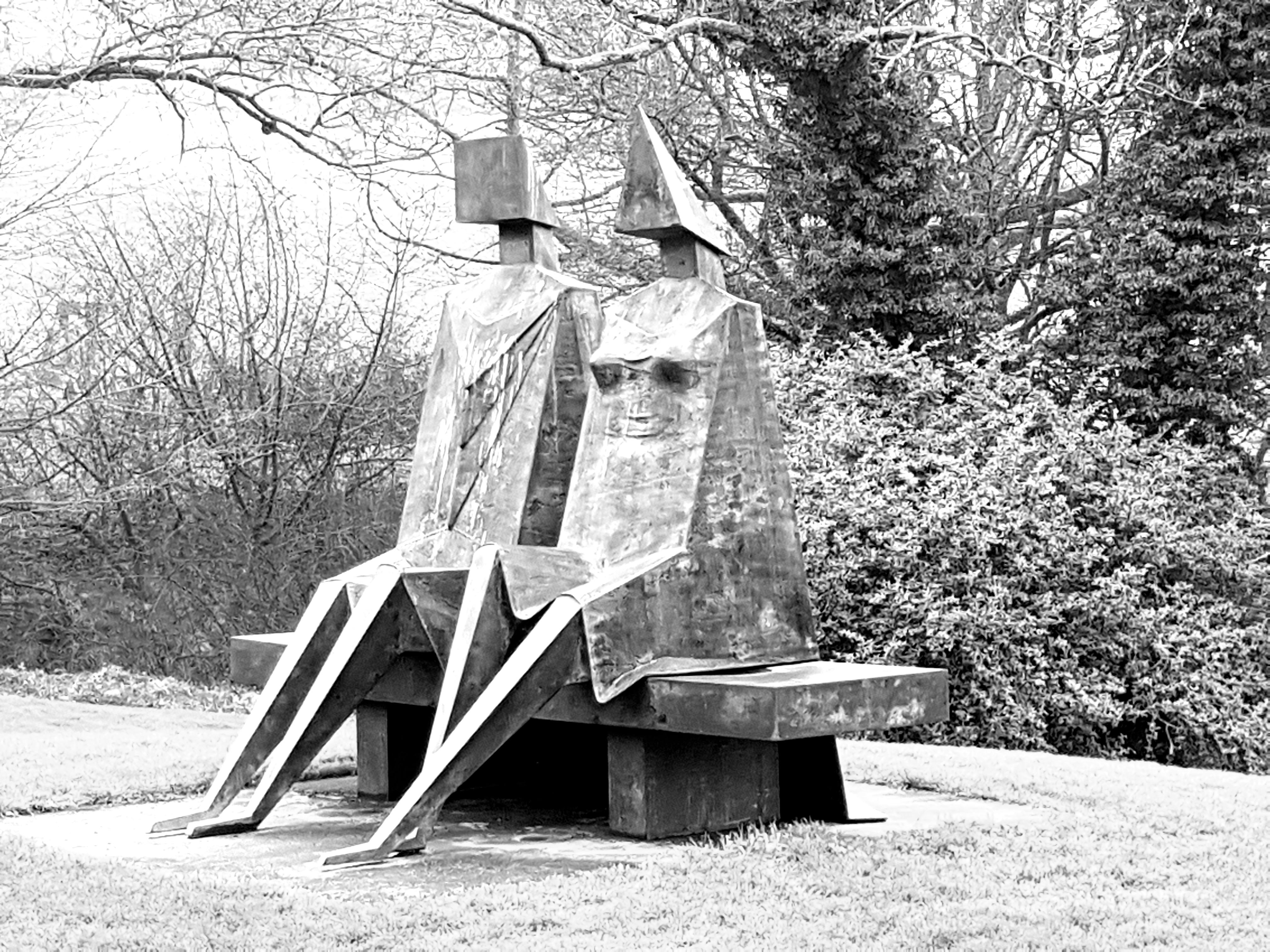
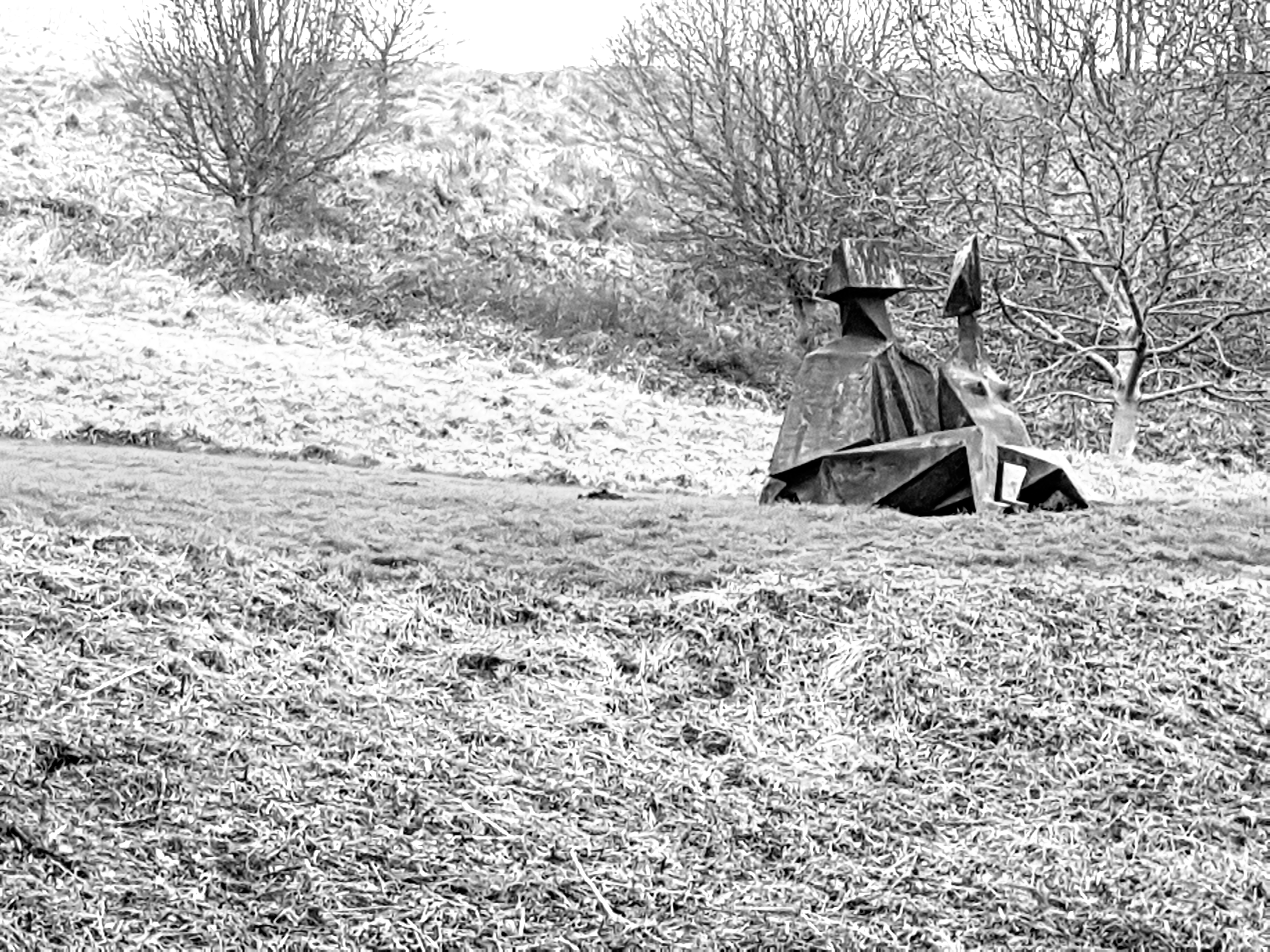
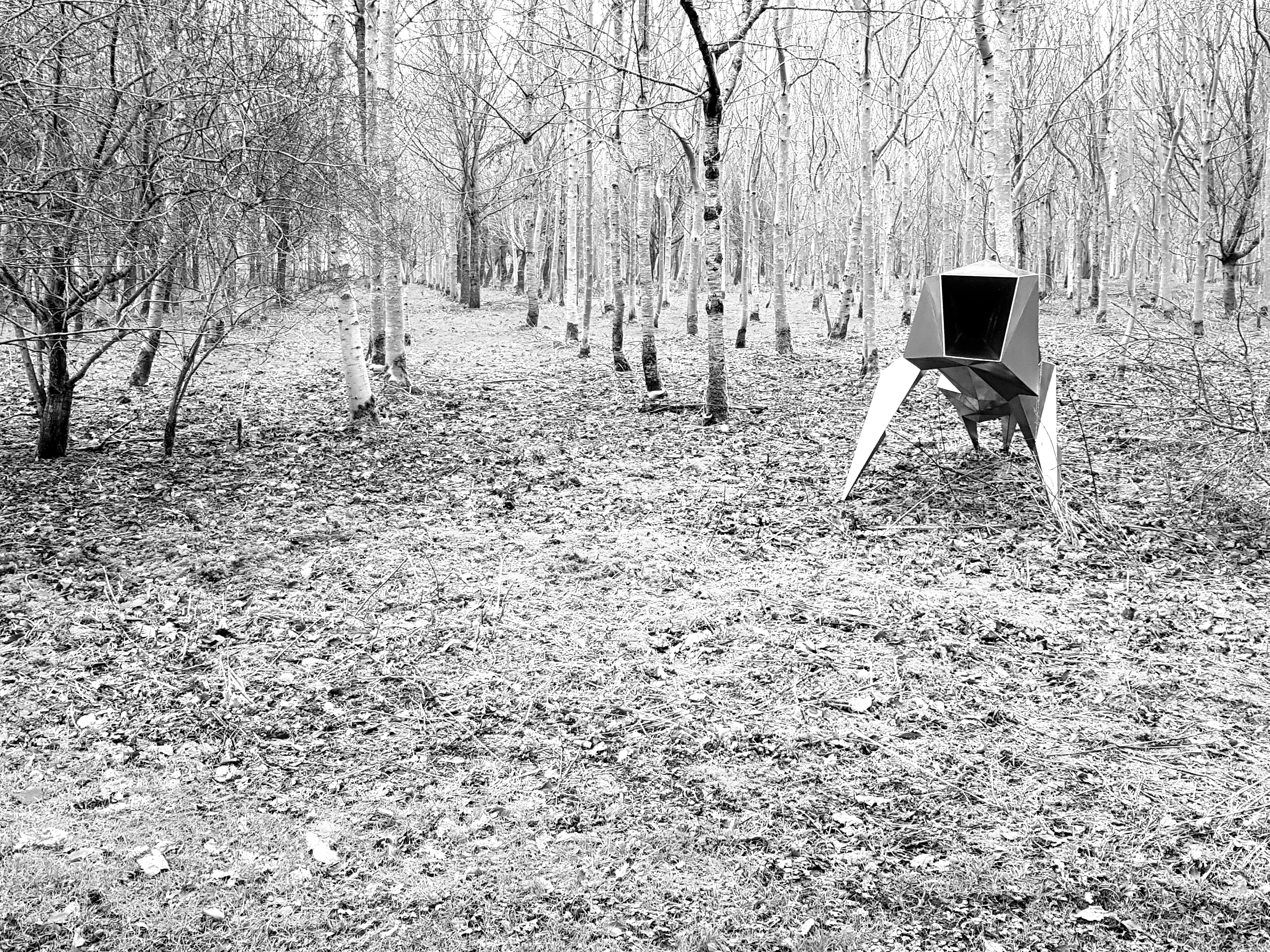
I had been to Lypiatt, the estate that Lynn Chadwick bought in September 1958, once before in the late 1990s when he was still alive. I remembered only being driven round a remote Gloucestershire valley in a slightly hair-raising way. This time, although the weather was grey, I was again immeasurably impressed by the sense of a secret landscape, with his sculptures carefully placed at unexpected and arbitrary intervals within it.
The house is Tudor, with a neo-Tudor wing by Wyatville:-

Inside is filled with his sculptures, as well as his spirit, in the free form way in which he treated the empty spaces of the house:-


Beyond is the park, empty and atmospheric, stretching up into the Toardsmoor Valley:-
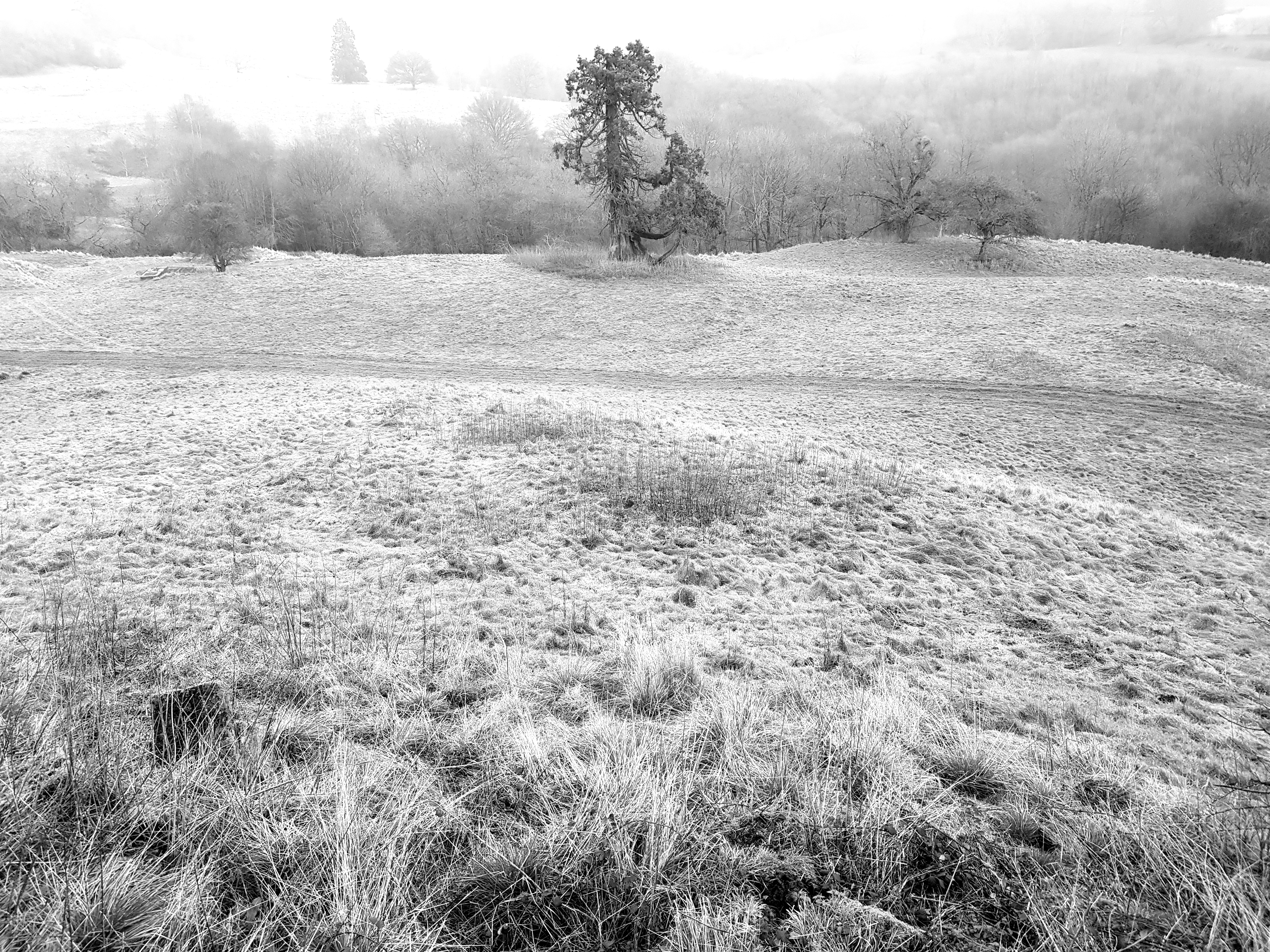
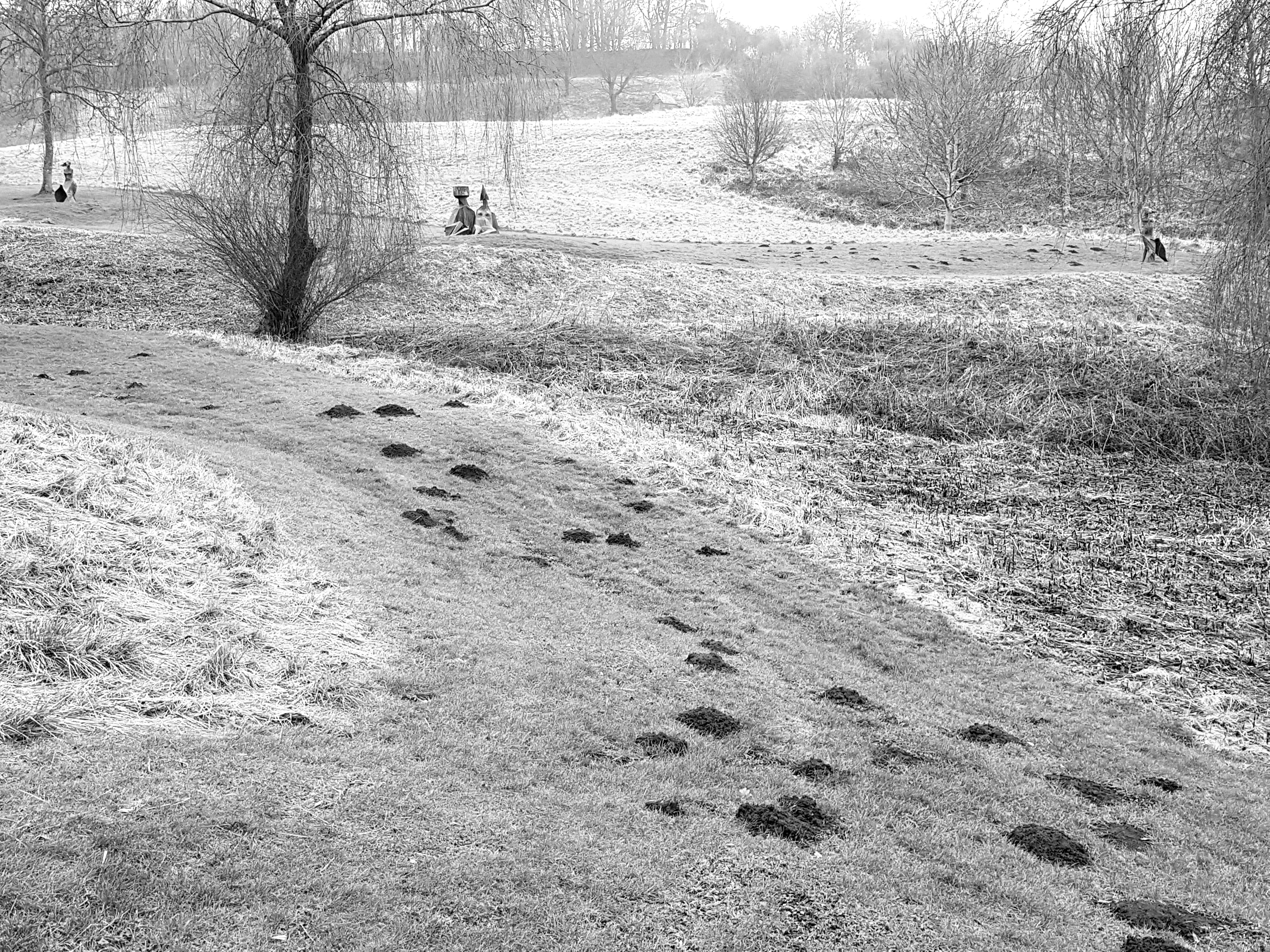
I would like to be able to identify each of the sculptures and their date, but saw them only as figures in the landscape, without name:-



 | Charles | Saumarez | Smith |
You must be logged in to post a comment.