
I went to a fascinating talk by Harry Handelsman, a developer who arrived in London in the early 1990s from Germany, France and Manhattan (some combination of all three) and recognised the value of buying warehouses in what were then still cheap areas of town. He started by buying for less than £450,000 (he gave the precise figure) what became Summers Street Lofts in Clerkenwell which had been designed by the architect of the Central Court, Wimbledon as an ink factory. Then he developed Soho Lofts with a Damien Hirst in the show flat. Bankside – immediately next door to what became Tate Modern – was a new-build project by Piers Gough in a style which was 1930s industrial. Then (amazingly) he took on the development of the hotel and chambers attached to St. Pancras Hotel Station: a gigantic project which must be one of the more successful radical renovations of a historic building. Chiltern Firehouse was another smart move. And now he’s developing Manhattan Loft Gardens, a skyscraper in Stratford designed by SOM with interiors by the Parisian Studio KO. It looked like he’s got pretty impeccable design instincts.
Apollo Awards 2017
I went to this year’s Apollo Awards: a good set of winners, some expected, some less so.
Exhibition
Raphael: The Drawings
(I knew I should have visited it)
Book
Aileen Ribeiro, Clothing Art
Acquisition
Van Otterloo and Weatherbie Gift
Museum of Fine Arts, Boston
Museum Opening
Musée d’Arts de Nantes
(With a new extension designed by Stanton Williams)
Digital Innovation
Smartify
Personality
Patrizia Sandretto Re Rebaudengo
(from Turin)
Artist
Lubaina Himid
Brain Tissue Research
I spent the first half of the morning, by long-standing arrangement, studying the cross-sections of the brains of people who have suffered from MS. I have never actually seen a brain before, so to speak, in the flesh: all wobbly, made out of tissue like jellified nougat, including the minuscule hippocampus where information is processed and the fatal lesions, small, desiccated, oval areas which are the causes of MS, owing most likely to viral infection. But the causes are not fully understood, nor the reasons why it affects people so differently.
Alongside the yellow-ish bits of cross-section of brain laid out on the slab was what looked like a bit of old rope, but turned out to be a spinal chord, with multiple wires protruding out of the bottom of it which control the movement of the body.
I would post photographs, but there are understandably very strict rules round the photography of grey matter.
Todd Williams and Billie Tsien
I went to hear Todd Williams and Billie Tsien talk in the Royal Institution as part of the RA’s Architecture Programme. I wanted to hear them because they were responsible for the recent building for the Barnes Foundation, which (with a few reservations) I admired: not least for the fact that its redisplay of the collection is very unusually an improvement on the original, which they demonstrated by juxtaposing a wall of the new with the old, demonstrating the very subtle variations of window design, wall colours and the way the pictures are hung. I liked their philosophy which consists of only doing projects they want to do, either domestic or public; emphasising the role of drawing and model making in design; and trying to do things slowly, not fast. Now they are doing the Presidential Center in Chicago for Barack Obama.
This was my view of the Barnes Collection with the addition of plastic swans:-

Physical Energy
I walked into the courtyard of the RA this morning to be confronted by G.F. Watts’s great equestrian statue titled Physical Energy, a gesso model of which survives at the Watts Gallery and a full-scale bronze on display (but not much noticed) in Kensington Gardens. A version was also displayed in 1904 in the courtyard of the RA and it is to mark this and draw attention to the work of the Watts Gallery that a new cast made by Pangolin is being shown again:-


East End Vernacular
We were kindly sent a copy of the book East End Vernacular: Artists who painted London’ East End Streets in the 20th. century which the Gentle Author has produced about artists who have depicted East London. They were mostly locals, trained in the art classes held at the Bethnal Green Men’s Institute, members of the East London Group, and exhibiting at the East London Art Club or the Whitechapel Gallery (during the 1930s, it had an East End Academy). The style is mostly one of painstaking topographical precision, showing the streets as they were when still much more densely built. But the book includes, for example, the work of Lawrence Gowing RA who, although the son of a draper on Mare Street, was sent away to boarding school and studied painting at the Euston Road School under William Coldstream; Anthony Eyton RA who was educated at Canford and studied painting at Reading before the war and Camberwell after; and Jock McFadyen RA, who has created his own vision of industrial dereliction round Salmon Lane and beyond. I was surprised that more space wasn’t devoted to the work of Adam Dant, whose graphic views of Spitalfields the Gentle Author has rightly promoted. But he includes several good discoveries, including the work of Pericles Parkes, who was born in Hampstead Garden Suburb, trained at the Slade, and later lived in Stepney and painted atmospheric big city, as well as back garden, views.
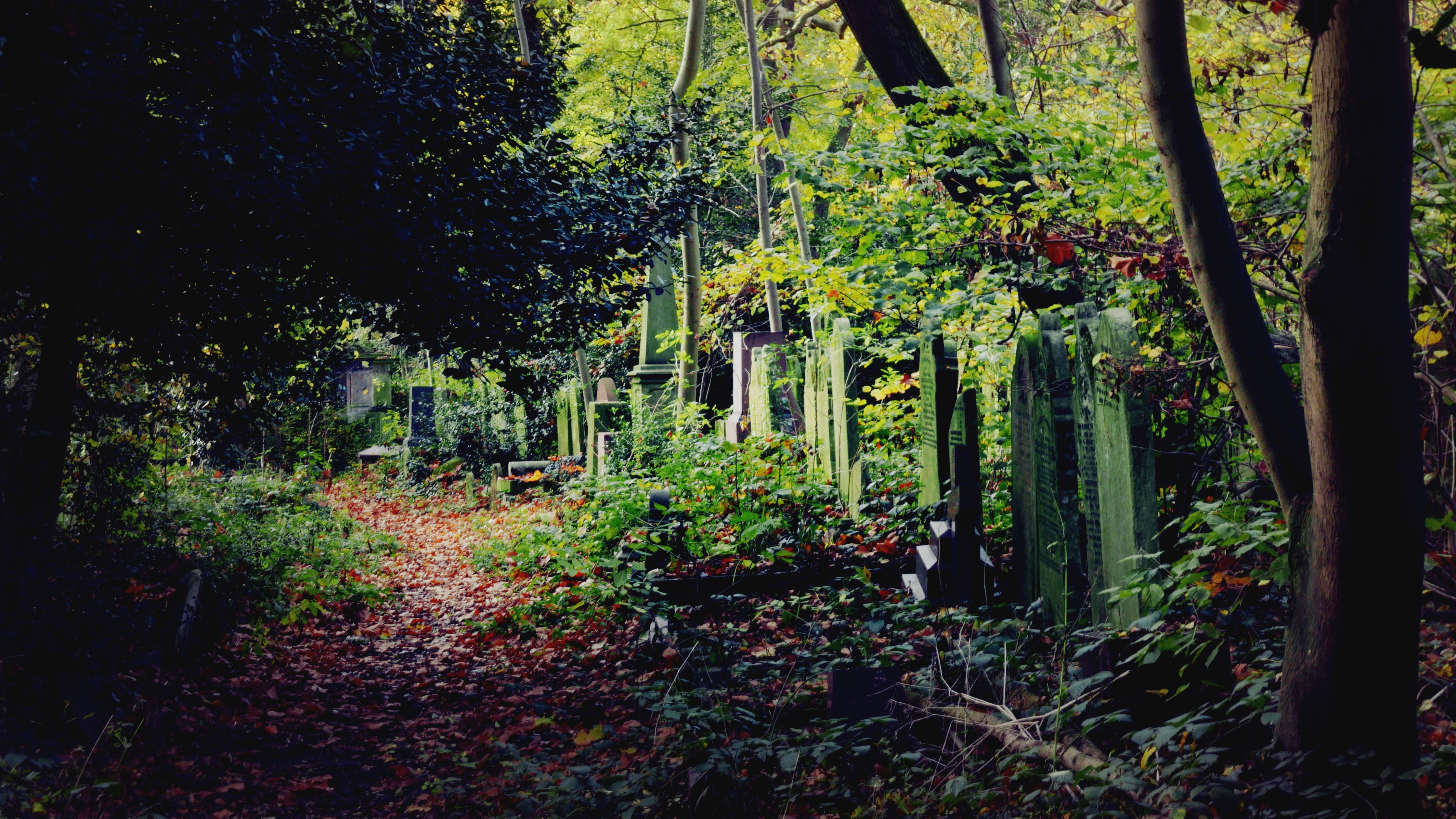
Tower Hamlets Cemetery
I walked back through the cemetery and took what I thought were beautiful photographs of it in autumn light. But they didn’t really come out, so I have doctored them, which I don’t really approve of:-


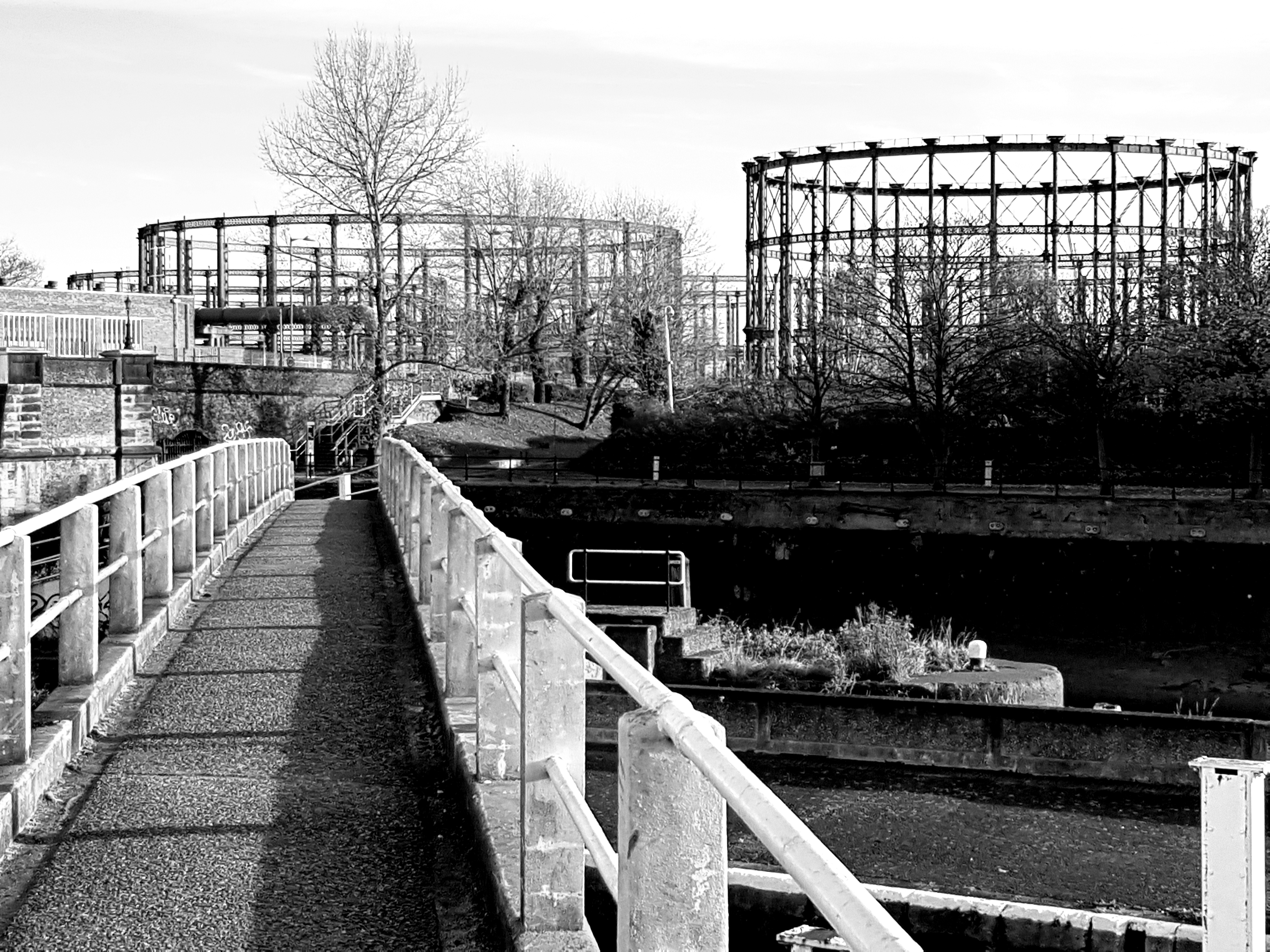
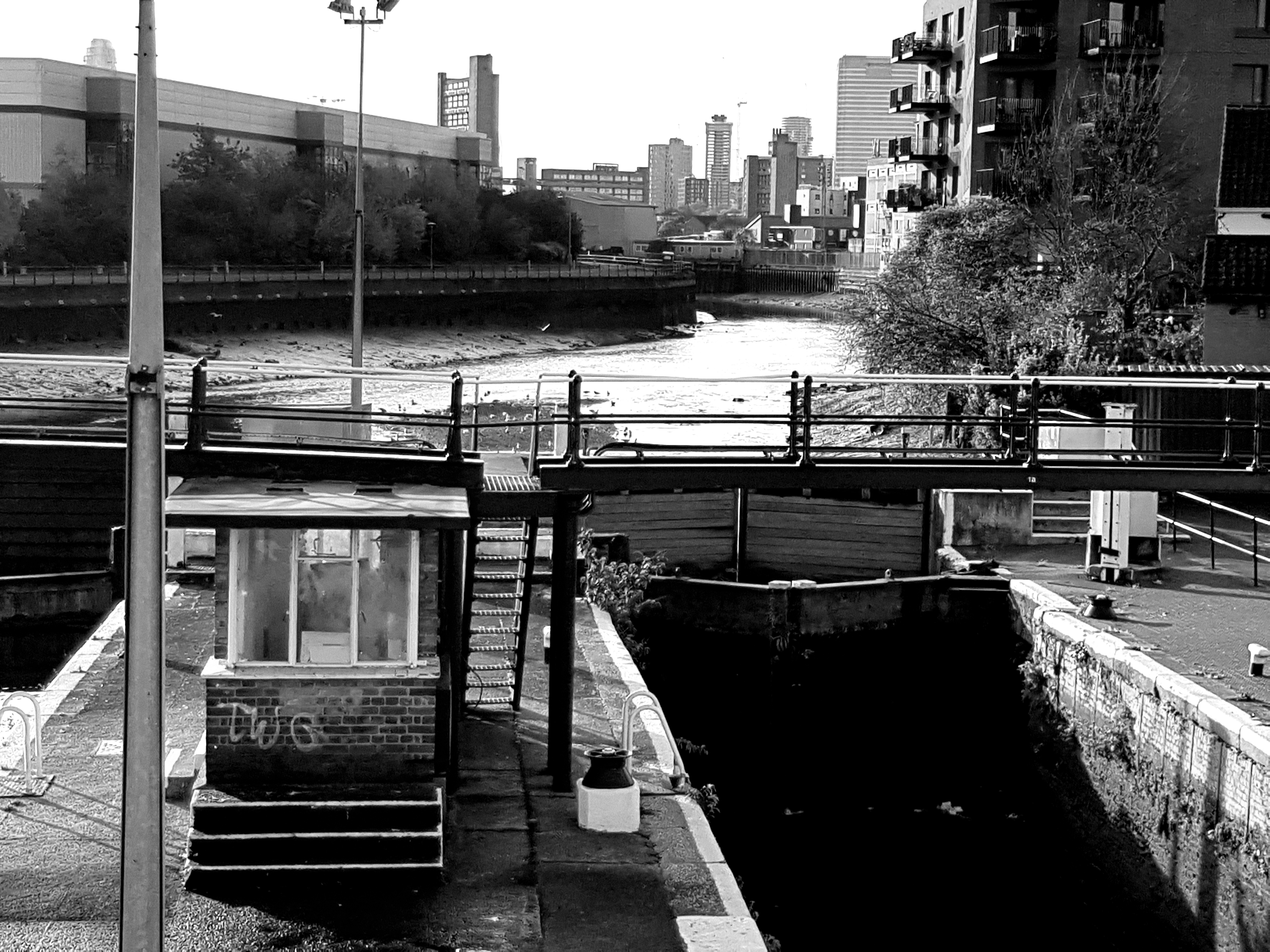
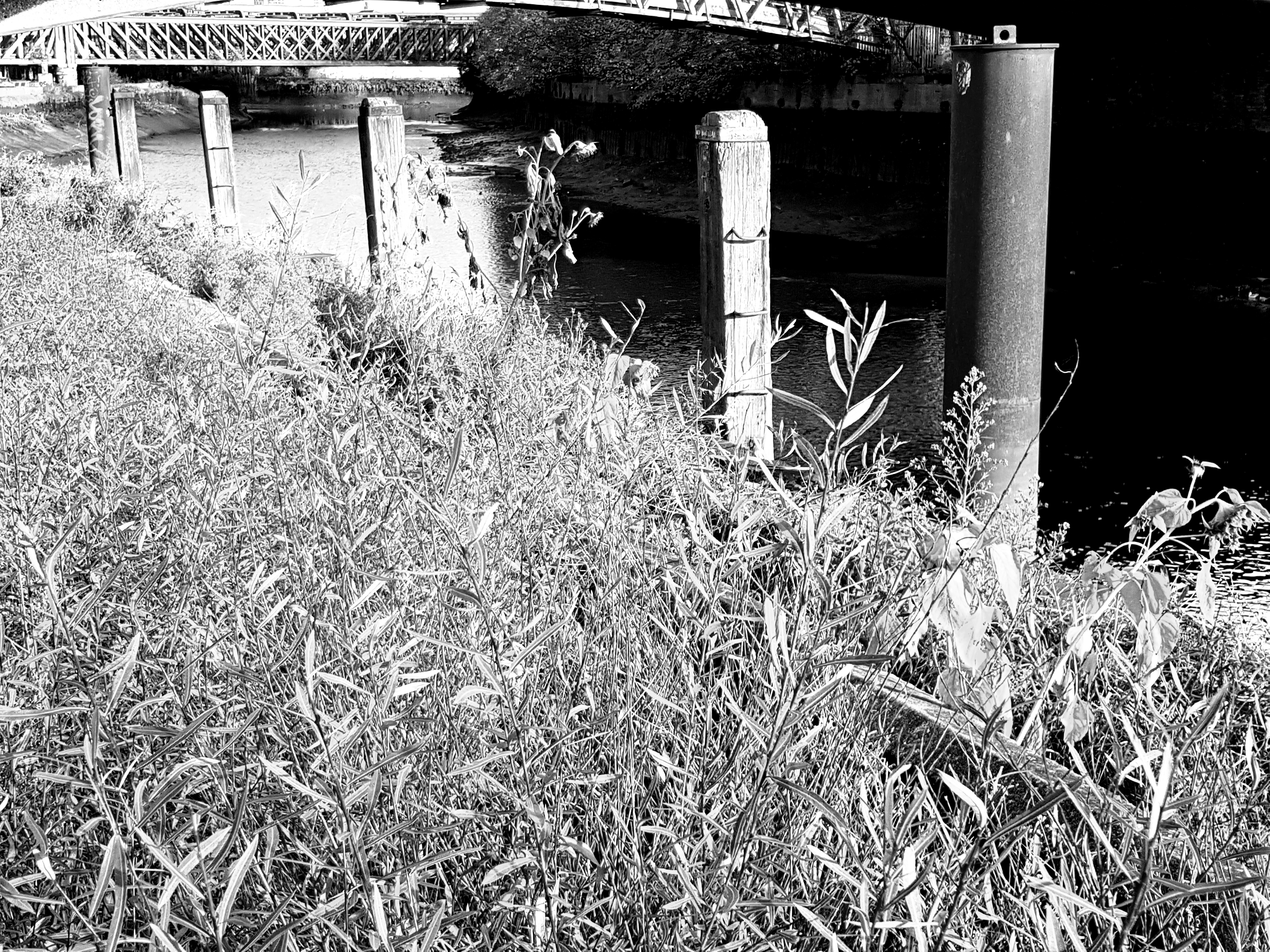
The Limehouse Cut
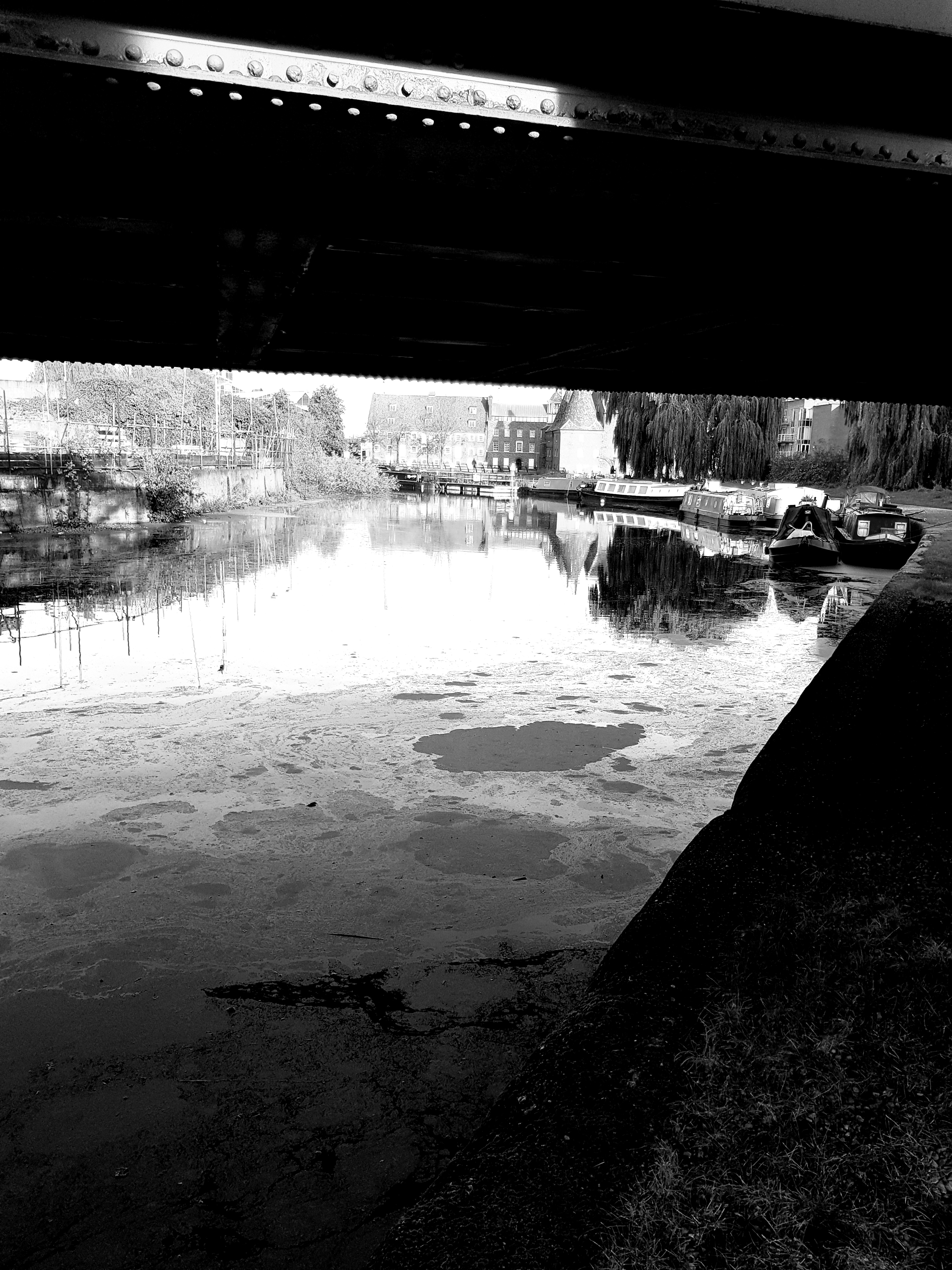
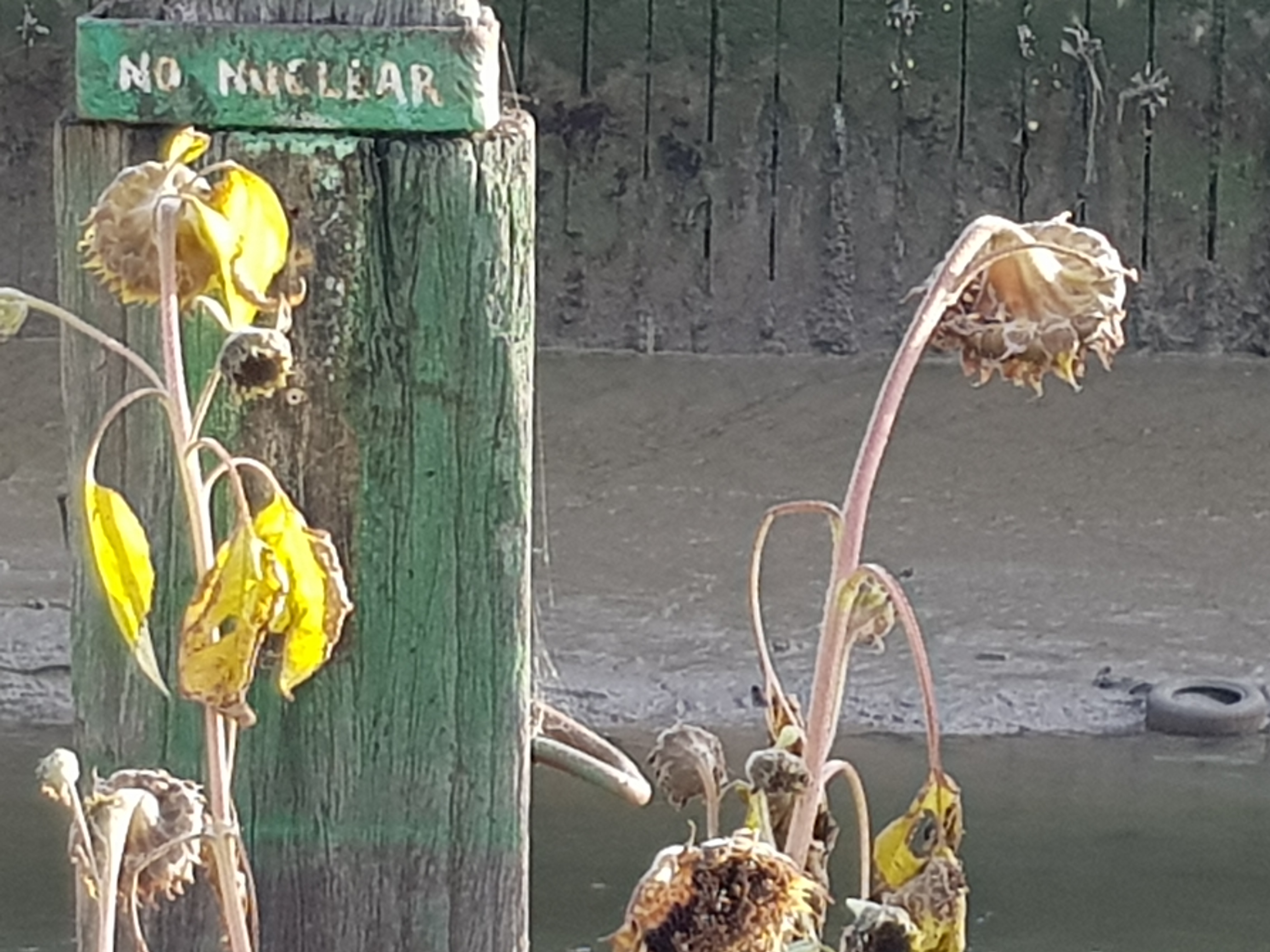
We walked up the Limehouse Cut today to its junction with the River Lea where there is an area of still industrial wasteland, looking across to the gasholders and north under the railway viaduct to Three Mills:-



East London (2)
I have now finished reading Maryam Eisler’s study of the East London creative community in her book Voices (actually, it could be called Vices) which studies the range of different creative types who have inhabited East London over the last three decades. What I realised and is obvious is the extent of inward settlement and migration, all of which has given vitality to the area. But what I also began to notice is how little the existing community is referred to. Doreen Golding, a Pearly Queen, describes how ‘Most of the old white English, the Pearlies, moved out to Essex, Basildon and Southend’. Colin Rothbatt describes how one of his neighbours threw a brick over the wall during one of his all night parties. And Jack Leigh, a retired gangster, describes how ‘The ’60s and ’70s were wonderful. The Krays were in Bethnal Green and we were in Roman Road…There was a sense of belonging because we loved one another and relied on each other’. It would be interesting to know a bit more of the views of those who have been displaced.
John Russell
I have been reading John Russell’s book about Shakespeare’s Country, which I had not known existed: his first book, published in Spring 1942, when he was only 23, having recently graduated from Oxford and was working as an unpaid assistant for the Tate, which had been evacuated to Eastington Hall in Worcestershire. It belongs to an odd genre of countryside writing much promoted by Batsford – not a guidebook, because, as I learn from the Preface, publishing a guidebook during wartime was illegal; nor was Russell a very obvious person to have written the book, as he had been brought up not in Worcestershire or Warwickshire, but in Strawberry Hill in London. In fact, the text is as much literary as architectural. The first chapter is devoted to a life of Shakespeare (one of the illustrations is of the original Shakespeare Memorial Theatre, a magnificent castellated structure, looking as if it belonged in south Germany). In later chapters, he is most enthusiastic about places with literary associations, like Hagley, admired by William Shenstone, and Sion Hill, the birthplace of the typographer, John Baskerville. I like the description of Cheltenham: ‘to coast through is crescents, promenade, and acacia-shaded avenues is to hear an old, thin, bony music, as if someone in an empty house were to play upon a wooden-framed piano, a sonata of Weber’. The qualities of Russell’s writing were much admired by John Piper, who became a lifelong friend, and Logan Pearsall Smith, who encouraged him to be a full-time writer.
 | Charles | Saumarez | Smith |
You must be logged in to post a comment.