
I’ve just got my copy of the winter edition of The London Library Magazine, which includes an article I wrote about the discovery of what I thought was a first edition of Hobbes’s Leviathan on the open shelves and the fact that, in the early 1980s, it was possible to borrow it. The article only half conveys my gratitude to the library during that period of my life, when I was a solitary Ph.D. student, trying to teach myself about late seventeenth-century intellectual thought in order to understand the cultural milieu of Castle Howard. It was in what is now regarded as the bad old days when Ph.D. students were given almost complete freedom to read round their subject with no pressure whatsoever to complete the research, let alone to publish it (actually, I only remember the opposite). The London Library was like a constantly open dish of pleasure.
Hyde Park
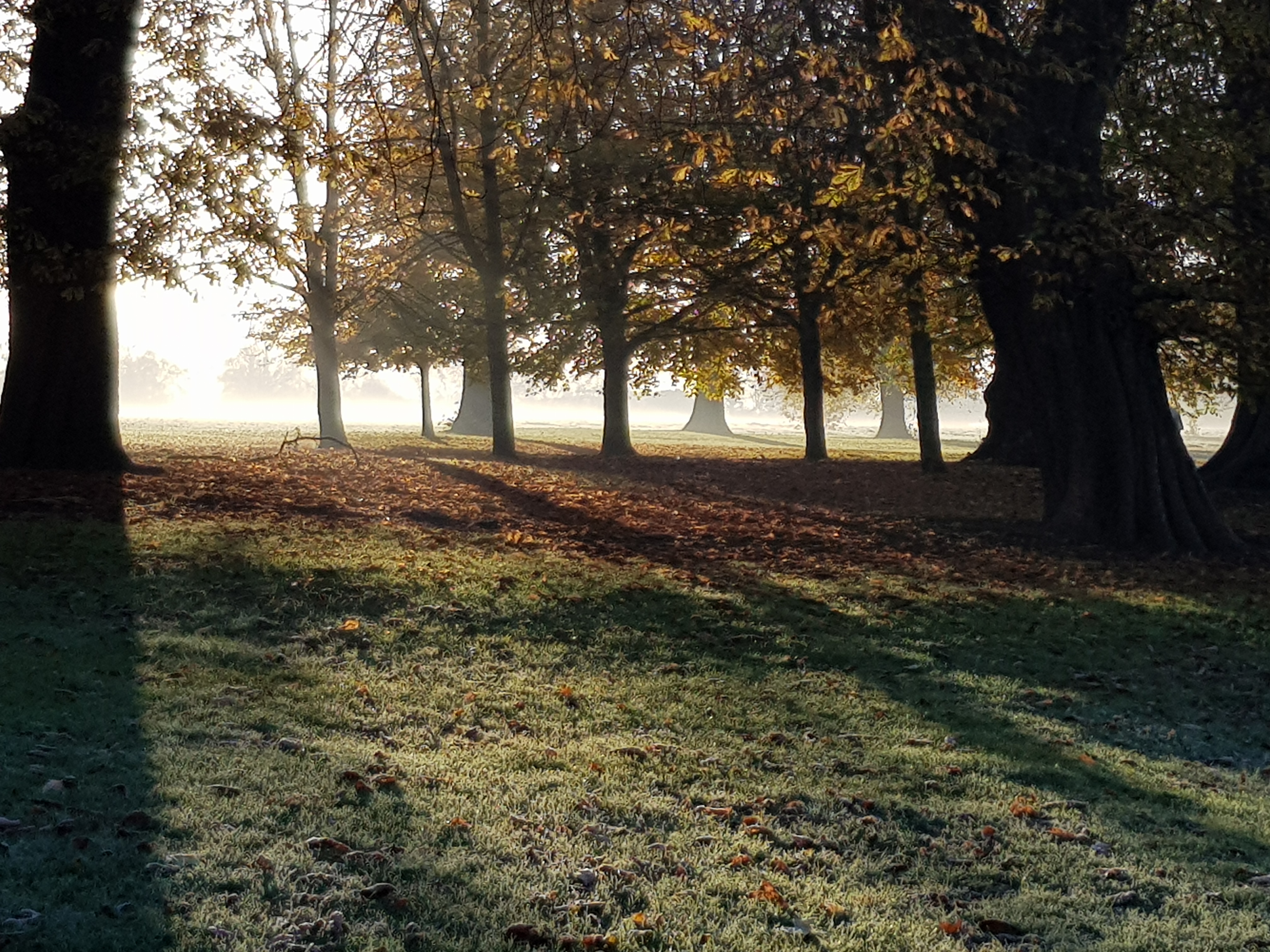
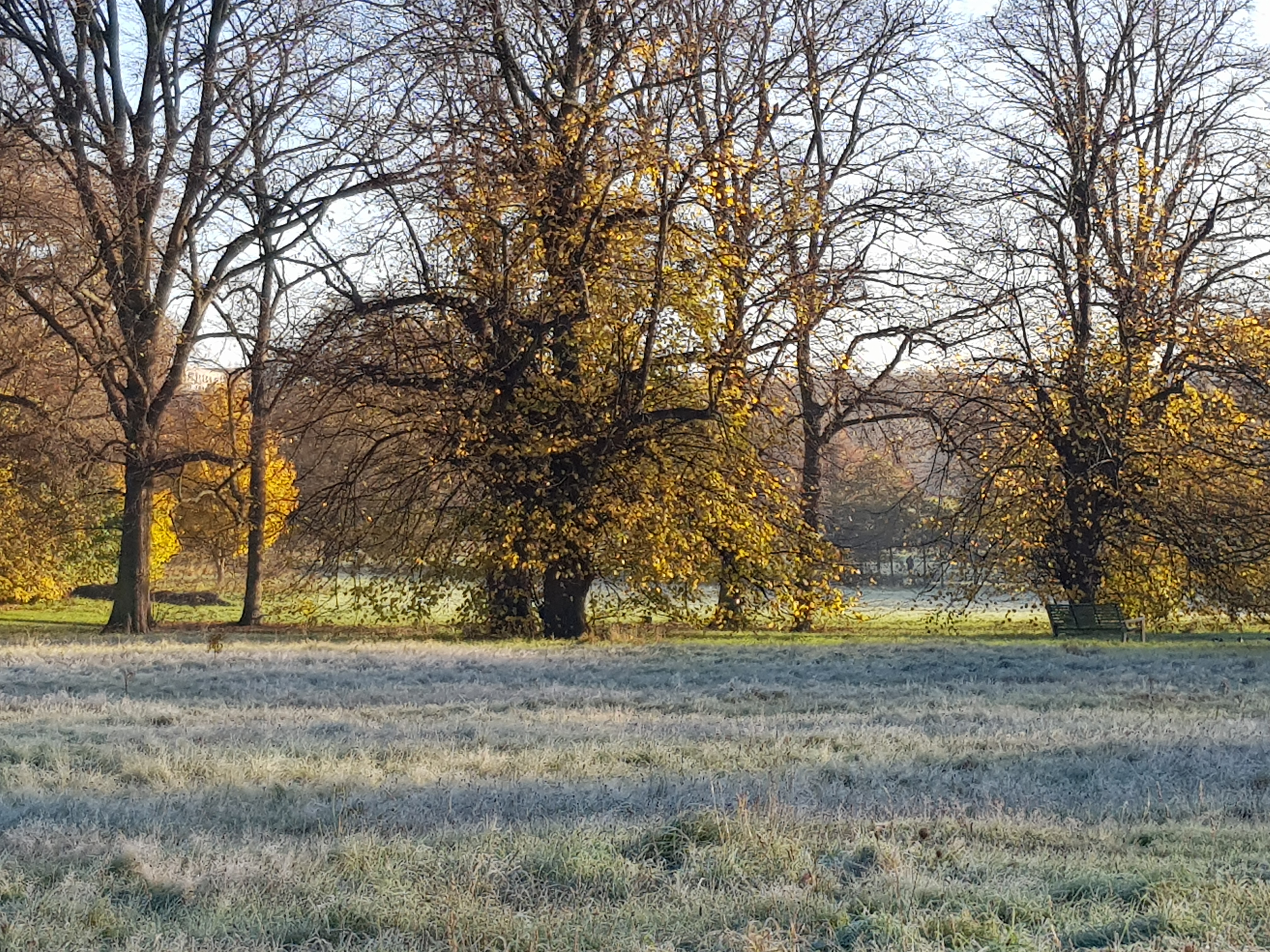
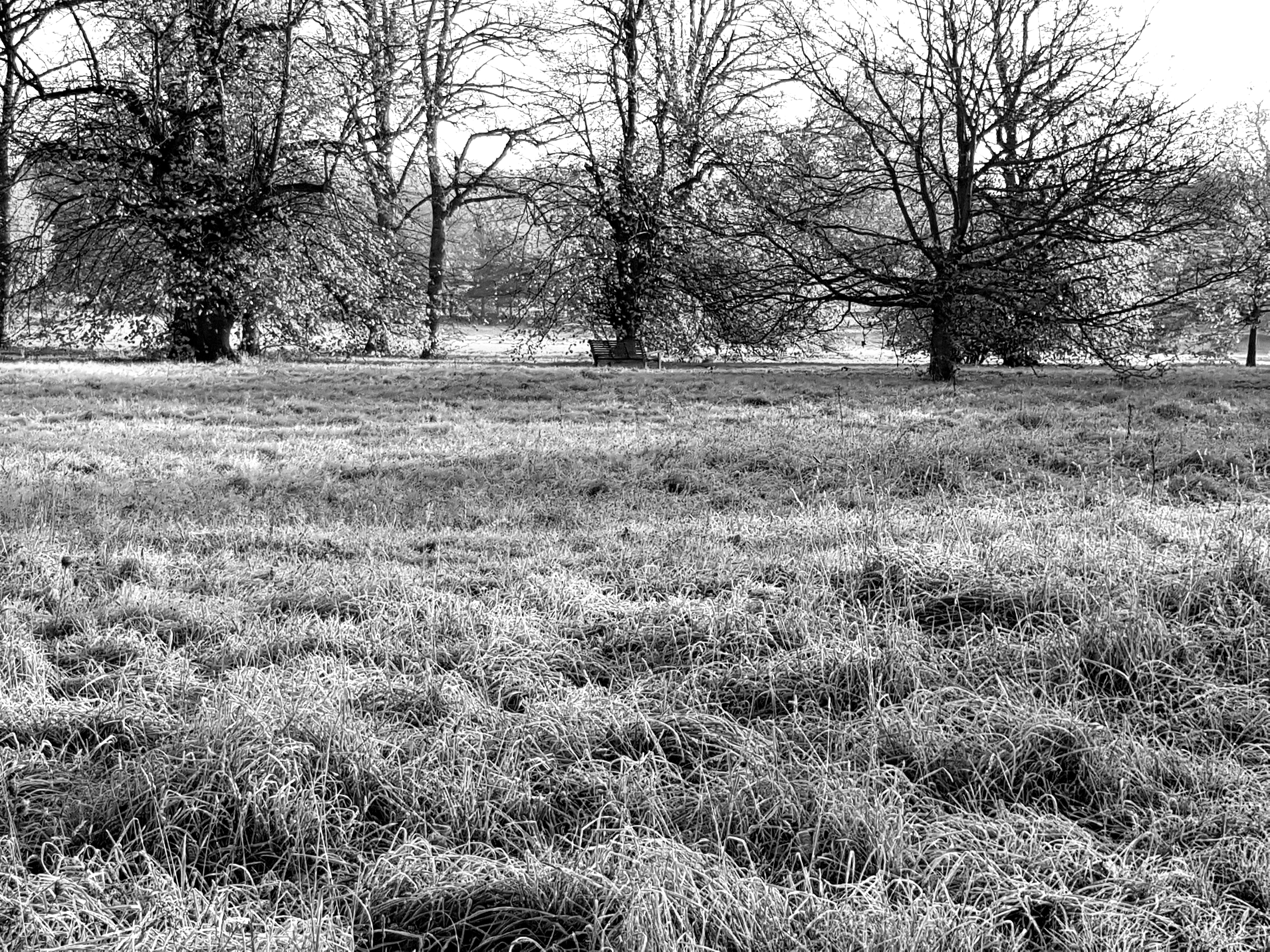
I was a bit early for the dentist so walked in Hyde Park. It was hard not to be enchanted:-




Lizzie Treip
I had not expected to be so affected by the memorial event in the local Ecology Pavilion for a local friend and neighbour, Lizzie Treip, who died of MS, aged 58. It was not as if I knew her so well. I used to meet her on Saturday mornings at the local farmer’s market and sometimes at social events, which she or we had arranged. It was partly the unspeakable cruelty of the disease, both spoken and unspoken, which influenced her life profoundly, but not her love of music and literature and friends; the fragility of her life before the disease struck and her resilience mostly in confronting it; and partly the memory of her life beforehand, its ordinariness, the pictures of her on holiday, when she was small and her children were small.
Herbert Cook
I have just refreshed my memory about Sir Herbert Cook who owned Leonardo’s Salvator Mundi unawares for most of the twentieth century. It was his grandfather Francis, a wealthy textile merchant, who must have bought it in 1900 from the connoisseur John Charles Robinson and then bequeathed it to his son Frederick who in turn left it to his son Herbert on his death in 1920. Herbert had helped establish the Burlington Magazine and was one of the founders of the Natiinal Art-Collections Fund, so his collection would have been well known to art connoisseurs of the time. But although he was a Trustee of the National Gallery during the 1920s, his collection, left to his two sons, was dispersed after his death.
Salvator Mundi
I have just been asked my opinion (on Sky News) on the sale of Leonardo’s Salvator Mundi for $450 million (including commission). It is indeed a staggering price, particularly given that it was sold in 1958 from the Cook Collection in Richmond for £45. It was then heavily overpainted and regarded by experts as a copy after Boltraffio. It surfaced in the United States in 2005 and was apparently sold for $10,000. It was only once it had been cleaned and restored by a consortium of dealers that it was accepted by scholars as authentic and shown as such in the National Gallery’s Leonardo exhibition in 2012. The estimate this time round was $100 million, which itself was more than any other Old Master painting has previously sold at auction.
Degas (3)
Marina Vaizey has rightly reminded me that, at the same sale that Charles Holmes failed to acquire Degas’s Combing the Hair, but did acquire three works by Ingres, including Monsieur de Norvins, and fragments of Manet’s Execution of Maximilian, so Maynard Keynes who had negotiated the special grant of £20,000 from the Treasury was also, and more officially, a member of the International Financial Mission led by Austen Chamberlain, also attended the sale, and himself acquired a study by Ingres, two paintings by Delacroix and a Cézanne Still life with apples (now owned by King’s College, Cambridge and on loan to the Fitzwilliam Museum) which he had wanted Holmes to acquire for the National Gallery. Both Keynes and Vanessa Bell were scornful of Holmes’s aesthetic myopia (the description used by Quentin Bell), but I have always been rather admiring of the fact that Holmes managed to acquire some great pictures while Big Bertha was booming in the distance. The story of Keynes’s trip and of him leaving the Cézanne in a hedge at the bottom of the Charleston drive was told by Quentin Bell in A Cézanne in the Hedge and other memories of Bloomsbury and Charleston.
Degas (2)
I had not heard (or had forgotten) the story behind the acquisition of the National Gallery’s great Combing the Hair: that it was on the list of the paintings that Charles Holmes wanted to buy when he travelled to Paris with the International Financial Mission at the end of the first world war to buy pictures at the auction of Degas’s studio effects; but that Lord Ribblesdale, one of the stupider and more arrogant of the Gallery’s Trustees, crossed it off the list on the grounds that it was unfinished. It was acquired instead by Matisse and later sold by his son Pierre in New York, where it was acquired by Kenneth Clark for the National Gallery in 1937: a story which does not appear in my history of the National Gallery, nor in James Stourton’s recent history of Kenneth Clark, nor, oddly (assuming that it’s true) on the National Gallery’s website.
Jeremy Hutchinson
I have been mourning the death of Jeremy Hutchinson, the RA’s Emeritus Professor of Law, who was a last relic of old Bloomsbury, the son of Mary Hutchinson, who was Clive Bell’s mistress, and taught to tie a bow tie by Lytton Strachey. I remember him for his amazing sardonic performance not so long ago at the Charleston literary festival when he was already 100 demonstrating how Mary Whitehouse wasn’t able to tell the difference between a penis and a thumb.
Degas (1)
We had the very intense experience of seeing the Degas exhibition Drawn in Colour at the National Gallery with Julien Domercq, its curator. It assembles the Degas works from the Burrell collection, acquired by Sir William Burrell, the Glasgow shipping magnate, from 1900 onwards from his dealer, Alexander Reid. Many of them have not previously been displayed and so are scarcely known to Degas scholarship. It’s an amazing opportunity to see the paintings next to pastels and compare the flatness and experimentation of his technique, the freedom of his composition, and his obsessional observation of the privacy of female form. The label for Dancer adjusting her Shoulder Strap adduces this to Degas’s putative misogyny, but the tenderness and fascination of the observation doesn’t suggest misogyny.
East London (1)
I have just got my copy of Maryam Eisler’s new book about East London, called Voices, which, like mine, is published by Thames and Hudson. Hers is a different East London from mine: about people more than places; much more punky funky; about music venues and motorbike shops and street art; nightclubs and digital start-ups; flamenco dancers and pearly queens; opening with a hymn (or a prayer) to the area by Gilbert and George. There’s a serious aspect to it as well because in attempting to describe and record the characteristics of the modernday east end through interviews with the people who live and work there, it demonstrates the odd mixture of characteristics which makes for a creative neighbourhood and the risk of it becoming antiseptic through the current process of radical urban development. I appear towards the end – sitting in the garden ruminating and eating breakfast in the recently defunct Foxcroft & Ginger. Her excellent photographs will appear above my blog once they have been reformatted.
 | Charles | Saumarez | Smith |
You must be logged in to post a comment.