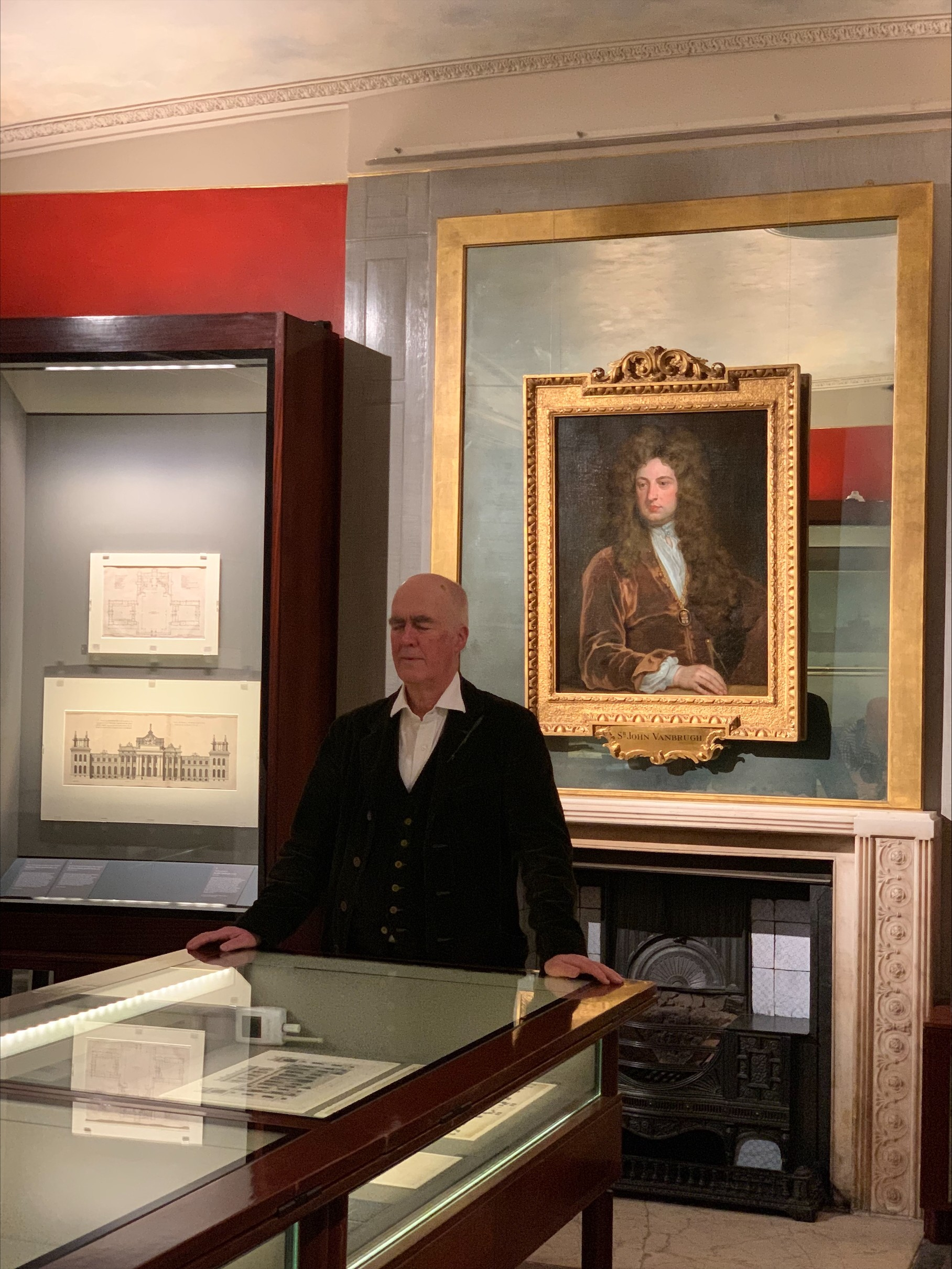
I finally made it to a screening of Margy Kinmonth’s film Revolution: new art for a new world, which she has made in advance of what will presumably be an orgy of commemoration of the Russian Revolution next year, including the Royal Academy’s own exhibition Revolution: Russian Art 1917-1932, which opens on February 11th. It gives an incredibly clear and graphic account of the impact of the Revolution on the practice of the arts, including painting, sculpture, graphic design and cinema: a brief period of Utopian idealism when everything seemed possible, followed by a long period of socialist realism, when the Leningrad Academy resumed its supremacy and many of the artists were sent to the Gulag. Margy has discovered and interviewed many of the children and grandchildren of the artists which gives an immediacy to the narrative.
RA Schools
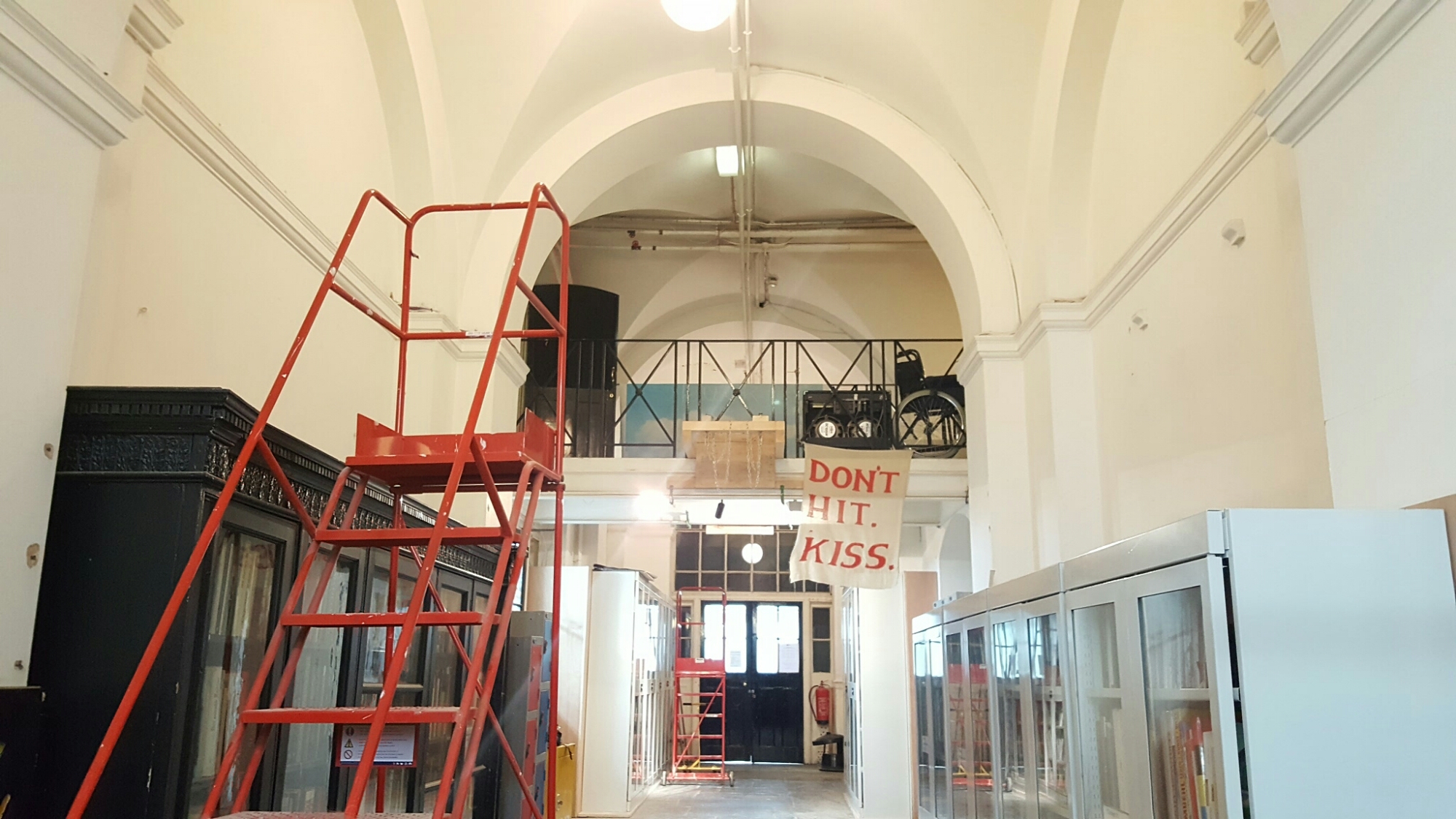
I spent part of the morning looking at the way that the RA Schools can develop after the completion of our scheme for Burlington Gardens. The building is currently a palimpsest: a layer of Sydney Smirke’s original utilitarian spaces, created by the use of cast iron girders supporting the exhibition galleries above; then, Norman Shaw coming in as Surveyor in the 1880s and making various changes, as well as adding an extra set of studios at the back; then a series of mezzanines inserted into the original spaces, thereby cannibalising them. Many of these accretions can be stripped away:-
Charlotte Verity
I should have said that I also went last night to see Charlotte Verity’s exhibition in Purdy Hicks, which has left the backstreets of Southwark for a smart new gallery nearly opposite South Kensington tube. Seeing the pictures in a very crowded room was nearly the worst way of appreciating the quiet and meditative qualities of her pictures of plants and branches in the winter sun, but I have at least been able to enjoy the book which has been produced alongside the exhibition with short tribute essays by Paul Hills and Edmund de Waal and a longer interview.
Boilerhouse Project
Going to the opening of the Design Museum in its grand new west London emporium has made me think about its antecedent Boilerhouse Project which was no more than a creative cell in the basement of the V&A where Stephen Bayley held court in a glass office surrounded by piles of magazines. I have discovered that John Pawson actually designed one of the early exhibitions which I half remember – a big wedge which required one to crouch down in order to see the objects on display. The other exhibition I remember was an exhibition on Taste in which Stephen had asked various luminaries to select objects representative of their taste. Alexander Shouvaloff, the then Director of the Theatre Museum, selected Michelin maps. I hope and assume (actually, I think I know) that someone is documenting its history.
Design Museum (2)
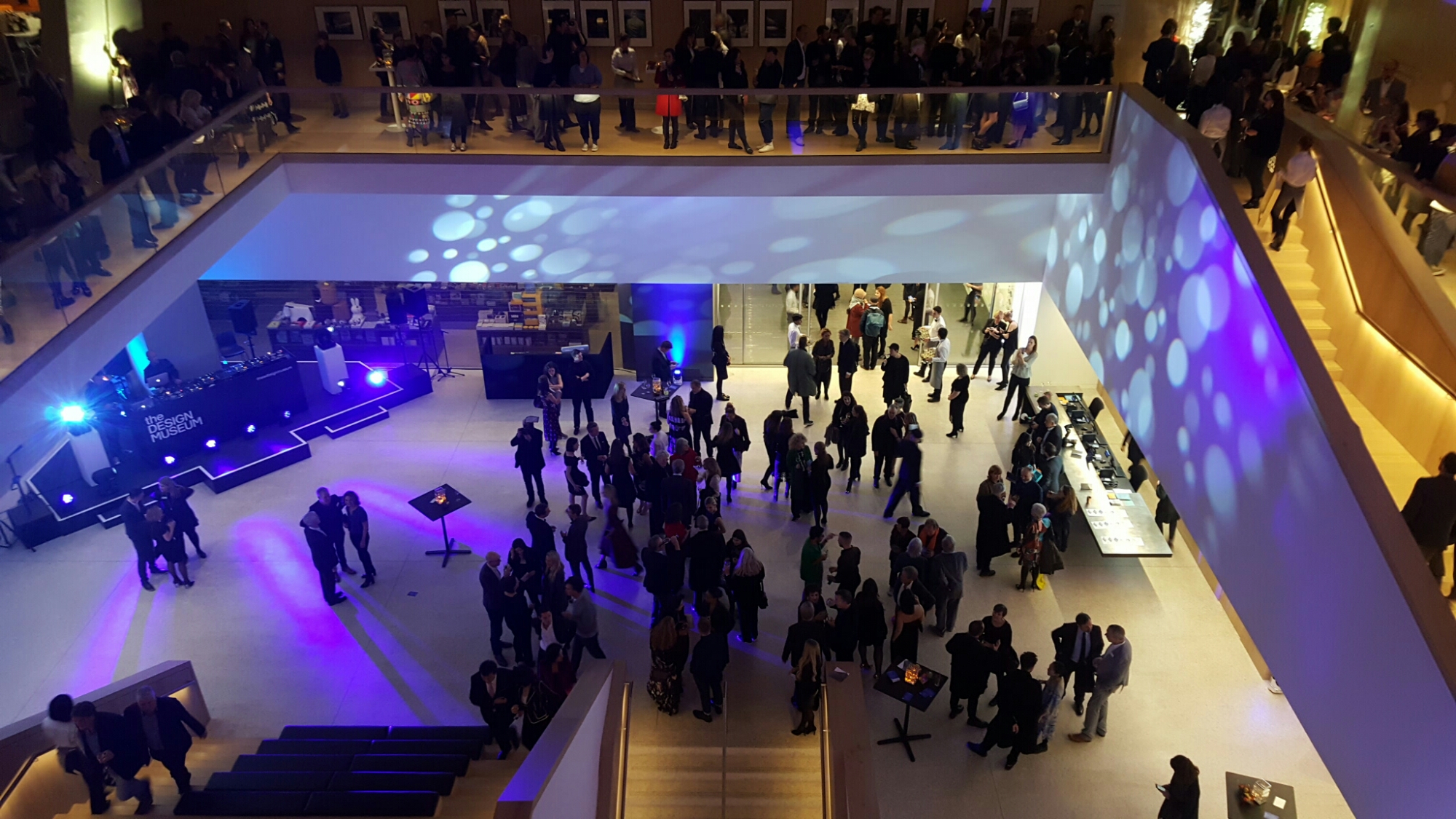
I don’t normally post images at night-time, nor those which contain people, because, like most people who enjoy photographing buildings, people are a distraction to style, design and shape. But I am breaking this rule in honour of the new Design Museum because everything I had heard about it suggested that it would be a grand 1960s parabolic space filled by a smart, but separate John Pawson interior. So, I wasn’t expecting the unexpectedly open, triple deck, public atrium surrounded by balconies. I gather that one of the best features is an accident: because of health and safety, the main staircase has seats down the middle, making it into an arena for watching people; and I like the re-use of the original marble from the old Commonwealth Institute:-

Picasso Portraits
We went to see the exhibition of Picasso Portraits on the ground floor of the National Portrait Gallery: a fairly astonishing collection of the full range of Picasso’s work as a painter, draughtsman, cartoonist, amateur filmmaker and, perhaps best of all, sculptor, with a grandly archaic portrait head of Dora Maar, done in 1941, modelled in his Paris bathroom, and sheet-iron portraits of Jacqueline Roque, done in 1962 and now in the National Gallery of Iceland. What the exhibition proves is that there is no such thing as the evolution of Picasso’s style, but that he uses any and every style as circumstance determined, according to the mood of the moment and how he wants to capture the sitter.
Portrait of the Artist
We went to see the exhibition, Portrait of the Artist, a nice, thoughtful, quite intense exhibition, which demonstrates the extraordinary wealth of the Royal Collection, not that that is needed, including astonishing seventeenth-century self-portraits – a Parmigianino drawing, a Rubens and a Rembrandt – and a wealth of material round the founding of the RA – Bartolozzi drawing Cipriani painting and Cipriani drawing Bartolozzi asleep. It was hard to take photographs because of the reflections, so I only took one or two of eyes.
Bernini’s Self-portrait drawing, because of the intensity of his hooded eyes :-

Rubens, more wordly:-

Post-election America (4)
Since my blog has taken an unexpected political turn, I am going to write about one of the few things that I did not record on my recent visit: that was, a visit to a gallery in the SoWa area of Boston (south of Washington) called Gallery Kayafas. An artist called Steve Locke had done a photographic exhibition called Family Pictures in which he had mounted archival pictures of lynchings in the south into characteristic bedside frames. He spoke about his anxieties about the possibility of a Trump victory because of the fact that lynchings had been such a normal part of Southern society until relatively recently, as one can see from the imperturbable faces of those witnessing what was happening. At the time, I thought the analogy was a touch melodramatic. But I have thought of his fears often since.
Avant Garde Place
Although I really don’t like the new block of flats on the Bethnal Green Road, which is so out-of-scale with its surroundings, caused members of the local artists’ community to move out, and was nominated for the Carbuncle Cup in 2013, I can’t disguise that I found it rather impressive, viewed from the south as I walked up Brick Lane:-

Rodney Archer
I was invited to a viewing of the remaining effects of Rodney Archer, a picaresque character whose house I visited in Fournier Street a couple of years ago to see his collection of designs for Spitalfields silks and died a year ago. They are being sold in the workshop of Adrian Davidson who has a picture framers in a backyard off Princelet Street:-

 | Charles | Saumarez | Smith |
You must be logged in to post a comment.