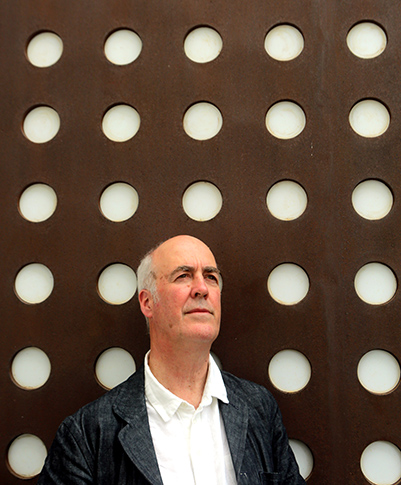
Tony Cragg RA

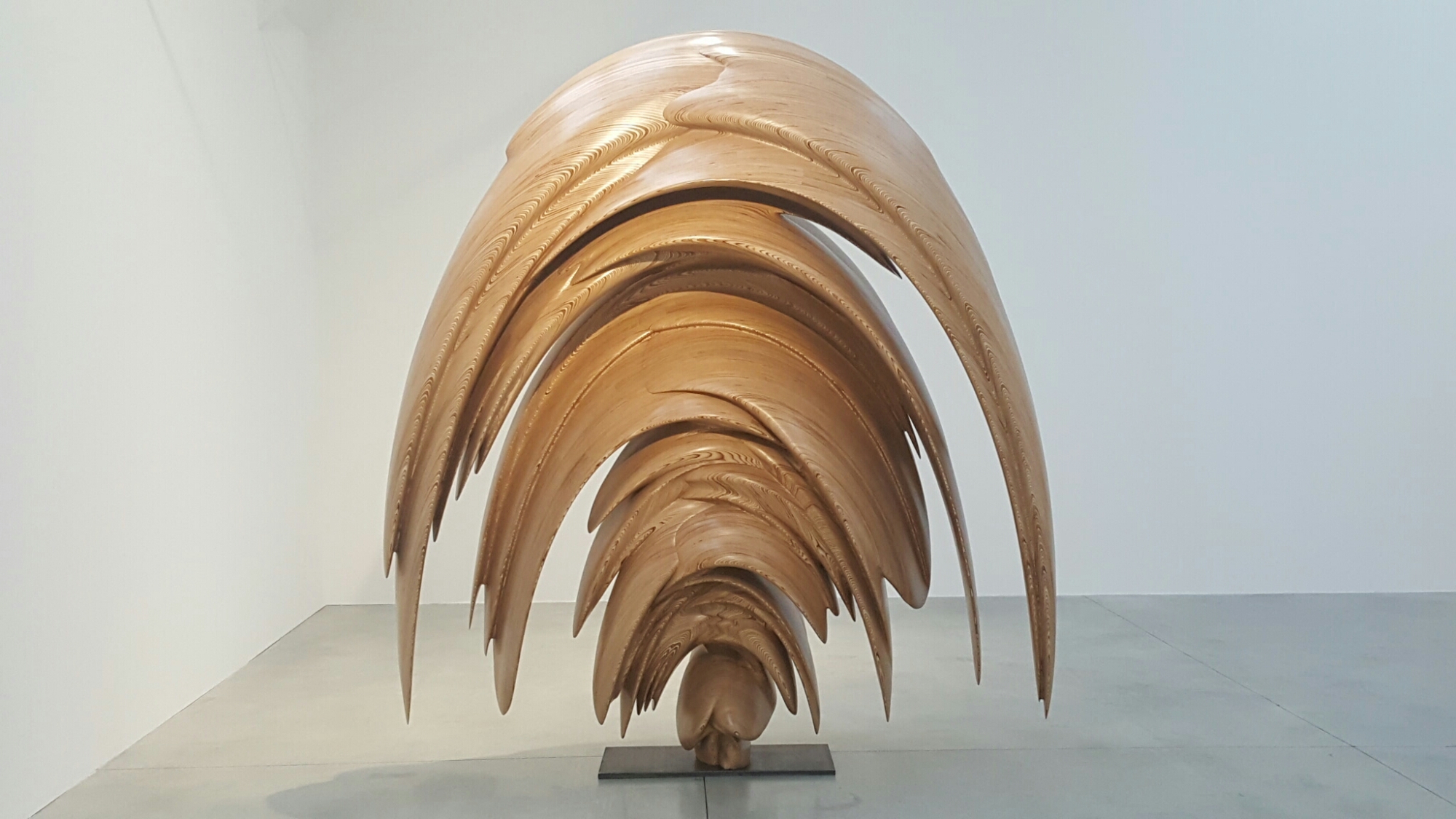
I went to a pre-preview of Tony Cragg’s exhibition at the Lisson Gallery:  full of grand, sensuous and organic forms in beautiful materials hovering in the space between the mechanical and the vegetal, what Cragg calls ‘threatening energy’.

Nicholas Logsdail spoke about how he had first met Cragg.   When he was having his car fixed in Uxbridge, he went to visit an exhibition Cragg had organised at Brunel University while still a student at the Royal College of Art.   His first exhibition at the Lisson Gallery was held in 1979 and he helped Logsdail make the transition from the minimalism and conceptualism of the 1970s, as represented by Richard Long, Donald Judd and Carl André, to showing a new generation of young sculptors:-
Continue reading

Standard

Blue Poles

We just had an event to celebrate the loan of Blue Poles by the Trustees of the National Gallery of Australia in Canberra, an act of extraordinary generosity because it is such a key work in their collection.   David Anfam spoke brilliantly about its importance to any understanding of Pollock’s career and scotched the various myths surrounding its creation – that it was painted in a single night when in fact it was painted over three months, that Barnett Newman painted the poles when he was nowhere in the vicinity, and that the painting incorporates Lee Krasner’s blood when no blood has been discovered in its conservation.  

Standard

Yinka Shonibare RA

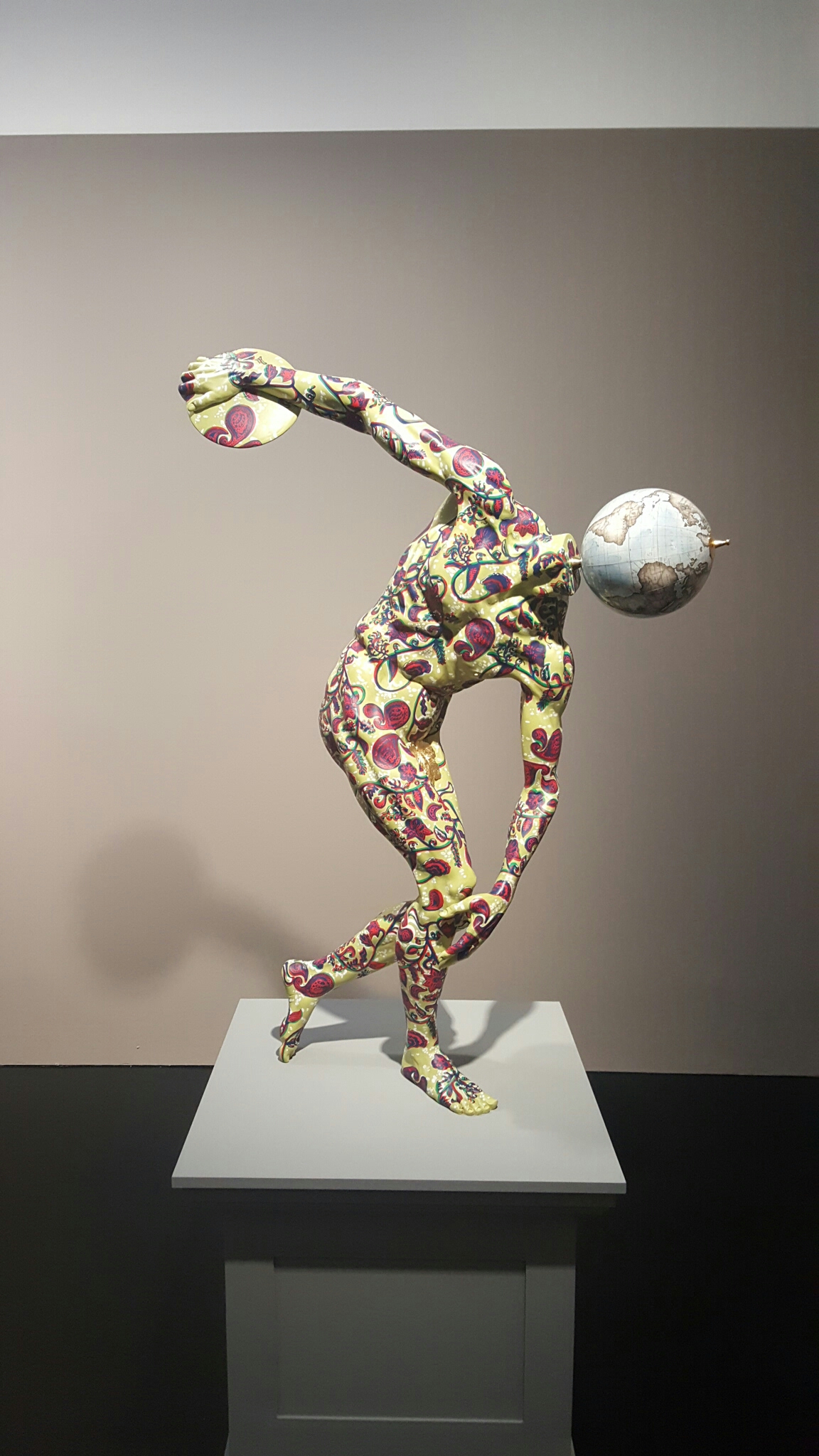
I went to hear Yinka Shonibare discuss the new exhibition of his work with Duro Olowu at the Stephen Friedman Gallery just along the road from his Royal Academy wrap.   He did so extraordinarily knowledgeably and thoughtfully – about the influence of postmodern theory, the need to preserve time in his life for looking at the sky (he only works at his studio three afternoons a week), his interest in pattern and fabric, and his knowledge of, and interest in, different languages, including yoruba:-

Standard

Abstract Expressionism

I was asked last night about the origin of the term ‘Abstract Expressionism’.   I knew the straightforward answer to the question, that it was first used in 1946 by Robert Coates to describe the work of Hans Hofmann.   But I couldn’t answer the second question.   Who was Robert Coates ?  Peter Mayer, who republished some of his experimental fiction, knew the answer.   He was the ballet critic for the New Yorker, a protégé of Gertrude Stein and author of books, now not much read, including The Eater of Darkness (1926) and The Outlaw Years (1930).   He described the works of Jackson Pollock as ‘mere unorganized explosions of random energy, and therefore meaningless’.

Standard

Maisie Anderson

Writing about the misericords in St. Katharine’s made me want to know more about M.D. Anderson, who published a King Penguin on misericords, following her earlier Animal Carvings in English Churches.   In looking her up, I saw her wrongly described as a man.   In fact, she was the daughter of a Master of Caius and married Trenchard Cox, who succeeded the alcoholic Leigh Ashton as Director of the V&A in 1955, supposedly only to keep the seat warm for John Pope-Hennessy, who patronised him.   There must be people who remember her, as well as Cox, who according to his obituary, resembled Lewis Carroll’s Dormouse.   Maybe she was similarly self-effacing.

Standard

Royal Foundation of St. Katharine

I was asked last week if I knew the misericords in the chapel of St. Katharine (I now realise because they were featured in the daily bulletin of Spitalfields Life).    The answer was that I knew the chapel, but not the misericords as there was a service or maybe just a prayer meeting going on when I went.   So, I returned to investigate this morning and discovered that at the back of the chapel are the original fourteenth-century choirstalls, as apparently illustrated in Andrew Ducarel’s History of the Royal Foundation and Collegiate Church of St. Katharine, published in 1782 (he was buried in the church) and G.L. Remnant’s Catalogue of Misericords in Great Britain.

This is the bearded man:-

Continue reading

Standard

Bethnal Green Library

As the book of my blog inches its way towards publication, I went to check out the Bethnal Green Library, which I include in passing, but without any information.   I’m glad I did.   It’s a fine piece of municipal socialism, originally built in the 1890s as a wing of the local lunatic asylum and adapted in the 1920s by the Borough Engineer as a library, with bas reliefs of Charles Darwin, Karl Marx, William Morris and Richard Wagner, as selected by the town council which was part Communist at the time:-

Continue reading

Standard

Soho Square

I know I shouldn’t really like the absurd Tudorbethan hut in the middle of Soho Square which has displaced Cibber’s statue of Charles II and hides an electricity sub-station, but I do:-

This is Charles II, removed in 1876 and returned in 1938:-

Continue reading

Standard

Maker’s House

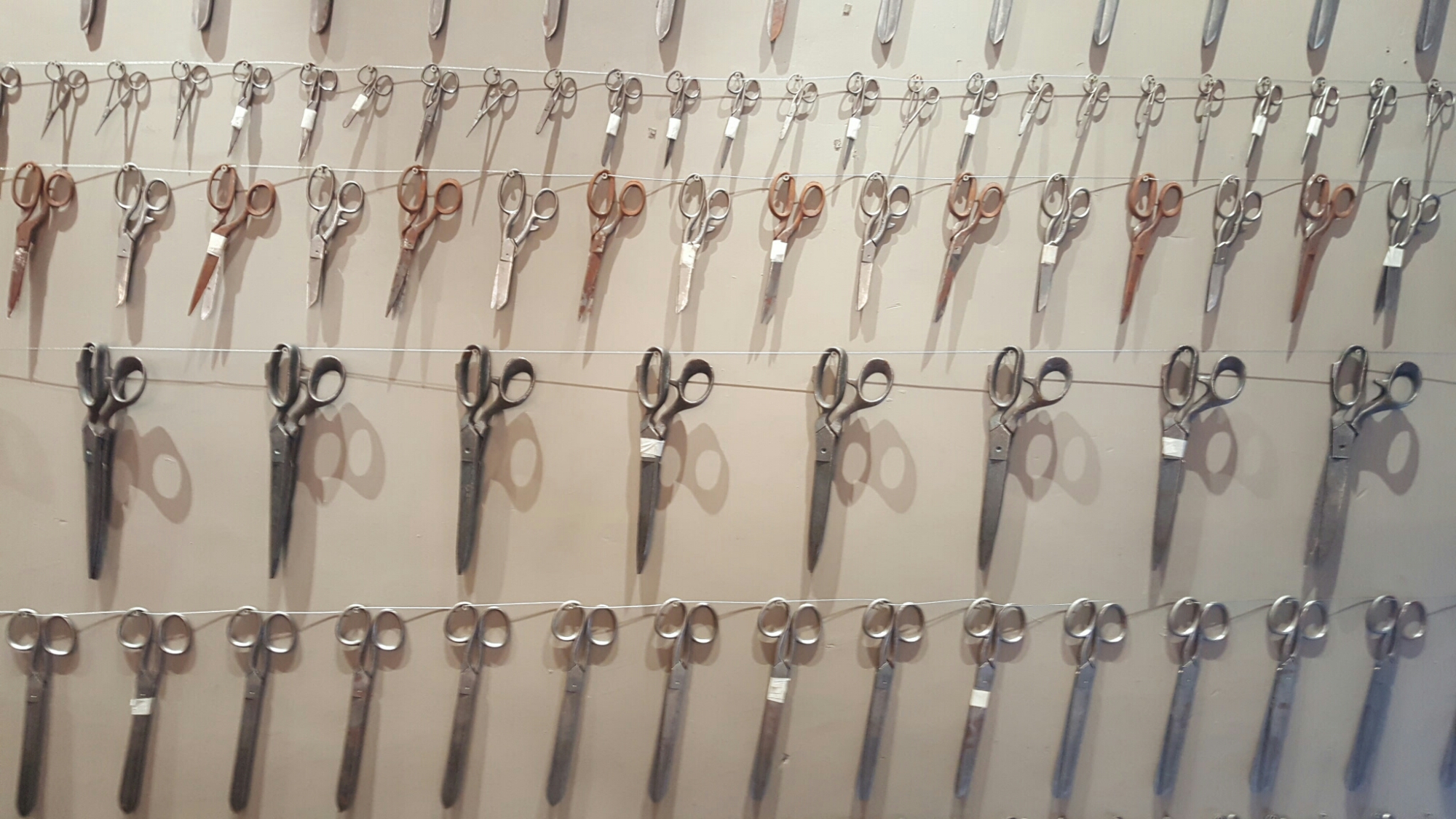
I was asked to see Maker’s House, a collaboration between Burberry and the New Craftsman in Burberry’s temporary premises in Manette Street in the old Foyles due to be demolished next year.   Downstairs, it consists of a grand pot pourri of crafts, making, needlework, sculpture and scissors, as well as a small shop selling Burberry’s gabardine boiler suits (sold out):-

Continue reading

Standard

Blue Poles

I have only just read the review by Matthew Collings which says that Blue Poles is, I quote, ‘notoriously unsuccessful as a painting’.   Having spent much of today standing in front of Blue Poles, absorbing its extraordinary visceral energy, the depth of pigment, the sense of its compositional complexity, and its obvious originality even amongst major works by so many of Pollock’s contemporaries, I find this negative assessment hard to understand.   ‘Heavy and airless’.   I don’t think so.

Standard