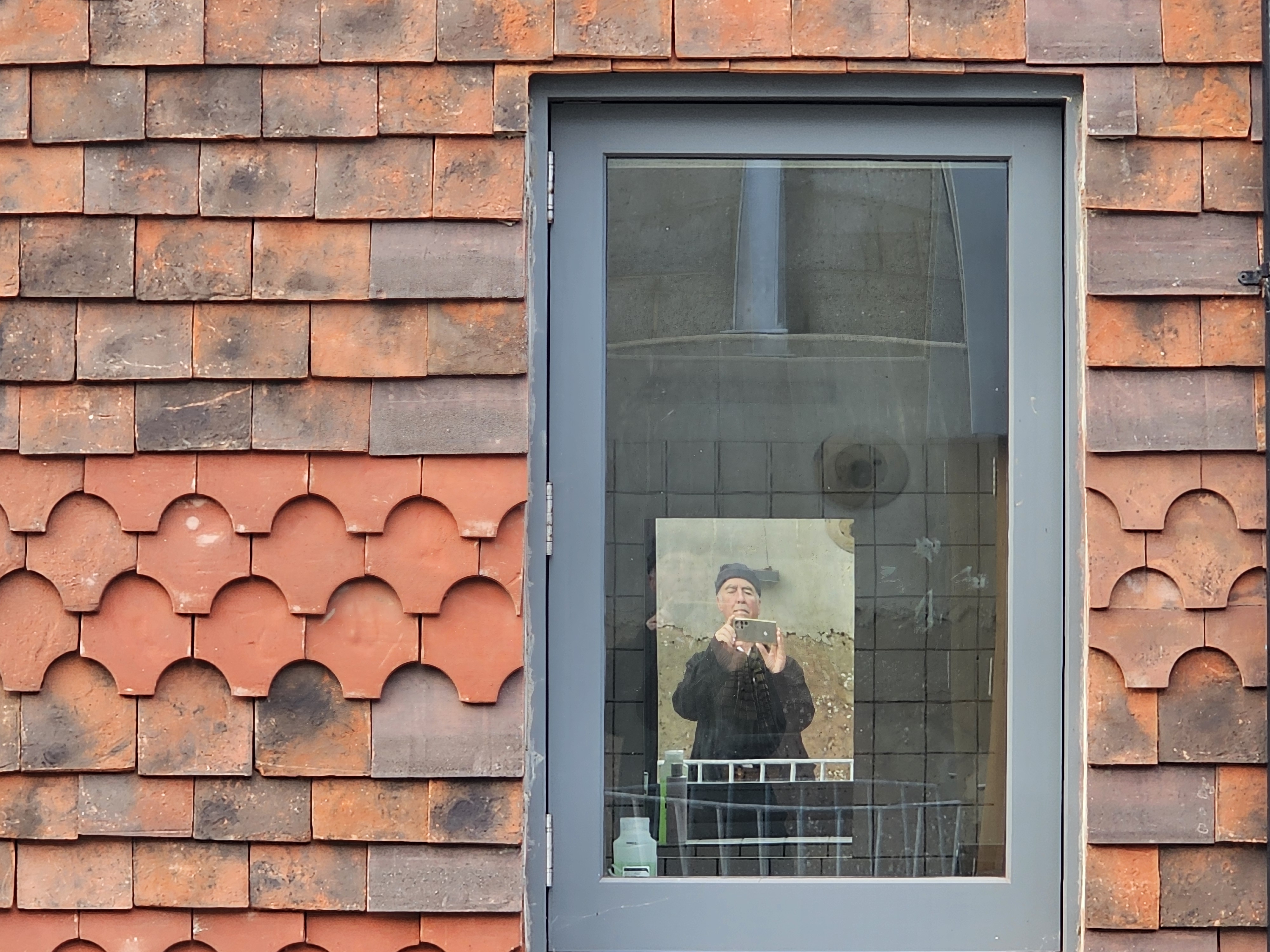
I have been trying to find out more about attitudes to city planning and have been reading Colin Rowe and Fred Koetter’s Collage City, published in 1978. They have an admirable description of the origins of townscape: ‘Townscape, a cult of English villages, Italian hill towns and North African casbahs, was, above all else, a matter of felicitous happenings and anonymous architecture…in the pages of The Architectural Review, even in the early nineteen-thirties, one can detect the uncoordinated presence of all its later ingredients. A perhaps wholly English taste for topography; a surely Bauhaus-inspired taste for the pregnant object of mass production – the hitherto unnoticed Victorian manhole, etc.; a feeling for paint, the texture of decay, eighteenth century folly and nineteenth century graphics…townscape could readily be interpreted as a derivative of the late eighteenth century Picturesque; and, as it implicated all that love of disorder, cuktivation of the individual, distaste for the rational, passion for the various, pleasure in the idiosyncratic and suspicion of the generalised which may, sometimes, be supposed to distinguish the architectural tradition of the United Kingdom, so (almost like Edmund Burke’s political polrmic of the 1790s) it was enabled to thrive’.
Sainsbury Centre (4)
There is a good MA dissertation by Ian McIntyre available online which gives helpful information on the pattern of Robert and Lisa Sainsbury’s collecting. Robert read history at Pembroke College, Cambridge from 1924 to 1927, but never entered a museum and spent much of his time playing bridge. Then he studied accountancy. But he began to collect private press books whilst still at Cambridge which led him to Zwemmers in the Charing Cross Road. This was where he first encountered the work of Jacob Epstein. He acquired two Epstein drawings and Epstein’s Baby Asleep in 1931. The following year he bought Henry Moore’s Mother and Child from the Mayor Gallery for £158. In 1933 he established the Gemini Press with Blair Hughes-Stanton. So, the question is who or what formed his taste ? It was presumably partly a matter of his milieu. Epstein was deeply interested in the art of Asia and the Pacific Islands. So was Henry Moore. But the biggest influence is likely to have bern Roger Fry, whose Vision and Design had popularised the idea of treating African, Asian and American Art as part of a common formal language.
Sainsbury Centre (3)
Mark Fisher has written a comment on my blog about the Sainsbury Centre to the effect that the displays reflect the beliefs of writers including Herbert Read and Ernst Gombrich (and most of all Roger Fry) that there is a universal language of the eye. I’m sure it’s correct that Robert and Lisa Sainsbury who started collecting seriously in the 1930s are likely to have been influenced, if only at second hand, by the writings of Herbert Read, whose interests in ‘primitive’ art, modernist sculpture and ceramics (he had been an Assistant Keeper in the Ceramics Department at the V&A) mirrored their own. The problem is that Read’s belief in a universal language of the eye has been discounted, if not discredited, by the next generation of art historians who have concentrated on the idea of specificity of context and on cultural content rather than aesthetics (sorry, this is a long answer to his comment). I am posting some images of the display technique:-

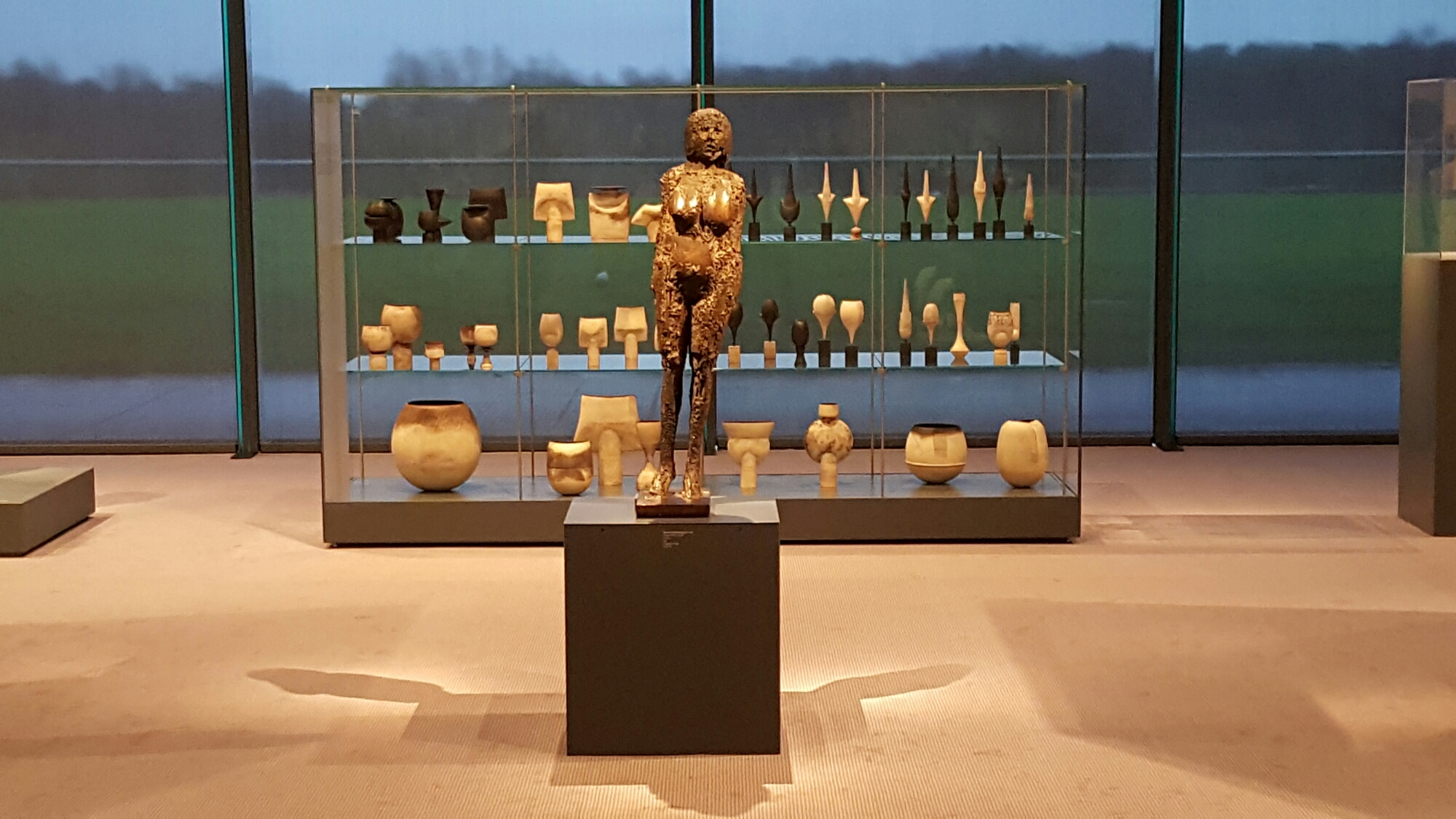
Sainsbury Centre (2)
I remember someone being faintly dismissive of the way that the Sainsbury Centre decontextualises objects by the randomness of its displays, treating them indiscriminately as if they belong to the same visual language. But I like and find it refreshing to be made to look, not quite sure if an object is two millennia old or from the last century and whether it is Mexican, Inuit or Hindu.
This century breast ornament is from Santa Cruz:-

A Mesopotamian votive figure:-

Courts of Justice
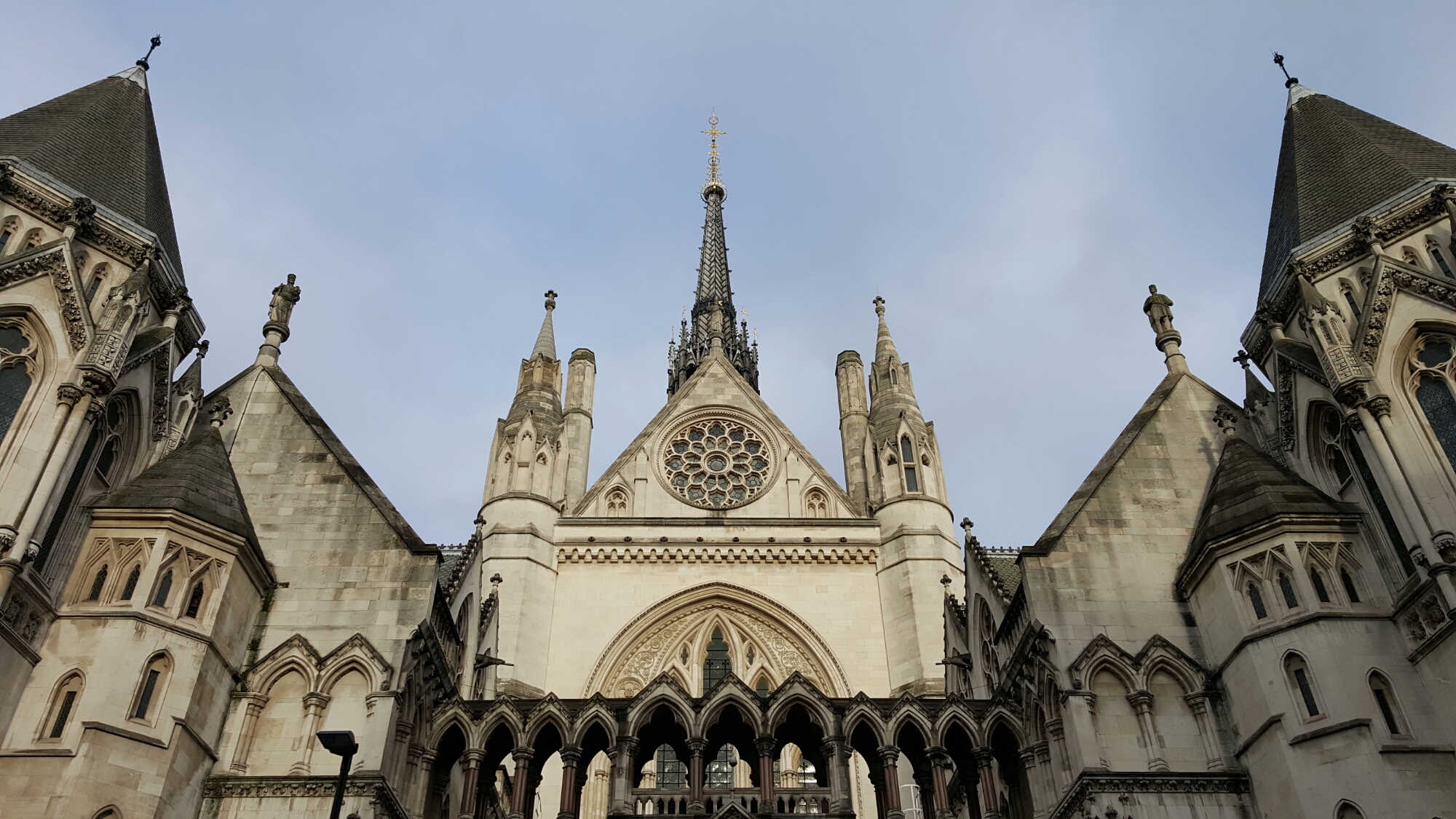
I’m not normally a great fan of G.E. Street, regarding him as at the dour end of the Gothic Revival, and have never previously warmed to the Courts of Justice, which have always struck me as cold and monumental; but, crossing the street opposite them yesterday (no pun intended), I realised that they do have a certain grandiosity, as well as being very convincing in the way they use the historical language of the Gothic Revival:-

St. Stephen Walbrook
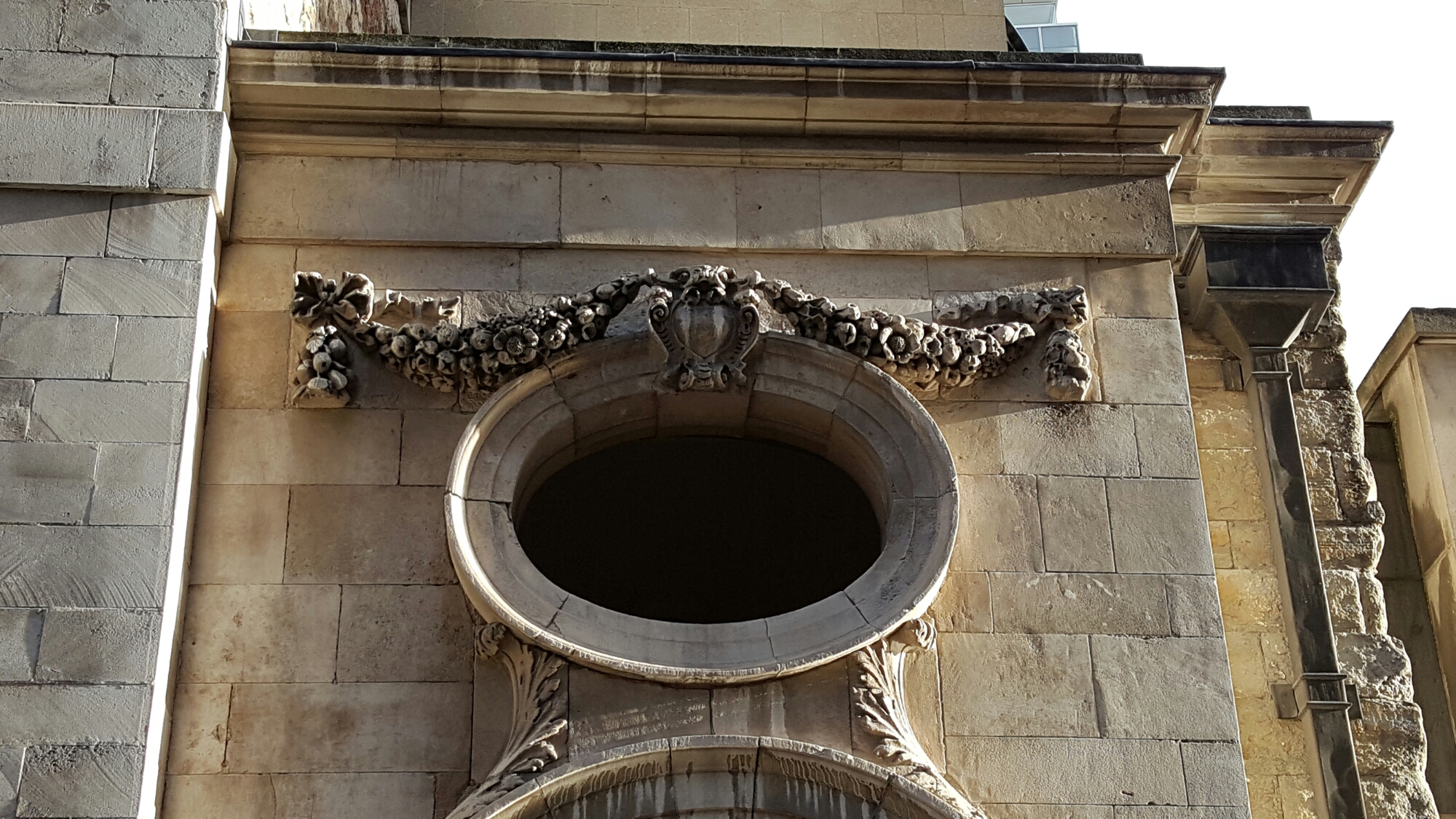
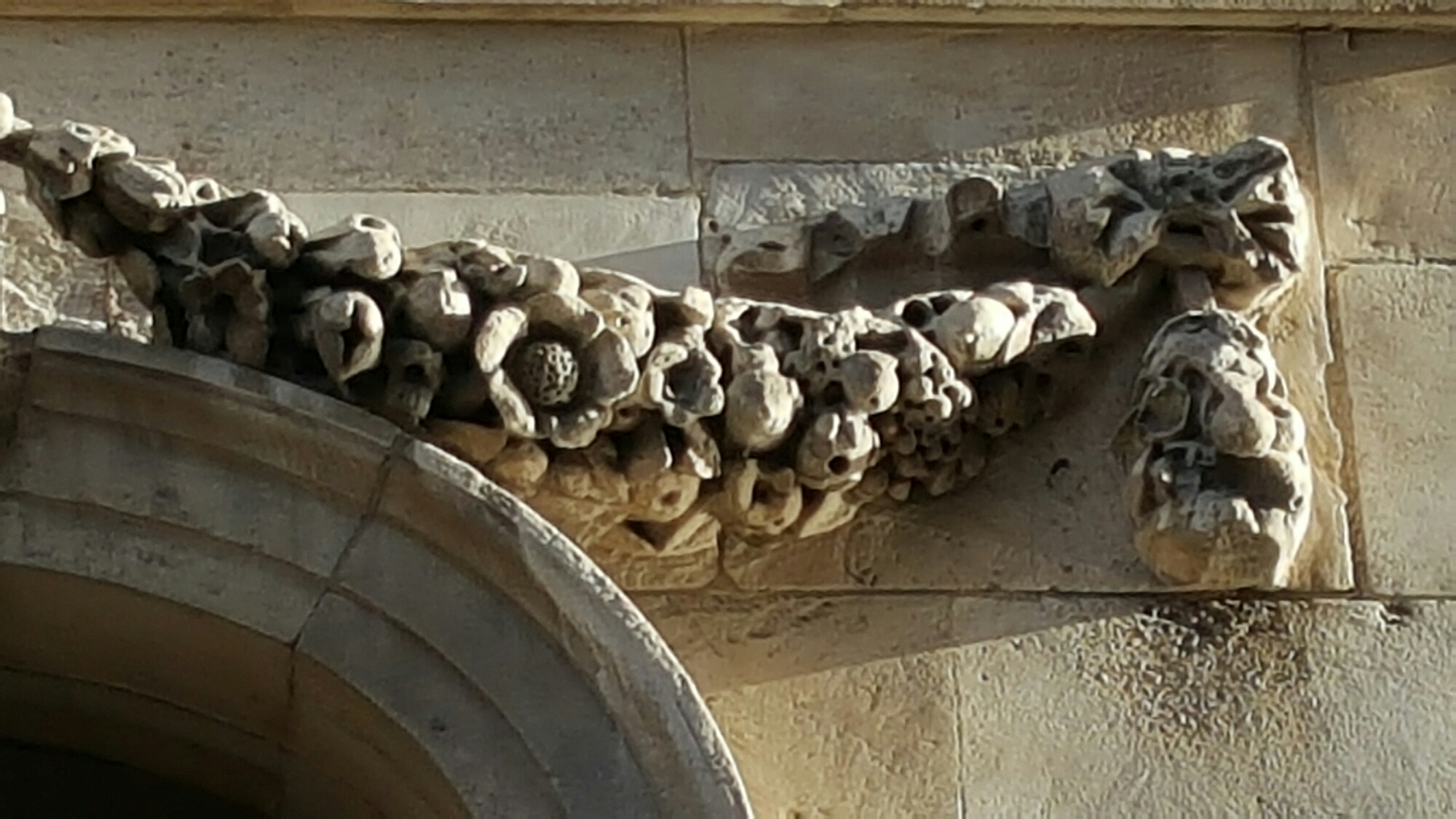
I also looked in on St. Stephen Walbrook, a curiously anonymous entrance for one of the largest and grandest of Wren’s City Churches, originally crammed in next to the old Stocks Market:-
St. Mary Woolnoth
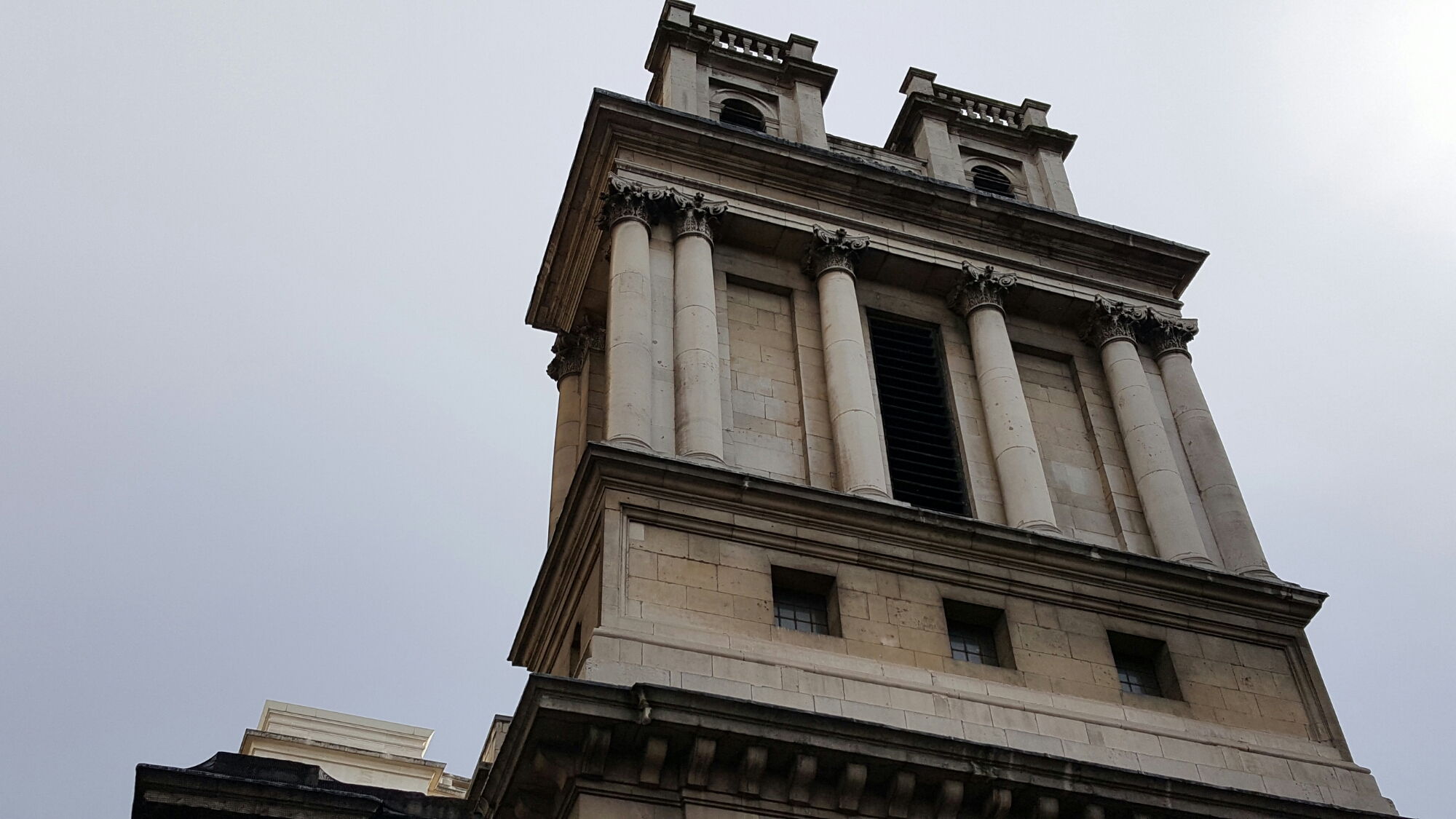
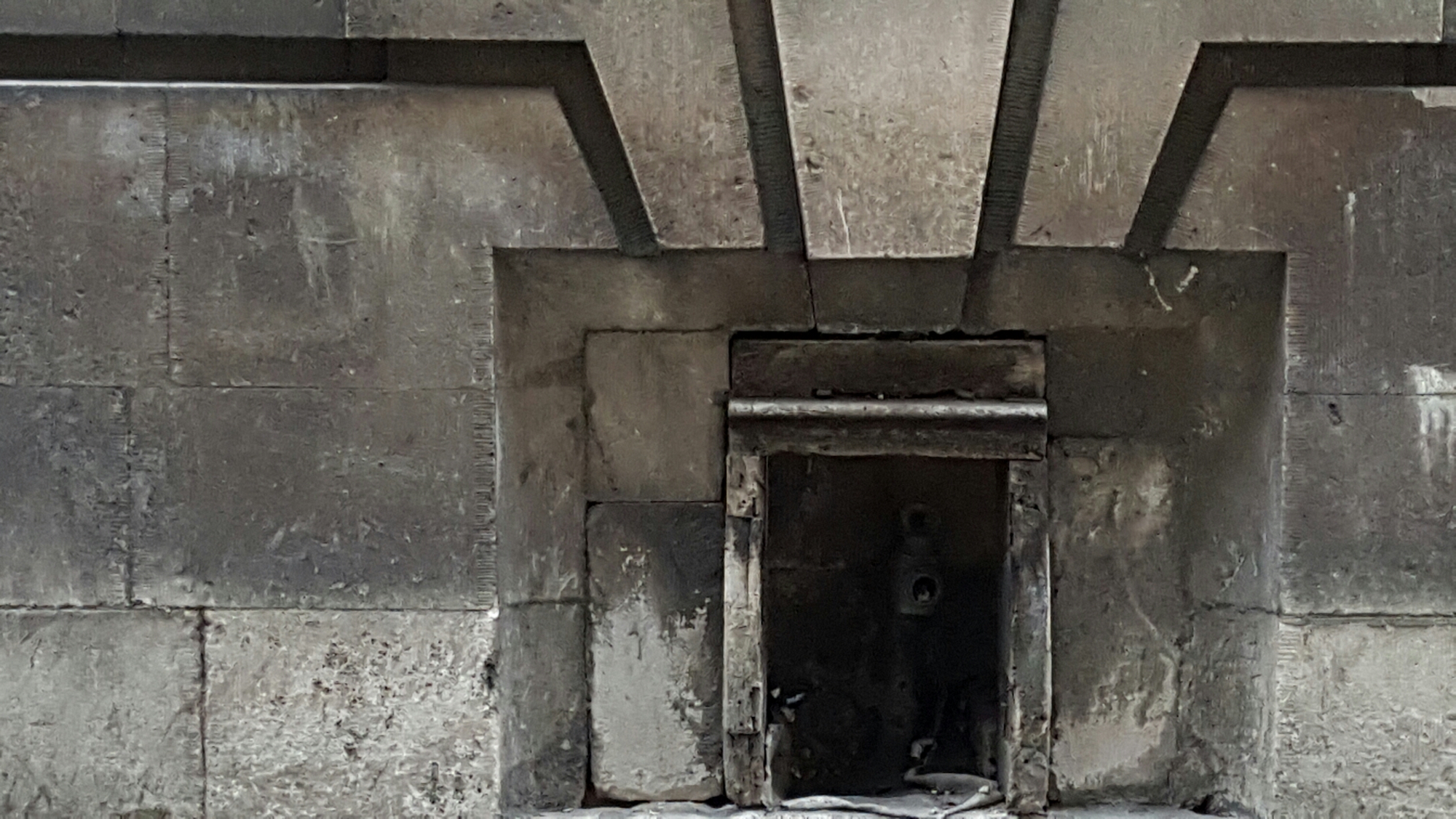
I tried to visit St. Mary Woolnoth between Christmas and the New Year. But it was closed. So, I slipped in instead at lunchtime today. It’s the Hawksmoor church I know least well, just behind the Mansion House, above Bank Station (one of the ticket halls is immediately underneath) and the survivor of several nineteenth-century attempts to demolish it. It’s quite intense, grandiose on a very confined site, cuboid, with huge Corinthian columns which press in on the space for the congregation and a fine pulpit, with an elaborate sounding board which feels redundant:-
Stepney School Board
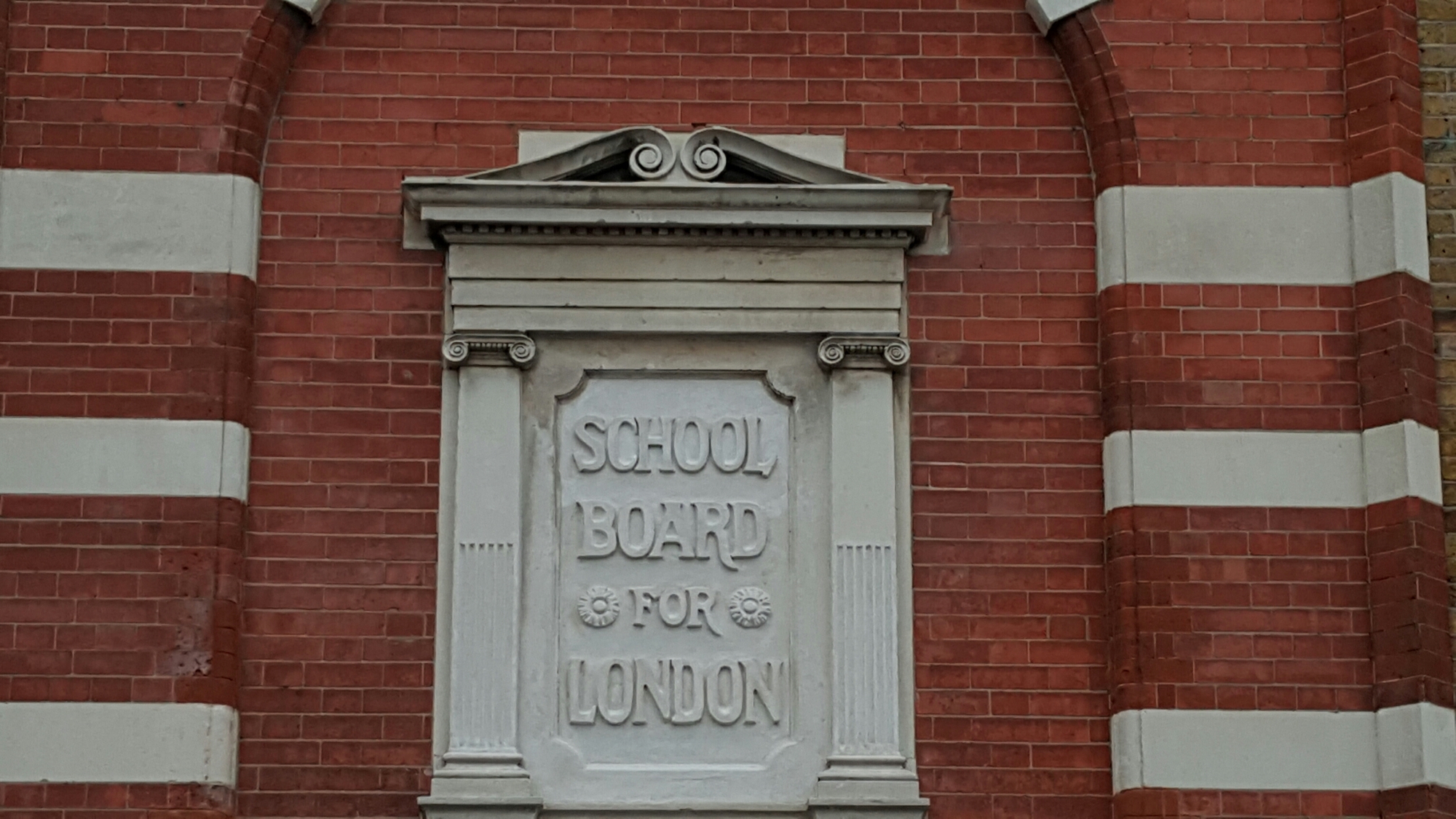
I took a minor deviation from my normal Sunday morning route and spotted that an old Board School on the far side of Shandy Park had been converted into luxury flats. It is described in the sales particulars as ‘dating back to the second world war’ which shows how much estate agents know of architectural history as it so obviously dates back to the Queen Anne Revival. It is the surviving wing of the original Ben Jonson School, constructed in 1872 on the Prussian model, and contained the original Cookery and Laundry Centre added in 1895, as well as the local School Board’s Divisional Offices:-

Soft City
I have been meaning to re-read Jonathan Raban’s classic study of the literary and psychological characteristics of city life, Soft City, as I remember enjoying its exploration of how individuals relate to the city in the construction of their private identity when it was first published in 1975. Raban had left teaching literature at East Anglia and settled for a life as a freelance writer in Islington and Earl’s Court, exploring the characteristics of the city with a mixture of Barthian fascination and nineteenth-century horror. It’s anti-modernist, anti-Corbusian and anti-Mumford, regarding the city as more an irrational psychological construct than a rational physical construction.
LDDC (2)
I learned more about the early history of the LDDC from Gregory Penoyre who was employed by the LDDC straight out of Sheffield School of Architecture as an architectural designer. He worked under Ted Hollamby, the ex-communist and owner of the Red House, who had been recruited as Chief Architect from Lambeth Borough Council, and alongside Gordon Cullen, the great proponent of townscape who liked to conduct meetings in pubs. I remember Greg saying that he was employed to draw ley lines connecting the Mudchute to the tower of St. Anne’s Limehouse (this was before the publication of Peter Ackroyd’s Hawksmoor), but he denies this.
 | Charles | Saumarez | Smith |
You must be logged in to post a comment.