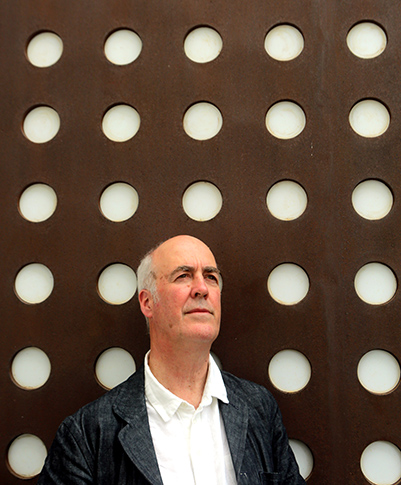
Our last appointment in Amsterdam was to go to the Van Loon house where we had arranged to meet Marlene Dumas, who has recently been appointed as an Honorary RA. She said that she hadn’t been sure whether to accept or not, but did so on behalf of women artists everywhere. I attach a photograph of us both raising a glass to this (sorry about my suit).

Rijksmuseum
I’ve been looking forward to seeing the reopened Rijksmuseum, having missed the opening this time last year. It’s been discussed and debated for as long as I can remember, the plan to integrate art and Dutch history causing controversy when it was first proposed by Ronald de Leeuw. He resigned five years into the project when it was delayed another five years by Dutch bicyclists wanting to retain their rite of passage through the centre of the building. Duncan Bull, the curator of paintings, explained the background to the museum, which was founded out of the Catholic emancipation movement in the 1860s when Dutch ecclesiastical treasures were being exported, not least by Duveen’s father to England. The King refused to open the original Cuypers building on the grounds that it looked like a monastery. Duncan then took me on a whistlestop tour of the medieval collections, which looked as if they had been very beautifully displayed by Jean-Michel Wilmotte down in the vaulted undercroft originally used for the manufacture of plastercast copies, and then to the eighteenth-century galleries, sparser and less impressive, apart from the wonderful group of pastels by Jean-Etienne Liotard bequeathed to the Dutch state by Liotard’s granddaughter. The official part of the trip was to the Gallery of Honour at the top of the building where we were able to contemplate Vermeer’s Milkmaid and Rembrandt’s Night Watch on our own. The picture which made a deep impression on me was The Oath Swearing of Claudia Civilis, which I now realise is on loan from the National Museum in Stockholm and which I must have seen in Stockholm. It’s so freely painted, in loose slabs of paint, and so savage.

Jan Six House
When I had breakfast with John Morton Morris on Wednesday, he said ‘Oh, if only I had known you were going to Amsterdam, I could have arranged for you to go to Jan Six’s house’. It turns out that it had already been arranged and I have never been anywhere so strongly redolent of mid-seventeenth century patrician Dutch culture: the small number of well established families, closely intermarried and full of civic conscientiousness, made prosperous by the profits of the Dutch East India Company and surrounded by images of the streets, houses and churches of Amsterdam, as well as their family portraits. Best of all is the astonishingly vivid portrait of Jan Six I by Rembrandt showing the man who had so often bailed him out, painted with a combination of casualness, intelligence, swift brushwork, human sympathy and vim. We went out into the garden, which gave a feel for the private life of Dutch families, normally maintained so visibly on public display, but not in their gardens behind. The Six’s only moved into their current house in 1915, but it still has the layering of the last eleven generations.

Gemeentemuseum, Scheveningen
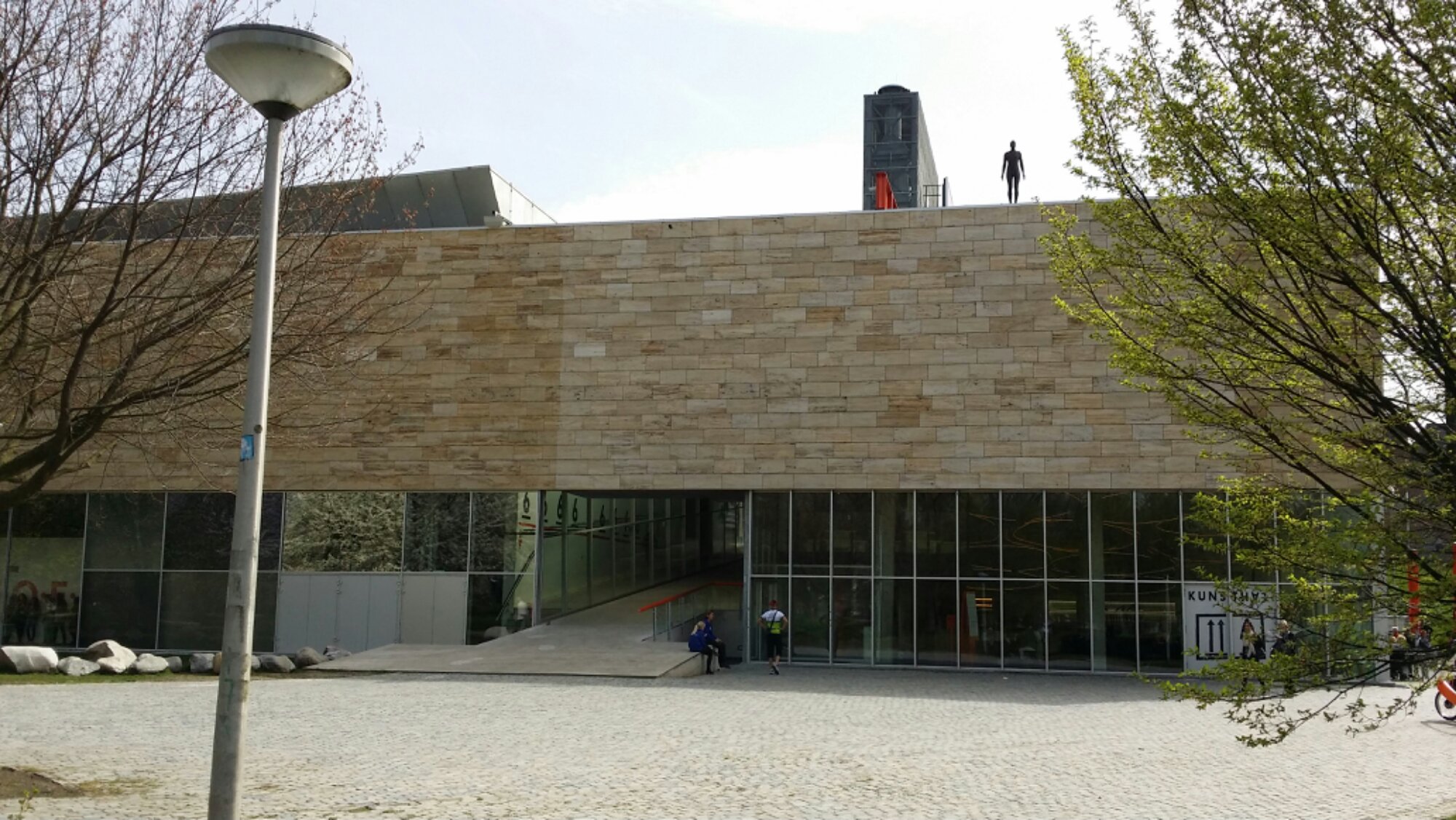
Lo and behold, the Gemeentemuseum, the great cradle of modernism, designed by H.P. Berlage in 1919, and not completed till 1935 after the Wall Street crash, has inaugurated a version of the Summer Exhibition, modelled on the Royal Academy’s, as a way of showing a wide range of contemporary art in a democratic way. I find this intriguing as the art world in London is so often inclined to regard the Summer Exhibition as absurdly old-fashioned, reactionary, without acknowledging it’s democratic characteristics and the way it allows a broad range of artists to show their work independently of the gallery system. I was also pleased to see Berlage’s system of diffused daylighting, so much admired by Caruso St. John, the quality of the tile work, not to mention a finely considered display of Mondriaan’s evolution to pure abstraction in 1914 and Victory Boogie-Woogie bought for the museum by the Dutch government in 1998 for $40 million.

Kunsthal, Rotterdam
Am in Rotterdam for the first time since I came in 1968 as the third player in a school performance of Hamlet. The Kunsthal is an interesting model: 25 exhibitions a year; only 23 staff; fast turnover, including fashion and photography; a building designed by Rem Koolhaas in an ad hoc style. Currently showing an exhibition of Shoes involving crowdsourcing (but not crowdsourcing in the selection of the shoes) and a very busy exhibition of 100 objects representing the history of the second world war, packed with schoolchildren and including the marbles which belonged to Anne Frank. The energy costs and maintenance costs are covered by a long-term contract with a local energy company ENECO (sorry, this is a slightly geeky comment). Interestingly, they accept no sponsorship from fashion companies for their fashion exhibitions.

Gillian Naylor (1)
I’ve just been to the funeral of Gillian Naylor, with whom I worked very closely all through the 1980s when I was at the V&A and she was Senior Tutor in the Department of Cultural History at the Royal College of Art. It’s odd how much one finds out about someone, but only after they die when friends from different stages of their life come together. She read modern languages at Somerville in the early 1950s, then worked for Design Magazine in the late 1950s. The shocking aspect of her life was that she had to resign from her job at the Council of Industrial Design when she became pregnant in 1962. The father of her child was never revealed and the great tragedy was that her son Tom drowned in the Thames on his seventeenth birthday. This must have been in 1980. They played In Paradisum from Faure’s Requiem which had been played at Tom’s funeral and we then carried her coffin through the Crematorium to another chapel. I couldn’t understand why the coffin was so heavy. It had apparently been filled with Tom’s books.
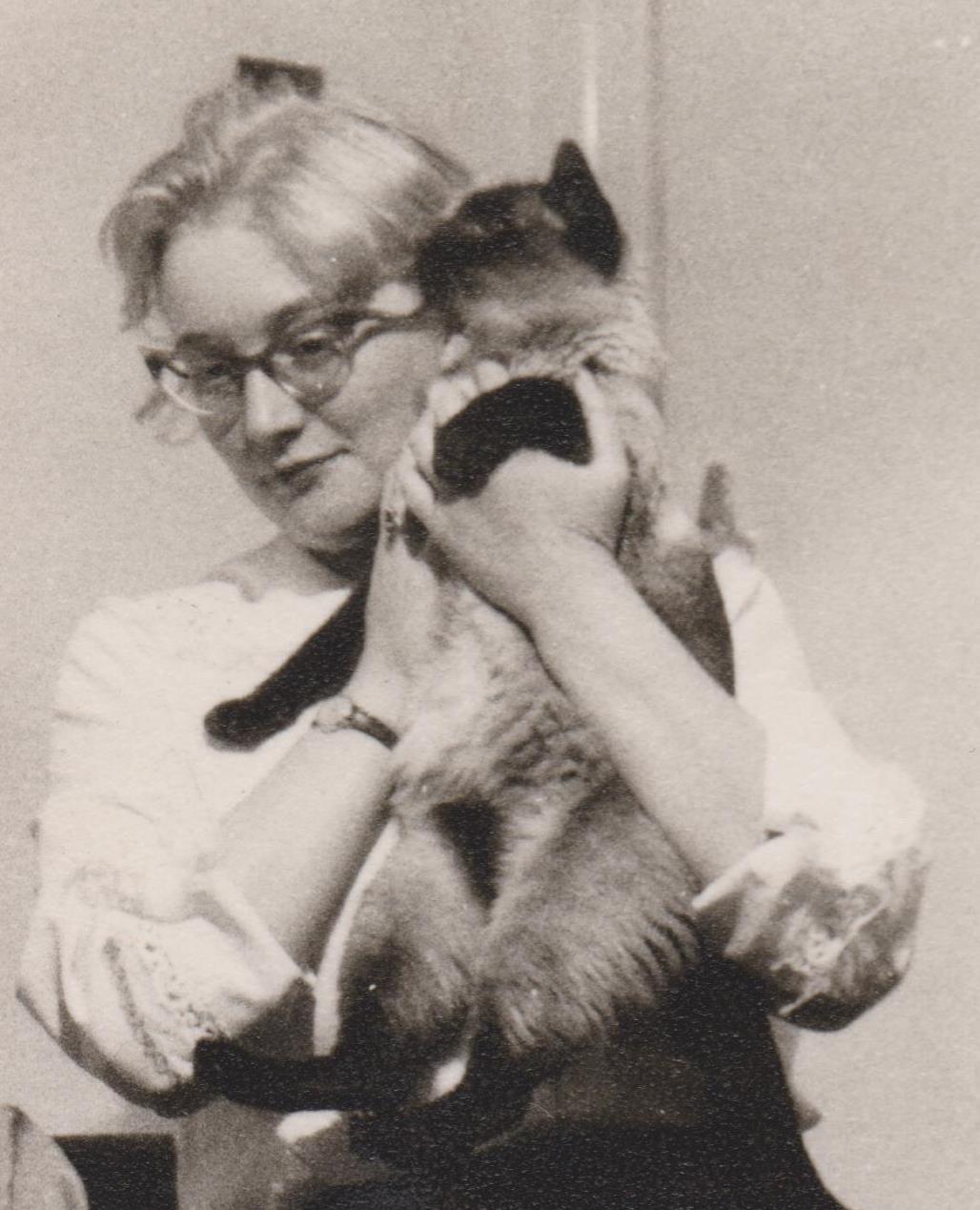
Gillian Erica Naylor
12th August 1931 – 14th March 2014
Anselm Kiefer (1)
We had Anselm Kiefer to dinner tonight. Tim Marlow interviewed him about his life and his forthcoming exhibition at the Royal Academy. It turned out that in his childhood, he had wanted to be first Jesus and then the Pope and then decided that it was better to be an artist. Born close to the Rhine, he studied constitutional law at university, influenced by the writings of Montesquieu, and only subsequently attended art school. In other words, he came across as an intellectual first, and an artist only to realise his intellectual vision. Tim asked him if he was a painter of the Sublime in the Burkean tradition. He denied this, but there is surely some truth to it. At least I discovered that the exhibition I remembered of his work at the Riverside Studios in the 1980s did really exist and wasn’t just an effect of false memory.
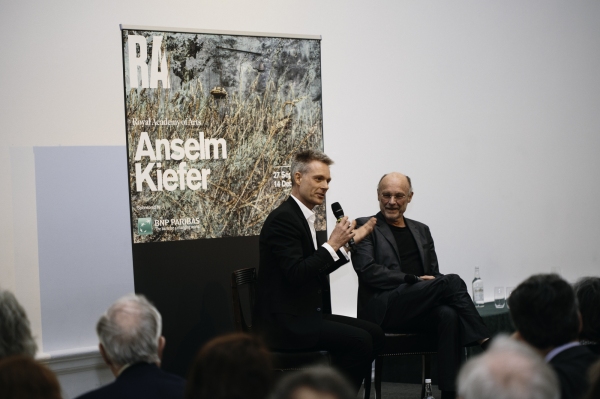
Tim Marlow and Anselm Kiefer in conversation at the Royal Academy. © Red Photographic
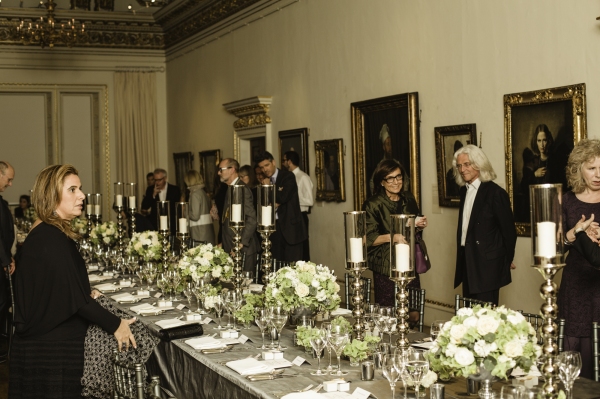
Dinner for Anselm Kiefer at the RA. © Red Photographic
Charleston Literary Festival
We’ve just had a very nice event to celebrate 25 years of the Charleston Literary Festival. I think I have gone every year for the last twenty. Every year a treat, full of unexpected literary, dramatic and occasionally political pleasures. In my speech, I tried to remember the best intervention by a member of the audience, which was when Lisbet Rausing asked a question of Adam Nicolson which made a connection between his admiration of the patriarchal values of the traditional landed aristocracy in Great Britain and the values of the Estonian aristocracy before the second world war. And what had that led to ? The point was that the audience always knows at least as much as the speakers.
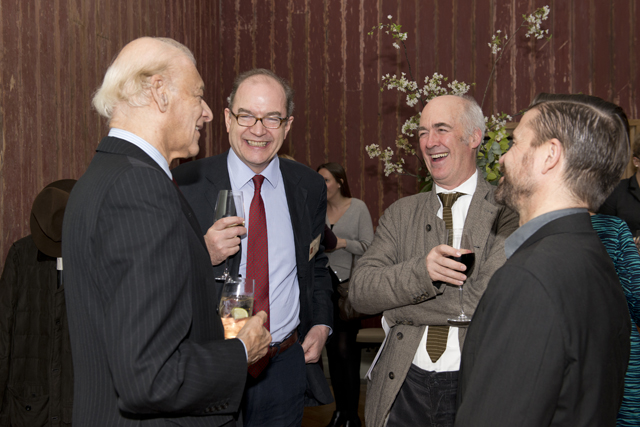
Christopher Ondaatje, Nigel Newton and Charles in the Academicians’ Room or the Royal Academy © Axel Hesslenberg
Edmund de Waal
Yesterday we went down to Margate to see Edmund de Waal’s new installation called Atmosphere, porcelain bowls hung in rows with musical intervals in front of the great East window looking out to the north sea. The Dean of Canterbury was there and the Canterbury Cathedral choir. They sang motets from the balcony and it was obvious that his work is a form of monastic contemplation stripped to shape and the space in between, although he talked more of Constable and Turner looking up at the clouds and the dissolution of the distant horizon.

Foxcroft and Ginger
At long last, there are signs that the new London has arrived in Stepney. We’re able to have eggs and bacon in Foxcroft and Ginger, the new, so-called ‘artisan bakery’ which has been installed in the old Wickham’s Department Store, which English Heritage has shamefully failed to list in spite of being one the grandest buildings in the old East end and the subject of a memorable eulogy in Nairn’s London.
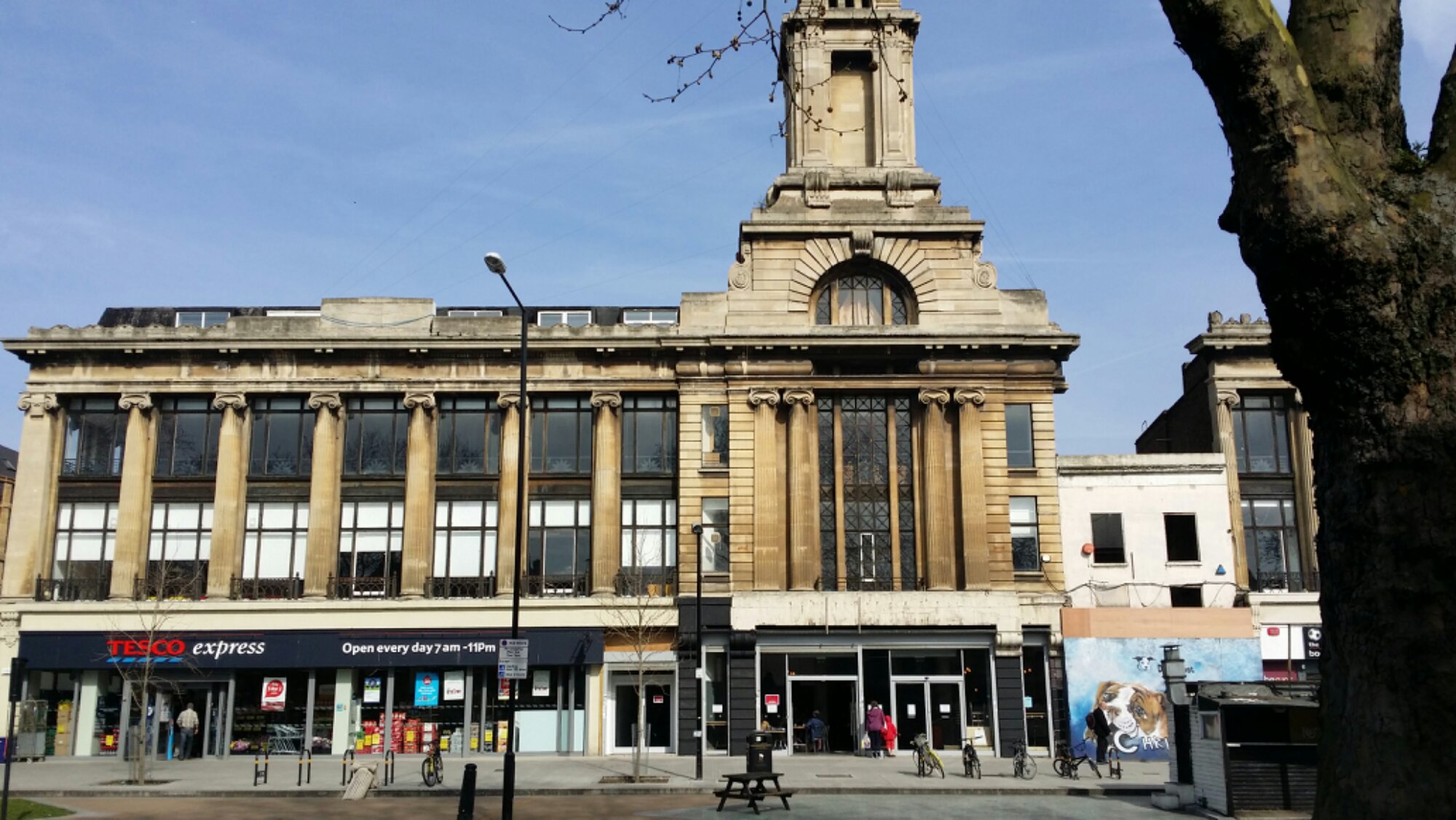
A developer has bought the building and installed work units upstairs. Now we don’t have to go to Spitalfields for bread and cappuccino. Farewell to the chicken shops which have traditionally lined the Mile End Road!

 | Charles | Saumarez | Smith |
You must be logged in to post a comment.