Victor Margrie (1)

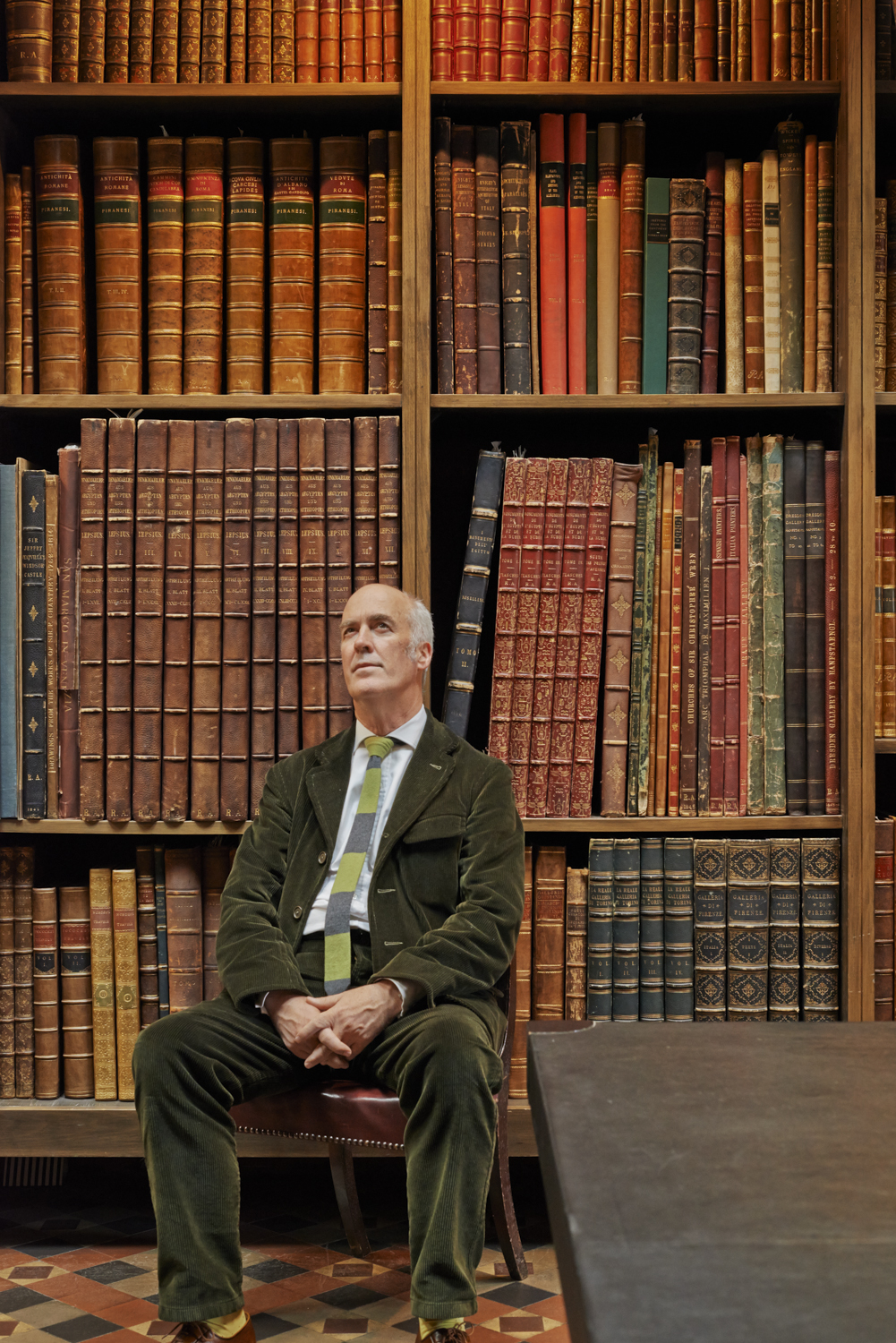
I had been told that Victor Margrie had died in early October (on October 5th.) and was bemused that there was absolutely no mention of it online because I have always regarded him as an exceptionally interesting and significant figure in the crafts revival of the late 1970s/early 1980s, when there were grants for graduates and the gallery in Waterloo Place, designed by Terry Farrell, was mainstream, before it migrated out to Islington.

Margrie had a strong belief in the relationship between the crafts and creativity/innovation/the avant garde and supported good writing in Crafts Magazine, when it was edited by Martina Margetts. There was a Crafts Council shop in the V&A and I think Margrie was himself a member of the V&A’s Advisory Council. There were craft demonstrations in the galleries of the V&A. Margrie stood down from directing the Crafts Council in 1984 and was then replaced by a man who was appointed because he refused to comment on the objects which were placed on the table in front of him – he said it wasn’t part of the job. The Crafts Council has never recovered.

https://www.theguardian.com/artanddesign/2022/nov/11/victor-margrie-obituary

Standard

Queen Alexandra (2)

Since Queen Alexandra was on my mind, I went to visit her. She’s currently a bit neglected, but will be in a better place when the new Tower Hamlets Town Hall opens and the park to its south. She is as I remembered: stately:

Good modelling of her robes:-

She appears again on the plaque below:

1904:

Standard

Queen Alexandra (1)

I was asked by the Public Statues and Sculpture Association (PSSA) to choose a public sculpture that I particularly admired (see below). I chose the fine statue of Queen Alexandra, which is on Stepney Way at the back of the new London Hospital, not perhaps an obvious choice, but deriving from a time when sculpture was a normal part of public commemoration, in a way that it can now feel a touch unnatural or forced – and there are not many artists who can do it effectively:-

Standard

The Sainsbury Wing (7)

By an odd and fortunate coincidence, my copy of a new and excellent volume of essays about the work of Denise Scott Brown arrived last week just at the moment when I was considering the issues surrounding the original design of the Sainsbury Wing and the current proposals for its redesign by Annabelle Selldorf:-

To an extent I half knew, but only half, Scott Brown was heavily involved in teaching about issues of urban form during the mid-1960s, including courses on ‘Form, Forces and Function’ at the University of Pennsylvania in fall 1963 and fall 1964, and then, again, in the University of California Berkeley in spring 1965 and at University of California Los Angeles in fall 1966 where she was appointed as a professor. She was due to write a book on ‘Determinants of Urban Form’ for which she was given annual leave to write it in 1967, of which the manuscript survives but has never been published. It was then that she first formulated her view of the need for flexibility in architectural design, writing in the notes for her lectures how

City form tailored too specifically to the special needs of one population at one time may become functionally obsolete long before the end of its structural life, whereas form designed to suit ‘functions’ more generally defined may prove less efficient for any one specific need, but over the span of its structural life more useful to more people.[1]

This was when many of the ideas which appeared in Learning from Las Vegas were first formulated and indeed she took Robert Venturi to visit Las Vegas when he came out to stay with her in Los Angeles in November 1966 before they were married in July 1967 and taught a course together on Las Vegas at Yale in fall 1968.

Key to her thinking was the idea of the glove and the mitten, the glove being highly specific in the way that it allows patterns of use, whereas the mitten is more generous and less determined:-

I can see now why Annabelle Selldorf showed this image in her lecture about the Sainsbury Wing. She did not state it quite explicitly, but the issue is clearly whether one treats the Sainsbury Wing as a glove or a mitten. Should its use be precisely as it was when it first opened in 1991 or should its use be allowed to evolve to a limited extent in order to acknowledge the changing requirements of the client and changing attitudes towards public use ?

I can see the argument for retaining the absolute integrity of the Sainsbury Wing in its original form because of its exceptional historical importance; but I am not persuaded that modifying its entrance as is now proposed by Selldorf necessarily damages its essential integrity, particularly now that the modifications are being done in a style that is more in sympathy with the classical language of the original architectural forms and, indeed, the changes to the space immediately outside the Sainsbury Wing, which will be enlarged will, I think, enhance its public visibility and its relationship to Trafalgar Square.

The Sainsbury Wing is indisputably a work of exceptional architectural interest and importance. But upgrading and renovating its entrance, making it more spacious and getting rid of later irrelevant accretions, could be viewed as an act of homage to it, not an act of desecration.


[1] Denise Scott Brown, ‘The Definition of City Form: Form and the Designer’ cit. Denise Costanzo, ‘The Function of Functionalism’ in Frida Gahn (ed.), Denise Scott Brown:  In Other Eyes, Portraits of An Architect (Basel: Birkhauser, 2022), p.81.

Standard

Lea Bridge Library (2)

I went to see the new back extension to Lea Bridge Library a week or so ago and have now spotted that Rowan Moore wrote about it at much greater length last Sunday, both of us admiring its calmness and civic values, a lightweight structure added behind an Edwardian public library for people to sit and work and have a cup of coffee.

https://www.theguardian.com/artanddesign/2022/nov/06/lea-bridge-library-pavilion-lending-new-life-organically-to-a-public-space?CMP=Share_AndroidApp_Other

Standard

The Sainsbury Wing (5)

I must say I was a tiny bit surprised that eight of the previous Presidents of the RIBA took it upon themselves to condemn the planned changes to the Sainsbury Wing, not least because I do not recall the architectural profession being especially protective of its merits in the past, not least, as it happens, the past Presidents of the RIBA, who turned down suggestions that Robert Venturi and Denise Scott Brown might be awarded its Gold Medal, which was proposed year after year during their time.

So, why the volte face ?

They can’t be especially well informed about what is currently proposed since I didn’t spot any of them at the lecture in which Annabelle Selldorf explained the detail of her latest plans – at a lecture at the RIBA.

https://www.theguardian.com/artanddesign/2022/nov/06/national-gallery-entrance-revamp-row-recalls-king-charles-carbuncle

Standard

William Kentridge

We spent nearly half the day at the William Kentridge exhibition, with a break for lunch, which we found you need because of its intensity – the range of media, the use of film, the way it absorbs you into its world, both personal and political, which he seems to have managed to maintain at full blast into his sixties in spite of his fame, using the galleries of the RA very creatively, if a touch cacophonously in Gallery 3. It’s been a long time in the planning – he became an Hon. RA in December 2014 and I think the idea of the exhibition came soon thereafter. Quite an achievement, given that much of the work for it must have been done during lockdown, but then it has an air of work-in-progress, much to its benefit.

Standard

The entry to a museum (2)

I have been thinking more about the issue of how important the entry to a museum is.

One of the things we had to do at the Museum Management Institute was to pick a museum we had never been to in San Francisco – easy for me as I had never been to any of them – and then describe everything about the experience of finding them/arriving/buying a ticket before the actual visit and how good or bad it was – in those days, mostly bad. It’s tricky once one is working in a museum to remember how off-putting they can be if you’ve never visited them. Hence, the focus on what the Sainsbury Wing looks like from outside, the metal gates, the scale of the urban/civic space between it and the Wilkins Building, what it looks like at night.

When we were first discussing the redesign of the Royal Academy, one of its most loyal donors said she always still found the courtyard a little bit off-putting as if she didn’t belong there. If she felt like that, what did everyone else feel ?

So, yes, the National Gallery is right to be paying attention to its entrance and what visitors feel.

Standard

The entry to a museum (1)

I have been asked by Bendor Grosvenor if there is any evidence that people are influenced by whether or not they go to a museum by the character of the entrance (I know he thinks the National Gallery shouldn’t be spending money on its entrance).

This is not exactly an answer to his question – I believe the National Gallery has assembled evidence on attitudes (all negative) to the current experience of the entrance to the Sainsbury Wing – but I remember being told at the Museum Management Institute which I attended long ago (1991) that visitors make up their minds about whether or not they will like a museum within thirty seconds of crossing its threshold.

When writing my book about museums, I managed to find out the source for this from Phil Nowlen, the wise man and mentor who ran the course. It came apparently from a book by Christopher Lovelock called Services Marketing: People and Strategy, now in its eighth edition. I can’t say I’ve read the book, but it suggests that entrances do matter.

Standard

Alcina

We went to the dress rehearsal of the new production of Alcina at the Royal Opera House. Opens Tuesday, a beautiful, lively, clever, if quirky production, directed by Richard Jones and designed by Antony McDonald. I couldn’t quite figure out what it would have been like when it opened as an opera at the recently built Theatre Royal in Covent Garden in April 1735, but it certainly is very enjoyable in 2022. I particularly liked the trees.

Standard