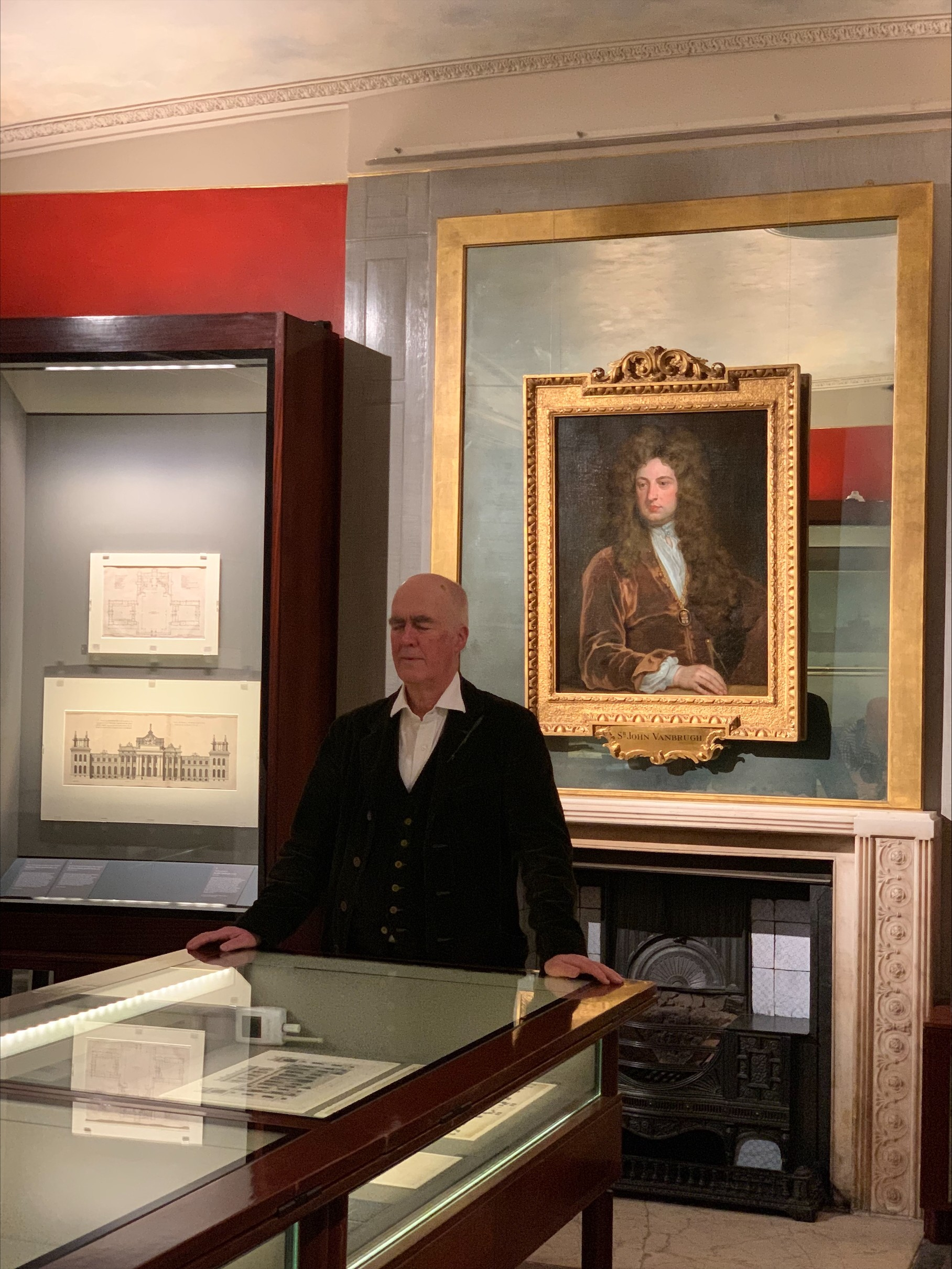
More on Liverpool Street Station from the Gentle Author, who alerted me to what’s proposed:-
Category Archives: Uncategorized
Liverpool Street Station (12)
I have been sent an image of the linocut done by Edward Bawden in 1962 of Liverpool Street Station:-

It was in the dying days of steam trains, but shows the cathedral-like magnificence of the railway sheds, which can still be seen if you go beyond the unattractive 1960s shopping mall which blocks the view. It remains one of the better preserved great railway stations of London. The plan to plonk a monster tower block on top of it and another next door will block out all the daylight and destroy the whole sense of scale of the building. Betjeman campaigned in the 1970s to stop Liverpool Street Station being replaced by the ‘slabs and cubes of high finance’. Poor Betjeman must be turning in his grave.
Liverpool Street Station (11)
In case you haven’t seen what is planned for Liverpool Street Station, here it is:-
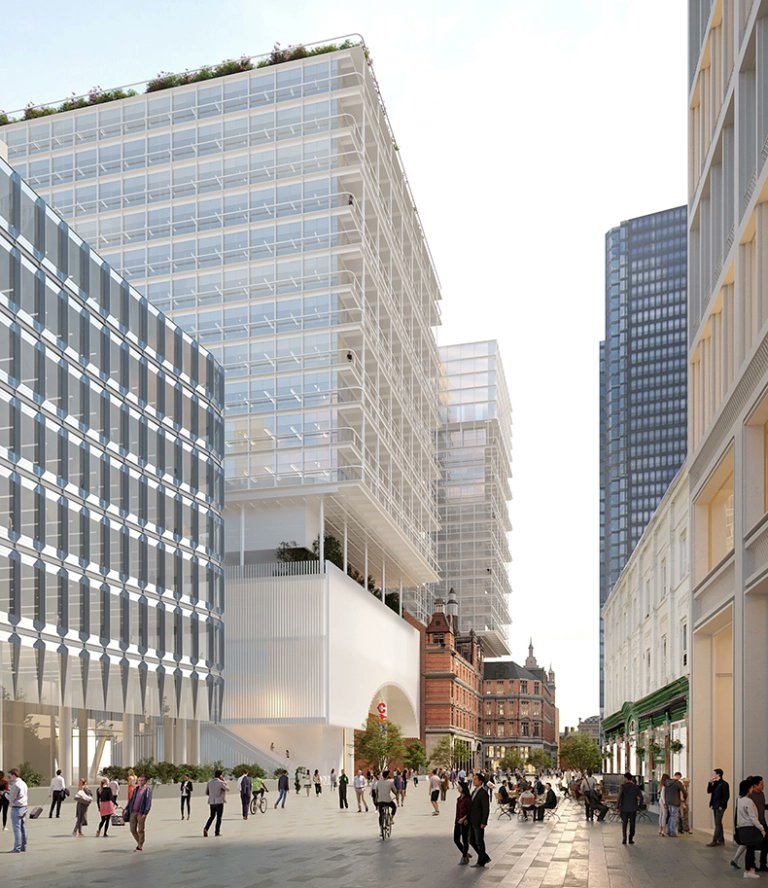
Just take a look at the difference in scale between the old Victorian railway station and the Herzog and de Meuron tower blocks, one of which is actually on top of the Grade 2* listed station.
This is at a time when the evidence points to fewer people wanting to work in the City, many of them working a three-day week, and the City planners wanting to make the City a better environment to work in.
This is an interesting way to start.
Westminster Abbey Choir School
I have just received the Coronation Issue of the Westminster Abbey Review which includes an interview with me about the brief period when I taught maths and English at Westminster Abbey Choir School from January to July 1972 when I left to go travelling in Italy. I was astonished that anyone remembered it.
It required me to dredge up my memories of my late youth, before I went to University, when I lived for seven months on the top floor of the school in Dean’s Yard and taught the four forms into which the School was divided. My memories were partly prompted by two of my former pupils who remember it all far better than I do, including what I was like before I was bald.
There were a few memorable figures:-
The Headmaster was called Francis Tullo, a nice, very decent figure.
Latin was taught by Jack Lodge, who was said to be some sort of champion at bridge, taught some of the pupils to play bridge, and apparently showed silent films in a Film Club which the better pupils would accompany on the piano (some of them were brilliantly talented musicians).
Science was taught by Mr. Bennett, who I met not so long ago. All I could remember was that he drove a Morris Minor.
Art was taught by Allan Johnston, who was and remains a very interesting Scottish minimalist who was a student at the Royal College of Art, presumably only teaching as a way of making some pocket money. He was the first artist I ever met and introduced me to the studios of the Royal College which were still then next door to the V&A. We would have dinner together after his teaching and became friends, although I haven’t seen him in a long while.
The main thing I remember is walking the boys across Lambeth Bridge to play cricket on the lawns of Lambeth Palace. I also took them, probably as a break from their maths, to the Tate – and, although I had forgotten, also to the National Gallery. It was my first experience of the London museums and I got to know them reasonably well.
I was asked what I thought of the School. It had its eccentricities, some of them owing to the fact that the pupils were professional singers. But they were interesting. And the teaching, including mine, was possibly a bit erratic. But it was no hardship living right in the heart of Westminster next to the Abbey.
Liverpool Street Station (10)
I sometimes slightly despair about what is happening in some parts of the City. Saving Liverpool Street Station was one of the great victories of the 1970s conservation movement, led by John Betjeman. Now, Network Rail, or whoever now owns the stations, plan to use it as the deck for a vast skyscraper, thereby completely destroying its surviving Victorian character.
The thing which is pretty unbelievable is that they held a public consultation in which they showed only half the project – the bottom half, of course. This is so fantastically disreputable that the City planning department should simply ban the developers from ever submitting a project for consideration again.
The Slab (4)
Every time I see a picture of the building proposed for the bend in the river half way between the Houses of Parliament and St. Paul’s, I cannot believe my eyes:-
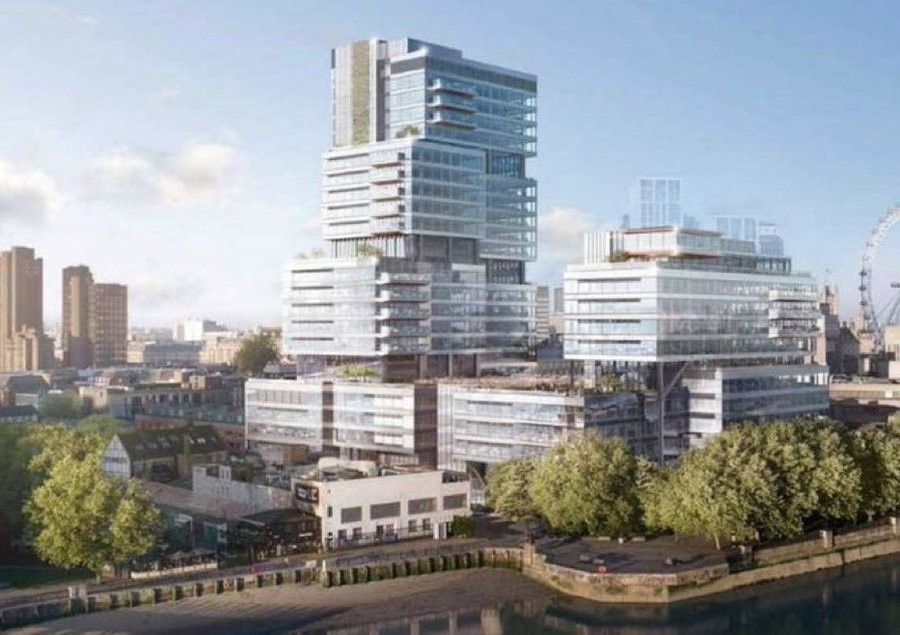
How on earth did a building of such ludicrous, over-scaled monstrosity get so far through the planning system and why on earth wasn’t it vetoed at Stage One of the process ? How did the members of the Lambeth Council planning committee possibly think that a building of this scale was legitimate right next door to the National Theatre ? Why was it not vetoed by the Mayor ? Today is the last day of the Planning Inquiry and I hope the Planning Inspector will say, which should be obvious, that it is grotesque.
Sir Christopher Wren (1)
I was asked last night to speak at the annual dinner of The Worshipful Company of Architects about Christopher Wren, whose tercentenary we are about to celebrate on February 25th.
It is not easy to condense what one knows about someone who lived to the age of ninety two into eight minutes, but what follows was my attempt:-
• I have been encouraged to say something about Sir Christopher Wren, the three hundredth anniversary of whose death we will commemorate next month, on February 25th, exactly three hundred years after Wren sat down in an armchair of the house he had leased in St. James’s Street after lunch, having caught a chill on his way travelling from Hampton Court, where he had retired after leaving the Office of Works. His servant came in later in the afternoon and found him dead.
• Wren had spent most of the previous five years thinking not so much about issues of architecture as about Longitude, the problems of which he had not been able to solve and wanted to before he died. In some ways, he remained at heart the scientist he had originally been, before being persuaded to switch to architecture by Charles II.
• The issues I want to consider very briefly are:- What sort of man was Christopher Wren ? And what is it about Wren’s career which makes it so worth paying attention to three hundred years later ?
• The first thing is that he was pretty, although not entirely, philosophical about changes in taste, the changed attitude to design which made his way of working seem old-fashioned, too much influenced by the court, by the time of his death. Instead of getting upset about the fact that he had been removed from his office after fifty years of devoted royal and public service, he settled down with his son to provide a detailed documentary record of all his work, later published in 1750 by his grandson, Stephen Wren, under the title Parentalia, which includes full details not just of his architectural work, but also his scientific experiments early in his career when he was a Fellow of All Souls and Gresham Professor of Astronomy, together with drafts of his ideas about architecture. He understood the importance of documentation to any future interpretation of his career and he wanted to make sure that there was plenty of evidence for his achievements.
• The second thing worth paying close attention to about Wren and his career was how immensely pragmatic he was. If one looks at the repeated changes in the design of St. Paul’s, one can see Wren shifting and adapting according to the requirements of his clients, the cathedral clergy, who wanted a design which was much more conservative than what Wren proposed in his Great Model in September 1674. Even though he would probably himself have much preferred the design represented by the Great Model, still extant and housed at St. Paul’s, he accepted the criticism of the clergy, who felt that the Model was insufficiently Cathedral-like, and he produced a new and adapted design, the so-called Warrant Design, which had a more conventional nave and choir, although still with a great dome which had been at the heart of all of Wren’s proposals from the beginning, even before the Great Fire had destroyed the old St. Paul’s.
• Although Wren was immensely able and could occasionally show traces of impatience, as when he decided to make no more models of St. Paul’s because he did not wish to have to submit his drawing to those he regarded as ‘incompetent Judges’, he was willing to subordinate his ego in a way which was highly admirable. He did not regard himself as what we would describe as a ‘star architect’. He worked closely with those around him, including John Vanbrugh.
• The third thing which is very admirable about Wren is his sense of the city as a whole. He was a London person. He threw himself into the redesign of London after the Great Fire, submitting designs to the King for wider and straighter streets and a proper quayside — his plans were based on what he had seen the previous year in Paris — only about four days after the fire had ended. His plans were thwarted by the desire of the citizens of London to reconstruct the City as fast as possible, based on existing property rights, without going through the huge legal complexities of renegotiating them. But Wren kept a sense of the way that architecture can, and should, contribute to its surroundings. St. Paul’s is designed as much as a civic and national monument as it is a holy place, which is probably why it still maintains such a strong hold on the national imagination. His work on the City Churches was in many ways severely practical, but he allowed for a spirit of free invention in the design of the church towers and spires which would be visible from a distance, as demonstrated in engravings of the City’s skyline.
• Wren wasn’t remotely interested in the design of country houses. He wanted to improve the working of the City — its palaces, its hospitals, above all, its churches — and he undertook his work without any particular need for personal enrichment, going to visit St. Paul’s every Saturday to inspect how work was getting on. He worked as part of a team. It was the result which was important.
• So, I hope you will all agree that Wren was, in every way, a very remarkable person. Someone of acute intellect; an effective draughtsman; brilliant at problem solving; but, also, oddly and unusually modest, willing to subordinate his ego to the task at hand.
• I would now ask you to raise your glasses to salute the memory of Sir Christopher Wren.
The last of Paris
I have been flicking through my photographs of Paris and now post a few late extras:-
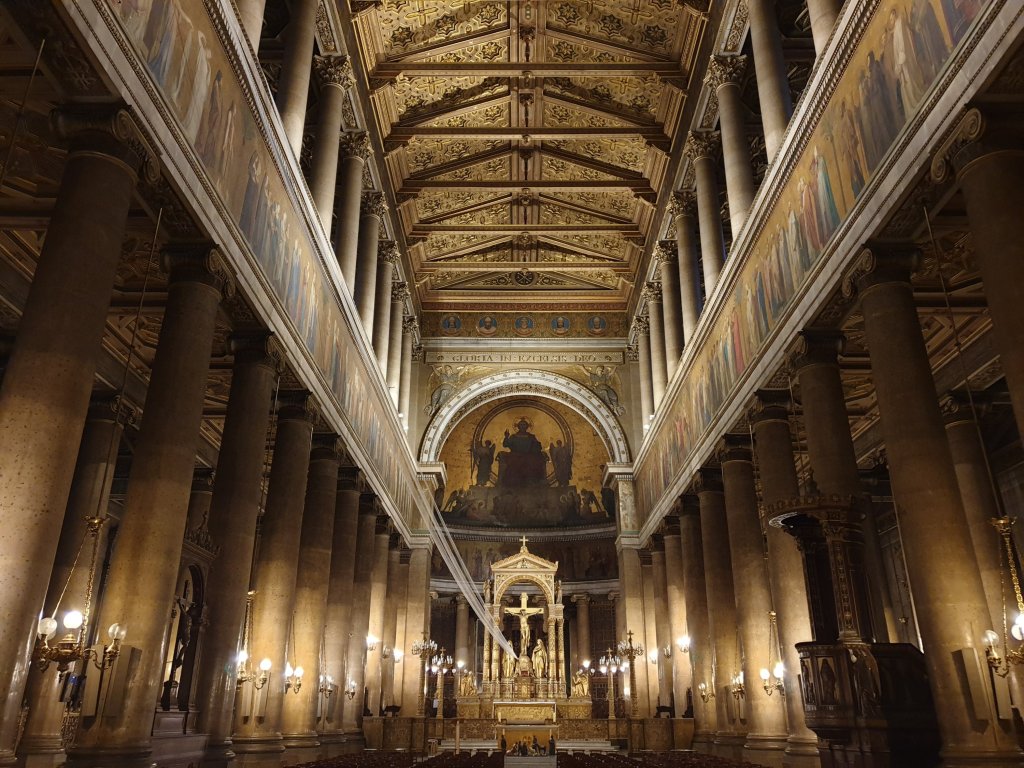
The interior of St. Vincent-et-Paul:-
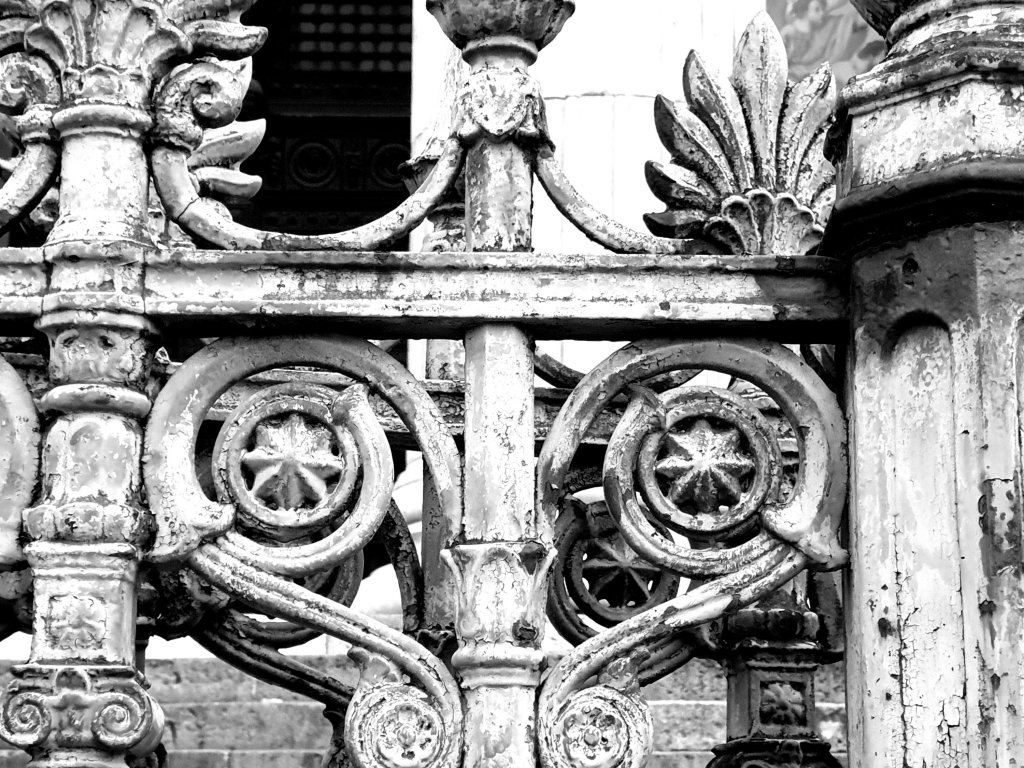
The ironwork outside:-
An unexpected pair of petrol pumps on one of the big boulevards:-

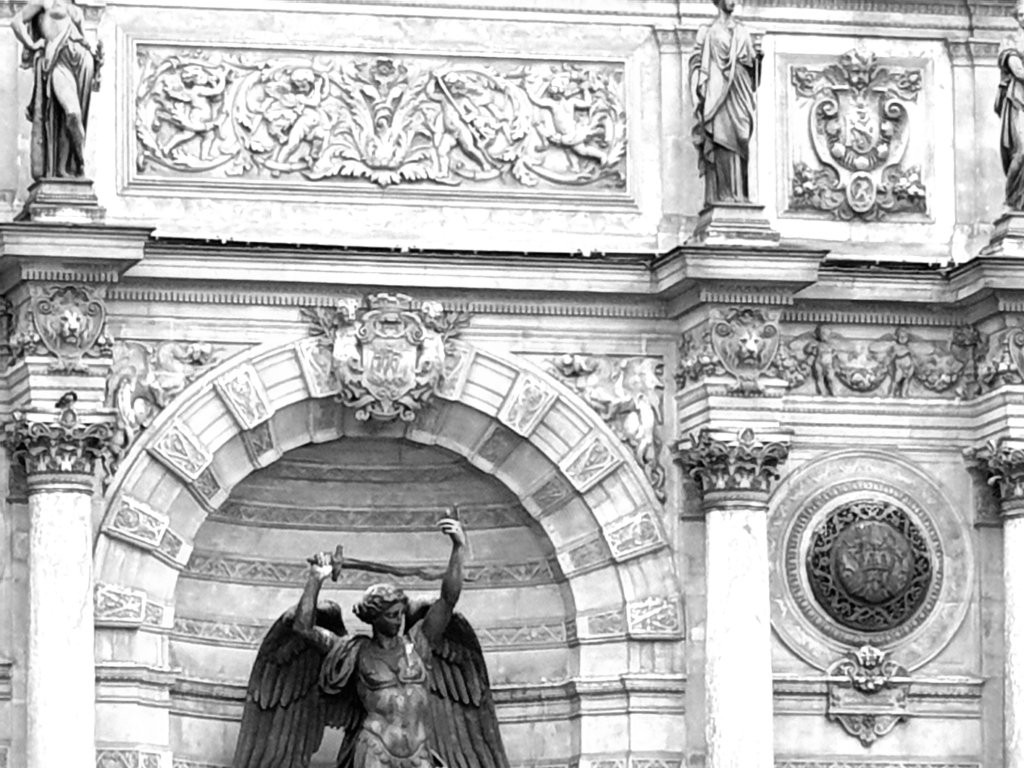
The Fontaine St. Michel, designed in 1856, constructed 1858 to 1860, no lack of urban ambition here:-
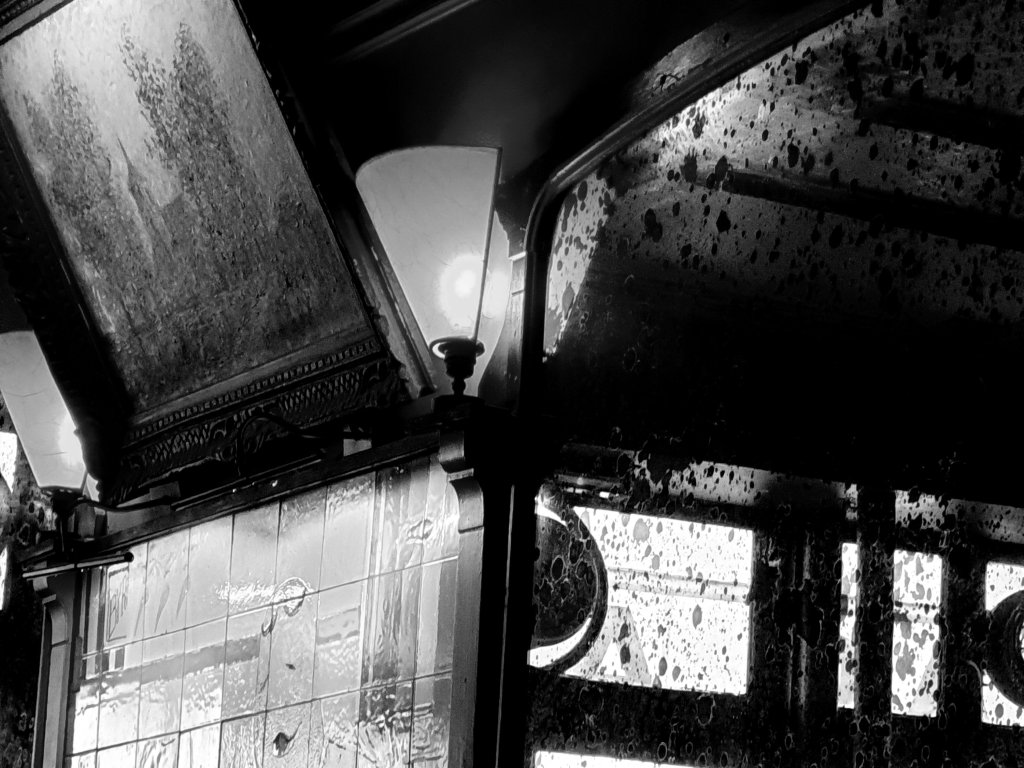
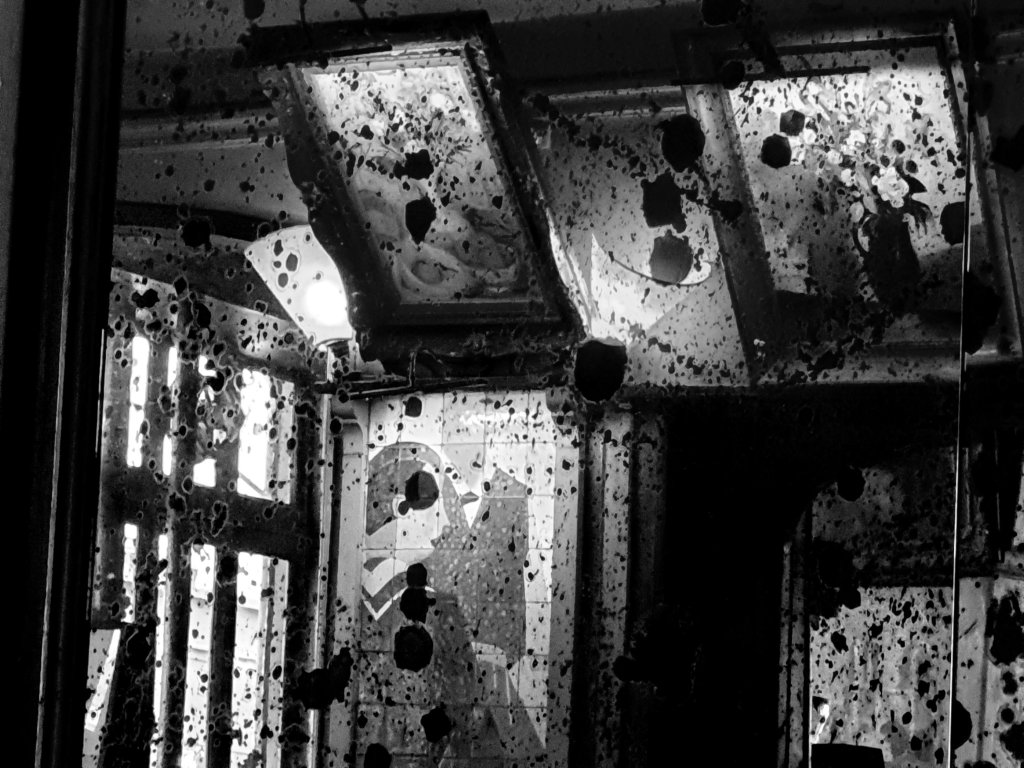
We were recommended La Palette for its charcuterie, not its atmospheric interior:-
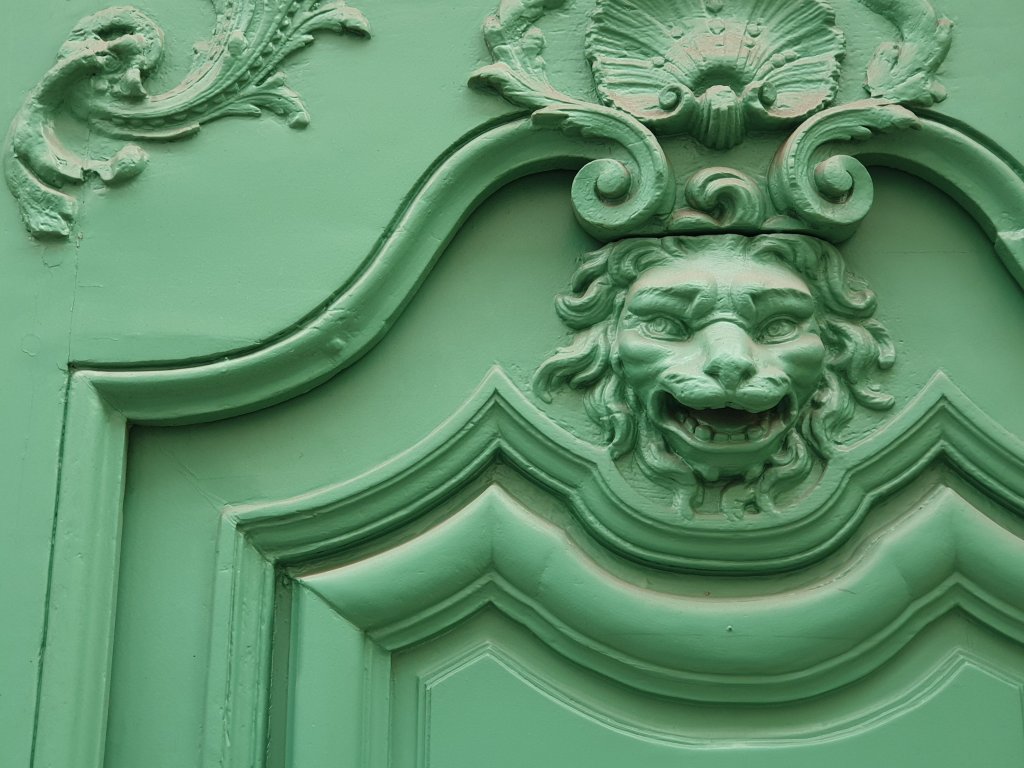
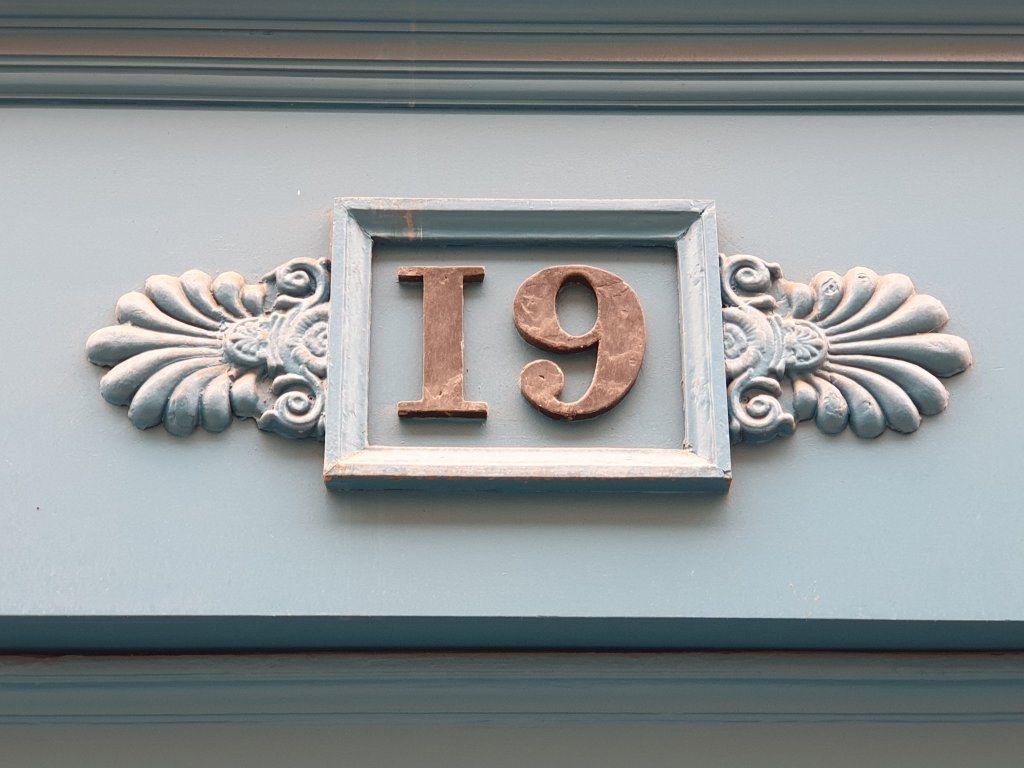
Two nice doors in the Marais:-
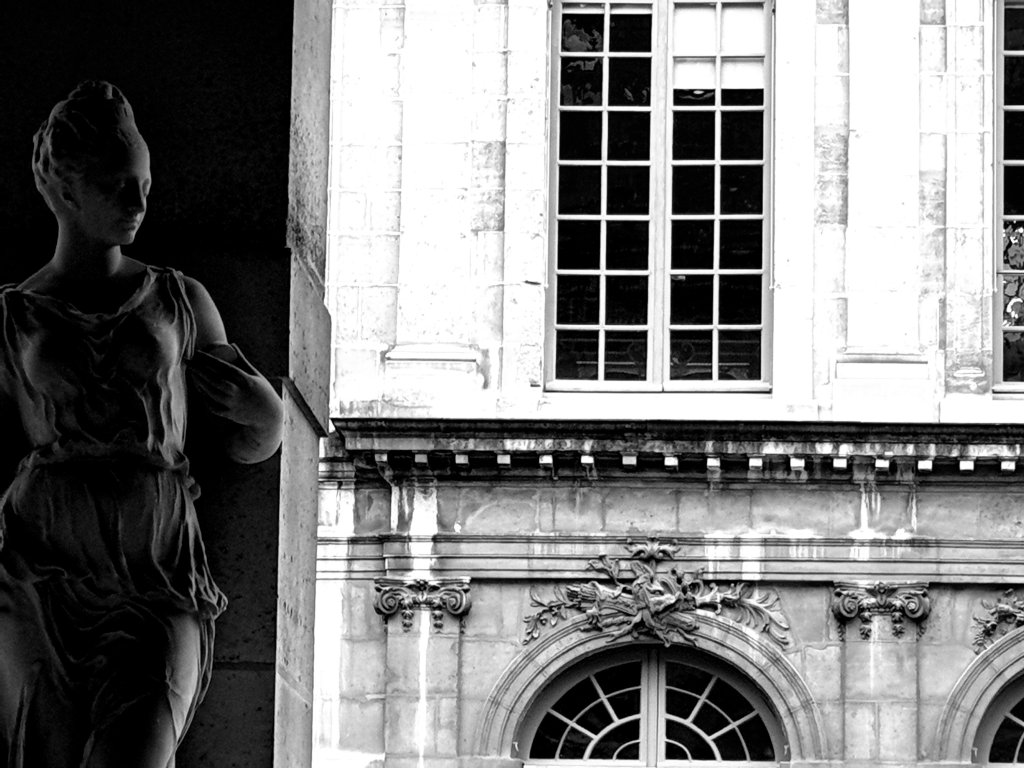
And the entrance courtyard to the Bibliothèque Nationale:-
Palais Royal
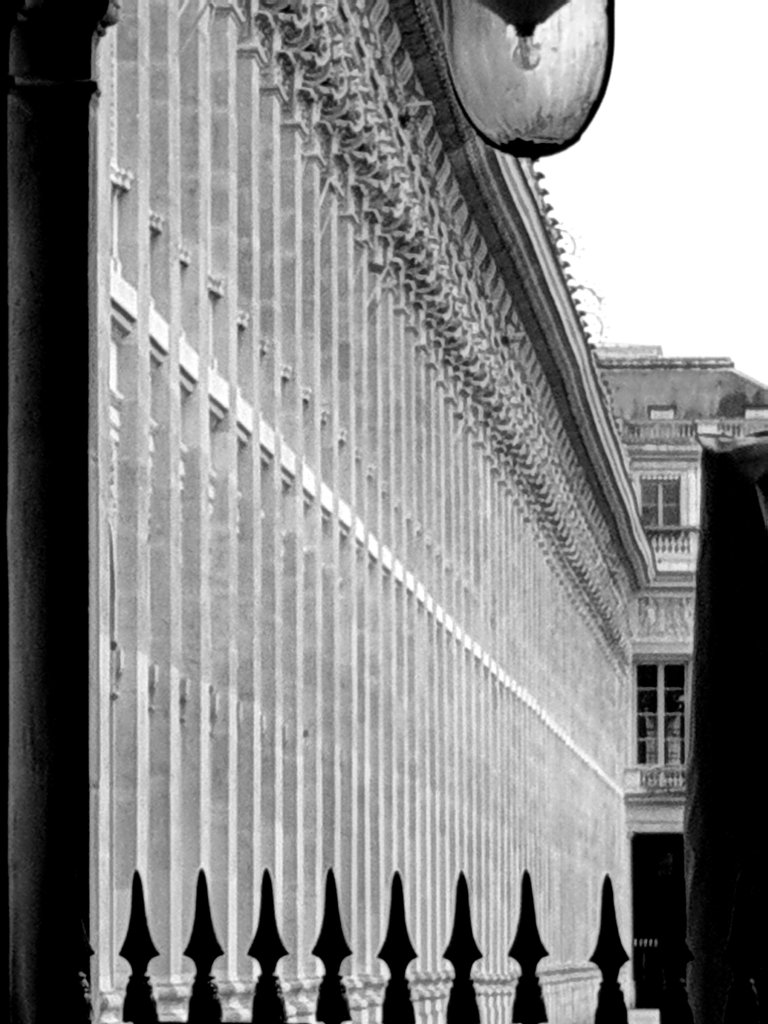
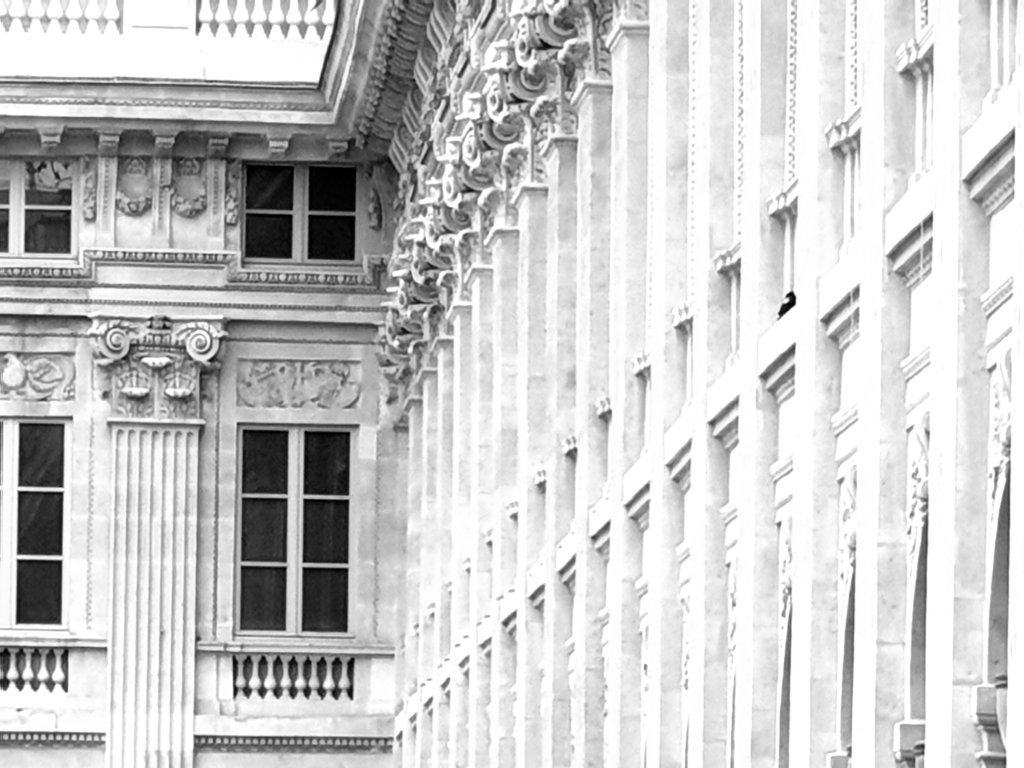
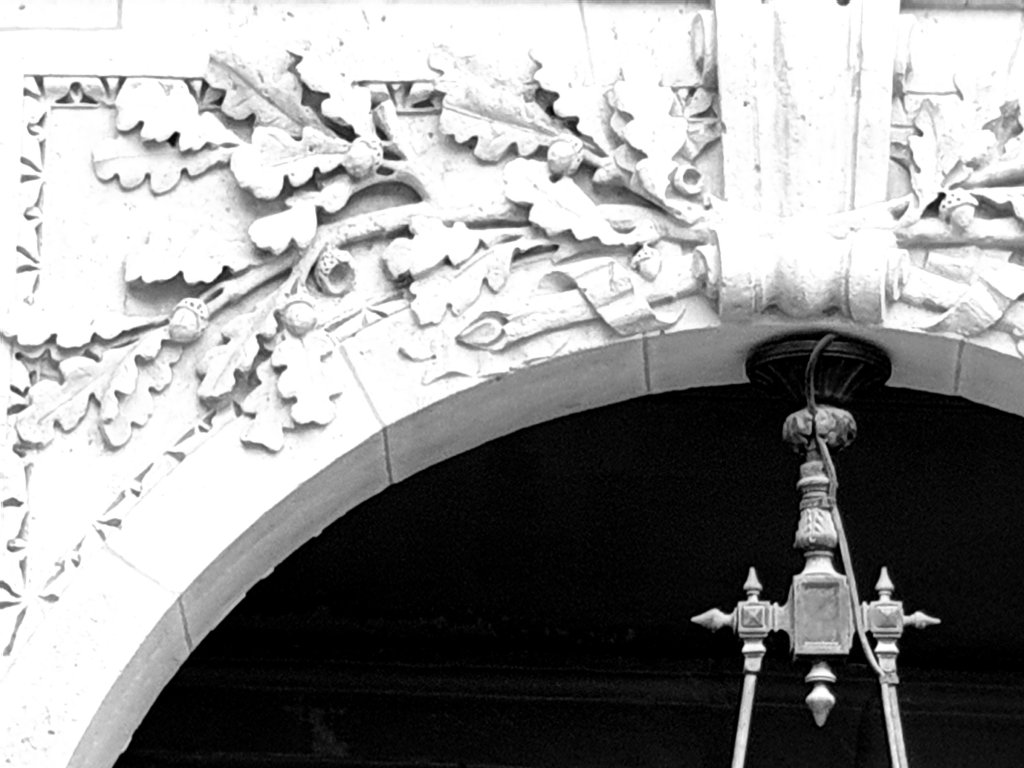
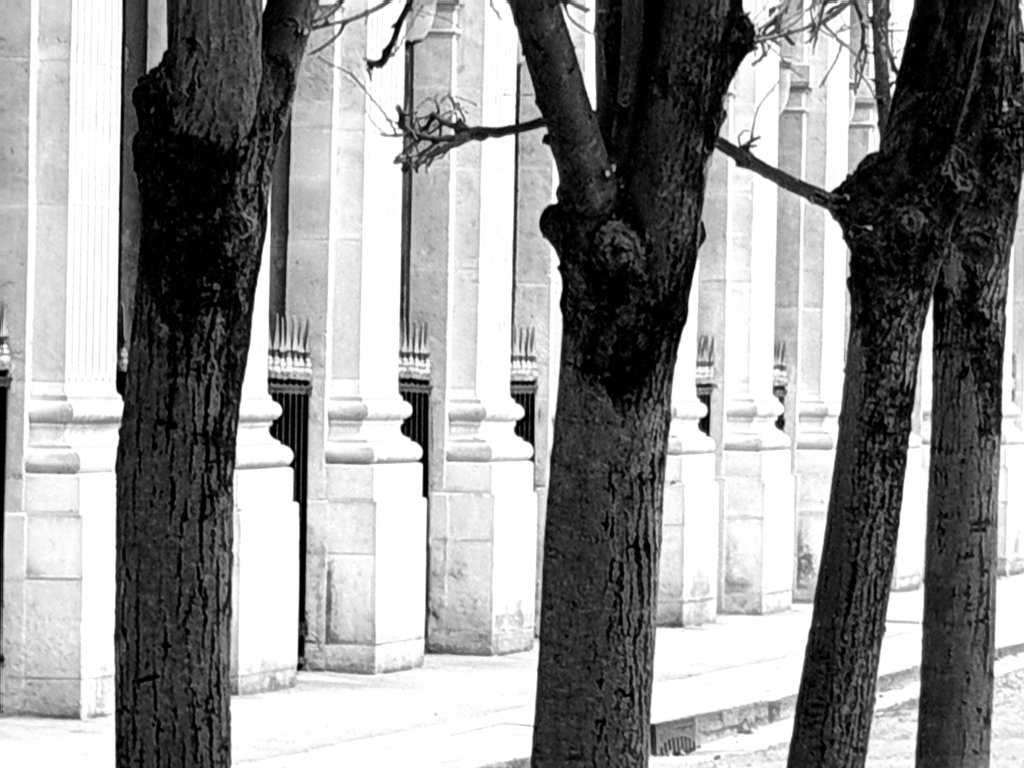
We walked through the Palais Royal this morning – such a treat. I couldn’t remember its history, not surprisingly since it’s complicated. First constructed in the 1630s for Richelieu. Richelieu gave it to Louis XIII, Louis XIV gave it to the Duc d’Orléans. But the character of the Palais Royal seems to have been owing to the construction of town houses round the courtyard towards the end of the eighteenth century by Victor Louis and the construction of shops. But who was Victor Louis ? Only half a neoclassical architect, discredited in the 1750s for inventing classical remains, so that he was never part of the architectural establishment. But the architecture is surely as good as can be, a monument to a certain style of civility:-

A wheelchair in Paris
I do not normally do posts about the problems and issues round travelling with a wheelchair. But having spent three days navigating our way around Paris, I am going to break my normal rule to give some tips and advice for those who might be planning something similar.
My first advice is of things to avoid:-
The Café Marly
We arranged to have lunch with friends in the Café Marly, convenient for the Louvre. We were made to wait fifteen minutes outside and then another fifteen minutes before being told there was no disabled access. I would have thought they might already know.
The RER
The RER is supposedly disabled accessible. It is if you can find someone to manage the special ramp required to get on to the train, but we did not know this before we arrived on the platform, so missed several trains before retracing our steps to find someone to assist. Not straightforward in Chatelet when we were late for a performance of Cabaret (we left two hours to get there).
The Metro
Lines One and Two are also supposedly disabled accessible. They are not.
Walking
In many ways, walking in Paris is the greatest possible pleasure. But not so much with a wheelchair. The pavements are narrow. Shopkeepers often put out advertisements mounted on an immovable metal base making the pavement impassable. People are, perhaps not surprisingly, annoyed to be confronted by a wheelchair blocking the pavement, especially in the Marais on a Saturday afternoon.
But it was not all bad:-
Eurostar
Everyone on Eurostar in both London and Paris was incredibly helpful.
Buses
Parisian buses are fantastic (when they come) – fast, spacious, easy to get on and off, better than in London. They go everywhere and Google makes finding routes straightforward.
Museums
In general, the people in museums were pretty helpful, particularly one of the guards in the Musée de la Chasse.
G7
There is a taxi app called G7 with which you can book accessible taxis. It worked really well except for the time when none were available.
So, all-in-all, it can be done, but is far from straightforward. In London, legislation must have made installing lifts compulsory, particularly for public institutions, but in Paris, the culture feels very different: much less sympathetic both institutionally and culturally. It makes one grateful for London’s culture of tolerance and helpfulness.
The benefit – oddly – is that everything takes a lot of time, which slows one down and allows one to look about and pay attention.


You must be logged in to post a comment.