Grinling Gibbons

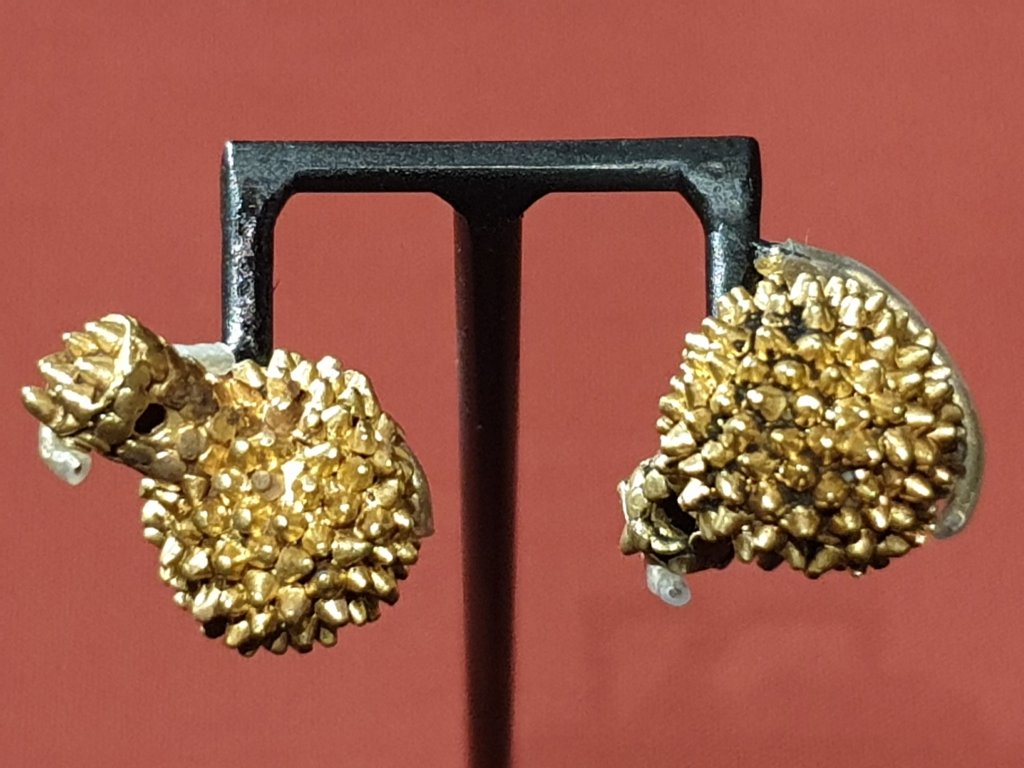
I wasn’t convinced that I would make it to the Grinling Gibbons exhibition before it transfers to Compton Verney, but was pleased I did – small, but choice, starting with a display of carving tools from the studio of the late David Esterly, who was such an advocate for Gibbons:-

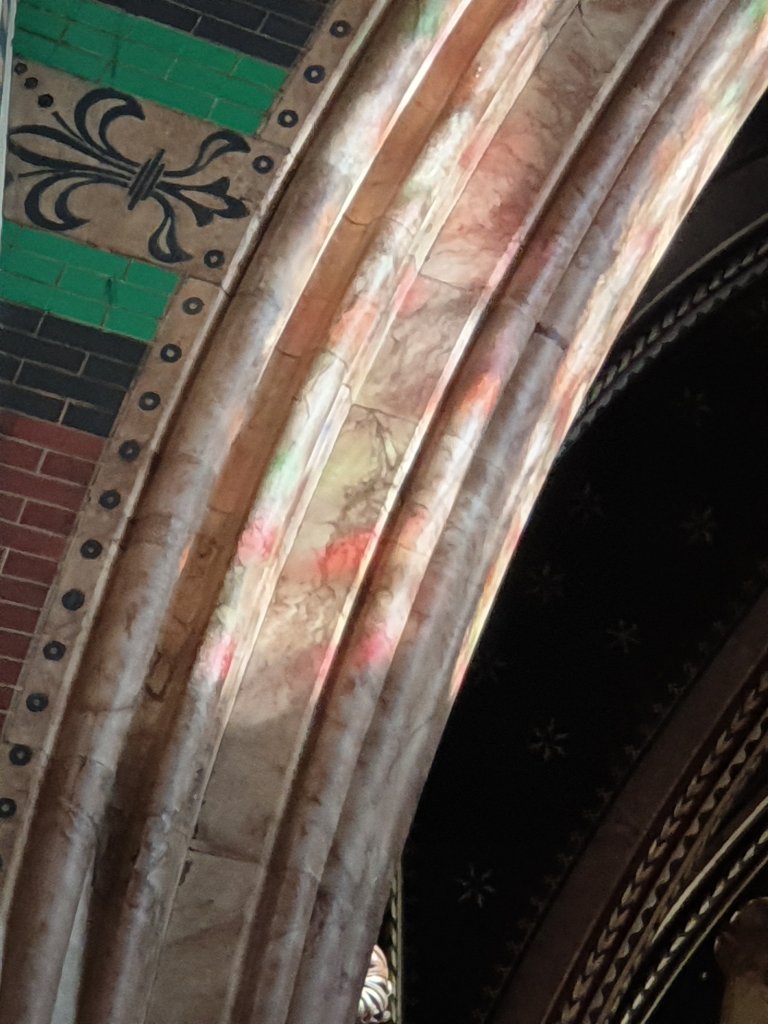
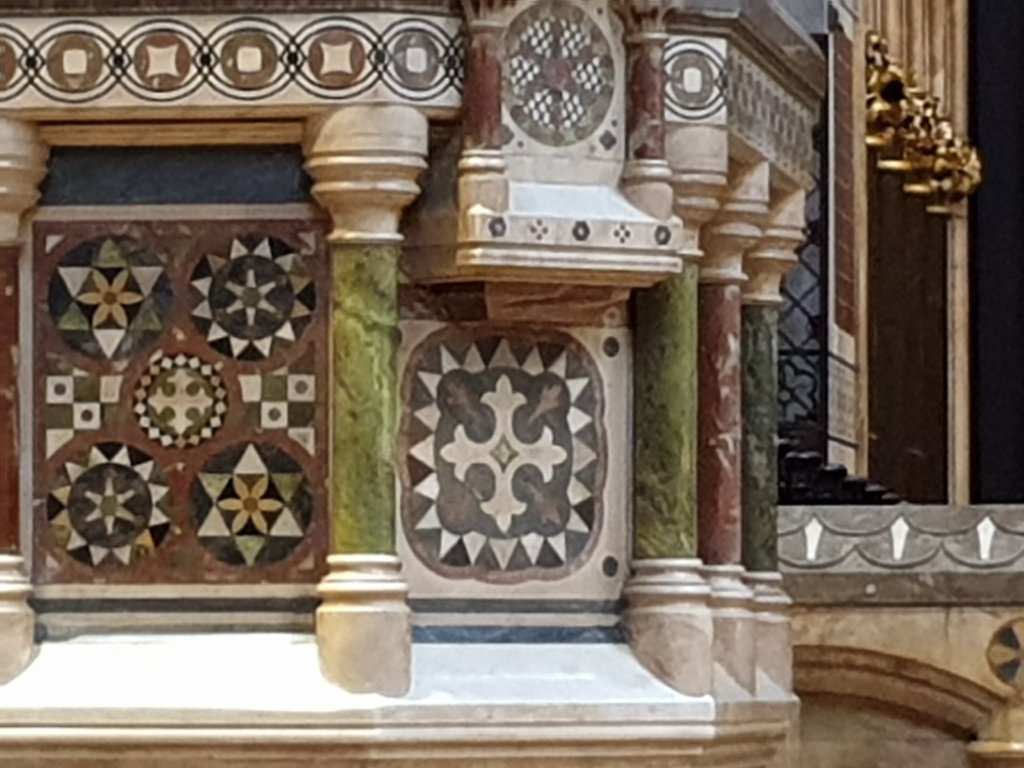
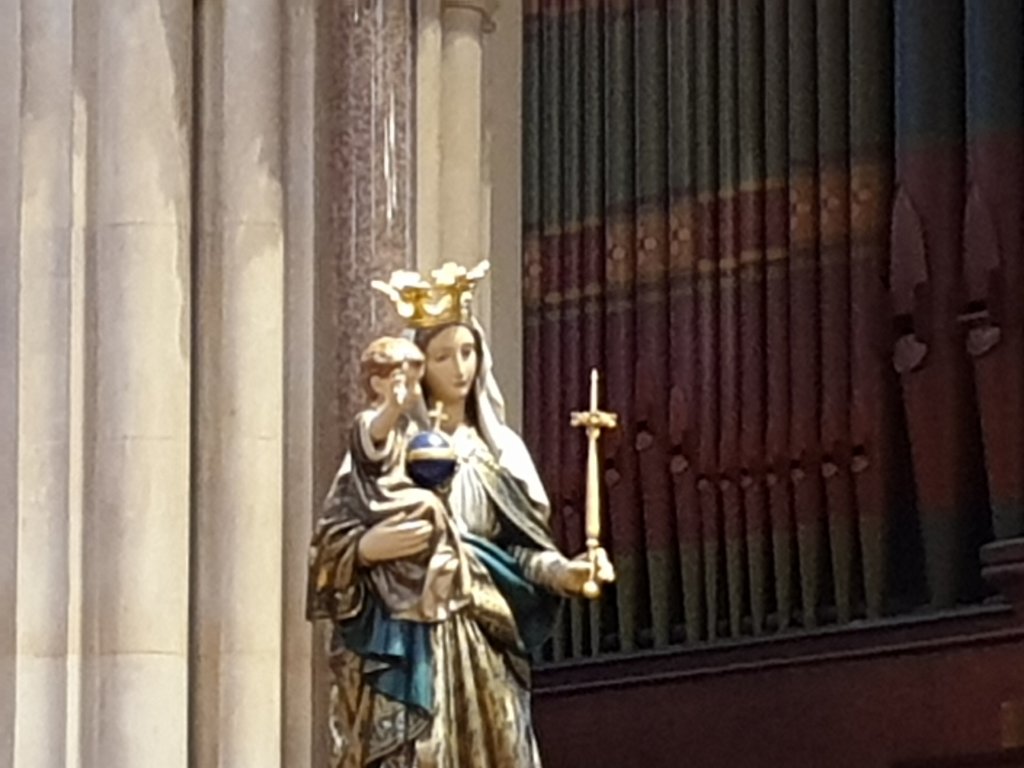
It’s very nice to be able to study Gibbons’s carvings – and carving technique up close:-

He’s pretty amazing (these two photographs are from Northbrook House in Kirtlington):-

I don’t think I have ever seen the font cover from All-Hallows-by-the-Tower:-

It’s quite an achievement to have put the exhibition together for Gibbons’s tercentenary.

Standard

Michael M. Thomas

Michael Thomas, a New York writer and bon viveur, has died, to my great sadness. He introduced me to New York high society at a cocktail party in 1977 – higher than I’ve ever experienced since as it included Lincoln Kirstein, who invited us to visit the inner sanctum of the Pierpont Morgan to see its manuscripts, and John Pope-Hennessy, who eyed me glassily and talked in his curious antiquated falsetto. Michael was interesting in that his father had worked for Lehman Bros., he himself worked as a curator of paintings at the Met. before himself joining Lehmans in 1961 and becoming a writer and columnist ten years later. He was quite a character.

Standard

The New City (2)

Just in case people thought I was too despondent about the glories of the new metropolis which has been constructed in order to replace the old Victorian and post-war city – a city which is now of totally bland and characterless internationalism, scarcely recognisable from what it was before – I am posting a few more photographs from the east: it’s absolutely ghastly, anonymous, chaotic. Perhaps it’s no wonder that no-one wants to return to work:-

Standard

The New City (1)

Looking north across the river Thames towards the heart of the City as it has now become, I thought this curious mash-up of architectural ideas (see below) gives some sense of what a total mess it has now become. To the right is the church tower of St. Margaret Pattens in Eastcheap, designed by Wren and which survived the Second World War. In front, you have one of the corner towers of Old Billingsgate market, proudly civic, designed by Horace Jones, architect to the City and designer of Tower Bridge. Behind it, you have Lloyd’s, designed by Richard Rogers in an idiom which was a deliberate contrast to everything around it, exciting at the time, but in retrospect, introducing an idea that anything goes. Then everything is dominated, indeed totally overwhelmed, by the bulk of the Walkie-Talkie, designed by Rafael Viñoly.

The question I ask myself is: are we expected to feel pleased and proud that our generation have so destroyed the City and produced a form of urban pandemonium. And whose idea was it ? Was it intended or just a result of market forces ? Was the City’s planning department asleep at the wheel or did they want this to happen ? Answers and suggestions would be much appreciated:-

Standard

Travelling to France (5)

I hope this is the last of my posts about the current complications of travel. We have just done our Day 2 test.

It is, like everything involved with testing, excessively complicated, although essentially no different from the standard test which is self-administered. But there is, of course, a big difference in that it is very expensive and boosts the personal fortune of Dr. Peter Fitzgerald, a polo-playing multi-millionaire who employs Owen Paterson, a prominent Brexiteer, to lobby on his behalf for £100,000 a year and the contract was awarded without competitive tendering.

Why I am not surprised ?

It is obvious that the whole of COVID testing has been a monumental scam to enrich the Prime Minister’s party supporters and Brexiteer friends, who are now laughing all the way to the bank, having looted and impoverished the country.

Standard

Meditations on the Museum (2)

Some time ago – actually, on June 1st. – I was interviewed for a podcast put out by The Browser, a daily news and current affairs digest, by Beatrice Wilford. It is the equivalent of a Long Read – long and sometimes, I realise, a touch rambling – discussion of issues raised by my book about museums and by the pandemic. The sound quality isn’t brilliant – the fault of not having proper recording equipment – but the questions are astute and very well informed, even if I never wholly answer them, and the broadcast covers the issues of the increasing politicization of museums and trustee appointments, the good things as well as the bad which have resulted from the pandemic, the move from the objective to the subjective, from didacticism to exploration. It’s a long bath.

https://radiobrowser.libsyn.com/charles-saumarez-smith-on-art-galleries

Standard

Raymond Erith

I missed this account of Raymond Erith in the May issue of Apollo. It’s good to read a reappraisal of Erith’s work, so thoughtful in its stripped-back and austere interpretation of classicism, as Holland rightly recognises, particularly in Great House, Dedham, but also, which Holland doesn’t mention, his ingenious design of the Provost’s Lodging for Queen’s College, Oxford in the late 1950s.

The only thing I am not persuaded by is Holland’s characterisation of him as a complete outsider. He was, after all, commissioned to redesign 10, Downing Street. Although a committed classicist, he was elected an RA and was a long-standing member of the Royal Fine Arts Commission. His entry in DNB was written by John Summerson, who clearly greatly admired his work. I’m not convinced that architecture in the 1960s was quite as completely dominated by the modernists as Holland implies.

https://www.apollo-magazine.com/raymond-erith-classical-modern-architecture/

Standard

Travelling to France (4)

Well, we made it back. For those who have not yet experienced it, it may be helpful to have a bit of advice on how to manage it (or not).

First, you have to pre-order your COVID test when you get back. We did this through a company called Randox (https://covid.randoxhealth.com/basket). I think they cost £48 each.

Next, you have to fill up a passenger locator form, not straightforward (Fill in your passenger locator form – GOV.UK (www.gov.uk)). It asks you if you want to open an account and when you enter your email address (I have three) it rejects it. Instead, you have to spot that at the bottom of the page there is a link to opening an account. It requires a fourteen letter/digit password (ie one which it is impossible to remember), nearly twice as long as most other passwords. I’m still not sure I filled it up correctly. Nor was the very nice and helpful (French) official who had to approve it at Calais.

Then, most tricky, particularly if you are in a small Provençal village, you have to get an approved COVID test. It has to be done at least 48 hours before travelling which, for us, was the day we arrived. The French government provides a map of approved testing places (https://www.sante.fr/cf/carte-depistage-covid.html). There were several in Draguignan. They appeared to be closed at the weekend. So, we decided to be tested this morning in Dijon. The only problem was that the approved testing place said they would give us the result tomorrow. Eventually, we found a very helpful pharmacist, not on the approved list, willing to do it. She stuck the poker so far up our nose that we all three screamed in turn. The test is no different from the one we routinely do ourselves, apart from how far into the sinuses the poker can go. On the way out, you fill up a form saying you have tested negative. But on the way back the British government no longer trusts you and requires a French pharmacist to produce a certificate confirming you have tested negative.

Bonne chance !

Standard

Travelling to France (3)

I can’t be the only person contrasting the nature of travel between England and France pre and post-Brexit. Pre-Brexit, it was straightforward. You showed your passport and scarcely that. Now, there is a gigantic thicket of regulations and form-filling, as if the Brexiteers, far from wanting a bonfire of bureaucracy, as was promised, were secret gauleiters: longing for the arbitrary discipline of routinised form-filling, making travel far more difficult. Of course, it is partly COVID. But I have been trying to fill up my ‘Passenger Locator Form’ to tell Big Brother where I will be. It does not recognise my existence. I may not be allowed back into the country.

Standard

Mont Ste. Victoire

We had supper last night on a terrace overlooking vineyards west. As the sun went down, the very recognisable silhouette of Mont Ste. Victoire appeared on the horizon:-

Standard