I feel a terrible and slightly desperate sense of sadness that museums have been put in Tier 3, only allowed to open at the earliest on May 17th. Just when it felt there were gleams of hope and the opportunity for cultural nourishment, when I have been receiving information about the long awaited reopening of Charleston and was looking forward to Durer’s Journeys at the National Gallery, it turns out that we can go to the gym and shopping, but not to the stately halls of the National Gallery, where everyone is so disciplined in the art of social distancing. It feels illogical as well as sad, but I presume is a victim of the decision to phase re-opening and sport is regarded as more important than the starvation of art.
Category Archives: Uncategorized
The interpretation of history (2)
I have just been on Times Radio, a new experience for me. I thought it was going to be about issues of restitution following the minor spat in the Times between Antony Gormley, a former trustee of the British Museum, and Hartwig Fischer, its current director, who has the task of re-interpreting the collections, a mammoth task, given their scale and immobility, and the history of the institution as a vehicle of the Enlightenment and Greek Revival.
Instead, I was asked about the meeting being held tomorrow in which Oliver Dowden is apparently now going to ask museum directors to present a rounded view of the past, a softening of the purpose of the meeting as previously reported in the Sunday Telegraph. I’m in favour of a rounded view, just cautious of the suggestion that it should be more overtly celebratory. So, both Yasmin Alibhai-Brown and I agreed on a history that was complex, investigative and open about the sins of the past.
Barbican (2)
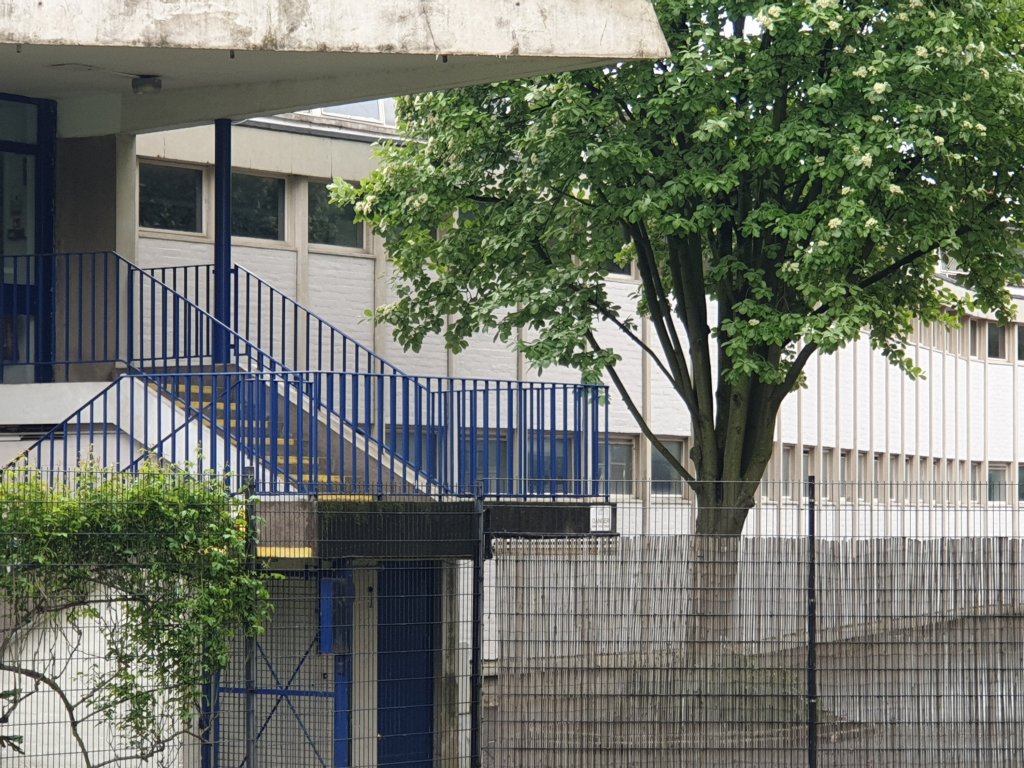
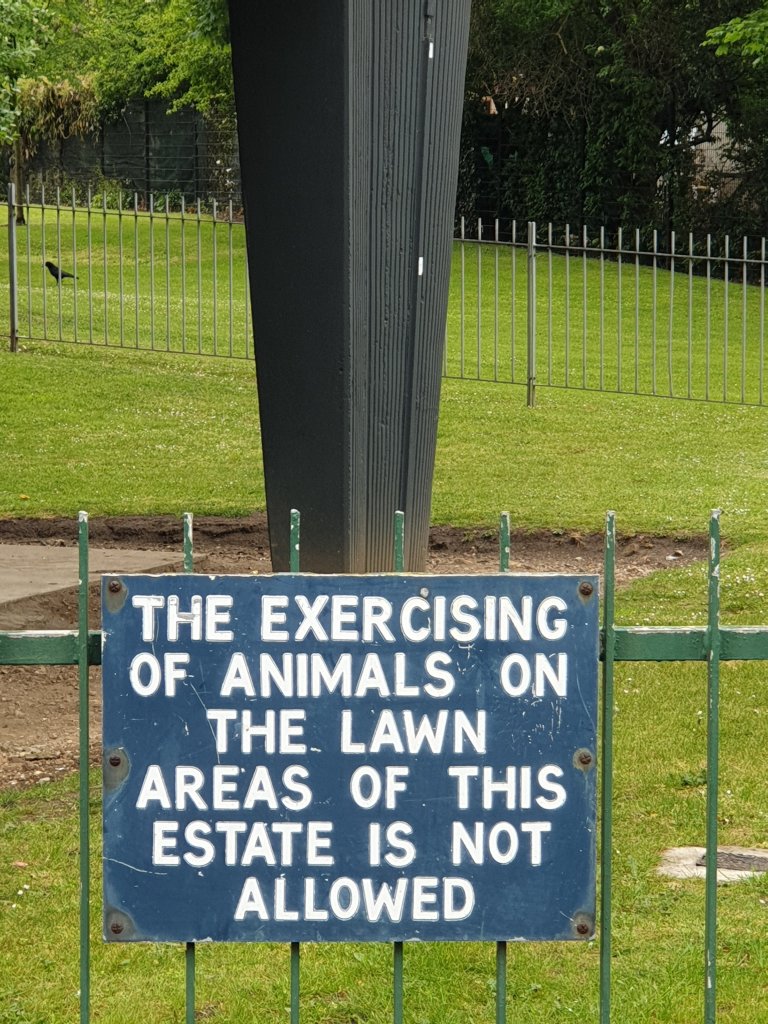
One of the benefits of going in search of the Museum of London is that I discovered how much more accessible the upper deck of the Barbican is and that there is a route through at upper level from the Barbican station which gives good views of the Barbican’s private estate and gardens:-


Museum of London (1)
Following the announcement that Sir Simon Rattle’s folie de grandeur has been axed, I wonder very much what will now happen to the old Museum of London, a strange and awkward building straddling a roundabout, but surely important as late work of Powell and Moya, informed by Philip Powell’s experience of designing Christ Church Picture Gallery under the Deanery garden. The site was due to be sold for redevelopment to help fund the new museum, but it will be a pity if the Barbican has to compete with another dull monster, like the rest of those which line London Wall:-


Wapping
We went down to Wapping, which I have sometimes thought a bit gloomy, with high Victorian wharves closed in on narrow cobbled streets. But this afternoon, with the bright mid-February sun, it felt surprisingly busy, maybe because all the city workers were out running.
There is nice Victorian brickwork on The Three Suns:-


Canary Wharf looms extraterrestrially downriver:-

Still some good detailing on the wharves:-

Then Wapping Pierhead:-


And the old Charity School:-


Robert Venturi
Since the Sainsbury Wing is in the news at the moment, I am re-posting Denise Scott Brown’s fascinating description of how she and Bob met and collaborated in teaching architectural theory and town planning at Penn and their shared interest in mannerism, long before their documented (and photographed) meeting at Las Vegas in 1966 when she invited him to come and lecture at UCLA:-
https://www.archpaper.com/2019/11/denise-scott-brown-memorializes-robert-venturi/
The Garden Café
I’m pleased to see the Garden Café listed as No.1 in National Geographic’s survey of museum restaurants – very deservedly as it serves such good food and in the summer you can eat outside. It was one of the few places I went to when it was allowed – good for social distancing and a leisurely lunch.
Am pleased to see that Hastings Contemporary makes the cut as well, and not just for its view across the huts to the coast of France.
Can’t Get You Out of My Head
We have been watching Adam Curtis’s latest series of documentaries Can’t Get You Out of My Head: An Emotional History of the Modern World one at a time, because each one seems more than enough in terms of a great morass of footage, alternately illuminating and bewildering, as if one is going to learn about the intellectual construction of the modern world, but instead that it is invariably and everywhere the product of malice and conspiracy. I have now been alerted to an interview with him in this week’s New Statesman (Adam Curtis: “Big Tech and Big Data have been completely useless in this crisis” (newstatesman.com)). I am not sure that it makes his thesis any clearer, but it at least makes clear that there is no thesis, but instead is wilfully nihilistic, deliberately provocative and wide-ranging, using old footage often arbitrarily: both admirable and perplexing, which is exactly what we feel at the end of each evening.
Trevor Dannatt RA
I am so sorry to hear of the death of Trevor Dannatt, a lovely, thoughtful and intelligent architect, who always seemed much younger than he actually was, having died on Monday aged 101, still with a good head of very white hair. He was encouraged to take an interest in the work of Le Corbusier while still at school, trained at the Regent Street Polytechnic before the war, then worked for Jane Drew and Maxwell Fry, before joining the LCC in 1948 to work on the design of the Royal Festival Hall, as well as a bar which only served tea for the Festival of Britain. I had forgotten that he did quite a bit of design work for Bryan Robertson at the Whitechapel Art Gallery, including 20th. Century Form in 1953 and the exhibition on Jackson Pollock in 1958. Hard to think that he thought of Peter Smithson as one of ‘Les Jeunes’. There are very good interviews with him by Alan Powers available in National Life Stories.
The interpretation of history (1)
My views of the Secretary of State’s invitation to cultural leaders to be told how to celebrate ‘our history’:-
https://www.apollo-magazine.com/oliver-dowden-british-history-meeting-museum-leaders/
You must be logged in to post a comment.