Lorenzo Lotto

We went to the Lorenzo Lotto Portraits exhibition downstairs in the basement of the National Gallery – free and mercifully uncrowded, whereas the upstairs galleries (and the National Dining Rooms) were packed.

He comes across as an unexpectedly uneven artist- some wonderful work, psychologically penetrating, including major works from the National Gallery’s own collection, Giovanni Agostino della Torre and his son, Niccolò, painted not long after Lotto had moved to Bergamo, the Portrait of a Woman inspired by Lucretia, and Andrea Odoni from the Royal Collection; also, a wonderful late Lotto from the National Gallery of Canada, Portrait of a Man with a Felt Hat, only acquired in 1998. But I found it hard to get a sense of his career as a whole, flitting across northern Italy, apparently increasingly depressed, ending his career as a lay brother in Loreto.

Standard

Chalkwell Station

One of the views of the Estuary that I admired by John Wonnacott was his view through the window of the station at Chalkwell:-

http://johnwonnacott.co.uk/?id=85

This is how the view looked as I left:-

Standard

John Wonnacott

I spent most of the day with John Wonnacott, a painter I much admire and whose landscape paintings are going to be the subject of an exhibition at the Focal Point Gallery in Southend-on-Sea, opening on May 4th.

This is him in his studio (it looks like one of his paintings because he uses wide angle perspective and often paints the view out to sea):-

This is a recent Self-portrait:-

And an older Self-portrait:-

This is the view out to sea:-

This is lunch because he thinks my blog is obsessed by food:-

And this is a painting which I like and he doesn’t which I hope he’ll include in the exhibition:-

Standard

Mary Banham

Following news of the death of Mary Banham, Peter (Reyner) Banham’s widow, I have been reading the transcripts of her interviews for National Life Stories, which tell one quite a lot that I did not know: that she was born in 1922, so must have been 96 when she died; how she and Banham got married in 1946 when she was teaching in Norwich and he had returned from service in the war (his father worked for the Norwich Gas Works); how she supported him through her exiguous earnings as a teacher while he was a student at the Courtauld Institute; that her leg was amputated in the 1950s, not the 1980s as I had always assumed; how central they both were to the activities and discussions surrounding the ICA in the mid-1950s; how enamoured their social circle of architects and pop artists (most especially, Sandy Wilson, their next door neighbour, Jim Stirling and Richard Hamilton) was with American imagery – food, cars, magazines, advertising; how she took a course in architectural drawing to provide the illustrations required for his books. She was remarkable – a great force for good in her own right.

Standard

Zwolle

As well as visiting the Museum de Fundatie in Zwolle for its Giacometti-Chadwick exhibition and prominent egg roof (shades of Ledoux) by Bierman Henket:-

I also explored the town, a medium-sized, prosperous city in the flatlands midway between Amsterdam and Groningen, a former member of the Hanseatic League, with two grand churches in its centre:-

And some surviving historic decoration in its streets:-

Standard

Lynn Chadwick

As part of my crash course in teaching myself more about the artists represented by BlainSouthern, I went to see the exhibition about the work of Giacometti and Lynn Chadwick in the Museum de Fundatie in Zwolle before it closes this Sunday.

The exhibition is based on the fact that Dirk Hannema, the politically dubious, but deeply knowledgeable former Director of the Boijmans Museum (he had collaborated with the Nazis), whose collection forms the basis of the Museum’s, bought a maquette by Lynn Chadwick, Dance IV in 1955 and a further major work, Teddy Boy and Girl in 1956. 1956 was the year that Chadwick, to everyone’s surprise, won the Grand Prize for Sculpture at the Venice Biennale when Giacometti was expected to.

It was a competition between, on the one hand, a highly sophisticated, intense Swiss artist based in Paris since the 1920s, internationally well known, working in a long-established tradition of observational drawing and modelling, and, on the other, a much younger, inventive, self-taught, post-war sculptor (Chadwick was only 42 in 1956 and had served in the Fleet Air Arm) making novel, spiky, energetic, non-figurative constructions. Chadwick won.

This is The Stranger (1954):-

This is Dance III (1955):-

This is Dance IV, also 1955:-

In September 1958, he bought Lypiatt Park in Gloucestershire, his own form of elysium, and thereafter pursued his own route – increasingly monumental, free-standing, more figurative and also many small works.

This is Maquette II Stranger (1968):-

This is Walking Cloaked Figure (1976):-

He died only in 2003, the year of his retrospective at the Tate.

Standard

BlainSouthern

It was my first day in the new office.

I am overlooked by Pitt the Younger (or maybe, more truthfully, I overlook him):-

Nathalie is next door:-

And there’s a beautiful exhibition of the work of Chiharu Shiota downstairs, and Jonas Burgert as well:-

Standard

Getty Grant Program

I have just been reading an interview with Deborah Marrow, the long-standing and immensely effective Director of the Getty Grant Program who is standing down after 35 years in post. I’m pretty sure they helped fund the new roof at St. Anne’s, Limehouse in the mid-1980s and have certainly been responsible for big building, conservation and publication grants ever since. I was a beneficiary of a small conference they organised in J.P. Getty’s villa north of Rome in 2000, which I don’t think they regarded as one of their big successes, but I look back on it as having been one of the best and most stimulating of such events. Since then, their big investment has been in Pacific Standard Time, creating a comprehensive exhibition programme about post-war art and design in West Coast museums. It’s an impressive track record, not to mention her two terms as interim President.

Standard

The New Year

Thinking about last year has had the salutary effect of making me a bit more optimistic about the New Year:-

• I’ve got a new job which I’m looking forward to.

• There’s a new deli next door (Nathalie’s).

• I’ve joined a gym (like many other people’s New Year’s Resolutions).

• Tim Barringer is giving this year’s Mellon Lectures at the National Gallery.

• Viola Michelangelo opens at the RA in late January.

• There will be a new person to replace me at the RA in February.

• We may finally know what we’re doing (or not) about Brexit by March.

• In April, Sean Scully is showing new work in the National Gallery.

• Otto Saumarez Smith’s Boom Cities will be published by Oxford University Press on April 4.

• Romilly Saumarez Smith has an exhibition of her work opening at the Harley Gallery on April 6.

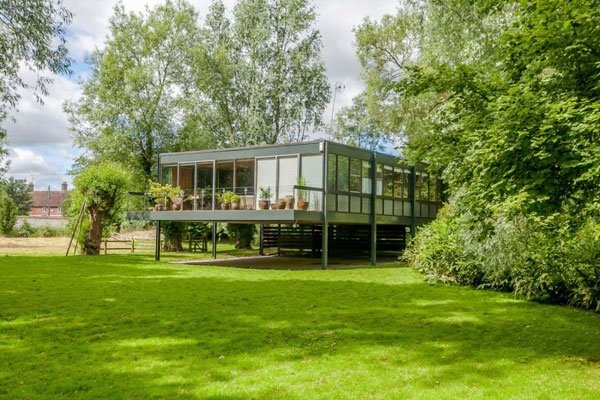
• In May, we’re going to stay in the Secular Retreat, Peter Zumthor’s house for Living Architecture in Devon.

• In the autumn, Tate Britain is doing a Blake exhibition, while the RA does Antony Gormley.

• Crossrail may open, making it possible to get from Whitechapel to Oxford Circus in eight minutes.

Much to look forward to….

Standard

The Old Year

Since the New Year seems likely to be filled with political anxiety, gloom and despondency, I have spent the afternoon thinking of some of the good things about 2018:-

• Visiting the Philadelphia Museum of Art.

• We spent our Easter holiday in Portugal which included a visit to the studio of Joana Vasconcelos, whose work was also featured prominently in the Octagon of the Summer Exhibition.

• I visited Brazil for the first time (I had never been to South America). I loved the liveliness, the sense of adventure of São Paulo, not to mention seeing the Glass House.

• The opening of the New RA, of course. The party was so crowded that I failed to see half the people.

• Ping-pong in the Lovelace Courtyard.

• I greatly admired – more than I expected – Ptolemy Dean’s ingenious addition to the triforium of Westminster Abbey (I didn’t expect to admire a modern addition to a great gothic building) and the beautiful way its collection has been displayed by Muma.

• Nick Grimshaw was awarded the RIBA Gold Medal.

• Hard to beat spending half an hour after closing time in the Sistine Chapel.

Not so good:-

• I never got to see Alison Wilding’s exhibition at the De La Warr Pavilion in Bexhill-on-Sea.

• The deaths of three architectural historians, only a bit older than me – Gavin Stamp, Colin Amery and David Watkin – not to mention Olivier Bell, Gillian Ayres and Bob Venturi.

Happy New Year !

Standard