
My thoughts on the choice of an architect for the British Museum:-
https://thecritic.co.uk/an-architect-for-the-british-museum/
My thoughts on the choice of an architect for the British Museum:-
https://thecritic.co.uk/an-architect-for-the-british-museum/
For anyone interested in the work of Rachel Reckitt as a result of seeing War Paint, there is plenty of her work to see in churches in Somerset and Devon in the area where where she lived at Golonscott on the edge of Exmoor and there was a recent exhibition in the Museum of Somerset:-
A Tour of Rachel Reckitt’s Somerset Artworks – South West Heritage Trust
We went last night to see Margy Kinmonth’s latest film, War Paint: Women at War, a brilliant study of the role of women artists in depicting and recording the horrors of war. The earliest was Dame Laura Knight who painted Ruby Loftus Screwing a Breech-ring, a memorable image from the Second World War. I didn’t know about Rachel Reckitt, who was Penelope Lively’s aunt and did what looked like wonderful and little known constructivist wood engravings of Whitechapel during the blitz. There was also film footage of Linda Kitson doing drawings during the Falklands War and interviews with Maggi Hambling, Rachel Whiteread and a Ukrainian artist making bread out of stones. I don’t think it is on general release, but is being shown in lots of cinemas round the country (https://www.conic.film/films/warpaint#screenings).
This is Rachel Reckitt’s picture of A Sleeping Family in a London Underground Station:-

One of the best of the local amenities in Stepney is the Genesis Cinema, a building with a long history, stretching back to when there was a music hall at the back of a pub in the 1840s. In the 1880s, after a fire, it was reconstructed by Frank Matcham, architect of the Hackney Empire, and re-opened in May 1885 as the Paragon Theatre of Varieties.
In 1938, it was again rebuilt as the Empire Cinema, with additional entertainment provided by the Kray Twins in their club, the Kentucky, across the road:-

Here is the interior as it was in the 1970s, now Screen 1:-

In 1998, it was bought by Tyrone Walker-Hebborn and turned into Genesis, a wonderful independent cinema – for a long time the host of the Tower Hamlets Film Festival.
Now we have just discovered that it is subject to a planning application. It is going to be demolished and the site used for ‘student accommodation’:-
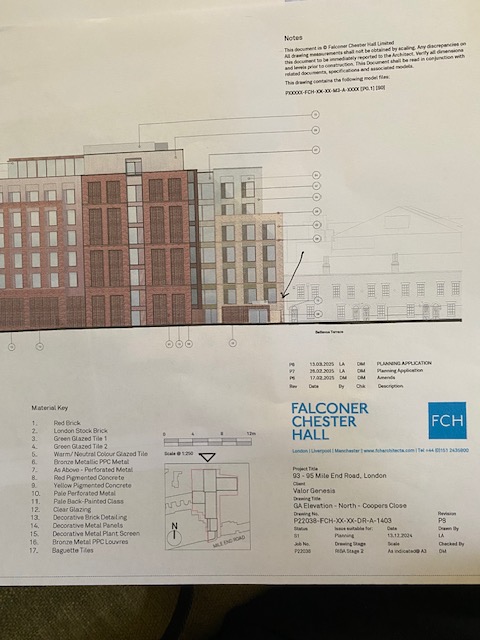
A cinema is planned in the basement, but hardly the five stately screens there are currently.
The big problem, apart from the loss of the cinemas, is the damage it will do to the charming and atmospheric Bellevue Place, tucked in behind it.
They said there would be a cinema in the big new development next to the London Hospital. It makes it easier to get planning permission, but then during construction the plans change.
You can write and object to:-
The architect-turned-architectural photographer, David Valinsky, has been posting the photographs he has taken for my book on Instagram. He did an amazing job, taking a vast number of photographs at speed last October and as I went through the final copy-editing last week, I realised, once again, how much they enhance the book, giving a sense of the vastness of Blenheim, as well as its details. The designer, Mark Thomson, has used many of them as double-page spreads which help to illuminate the long process of Blenheim’s design.
This was one of the photographs he posted today, showing the beautiful colour of the stone which made such an impression on Bob Venturi when he went to visit Blenheim on his first day in Europe in July 1948 (he docked in Liverpool on 9 July 1948 and then must have travelled to London, visiting Oxford and Blenheim the following day):-

The embargo on commentary on the newly configured Sainsbury Wing was lifted at noon today. I was pleased to be able to read Ben Flatman’s immensely careful and scrupulous account of what has been done online, as below. Two things are clear: the first is that Annabelle Selldorf and both Alasdair Travers and Jon Wright of Purcell approached the task with immense care – I had not known that Jon Wright went to Philadelphia to talk to Denise Scott Brown about the project; and that it is currently unclear exactly what the effect is of the changes to the entrance hall apart from making it very much more spacious and may not be until the building opens to the public on Saturday, the 201st. anniversary of the foundation of the National Gallery.
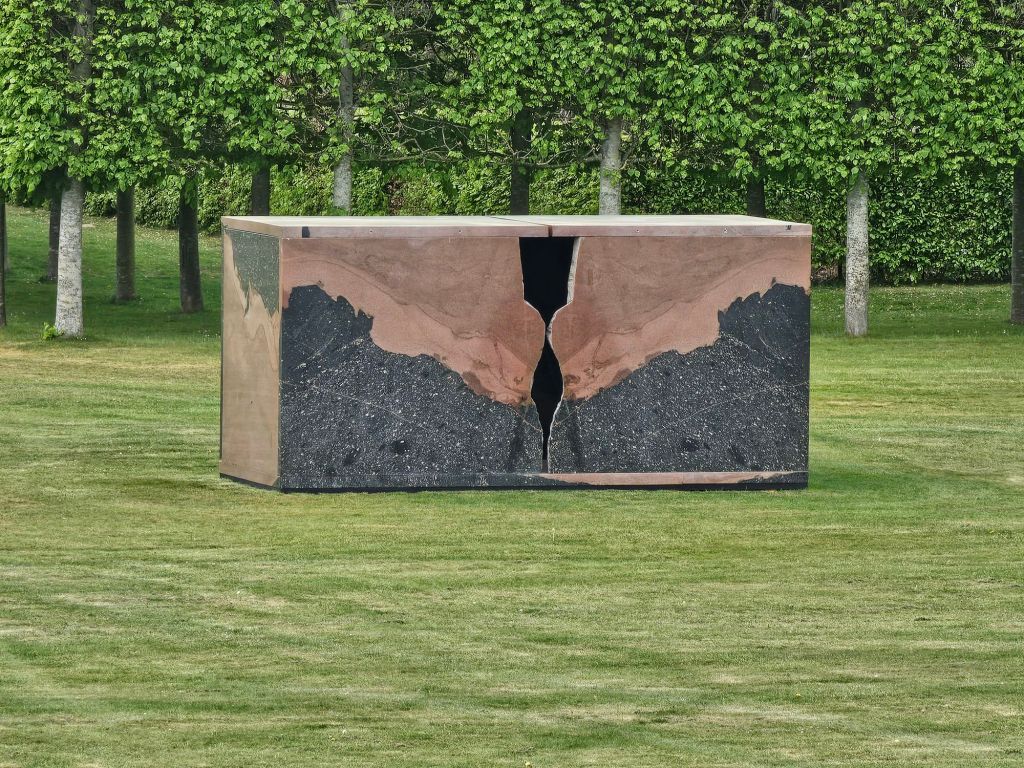
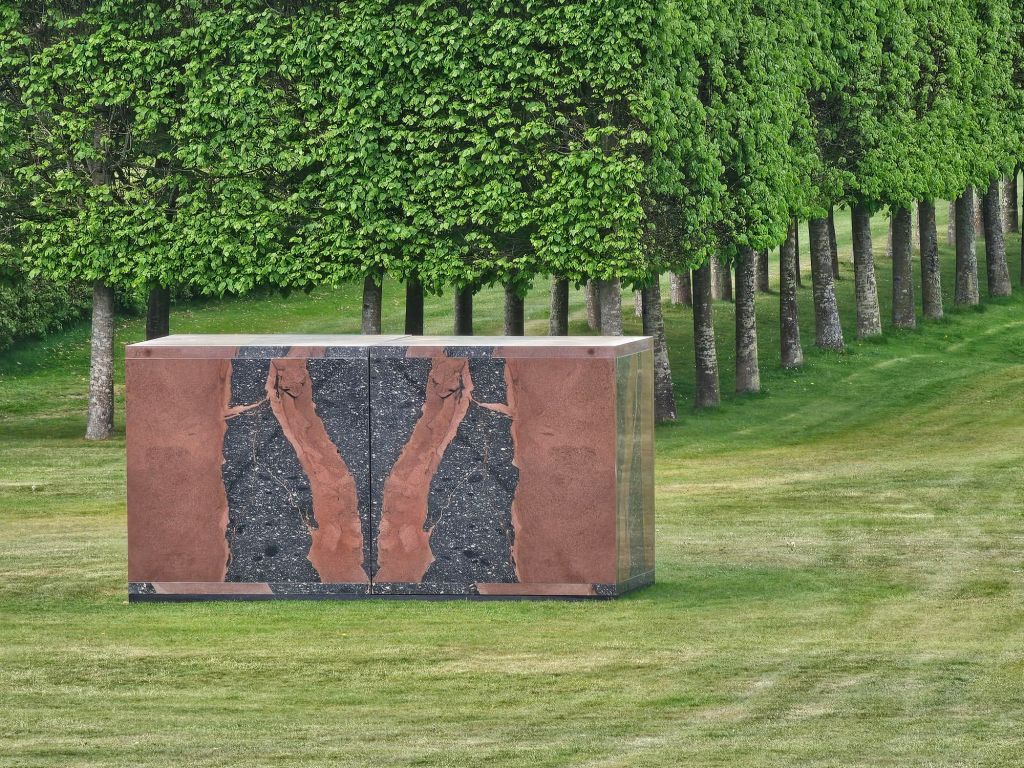
A huge range of work by Stephen Cox, both large pieces outside and smaller pieces dotted throughout the rooms indoors.
The big sculptural work outdoors:-

Beautiful smaller works in nearly every room in the house:-

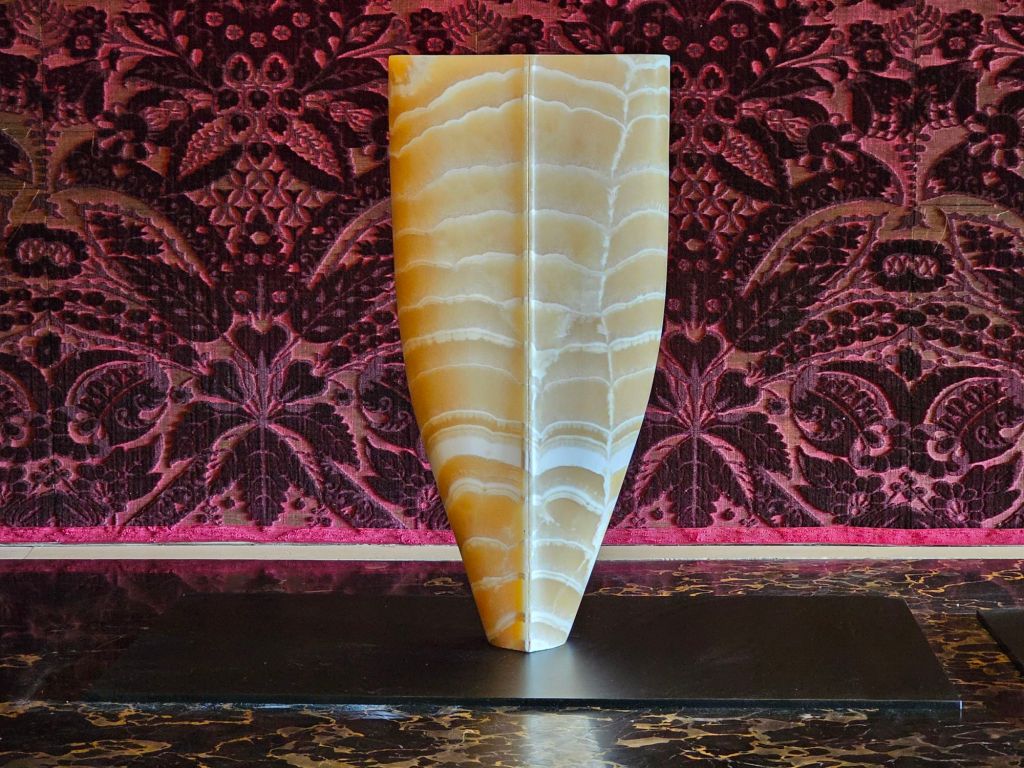

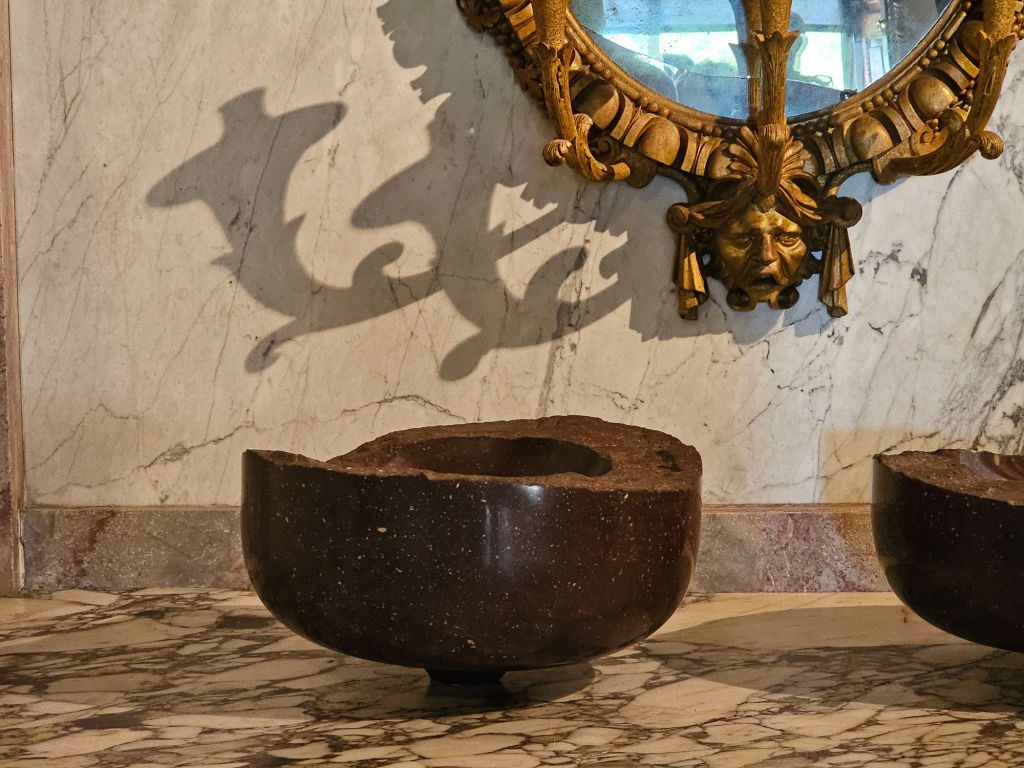
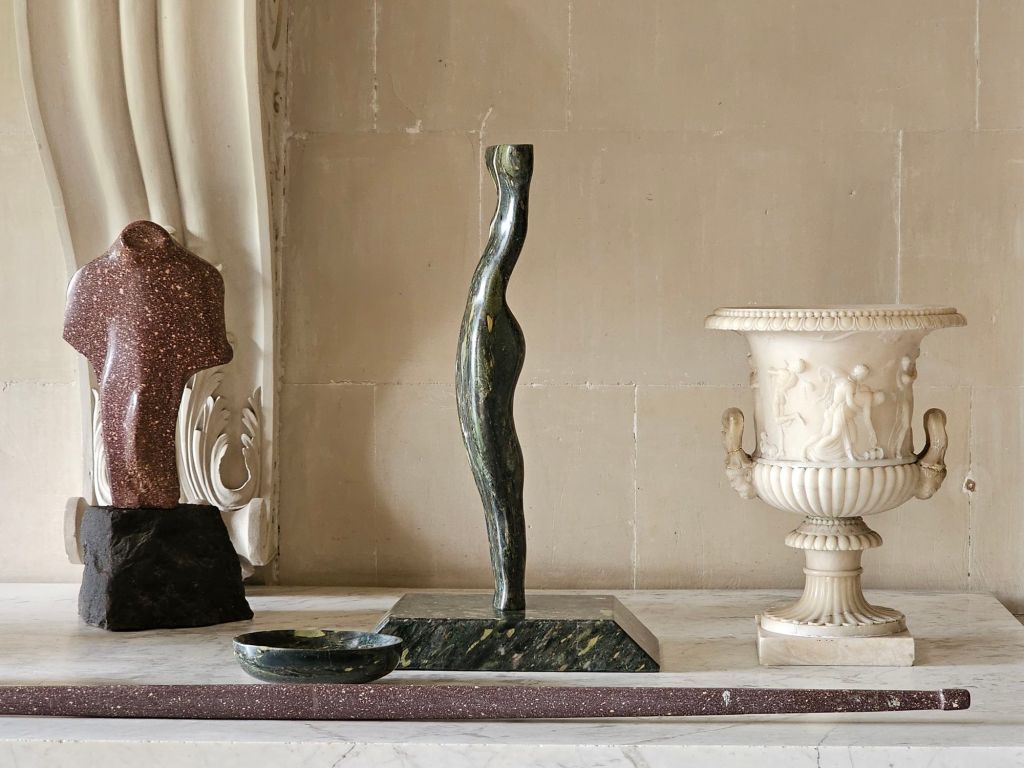

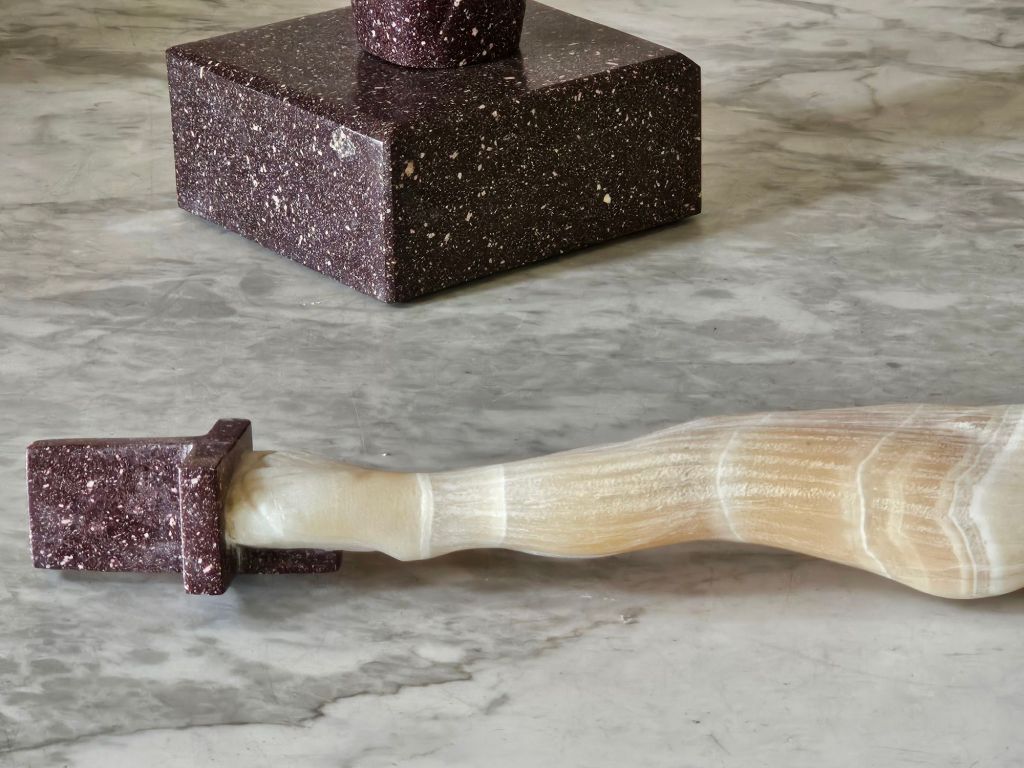
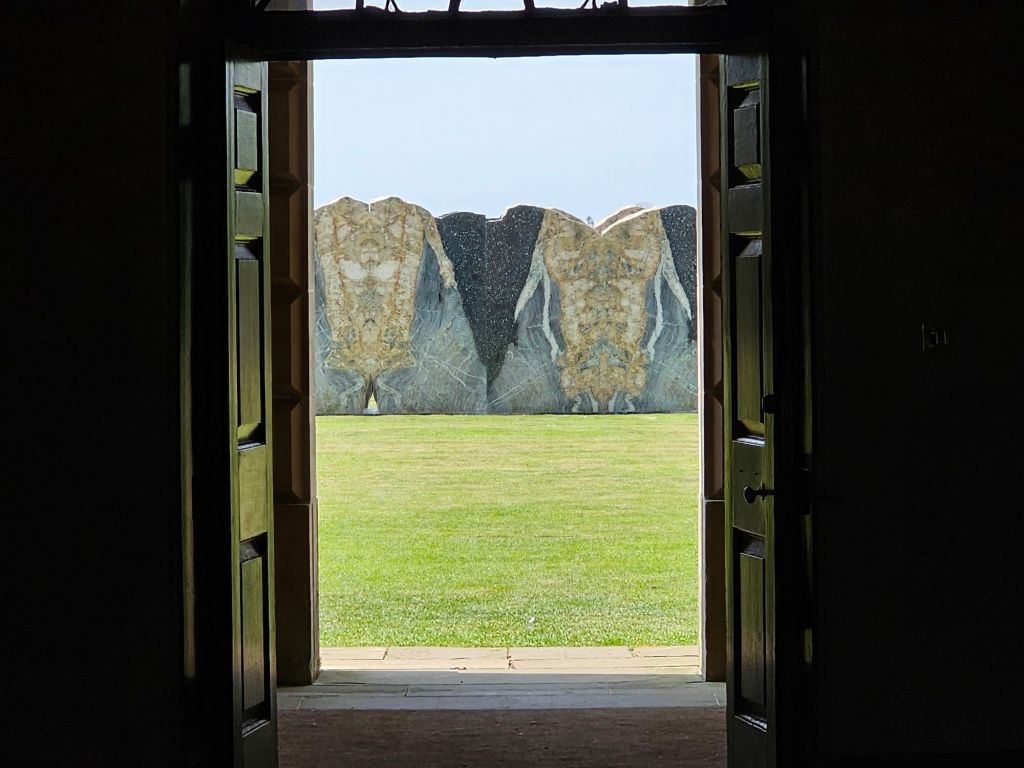
A great treat to go to Houghton to see this year’s exhibition by Stephen Cox, whose work I have long admired.
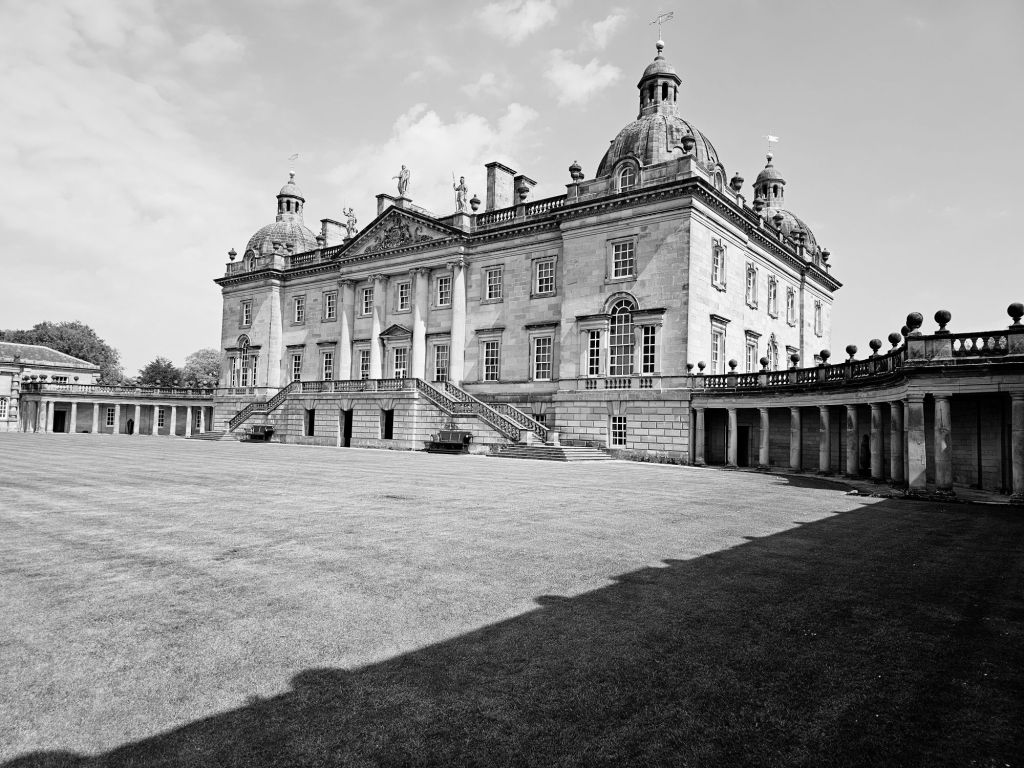
The house – is it Ripley, Gibbs, or Colen Campbell or some mixture of the three ? – looking good:-
The first room on the garden side is the Saloon. Ceiling by Kent:-

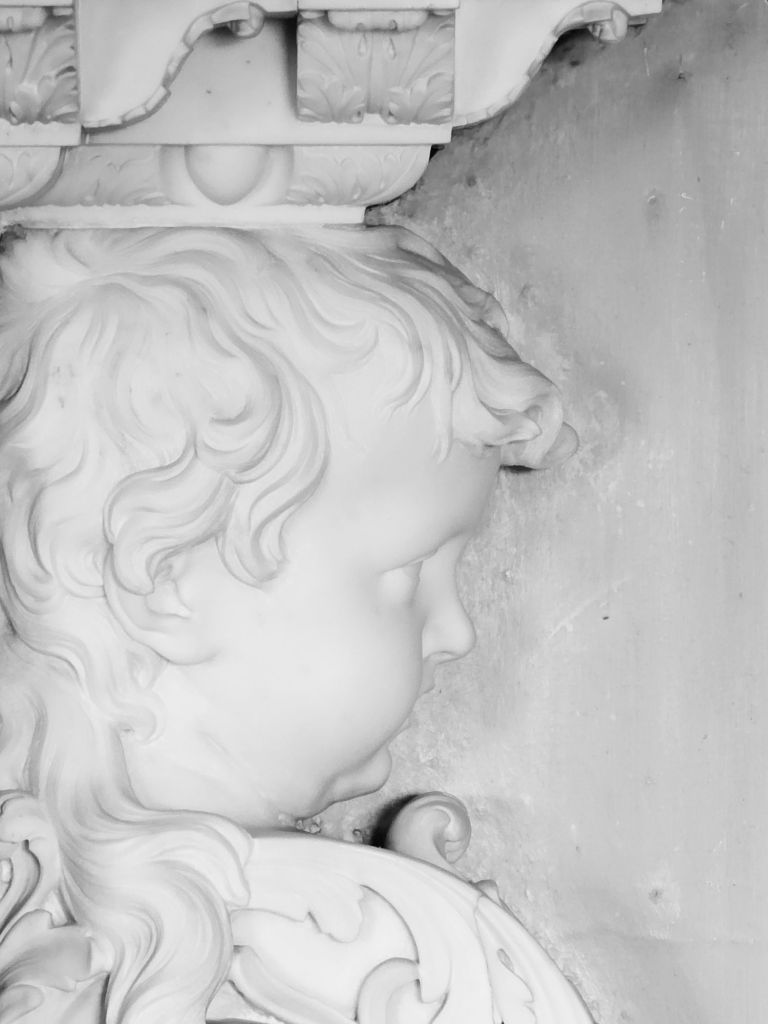
Chimneypiece:-

White Drawing Room, with fireplace designed by Kent:-

Green Velvet Bedchamber. An amazing state bed designed by Kent:-
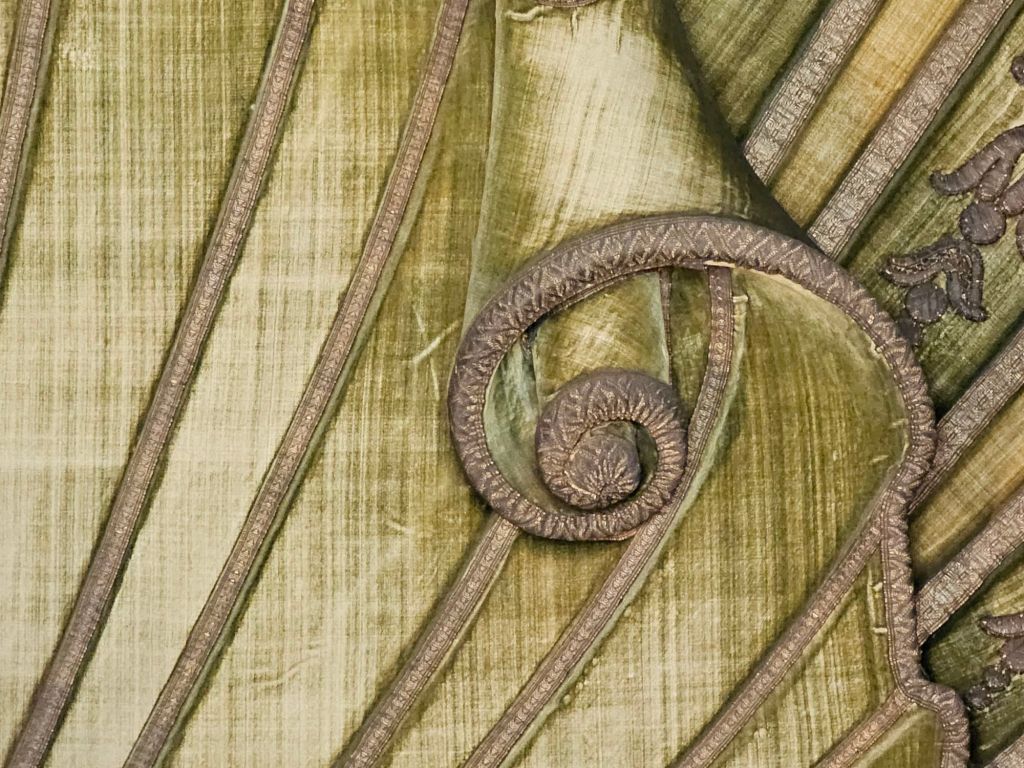

Through to the Embroidered Bedchamber:-


The Cabinet:-
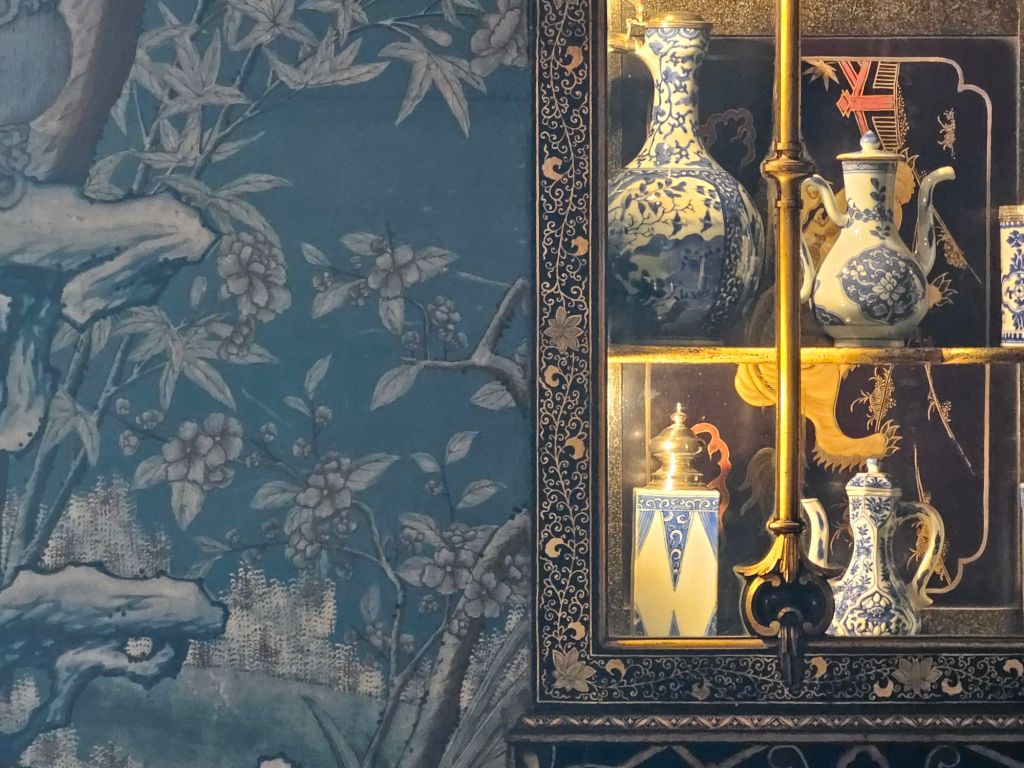

The Marble Parlour for dining:-
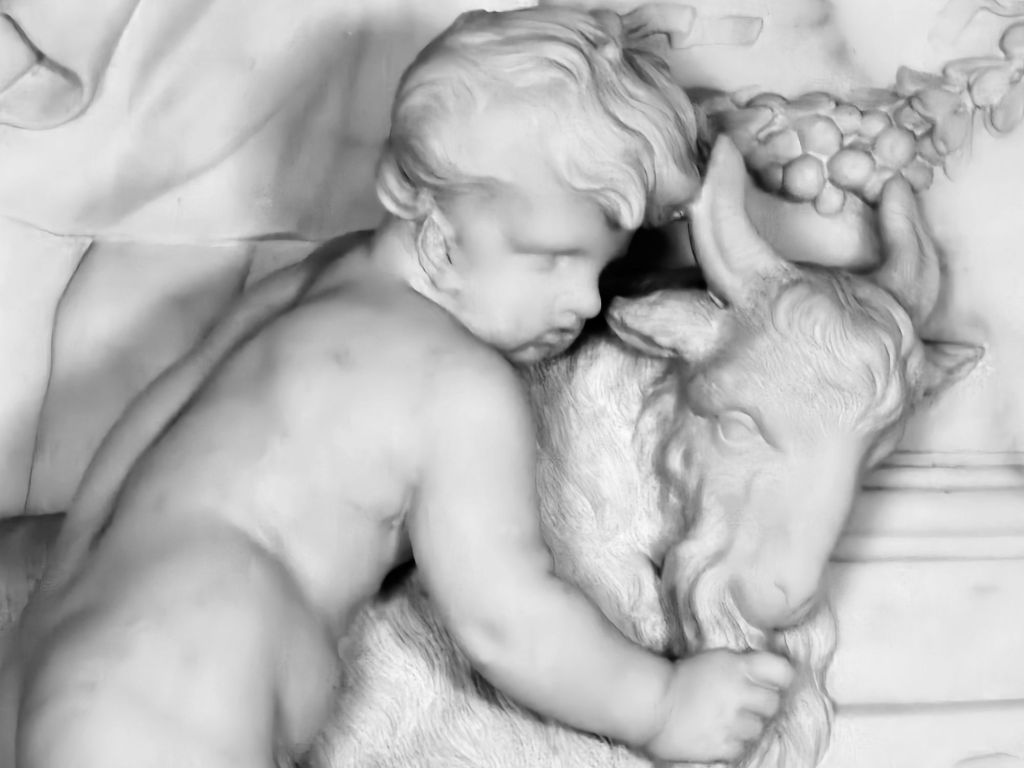
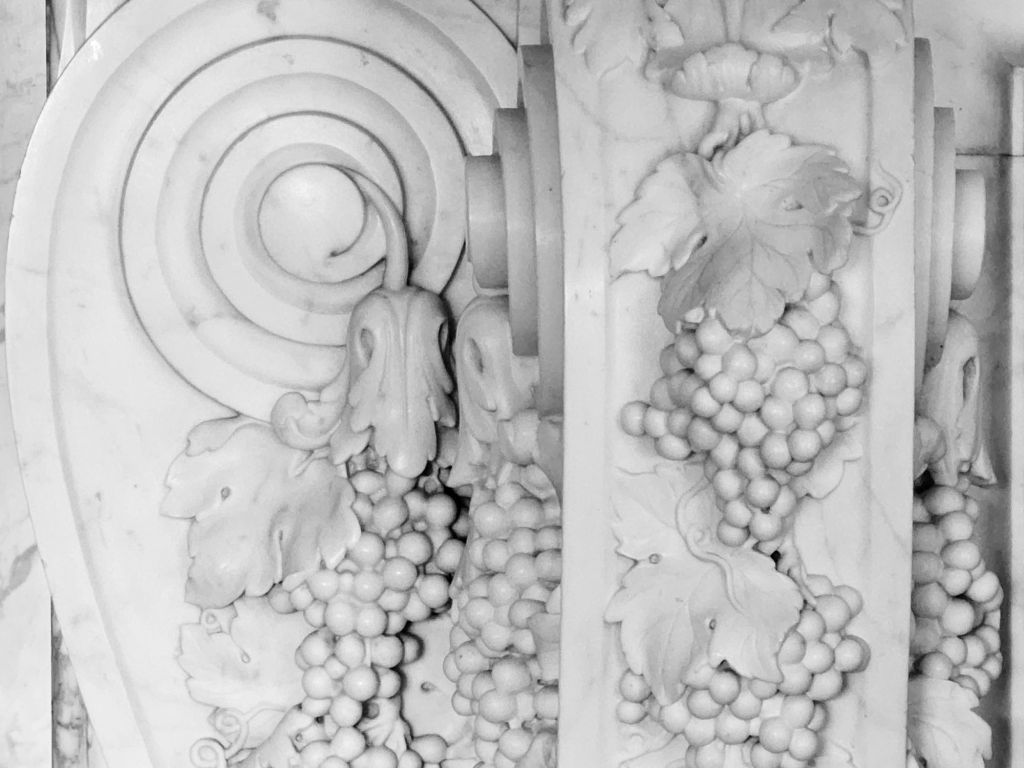

The Marble Hall:-
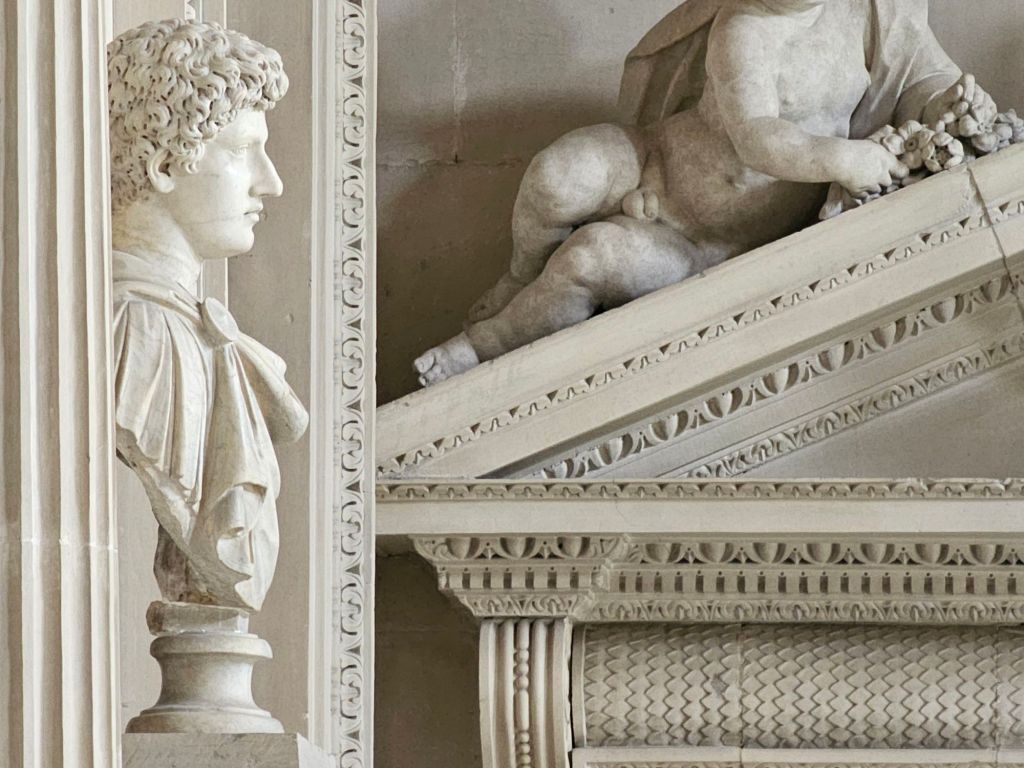


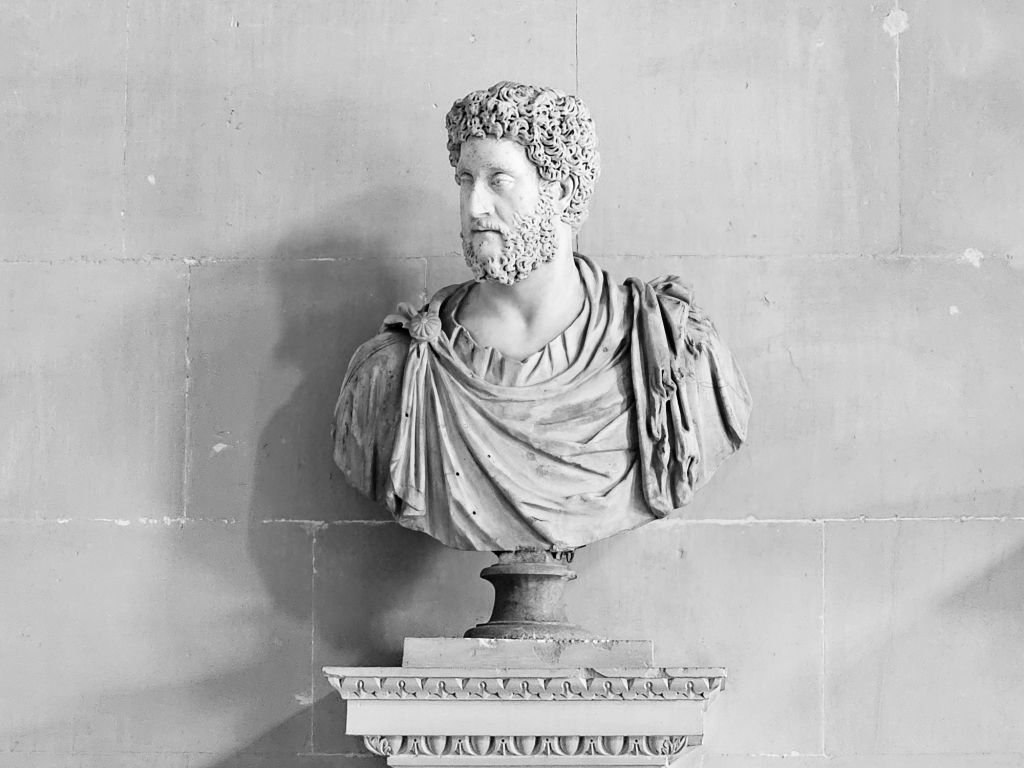
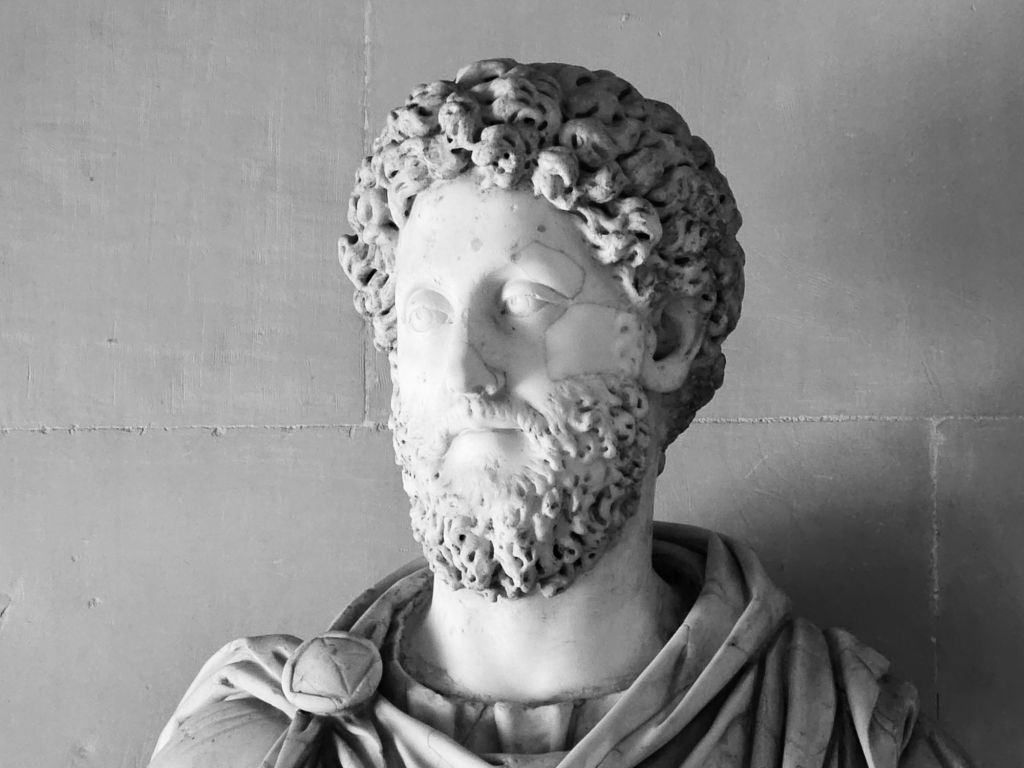
The Library:-
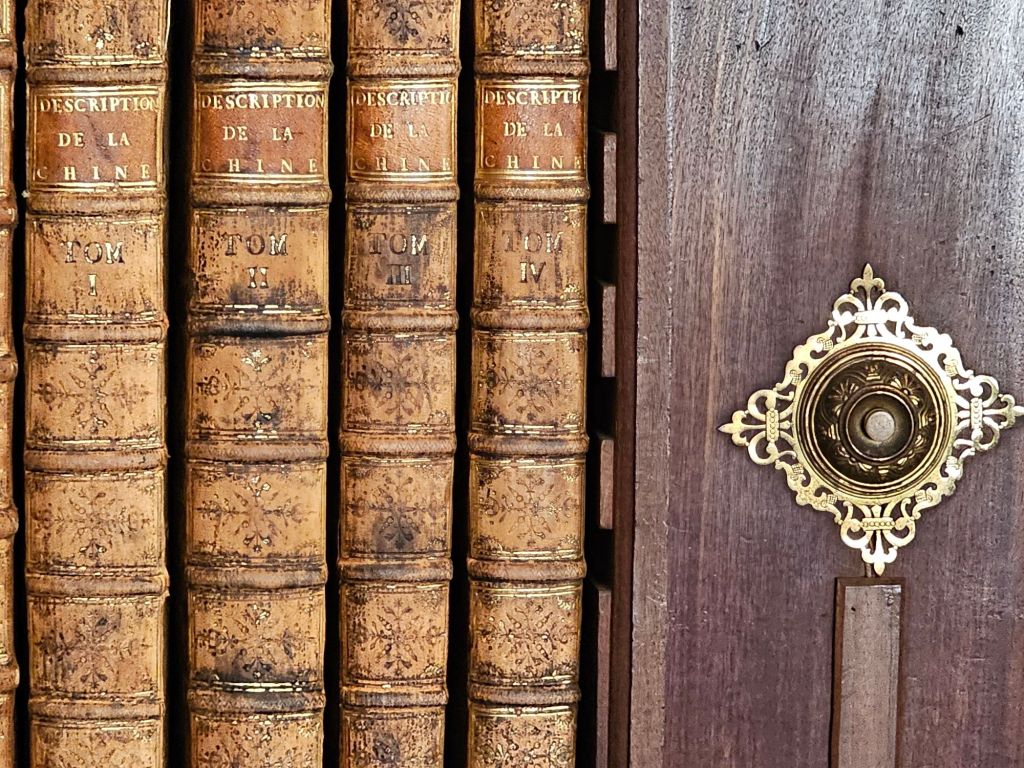

Out by the staircase:-

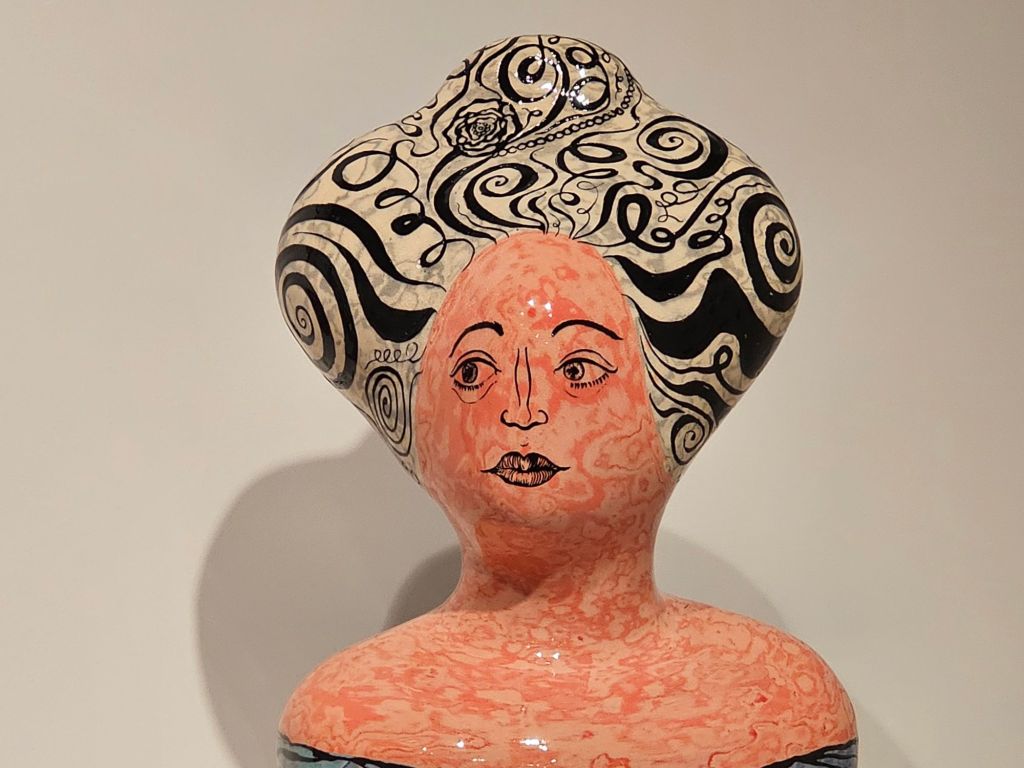
We went to the Grayson Perry exhibition at the Wallace Collection on Sunday. I wasn’t going to post anything about it, except someone said to me that they thought Grayson was negative about the Wallace Collection. I thought the exact opposite – that he had maybe started out being a bit resistant to it, but had ended up making a wide range of wonderful work in response to its collection, including metalwork, tapestry and pots.
I’ve realised that it is essential to take the sound guide in which he talks through what stimulated the major pieces:-
We attended the memorial service for Sir Henry Keswick this morning. Charles Moore admirably summed up his many virtues. He was my chairman of trustees at the National Portrait Gallery, taking over from Owen Chadwick on the same day that I started as Director. I always liked and respected him and he remained a good friend, although, as he once pointed out, we had absolutely nothing in common, apart from strong-minded wives.
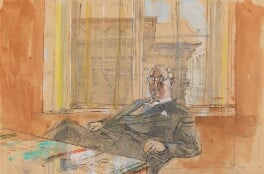
I remembered that I gave a speech at a dinner when he stood down as chairman and I re-publish the speech in his memory, as well as his portrait by John Ward from the NPG’s collection:-
Two of Henry Keswick’s great virtues as a chairman of Trustees were that he liked speeches to be short and he liked to get home not too late at the end of the evening.
But now that he’s no longer chairman of Trustees, I can safely disobey him on both counts.
I first met Henry at my interview for the post of Director. It was held, as some of you will remember, at the Headquarters of the Civil Service Commission at number 24, Whitehall. Candidates were given a large badge with a number on it to make sure that one did not join, by mistake, the interviews for cleaners for the Ministry of Defence.
I had been tipped off that Henry was a big-shot financier and that he was likely to ask me penetrating questions about accounting practice. He fixed me with a penetrating glare and asked me:
‘Could you tell me what’s your favourite picture ?’ For a moment, I thought it was a trick question, but, from that point onwards, I always thought he had the right set of priorities for the Gallery.
Shortly after my appointment was announced, I thought I should go and pay my respects to my future chairman of Trustees and (rather forwardly) invited myself to lunch at his headquarters in the City. I remember two things about the visit. The first was that, shortly after I had arrived, he lent back in his office chair and said,
‘You do know, don’t you, that I didn’t want you to be appointed’. Well, as it happened, I did and I regard him as having been an unceasingly loyal and good friend, ally and supporter ever since, always keen, rightly to keep the Gallery and its Director, up to the mark, but in a way which was always supportive as well as tough.
The second thing I remember about that visit was that he mentioned that he was on the Board of the Telegraph Group and that it took an awfully long time to get to Canary Wharf. I made the mistake of saying to him that I thought it was pretty quick by the Docklands Light Railway. He looked at me and paused in a slightly glacial way and said,
‘You mean to say that you think that I might travel by the Underground Railway ?’
Well, we’ve had a good seven and a half years together. Visitor numbers have more than doubled from half a million to well over a million (in fact, we’re close to the million mark this year already). We’ve opened the Ondaatje Wing, with its beautiful new Tudor Gallery, paid for by Drue Heinz and Lord Wolfson. On Saturday, we hear if we’ve won the Stirling Prize for the best building of the year 2000. We’ve already won the Royal Fine Arts Commission Award for the best gallery. We’ve even got an audit and compliance committee.
But what I will remember Henry for most of all is not just the achievements of the last seven and a half years, the trips to his and Tessa’s house at Oare, but more his sense of decency, the feeling that he always had the right instincts and a healthy contempt for redundant bureaucracy. I will always think of him whenever I receive another circular from the Department for Culture and him invariably saying,
‘You don’t seriously expect me to read all this awful rubbish, do you ? I’m going to put it straight in the rubbish bin’.
Ladies and gentlemen, we will all miss Henry as chairman. We have much to thank him for — his loyalty to the Gallery, friendship and his good sense. I think it is safe to say we will never see his like again. And I hope you will now all rise and drink a toast of appreciation to ‘Henry’.


You must be logged in to post a comment.