
In undertaking research recently on attitudes to Picasso in the first half of the twentieth century (due to appear shortly in the art supplement of Vanity Fair), I was struck by how many American collectors, including Albert Barnes, formed their tastes during visits to Leo and Gertrude Stein’s apartment in Paris before the first world war, at a time when Picasso’s work was scarcely known in London. I remembered that Janet Malcolm had written a book about the long relationship between Alice B. Toklas and Gertrude Stein and bought a copy of Two Lives in McNally Jackson, the bookshop in Prince Street. It tells one almost nothing about her pioneering interest in Picasso, other than the fact that he was almost the only person she regarded as a fellow genius and that he found it almost impossible to paint her; but a great deal about her ghastliness, self-obsession and Vichy friends.
Category Archives: Uncategorized
The Future of East London (2)
In looking back at the photographs I submitted for The Future of London, I realise that their message is wilfully opaque. So, it is may be worth trying to spell it out:-
1. It’s obvious, looking particularly at the development of Stratford and Woolwich and the opening of Crossrail next year, that there is an ineluctable drift eastwards, beyond the River Lea, as Leyton, Leytonstone and Walthamstow are gentrified and people recognise the quality of the housing stock in places like Ilford.
2. There are still large areas of east London with ex-industrial, brownfield sites, particularly evident when travelling on the Docklands Light Railway out to City Airport.
3. The model adopted by the LDDC of government funded investment in infrastructure was, in retrospect, strikingly successful in developing the Isle of Dogs and opening up the docks beyond.
4. The problem of leaving development to developers is that they concentrate on the top end of the market of apartment blocks which are then sold to the international market for investment purposes, not on smaller-scale and more socially beneficial housing schemes. It surely ought to be possible for Sadiq Khan to influence the planning system to privilege middle-market and mixed development housing schemes, instead of allowing big developers to cheat the system, as in Vauxhall.
5. I am in favour of infill and niche development, as advocated by Roger Zogolovitch, and so-called densification, rather pillaging the green belt, as many are advocating.
6. These recipes for future development probably aren’t very different from what Richard Rogers and Mark Fisher advocated in A New London, published in 1992. This doesn’t mean they’re wrong.
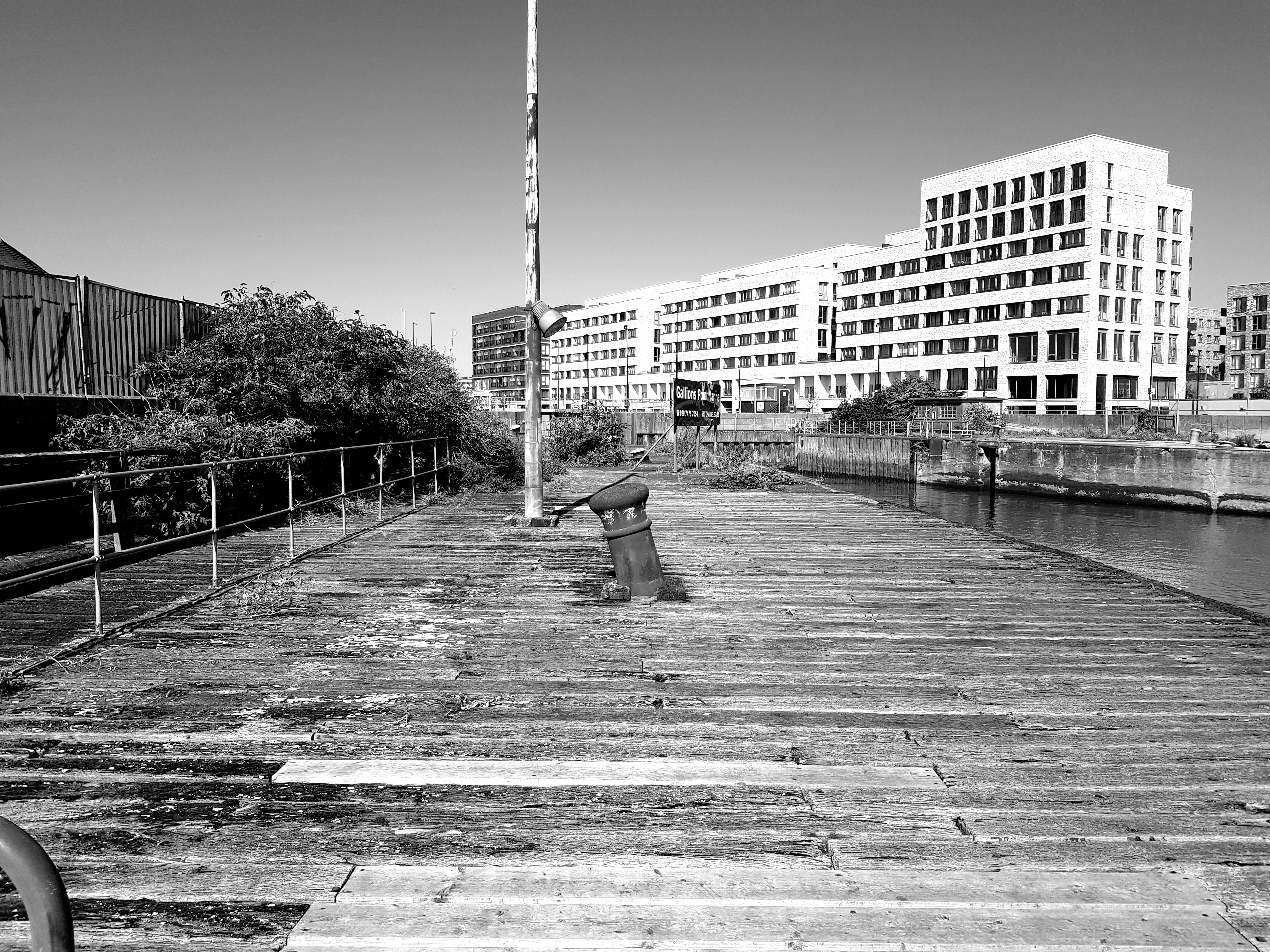
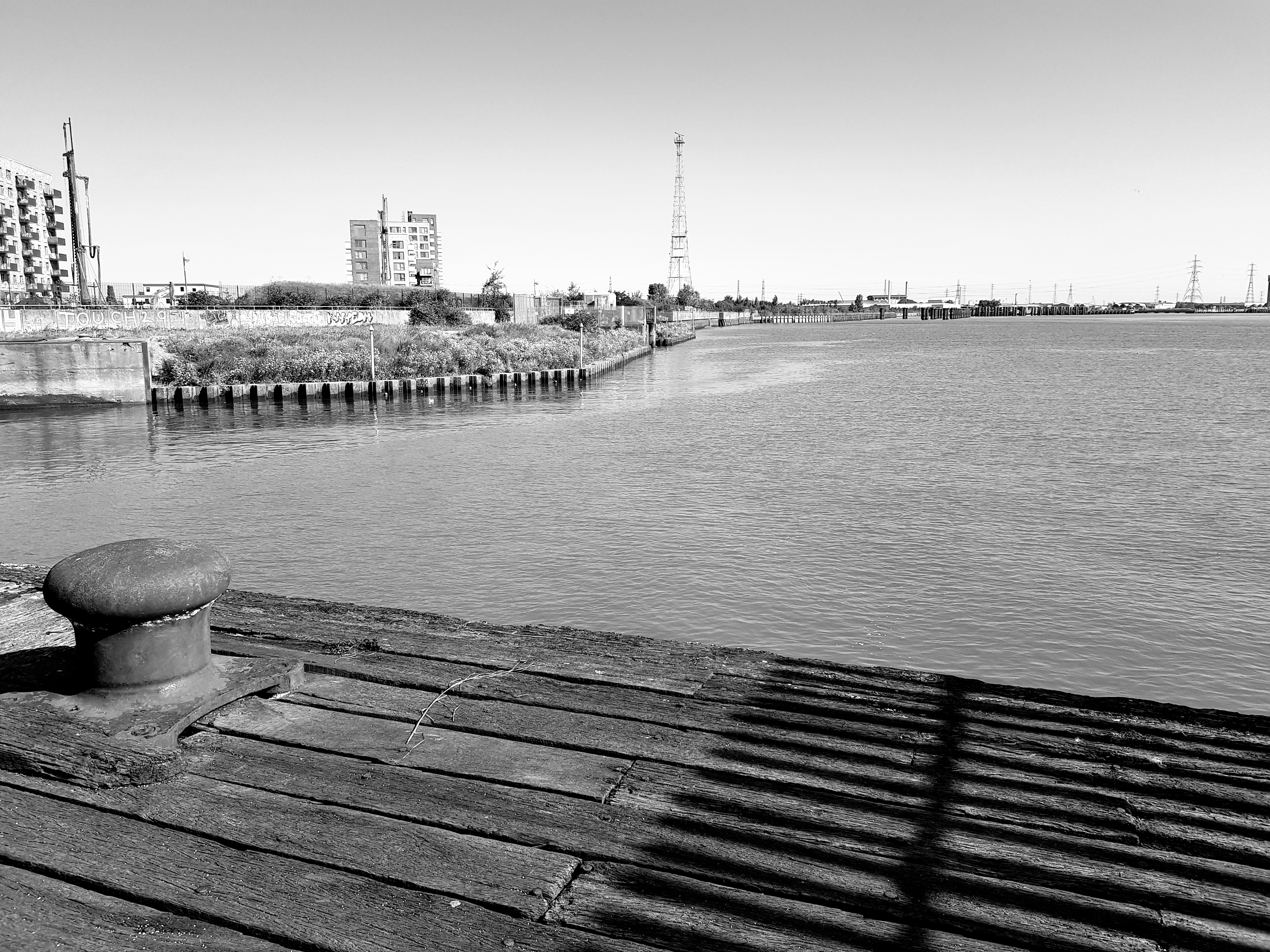
7. I am ending by posting two pictures I took earlier this month out on Gallions Point, one of a big new housing scheme, not beautiful perhaps, but not bad either; and the other of the river stretching east across the landscape of the old gasworks. There’s plenty of room for growth, if only it can be imaginatively managed:-
The Future of East London (1)
As I prepare to return to London, my reading for the flight is a volume of essays on the future of London which was published yesterday and in which misty photographs from my blog make a guest appearance. See http://essays.centreforlondon.org/issues/futures/the-future-of-east-london. Nice typeface.
Lewis Walpole Library
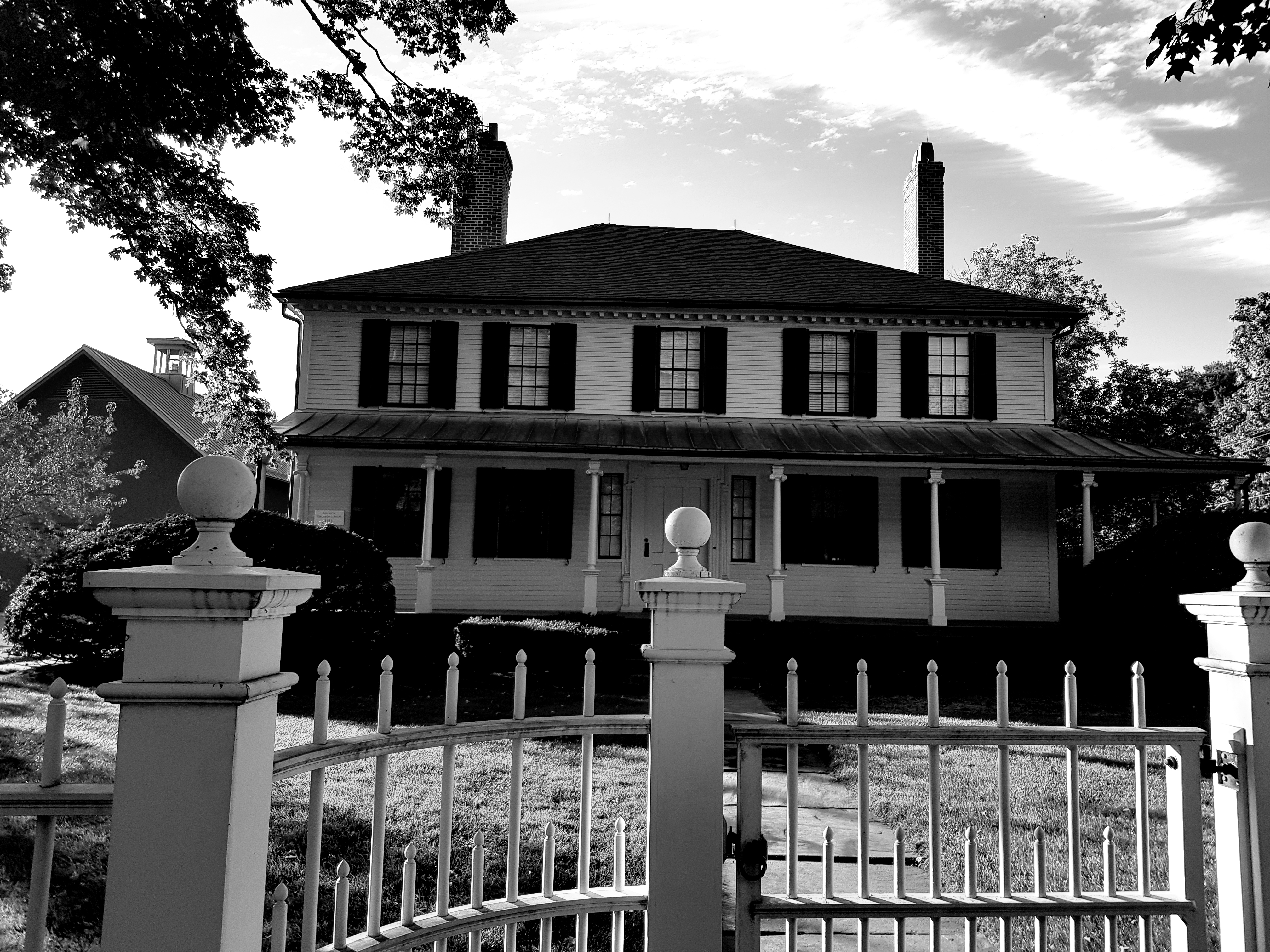
I went to tea at the Lewis Walpole library to celebrate the 300th. anniversary of Horace’s birth. I have been to Farmington before, but had forgotten the scale of the house which Wilmarth Sheldon Lewis bought on graduating from Yale and made the centre of his passionate, if not pathological, reconstruction of all aspects of the life and letters of Horace Walpole. Lewis added a grand Delano and Aldrich library at the back in 1930 and Yale added a much larger research library in 2007:-
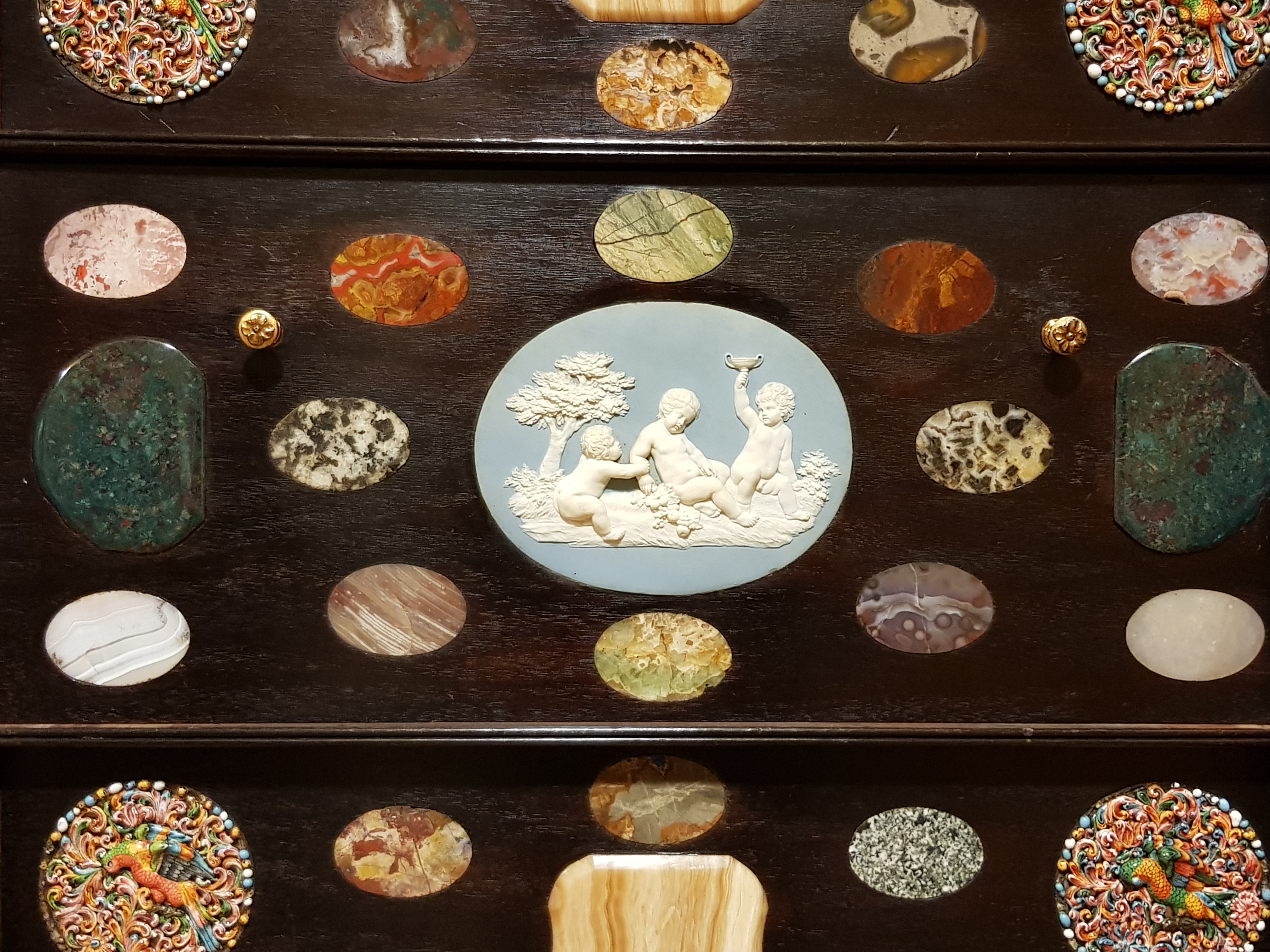
We were allowed especially to see the elaborate cabinet which Walpole had made to house drawings by Lady Diana Beauclerk (acquired by Lewis in 1939):-
Yale Center for British Art
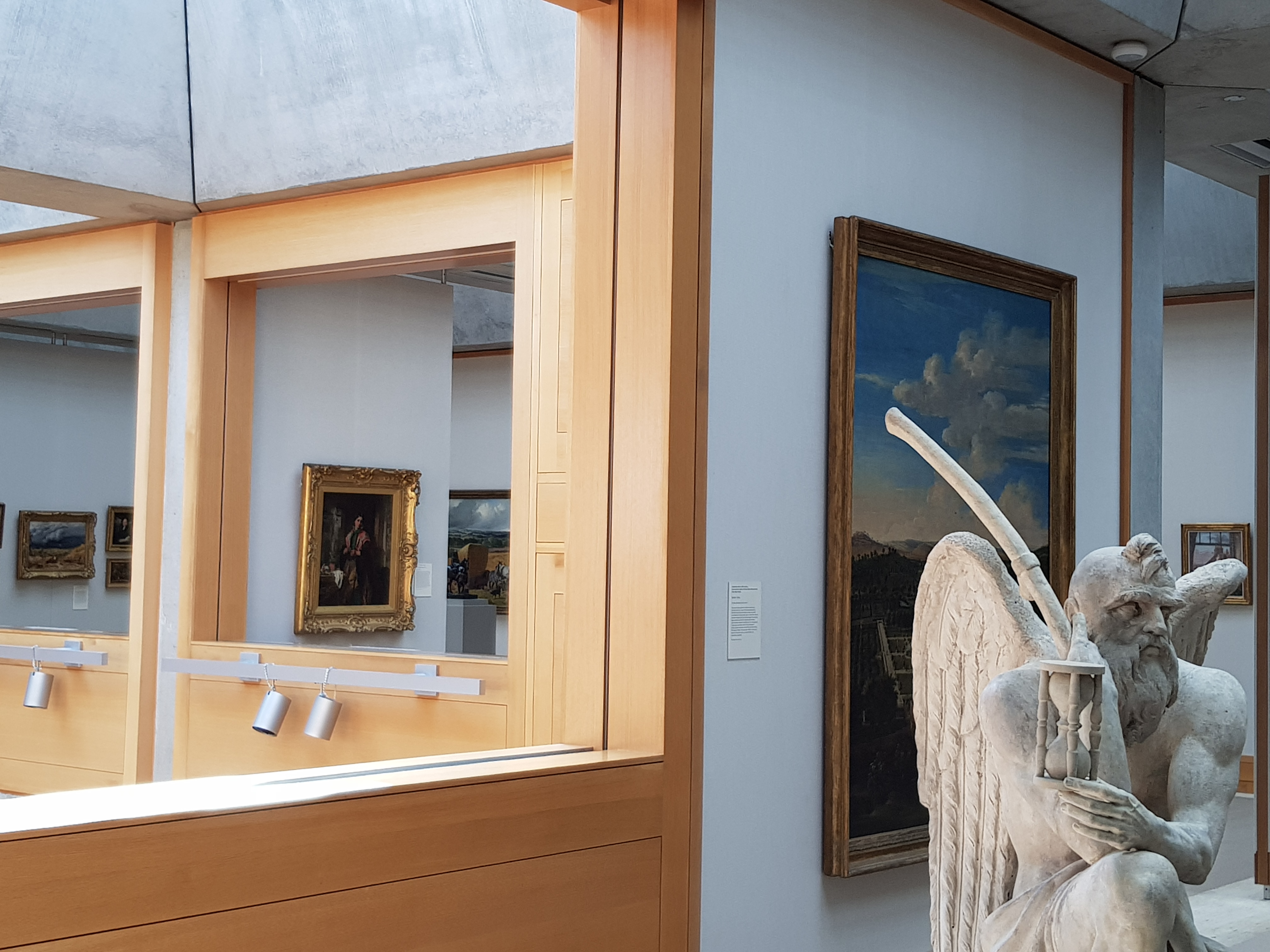
I’ve always loved the building of the Yale Center – Louis Kahn’s last masterpiece which he was working on when he was found dead in Grand Central Station: a set of cool and lucid, daylit spaces, half domestic, half institutional, encouraging dedicated looking.
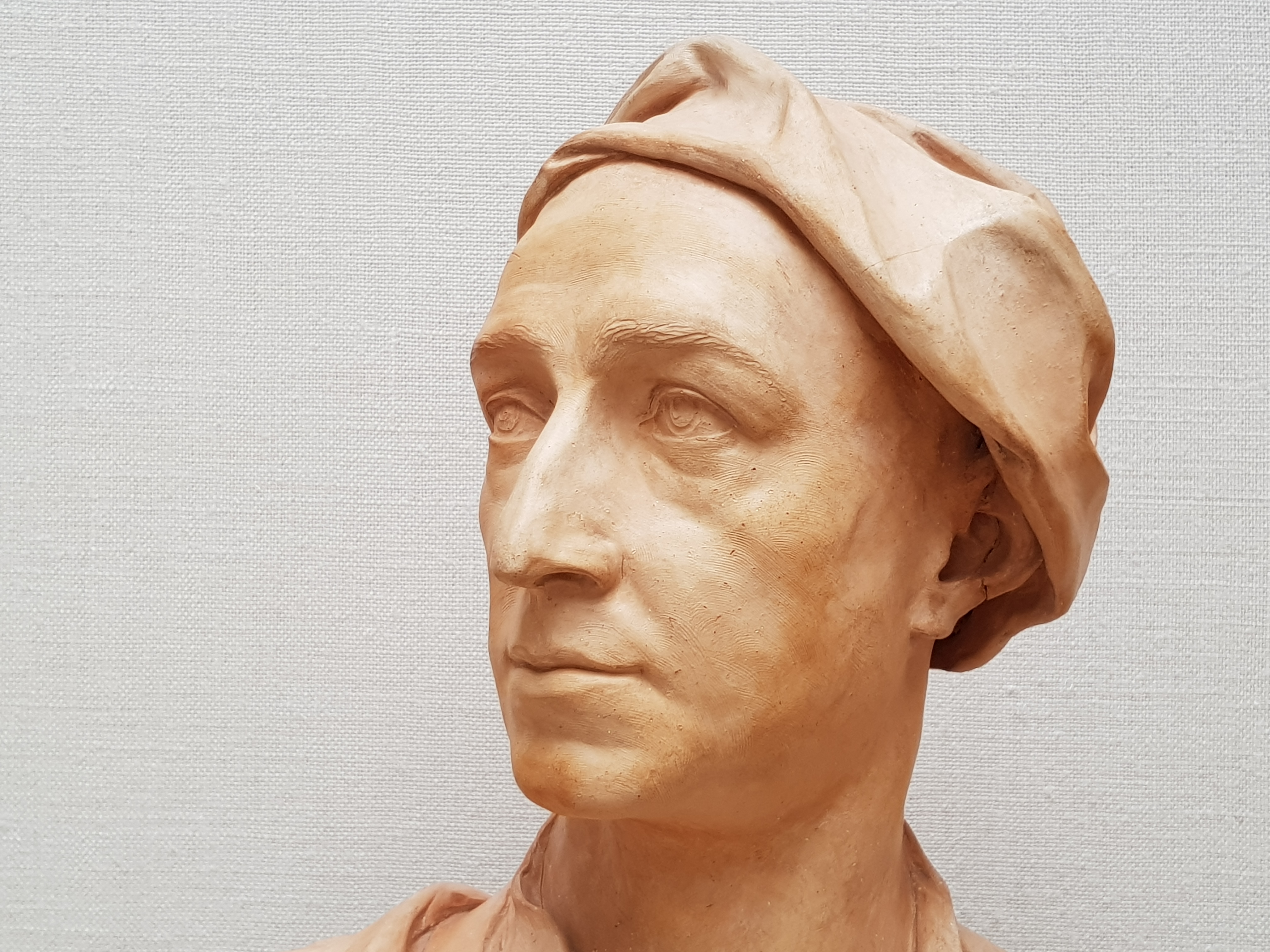
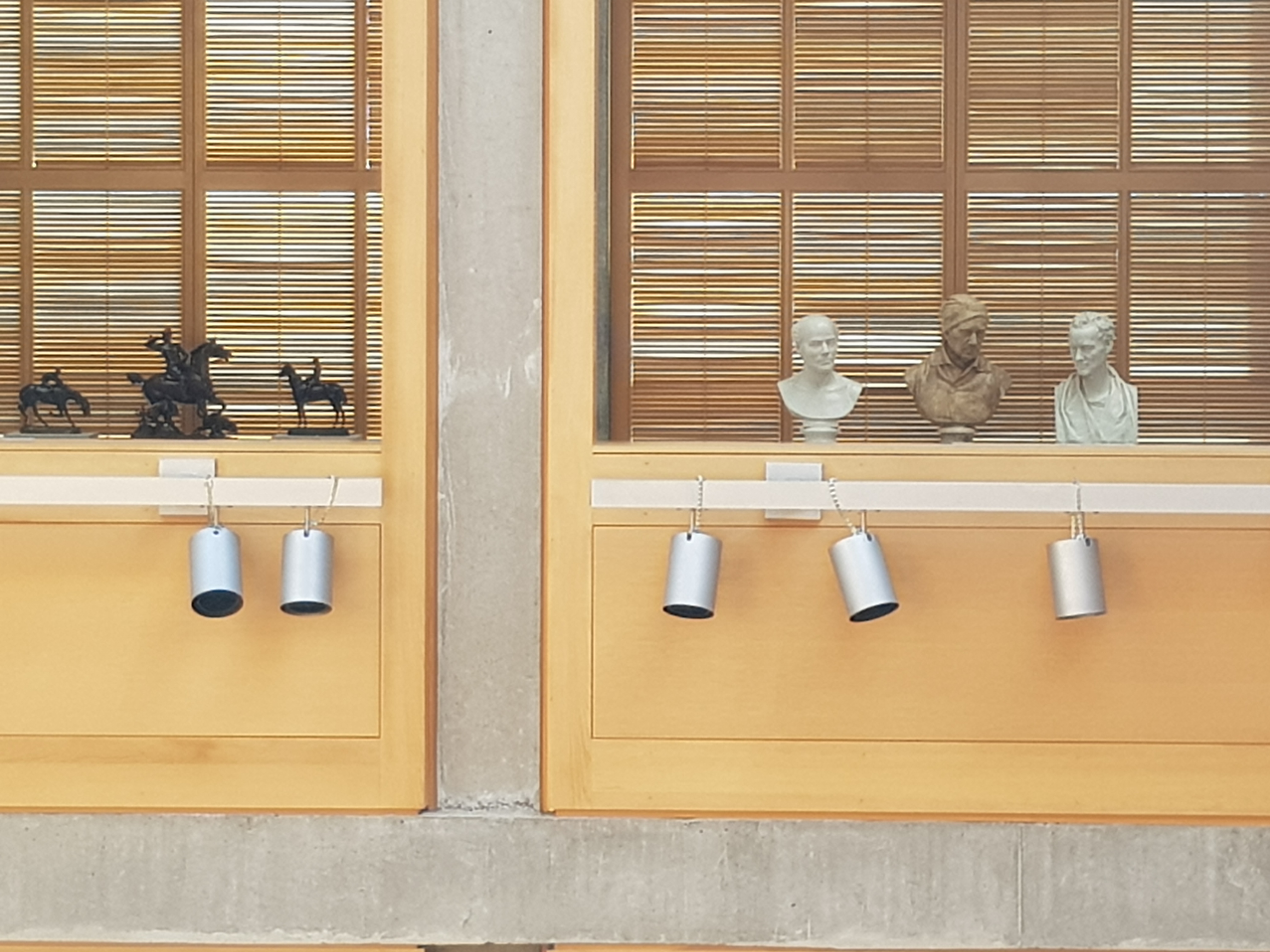
There’s more sculpture than I remember, including a very beautiful terracotta Rysbrack bust of Peter Tillemans, a fellow Fleming:-
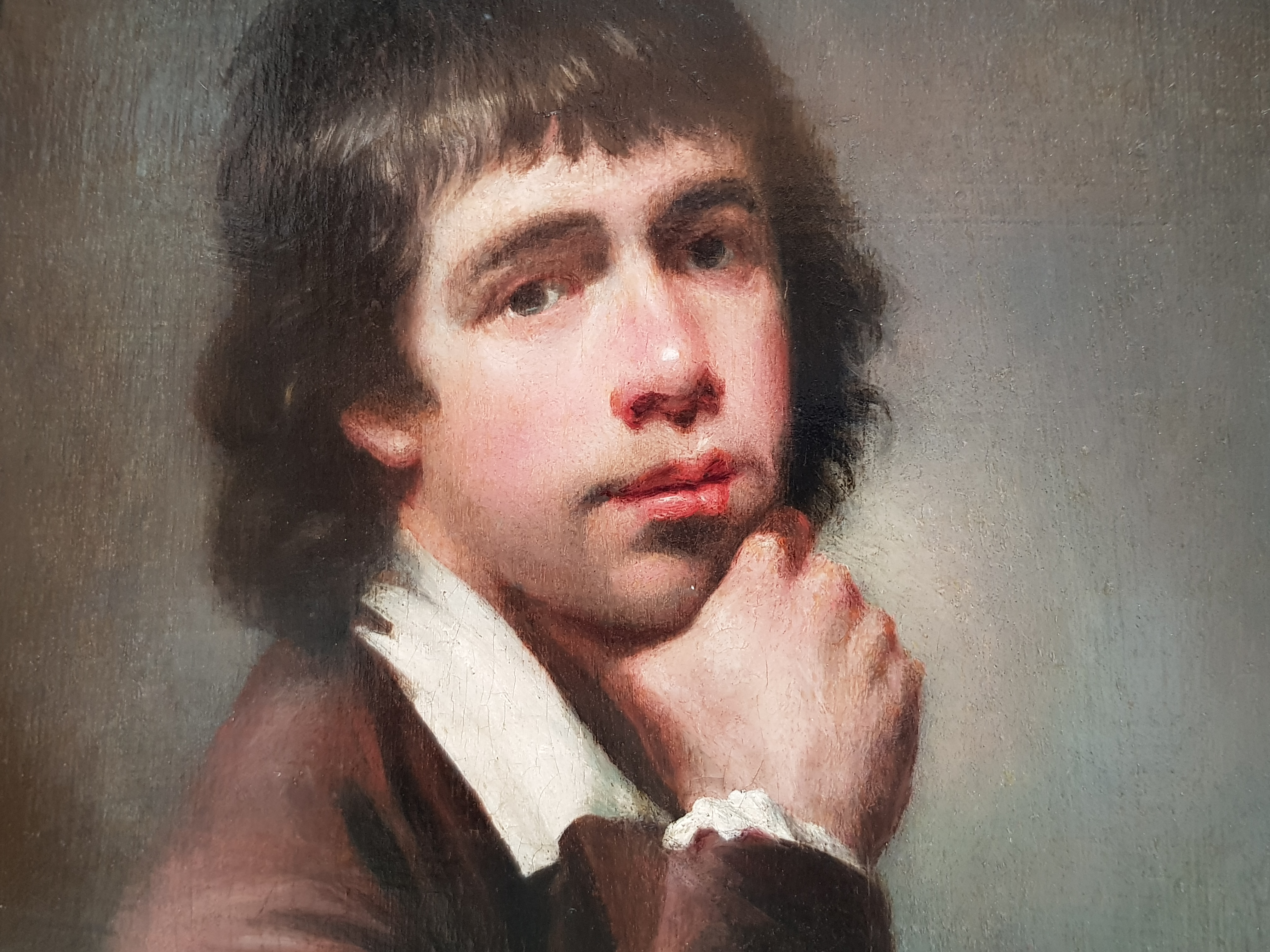
This is Benjamin West in his self-portrait with his family:-
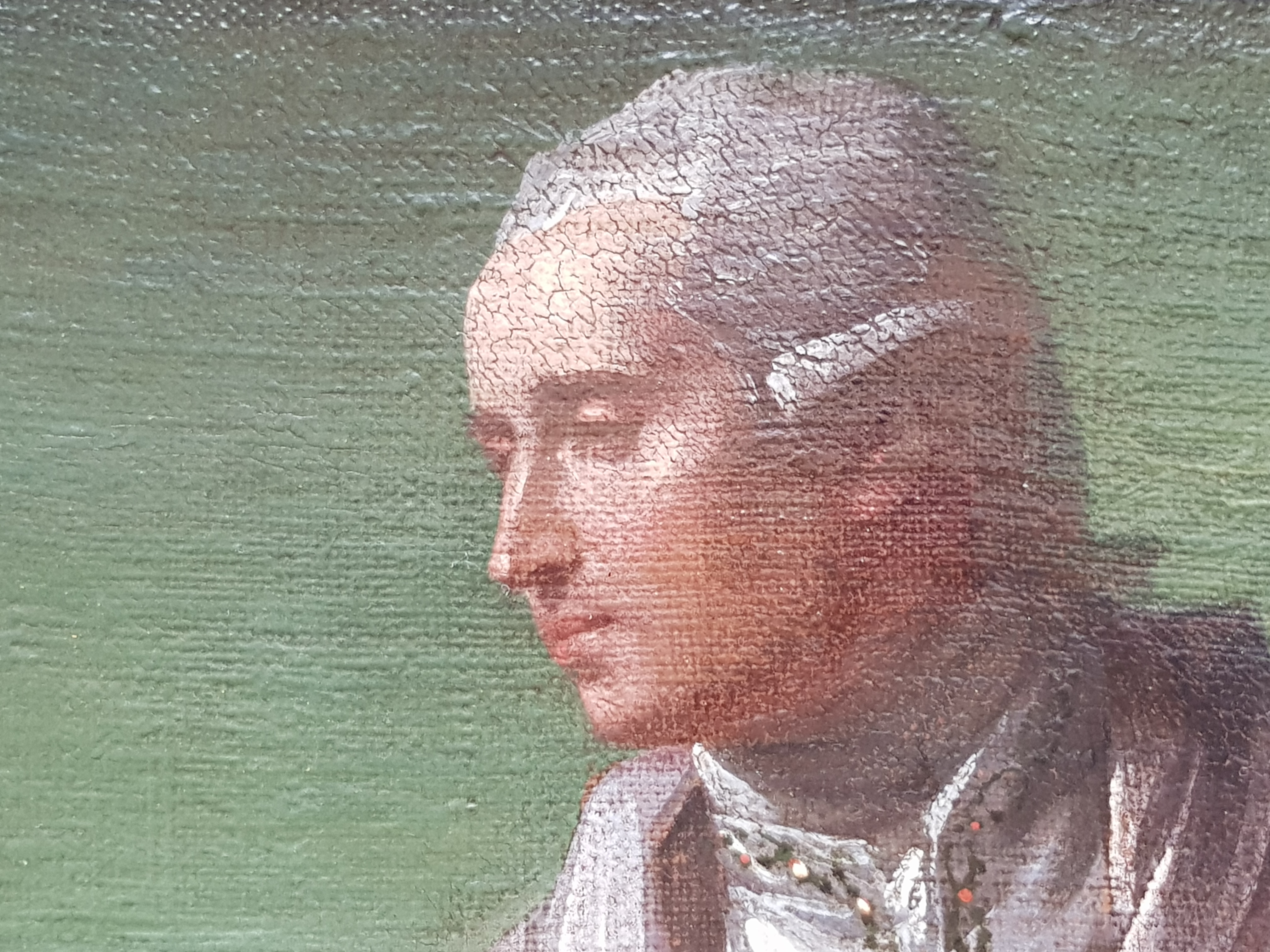
A Self-portrait of Daniel Stringer who was a student in the RA Schools in its early years:-
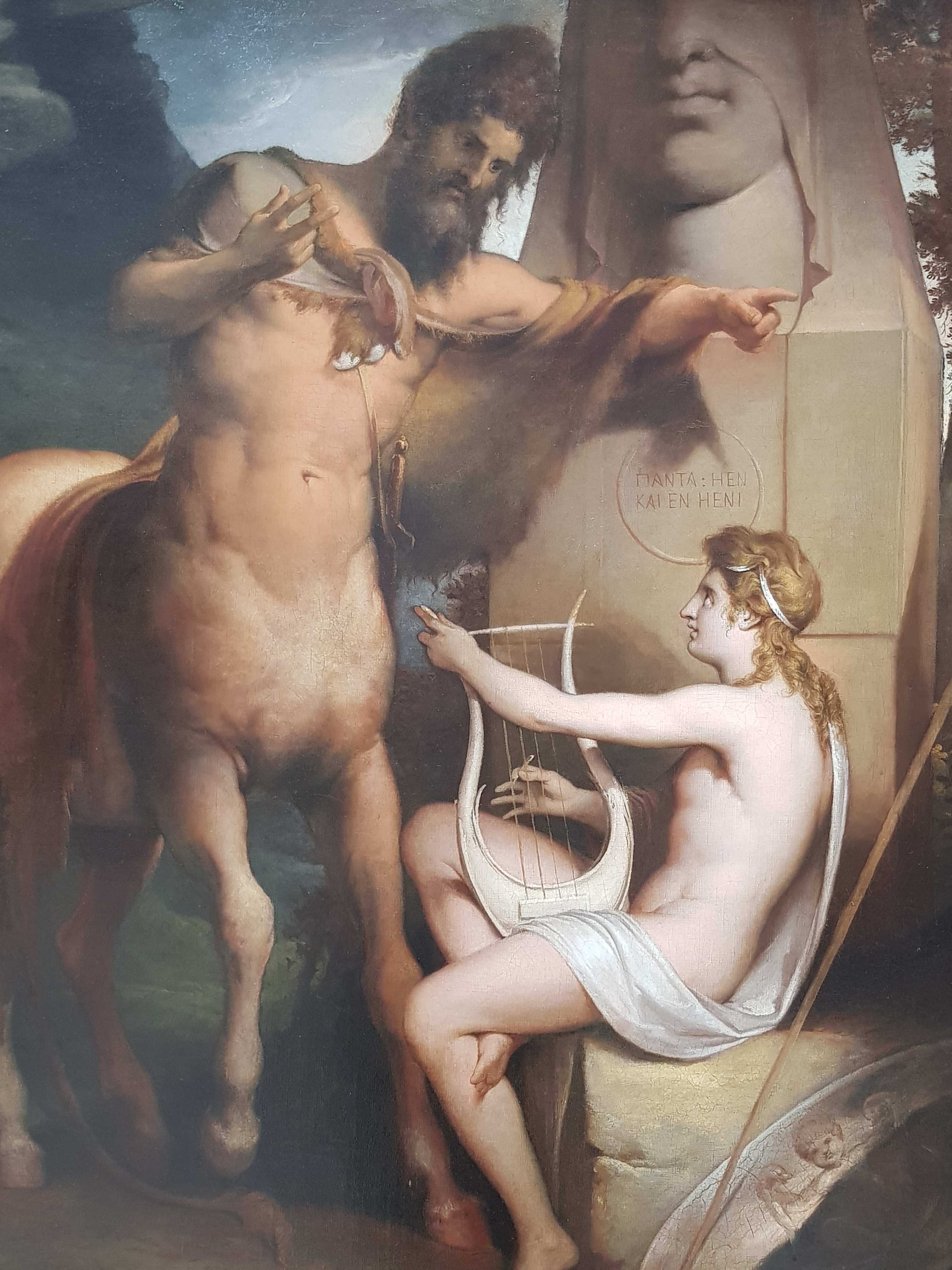
Barry’s Education of Achilles, shown at the RA in 1772 (he was elected in 1773):-
That was as much as I could see before lunch, other than the grand interior spaces of the building:-
British Studio Pottery
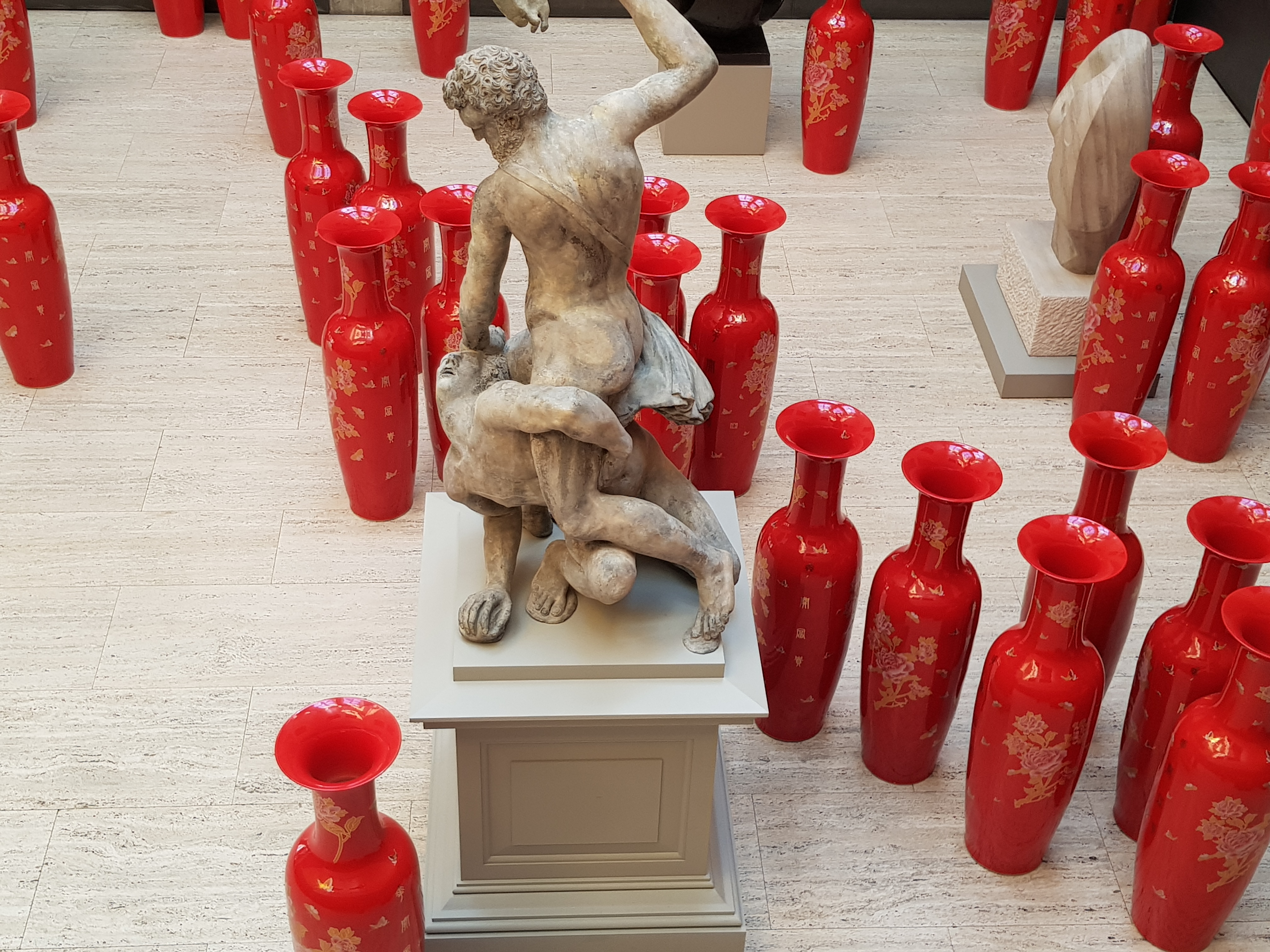
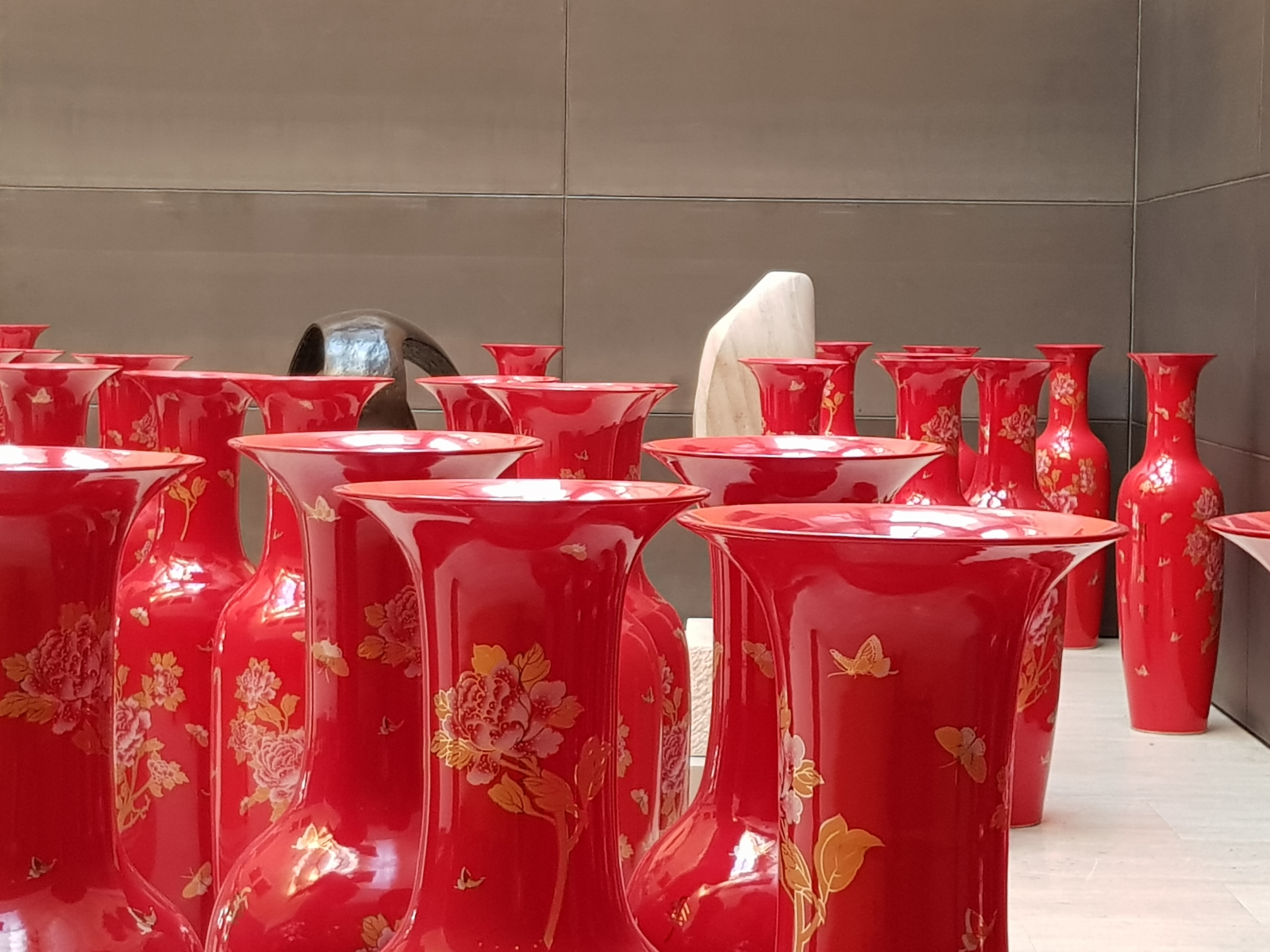
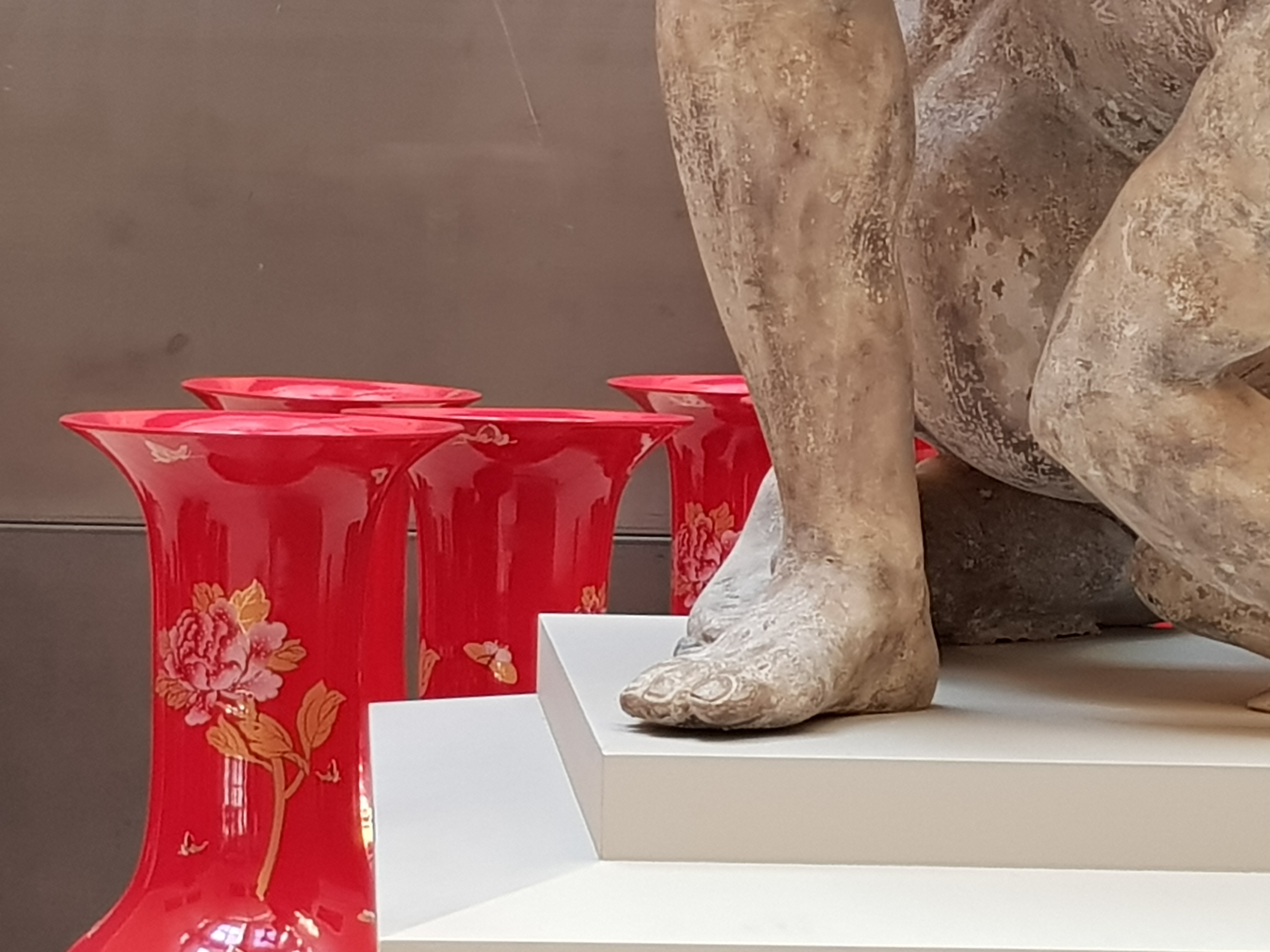
I managed to catch the exhibition Things of Beauty Growing at the Yale Center for British Art before it travels to the Fitzwilliam in March. It’s an exploration of the twentieth-century tradition of studio pottery, beginning with the appreciation of William Staite Murray, Katharine Pleydell-Bouverie and Bernard Leach for Chinese, Japanese and Korean porcelain and stoneware. There’s a tea set designed, but not, I assume, made by Roger Fry (V&A) and a breakfast set – very beautiful – by Lucie Rie from the Crafts Study Centre. The generation from the 1970s are described as a fragmentary group, an odd term for a group, including Alison Britton, Carol McNicoll and Jacqueline Poncelet, who I think of as a cohesive group – friends and allies, art-school trained and supported by Victor Margrie’s Crafts Council in exploring new forms of pottery as fine art. The work looks good in the cool and recently renovated spaces of Louis Kahn. There’s a very fine Phil Eglin jug, which fits oddly uncomfortably, as does Grayson Perry, with this tradition. No photography, except the work of Clare Twomey in the Entrance Court:-
More Soho
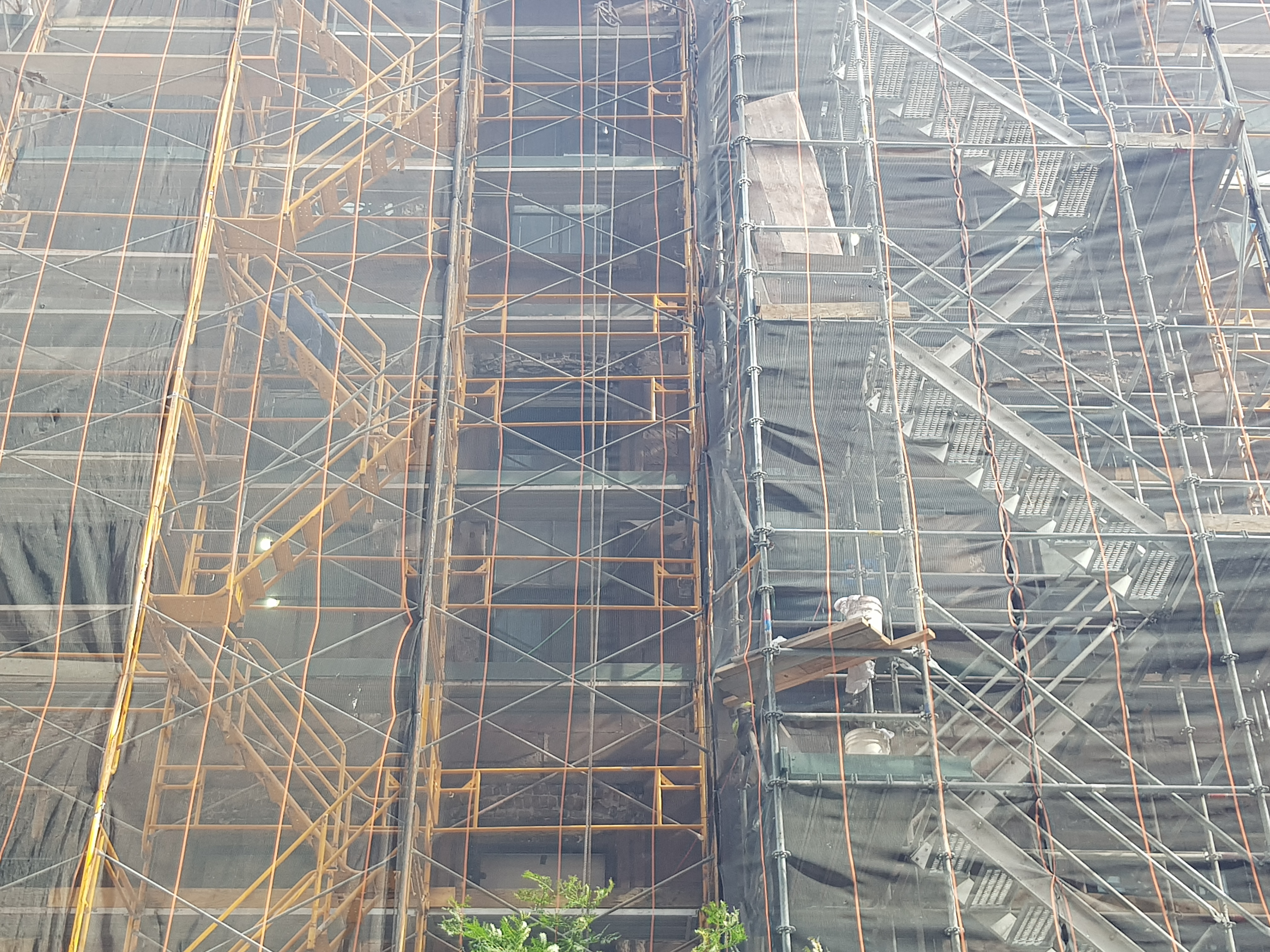
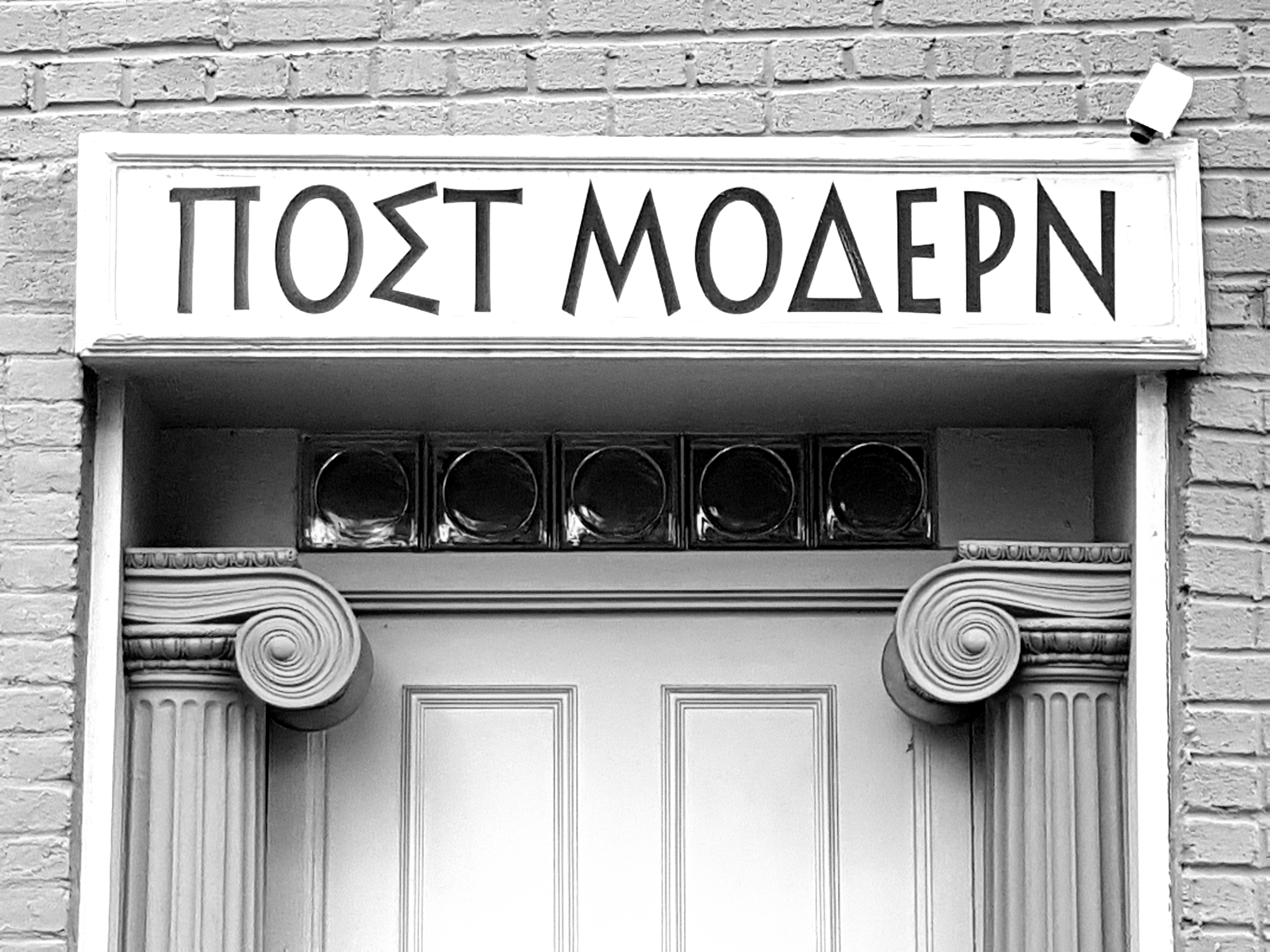
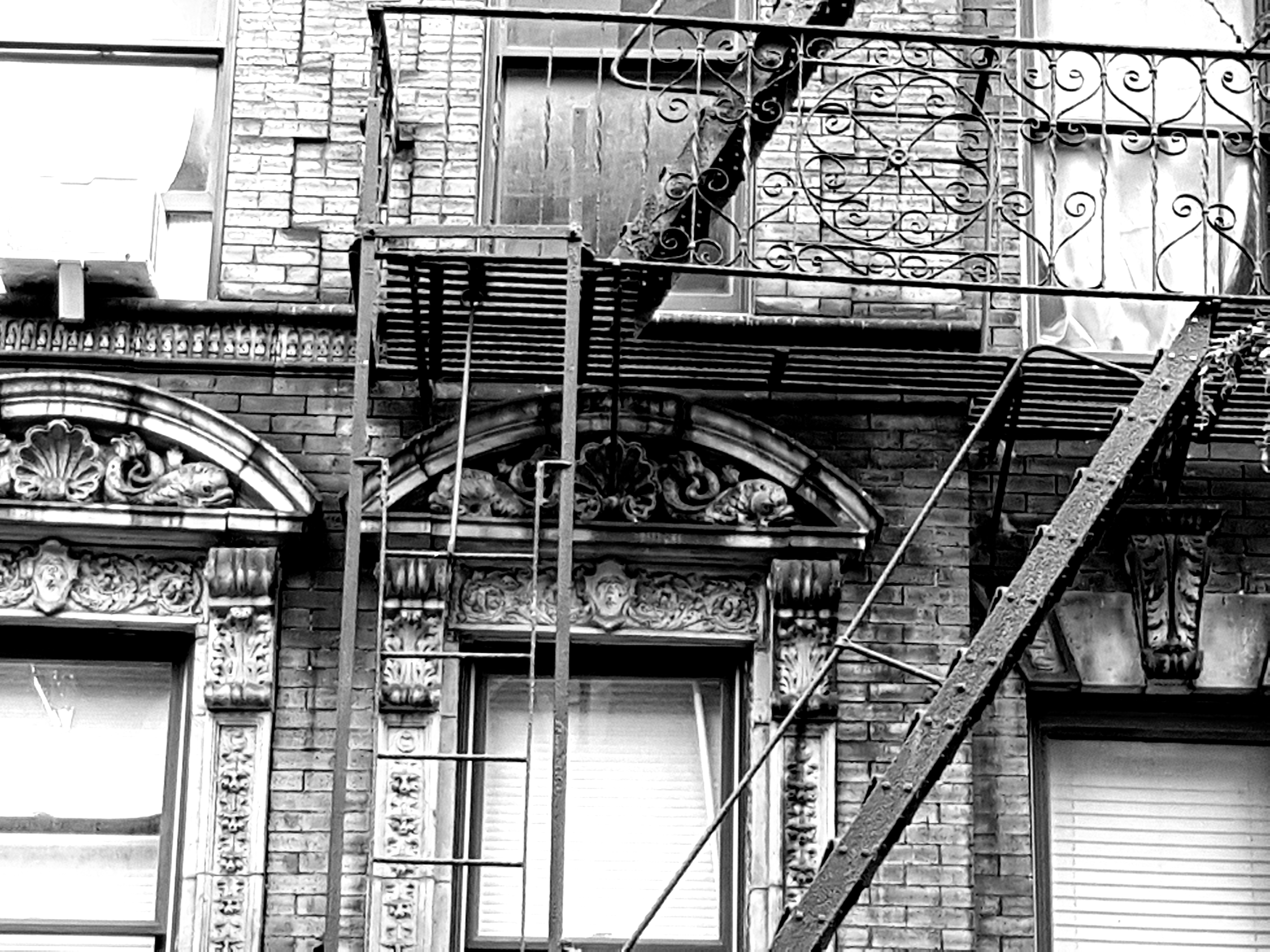
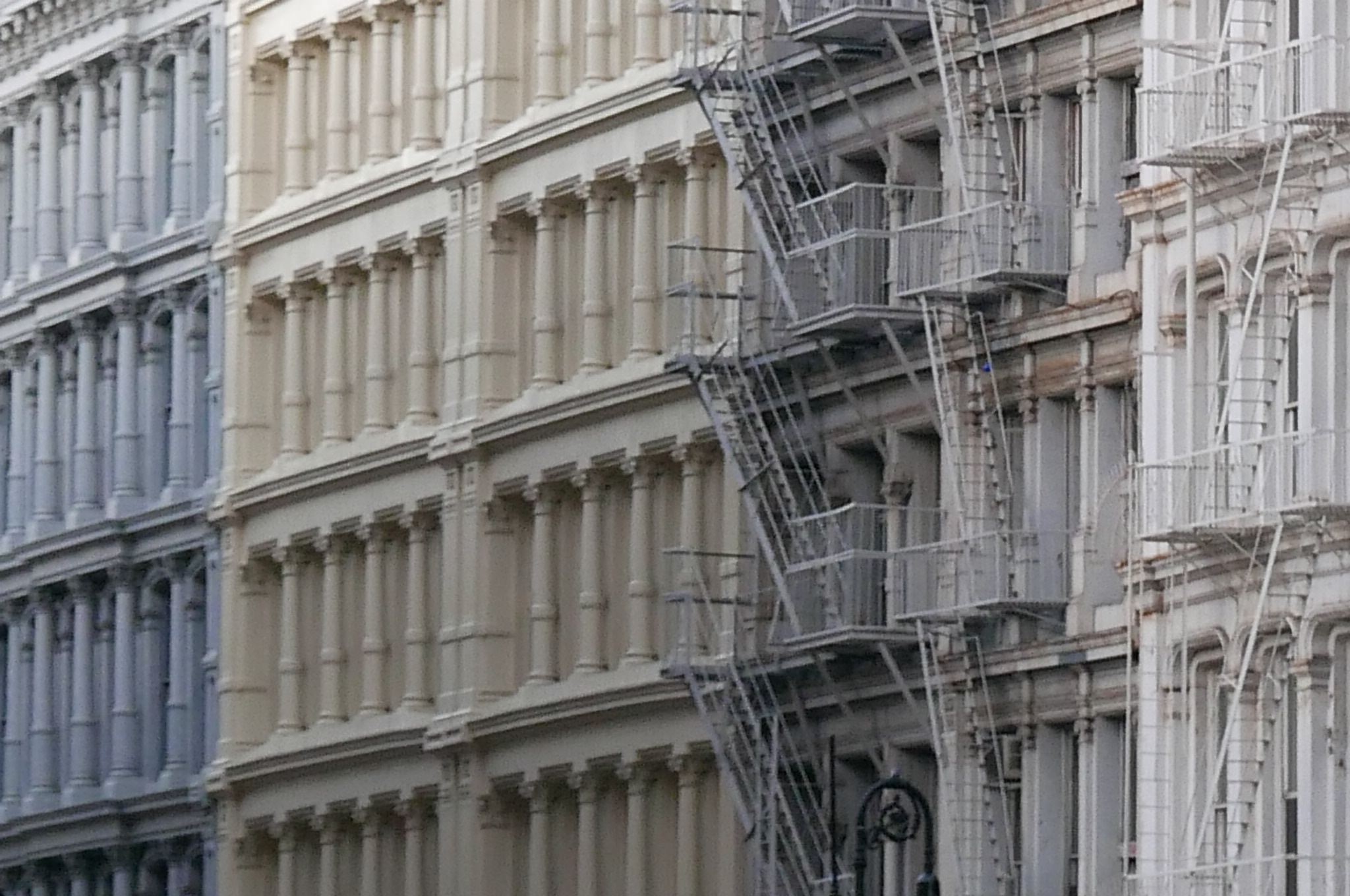
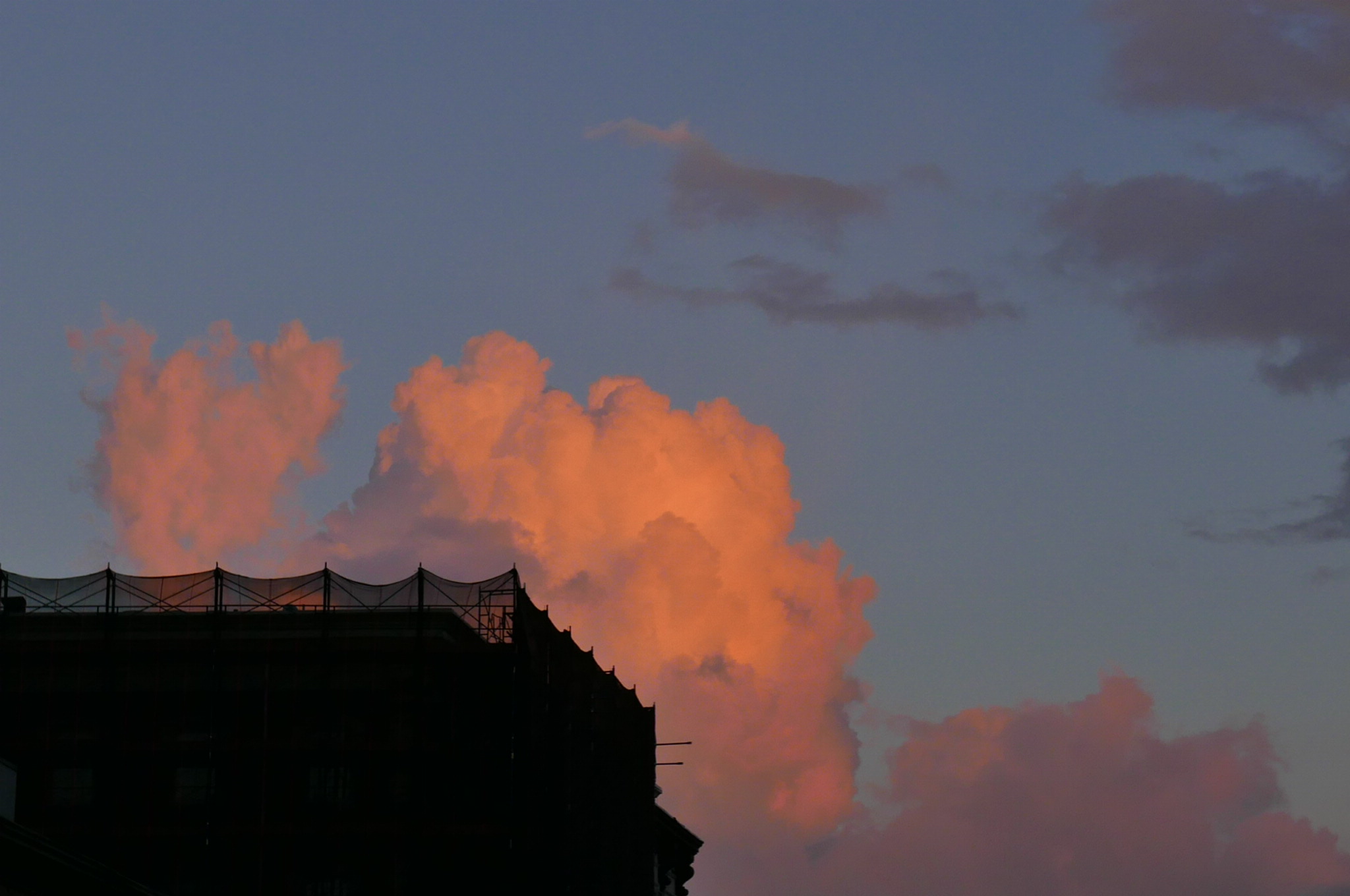
As a tourist, I’m a sucker for Soho: cobbled streets, old industrial building, a place to buy braces (If); it’s got everything:-
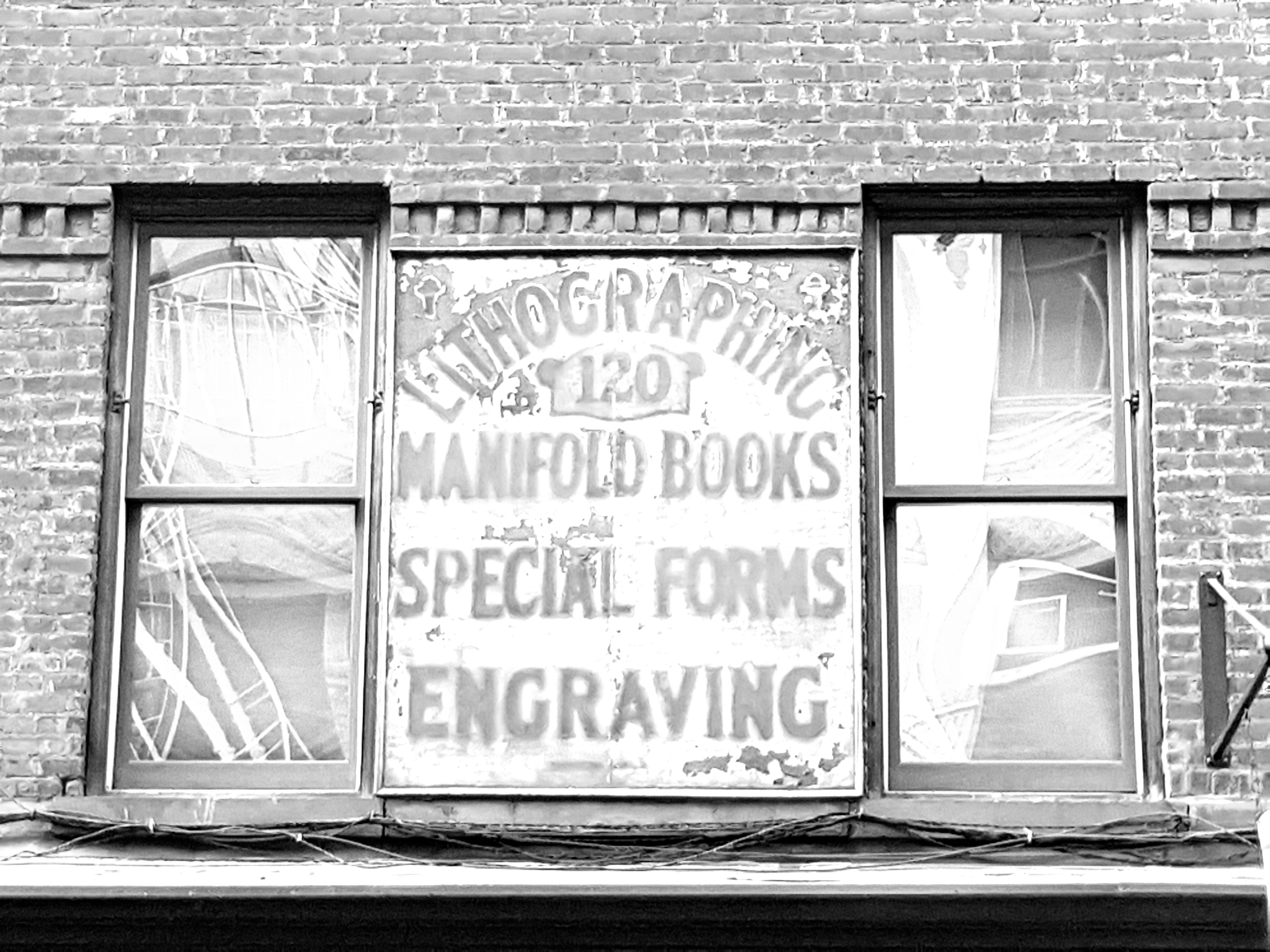
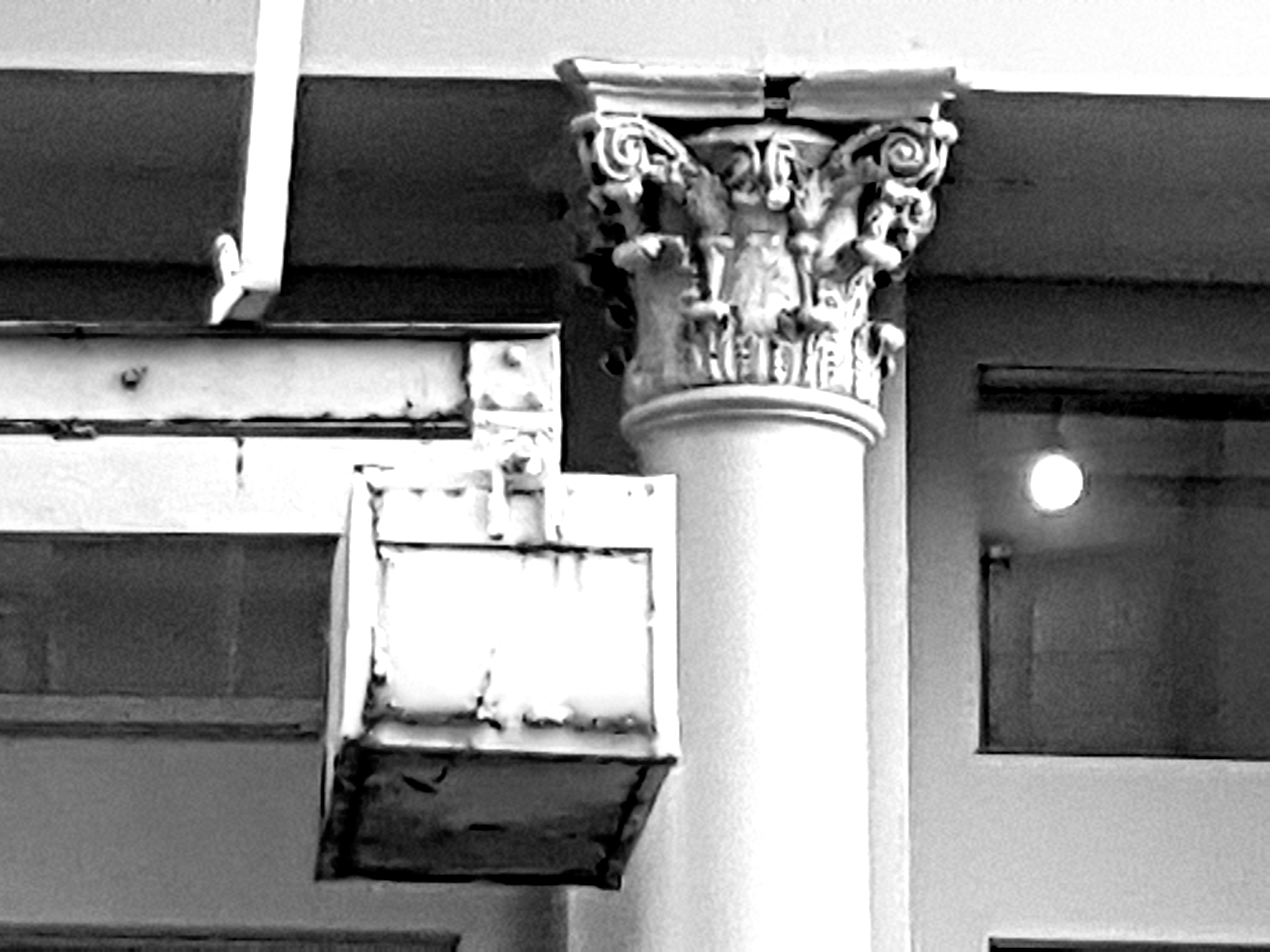
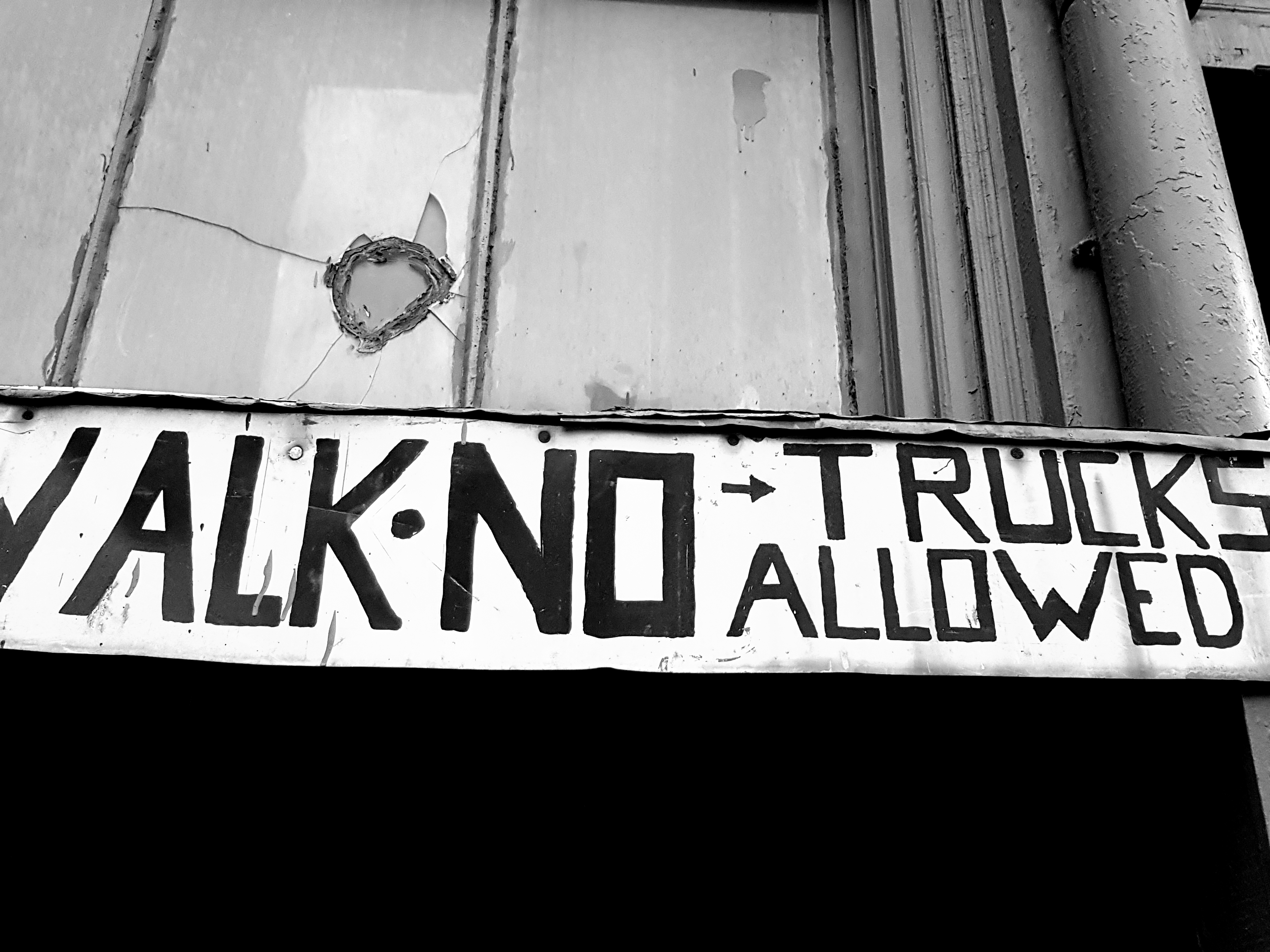
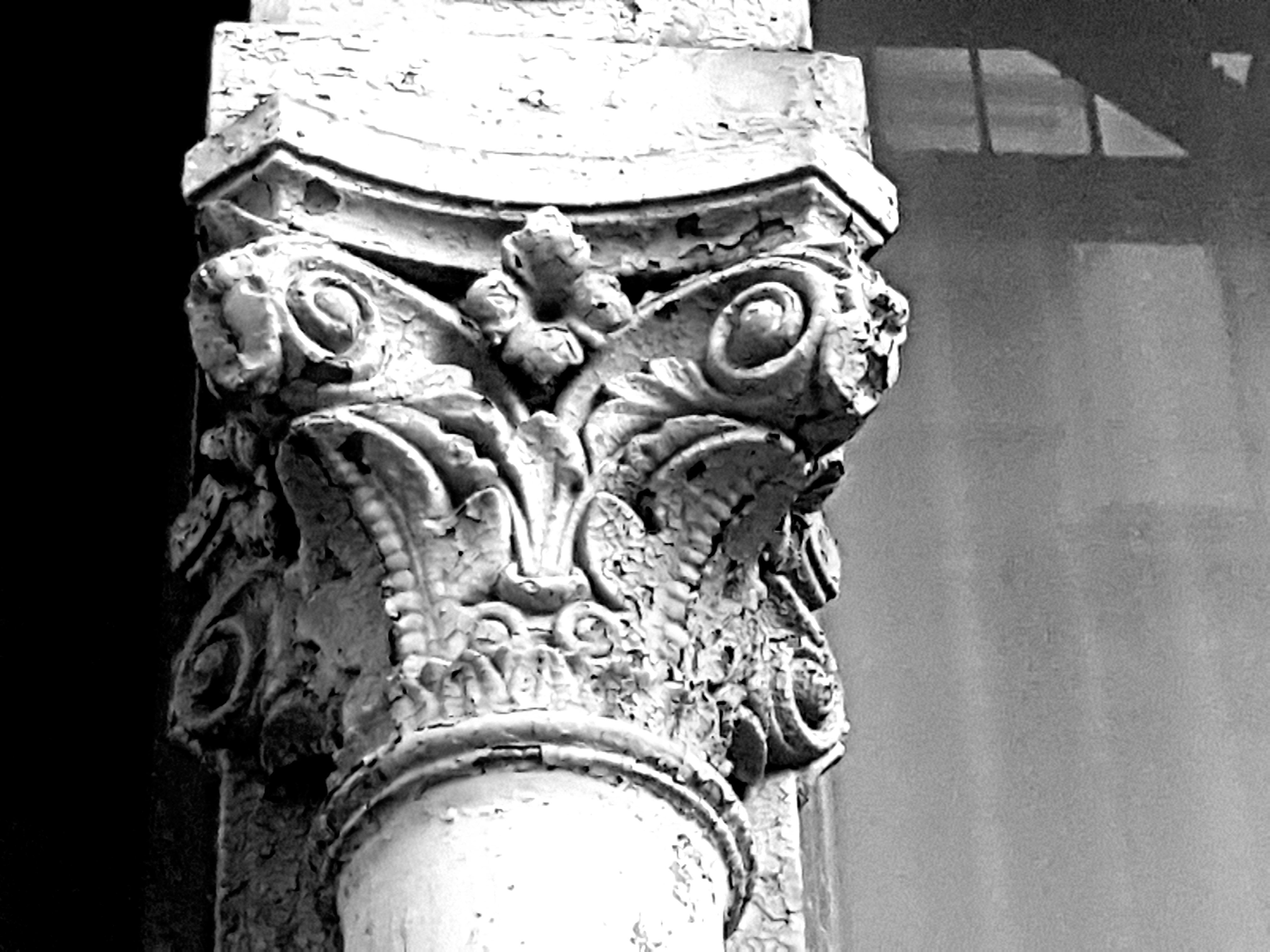
Tribeca
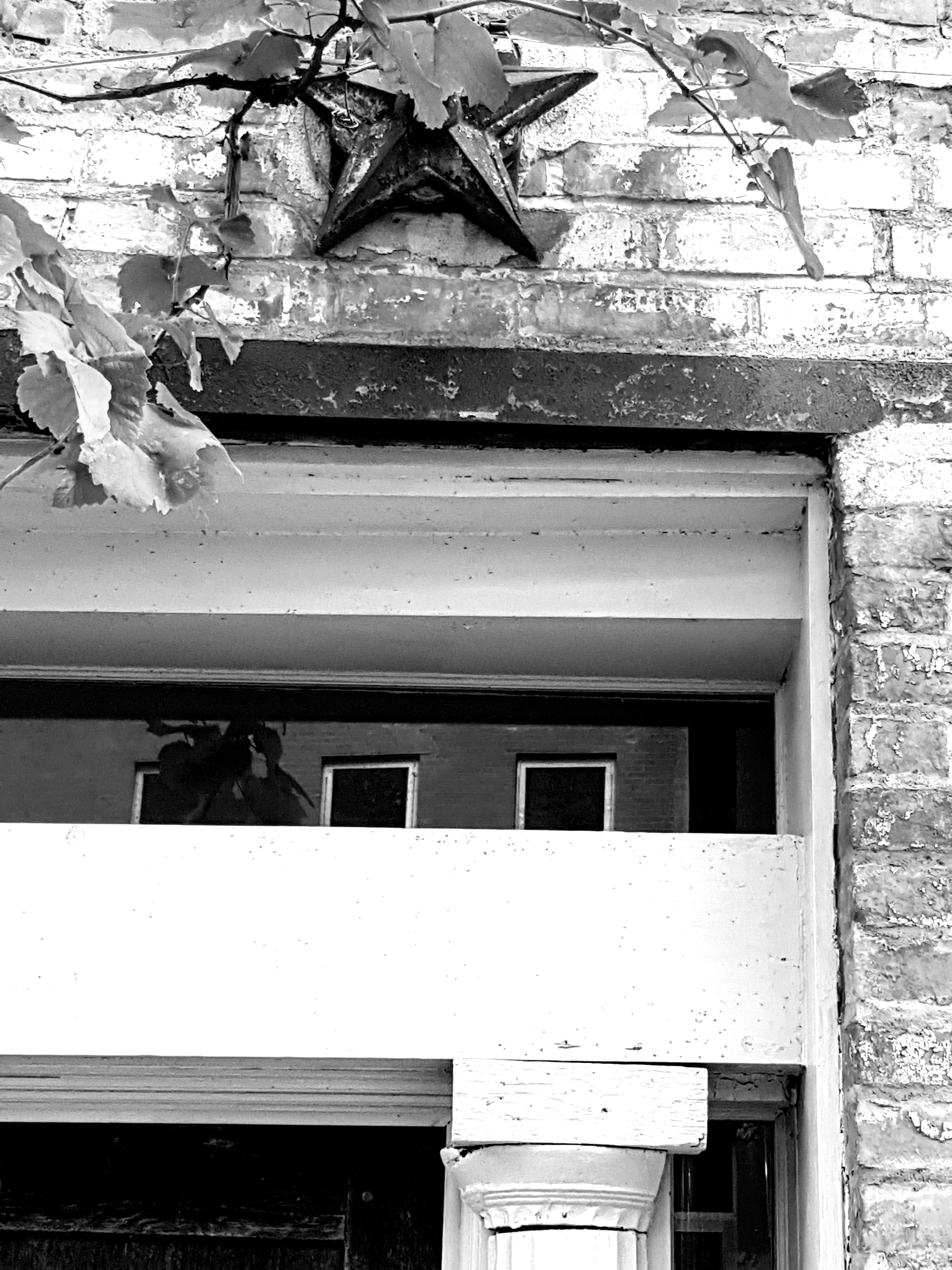
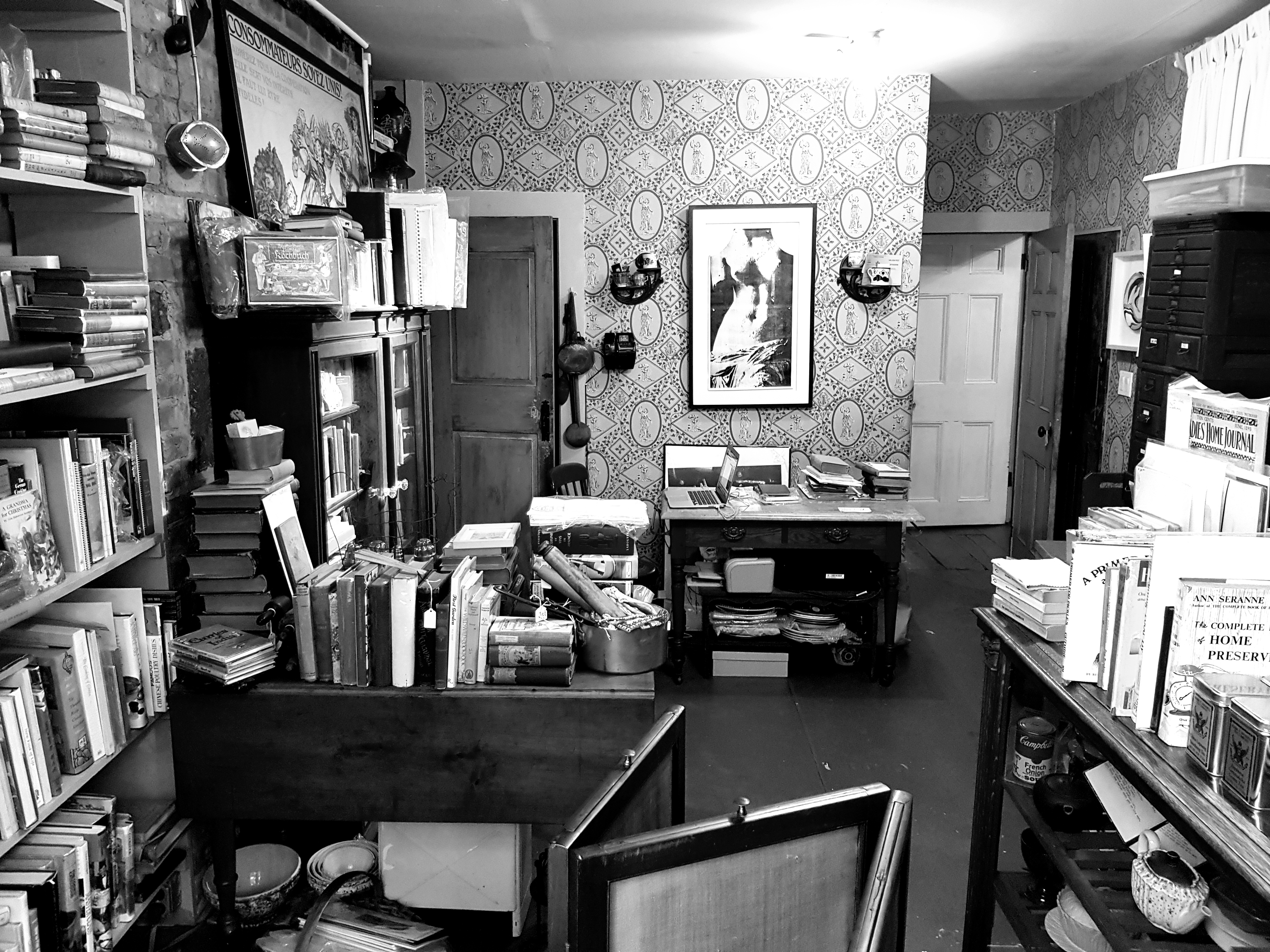
I went for an early evening stroll south of where I’m staying, into Tribeca. Past a shop specialising in the sale of Cook Books:-
Down Washington Street:-
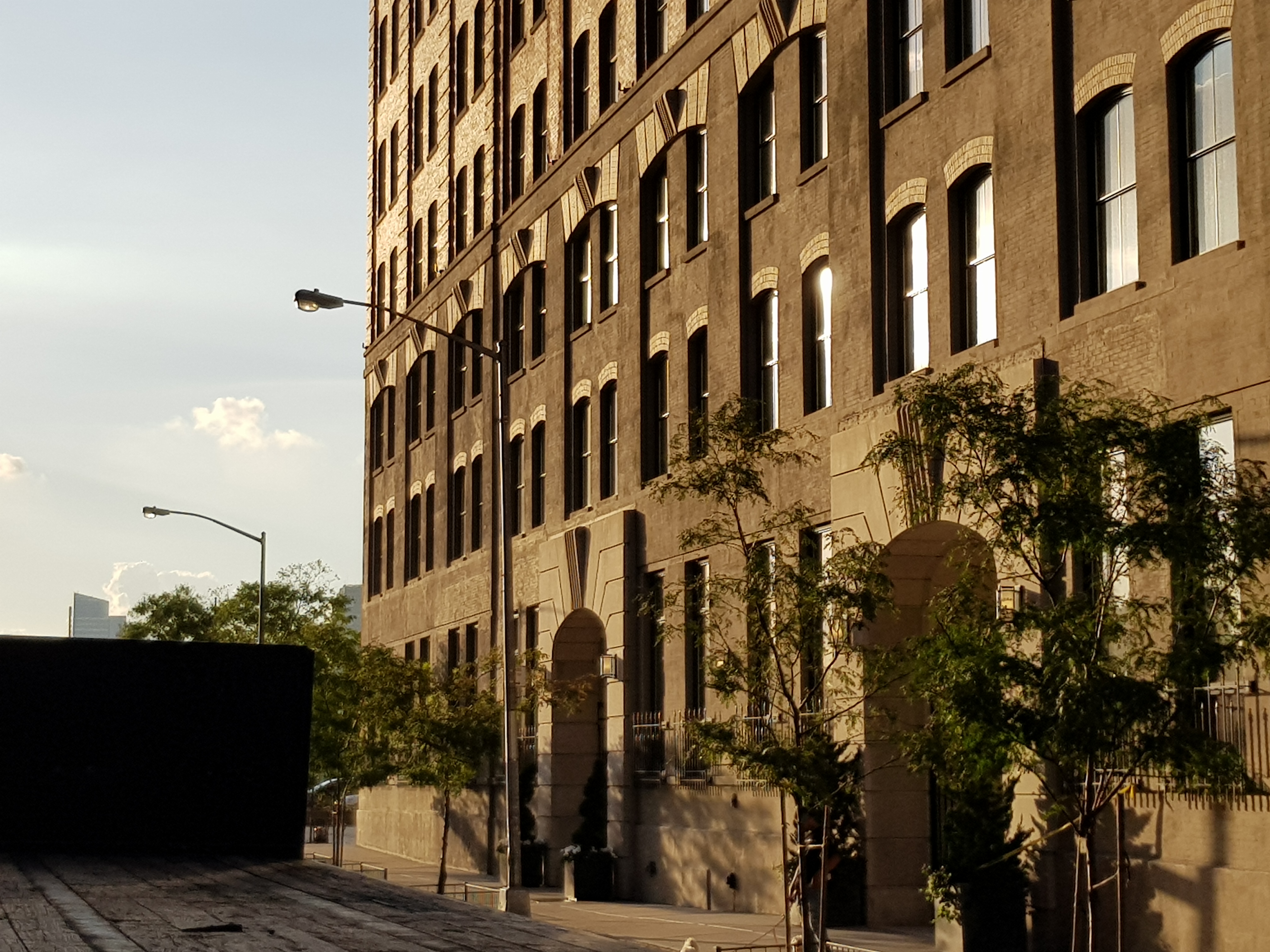
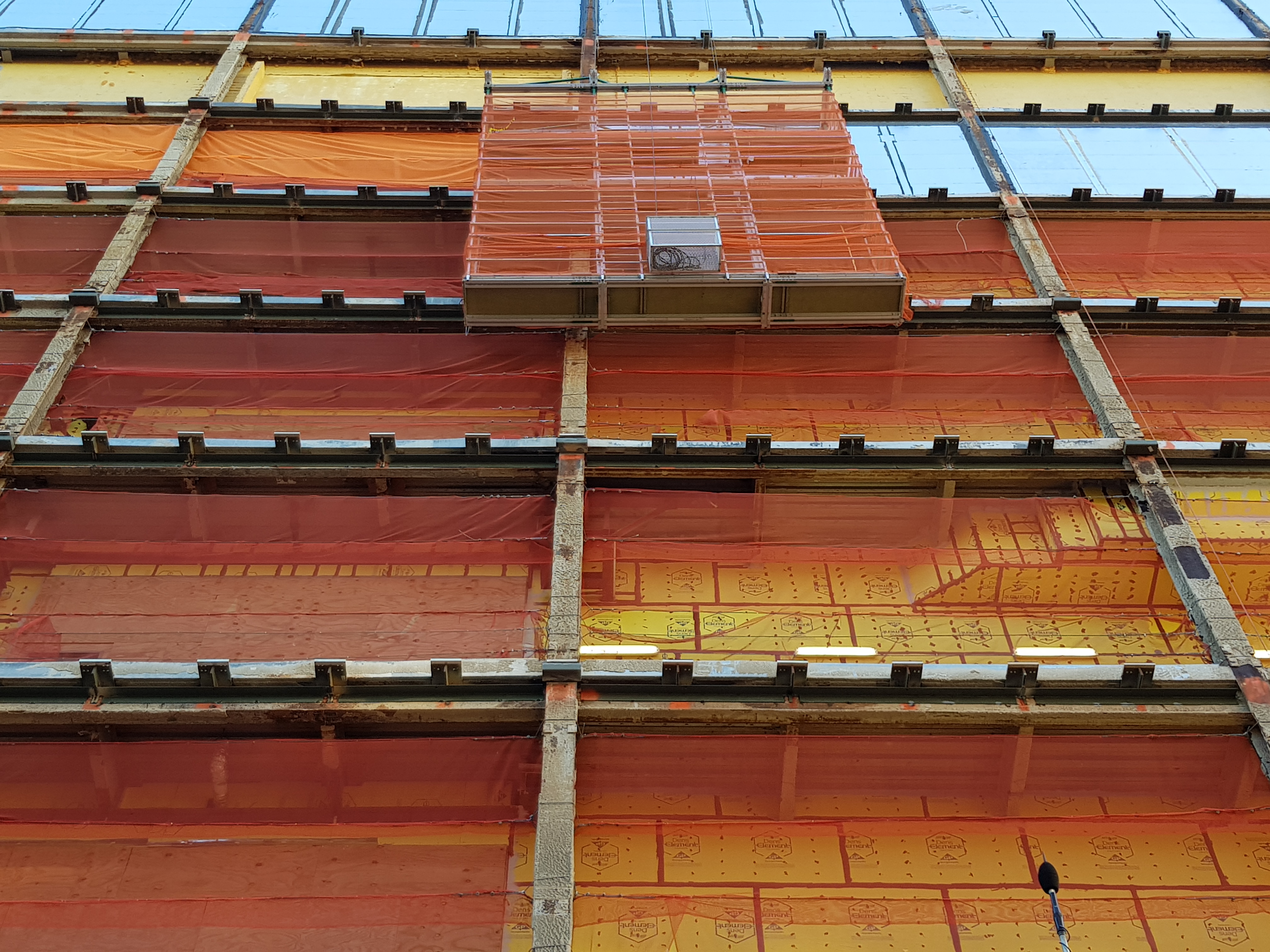
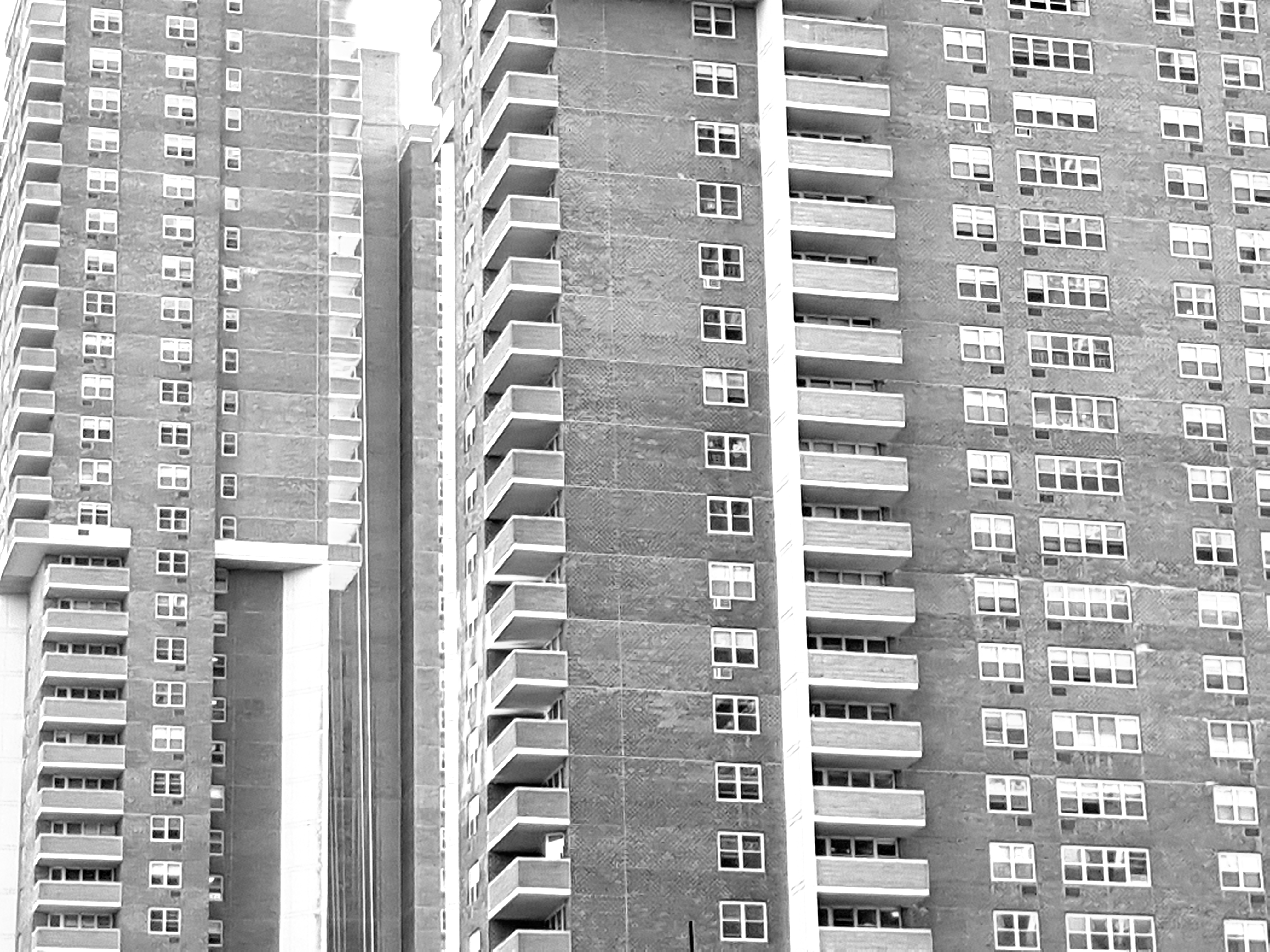
I think this is CUNY, described as a megastructure and damaged in 9/11:-
I liked Kaffe 1668, an eccentric coffee shop:-
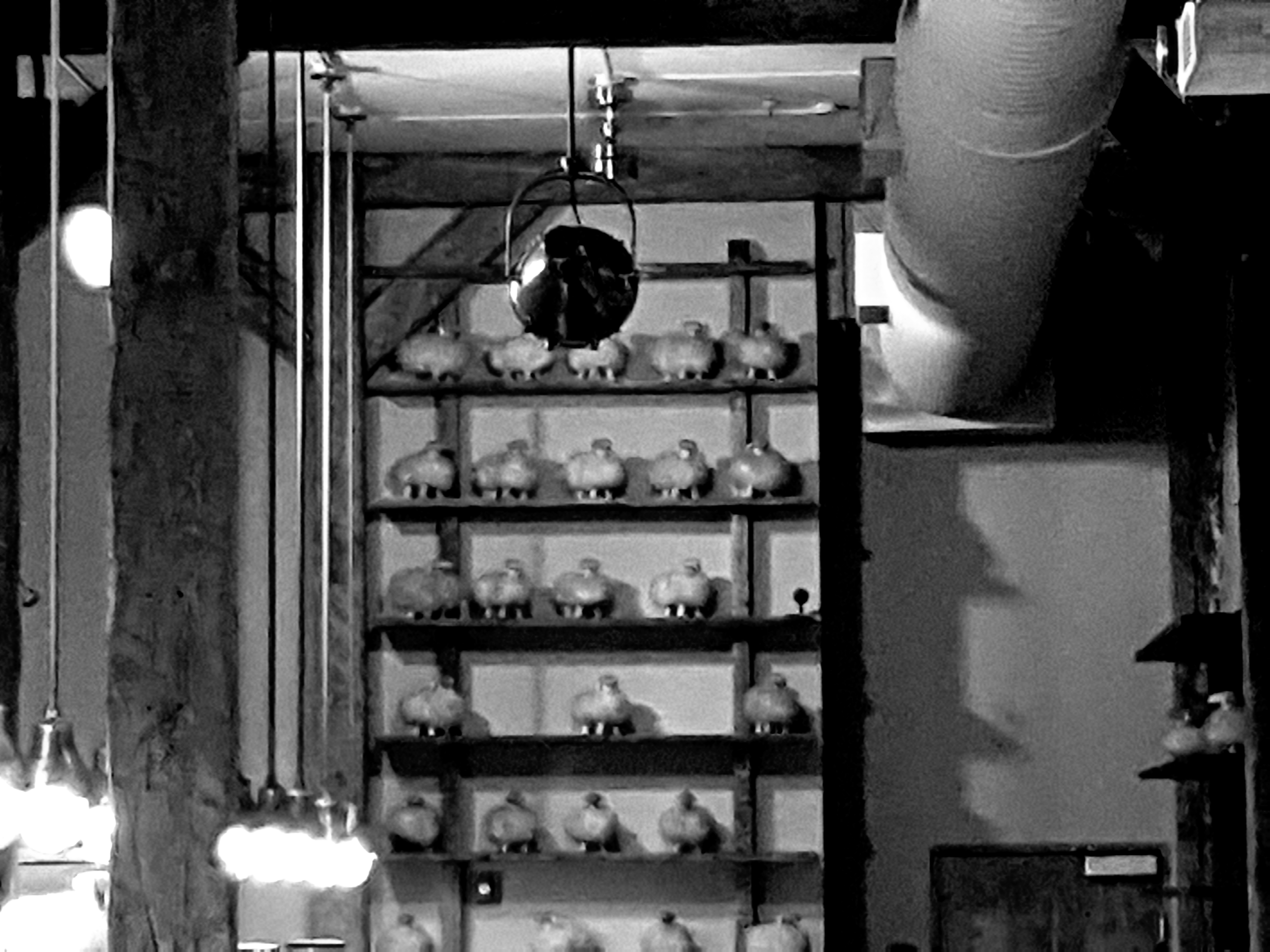
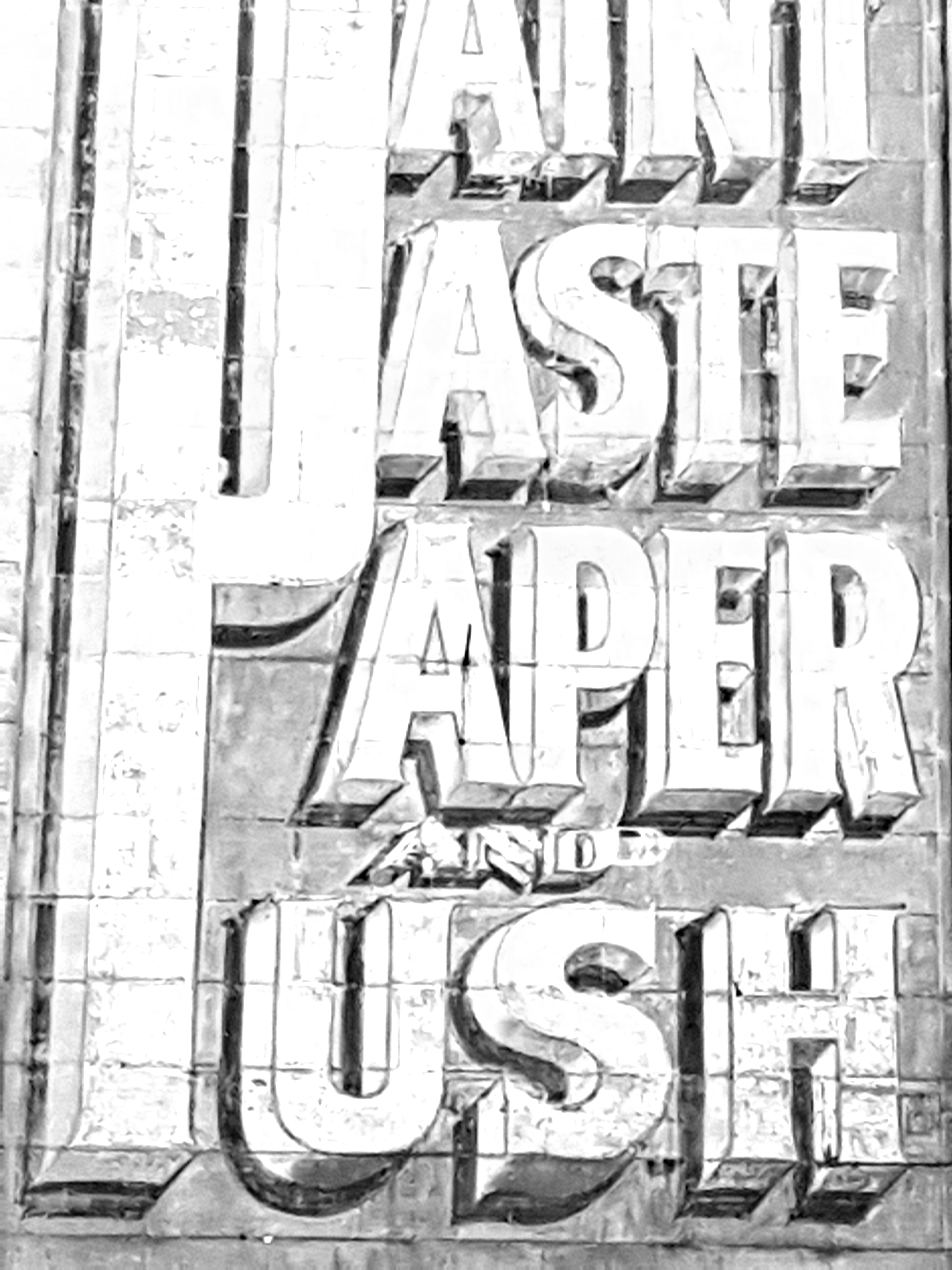
More signs:-
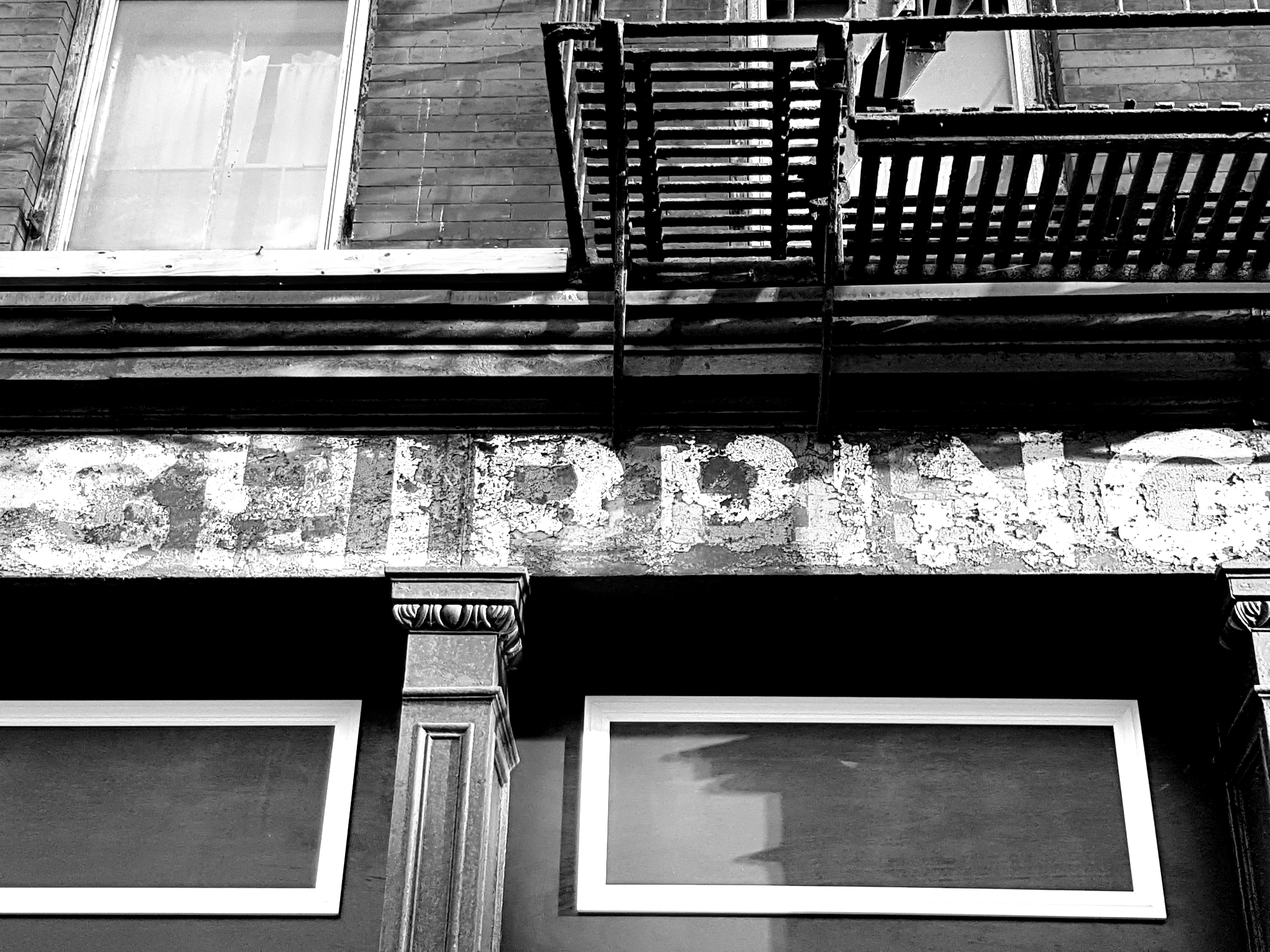
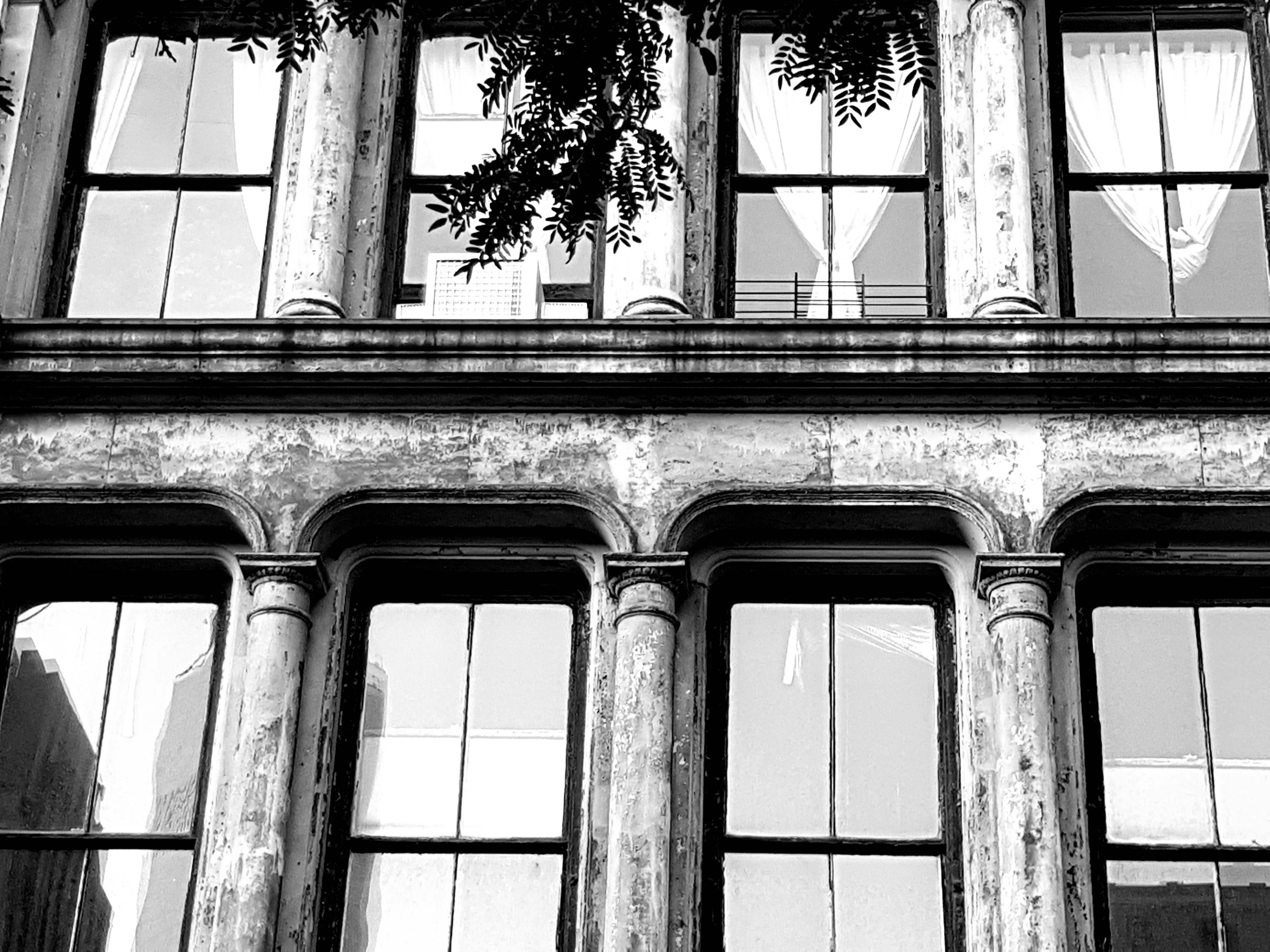
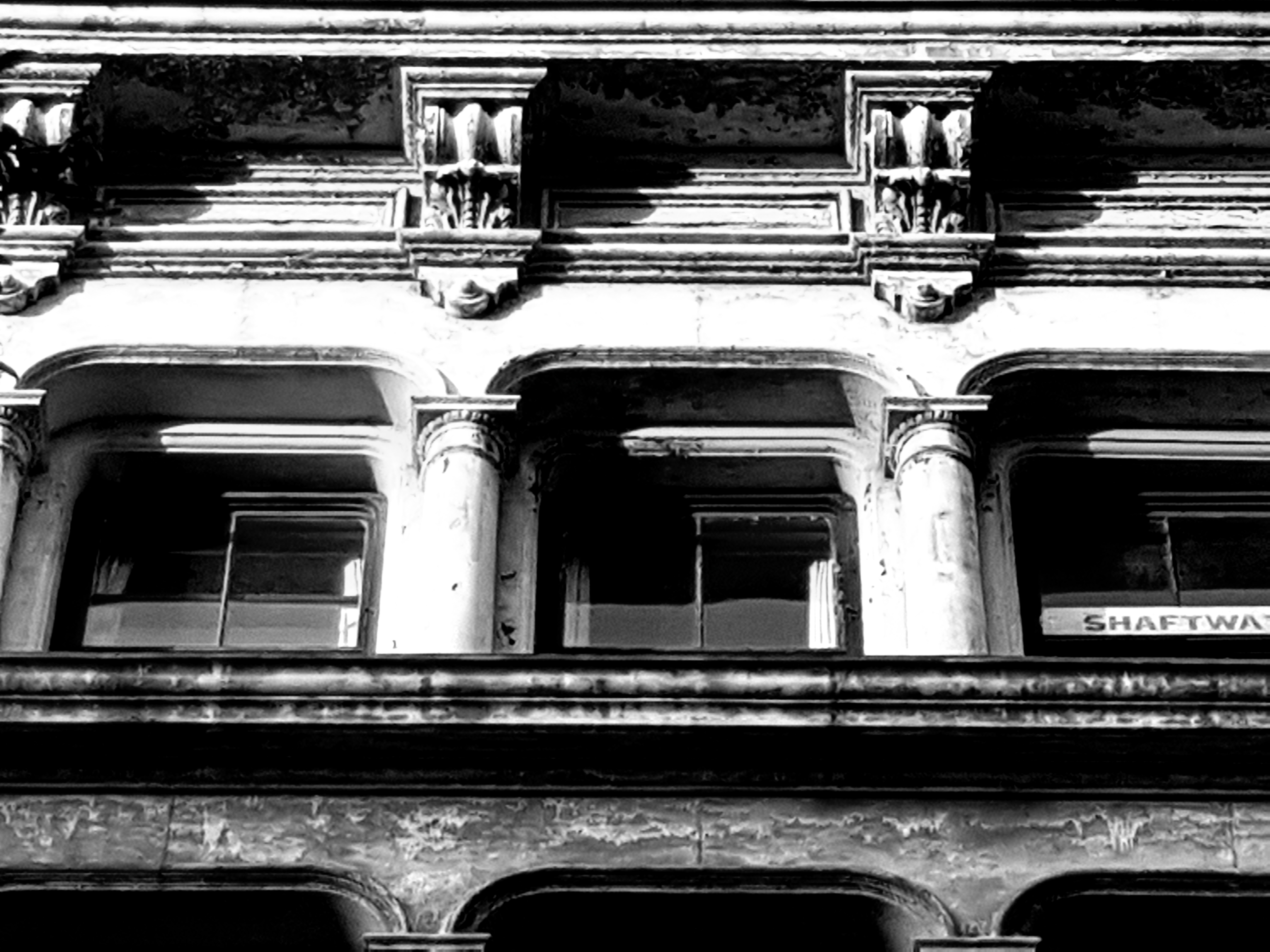
Everywhere, there was wonderful, surviving, old industrial architecture:-
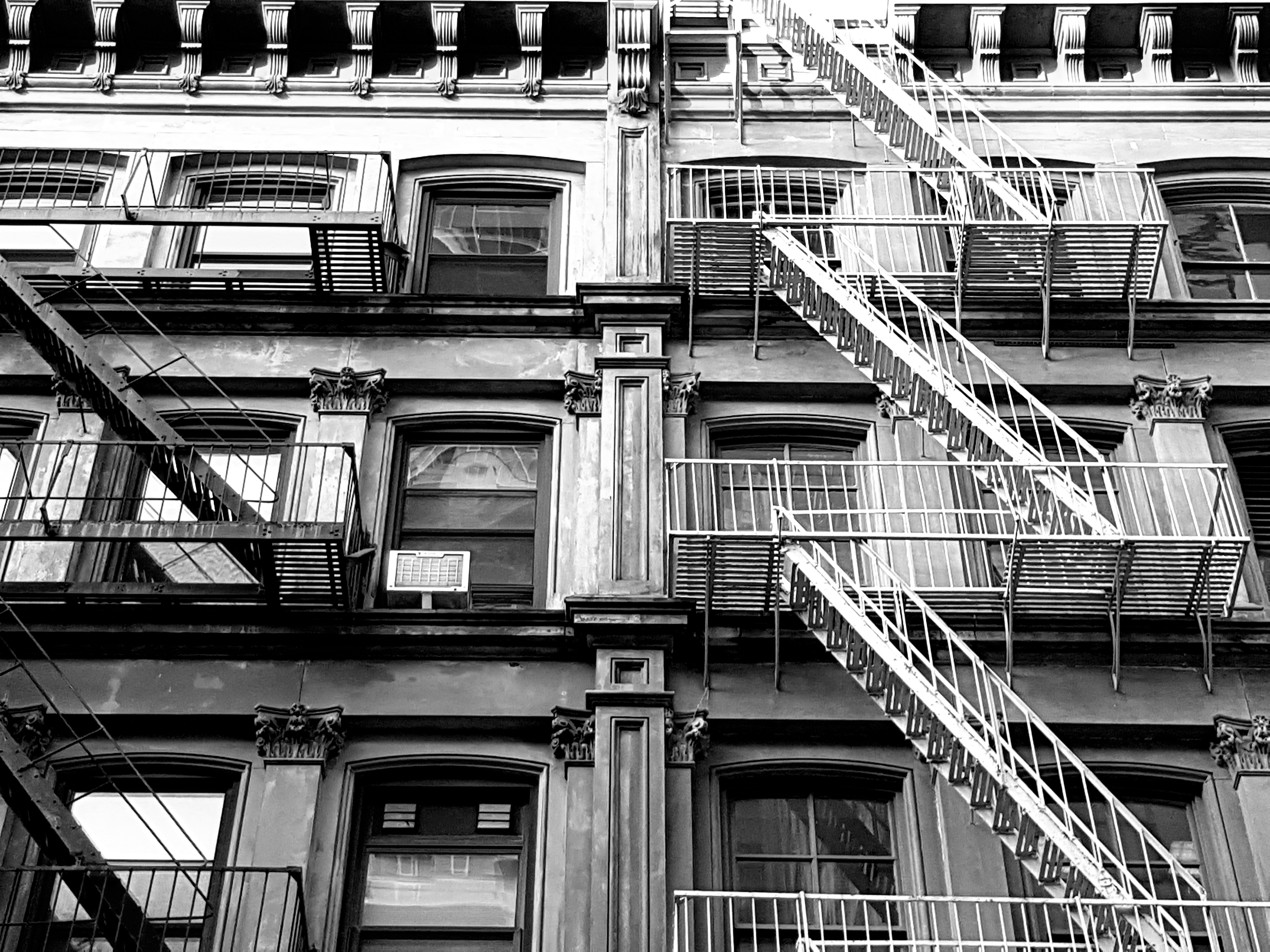
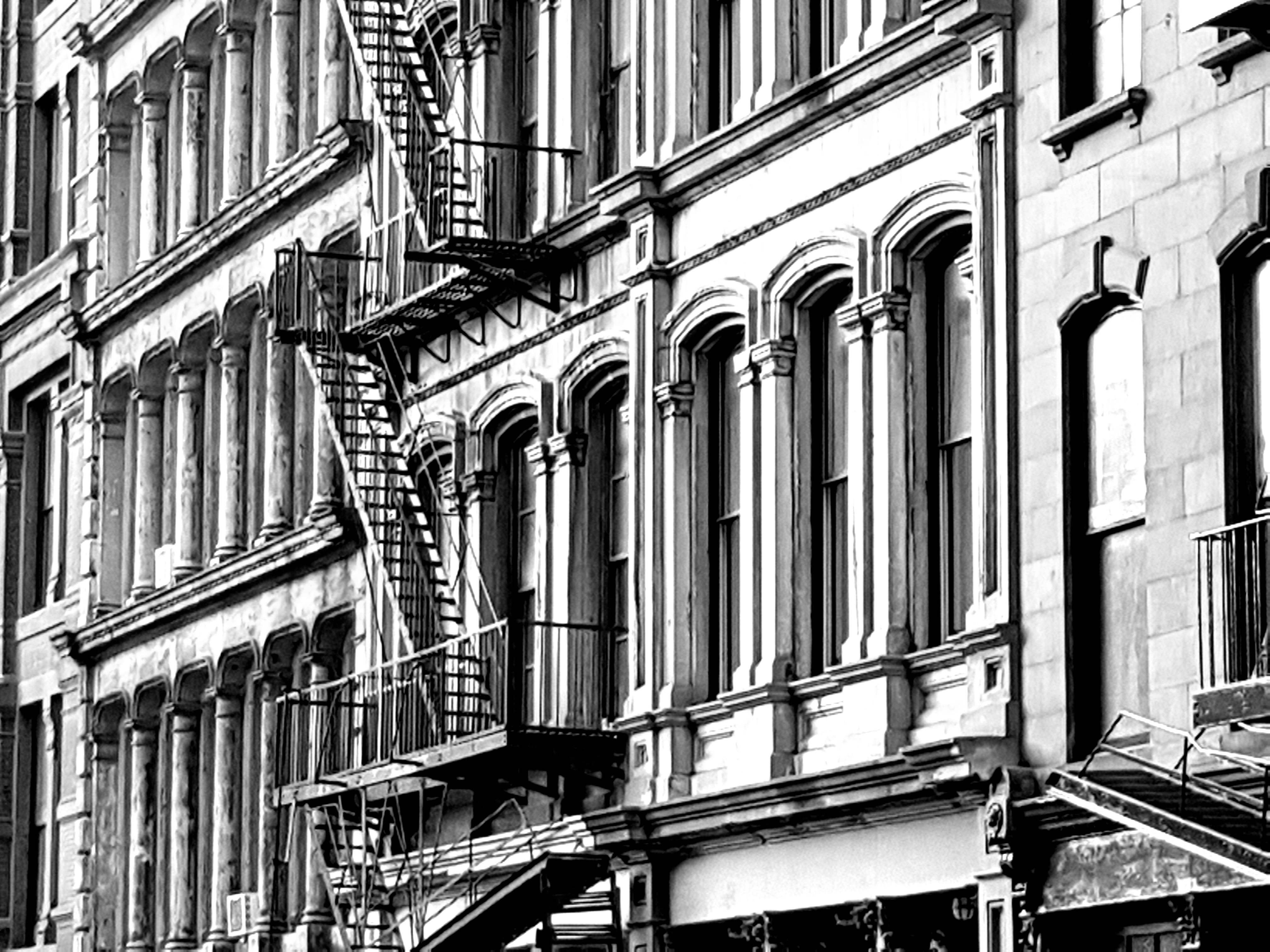
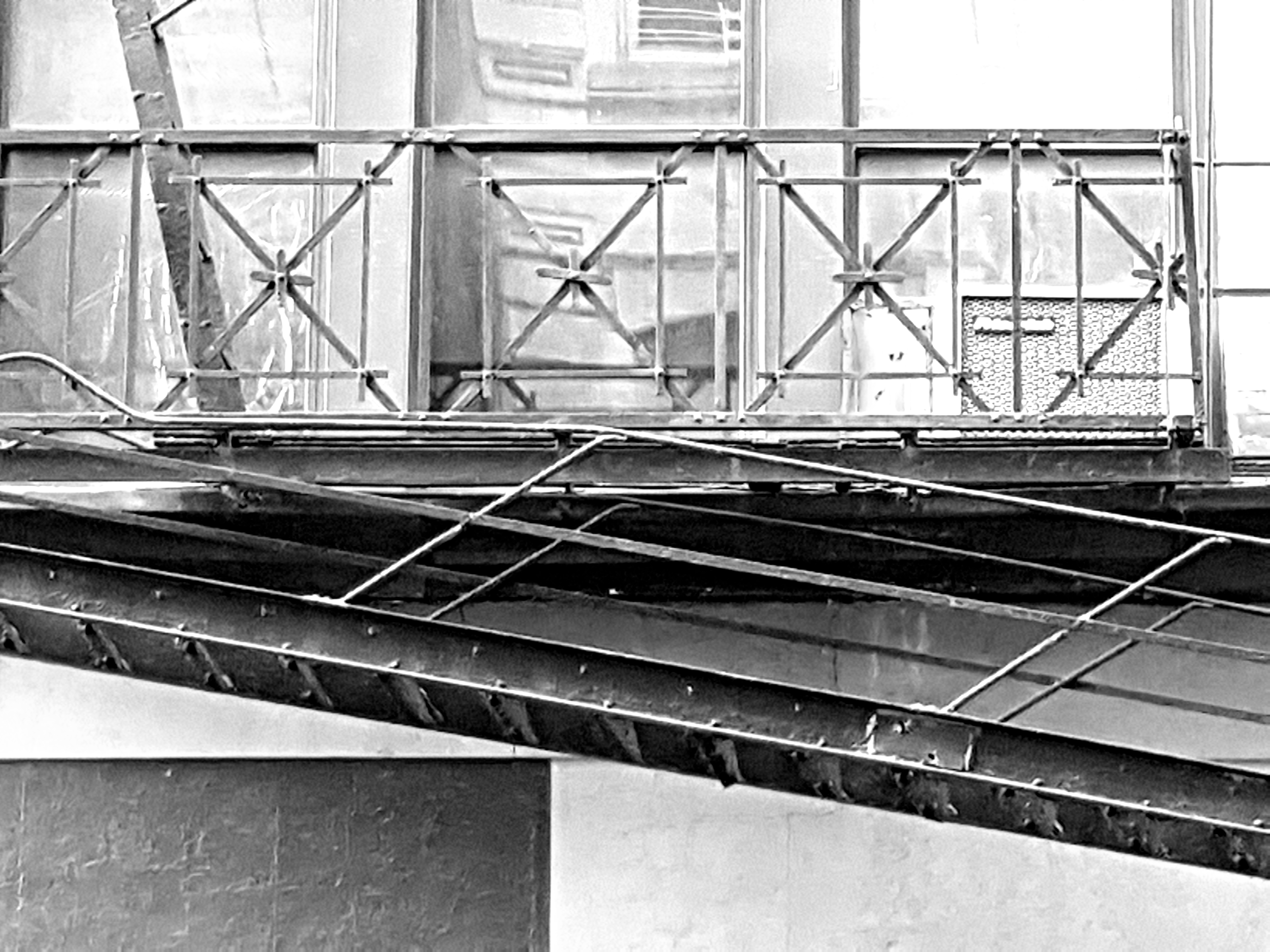
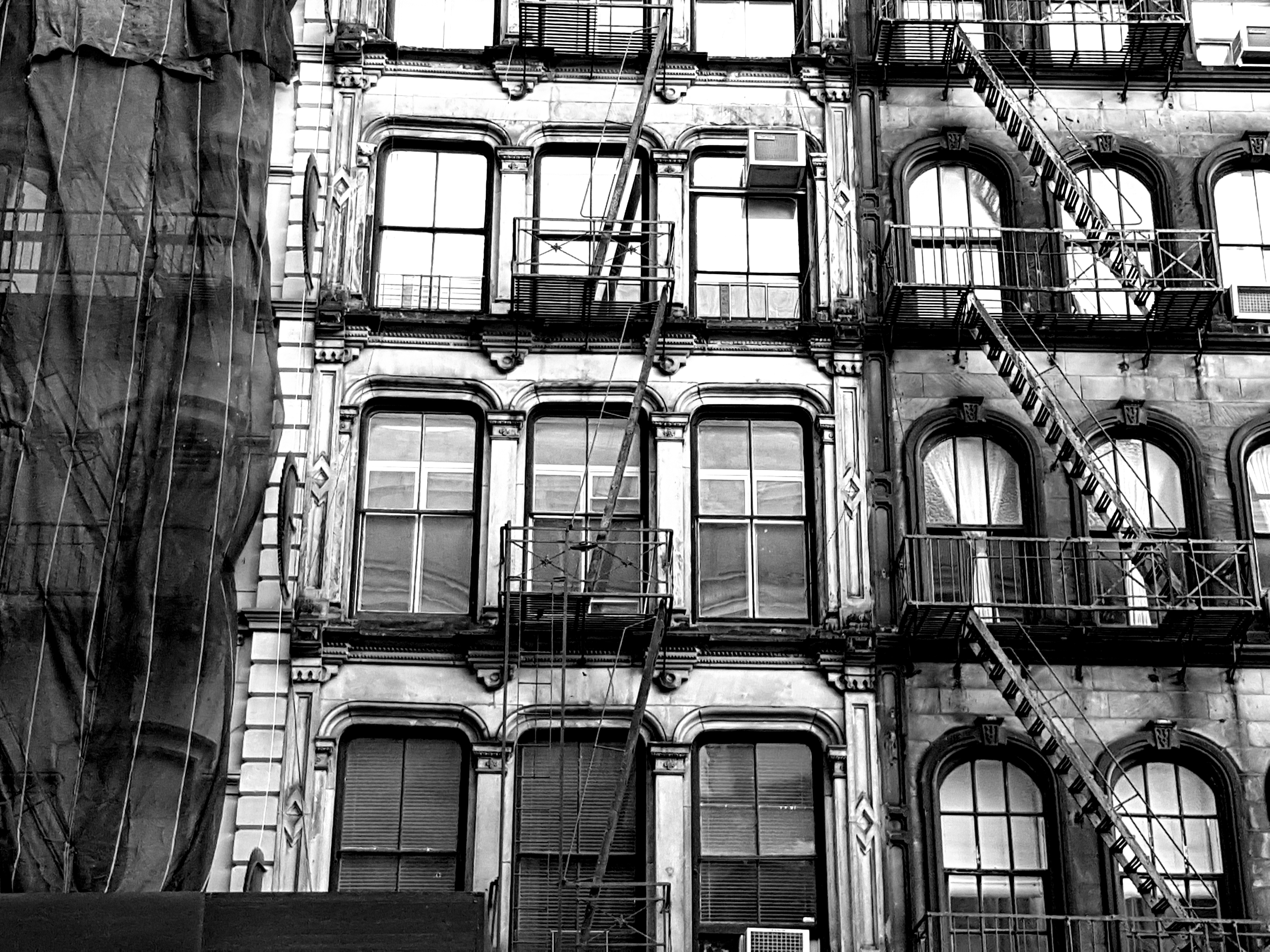
I ended up buying socks from my friends in Best Made.
65, Bleecker Street
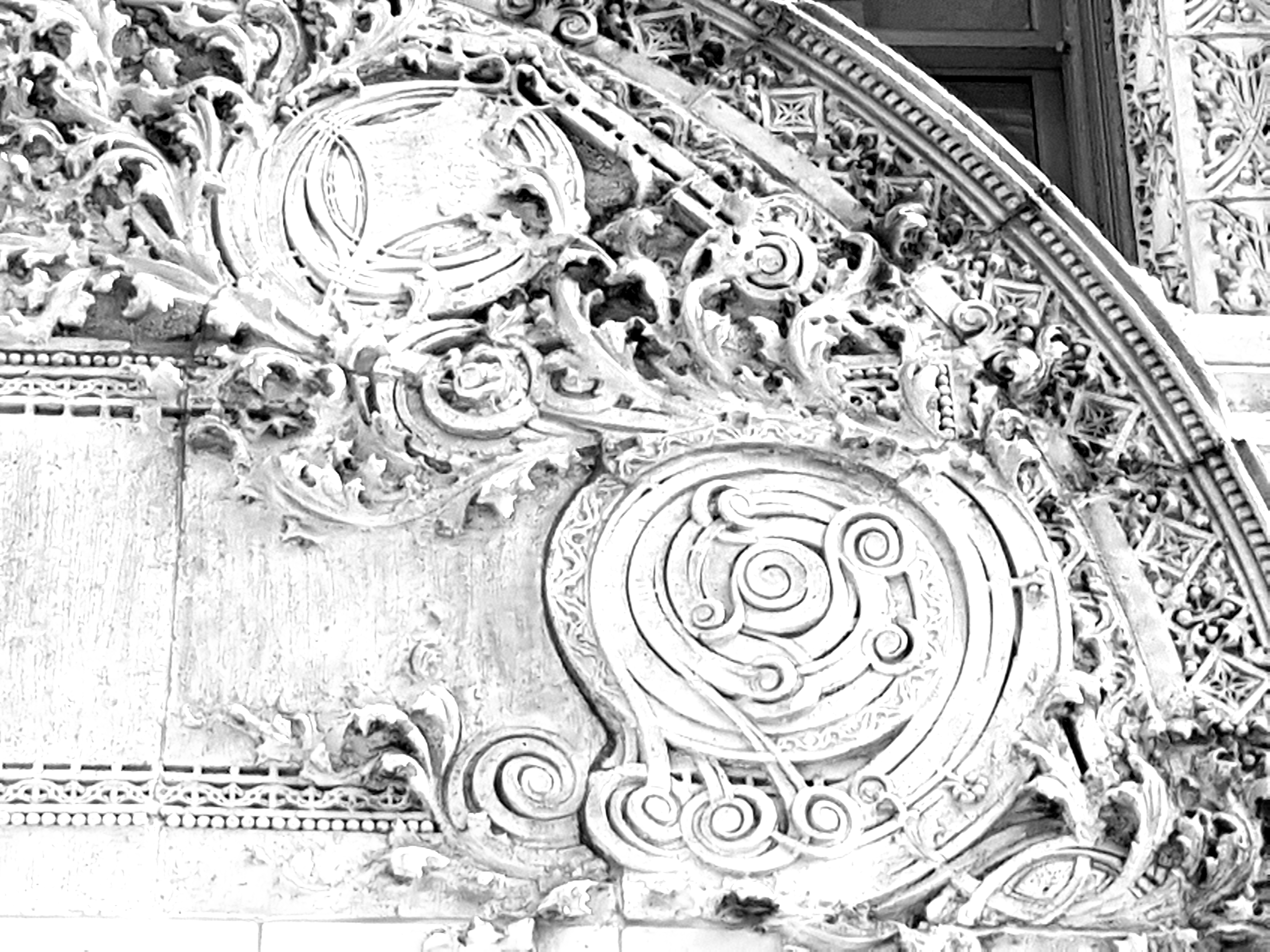
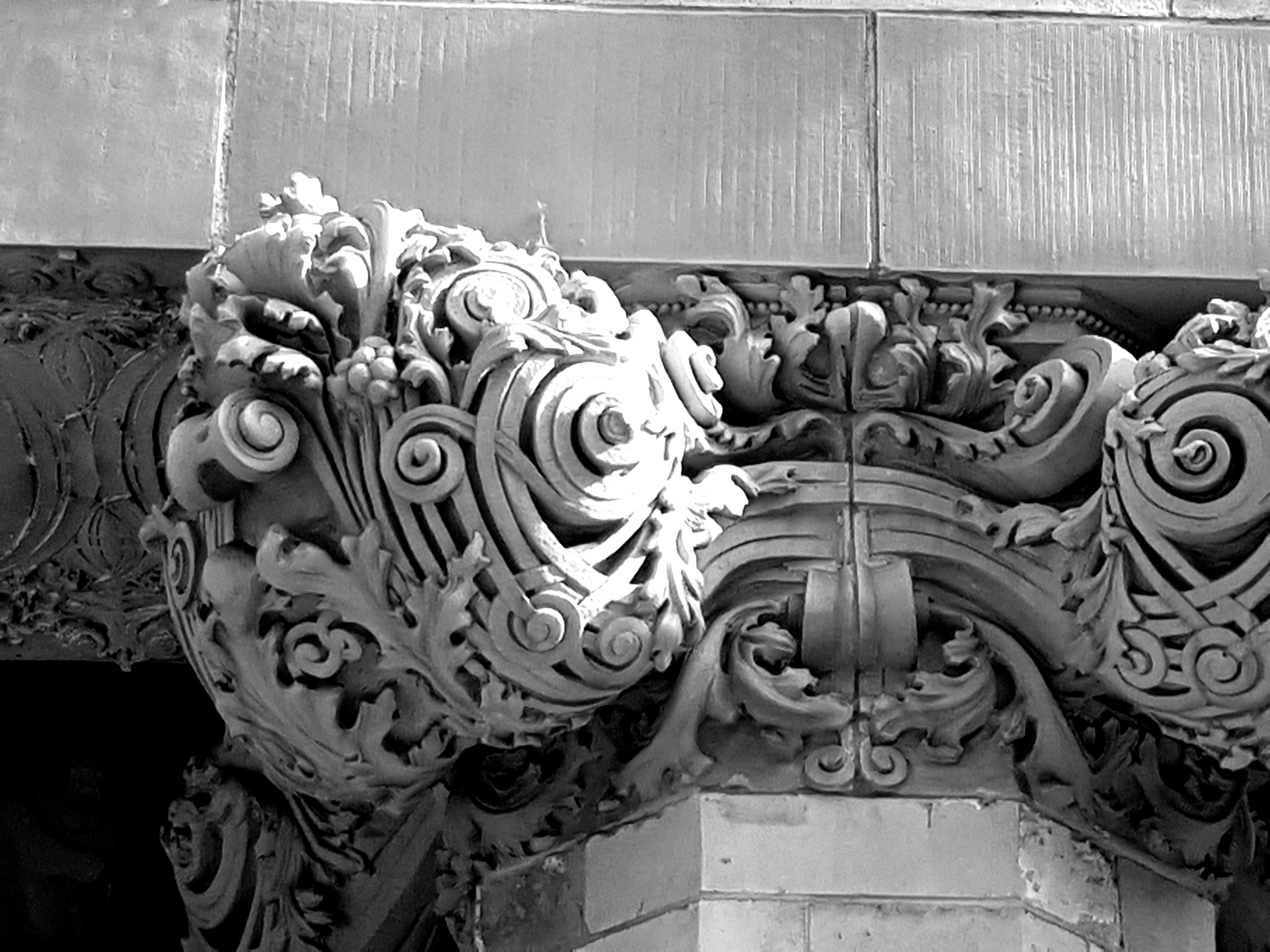
One of my readers has kindly alerted me to 65, Bleecker Street, which I might well have passed without paying proper attention and turns out to be a well-preserved work by Louis Sullivan (Frank Lloyd Wright’s lieber meister). Hard to spot the angels with outstretched arms at the top, added at the behest of Silas Alden Condict, client of the building, after whom it was originally named:-
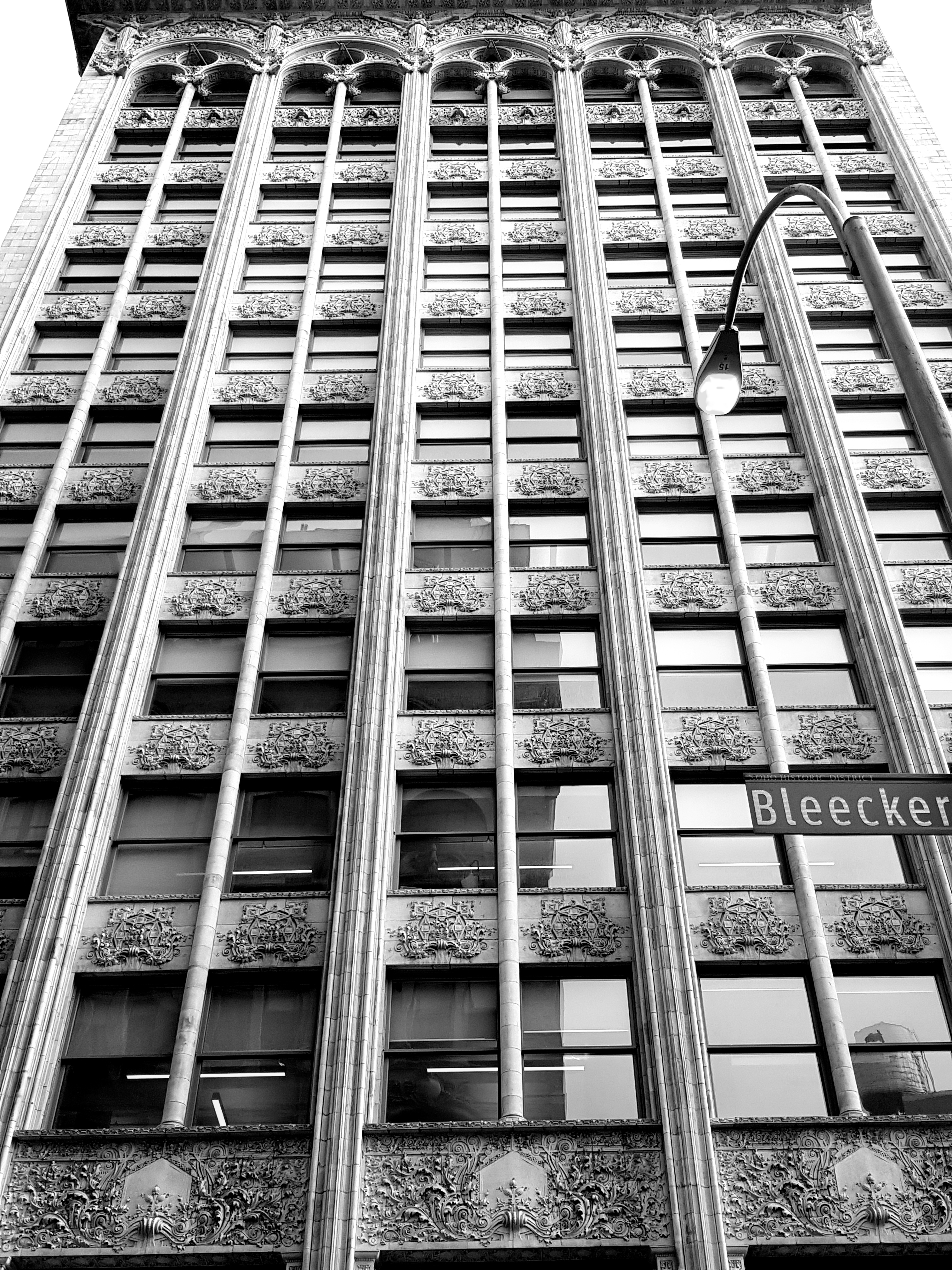
The details of the façade:-
Whitney Museum
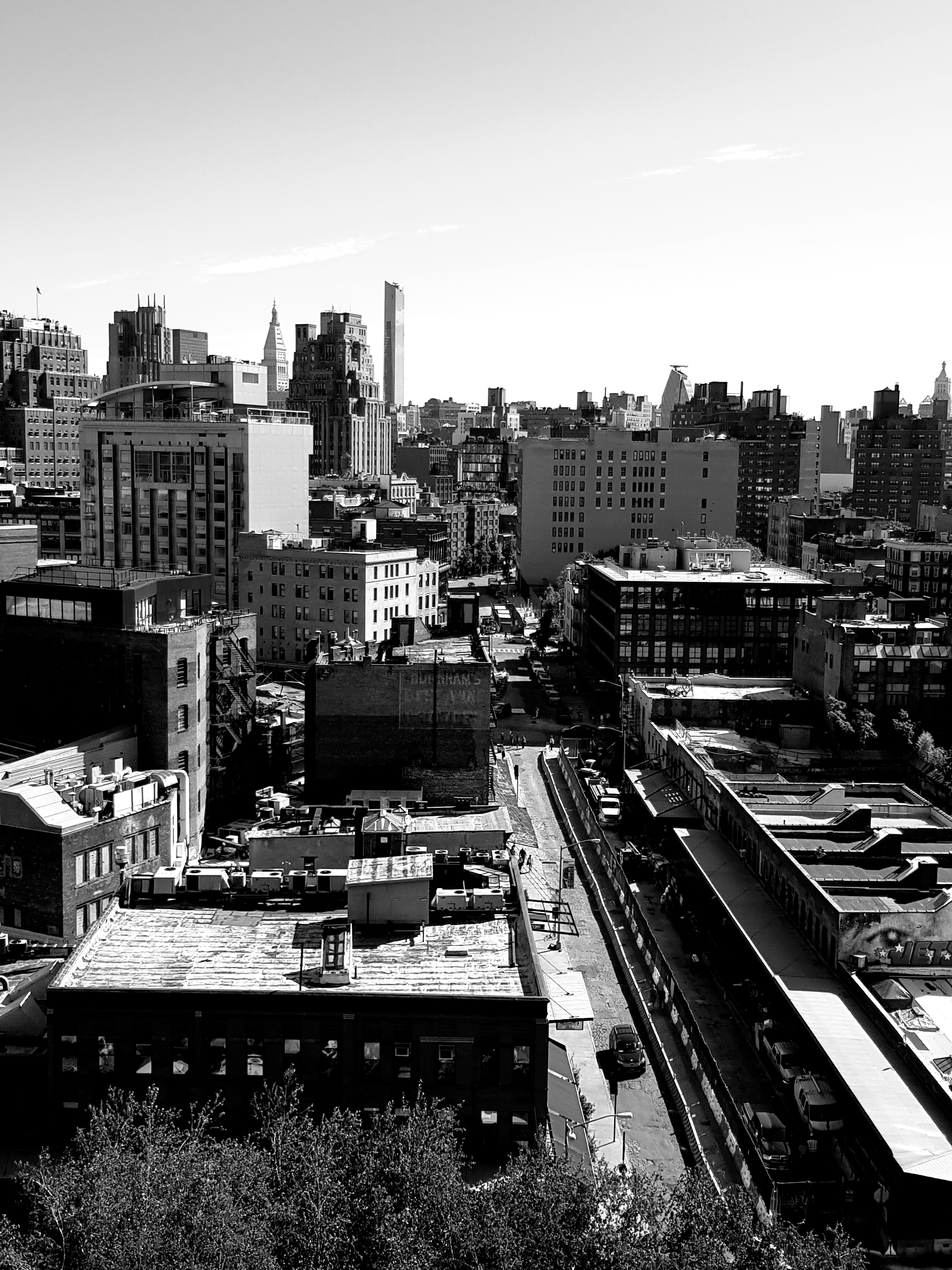
I had previously approached the new Whitney Museum from the north by way of Chelsea and the Highline. I hadn’t realised how closely connected it is to the smart streets of Greenwich village with their rows of Federal houses.
It’s not an easy building to photograph as it it’s right up against the Highline to the east and the highway to the west.
Here it is from the west:-

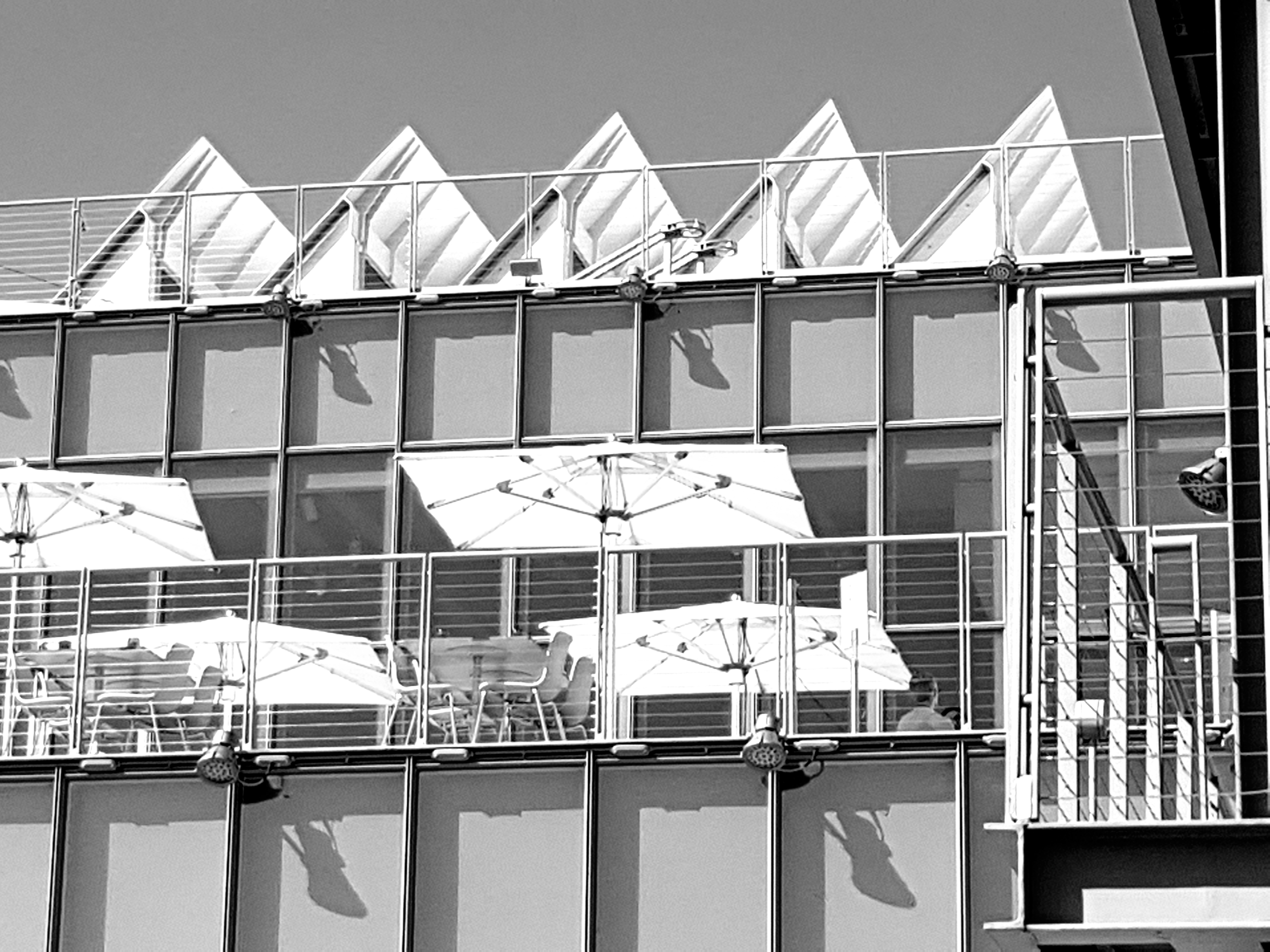
It certainly makes spectacularly good use of its situation, with decks of outside viewing stations with views south the length of, and across Manhattan:-


You must be logged in to post a comment.