Pra d’Mill

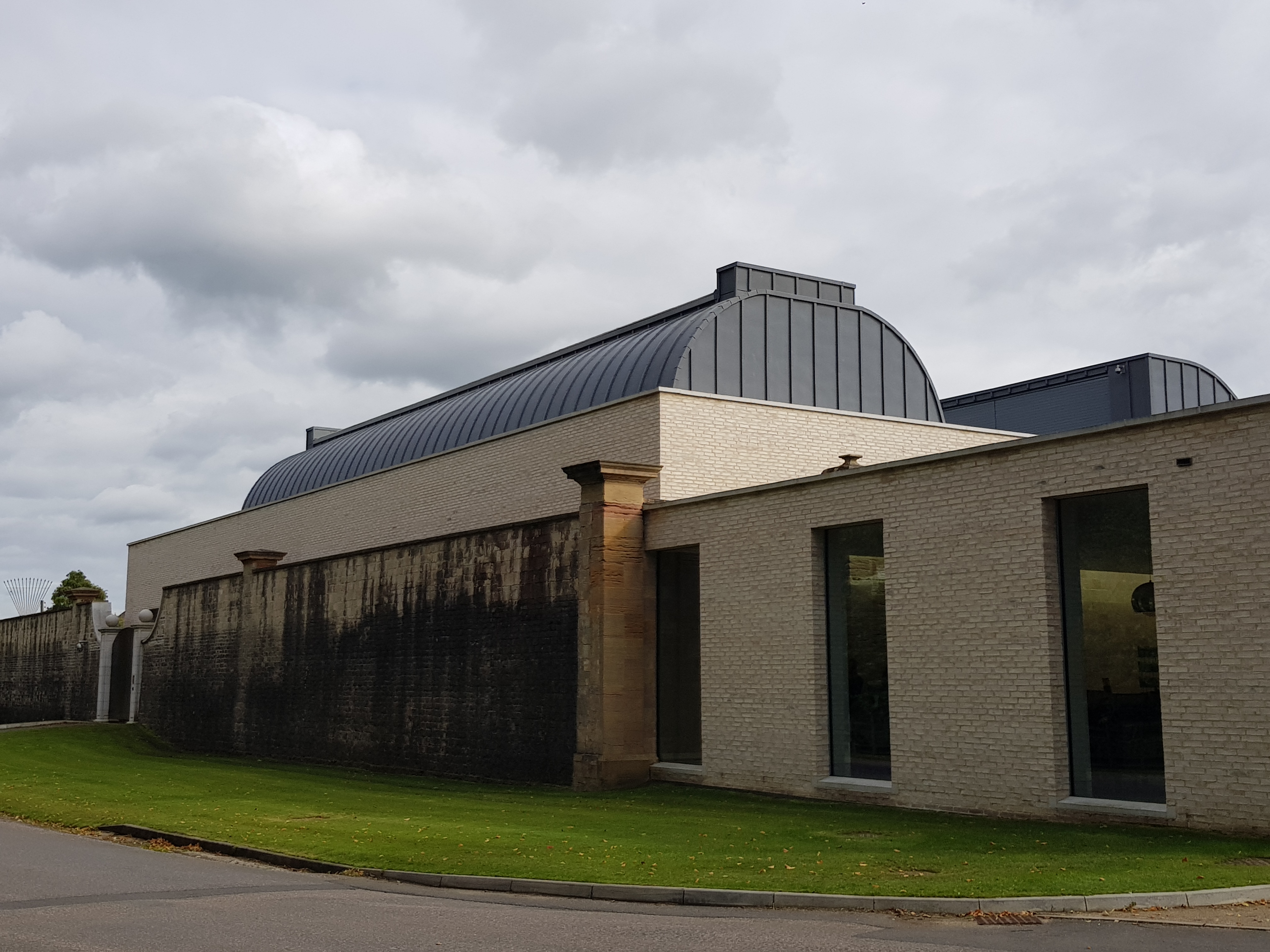
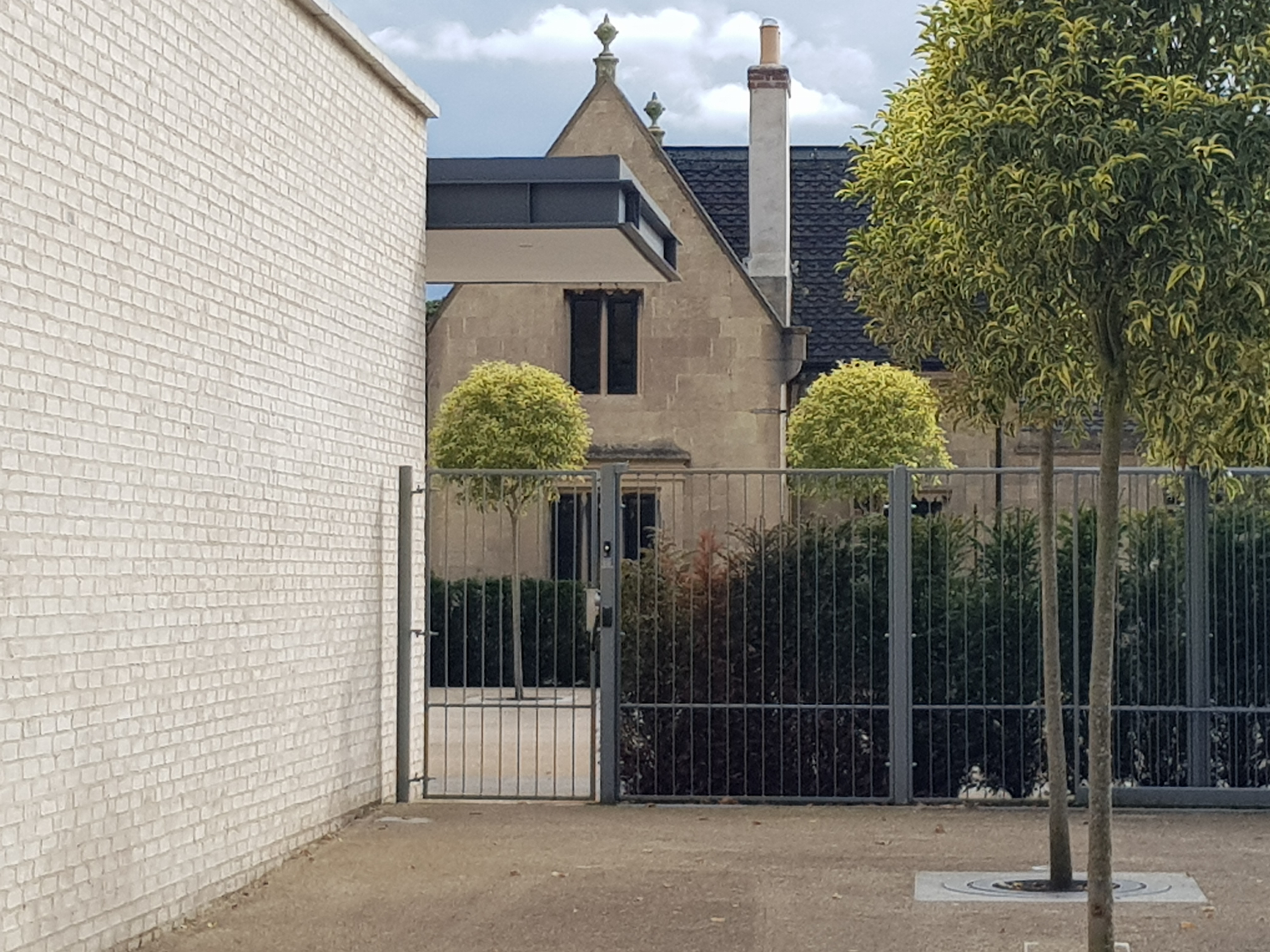
We accidentally took the wrong road up to Montoso and found ourselves instead at the Monastero Dominus Tecum in Pra d’Mill, another church project, overseen, but not, I think, executed by Aimaro d’Isola (it is attributed to Maurizio Momo) in a fully fledged, elaborately vernacular style, with multiple pitched stone rooves more reminiscent of Frank Lloyd Wright than Turinese modernism, in a remote valley, surrounded by mountains:-

Standard

Montoso

We made our way up the mountain road above Bagnolo to see Montoso whose church, designed by Aimaro d’Isola in 1963, is dedicated to Our Lady the Assumption and was consecrated on 15 August 1967.   It was one of the first of his experiments in reviving the Piedmontese vernacular, working with the local community and using local materials.   On the Feast of the Assumption (today), it has an open-air street market where people come and sell holy biscuits, salami and mountain cheese:-

Standard

Indian Independence (2)

I realise I should have declared a special interest in this topic in that my father was one of the civil servants who packed his bags on 15 August 1947 and left India where he had lived and worked for the previous thirteen years, never to return, except for a brief visit in the 1970s.   He was phelgmatic about the end of British rule, as he was about most things in life, as he had known that one of his prime responsibilities as a civil servant, from the time that he joined the Indian Civil Service in 1934, having leaned Bengali as well as something about Indian history and law’ before travelling out, was the benign transfer of power, and was not a whisky swilling imperialist, but an excessively conscientious, highly upright, legal minded, New Statesman reading, colonial administrator, as were the other former members of the ICS who I met in my youth.

Standard

Pinerolo

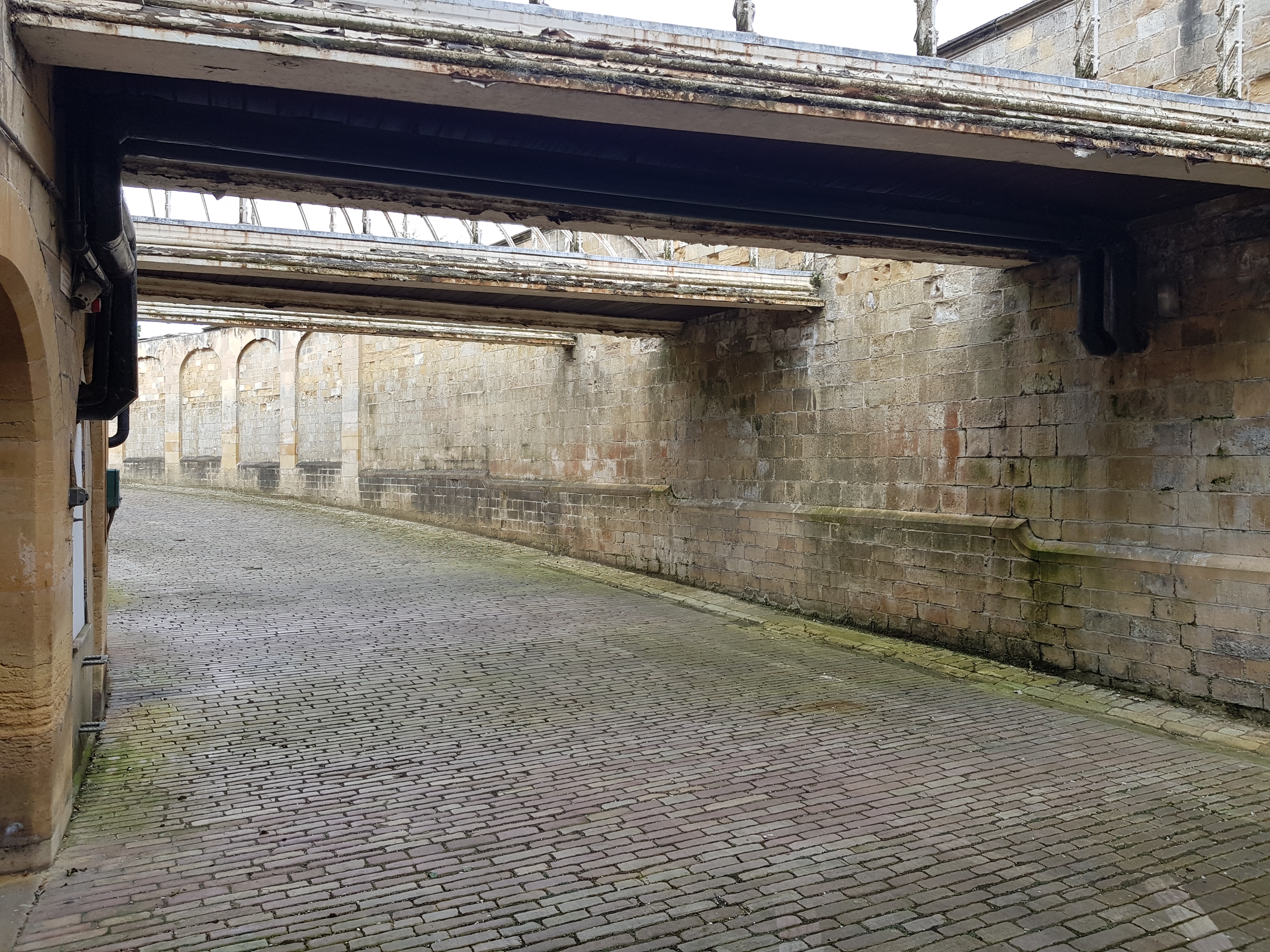
I found myself wandering round Pinerolo in the middle of the afternoon when everyone else was having a siesta or preparing for the National Holiday tomorrow (it’s Ferragosto).   Like a lot of Italian towns, it has a rather dull nineteenth-century town centre, where one finds the town hall, the riding school and other civic institutions and then, up the hill, is what survives of a medieval, sub-Alpine hill town:-

And, lastly, a picture of the railway station, waiting for the last train:-

Standard

Indian Independence (1)

I have been listening with the utmost interest to the programmes broadcast each morning about Partition and have been waiting for some reference to the fact that Indian Independence also involved the rapid unwinding of at least two centuries of British rule and the transfer of authority to two new governments and two new systems of administration, both of which were modelled on the previous Indian Civil Service and involved the transfer of a number of existing civil servants, a small number British (the great majority returned to Britain) and a much larger Indian.   But there seems to be a tacit assumption that this period of Empire was either an accident or an embarrassment, responsible for the disastrous consequences of Partition.   In marking Independence, it is surely worth considering the British side of the narrative, as well as the Indian, whether or right or wrong.

Standard

The Pizza Oven

After a week of living without an oven, we realised that the archaic structure in the garden was a pizza oven, so experimented with making home-made pizzas, which, apart from the three hour wait for the wood to get going, was surprisingly successful:-

Standard

Staffarda Abbey

We went down to the Po Valley to see Staffarda Abbey, the local Cistercian monastery founded in 1135 by the Marquis of Saluzzo, in the middle of a farm, with a beautiful unspoilt cloister, leading to a grandly decorated, sparse, Romanesque church interior with painted brick decoration:-

These are the farm buildings, with views back up to the mountains:-

Standard

The Milk Machine

By special request, I am posting a picture of a Piedmontese milk machine in the high street of Bagnolo.   I thought there were two, but it turns out that the other one offers a choice of still or sparkling mineral water.   It’s flanked by a second machine which provides fresh cheese and a third condoms.   It’s symbolic of Piedmontese food culture that one can get fresh, unpasteurised milk, twenty four hours a day, out of a blue teat in a bring your own, recycled bottle:-

Standard

The Revenge of Analog

I have been reading The Revenge of Analog:  Real Things and Why They Matter, a book published last year by a Canadian writer, David Sax, which analyses the ways in which, in a number of industries, new disruptive digital technologies which appear to revolutionise an industry have frequently been superceded or supplemented by a niche reinvention of the older analogue technology, as in the rediscovery of the merits of vinyl, the making and marketing of Moleskine notebooks, a relatively recent invention (they were only established in 1997), the revival of specialist print magazines (Cereal is given the example, alongside the growth in circulation of the Economist), the opening of new local bookshops, and Shinola, the new manufacturing company based in Detroit.   The narrative in each of the chapters is essentially the same:  the superficial allure of new digital technology, followed by the discovery that new systems of digital working cannot altogether replace the virtues and benefits of empathy, emotion and human interaction.   It feels like an appropriate book to be reading in the land of Slow Food.

Standard

Bagnolo (2)

After two days of thunderstorms, it’s beautifully green and clear, so we have stayed in the vicinity of Bagnolo with its Cooperativa Agricola and coin-in-the-slot milk machine:-

Standard