Japanese Craftsmanship

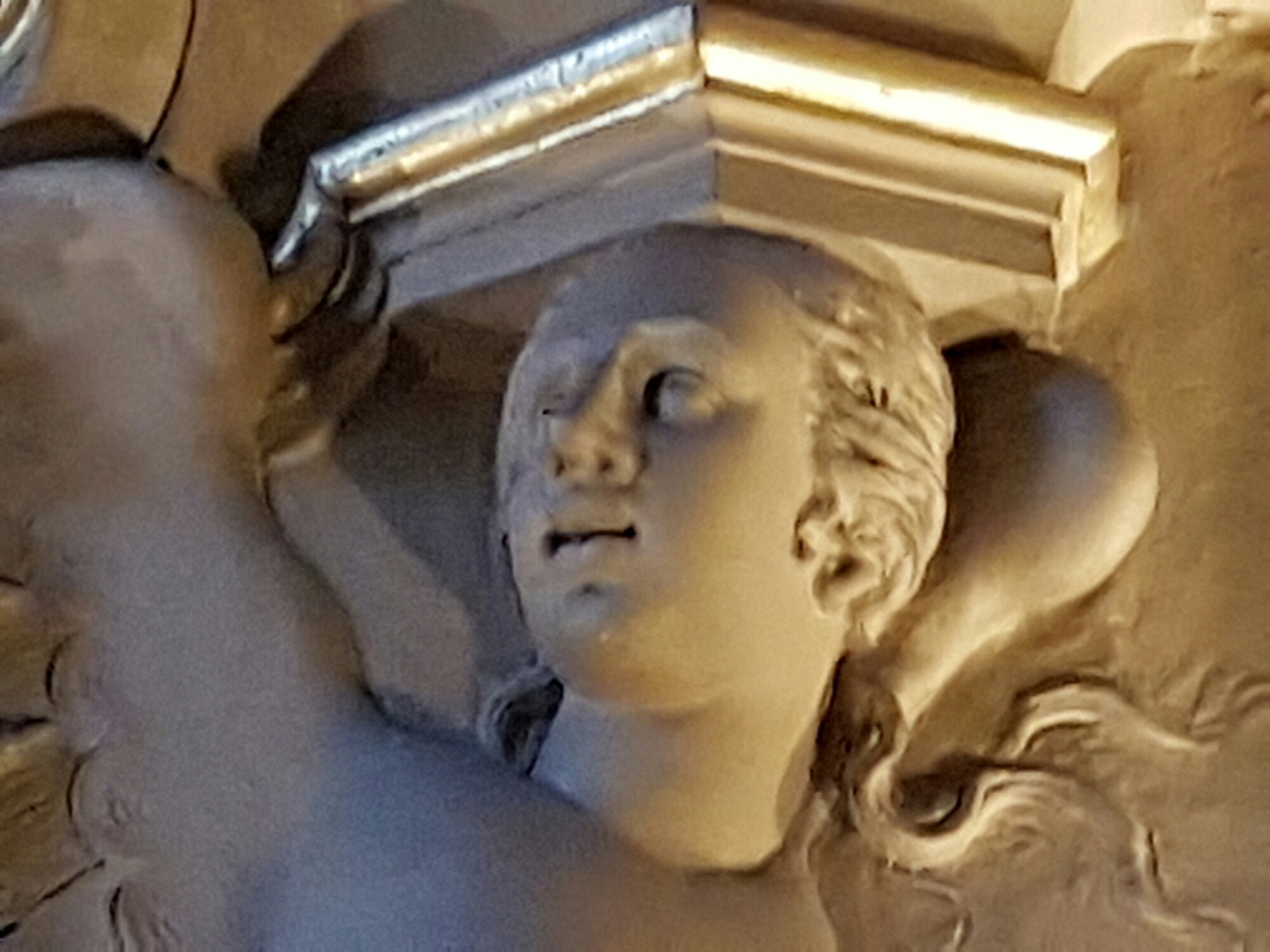
As I sit in Narita Airport waiting for the departure of my flight and reflecting on what I’ve seen, I am posting one photograph which I left out of the sequence of photographs of Sayama Chapel.   It’s of a joint in the pine planks (Architectural Review calls them ash) which make up the interior of the chapel and shows the extreme quality of cratsmanship which is taken for granted in the process of construction and which both Hiroshi Nakamura and Hiroshi Sugimoto require, an attitude of admirable precision in the detailing of a building, such that Sugimoto was annoyed by the way the tables had been cleaned.   It’s part of what makes the character of the buildings as a whole:-

Standard

The Tokyo Subway

Having spent the last few days navigating the Tokyo subway system and since most of the Japanese I have met have expressed surprise at this (I’m not sure they use it themselves), I can only say:  it can be done, packed in the morning like sardines, occasionally taking a train in the wrong direction, confusing the JR suburban railway system with the subway system, and sometimes buying the wrong ticket or two.   I can only say that the officials are exceptionally helpful, although few speak English, never more so than on a previous trip when they stopped the escalator for a wheelchair, converted the escalator into a travelling wheelchair platform, and stood to salute top and bottom.   They don’t do that in London.

Standard

Sasha Kanetanaka

Last stop was the restaurant designed by Hiroshi Sugimoto – unexpectedly quiet and contemplative given that it is just off the hubbub of Omotesando.   One approaches by a lobby lined with huge chunks of Chinese granite:-

And then you sit eating tiny fragments of duck and the most delicious sushi looking out onto a terrace of rock and brush which protect one from the experience of the city:-

Standard

Hara Museum of Contemporary Art

I went southwards this morning to Shinagawa in order to see the Hara Museum of Contemporary Art, a prewar modernist villa, designed by Jin Watanabe, which was requistioned during the American occupation, left uninhabited for twenty years, and turned into a Museum of Contemporary Art in 1979 by Kunizo Hara, inspired by the example of Louisiana.   It shows regular exhibitions – it was about to open an Elizabeth Peyton exhibition – and has the most sophisticated collection box I have ever seen.

The house:-

Continue reading

Standard

Sayama Chapel

In the afternoon, I went out into the countryside again – this time by car – to see the Sayama Chapel, a recent project, completed in 2014 by a young-ish architect, Hiroshi Nakamura, who previously worked for Kengo Kuma.   He was initially selected to design a Community Hall to serve the interests of those visiting the cemetery, a satisfyingly simple project consisting of a slightly asymmetric cone which frames the view onto the surrounding countryside.

The roof:-

The view out of the hall:-

Continue reading

Standard

Tokyo Fuji Art Museum

I took an early morning train out to the Tokyo Fuji Art Museum in the far distant suburbs of Tokyo, not really, it feels, in Tokyo at all, but out towards the mountains.   I had the warmest possible welcome from what seemed like the entire staff of the museum, from the Director downwards, many of whom have visited the RA and collaborated on a travelling exhibition we showed there in 2012.

My purpose was to see, and see if we might be able to borrow, Turner’s Helvoetluys – the City of Utrecht, 64, Going to Sea, which was exhibited in the Summer Exhibition in 1832 alongside Constable’s Opening of Waterloo Bridge and which gave rise to the anecdote that Turner added a splash of bright red paint on varnishing day, causing Constable to remark, ‘he has been here and fired a gun’.   There in the painting, in amongst the ships, is a bright red buoy:-

Continue reading

Standard

Professor Toshio Kusamitsu

I travelled out into the suburbs of Tokyo on the local train tonight to have dinner with Professor Toshio Kusamitsu, who I always regard as a founder subscriber of the blog – the only person for whom I have evidence of his reading it since every day the map shows a single visitor from Japan, keeping a watch on life in the UK.   He worked for Joseph Needham and was one of the early supporters of Raphael Samuel and History Workshop.   Last year, he published his Collected Essays, which he offered me to read except they are in Japanese – essays on Trevelyan and History Workshop and Peter Burke.   I knew which was his house because it had a Land Rover parked outside.

Standard

Tokyo (5)

Since I have a day of meetings, I decided to stick to the area that I already know round Roppongi Hills, the midtown cultural district, centred on the Mori Art Museum.   I walked there, past the Hikawa-jinja Syaden, a shrine built in 1730 by Tokugawa Yoshimune.   They were praying:-

Continue reading

Standard

Tokyo (4)

After lunch, I resumed my exploration of Yanaka.   I realised the whole area is stuffed full of temples and cemeteries, including the Tomb of Gamo Kunpei:-

Continue reading

Standard

Tokyo (3)

I was encouraged by Rebecca Salter, who knows Tokyo well, to visit Yanaka, an area of old shops and housing to the north of Ueno park, well to the north of central Tokyo and which survives relatively unscathed from new development, the 1923 earthquake and allied firebombing.   I wandered the streets, admiring examples of unspoilt housing:-

Continue reading

Standard