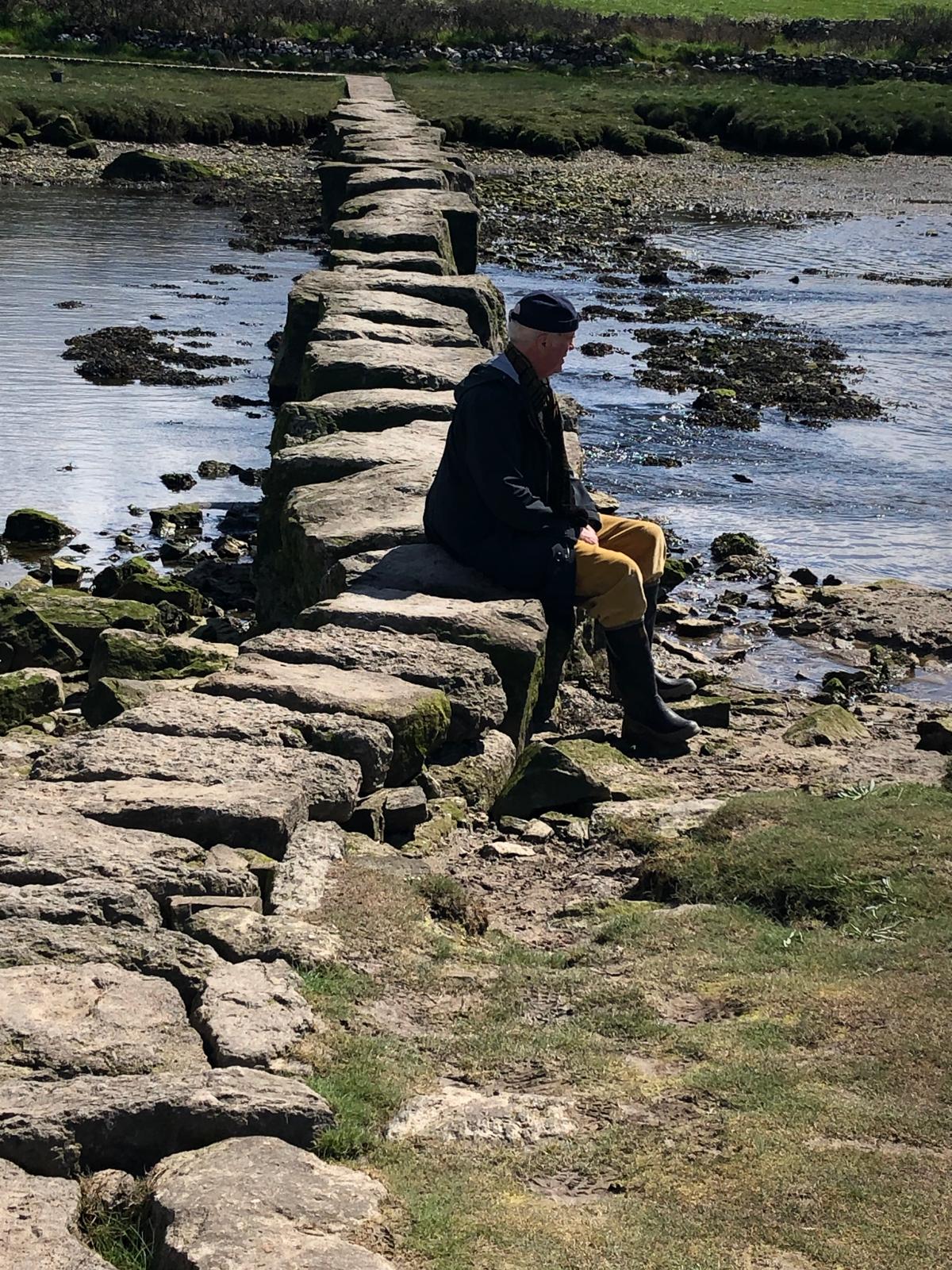
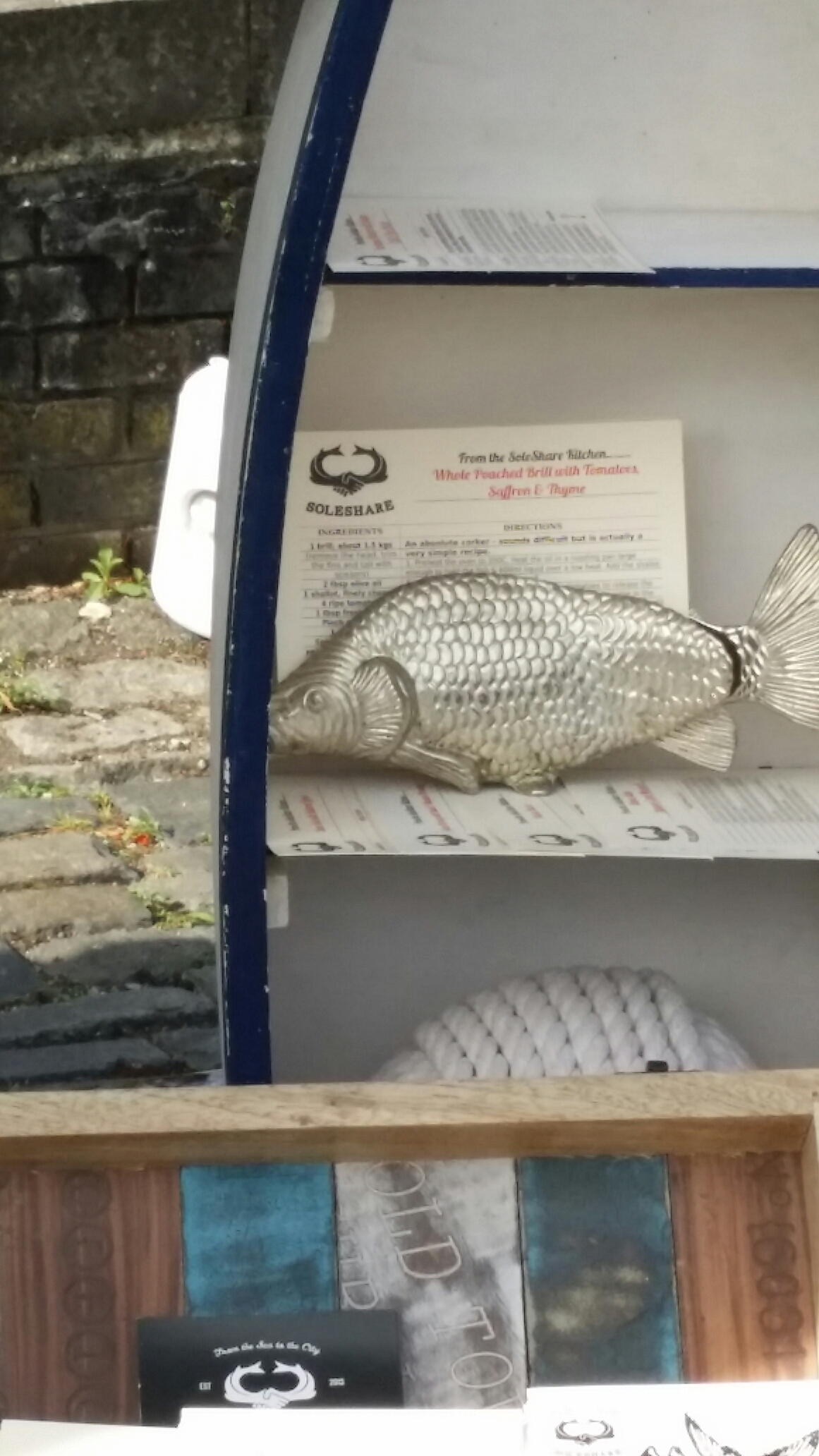
We were just remarking how difficult it is now to buy good quality bacon (the decline of the butcher/the feebleness of supermarket bacon), when, lo and behold, we saw a farmers’ market rise up before us on the wharves of London dock. It’s the first day of a new farmers’ market just next to Wapping pumping station: fresh fish available in boxes (Soleshare), organic vegetables, flat bread, van food and Ruby Violet’s handmade ice cream:
Tag Archives: East London
St. Dunstan’s, Stepney
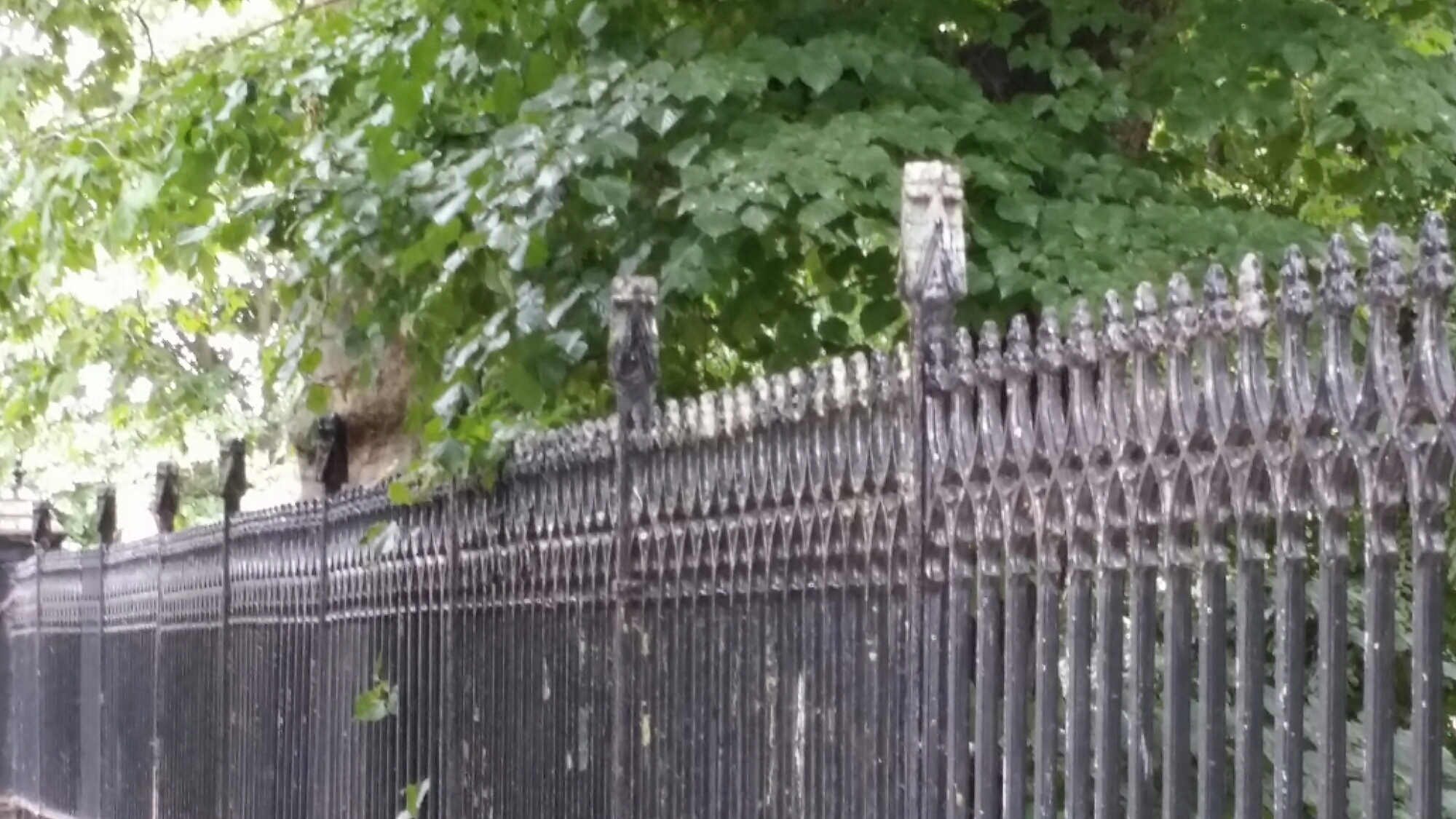
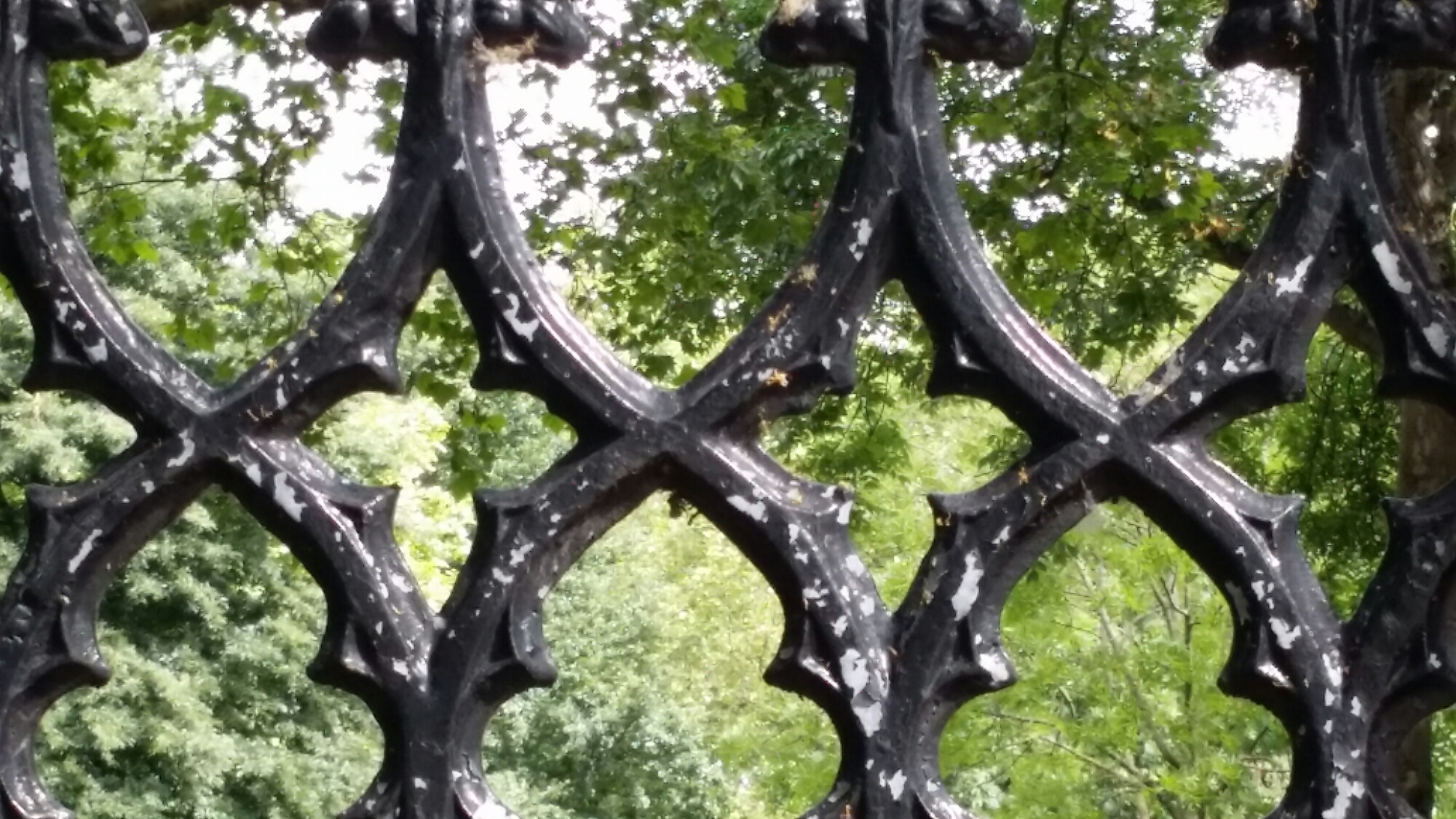
Most weekends I walk through the churchyard of St. Dunstan’s, Stepney, the medieval church which was at the heart of the first village on the cattle road out to Essex. It has exceptionally fine, early Victorian ironwork railings, which somehow escaped being removed in the war. An inscription states that they were the work of Deeley and Clarke in Whitechapel, a local iron foundry based at Buckle Street. They were installed in 1844:
Dirty Burger
In documenting the rapid gentrification of Stepney, a landmark is clearly the opening of Dirty Burger on the Mile End Road. It occupies a grand Edwardian building next to the Trinity Almshouses. Run by Soho House, it is an instant 1950s saloon, complete with light industrial styling, where you can have flagons of Crate ale and superior, but not expensive burgers:
Whitechapel Road
In walking to the local post office under the absurd delusion that there might still be a collection on Sunday, I noticed how well the façades of the Whitechapel Road look now that they have been cleaned up under an HLF scheme, dating back from when the road was planned to be Olympic boulevard. It reveals some of the history of the east end:
Sir Richard MacCormac (1)
I have just been to the launch of a book that Richard MacCormac (RA) has produced about the house he has lived in in Heneage Street, Spitalfields, and, more importantly, the house next door where Jocasta Innes, his partner for the last three decades, lived. It’s called Two Houses in Spitalfields. She bought no.5, which had been built for a brewer, in the late 1970s. Her daughter, Tabitha, evoked the heroic days of Spitalfields preservation, when their house had few amenities but electric light, Brick Lane had only curry houses, and much of the area was faced by demolition. The neighbours met one another in a nearby pub and Richard’s house could apparently be reached from Jocasta’s via a secret door made out of a fireplace. Jocasta died in April 2013. Her house is now up for sale. The book is a photographic record.
Docklands Light Railway
It’s a long time since I used to use the Docklands Light Railway, travelling in to work on two toy trains from Westferry to Bank, scrunching as it turned the corners on the track. I remember how at a dinner party in the mid-1980s a junior official at the Treasury told me that she had tried to cancel it as a public project on the grounds that there was no possibility of it being of discernible use. Now it extends all the way south of the river, weaving its way through Canary Wharf and past the new huge station designed by Norman Foster for Crossrail. I have been able to travel from Bank to Cutty Sark, past what used to be the wastelands of the Isle of Dogs and the Mudchute, and up Crooms Hill through the rain to the Manor House overlooking London.
Bethnal Green Academy
Some time ago, I was asked if I would sign up for a scheme called Speakers in Schools, whereby there is a register which allows state-funded schools to ask people in public life to speak to them. I have only been asked to speak once before to a school in Wimbledon. This morning I was asked to speak in the Bethnal Green Academy.
I walked there. Past the legacy of Victorian social improvement:
Strike Day
Today I’ve got an all-day meeting in King’s Cross. The journey was not half so easy. I decided to walk through the early morning mist along the canal. The rest of London had decided to do the journey by bicycle. It was like being in the middle of a bicycle marathon, children on bicycles, dispatch riders, racing bicyclists, Boris bicyclists, all ringing their bells as they rushed past en route to Canary Wharf. Suddenly the sun shone.
The District Line
There are benefits in living on the District Line when it comes to strike days. I remember reading in John Lanchester’s admirable short book book about it that the older drivers graduate to the District Line in order to enjoy the long journeys above ground between Bromley-by-Bow and the green fields of Upminster at one end and out to Wimbledon at the other instead of having to endure the deep bore tunnels of the Northern Line. This means that, when everyone else has to endure long traffic jams and queues for the buses, the citizens of Stepney can travel as normal from Stepney Green undergound station, purling through Cannon Street and Embankment to Charles Holden’s stately headquarters at St. James’s Park.
Dame Jane Mico
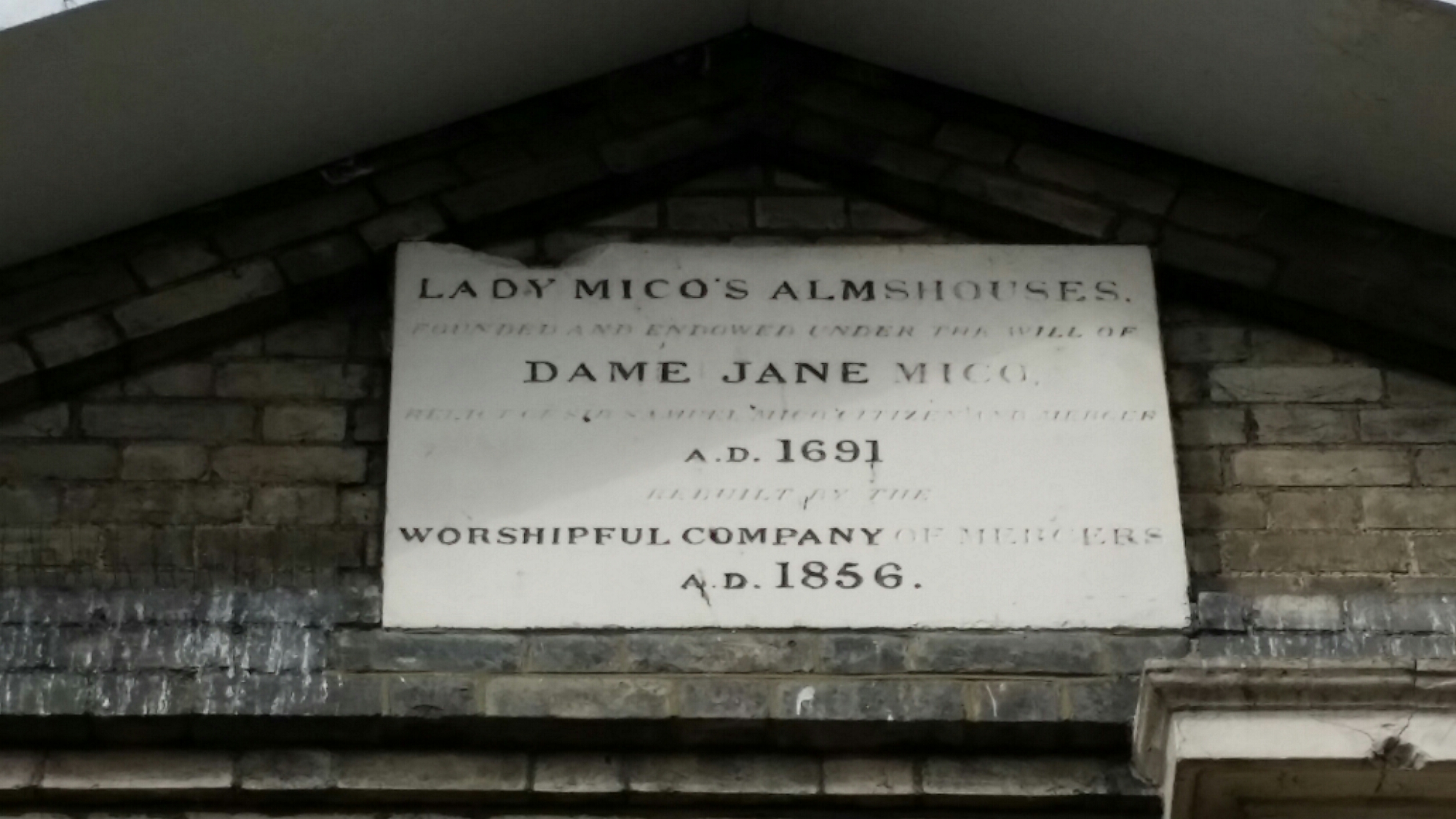
My attention was caught whilst out walking this morning by an inscription on the side of the Victorian almshouses to the south of Stepney parish church which revealed that they were the gift of Dame Jane Mico in 1691. LADY MICO’S ALMSHOUSES FOUNDED AND ENDOWED UNDER THE WILL OF DAME JANE MICO RELICT OF SAMUEL MICO CITIZEN AND MERCER.
Who she ? Her husband, Sir Samuel Mico, grew rich on the profits of the Levant Company and East India Company, importing silks. He also (surprisingly since he was a pure Londoner) owned the George Inn in Weymouth. When he died in 1665, he split his estate between his widow Jane, his nephew Samuel, the Mercer’s Company, and the town of Weymouth, which celebrates his memory every year with lemonade and hot cross buns. She in turn drew up her will in 1670, leaving money to multitudes of relations, for ‘the redemption of Christian slaves in Barbary’, as well as for 10 poor widows of the city of London who were to be housed in her Almshouses. They remained there until 1976 when they were moved to new accommodation in Whitehorse Lane. She left funds to her nephew which he could not claim because he failed to marry one of his cousins as specified. The funds accrued until they enabled the establishment of a teacher training college in Jamaica. Continue reading


You must be logged in to post a comment.