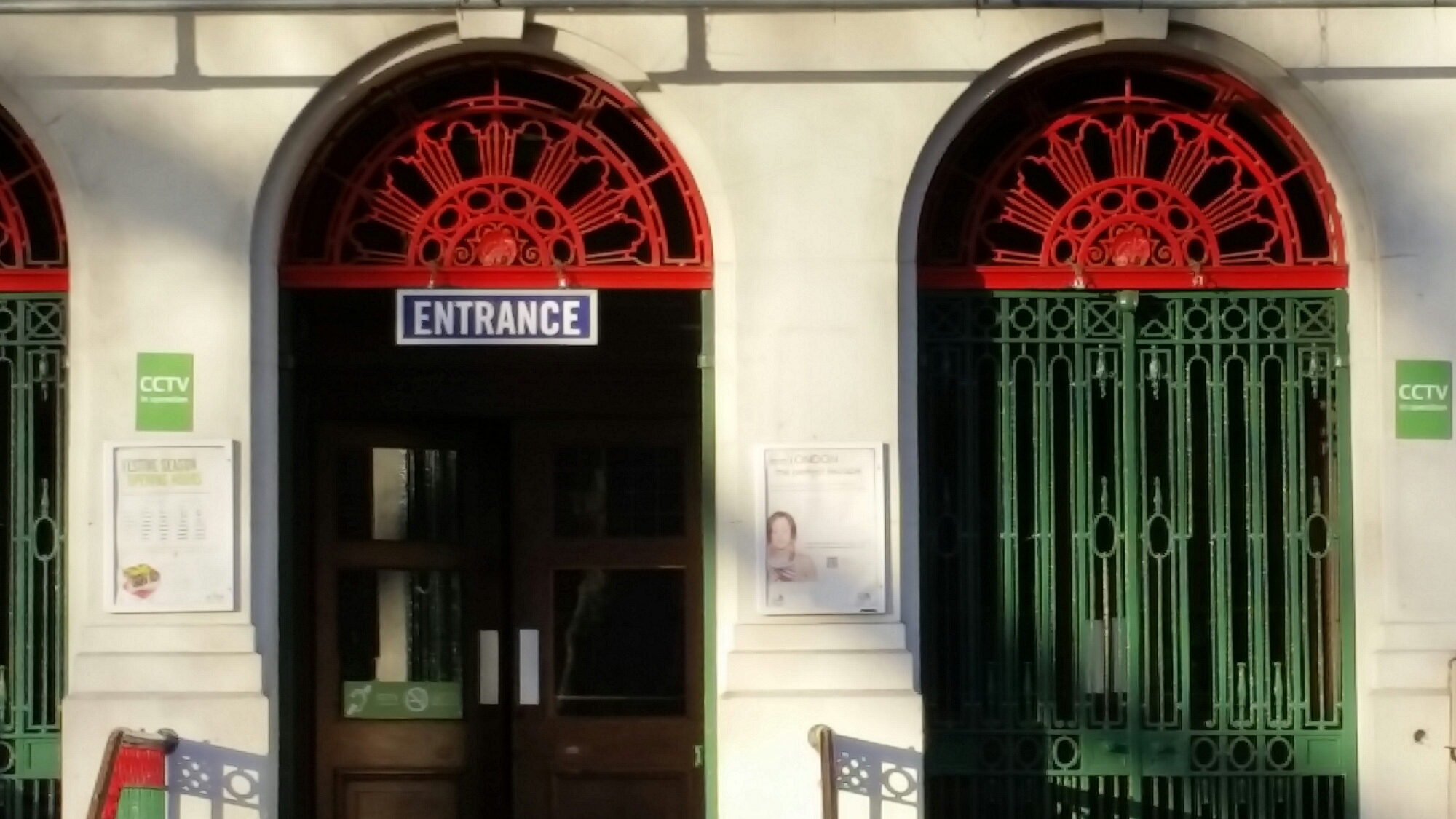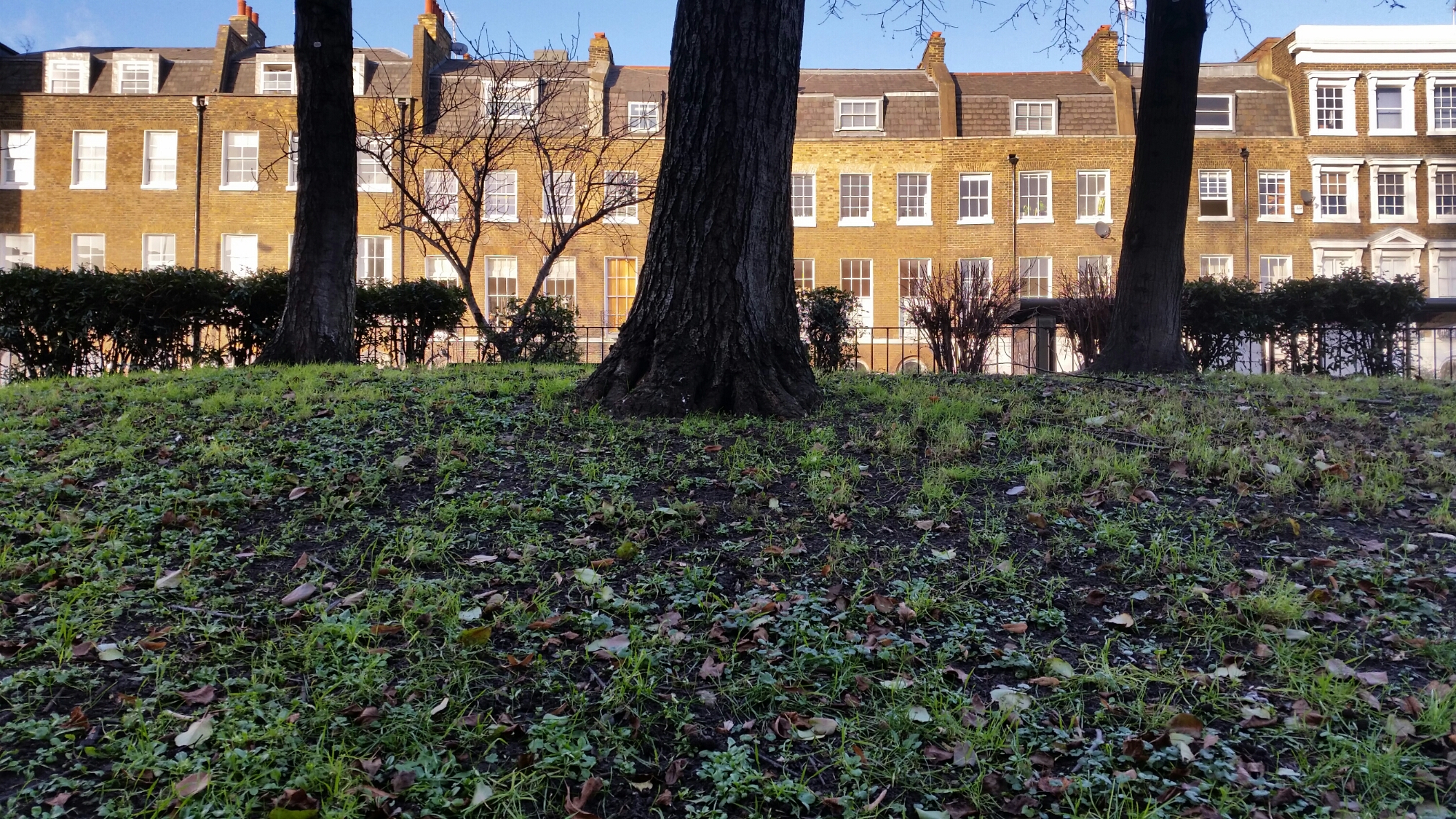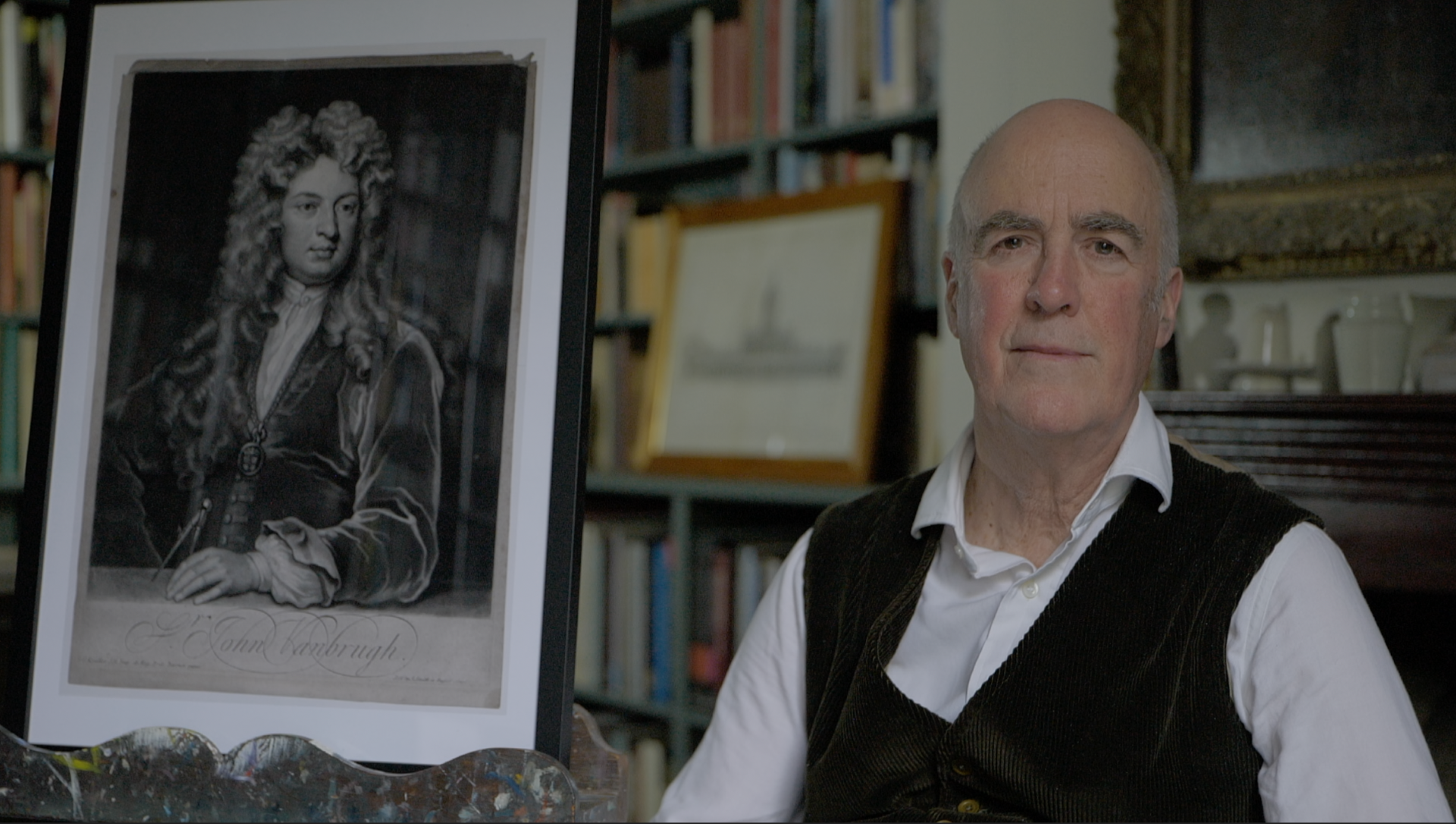
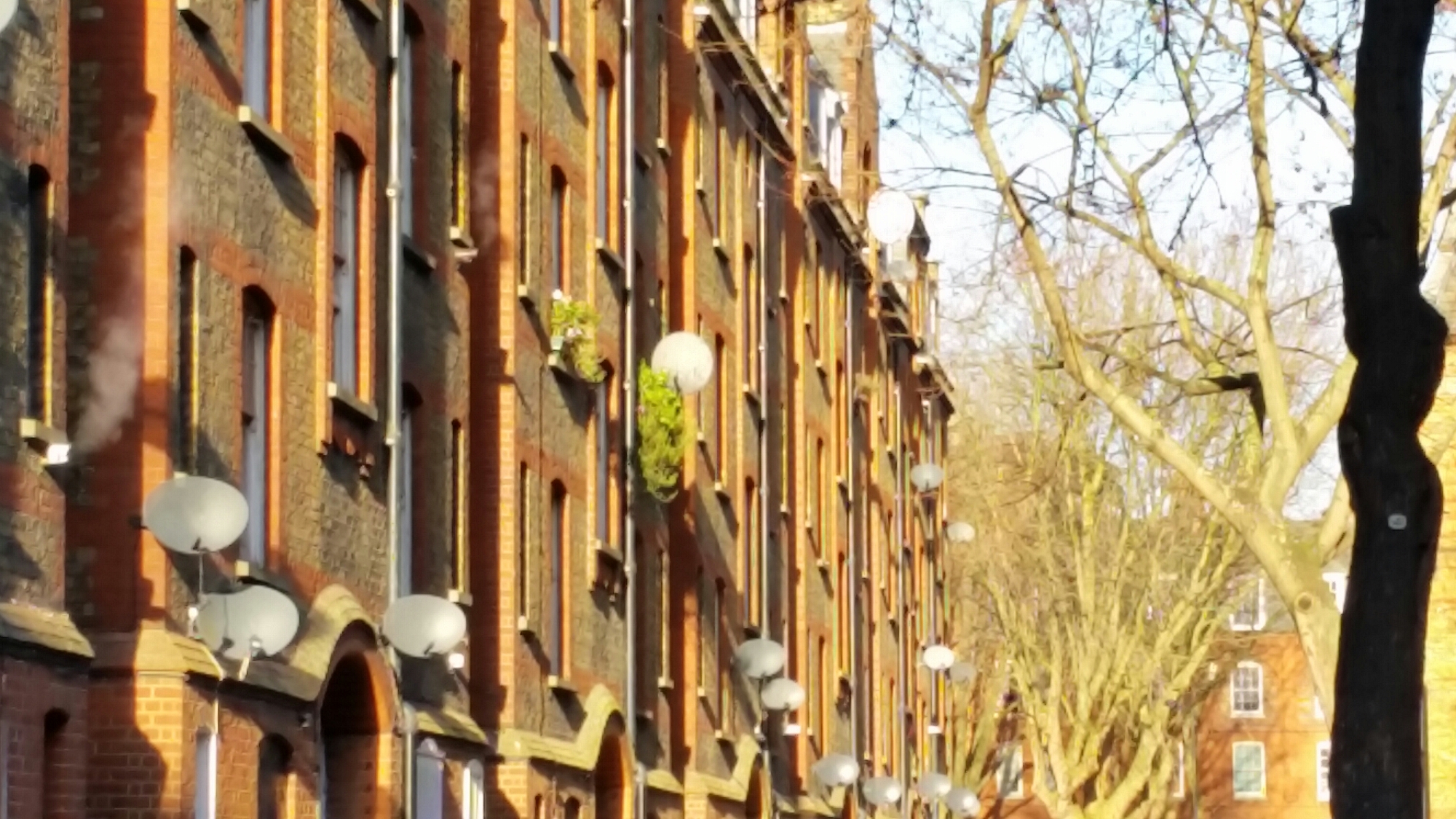
The Boundary Street Estate was built in the 1890s by the London County Council as a way of clearing out The Nichol, a largely criminal district which was the subject of Arthur Morrison’s A Child of the Jago, published in 1896, and Raphael Samuel’s classic East End Underworld. It was the first big estate designed by the Working Classes Branch of the Architect’s Department at the LCC and has blocks designed by different architects, all of which are centred on Arnold Circus and its bandstand. I hadn’t previously noticed the quality of some of its Arts-and-Crafts detailing, including the lettering:-
Tag Archives: East London
Moths
As the season of moths approaches, I was tipped off that the best place to buy all sorts of moth repellent, including moth balls, is an old fashioned hardware shop called A.W. Bradbury at the top end of Broadway market. There, indeed, just inside the door on the left, is a whole section devoted to the destruction of moths – balls, spray and traps. I plan to use them all.
Lakeview Estate
I was reminded by Otto (or maybe it was castigated for my ignorance) that there is another estate by Lubetkin just south of Victoria Park. Indeed, there is, with some of the same hallmarks as the nearby Cranbrook Estate, which is visible along the Hertford Union canal, but Lakeview has distinctive side pavilions which look as if they derive from rural Slovakia:-
Kirby’s Castle
In examining the history of Bethnal Green, I have become interested in the house known as Bethnal House or Kirby’s Castle, which occupied the site where the library now is. It was built in 1570 by John Thorpe for John Kirby, a merchant and was subsequently owned by the lawyer and natural scientist, Sir Hugh Plat. Plat used the garden to experiment growing grapes and the effects of different manures. In 1602, he published Delights for Ladies with instructions about how to preserve and bottle fruits and, in 1608, Floraes Paradise Beautified, which included instructions on how to make fuel brickettes. Pepys visited the house on 26 June 1663 when it was owned by Sir William Rider, Deputy-Master of Trinity House, and described how he had ‘a noble dinner, and a fine merry walk with the ladies alone after dinner: the greatest quantity of strawberries I ever saw, and good’. In 1727, it was leased to Matthew Wright as a private mad house, later known as the White House or Blind Beggar’s House and was run by the sadist employed to cure George III of his madness. Its use as a lunatic asylum is why the local park is apparently known as Barmy Park.
St. Paul, Shadwell
St. Paul, Shadwell lurks beyond the high wall of the old London dock across Shadwell Basin, one of the first of the Commissioners’s churches, designed by John Walters, who died in 1821, the year after the church opened, aged 39. It replaced what was known as the Church of Sea Captains and was described in Walters’s obituary in the Gentleman’s Magazine as ‘simply neat, and elegantly chaste’:
York Hall and Baths
Just north of the Bethnal Green Museum is the York Hall and Baths where the citizens of Bethnal Green could come to box, wash their laundry and take a Turkish bath:-
Bethnal Green Town Hall
I had read somewhere that the back elevation of the recently renovated Bethnal Green Town Hall is one of the top ten pieces of new architecture in London. I was intrigued as I hadn’t registered this elevation (one enters on the opposite side). It’s a fine, aluminium, if (at least in the photograph) slightly surreal, sheath designed by Michel da Costa Gonçalves and Nathalie Rozencwajg of rare:-
Bethnal Green Museum
I’ve always liked Bethnal Green Museum of Childhood and now the new decorated entrance façade by Caruso St. John:-
Hackney Road
Pevsner (or, more likely, Bridget Cherry) is dismissive of Hackney Road, but it has good examples of early Victorian terrace housing on the north side, surprisingly grand for the neighbourhood, which at the time was beginning its slide into slumdom:-
Keeling House
I was only shown Keeling House recently: a muscular and ingeniously geometric, early example of work by Denys Lasdun, when he was working for Fry, Drew, Drake & Lasdun in the mid-1950s. It’s more purely architectural than the standard LCC blocks, still surrounded by what would have been regarded as Victorian slum housing, now being done up, as has Keeling House itself:-


You must be logged in to post a comment.