In wandering round East London, I am increasingly admiring of the scale and ambition of the London Board Schools. They were designed to be ‘Lighthouses, my boy ! Beacons of the future ! Capsules with hundreds of bright little seeds in each, out of which will spring the wiser, better England of the future’. The one in Cassland Road was opened in 1902, the year after education was taken over from central government by the local authorities and was designed by T.J. Bailey in the grandest Wrenaissance style in the middle of an area of market gardens. It is now – surprise, surprise – being converted into luxury flats:-
Tag Archives: England
The French Hospital
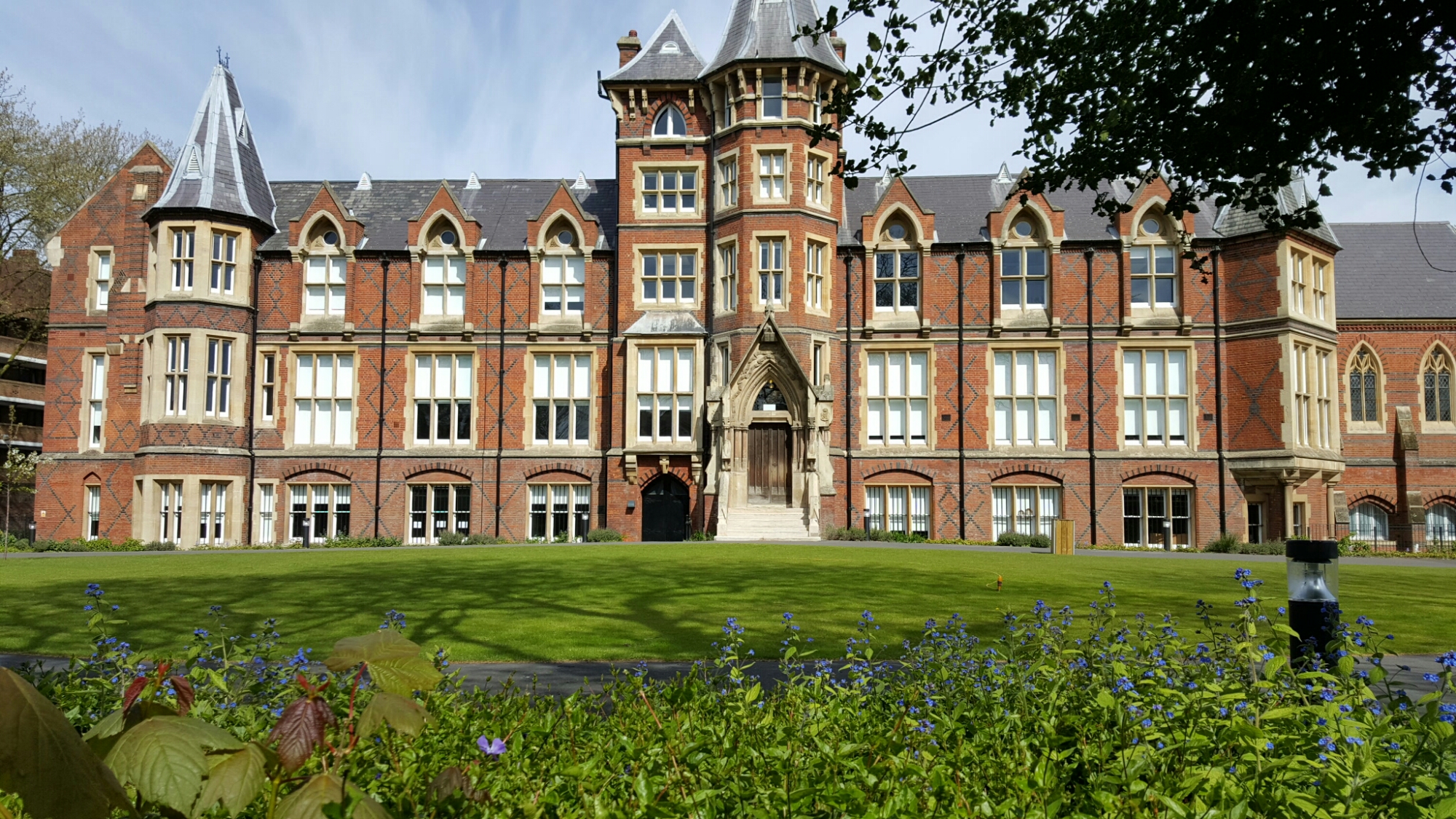
Another big immigrant community was the Huguenots. They established a hospital in Bath Street off City Road in November 1718. By the mid-nineteenth century, it was dilapidated, so was moved to the green fields of Hackney where it re-opened in June 1865 in a French gothic building modelled on the Château de Chambord and designed by R.L. Roumieu. It turned into a Convent School in 1949 and has recently been converted into a branch of Mossbourne Academy with a new building next door designed by Jestico + Whiles:-
Albert Stern House
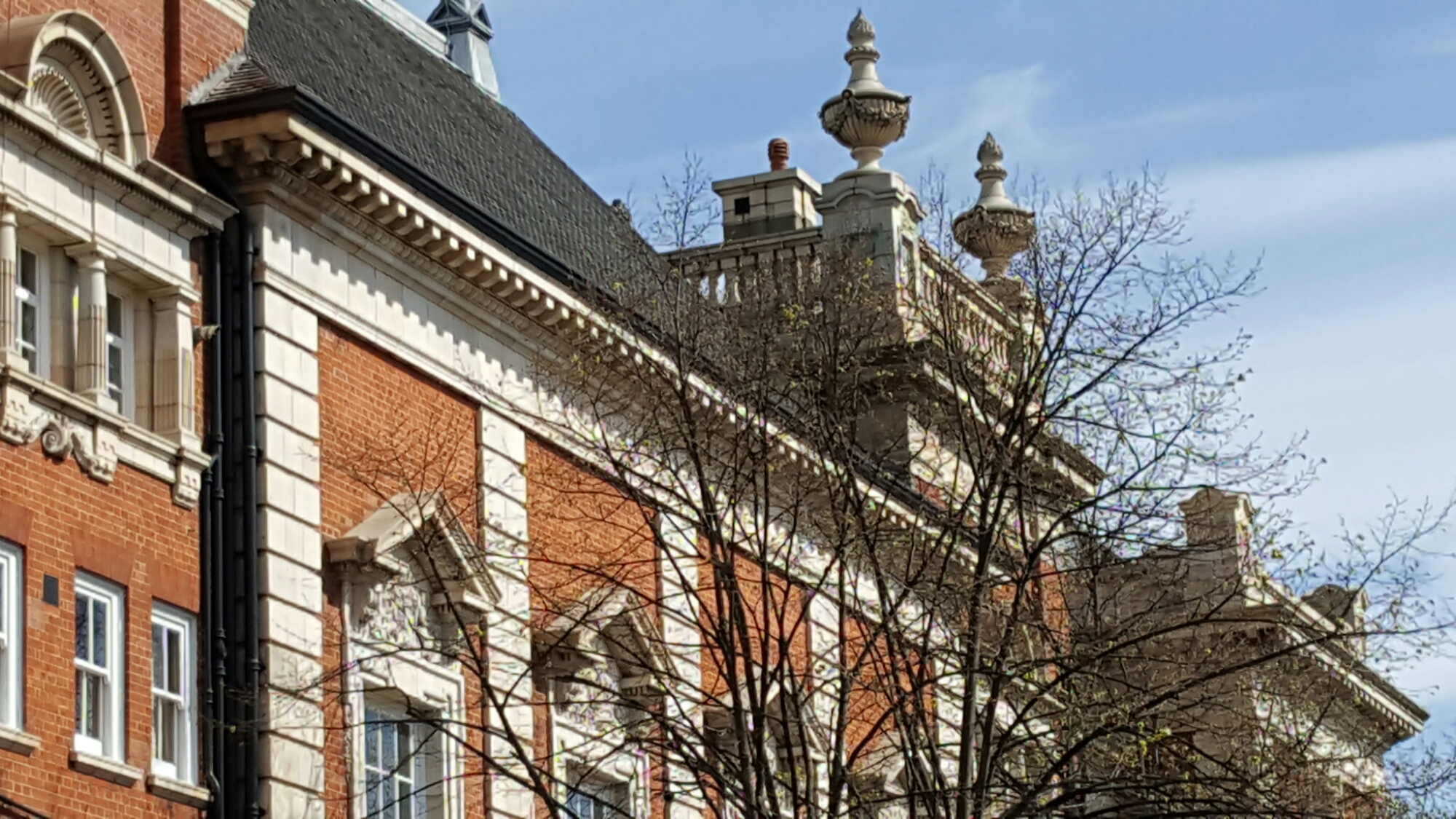
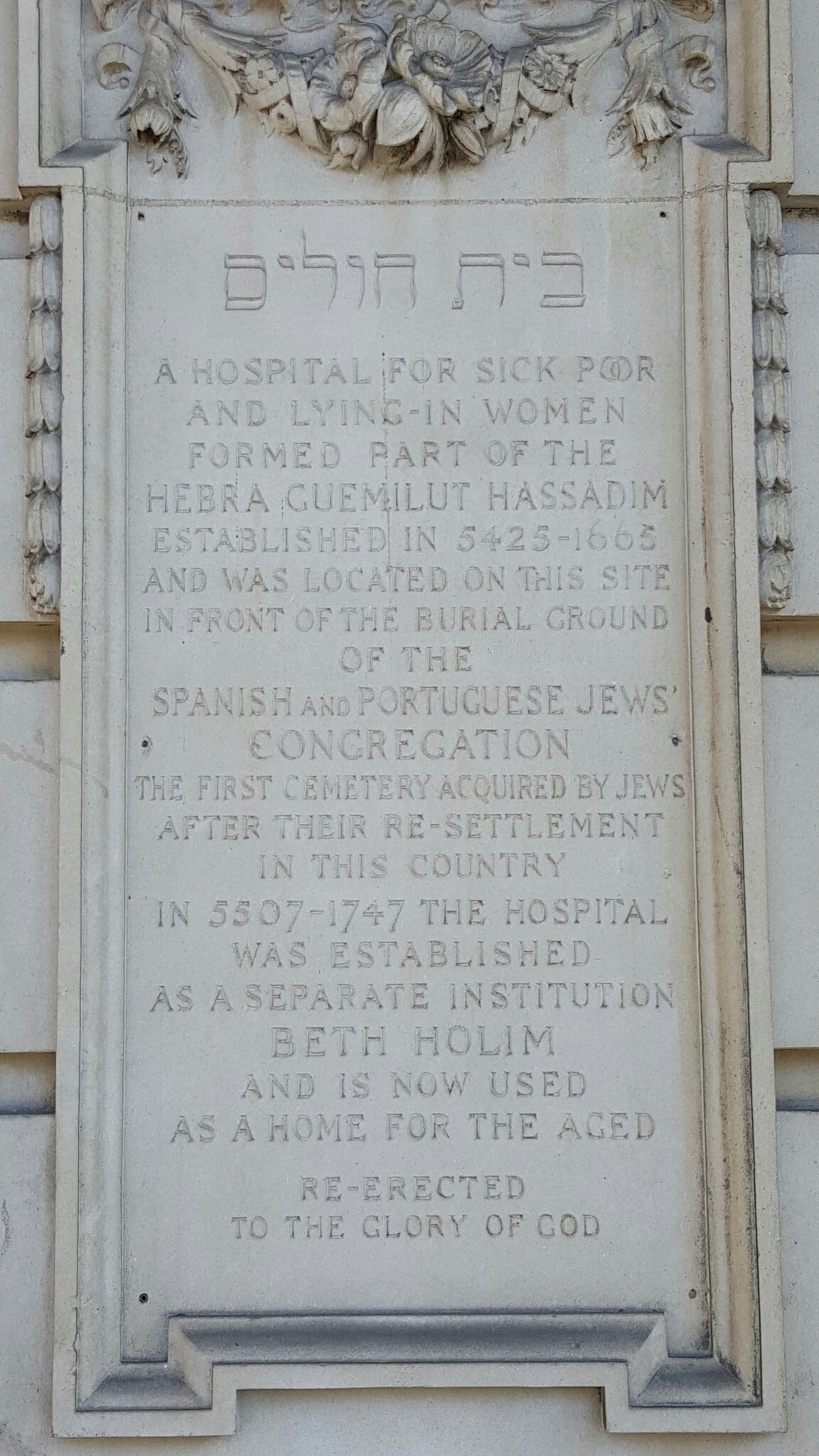
I was walking past Albert Stern House on the Mike End Road yesterday and stopped to read the plaque on its façade, which encapsulates the long history of Jewish settlement in the area. Originally A HOSPITAL FOR SICK POOR AND LYING-IN WOMEN FORMED PART OF THE HEBRA GUEMILUT HASSADIM ESTABLISHED IN 1665. The Jewish Cemetery immediately to the north had been established in 1657 by Sephardic Jews. In 1665, they set up a hospital immediately to the south on the main road out to Essex (Gemilut Hasadim means ‘the giving of loving-kindness’). Later this must have been amalgamated with the Beth Holim Hospital, which, according to the inscription, was founded in 1747, but originally in Leman Street. Albert Stern House (Sir Albert Stern was one of the inventors of the tank) was opened in 1913 as a home for the elderly, but in 1977 moved out to Wembley:-
Gascoyne Estate
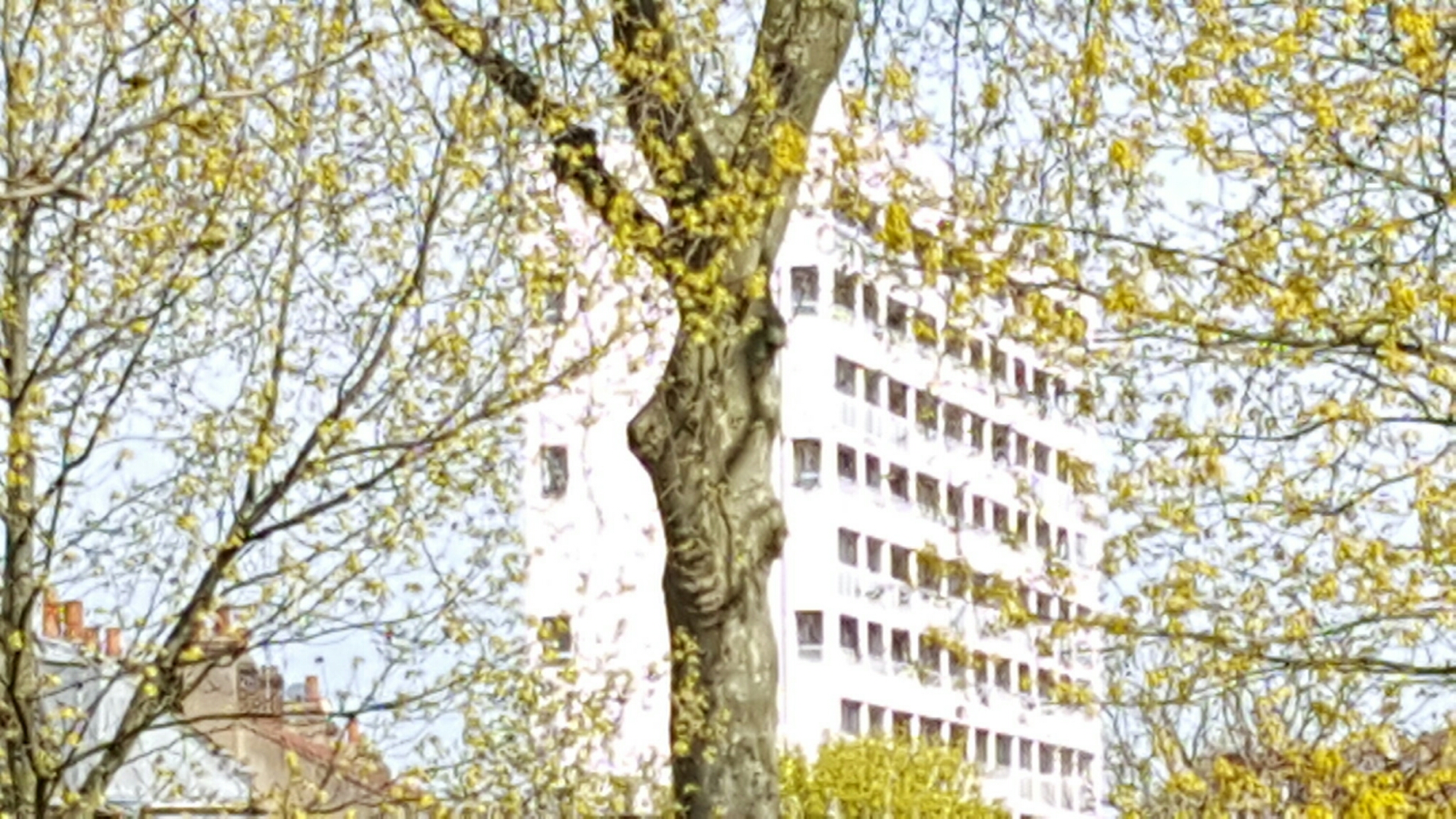
Reading Rowan Moore’s piece in the Observer this afternoon about the need for local authorities to start building again reminded me that this morning I spotted a tower block in the distance north of Victoria Park:-
St. Mary-of-Eton
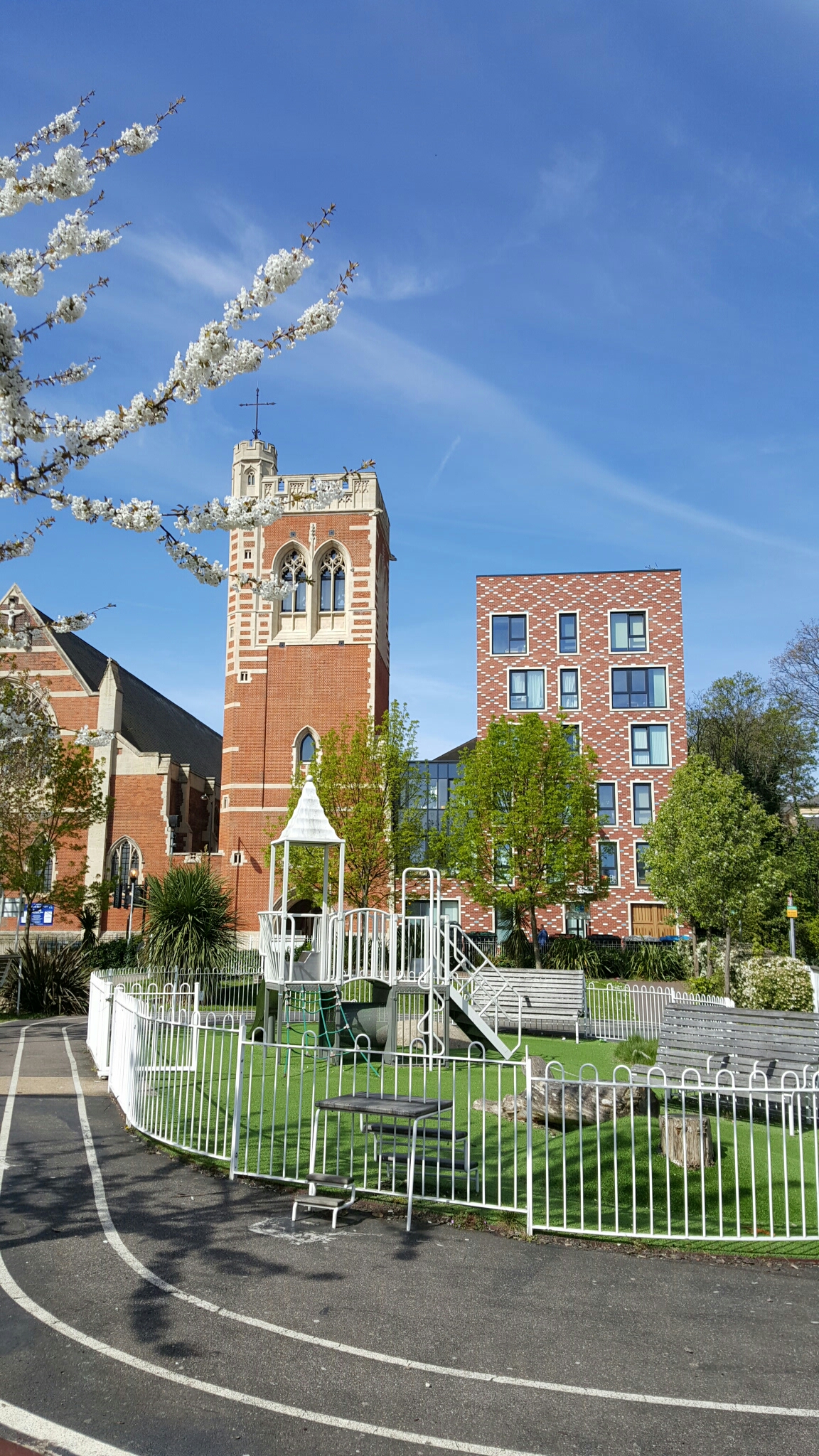
I have several times admired the new housing development on either side of St. Mary-of-Eton, which is in no way deferential to Bodley’s 1892 original, but oddly enhances it by sandwiching it in between two exaggeratedly diapered brick blocks of flats. The original church and surrounding buildings were designed for Eton’s mission to East London. The new flats are purely commercial by Matthew Lloyd Architects and only completed last year:-
The Pavilion Café
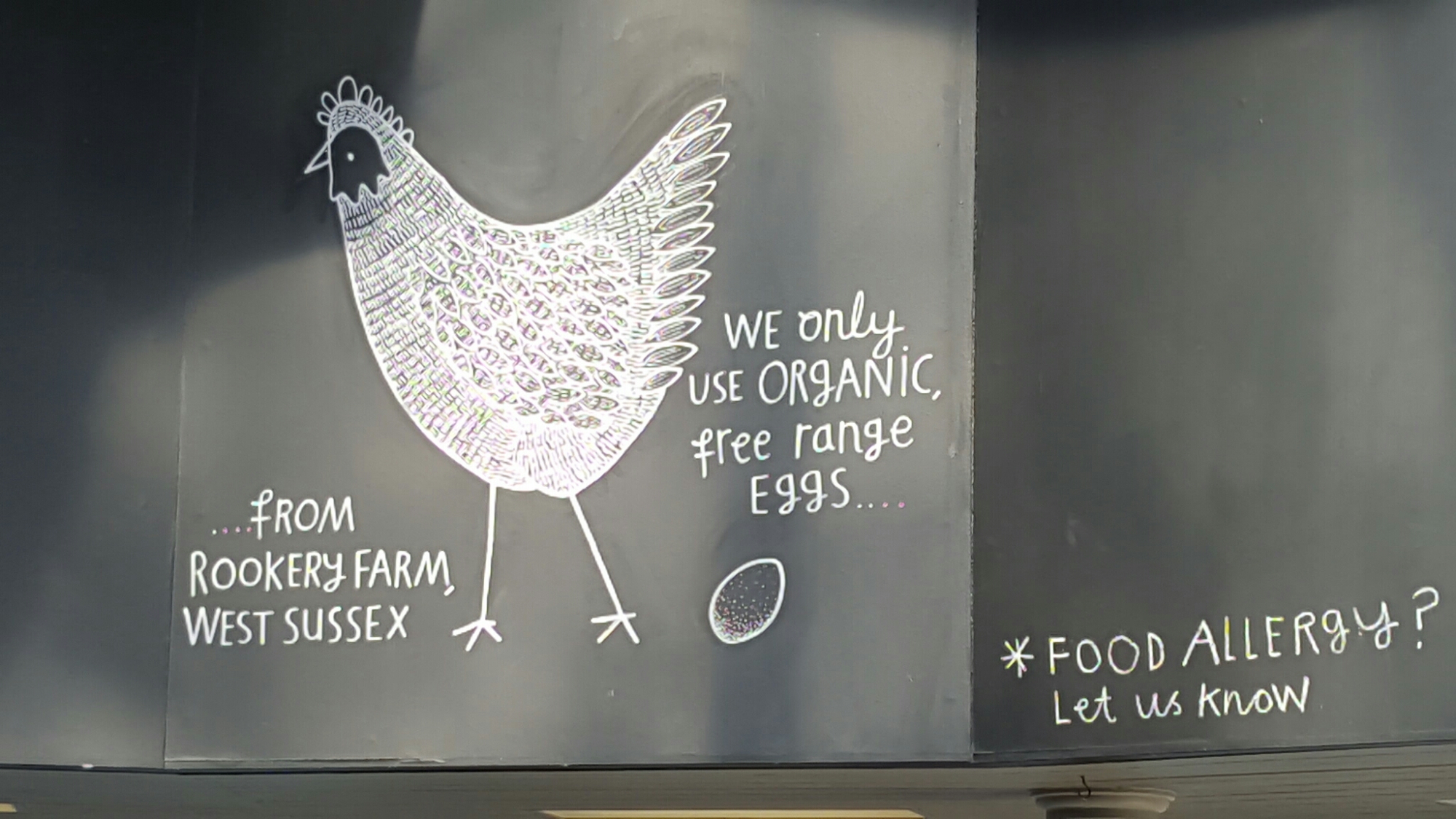
I had breakfast in the Pavilion Café next door to the lake in Victoria Park. It’s strenuously organic, with meat from the Ginger Pig and eggs from West Sussex. I don’t normally like pictures of food which look like advertisements for a Chinese restaurant, but in honour of the quality of their smoked salmon and scrambled eggs, I am breaking my rule:-
Hall of Residence, Queen Mary
For some reason, I’ve never done a post about one of the more distinctive buildings in our neighbourhood – the big block of student flats designed by Feilden Clegg Bradley and completed in 2006, clad in copper sheathing which softens the Corbusian monumentality of the building:-
Novo Cemetery
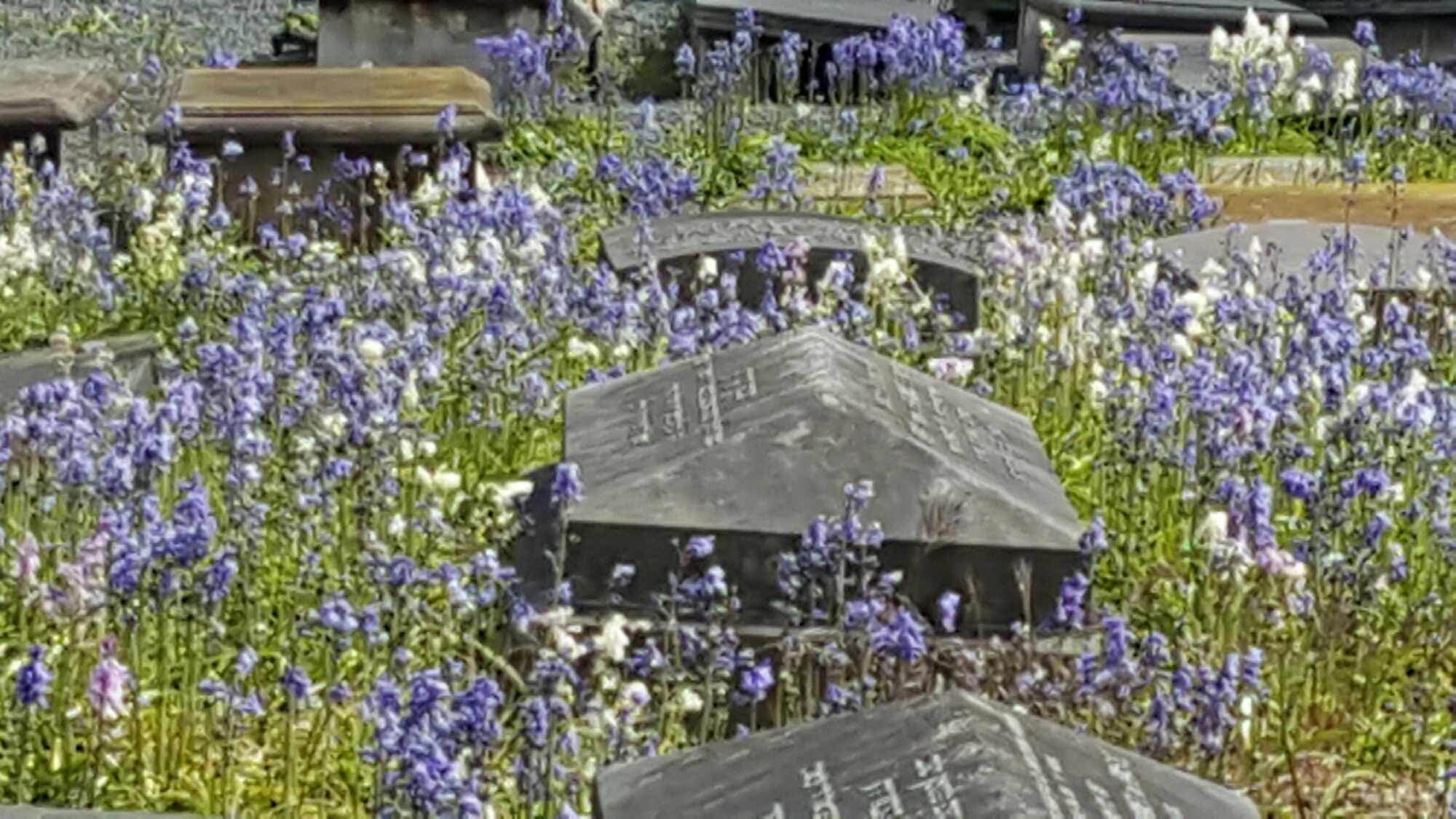
The Novo Cemetery provided equality in death to the community of Sephardic Jews, who first migrated to England in the 1490s, following their expulsion from Spain and Portugal. More followed during the Commonwealth and the cemetery was established in 1733. It is strangely enclosed by Queen Mary and, like the Tower Hamlets Cemetery, is covered in bluebells:-
The New People’s Palace
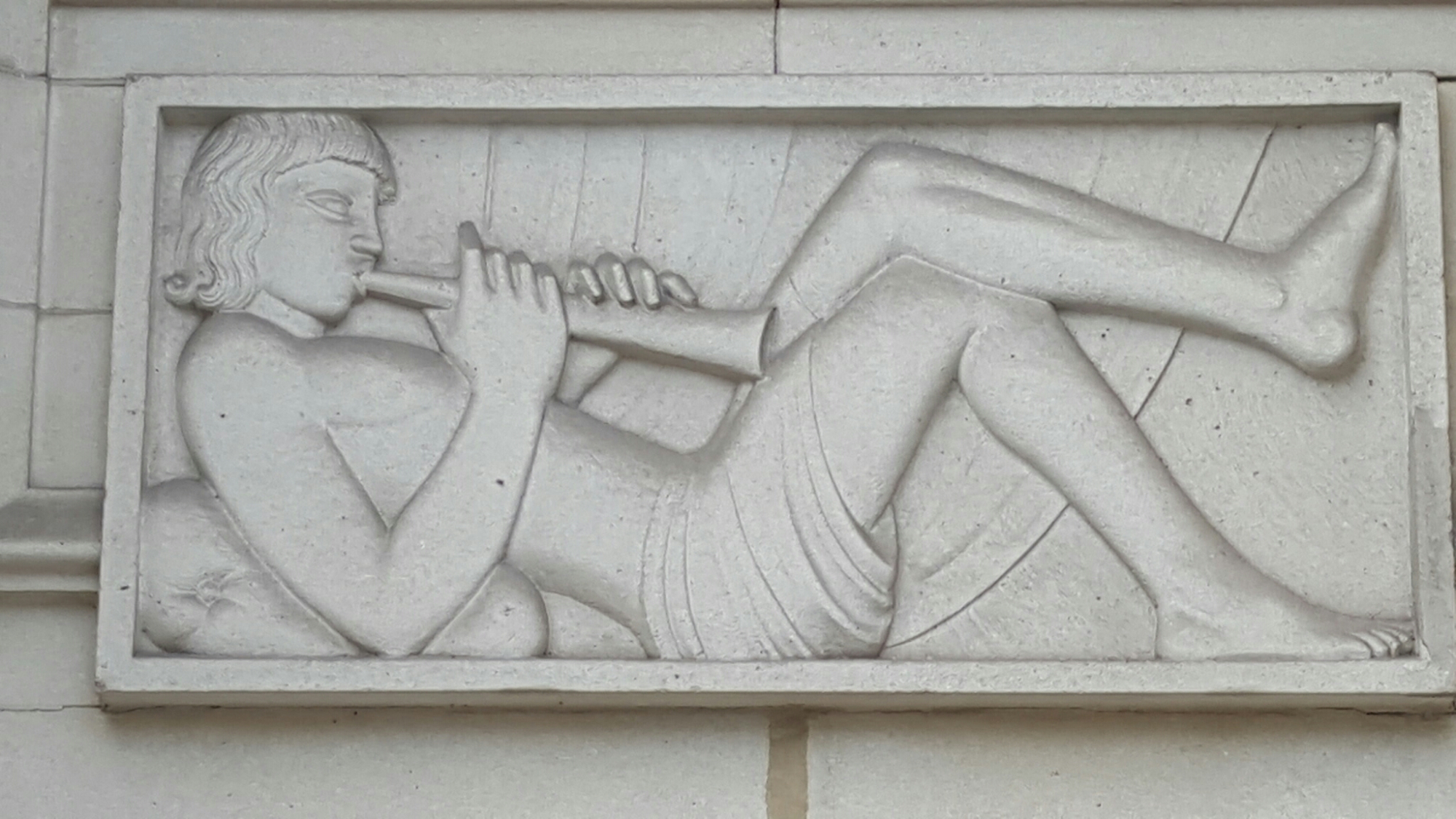
We were walking along the Mile End Road this afternoon when we noticed some carvings inset into the building next to the Old People’s Palace. They looked reminiscent of work by Eric Gill. This is not surprising because they are indeed by Eric Gill, commissioned in 1936 after he had done similar work for the BBC. The building itself, combining theatre, cinema and music hall, was opened in 1937, designed by Campbell Jones & Smithers to provide popular entertainment to the east end.
The left hand Recreation is playing the pipes:-
Springtime in Stepney
On one of my occasional visits to Chelsea, I managed to leave my telephone behind so that, in spite of it being the most beautiful crisp morning, I was unable to take photographs of Argyle House or Paulton’s Square or the Moravian Burial Ground off the bend in the King’s Road, but instead am posting pictures of our garden instead:-


You must be logged in to post a comment.